Why Can’T You Touch A Car Light Bulb? Here’S The Reason
This guide will break down exactly why touching car light bulbs is a no-go. We’ll look at the science involved, what can happen if you do touch them, and how to handle them correctly to make sure your new bulbs last as long as they should. You’ll learn about the oils on your skin and how they react with the bulb’s heat.
By the end, you’ll know precisely why this small detail makes a significant difference for your vehicle’s lighting.
You shouldn’t touch the glass part of a car light bulb because oils and dirt from your skin can cause it to overheat and break. This happens because the bulb gets very hot. Even a tiny bit of oil can create a hot spot. This hot spot makes the glass weak. It can lead to the bulb burning out much sooner than it should.
The Science Behind the “No Touch” Rule
LYCARESUN
2 PCS Car USB Night Light Bulb,…
- Multiple Colors Available:Enhance your car or home with our USB interior car lights. Choose from Blue, Pink, Red, Yellow, Green, P…
- Touch-Activated Control: Lightly touch the sensing area at the bottle's base for 1 second to turn the light on/off, Press and hold…
- Innovative Design: Crafted with durable, wear-resistant glass and classic tungsten filament bulbs, the retro night light emits a g…
As an Amazon Associate I earn from qualifying purchases.
Let’s dive into the nitty-gritty. Car light bulbs, especially halogen and high-intensity discharge (HID) bulbs, work by heating a filament or gas to extreme temperatures. This high heat is what makes them produce light.
Think of it like a tiny, super-hot toaster element, but for light.
These bulbs are designed to handle this intense heat. The glass enclosure is made to withstand these temperatures and keep the delicate inner workings protected. However, this design also makes them very sensitive to anything that disrupts the even distribution of heat.
Your skin, believe it or not, is a source of oils and moisture. When you handle a glass bulb with your bare hands, you leave behind microscopic traces of these substances. Even if you think your hands are clean, these oils are present.
They are a natural part of your skin’s protective layer.
Now, imagine these tiny oil traces on the surface of the bulb’s glass. When the bulb heats up, the glass starts to get very hot. The oil, being organic material, doesn’t react the same way glass does to heat.
Instead of heating up evenly, the oil starts to burn or vaporize.
This burning oil creates a small, localized “hot spot” on the glass. It’s like putting a tiny piece of paper on a hot stove. That one spot gets much hotter than the surrounding glass.
The glass around this hot spot is under stress. It’s being pulled in different directions by the uneven temperatures.
Over time, or sometimes quite suddenly, this stress can cause the glass to crack or even shatter. This is why a bulb might fail prematurely. It’s not always a manufacturing defect.
Often, it’s a direct result of contamination from skin oils.
Think about it: the bulb needs to reach temperatures of hundreds, even thousands, of degrees Fahrenheit. The glass is engineered for this. But that same heat becomes a problem when combined with something that burns or vaporizes unevenly.
The oil creates a point of weakness.
What Happens When You Touch a Bulb?
So, what are the actual consequences of this oily touch? It’s not just about a bulb failing. There are several ways it can go wrong, and it’s often a domino effect.
The most common outcome is a shortened lifespan. A bulb that should last for thousands of hours might only last a few hundred. This means you’ll be replacing bulbs more frequently.
This costs you money and takes up your time. It’s a hassle you can easily avoid.
In some cases, the failure can be more dramatic. The “hot spot” created by the oil can weaken the glass so much that it breaks while the bulb is on. This can lead to the glass shattering.
Imagine a very hot glass object suddenly breaking; pieces can fly outwards.
While modern headlight assemblies are designed to contain most debris, shattered glass can still be a problem. It might damage other components in the headlight housing. It could also create sharp edges that are dangerous to handle if you need to access the bulb again soon.
Furthermore, the oil residue itself can affect the light output. It might create a cloudy or hazy appearance on the glass. This can reduce the brightness of the bulb.
It might also cause uneven light distribution, leading to poor visibility on the road. This is a safety concern.
It’s also worth noting that the type of bulb matters. Halogen bulbs are particularly susceptible. Their design relies on a halogen gas cycle to re-deposit evaporated tungsten back onto the filament.
The glass envelope in a halogen bulb operates at extremely high temperatures, often over 500°F (260°C).
If oils are present, they can interfere with this delicate cycle. The oil can deposit on the filament itself. This can cause it to burn hotter and faster.
It can also lead to uneven evaporation, weakening the filament structure. All of this points to a bulb that will fail sooner.
HID bulbs are a bit different, as they use an arc of electricity through gas. However, the outer glass envelope still gets hot. While less susceptible to the filament burning issue, oil on the outer glass can still create hot spots and lead to premature failure due to thermal stress on the glass itself.
The key takeaway is that any contamination that causes uneven heating is bad. Your skin oils are a primary culprit. They introduce an anomaly into an otherwise perfectly engineered system.
Quick Tip: How to Handle Bulbs Safely
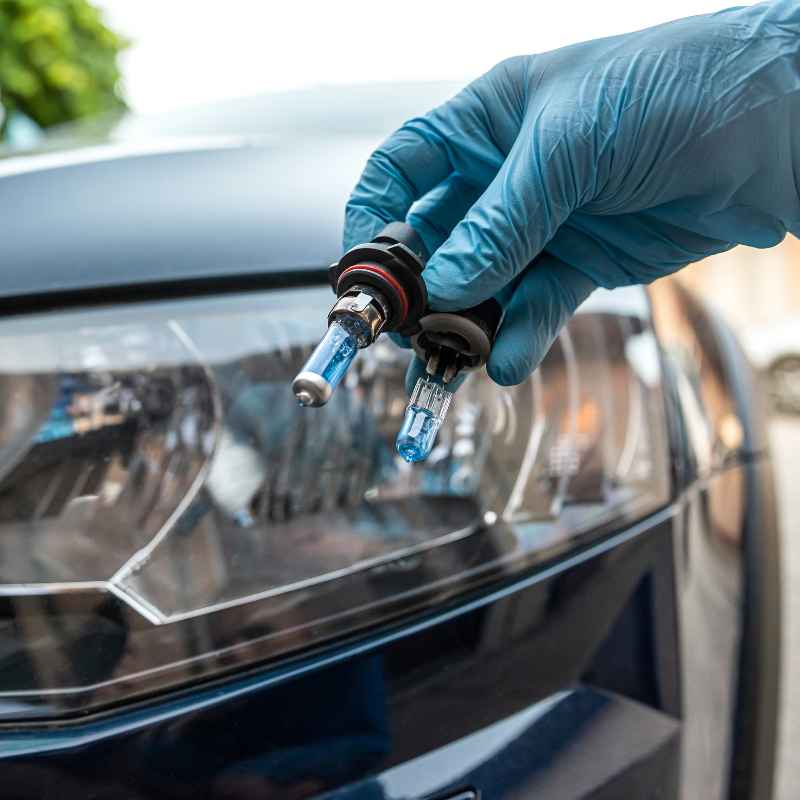
Always use a clean, lint-free cloth or wear gloves when handling the glass part of a new bulb. This creates a barrier between your skin and the glass. It’s a simple step that makes a big difference.
Most new bulbs come with a plastic cap or sleeve to help with installation. Use these!
My Own “Oops” Moment with a Headlight Bulb
I remember one particular evening, it was a chilly autumn night. My neighbor, Mrs. Gable, had called in a panic.
Her car’s driver-side headlight had gone out. She needed to drive her granddaughter to an urgent doctor’s appointment the next morning and couldn’t see well at night.
I offered to help. I keep spare bulbs for my own car, so I figured I had a compatible one for hers. We popped the hood, found the headlight assembly, and I went to swap the bulb.
It was a tight spot, as they often are in modern cars.
I was in a bit of a rush, focused on getting it done quickly so she wouldn’t worry. I grabbed the new bulb, and in my haste, I nudged the glass part with my thumb as I was fitting it into the socket. I didn’t even think about it.
I installed the bulb, reconnected the wiring, and tested the lights. It worked! Mrs.
Gable was so relieved. I felt good about helping out. The next day, however, she called me again, sounding quite upset.
The headlight bulb had already failed. It had barely lasted a few hours.
I was baffled. This was a reputable brand of bulb. I went over to her place.
Sure enough, the bulb was dead. I looked closely at the glass. There was a faint, slightly greasy smudge on one side, right where I remembered my thumb brushing it.
That’s when it clicked. My haste, my quick, thoughtless touch, had likely doomed that bulb from the start. I felt terrible.
I had to go out, buy another bulb, and this time, I made sure to wear the nitrile gloves that came with the new one. I handled the glass with extreme care. That second bulb worked perfectly for a very long time.
That experience really hammered home the importance of that simple “don’t touch the glass” rule. It’s not just theory; it’s something I saw happen firsthand. A moment of carelessness cost a bulb its life and caused unnecessary stress for my neighbor.
It taught me a valuable lesson about respecting the small details in car maintenance.
Understanding Bulb Types and Their Sensitivity
Not all car light bulbs are created equal, and their sensitivity to touch can vary. However, the underlying principle remains the same: oils and contaminants are bad for high-heat components.
Halogen Bulbs: These are perhaps the most common type in older and many current vehicles. They work by heating a tungsten filament until it glows. To prevent the filament from burning out too quickly, the bulb is filled with a halogen gas (like iodine or bromine).
This gas helps re-deposit evaporated tungsten back onto the filament. As mentioned, these bulbs get incredibly hot. The glass envelope often operates at temperatures exceeding 500°F (260°C).
This makes them highly sensitive to skin oils, which can create hot spots leading to premature filament failure or glass breakage.
Incandescent Bulbs: These are older technology, less common in headlights now but still found in some interior lights or older vehicle signals. They work similarly to halogens but without the halogen gas cycle. They are generally less efficient and have shorter lifespans.
They also get very hot, making them susceptible to the same contamination issues as halogens.
HID (High-Intensity Discharge) Bulbs: Also known as Xenon headlights. These are more advanced. They don’t have a filament.
Instead, they create light by striking an electric arc between two electrodes in a bulb filled with gas and metal halide salts. HID bulbs produce a brighter, whiter light. While they don’t have a filament to burn out in the same way, the outer glass envelope still gets very hot during operation.
Oils and contaminants on this glass can still cause uneven heating, leading to thermal stress and potential cracking or premature failure of the bulb’s enclosure. They are generally more robust than halogen bulbs but not immune to damage from improper handling.
LED (Light Emitting Diode) Bulbs: LEDs are becoming increasingly common. They are solid-state devices that produce light when electricity passes through semiconductor material. LEDs are much more energy-efficient and have much longer lifespans.
They also produce less heat directly from the light-emitting element compared to incandescent or halogen bulbs. However, the heat they do generate needs to be dissipated, usually through a heatsink. While you don’t typically touch the LED element itself during installation (it’s usually protected), the base or housing can still get warm.
More importantly, the quality of the connection and the integrity of the housing are crucial for LEDs. Introducing contaminants could potentially affect electrical contacts or the seals designed to protect the electronics from moisture and dirt.
Regardless of the bulb type, the principle of keeping the glass or critical surfaces clean and free from foreign substances like skin oils is paramount for ensuring the bulb performs as intended and lasts its full lifespan. It’s a universal rule for these heat-generating light sources.
Contrast Matrix: Normal vs. Concerning Bulb Handling
Using clean gloves or a lint-free cloth.
Holding the bulb by its base or metal connector.
Carefully seating the bulb without touching the glass.
Using provided protective sleeves or caps.
Touching the glass part with bare fingers.
Using a dirty or oily cloth.
Dropping the bulb or handling it roughly.
Forcing the bulb into the socket.
Real-World Scenarios Where This Matters
This “no touch” rule isn’t just for mechanics in a shop. It applies to everyday car owners in all sorts of situations. Let’s look at a few common scenarios.
Scenario 1: The DIY Bulb Replacement
You’re at home, in your driveway. Your headlight bulb just burned out. You bought a
Scenario 2: Emergency Repair on the Roadside
You’re on a trip, and a taillight bulb goes out. You’re pulled over on the side of the road. Maybe it’s dark, or raining.
You’re trying to change the bulb quickly to be safe. In the urgency, you might forget the rule and touch the glass. The conditions are already stressful, and adding a prematurely failing bulb can make things worse.
Scenario 3: Vehicle Maintenance Checks
You’re doing a routine check of your car’s lights. You notice a bulb is dimming or flickering. You decide to replace it preemptively.
If you’re not mindful of how you handle the new bulb, you could be setting yourself up for another replacement sooner than you think. Even a small smudge can start the process of degradation.
Scenario 4: Working in a Dusty Environment
Imagine you’re working on your car in a garage or workshop. There’s dust and grime in the air. You change a headlight bulb.
If your hands are dusty or greasy, and you touch the glass, you’re introducing more than just skin oils. You’re adding dirt and grit, which can also create hot spots or interfere with the bulb’s seal.
Scenario 5: Fleet or Commercial Vehicles
For businesses that rely on vehicles, like delivery services or taxi companies, bulb failures mean downtime. Downtime equals lost revenue. Ensuring that every bulb replacement is done correctly, including the handling of the glass, is critical for maintaining operational efficiency.
Training drivers or mechanics on these simple but vital steps can save significant costs over time.
In all these situations, the environment and the urgency can make people forget. But the physics of heat and oil remain the same. The bulb doesn’t care if you’re at home, on the road, or in a professional shop; it will react to contamination.
What This Means for You: Normal vs. Worrying
Understanding when a bulb issue is normal versus when it’s a sign of a bigger problem is key. The “no touch” rule primarily affects the bulb’s lifespan and integrity.
When It’s Normal (or Expected):
- Lifespan: All bulbs have a finite lifespan. Over time, they will eventually burn out. If a bulb fails after many thousands of hours of use, it’s just the end of its natural life.
- Heat: It’s normal for headlight bulbs to get very hot. You should never touch them immediately after they’ve been on.
- Color Shift: As some bulbs age, their light color can shift slightly. This is usually a sign of the bulb nearing the end of its life.
When to Worry (and Check Your Handling):
- Premature Failure: If a new bulb burns out within days or weeks of installation, suspect contamination. Did you touch the glass with your bare hands?
- Sudden Shattering: If a bulb suddenly breaks while in use, it could be a sign of a severe hot spot caused by oil, leading to rapid glass failure.
- Inconsistent Brightness: If a bulb flickers or is noticeably dimmer than its counterpart, it might be failing due to uneven heating.
- Cloudy Glass: If the new bulb’s glass looks hazy or has spots on it shortly after installation, it could be the residue from your handling.
Simple Checks to Do:
- Visual Inspection: Before installing a new bulb, look at it. Does the glass look perfectly clean? If not, wipe it gently with a clean, lint-free cloth.
- Post-Failure Inspection: If a bulb fails unexpectedly, carefully remove it (once cool!) and inspect the glass. Look for any smudges or discolored areas.
- Review Installation: Think back to how you installed the bulb. Did your fingers touch the glass at all? Even a slight brush could be the cause.
It’s easy to dismiss a failed bulb as just bad luck or a faulty product. But by understanding the “no touch” rule, you empower yourself to prevent these failures. It’s about simple, careful practices leading to reliable performance.
Quick Fixes & Best Practices
While “fixing” a bulb that has already failed due to oil contamination isn’t possible, adopting best practices for installation will prevent future issues. Here are the key takeaways:
1. Always Use Protection:
When handling the glass part of any new headlight, taillight, or signal bulb, use protection. This means clean, lint-free gloves (nitrile or cotton are excellent) or a clean, soft cloth.
Many bulbs come with a plastic sleeve or cap over the glass. Leave this on until the bulb is seated in the socket.
2. Handle by the Base:
Grasp the bulb by its metal base or plastic connector only. Avoid touching the glass enclosure at all costs.
The base is designed to be handled and is less sensitive to contaminants.
3. Keep New Bulbs Clean:
Store new bulbs in their original packaging until you are ready to install them. This keeps them clean and protected from dust and oils in your toolbox or glove compartment.
4. Cleanliness is Key:
Before you even open the new bulb’s packaging, ensure your hands are clean and dry. If you’ve been working on your car or handling greasy parts, wash and dry your hands thoroughly.
5. Follow Manufacturer Instructions:
Always refer to your vehicle’s owner’s manual for specific instructions on how to replace bulbs. They may have unique steps or warnings.
6. Avoid Overtightening:
When installing the bulb, don’t force it. Seat it gently and turn it just enough to lock it in place.
Overtightening can also damage the bulb or the socket.
These practices are simple and require minimal effort. They are preventative measures that ensure your lighting system functions correctly and reliably.
Frequent Questions About Car Light Bulbs
Why do my new headlights keep burning out so fast?
If new headlight bulbs are burning out quickly, it’s often due to oils from your skin contaminating the glass during installation. These oils create hot spots on the hot bulb, leading to premature failure. Always handle bulbs by the base and use gloves or a clean cloth on the glass.
Can I use my bare hands to install a car bulb if I’m careful?
It’s strongly advised against using bare hands. Even if you are very careful, your skin naturally has oils that can transfer to the bulb’s glass. These oils cause problems when the bulb heats up.
It’s best to always use a barrier like gloves or a clean cloth.
Does touching the glass affect LED bulbs too?
While LED bulbs don’t rely on a hot filament like halogens, the glass or plastic lens covering the LED can still be affected by oils. Contaminants can lead to uneven heat dissipation or affect the clarity of the lens, potentially impacting performance or lifespan. It’s still a good practice to avoid touching the critical parts.
What kind of gloves are best for changing light bulbs?
Nitrile gloves are ideal. They are thin enough to give you good dexterity but thick enough to provide a reliable barrier against skin oils. Cotton gloves also work well, as long as they are clean and lint-free.
Is it okay to touch the metal base of the bulb?
Yes, it is perfectly fine to touch the metal base or the plastic connector of the bulb. This is the part you are meant to handle during installation. The concern is specifically about the glass or plastic enclosure that houses the light-emitting element.
What if the bulb comes into contact with my skin briefly?
If it was a very brief touch with dry, clean hands, the risk might be minimal. However, any contact increases the chance of oil transfer. For peace of mind and to ensure the bulb’s longevity, it’s always best to re-clean the glass with a lint-free cloth if you suspect any contact.
Conclusion
The simple act of not touching the glass part of a car light bulb is a small detail with significant consequences. It stems from the way these bulbs generate intense heat and how the oils on our skin can create damaging hot spots. By understanding this, you can prevent premature bulb failure, save money, and ensure your car’s lights are always working reliably.
Remember to always use gloves or a clean cloth when handling new bulbs. Treat the glass with care, and your bulbs will thank you with a long and bright life. It’s a simple habit that makes a real difference for your vehicle. See also why is my car brake light on common causes and quick fixes.
Related pick: Check today's price on Amazon See also how to make car lights brighter without replacing them.
Products related to this article
Sponsored / affiliate links. As an Amazon Associate I earn from qualifying purchases. I may earn additional commission from eligible campaigns.