How Often Should You Replace Car Lights
Figuring out how often to change your car lights can seem a little tricky, especially if you’re new to owning a vehicle. You might wonder if there’s a set schedule or if you just wait until a bulb burns out. It’s a common question because broken lights are not just an inconvenience; they can be a safety risk.
Don’t worry, though! We’ll walk through this simply, step by step, so you know exactly what to do. Let’s get your visibility sorted out.
When To Replace Car Headlights

Govee
Govee Car LED Lights, RGB Smart Car…
- Creative DIY Mode: Choose from 16 million available colors or customize car led light effects to your liking in DIY mode via Govee…
- Dynamic Music Mode: Built-in mic helps interior car lights sync with any music type. Liven up your road trips, weekend getaways or…
- Smart App Control: Manage the colors and brightness of car lights or choose music mode by one simple tap with Govee Home app. Enjo…
As an Amazon Associate I earn from qualifying purchases.
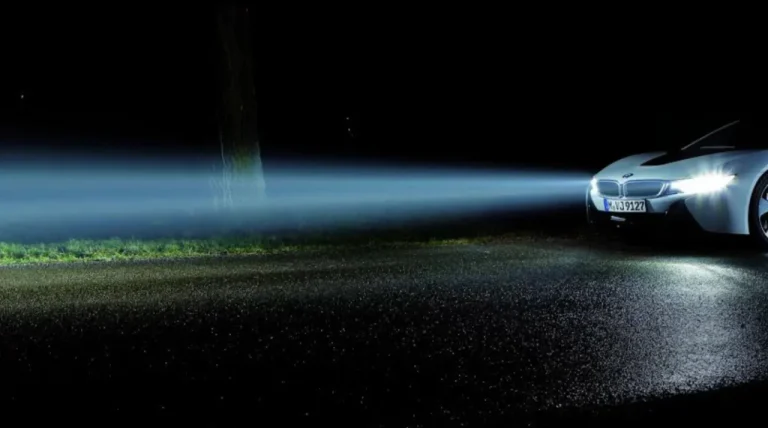
Headlights are super important for driving safely at night or in bad weather. They let you see the road ahead and also help other drivers see you. Knowing when they need changing is key to staying safe.
We’ll look at the common reasons they might need replacing and what to watch out for.
Understanding Headlight Lifespan
Most car headlights are designed to last a good long while. They aren’t something you typically swap out every few months. The lifespan can really depend on the type of bulb you have and how much you drive.
Some bulbs can last for many years, while others might start to dim sooner. It’s always good to know what kind of bulbs your car uses.
Halogen bulbs, which are quite common in older cars, usually last between 500 and 1000 hours of use. That sounds like a lot, but if you drive a lot, it adds up.
LED and HID (High-Intensity Discharge) bulbs, found in newer cars, tend to last much longer. LEDs can often last for 15,000 to 30,000 hours, and HIDs can also go for thousands of hours. This means you might not ever have to replace these types during the time you own the car.
Signs Your Headlights Need Replacing
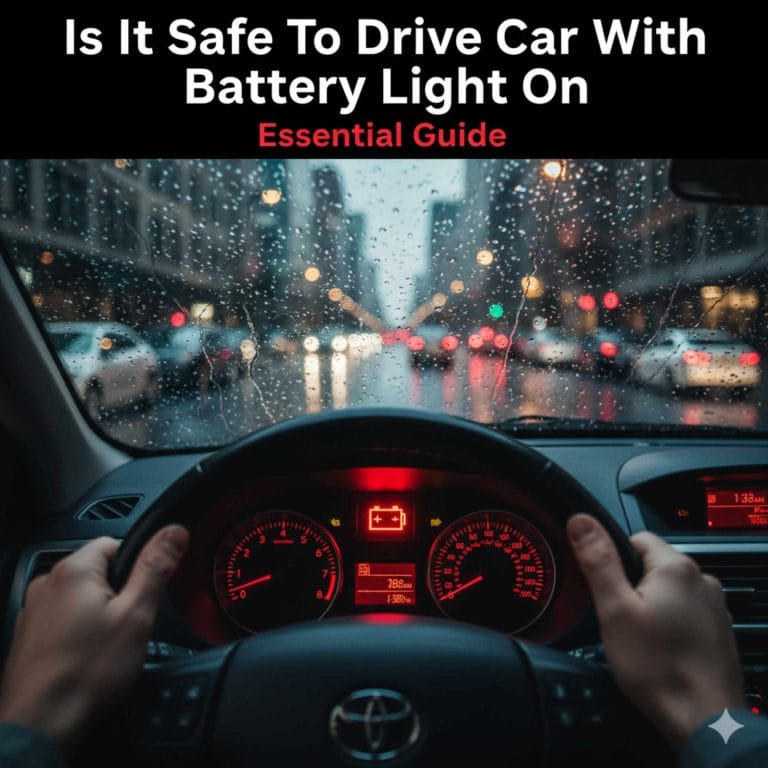
Your headlights don’t just go from working perfectly to suddenly not working. There are usually signs that they’re on their way out. One of the most common signs is dimming.
If your headlights look dimmer than they used to, it’s a sign they might be failing. This can be dangerous because you won’t be able to see as far down the road. Another sign is a change in the color of the light.
Sometimes, headlights can turn yellow or even purple as they age. This is a clear indicator that it’s time for a change.
Of course, the most obvious sign is when a headlight bulb completely burns out and stops working altogether. If one headlight is out, you should replace it as soon as possible. It’s also a good idea to replace them in pairs.
Here are some signs to watch for:
- Dimming light output. This means the brightness has noticeably decreased from when they were new.
- Yellowish or discolored light. The light should be a clear white, not tinted.
- Flickering or inconsistent light.
If the light flickers on and off, the bulb is likely failing.
- Headlight housing appears foggy or hazy. While this can sometimes be cleaned, it can also affect light output.
Checking your headlights regularly is a smart habit. A quick walk around your car before driving at night can catch issues early. Many auto shops offer free headlight checks if you’re unsure.
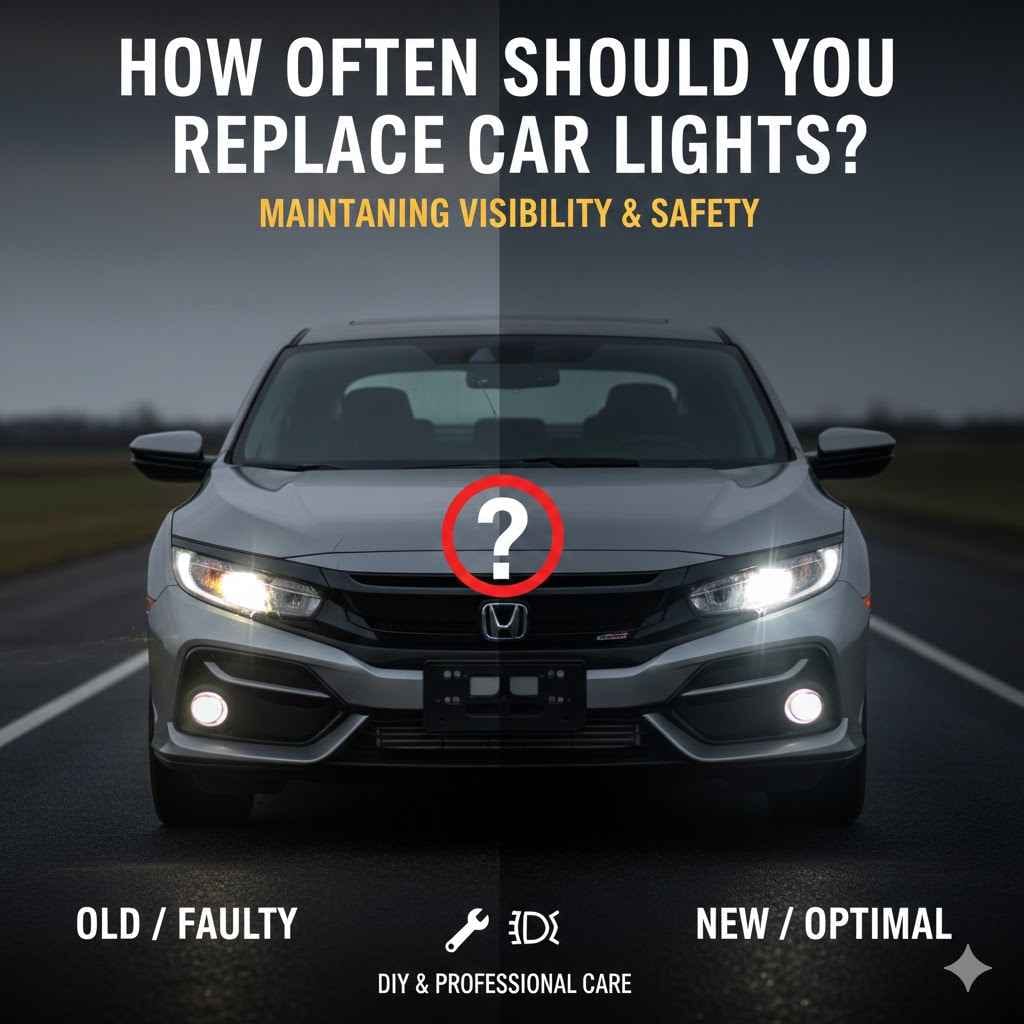
How Often Should You Replace Car Lights – The General Rule
For traditional halogen bulbs, a good rule of thumb is to consider replacing them every 2 to 3 years, or around 30,000 to 50,000 miles. This isn’t a strict rule, but it’s a proactive approach.
If your car has LED or HID headlights, you likely won’t need to replace them as often, if at all, during your ownership. These are built to last much longer. Think of them as being on a “replace if broken” basis rather than a scheduled replacement.
A study by the National Highway Traffic Safety Administration (NHTSA) found that a significant percentage of nighttime crashes are linked to poor visibility, highlighting the importance of functional headlights.
Replacing Headlights in Pairs
It’s generally recommended to replace both headlight bulbs at the same time. Even if only one bulb has burned out, the other one is likely close to the end of its lifespan.
Replacing them together ensures that both headlights have the same brightness and color. This is important for consistent visibility on the road. If you replace just one, the new bulb might be brighter and a different color than the older one, which can be distracting or even illegal in some places.
Imagine driving with one bright, white headlight and one dimmer, yellowed headlight. It’s not only less effective for seeing but can also look odd and potentially confuse other drivers. So, for safety and uniformity, always replace headlights in pairs.
Replacing Other Car Lights
Your car has many lights beyond the headlights, and each plays a role in safety and communication. These include tail lights, brake lights, turn signals, and reverse lights. Knowing when and why to
Tail Lights and Brake Lights
Tail lights and brake lights are crucial for letting other drivers know your intentions and your presence, especially in low light conditions or at night.
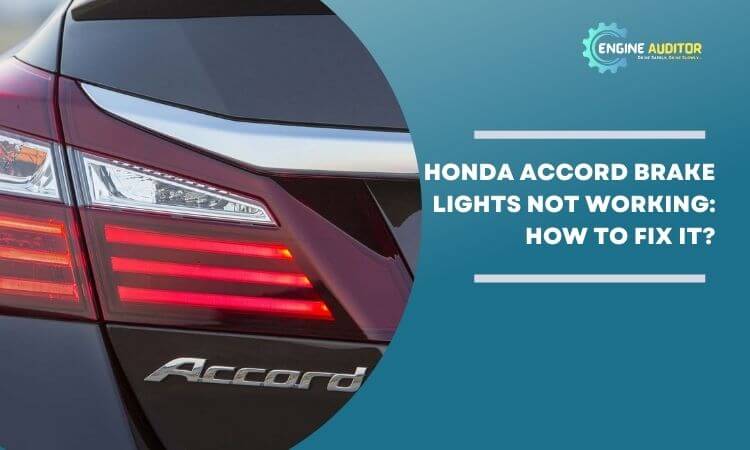
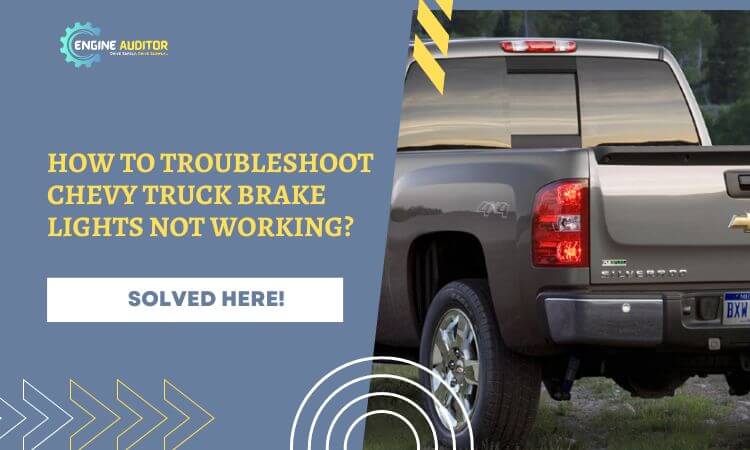
Tail lights are usually on whenever your headlights are on. Brake lights, on the other hand, only illuminate when you press the brake pedal. A common issue is a burned-out brake light bulb, which can be very dangerous as it might not signal to the car behind you that you are slowing down.
The lifespan of tail light and brake light bulbs is generally similar to halogen headlights, often needing
Here’s a quick breakdown:
- Tail Lights: Ensure they are on and bright whenever your headlights are active.
- Brake Lights: Have a friend or family member check them while you press the brake pedal. You need to see three distinct lights illuminate (two outer, one center if applicable).
- Check for dimness or discoloration, similar to headlights.
A study from the AAA Foundation for Traffic Safety indicated that about half of all drivers admit to driving with at least one burned-out bulb. This shows how common these issues are and why simple checks are vital.
Turn Signals and Hazard Lights
Your turn signals (also called blinkers) and hazard lights are your way of communicating with other road users. Turn signals tell others which way you are planning to go, while hazard lights are for emergencies or when you are stopped in a dangerous spot.
If your turn signal bulb is out, you might notice the blinking is faster than usual for that side. For example, if the right front turn signal bulb is burned out, the right side blinker might flash rapidly. Hazard lights use the same bulbs as turn signals, so if one is out, it will affect both functions.
Replacement frequency is similar to tail and brake lights. A proactive approach would be to check them every six months.
Remember to check:
- The front and rear turn signal lights on both sides.
- The hazard light function which flashes all four turn signal lights simultaneously.
These lights are often small incandescent bulbs, but some newer vehicles are moving towards LEDs for turn signals as well, which have much longer lifespans.
Reverse Lights
Reverse lights are white lights that come on automatically when you shift your car into reverse. They serve two main purposes: to illuminate your path when backing up in the dark and to signal to others behind you that you are reversing.
Unlike brake lights, you can usually see your reverse lights working when you put the car in reverse. If they are dim or not working, it makes backing up in low light conditions much harder and also makes it harder for people to see you backing up.
The lifespan is similar to other incandescent bulbs. A good practice is to check them every time you check your brake lights.
When checking:
- Ensure both reverse lights illuminate when the gear is in reverse.
- Look for a bright white light.
Factors Affecting Light Lifespan
Several things can influence how long your car’s light bulbs will last. It’s not just about the type of bulb; other conditions play a role too.
Driving Conditions and Usage
How much and where you drive can significantly impact bulb life. If you frequently drive at night or in areas with poor visibility, your headlights will be on more often. This constant use naturally wears them out faster than if you only drive during the day.
Rough roads and constant vibrations from driving can also stress bulbs. While modern bulbs are built to withstand these conditions, extreme or prolonged vibrations can shorten their lifespan. Think about driving on bumpy dirt roads versus smooth highways.
Here’s how different conditions can affect lights:
- Frequent Night Driving: Increases overall usage hours, leading to quicker wear.
- Extreme Temperatures: While less of a direct factor for incandescent bulbs, rapid temperature changes can sometimes stress components.
- Vibration and Shock: Constant jostling can reduce a bulb’s physical integrity over time.
Bulb Type and Quality
As mentioned, the type of bulb is a major factor. Halogen bulbs are standard but have a shorter lifespan than LEDs or HIDs. LEDs are very durable and can last tens of thousands of hours.
The quality of the bulb itself also matters. Cheaper, off-brand bulbs might not last as long or might not perform as well as those from reputable manufacturers. It’s often worth spending a little more for a reliable brand to ensure better performance and longevity.
Here’s a comparison of common bulb types:
| Bulb Type | Typical Lifespan (Hours) | Pros | Cons |
|---|---|---|---|
| Halogen | 500 – 1,000 | Inexpensive, widely available | Shorter lifespan, less bright than others |
| HID (Xenon) | 2,000 – 3,000 | Very bright, good color | More expensive, require ballast |
| LED | 15,000 – 30,000+ | Extremely long life, energy efficient, bright | Higher initial cost, can be complex to replace in some vehicles |
Environmental Factors and Maintenance
Moisture, dirt, and debris can affect your lights. If the seals on your light housings are broken, water can get inside and corrode the bulb socket or the bulb itself, leading to premature failure.
Regular cleaning of your car’s lights can also help. Dirt and grime on the outside of the headlight or taillight lens can significantly reduce the amount of light that gets through. This makes your lights appear dimmer, even if the bulb itself is still good.
Good maintenance practices include:
- Keeping light housings clean. Wash your car regularly and pay attention to the lenses.
- Checking for cracks or damage to the light housings. Seal any small cracks if possible.
- Ensuring bulb sockets are free of corrosion.
One study found that dirty headlights can reduce light output by up to 50%, making night driving significantly more dangerous.
How Often Should You Replace Car Lights A Proactive Approach
Being proactive about replacing your car lights means avoiding sudden failures and ensuring you always have optimal visibility. It’s about staying ahead of potential problems.
Visual Inspection Schedule
The easiest and most effective way to stay on top of your car’s lights is through regular visual inspections. You don’t need to be a mechanic to do this. A quick check once a month can catch many issues before they become serious.
Here’s a simple schedule:
- Once a month, walk around your car in daylight and then again at dusk or night.
- Turn on your headlights, parking lights, tail lights, and hazard lights.
- Check that all lights are illuminated and appear to be the correct brightness and color.
- Have someone help you check your brake lights by stepping on the brake pedal while you observe from behind.
- Check your turn signals by activating them in front and back.
- Put the car in reverse to check the reverse lights.
If you notice any dimness, flickering, or a bulb that’s completely out, it’s time to replace it. For headlights, if they seem dimmer than before but are still working, consider replacing them soon, especially if you have halogen bulbs.
When To Consider Replacement Even If Working
Sometimes, it’s smart to
The gradual dimming of headlights can be so subtle that you get used to it. However, reduced visibility can compromise your safety. A common recommendation for performance and safety is to replace headlight bulbs every 2-4 years as a preventive measure.
For other lights like tail lights and brake lights, replacement is usually only needed when they burn out or show clear signs of failure. But if one brake light is noticeably dimmer than the other, it’s a good idea to replace both.
The Role of Professional Checks
While DIY checks are great, periodic professional inspections are also beneficial. Your mechanic can spot issues you might miss, such as corrosion in the bulb socket or problems with the wiring that could affect light performance.
During routine maintenance like oil changes, ask your service technician to check your lights. They have the experience and tools to identify subtle problems and can also advise on the best replacement bulbs for your specific vehicle. Many service centers offer free light checks as a courtesy.
Frequently Asked Questions
Question: How often should I replace my car’s headlights?
Answer: For traditional halogen headlights, consider replacing them every 2 to 3 years or around 30,000 to 50,000 miles as a proactive measure. If you have LED or HID headlights, they typically last much longer, and you’d usually only replace them if they burn out or fail.
Question: Do I need to replace both headlight bulbs at once?
Answer: Yes, it is strongly recommended to replace both headlight bulbs at the same time. This ensures they have the same brightness and color, providing uniform visibility and preventing one side from being noticeably different or dimmer than the other.
Question: What if only one of my brake lights is out?
Answer: If only one brake light is out, replace it as soon as possible. It’s also a good idea to replace the other brake light bulb at the same time. This ensures both lights are equally bright and functional, which is crucial for safety.
Question: How can I tell if my headlights are dimming?
Answer: Look for signs like reduced visibility on the road at night, a yellow or discolored light output, or if your car’s headlights look significantly less bright compared to newer cars. Having someone else check them can also help you notice dimming.
Question: Are LED headlights better than halogen?
Answer: LED headlights generally offer much longer lifespans, are more energy-efficient, and often provide brighter, clearer light than traditional halogen bulbs. While they may have a higher initial cost, their longevity and performance can make them a better choice over time.
Final Thoughts
Knowing how often to replace car lights is all about simple checks and a bit of foresight. Keep an eye on your headlights, tail lights, brake lights, and signals. Replace bulbs proactively for headlights, especially halogens, and switch out others when they burn out.
Your car’s lights keep you safe, so keeping them in top shape is easy and important. See also how to fix car lights in fivem quick working method .
Related pick: Check today's price on Amazon
Products related to this article
Sponsored / affiliate links. As an Amazon Associate I earn from qualifying purchases. I may earn additional commission from eligible campaigns.