When to Replace Wiper Blades, Belts, and Hoses
Replace wiper blades about every 6 to 12 months, and replace belts and hoses at the interval in your service schedule. Move sooner if you see cracking, fraying, glazing, swelling, leaks, or hear squealing. Ignoring them can mean poor visibility, overheating, loss of charging, or a roadside breakdown. This guide explains routine replacement timing and the warning signs that justify immediate action or inspection.
Replace now, soon, or inspect further


Use this table to separate a blade issue from a belt or hose problem. The point is to replace the right part at the right time, not to swap good parts because the symptom looked similar. Wet-weather visibility problems call for faster action than a mild cosmetic defect.
| Part | Warning signs | Likely cause | Urgency | DIY difficulty | Estimated cost band | What else to check first |
|---|---|---|---|---|---|---|
| Front wiper blades | Streaking, smearing, chattering, skipping, squeaking, missed wet areas | Rubber wear from UV, heat, cold, salt, ozone, and grit; wrong size or mount | Replace now if visibility is poor in rain or snow | Low to moderate | Budget to premium for a pair | Washer fluid level, spray pattern, dirty glass, wiper-arm tension |
| Rear wiper blade | Streaking, chatter, poor sweep on hatch glass | Shorter, vehicle-specific blade wear or incorrect fitment | Replace soon if the rear glass is hard to clear | Low, but fitment may differ | Usually one blade, often modest | Rear washer nozzle, hatch glass contamination, arm spring tension |
| Wiper inserts | Blade body is fine, but rubber edge is split, hardened, or leaving lines | Insert-only wear on a compatible frame | Inspect further before replacing the whole assembly | Moderate | Lower than full blade replacement | Frame damage, corrosion, end clips, correct insert length |
| Serpentine/accessory belt | Cracking, glazing, fraying, noise, looseness | Age, mileage, heat, oil exposure, and wear on the drive system | Replace soon; replace now if noise or slip is severe | Moderate to difficult | Parts plus higher labor sensitivity | Pulley alignment, tensioner condition, routing diagram |
| Coolant hose | Cracks, swelling, softness, leaks, brittleness, damp joints | Heat cycling, age, chemical exposure, clamp wear | Replace now if leaking or swollen | Moderate to difficult | Often labor-sensitive | Clamp tightness, nearby seepage, thermostat housing, radiator neck |
| Vacuum hose | Cracks, splits, collapse, brittleness, idle or driveability issues | Age, heat, oil vapor, and hardening rubber | Replace soon if drivability is affected; now if disconnected | Low to moderate | Usually low parts cost | Loose fittings, split tees, intake leaks, vacuum routing |
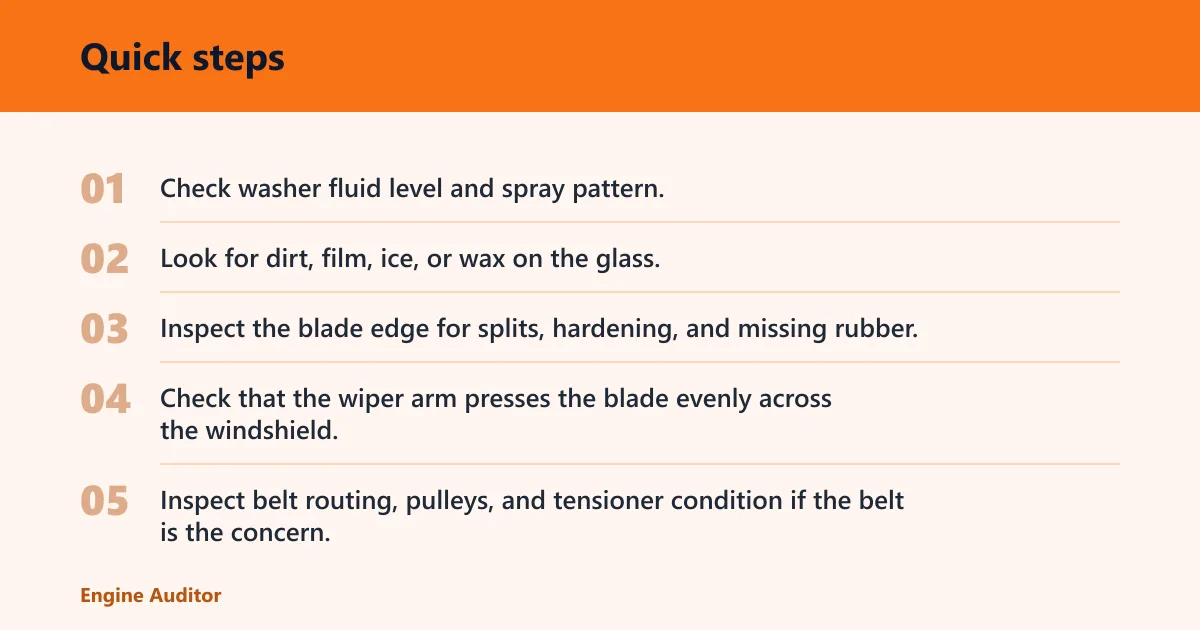
Start with the simplest checks. Washer fluid should be full, the spray pattern should hit the glass where the blade passes, and the windshield should be clean enough that the rubber is not dragging across film or grit. If the blade still streaks after those checks, move to arm tension and fitment before buying parts again.
A common first-timer mistake is replacing a wiper blade because it smears, then finding the real problem was a clogged nozzle and a dry windshield. Another is blaming a belt noise on the belt alone when a weak tensioner or misaligned pulley is the real cause. Inspection prevents that kind of repeat work.
- Check washer fluid level and spray pattern.
- Look for dirt, film, ice, or wax on the glass.
- Inspect the blade edge for splits, hardening, and missing rubber.
- Check that the wiper arm presses the blade evenly across the windshield.
- Inspect belt routing, pulleys, and tensioner condition if the belt is the concern.
- Look for hose wetness, cracking, swelling, and loose clamps.
When should you replace wiper blades?
Wiper blades usually need replacement every 6 to 12 months, and parked-outside vehicles or harsh climates often need them sooner. The right trigger is performance, not the calendar alone. If the blades leave streaks in rain, snow, or road spray, or start chattering and skipping, replacement is usually justified.
Typical interval and why climate changes it
One regional service shop recommends replacement every 6 to 12 months. Sun, heat, cold, ozone, salt, and debris all age the rubber, and outdoor parking speeds that up. A blade that looks acceptable on a dry windshield can still fail in a heavy downpour.
Common warning signs
Streaking, smearing, chattering, skipping, squeaking, and missed areas are the main signs that the blade is done. Carolina Quick Lube lists streaking or smearing as a warning sign, and it also treats reduced visibility in rain or snow as a sign of worn blades. Wet-weather performance is the real test.
Front blade fitment basics
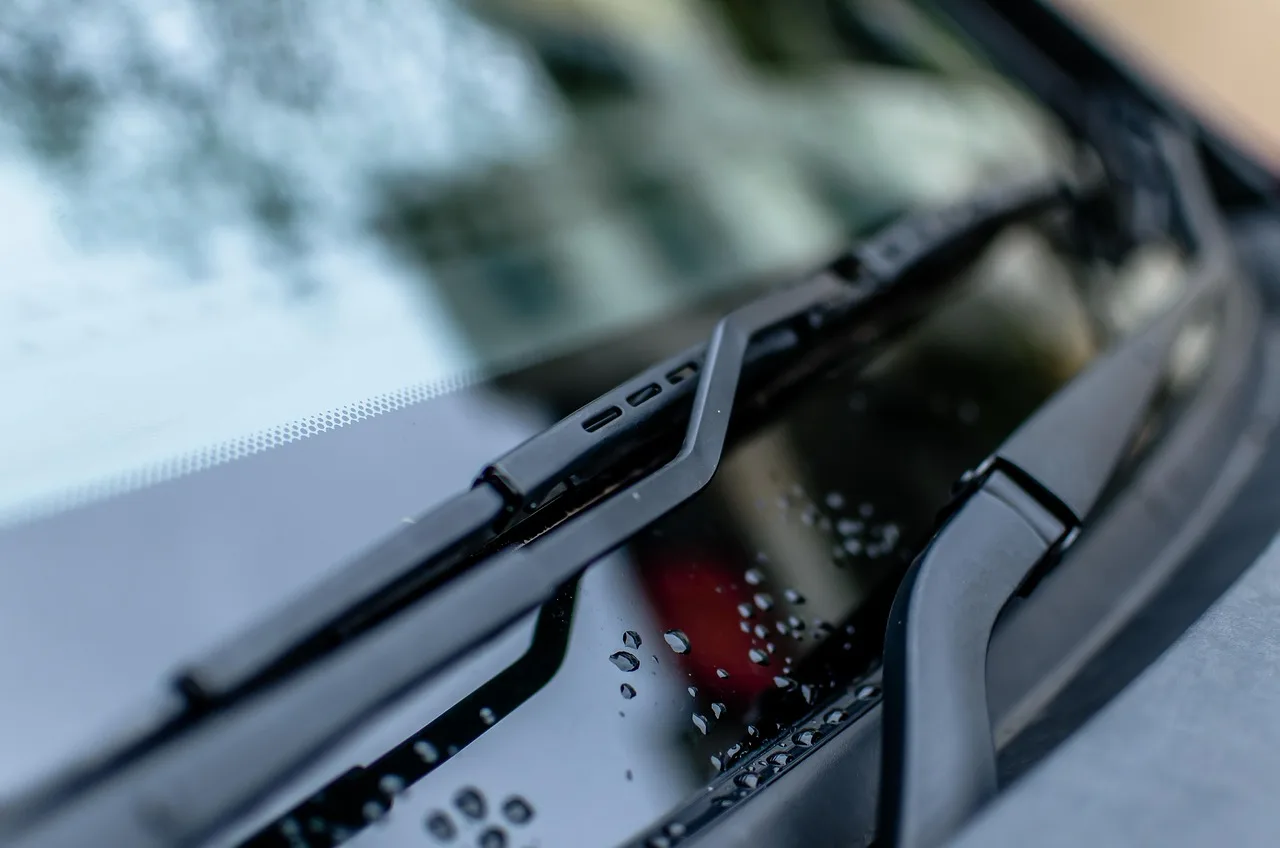
Front blades are not universal. Fitment depends on the vehicle-specific mounting system and blade length, and some mounts use pins, tabs, hooks, or screws. Frame-style, beam-style, and hybrid blades all exist, so check the owner’s manual or a parts catalog before buying.
Beam-style blades are often a sensible upgrade if the factory blade is older or the vehicle sees winter weather. The shape helps the rubber follow the glass more evenly, especially on curved windshields, but the mount still has to match the arm correctly.
Why blades fail before the rubber looks torn
Rubber can lose performance long before it rips. UV exposure, heat, cold, ozone, salt, and grit dry out the edge and change how it flexes against the glass. That is why a blade can look intact and still leave smear lines or a thin film after each pass.
Washer fluid and glass condition matter
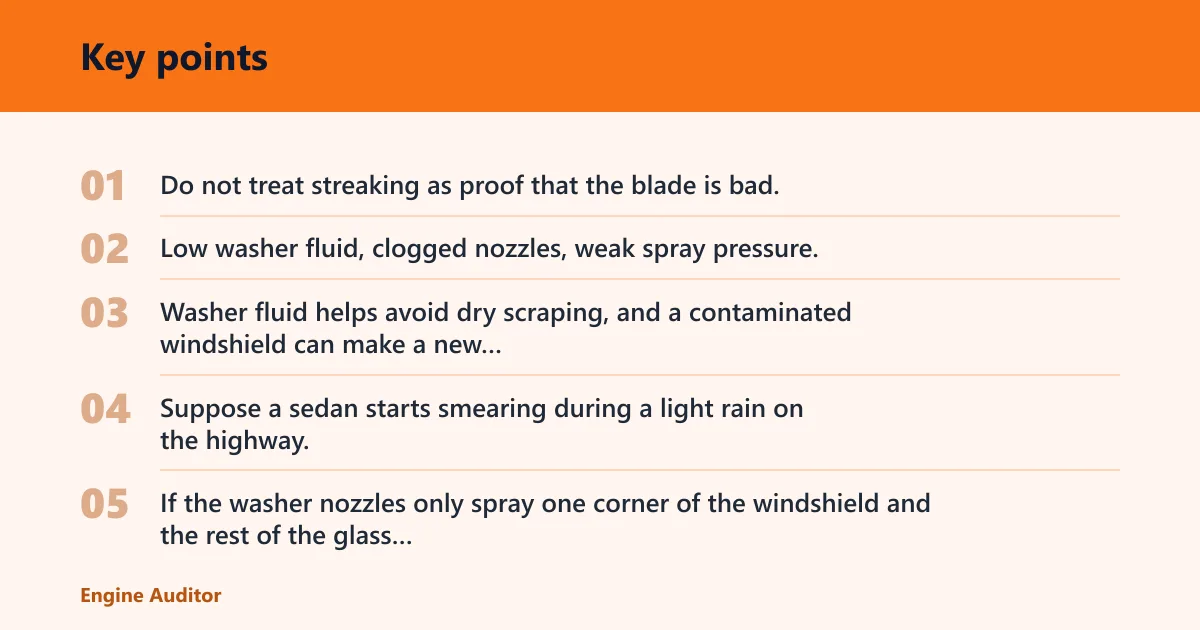
Do not treat streaking as proof that the blade is bad. Low washer fluid, clogged nozzles, weak spray pressure, or dirty glass can mimic blade failure. Washer fluid helps avoid dry scraping, and a contaminated windshield can make a new blade perform badly on day one.
Suppose a sedan starts smearing during a light rain on the highway. If the washer nozzles only spray one corner of the windshield and the rest of the glass has road film, the blade may be fine. Clean the glass and check the spray before replacing anything.
Wiper arm tension can cause missed areas
Weak wiper-arm spring tension can leave floating contact or missed areas, especially near the center of the sweep. If a new blade still skips the same section, inspect the arm rather than assuming the replacement was defective. A bent arm or tired spring can change contact pressure enough to matter.
How do you know when to replace windshield wiper blades?
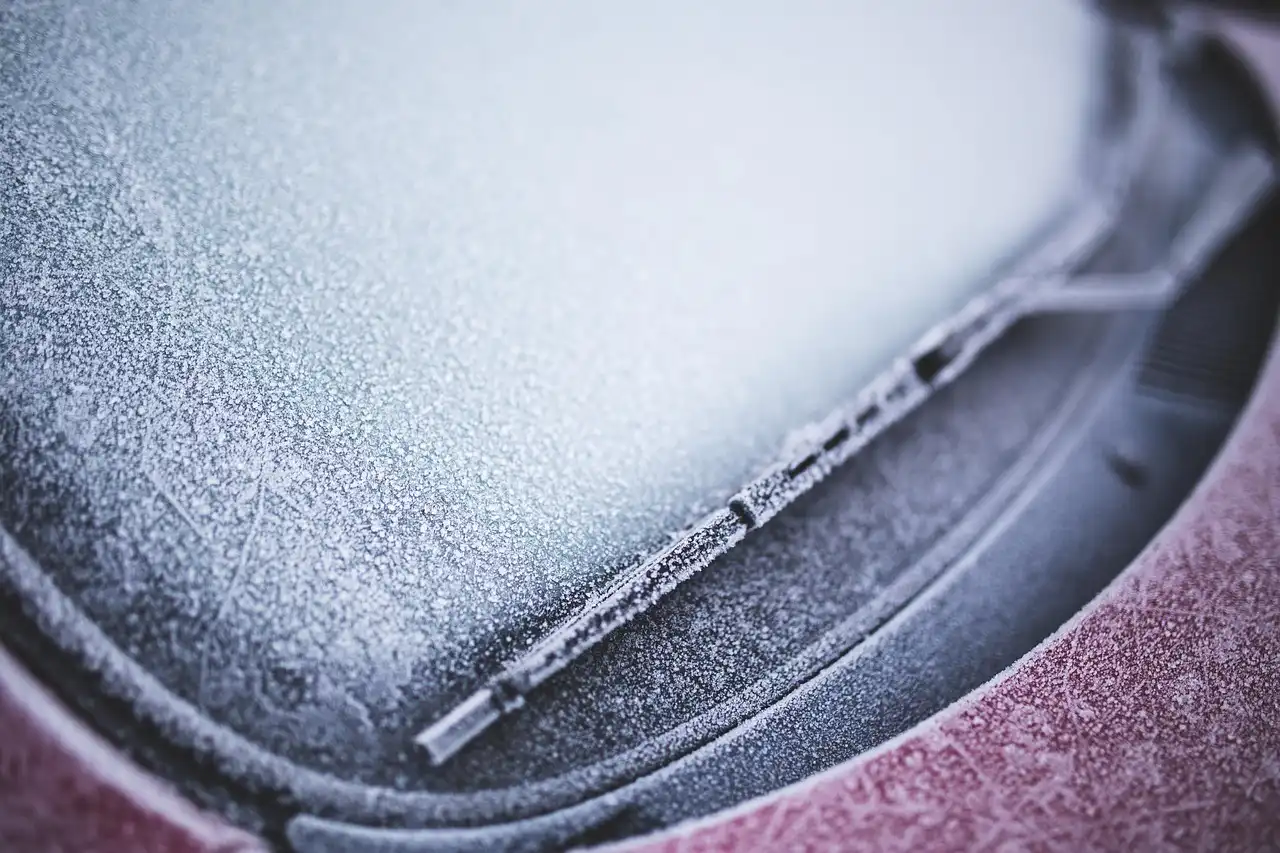
Replace windshield wiper blades when they leave wet patches, chatter across the glass, or lose contact in rain or snow. Base the decision on how they perform in real weather, not only on age. If visibility drops enough to slow your driving, replace them now.
How to use the table without replacing the wrong part
Match the symptom to the part. If the blade leaves lines but the washer spray is weak, the washer system may be at fault. If the same missed spot remains after cleaning the glass and checking the blade, the arm tension is the next place to look. Replace the blade only after the other causes are ruled out.
How to replace wiper blades yourself
Most blade swaps are straightforward. Lift the arm carefully, release the old blade from the mount, and install the new one in the same orientation. Because mounting systems vary, confirm the connection type before you start so you do not force a tab or hook that does not match.
How do you replace a rear wiper blade?
Rear wiper blades are often shorter and vehicle-specific, and the removal procedure can differ from the front blades. They are common on hatchbacks, wagons, and SUVs. A rear blade that streaks may be harder to notice at first, but it matters for backing visibility in rain, slush, and road spray.
Rear replacement basics
Check the exact rear blade length and mount style before ordering. Some rear arms use a different clip, cover, or hinge than the front. If the rear blade is part of a special assembly, the insert may not be sold separately, so the whole unit may need replacement.
Insert-only versus full assembly
Can you replace only the rubber? Sometimes, yes. On some blades, a fresh insert is all you need. On many vehicles, though, the frame, adapter, or rear arm design makes a full blade replacement the simpler and safer route. If the frame is corroded or loose, replace the assembly.
What are the warning signs that belts need replacing?
Belts should be inspected for cracking, glazing, fraying, noise, and looseness. A serpentine or accessory belt can still move the engine’s accessories while being near failure, so visible wear matters. If the belt is noisy, loose, or visibly damaged, replacement should move up the list.
Age, mileage, heat, and oil exposure
Unlike wiper blades, belts are sensitive to age, mileage, heat, and oil exposure. A belt that has hardened from age or contamination can slip or shed material before it breaks. If you see glazing or frayed edges, do not wait for a breakdown warning light to appear.
Picture a family SUV with a squeal on cold start and a glossy belt surface. That belt may still look intact from across the engine bay, but glazing and noise point to slip or tension problems. Waiting for a complete failure can leave you with charging or cooling trouble.
What are the warning signs that hoses need replacing?
Hoses should be inspected for cracks, swelling, softness, leaks, and brittleness. Coolant hoses and vacuum hoses both age with heat and exposure, but they fail in different ways. A leaking coolant hose is a breakdown risk, while a cracked vacuum hose can cause drivability and idle problems.
Coolant hose signs
Look for damp ends, crusty residue, softened sections, and swelling near clamps or bends. If a hose feels mushy when cold or brittle when flexed lightly, it is moving toward failure. Replacement should be urgent if the hose is leaking or ballooned.
Vacuum hose signs
Vacuum hoses often fail by splitting, collapsing, or cracking where they bend. A collapsed section can cause rough idle, poor engine behavior, or a warning light. These hoses are usually inexpensive, but the symptoms they cause can be confusing if you do not inspect them closely.
Wiper blades and vehicle safety
Clear visibility is a safety requirement, not just comfort. Heavy rain, snow, and road spray are the main conditions that expose worn blades, and poor night visibility can make the problem worse. If the windshield is not clearing fast enough to keep lane markings visible, replace the blades now.
When poor visibility means replace now
Do not wait if the blade fails during a storm, leaves a broad smear in the driver’s field of view, or skips across the glass at highway speed. A bad blade can turn a manageable weather problem into a visibility problem. That is the point where replacement is the right move.
Popular Mechanics tested wiper blades on a 2015 Volkswagen GTI, using a three-to-one mix of washable paint and water and comparing noise on a semi-dry windshield with 20% remaining water. The setup makes one thing plain: blade performance changes quickly as the windshield condition changes. Real-world wet-weather use matters more than a casual dry test.
How much does replacing wiper blades cost?
Wiper blade replacement is usually a low-cost job compared with belts and hoses. Blade pairs commonly fall in a budget to premium range, and many drivers can handle the swap without shop labor. Belts and hoses are often more labor-sensitive because access, routing, and bleeding or tension steps can add time.
Cost context for DIY versus shop work
If you replace blades yourself, the main cost is the part. If you pay a shop, the part price may be modest but labor can still change the total. Belts and hoses usually cost more overall because diagnosis and access matter more than the part itself.
Should you replace both wiper blades at the same time? Usually yes. Even if one side looks worse, both have the same age and exposure, so the second blade often follows soon after. Matching blades also helps keep sweep quality even across the windshield.
When DIY makes sense and when a shop is smarter
DIY makes sense for most front and rear wiper blades if the mount is accessible and the correct size is on hand. A shop is a better choice for belts that require tool access, tensioner work, or routing confirmation, and for hoses that sit deep in the engine bay or need coolant service afterward.
Frequently asked questions
How often should I replace wiper blades?
Replace wiper blades every 6 to 12 months, or sooner if they streak, chatter, skip, or squeak. Outdoor parking, harsh sun, snow, road salt, and frequent use shorten that window. If wet-weather visibility falls off before the calendar says it should, replace them based on performance.
How do I replace wiper blades myself?
Lift the arm carefully, match the blade mount to the connector, release the old blade, and click the new one into place. Some mounting systems use pins, tabs, hooks, or screws, so the exact release method depends on the vehicle. Check fitment and length before you start.
Can I replace the rubber in my wiper blades instead of the whole blade?
Sometimes. Insert-only replacement works on some blade assemblies, but many vehicles use designs that make a full blade swap easier and more reliable. If the frame is bent, corroded, or loose, replacing only the rubber will not solve the fit or pressure problem.
Products related to this article
Sponsored / affiliate links. As an Amazon Associate I earn from qualifying purchases. I may earn additional commission from eligible campaigns.