What Engine Components Can You Clean Instead of Replace?
Clean reusable engine components when dirt, carbon, oil residue, or corrosion is the only problem; replace them when wear, cracking, electrical failure, internal blockage, or a failed relearn/calibration remains after cleaning. That rule is consistent with OEM service information for electronic throttle bodies and airflow sensors, EPA guidance on avoiding unnecessary emissions-component tampering, and standard maintenance advice from major parts manufacturers. The practical test is simple: if cleaning restores normal operation and the part stays within spec, reuse may be reasonable; if the fault pattern remains, replacement is the safer call.
Engine component decision table
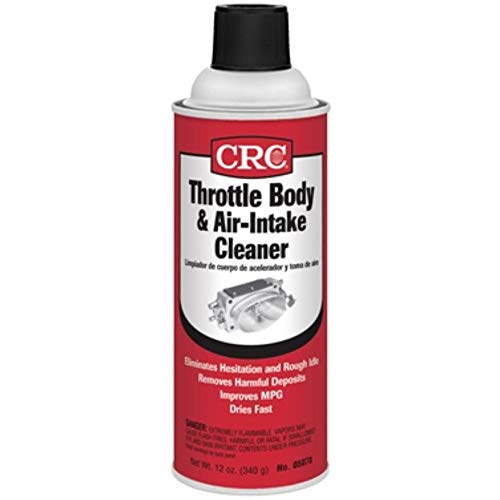
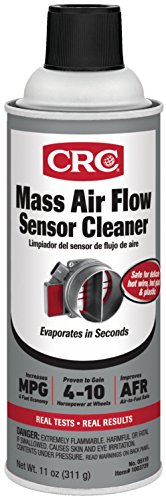
This table separates contamination from wear. If cleaning removes the fault, the part can go back into service. If the part still sticks, leaks, reads wrong, or has damaged internals after cleaning, replacement is the safer call. When in doubt, use live data, scan-tool fault patterns, and a visual inspection for leaks, misfire counters, fuel-trim behavior, or electrical damage rather than guessing.
| Component | Common contamination | Safe cleaning method | Signs cleaning is enough | Signs replacement is smarter | Risk level | DIY difficulty / Relearn may be required |
|---|---|---|---|---|---|---|
| Throttle body | Carbon buildup around the bore and plate | Apply throttle-body cleaner to a lint-free cloth, then wipe the plate edges by hand. Follow OEM service info for electronic throttle systems and do not force the blade open if the procedure forbids it. | Idle stabilizes, plate moves freely, no electronic fault codes return | Motor, gear, or position sensor faults; plate binding after cleaning | Medium | Moderate / Often yes |
| Fuel injectors | Fuel varnish, deposits, restricted spray | Fuel system cleaner for mild deposits; professional bench cleaning for heavy clogging. Use injector balance-test results and misfire counters to judge whether cleaning worked. | Rough idle, misfire, or trim issues improve and spray pattern returns | Leaking body, broken coil, bad spray pattern after service, uneven balance-test output | High | Advanced / Usually no, unless rails are removed or the PCM adaptive strategy is reset |
| Mass air flow sensor | Dust and oil film on the sensing element | Use a MAF-safe cleaner only, and avoid touching the element, brushing it, or leaving any solvent residue behind. OEM and major sensor makers consistently warn against compressed air, contact cleaning, or non-approved solvents. | Airflow readings and drivability return to normal after drying | Reading still drifts, circuit faults remain, element is damaged | High | Easy to moderate / Sometimes, after battery disconnect or air-learn reset |
| EGR valve | Carbon on pintle, seat, and passages | Carbon-safe cleaner and soft brush on accessible passages | Valve opens and closes smoothly after cleaning | Sticks open or closed, solenoid faults, worn seat, poor response | High | Moderate / Often yes, depending on the control strategy |
| PCV valve | Oil sludge and sticky internal flow restriction | Replace if sealed or low-cost; clean only if the design is serviceable. Many OEM designs are not intended to be rebuilt, and a restricted or failed diaphragm usually means replace, not reuse. | Flow is restored and crankcase vacuum symptoms stop | Rattle is missing where expected, diaphragm fails, flow remains restricted | Medium | Easy / No |
| Spark plugs | Carbon fouling, oil fouling, fuel wetting | Light cleaning only for diagnosis; usually replace rather than reuse. If the plug was removed, check the OEM service interval, heat range, torque, and whether the sealing washer is meant for one-time use. | Gap and electrode shape remain within spec after mild fouling is cleared | Electrode wear, cracked insulator, wrong heat range, damaged tip | High | Moderate / No, but some engines may need PCM idle relearn after disconnect |
| Battery terminals | Corrosion and white or blue-green deposits | Terminal brush, baking-soda solution used carefully, dry wipe | Starting and charging improve after clean contact is restored | Clamp is cracked, cable is swollen, corrosion has eaten the post | Medium | Easy / No, but clock, window, or idle memory may reset if disconnected |
| Ignition wires | Dust, oil, surface grime | Dry wipe only; clean boots with electrical-safe product if needed | No cracking, no arcing, no high-resistance fault after cleaning | Hard insulation cracks, misfire under load, arcing, swollen boots | High | Moderate / No |
| Coil boots / coil-on-plug wells | Oil, water, and carbon tracking in plug wells | Remove the coil carefully, dry the well, and replace any oil-soaked or carbon-tracked boot. A clean well can help diagnose a valve cover leak, but it does not fix one. | Misfire counters drop and the well stays dry after service | Boot carbon tracking, coil misfire persists, oil keeps entering the well | High | Moderate / No |
| Idle air control valve | Carbon and sticky pintle movement | If the engine uses a separate IAC valve, clean only the passages and pintle with the correct cleaner and follow the service manual for gasket and reset steps. | Idle speed stabilizes and air control responds normally | Motor failure, worn seat, recurring idle surge after cleaning | Medium | Moderate / Sometimes |
| Valve cover exterior | Oil film and road grit | Degreaser matched to the surface, then low-pressure rinse | Leak source is external grime, not an active gasket failure | Fresh oil seepage continues after cleaning and inspection | Low | Easy / No |
| Air intake duct | Dust, oil mist, loose debris | Remove and wash with safe cleaner, then dry fully | No cracks, clamps hold, airflow path is clear | Split boot, collapsed duct, softened rubber, broken sensor port | Low | Easy / Sometimes, if MAF disconnect or throttle relearn applies |
| Intercooler pipes / MAP sensor area | Oil mist film, dust, loose coupler residue | Clean the outside and inspect couplers, clamps, and sensor ports; keep solvent off the sensor face unless the OEM procedure says otherwise. | Boost leaks stop, couplers seal, MAP readings stabilize | Split hose, oil-soaked coupler, bad sensor output, recurring underboost or overboost code | Medium | Moderate / Sometimes |
| Catalytic converter | Soot on the exterior only | Exterior wipe only; do not try to clear the substrate | Surface dirt is the only issue | Internal blockage, melted substrate, efficiency fault | High | Advanced / No |
How to read the risk column: low means the part is usually cleanable if the outside is dirty. Medium means cleaning can help, but the part may still fail for mechanical reasons. High means cleaning can help only as a diagnostic step, because wear, calibration, or internal damage often decides the outcome. For replacement decisions, parts price matters, but so do fault confirmation steps such as scan data, leak checks, compression or leak-down results, and injector balance tests.
Do-not-clean list
These parts are poor cleaning candidates. Cleaning can hide the real fault, leave residue where it should not be, or create a second problem.
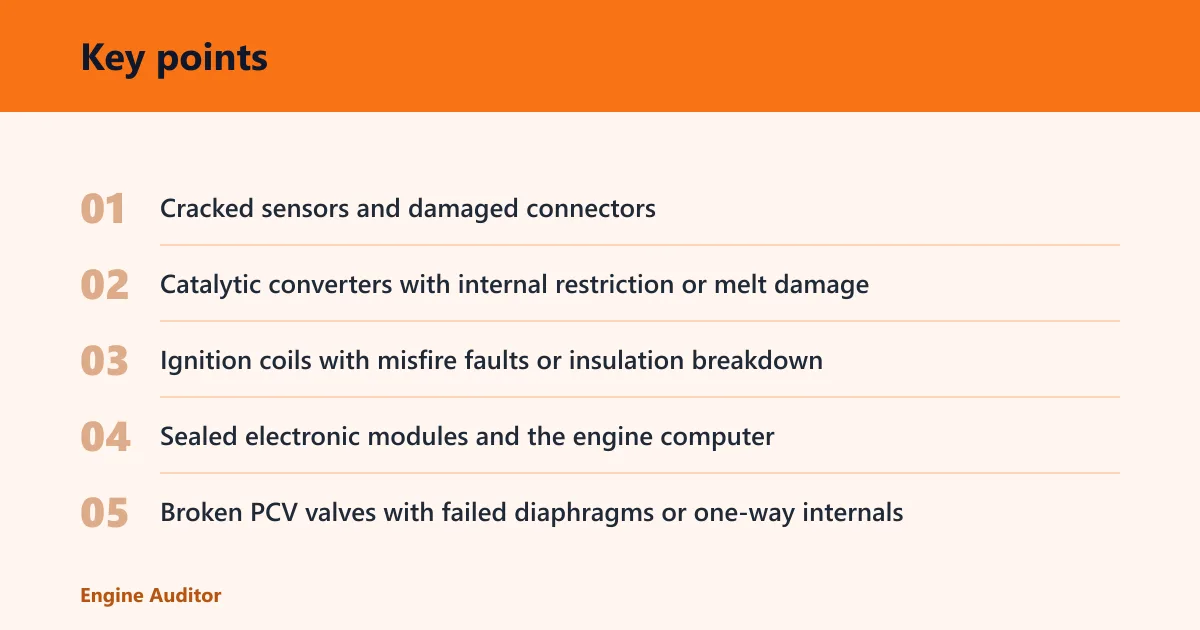
- Cracked sensors and damaged connectors
- Catalytic converters with internal restriction or melt damage
- Ignition coils with misfire faults or insulation breakdown
- Sealed electronic modules and the engine computer
- Broken PCV valves with failed diaphragms or one-way internals
- Spark plugs with worn electrodes, cracks, or heavy oil fouling
Which engine parts can you clean instead of replace?
You can clean parts whose main problem is contamination, not wear. Throttle bodies, some injectors, MAF sensors, EGR valves, battery terminals, and dirty intake ducting often respond to cleaning if the moving or sensing parts still work. If the fault remains after residue is removed, the part has a deeper problem.
Parts that usually respond to cleaning
Throttle body carbon, light injector deposits, MAF dust film, EGR soot, and battery corrosion are common examples. These parts can look bad and still be serviceable. Clean when the symptom matches the grime, such as unstable idle, a lean code from bad airflow reading, or a slow EGR response.
Parts that often need service, not replacement
Some parts need removal, cleaning, and reinstallation rather than immediate replacement. A dirty throttle body may idle badly because the plate cannot close to its learned stop point. An EGR valve may stick because soot blocks its pintle. A PCV valve with removable internals may only need a clean passage if the design is serviceable.
Parts that should usually be replaced
Wear-out parts are different. Spark plugs with eroded electrodes, ignition wires with cracked insulation, injectors with broken coils, and sensors with failed calibration do not become reliable just because they look cleaner. A common replacement clue is that the symptom stays after the grime is gone.
A heavily carbon-coated throttle body may cause a low idle and shaky stoplights. If cleaning restores the plate movement and the idle relearn holds, the part was dirty. If the throttle motor still faults or the commanded-versus-actual position stays out of range, the problem is electrical or mechanical, not just contamination.
Can you clean a throttle body or fuel injector at home?
Yes, but only within limits. A throttle body with carbon buildup is often a home-cleaning job if you use the right cleaner and avoid forcing the plate. Fuel injectors are different: light deposit control can start with approved additive use, while a bad spray pattern or leaking injector usually needs professional cleaning or replacement.
Throttle body carbon buildup and idle complaints
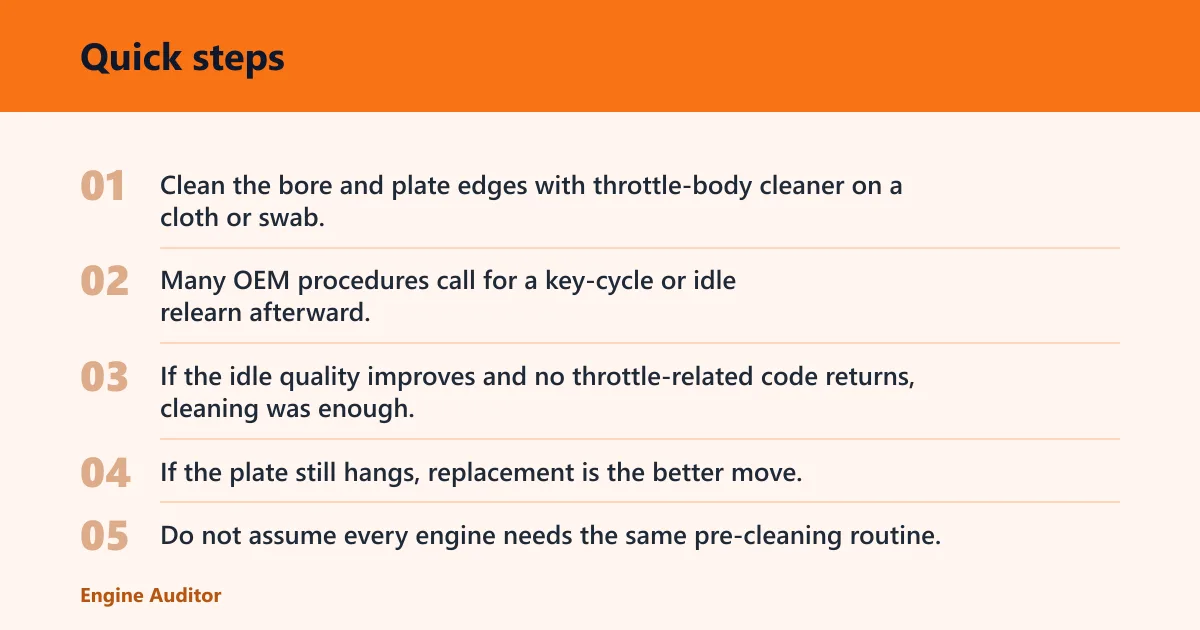
Electronic throttle systems are sensitive. Clean the bore and plate edges with throttle-body cleaner on a cloth or swab, then leave the throttle blade and motor alone unless the service manual says otherwise. Many OEM procedures call for a key-cycle or idle relearn afterward, and some systems need a scan-tool relearn. If the idle quality improves and no throttle-related code returns, cleaning was enough. If the plate still hangs, replacement is the better move.
Do not assume every engine needs the same pre-cleaning routine. Some under-hood cleaning jobs are better done on a cool engine, while others can be done after a short run if the OEM procedure calls for heat to soften deposits. The safer rule is condition-based: follow the vehicle service information, let surfaces cool enough to touch, and keep cleaners away from hot exhaust parts and ignition sources.
Fuel injector clogging, spray pattern, and cleaner limits
Fuel injector clogging usually shows up as rough idle, hard starting, misfire, or poor fuel trim. A bottle of fuel system cleaner can help mild deposit issues if the product is compatible with the fuel system and used as directed. It may not resolve a worn injector pintle, a leaking seal, a bad coil, or a distorted spray pattern.
When professional cleaning makes more sense
Bench cleaning becomes practical when one cylinder keeps misfiring, the injector flow is uneven, the fuel trim stays outside normal range, or the spray pattern is visibly poor after in-car treatment. That is the point where labor and parts costs start to matter. Instead of relying on a retail listing, use evergreen decision points: failed injector balance-test results, persistent misfire counters, visible leaks at the rail or seal, repeated P0171/P0174-style lean patterns, or cylinder-specific faults that stay after cleaning.
What sensors and valves should you clean with care?
Some parts can be cleaned, but only with strict limits. Mass air flow sensors, EGR valves, and some PCV assemblies are sensitive to the wrong solvent, too much force, or a failed internal mechanism. Cleaning helps when contamination is the only issue. It does nothing when the sensor output or valve movement has already failed.
Mass air flow sensor cleaning rules
The MAF sensor has a delicate sensing element. Use a MAF-safe cleaner only, and never touch the filaments or sensor film. Do not use a brush, compressed air blast, or residue-heavy solvent. Manufacturer guidance for airflow sensors generally limits cleaning to a light spray and air drying; if the sensor needs scrubbing, it is already beyond that repair. If airflow reading accuracy returns after drying, the sensor was contaminated. If the readings still drift, replacement is usually smarter.
EGR valve carbon deposits and sticking symptoms
An EGR valve can carbon up and stick open or closed. That can trigger rough idle, stalling, pinging, or an EGR flow fault. Clean the valve and visible passages if the pintle still moves freely afterward. Replace it if it still hangs, the position feedback is wrong, or the valve does not respond to command.
PCV valve cleaning limits and replacement thresholds
PCV valves often fail by restriction, sludge, or internal wear. Some designs are cheap enough that replacement is the sensible choice rather than cleaning. If the valve is sealed, non-serviceable, or still restricts flow after cleaning, replace it. Restricted flow can raise crankcase pressure and create oil leaks or idle complaints.
Which ignition parts are cleanable and which are not?
Ignition parts sit in a middle zone. External grime can be cleaned away, but heat, voltage, and wear decide whether the part is still usable. Spark plugs and wires deserve close inspection before you decide to clean or replace them.
Spark plug fouling versus electrode wear
Spark plugs can foul from fuel, oil, or carbon, but that is not the same as wear. Light carbon fouling may clear long enough for diagnosis, but the plug should still be replaced if the electrode is rounded, the insulator is cracked, or the gap is out of spec. A plug with worn metal is not made new by cleaning.
Gap specification and reuse limits
The gap must match the engine’s specification. If cleaning changes the gap or the electrodes are visibly eroded, replace the plugs. Reusable plugs are the exception, not the rule, and they should only go back in when the insulator is intact, the threads are good, and the firing end still matches spec. OEM service data is the best source for whether a plug is intended for reuse after removal.
Ignition wires and connectors
Ignition wires can be wiped clean, but they should not be soaked. Check for cracking, swollen boots, carbon tracking, and arcing marks. A clean wire with damaged insulation is still a bad wire. Connectors should stay dry and corrosion-free; if the terminals are burned or loose, replacement is the proper fix.
Which cleaners are safe under the hood?
Choose cleaners by material, not by convenience. Automotive degreasers and sensor-safe products are built for specific surfaces, while household cleaners may leave residue, attack seals, or interfere with electrical connectors. EPA and DOE consumer guidance both emphasize using the right product, avoiding excess runoff, and keeping water away from sensitive components.
Engine bay degreaser: solvent-based versus water-based
Use a degreaser designed for automotive use. Solvent-based products usually cut heavy grime faster, while water-based formulas are often easier on plastics and rubber. In either case, test the product on a small area first if the label allows it. Avoid warm soapy water as a default fix; it is not universally wrong, but it is not automatically safer than a dedicated automotive cleaner, and it can still leave residue or seep where it should not.
Rinsing, drying, and residue control
After the cleaner loosens grime, use a low-pressure rinse rather than a power washer blast. Aggressive spray can force water into connectors, coil wells, and sensor housings. Wipe the area dry, then let everything dry fully before reconnecting parts or starting the engine. Residue left behind can attract fresh dust and oil.
Plastic, rubber, and electrical compatibility
Cover or avoid direct contact with fragile plastics, soft rubber boots, and exposed electrical contacts. Battery terminals can be cleaned, but the engine computer and sealed modules should stay dry. Water exposure is the main risk, not the dirt itself. If a cleaner is not safe for plastic and rubber, it should stay away from those surfaces.
What should you cover before cleaning under the hood?
Cover exposed electrical parts, open intakes, and sensitive connectors before any rinse or spray. The goal is to remove grime without pushing water into places that do not dry quickly. Battery terminals, ignition wires, and the engine computer deserve special attention because water exposure can cause starting, misfire, or module faults.
Battery terminals and exposed connections
Battery terminals can be cleaned, but they should not be drenched. Disconnect the battery only when the vehicle procedure calls for it, and keep cleaner and rinse water away from open cable ends and exposed junctions. Corrosion is fair game. Soaked connections are not.
Engine computer and other electrical components
The engine computer, fuse boxes, coils, and sensor plugs should be shielded from direct spray. Use plastic covers or foil barriers where appropriate, but do not trap heat by leaving coverings in place after cleaning. Remove covers, dry the area, and inspect for moisture before restarting.
Water exposure risks to avoid
A common first-timer mistake is spraying a dirty connector until the grime looks gone and assuming the part is safe. The better rule is simple: if a part has vents, seams, or exposed pins, keep water out of it. Heavy grime is worth removing, but water in the wrong place can create its own failure. On vehicles where under-hood washing is allowed, OEM service guidance typically favors controlled spray, protected openings, and complete drying rather than broad soaking.
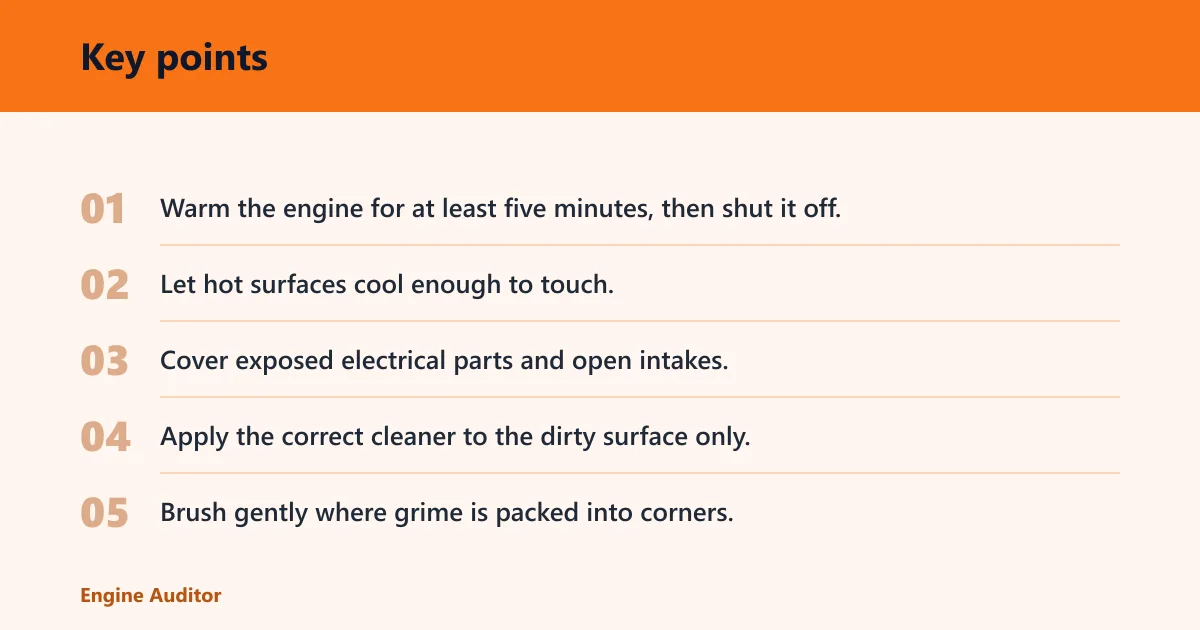
- Warm the engine for at least five minutes, then shut it off.
- Let hot surfaces cool enough to touch.
- Cover exposed electrical parts and open intakes.
- Apply the correct cleaner to the dirty surface only.
- Brush gently where grime is packed into corners.
- Use a low-pressure rinse.
- Dry the area fully before reconnecting or starting the engine.
Frequently asked questions
What engine components can you clean instead of replace?
Throttle bodies, MAF sensors, EGR valves, battery terminals, intake ducts, and some PCV valves can often be cleaned if contamination is the only problem. The key is whether the part still moves, reads, or seals correctly after the grime is removed. If not, replacement is usually the right call.
Can a dirty engine part be cleaned and reused?
Yes, when dirt, carbon, or oil film is the issue and the part is otherwise sound. A dirty throttle body or corroded terminal can often go back into service after cleaning. Parts with wear, cracks, internal electrical faults, or bad calibration should not be treated as reusable just because they look better.
When should I clean a part instead of buying a new one?
Clean first when the symptom matches contamination and the part is still structurally intact. Rough idle, sticky movement, or false airflow readings often point to grime. Buy new when cleaning does not restore function, or when the part has wear, broken insulation, leaks, or a failed sensor output.
Which engine parts are safe to clean with a degreaser?
Exterior metal surfaces, valve covers, intake ducting, and some housings can usually handle an automotive degreaser if the product matches the material. Avoid soaking sensors, ignition parts, and the engine computer. Use low-pressure rinsing and let the area dry fully before restarting.
How often should I clean engine components?
There is no fixed three-month or six-month rule that fits every vehicle. Clean based on condition: when deposits, corrosion, or oil residue start affecting airflow, idle quality, sensor readings, or electrical contact. Driving environment matters, so dusty, oily, short-trip, or stop-and-go use may justify more frequent inspection than highway use.
When does engine grime become a safety issue?
Engine grime becomes a safety issue when oil or fuel residue collects near hot surfaces, wiring, or rotating parts, or when it hides a real leak that still needs repair. The concern is not that dirt always makes the engine run hotter; the issue is that heavy deposits can complicate inspection, retain heat locally on some surfaces, and increase fire risk if liquid fuel or oil is present. If the grime is wet and thick, do not ignore it.
Products related to this article
Sponsored / affiliate links. As an Amazon Associate I earn from qualifying purchases. I may earn additional commission from eligible campaigns.