How to Check Engine Components Before Buying a Used Car
Check seven engine areas, oil leaks, coolant level, belts, hoses, battery condition, exhaust smoke, and cold-start idle, and walk away from any car with knocking, overheating, or mayonnaise-like oil unless the seller can prove a recent repair. Bad checks can turn a bargain into an engine rebuild, tow bill, or missed warning sign. This guide shows which clues are cosmetic, which mean deferred maintenance, and which should end the inspection before you make an offer.
Before you open the hood
Start with records, then the car itself. Service history tells you whether the engine has had regular oil changes, and many manufacturers commonly place routine oil changes in the 5,000 to 10,000-mile range depending on engine design, oil type, and driving conditions. A cold, parked inspection is better because it can expose starting problems that disappear once the engine warms up.
What you’ll need
- Flashlight or phone light
- Paper towels or a clean rag
- Gloves and a small notepad
- Vehicle history and maintenance records
How do you check the engine cold?
- Park on level ground and keep the engine off.
- Set the transmission in Park and open the hood carefully.
- Look for fresh drips, wet seams, or warning lights before touching anything.
- Note any strong burnt smell, sweet smell, or heavy oil odor near the front of the car.
Check whether the bay looks dry under the hood and underneath. A clean engine bay can mislead you because sellers may shampoo it. Fresh cleaning around hoses, clamps, or the valve cover can hide recent leaks, so look for residue in corners and low spots where fluid collects.
Say your 2016 sedan has a spotless engine bay but the radiator support, hose clamps, and frame rail edges look wet. That points more toward recent cleaning than a healthy engine. If the seller cannot explain the cleanup or show records for the repaired leak, treat the inspection as incomplete.
How do you check the engine before buying a used car?
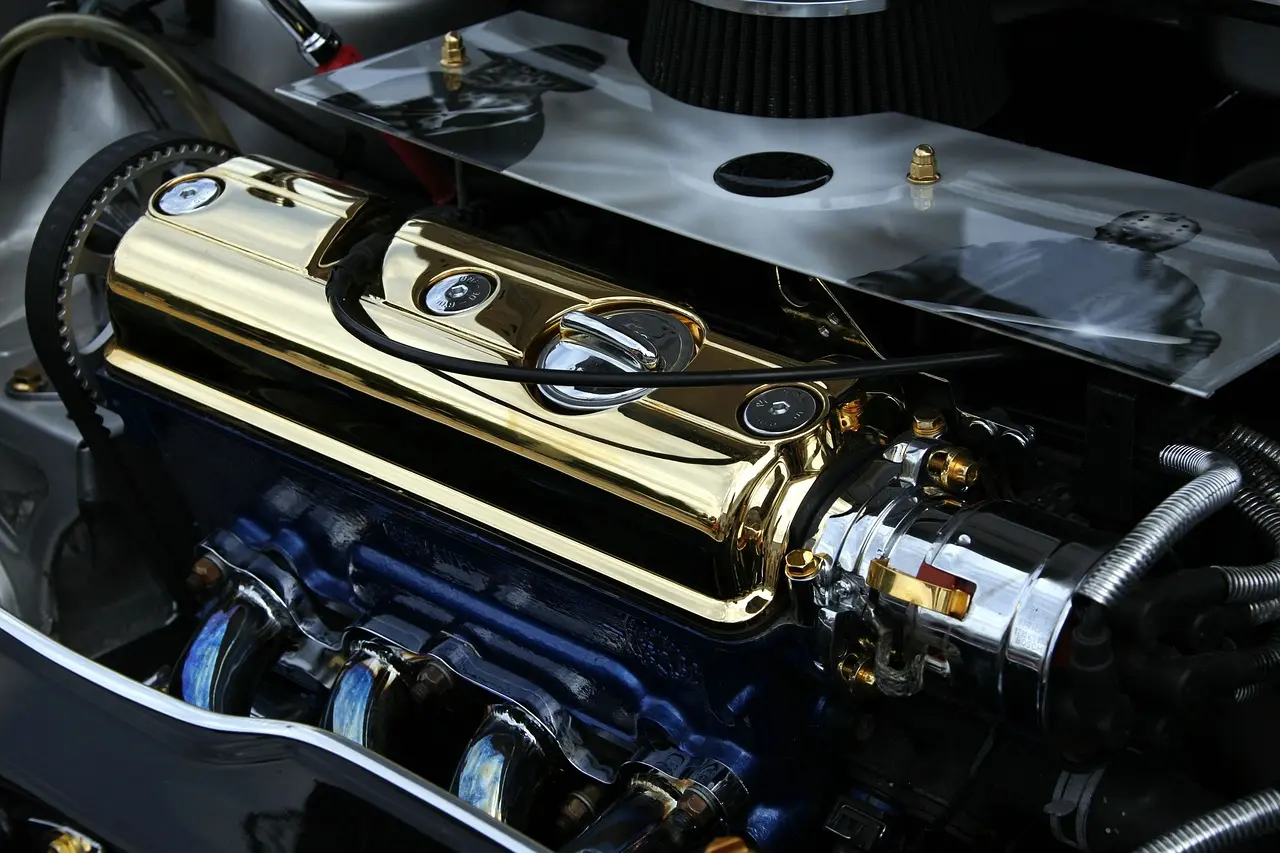
Use a cold, off-engine inspection first, then a short startup check, then the records. The fastest path is: paperwork, visible leaks, oil condition, cap residue, coolant evidence, belts and hoses, and finally a pre-purchase inspection if anything looks off. This order catches the major engine problems before the sale gets signed.
Open the hood and scan first
Look for oil around the valve cover, grime at hose connections, crusty coolant residue, broken plastic clips, and signs of recent spray cleaning. Fluid leaks should be checked around the engine block seams and hose connections. A dry engine is a good sign, but a dry engine with no records is only a partial answer.
Check the oil dipstick with the engine off
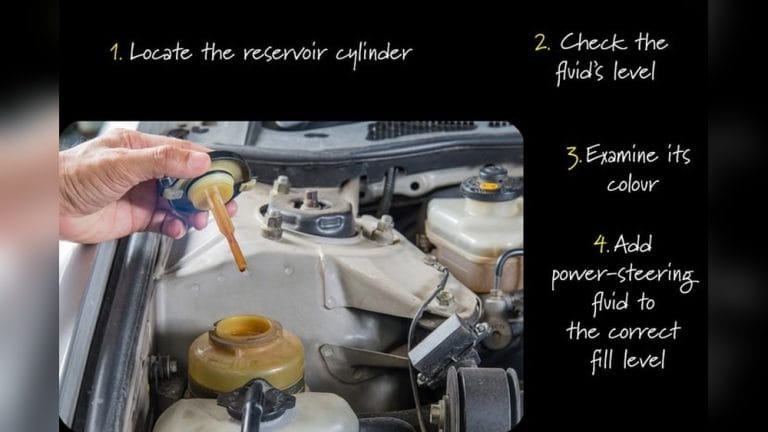
Pull the dipstick with the engine off, wipe it, reinsert it fully, and read it again. Compare the level against the hot/cold marks on the stick if they are marked. Low oil level can mean the engine consumes oil or is overdue for service. Also note whether the oil is dark and gritty.
Dark oil alone is not an automatic failure. Oil can darken before the next interval. Grit, metallic sparkle, or a level below the mark matters more. If the oil is very low and the records are thin, that is a stronger warning than color by itself.
Inspect the oil filler cap and surrounding area
Remove the cap only with the engine off. Look at the underside for sludge, carbon deposits, or milky residue. Black carbon deposits or sludge under the oil cap signal poor maintenance. Milky residue can warn of coolant mixing with oil, which needs deeper diagnosis before you buy.
What does sludge under the oil cap mean? It often points to long oil-change intervals, lots of short trips, or a crankcase ventilation problem. On a higher-mileage turbo engine, that clue matters more because heat and blow-by can load the PCV system and speed up oil contamination.
Start the engine cold and listen, look, and smell
A cold start reveals problems that can disappear once the engine warms up. Watch the tachometer and listen for rough idle, knocking, or ticking. A brief high idle can be normal, but persistent stumble, loud knock, or smoke is not. Blue or white smoke that lingers is a stronger warning than a momentary puff.
Cosmetic haze from a long-dormant exhaust can clear quickly, but blue smoke can point to oil burning and white smoke that continues after startup can indicate coolant entry. A brief ticking sound may be normal injector or valvetrain noise on some engines, but deep knocking, misfire shaking, or a check-engine light should push you toward a walk-away or professional inspection.
Check the warning lights too. A light that briefly illuminates during the key-on self-test and goes out is normal. A check-engine light that stays on, or an oil-pressure or temperature light that appears after startup, is a major caution. If the seller has cleared the codes, treat that as a red flag rather than proof of a fix.
How do you inspect leaks and wear?
Focus on where oil or coolant would actually escape. The valve cover area, block seams, hose joints, and the underside of the engine tell you more than the painted outer surfaces. Treat a light stain as a negotiation point only if it is isolated and clearly not active.
Check the valve cover area for seepage
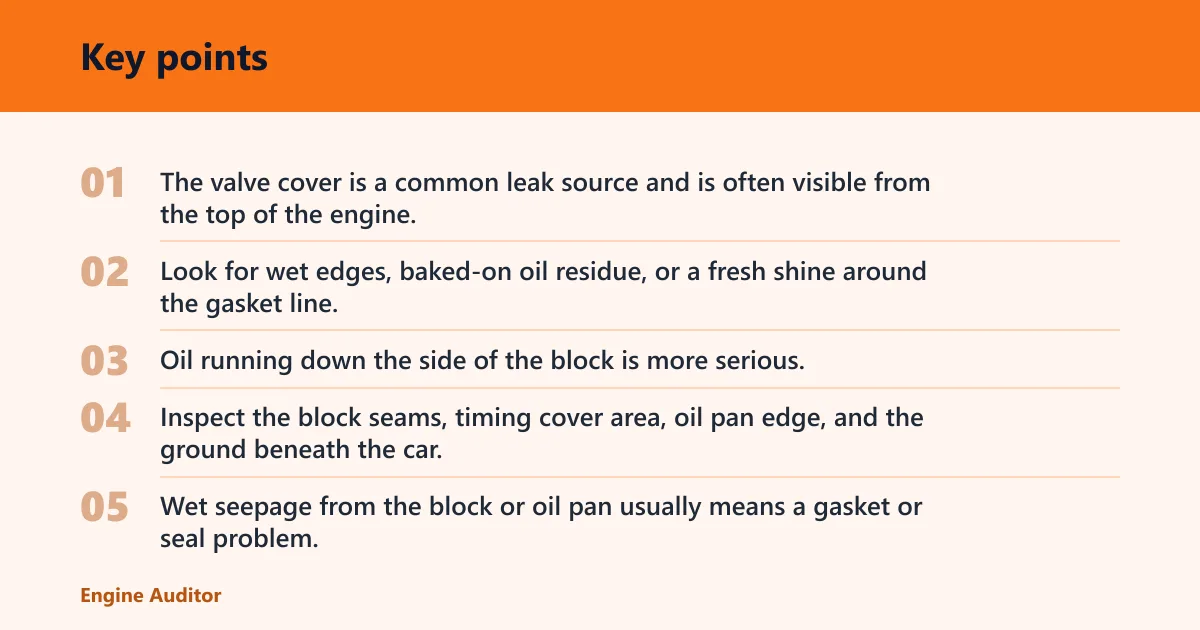
The valve cover is a common leak source and is often visible from the top of the engine. Look for wet edges, baked-on oil residue, or a fresh shine around the gasket line. A light seep can sometimes be repairable. Oil running down the side of the block is more serious.
Look at the engine block seams and underside
Inspect the block seams, timing cover area, oil pan edge, and the ground beneath the car. Look underneath as well as from above. Wet seepage from the block or oil pan usually means a gasket or seal problem. Cracks, heavy wetness, or a drip trail are stronger walk-away signals.
Inspect belts, hoses, and pulley alignment
Belts around accessories should be clean and show no cracks or frays. Hoses should be crack-free and not brittle or tough. Check routing and pulley seating too. A loose or misrouted belt can be a maintenance issue. A cracked belt near a pulley edge deserves a bigger repair estimate.
Belts and hoses are usually a maintenance clue rather than an immediate deal-breaker. On an older car, replacement may be expected. On a low-mileage car with cracked hoses and a torn belt, the wear can suggest long storage, age, or neglected upkeep.
How do you spot cooling-system trouble?
Look for leaks, stains, low coolant, and overheating evidence around the radiator and expansion tank area. Coolant problems matter because a radiator leak may require a new radiator, and repeated overheating can damage the head gasket, hoses, and other engine parts. Do not buy past the first obvious cooling warning.
Inspect the radiator and expansion tank area
Check for crusty residue, pink or green staining, damp corners, and cracked plastic tanks. A leak from the radiator may require a new radiator. Inspect the cap area, upper hose, lower hose, and any visible clamps. If the reservoir is low and there is residue nearby, suspect an active loss.
Look for overheating clues or burnt smells
Look for discolored coolant, warped plastic, brittle hoses, and dark heat marks near the radiator fan area. Burnt coolant smell, steam stains, or repeated top-offs are all warning signs. If the seller says the car “ran hot once,” ask for the repair record and the exact parts replaced.
How do you tell if a used car has overheating damage? Watch for coolant residue, bubbling in the reservoir, brittle hoses, coolant loss, and heat staining around the radiator or expansion tank. If the engine bay shows both overheating clues and oily residue, move from repairable to high risk fast.
Engine inspection matrix
Use this matrix to separate cosmetic wear from deferred maintenance and hard failure. A light stain can often be negotiated. Wet seepage, sludge, or overheating evidence near the block or coolant system is closer to a walk-away issue. The farther the symptom reaches into the engine’s core, the higher the risk.
| Symptom | Likely component involved | Quick check | Estimated repair seriousness | Negotiation value | Walk-away threshold | Buy / negotiate / avoid |
|---|---|---|---|---|---|---|
| Light dust, dry grime, no wet spots | Cosmetic engine-bay dirt | Touch a corner with a rag; no fresh oil transfer | Low | None or minimal | No, if all records are strong | Buy, if records are solid |
| Fresh oily film at valve cover edge | Valve cover gasket | Look for seepage along the top seam | Low to moderate | Moderate | Only if it is active and widespread | Negotiate |
| Oil running down the block | Valve cover gasket or upper seal | Trace the wet path from top to bottom | Moderate | Moderate to strong | Yes, if the source is unclear or drip is active | Negotiate or avoid if heavy |
| Low oil level with dark, gritty oil | Neglected oil service or internal wear | Compare level to marks; check service records | Moderate to high | Strong | Yes, if repeated or paired with noise | Negotiate; avoid if repeated |
| Sludge under oil cap | Poor maintenance, PCV issues, short-trip use | Inspect cap underside for black deposits | High | Strong | Yes, if sludge is heavy or widespread | Avoid if sludge is heavy |
| Milky residue under oil cap | Coolant mixing or condensation with serious history | Check coolant level and oil condition | High | Very strong | Yes, unless repair documentation is complete | Avoid unless repair is documented |
| Cru crusty coolant stain at radiator | Radiator, hose, or tank leak | Inspect seams and hose connections | Moderate | Moderate | Only if there is active loss or repeated top-offs | Negotiate |
| Repeated overheating signs | Radiator, thermostat, head gasket, fan system | Look for heat staining and coolant loss | High | Strong to very strong | Yes, especially with smoke, bubbles, or warning lights | Avoid |
| Cracked or frayed belts | Accessory drive belt | Check surface cracks and pulley tracking | Low to moderate | Moderate | No, unless belt damage is severe or multiple accessories are affected | Negotiate |
| Brittle hoses | Cooling or vacuum hose | Squeeze gently for stiffness and cracking | Low to moderate | Moderate | Only if cracking is active or hoses are leaking | Negotiate |
| Wet block seams or underside seepage | Engine block gasket, oil pan, or seal | Inspect under the car after it sits | High | Very strong | Yes, if active drip is present | Avoid if active drip is present |
| Performance parts with no documentation | Aftermarket engine modifications | Verify part numbers, install quality, and receipts | Moderate to high | Moderate | Yes, if tuning or hardware cannot be verified | Negotiate or avoid |
| Rough idle, whistle, oil consumption, or oily intake residue | PCV valve or crankcase ventilation issue | Check for cap suction, hose cracks, and sludge buildup | Moderate to high | Moderate to strong | Yes, if smoke, sludge, or misfire accompanies it | Negotiate or avoid |
| Missing timing-belt proof at service interval | Timing belt, tensioner, and related service items | Verify receipt, mileage, and date against service schedule | High | Strong | Yes, if the engine is belt-driven and the interval is overdue | Negotiate or avoid |
What engine problems are red flags when buying used?
Knocking, overheating, coolant in the oil, active block seepage, heavy sludge, and undocumented modifications are the biggest red flags. Turbo engines and high-mileage engines deserve more scrutiny because added heat and wear can magnify small faults. If the problem sits deep in the engine, not just on a hose, take it seriously.
What service records should I ask for before buying?
Ask for proof of oil changes and mileage records first. You want dates, odometer readings, and the interval between services. Timing-belt proof matters on engines that use a belt instead of a chain. Missing records do not prove failure, but they do remove the easiest way to trust the engine’s history.
Check timing-belt evidence and maintenance intervals
Verify whether the timing belt has been replaced if the engine uses one. Look for a dated receipt, parts list, and mileage entry. If the car is at a mileage where the belt should have been done and there is no proof, treat that as a negotiation problem or a walk-away issue depending on engine type.
Watch for aftermarket modifications
Aftermarket engine modifications can signal abuse, and non-factory parts can complicate repairs. Cold-air intakes, boost controllers, swapped intercoolers, and altered exhaust parts are not proof of damage by themselves. They do require documentation. If the seller cannot explain the parts and who installed them, raise the risk rating.
Suppose a turbo sedan has a polished intake pipe, a blow-off valve, and no receipts. That setup may be harmless or it may hide hard use. Without records, you cannot tell whether the parts were installed cleanly or whether the tune and hardware match the engine.
Common mistakes
Buyers often confuse cosmetic dirt with active mechanical trouble. Dirt by itself is not a failure. Wet seams, fresh residue, low fluid levels, and sludge are different. A clean engine bay can also hide a problem, so inspect corners, clamps, and the underside instead of trusting a quick shine.
- Do not check the engine warm and call it complete. Cold inspection reveals starting trouble and some fluid-loss clues.
- Do not treat every stain as a deal-breaker. Small seepage can be negotiated if it is isolated and explained.
- Do not ignore timing-belt records on belt-driven engines.
- Do not assume a modified engine is abused without context, but do verify the parts and the work.
- Do not skip a pre-purchase inspection when you see sludge, overheating signs, or mixed leak evidence.
A common first-timer mistake is seeing a shiny engine bay and assuming the seller maintained it well. A cleaner look can come from recent shampooing, not careful ownership. If the records are thin and the bay looks freshly washed, let the paperwork and the hidden seams carry more weight than the shine.
If that didn’t work, try this next
When the visual check leaves questions, move to a qualified pre-purchase inspection before signing the contract. That inspection is commonly described as costing about $100-200, according to typical independent-shop pricing and consumer guidance, and it can confirm hidden mechanical condition that a quick walkaround cannot catch. It is the best next step when the engine shows several small warning signs.
Frequently asked questions
What should I look for under the hood on a used car?
Look for dry seams, clean routing, intact belts, crack-free hoses, proper fluid levels, and no active seepage around the valve cover, block, or radiator. Also check for fresh cleaning that could hide problems. A tidy bay is good only when the records and fluid checks match it.
Should I inspect a used car engine cold or warm?
Inspect it cold. A cold start can reveal rough idle, starting trouble, smoke, or noises that may disappear after warm-up. Keep the car parked safely, open the hood before it runs, and make the first checks with the engine off. Warm engines can hide the very faults you want to catch.
What does sludge under the oil cap mean?
Sludge under the oil cap usually points to poor maintenance, short trips, or a crankcase ventilation problem. Heavy black deposits raise the risk more than a faint film. If the oil is also dark and gritty or the service history is missing, the car deserves a deeper inspection before purchase.
When should I walk away from a used car engine?
Walk away when you see knocking, repeated overheating, milky oil residue, heavy sludge, active block seepage, or major leak evidence without repair proof. Also step back if timing-belt history is missing on a belt-driven engine and the mileage suggests it should already have been replaced.
Do I need a mechanic to inspect the engine before buying?
Yes, if the engine shows any sign of hidden trouble. A pre-purchase inspection can confirm whether a seep is minor, whether the cooling system is healthy, and whether the seller’s explanation matches the hardware. It is the best way to avoid buying an engine problem that looks minor from above.
Products related to this article
Sponsored / affiliate links. As an Amazon Associate I earn from qualifying purchases. I may earn additional commission from eligible campaigns.