What Is a Car Engine Valve and Why Does It Matter?
A car engine valve is a spring-loaded poppet in the cylinder head that opens and closes to admit the intake charge, seal compression, and let exhaust leave. If it will not seal, the engine loses compression and power. Bad valve timing or a leaking valve can cause hard starting, misfires, rough idle, poor fuel economy, and engine damage. This guide explains how valves work with the camshaft and valvetrain, how timing affects modern engines, and which symptoms point to valve trouble.
What is a car engine valve?
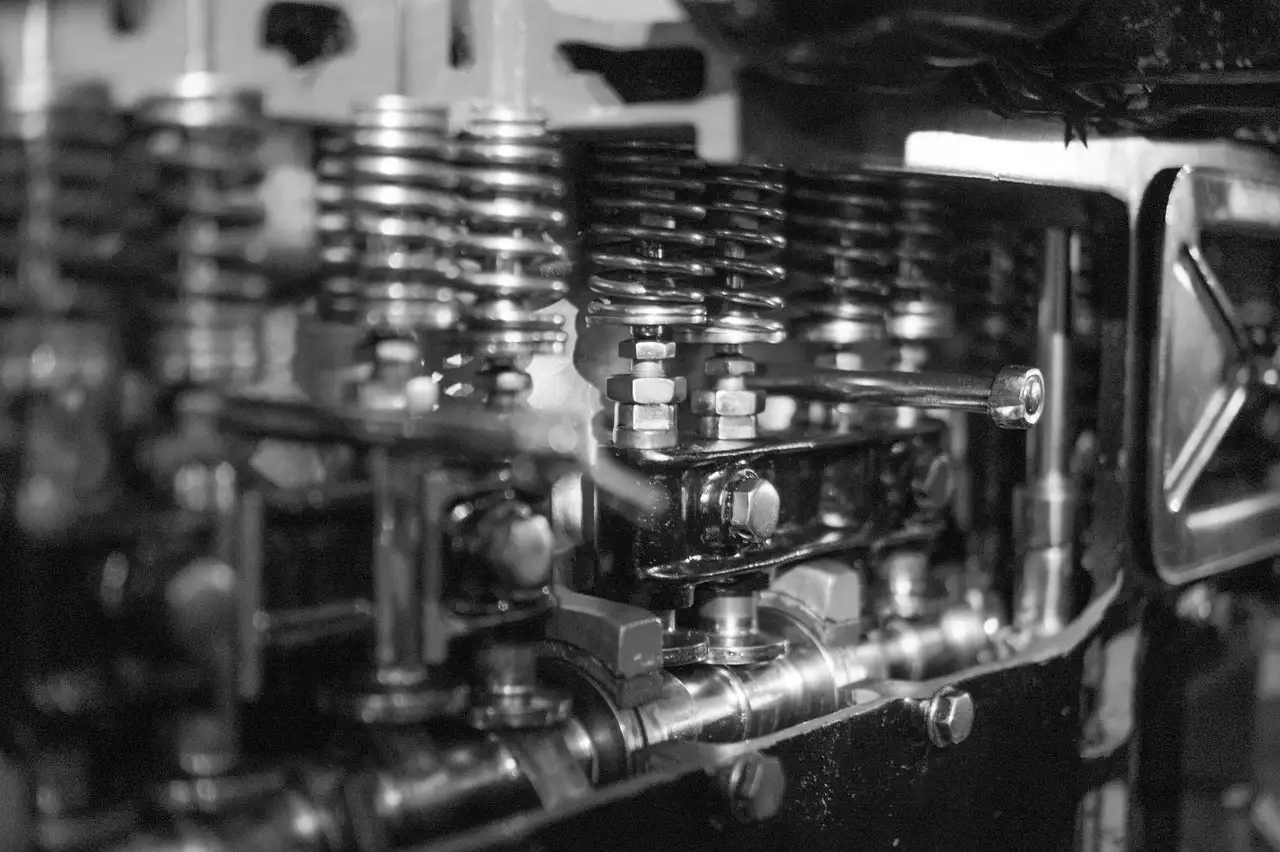
Engine valves open and close the intake and exhaust passages in the cylinder head. They act like moving gates. Their job is to open and close on schedule so air and fuel can enter, burned gases can leave, and the cylinder can seal again for compression and power.
Intake valve and exhaust valve
The intake valve opens during the intake stroke and lets the air-fuel charge into the cylinder. It must close before compression starts. The exhaust valve opens during the exhaust stroke and lets burned gases leave the cylinder. It has to handle hotter gas, so it lives a harder thermal life than the intake valve.
Why are the valves important? They control engine breathing. If one valve leaks, sticks, or opens at the wrong time, the cylinder cannot fill and seal correctly. That affects power, efficiency, and emissions.
How do engine valves work in the four-stroke cycle?
Engine valves work in step with the four-stroke cycle: intake, compression, power, and exhaust. The piston moves, and the valves open or close at the right points so the cylinder can fill, trap the charge, burn it, and clear the exhaust. Good valve timing keeps each stroke doing its own job.
Intake stroke
During intake, the intake valve opens while the exhaust valve stays closed. Air enters the cylinder, and in many engines fuel is mixed in before or during that process. The cylinder head and valve seats must seal again as the piston starts upward.
Compression and power strokes
During compression, both valves stay closed. That sealed chamber is what lets compression rise before ignition. During the power stroke, both valves still stay closed so expanding combustion pressure can push the piston down instead of escaping through the ports.
Exhaust stroke
During exhaust, the exhaust valve opens and the piston pushes burned gases out. The intake valve remains closed until the next cycle begins. If either valve hangs open too long, cylinder pressure falls and the engine loses efficiency.
What opens the valves in an engine?
The camshaft opens the valves. Its lobes push on valvetrain parts, and those parts turn cam motion into valve movement. The valve spring then closes the valve after the cam lobe releases pressure. That timing chain or gear path matters because it sets exactly when the valve opens and shuts.
Camshaft and valvetrain path
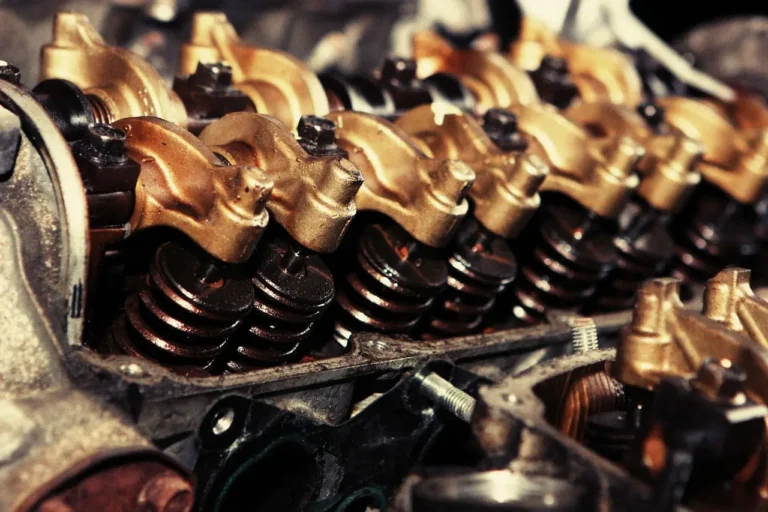
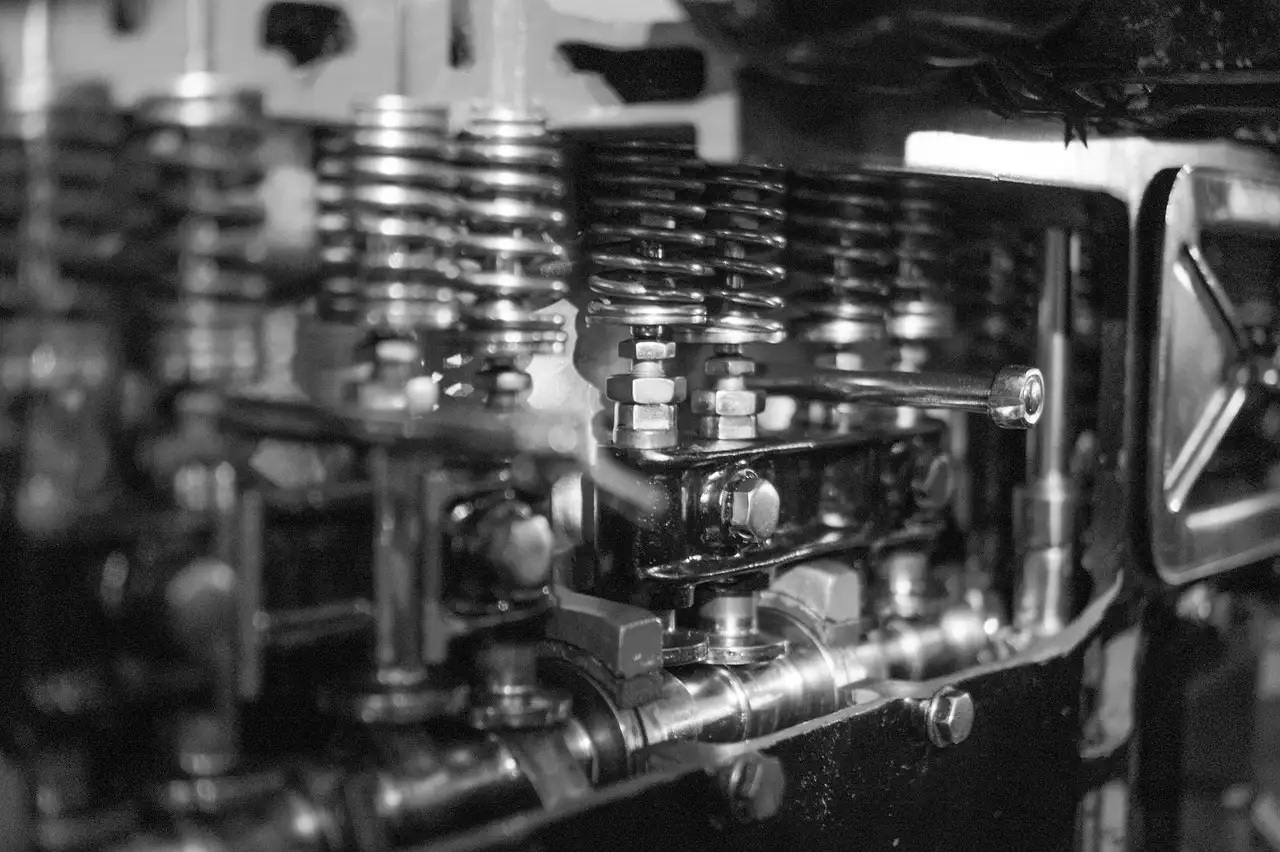
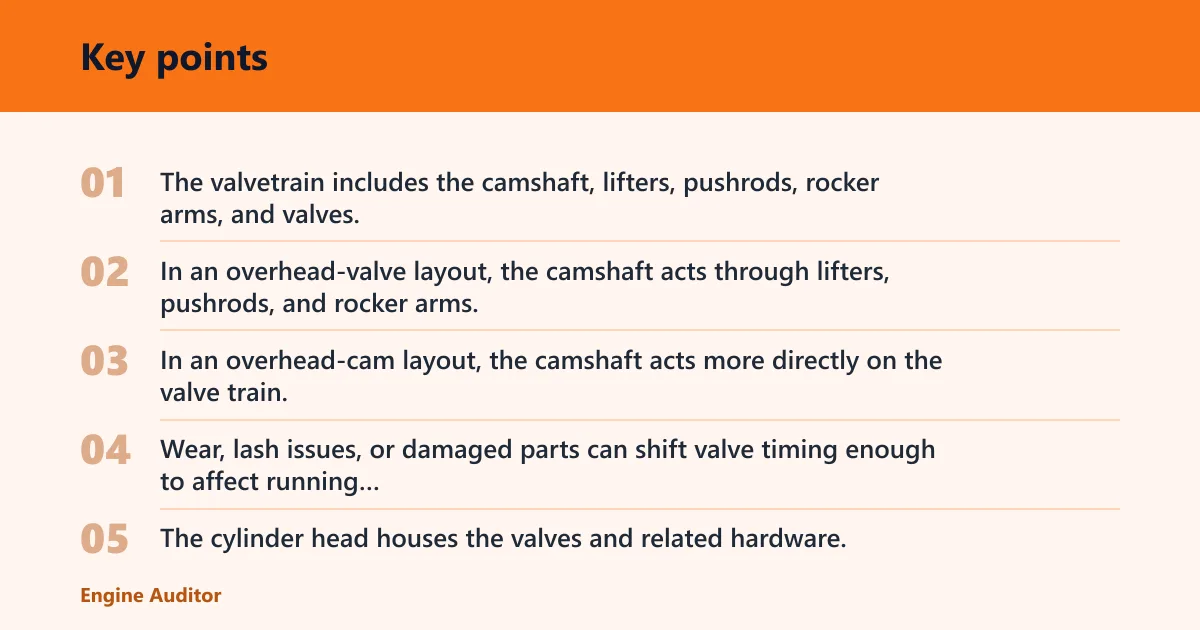
The valvetrain includes the camshaft, lifters, pushrods, rocker arms, and valves. In an overhead-valve layout, the camshaft acts through lifters, pushrods, and rocker arms. In an overhead-cam layout, the camshaft acts more directly on the valve train. Wear, lash issues, or damaged parts can shift valve timing enough to affect running quality.
The cylinder head houses the valves and related hardware. It also seals the combustion chamber when the valves are closed. Heat control matters there, especially around valve seats, because hot exhaust flow and repeated sealing loads can burn, distort, or wear the contact surfaces.
What valve springs do
Valve springs force the valves closed after the cam lobe passes. They must control the valve at higher RPM so it follows the cam profile instead of floating away from it. Weak springs, fatigue, or breakage can cause valve float and, in severe cases, major engine damage.
Suppose a 4-cylinder engine starts missing at idle after long highway driving. If the misfire gets worse as RPM rises and a compression test shows one cylinder low, a weak spring or a valve that is not sealing is more plausible than a simple fuel trim issue.
Engine valve parts and materials
What are engine valves made of? They are metal components built to survive heat, impact, and repeated sealing. Intake valves usually see cooler conditions than exhaust valves. Exhaust valves need greater heat resistance because they sit in the path of hot combustion gas and depend on good seat contact to shed heat into the cylinder head.
Stem, guide, and seat
The valve stem slides in a guide so the valve stays aligned. The seat is the surface in the cylinder head where the valve closes. When the seat or face wears, sealing gets worse and compression drops. Carbon can also build up on the stem or face and make the valve stick.
A common first-timer mistake is blaming a ticking sound on injectors alone. A loose valvetrain, worn lash adjuster, or excessive clearance can also tick, and the noise often follows engine speed. A sticking valve can also make the engine feel uneven at idle.
Why valve timing matters
Valve timing controls how well the engine breathes. Proper valve timing lets the cylinder fill and empty at the right moments, which helps power, efficiency, and emissions. If the valves open late, close early, or overlap too much, the engine can lose torque, run rough, or push more unburned gases out the tailpipe.
Valve float and modern engines
At higher RPM, valve float becomes a real issue if the springs cannot keep up. The valve may not follow the camshaft profile closely, so breathing and sealing both suffer. Modern engines can be more sensitive here because variable valve timing changes opening and closing events to suit load, RPM, and emissions targets.
Direct injection does not remove valve trouble. It changes how fuel enters the engine, but the valves still control air motion and cylinder sealing. On many direct-injection engines, intake valves can also collect carbon because fuel no longer washes them as much as in port-injected designs.
What happens when a valve fails?
Valve failure usually shows up as poor sealing, incorrect timing, or physical damage. Common causes include burning, sticking, wear, bent valves, weak springs, and carbon buildup. The result can be low compression, hard starting, rough idle, loss of power, misfires, and in severe cases engine damage from contact or heat.
Common failure modes
A burned valve often shows up as chronic misfire and low compression on one cylinder. A bent valve can happen after mechanical contact in an interference engine. A weak spring may let the valve float at high RPM. A sticky valve may act normal cold, then misbehave as heat and deposits build.
Picture a car that cranks for several seconds before starting on cold mornings, then idles rough for the first minute. If the problem improves as the engine warms, sticking valves, carbon buildup, or a sealing problem is worth checking before chasing sensors.
Valve diagnosis matrix
Use this matrix as a first pass. It does not replace a compression test, leakdown test, or a careful inspection of the valvetrain and cylinder head.
| Symptom | Likely valve-related cause | Quick test | Next step |
|---|---|---|---|
| Misfire at idle | Valve not sealing well, carbon sticking, or worn guide | Check idle quality, then do a compression test on the suspect cylinder | Follow with leakdown testing and inspect the valve seat and stem |
| Ticking noise | Excess lash, worn lifter, rocker wear, or weak spring control | Listen at the valve cover with RPM changes | Inspect valvetrain clearance and the related components |
| Low compression | Burned valve, bent valve, poor seating, or damaged seat | Compare dry compression and leakdown results | Remove the cylinder head if leakage points to the valves |
| Loss of power at high RPM | Valve float from weak springs or timing error | Note whether the issue appears only near higher engine speed | Check spring condition, cam timing, and valvetrain wear |
| Hard starting | Valve not closing fully, poor sealing, or timing out of phase | Look for uneven cranking speed and compare cylinder compression | Inspect timing, then test sealing before replacing sensors or fuel parts |
Repair decision guidance
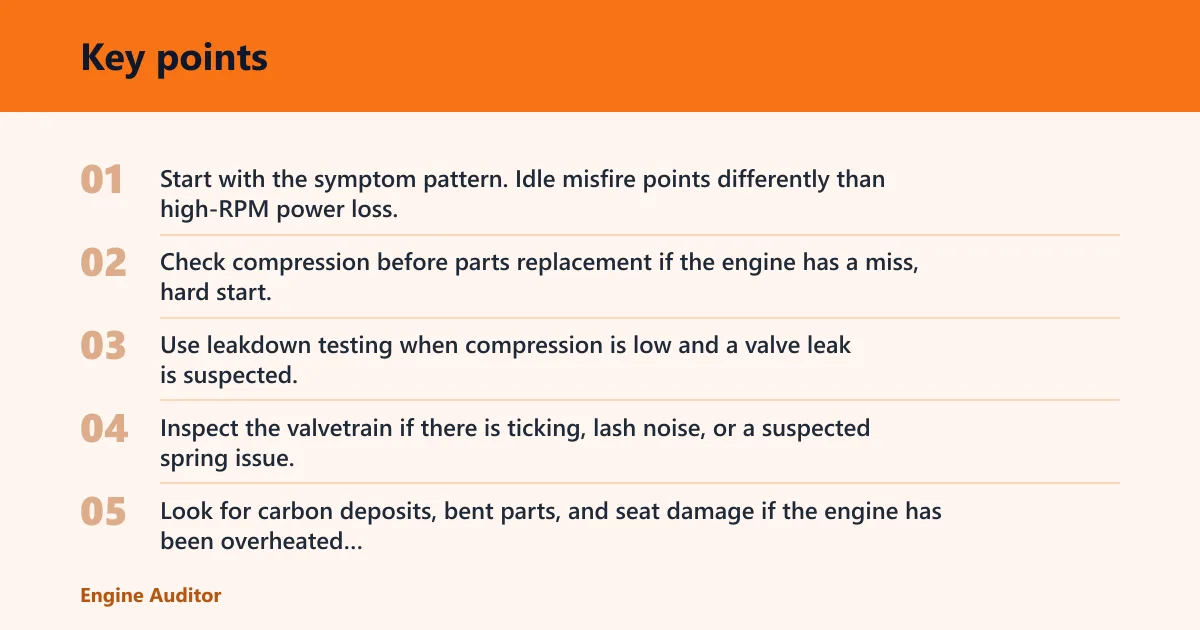
- Start with the symptom pattern. Idle misfire points differently than high-RPM power loss.
- Check compression before parts replacement if the engine has a miss, hard start, or power loss.
- Use leakdown testing when compression is low and a valve leak is suspected.
- Inspect the valvetrain if there is ticking, lash noise, or a suspected spring issue.
- Look for carbon deposits, bent parts, and seat damage if the engine has been overheated or has a history of timing trouble.
If the problem is only adjustment or lash-related, repair can be limited to the valvetrain. If the valve face, seat, or spring is damaged, repair often moves toward cylinder-head service. That work is labor-heavy, so it is usually more expensive than inspection or adjustment alone. If the cylinder head is already off, replacing worn seals, guides, or springs at the same time is often the better decision.
Frequently asked questions
What do valves do in an engine?
Valves control the engine’s breathing. The intake valve opens so air-fuel can enter the cylinder, and the exhaust valve opens so burned gases can leave. When both close, the cylinder seals for compression and power. If sealing or timing is off, the engine loses efficiency and smooth running.
What is an engine valve?
An engine valve is a metal part in the cylinder head that opens and closes the intake or exhaust path. It works with the camshaft, valvetrain, and valve spring. Its sealing job matters as much as its opening job because the closed valve must hold compression.
How do engine valves work?
Engine valves work through camshaft lobes that push on the valvetrain and open each valve at the right time. The spring closes it again after the lobe passes. That sequence repeats through intake, compression, power, and exhaust so the cylinder can breathe and seal correctly.
What happens when an engine valve fails?
When a valve fails, the engine may misfire, start hard, tick, lose compression, or lose power at high RPM. Common causes include burning, sticking, wear, bent valves, weak springs, and carbon buildup. Severe failure can damage the cylinder head and, in some engines, nearby parts.
What is a car valve?
A car valve is the same basic part used in the engine’s intake and exhaust system. It opens and closes passages in the cylinder head to control airflow and sealing. In practical terms, it affects power, fuel use, emissions, and whether the engine can run smoothly at all.
Products related to this article
Sponsored / affiliate links. As an Amazon Associate I earn from qualifying purchases. I may earn additional commission from eligible campaigns.
 JMI BASIC Pre-Taped Masking Film for Car Painting – 94" x 65' Painters Plastic Sheeting with Automotive Tape and Drape, Paint Plastic Covering Cars, Appliance, Windows and Furniture Protection (1)
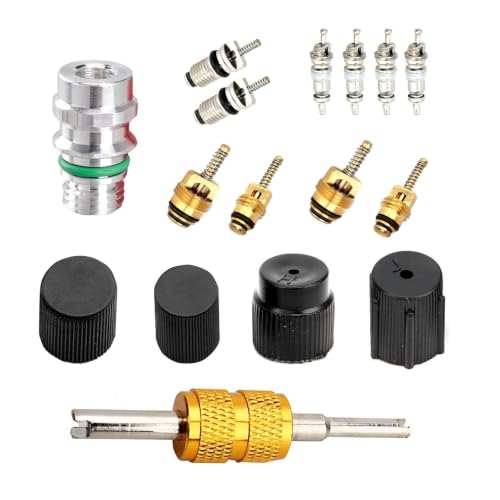 Pouzorc 16 PCS Car Air Condition Valve Core Kit, R134a AC System Port High & Low Pressure Cap & Service Valve, Sealing HVAC AC Duct Maintain Accessories, for Most Cars Trucks SUVs (Black)