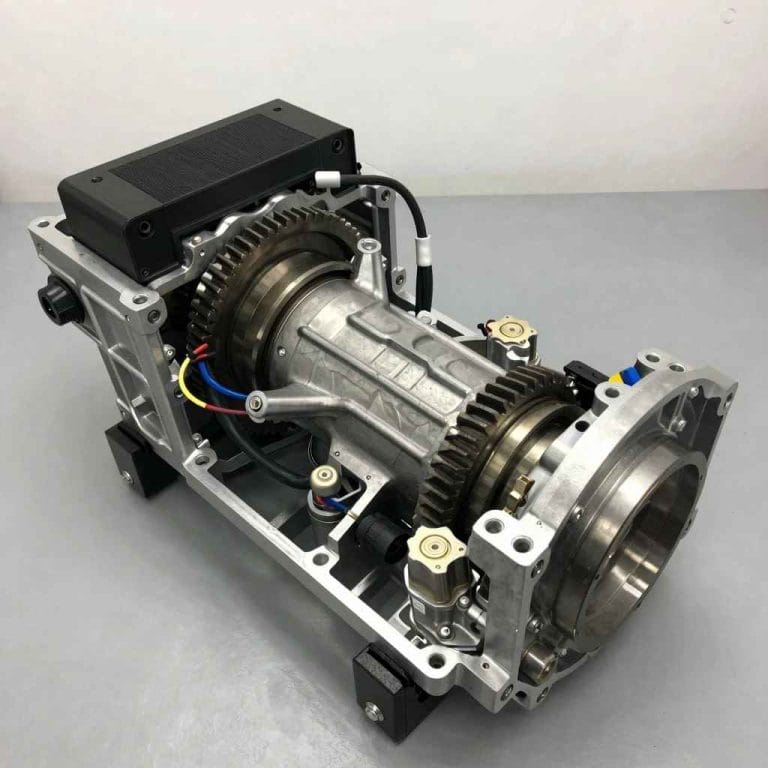
What Causes Transmission Control Communication Errors?
Transmission control communication errors are usually caused by lost power or ground to the transmission control module, a CAN network wiring fault, or an internal module fault. Ignore it and you can chase the wrong component, miss a simple wiring issue, or keep the vehicle in limp mode longer than needed. This guide shows how to separate electrical, network, and module failure so you know the next test to run.
What a transmission communication error means


A transmission control communication error means the module that manages shift logic is not exchanging data correctly with the PCM or ECU. That can trigger a warning light, store network-related codes, and place the vehicle into a failsafe or limp strategy. The exact behavior depends on the make, model, and module architecture in the OEM service manual.
How the TCM, PCM, and CAN network share data
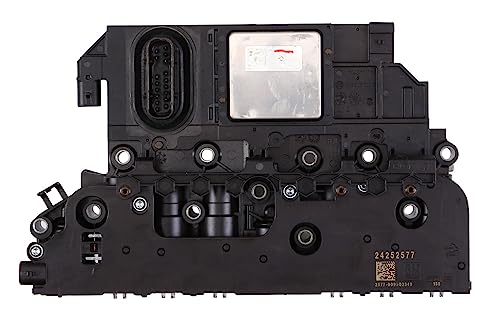
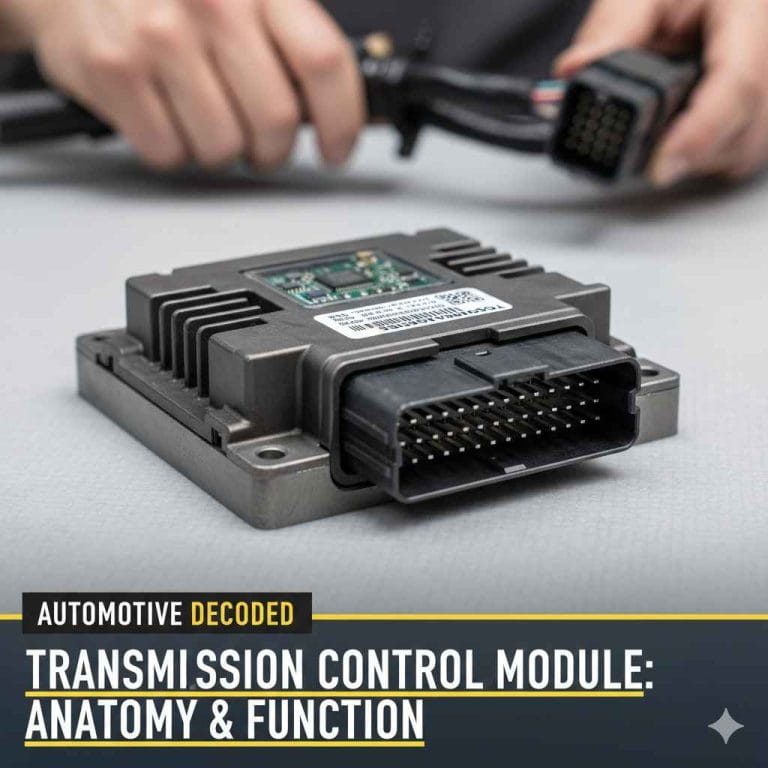
The transmission control module controls shift timing, solenoid commands, and some adaptive logic. The PCM or ECU often coordinates with it over the CAN bus, so a fault in the shared network can look like a bad module even when the controller itself is fine.
An OBD2 scan tool is the fastest way to separate those paths. It can read transmission codes and broader network codes, show live data, and reveal whether the PCM says it cannot hear the TCM, whether power is missing, or whether the network itself is unstable. OEM diagnostics typically start with communication status, module power/ground checks, and code confirmation before any replacement decision.
What warning lights, limp mode, and shifting symptoms can tell you
Warning lights, harsh shifting, delayed shifting, and limp mode often show up together, but they do not point to one single cause. Those symptoms can also come from unrelated faults elsewhere in the vehicle, so they should be treated as clues, not proof of a failed TCM.
If the transmission stays in a limited gear after a restart and the scan tool shows a communication code plus a battery-voltage complaint, that pattern points first to a power problem, not a dead module. A truck that shifts hard only after a long drive may have heat-sensitive wiring, a loose connector, or a module that drops offline only when electrical resistance rises.
What should you check first?
Check battery state, cranking voltage, charging output, the transmission control fuse, and connector condition before anything else. Low system voltage, poor cranking voltage, or a blown fuse can prevent the TCM from waking up, and a bad ground can make the module appear dead even when it is still functional.
Battery state, cranking voltage, and alternator output
Start with the vehicle battery and charging system. Low voltage can interrupt module communication, and voltage drops during crank can mimic module failure. If the battery is weak or the alternator output is unstable, fix that first and rescan before touching the transmission controller. Voltage-related communication complaints should be diagnosed with a DVOM and scan data together, not by symptom alone.
A battery that is only marginal at rest may still fail under load. That matters because the module may power up with key-on voltage but drop offline during start, which creates an intermittent no-communication complaint that looks electronic until the electrical supply is tested.
Fuse continuity and correct fuse rating
The transmission control fuse is part of the TCM power supply path. Check continuity and make sure the installed fuse has the correct amperage. A blown fuse can create a no-communication condition, and an incorrectly rated replacement can hide a real short or open. If the fuse opens again, inspect the circuit for a short to ground or a damaged branch before replacing anything else.
Connector fit, corrosion, and ground points
Inspect the TCM connector, nearby wiring branches, and ground points for corrosion, spread terminals, water intrusion, or a loose lock tab. Open circuits, shorts, and connector damage can interrupt CAN or power feed lines. A careful wiggle test while watching live data can expose an intermittent fault, especially where the harness crosses hot or moving areas.
Scan-tool data and related module codes
Use the scan tool to look at both transmission codes and broader network codes. If the PCM logs a communication fault but the TCM still reports in on the network, the problem may be a branch fault, a connector issue, or a module that fails only under certain conditions. Common examples include U-codes such as U0101, U0100, and U0121 on many makes, but the exact definition varies by manufacturer and model year.
Transmission control diagnostic table
This table separates the likely fault by symptom pattern, scan result, and test result. Start with the row that best matches the vehicle, then follow the next best test before ordering parts.
| Symptom pattern | Scan result | Test result | Most likely cause | Next best test | Likely repair path |
|---|---|---|---|---|---|
| No communication at all | TCM absent from scan; PCM may log U-codes | No power, no ground, or dead bus activity | Power feed loss, ground loss, or network open | Check battery, fuse, grounds, then CAN resistance | Repair power feed, ground, or damaged wiring before module replacement |
| Intermittent communication | Codes come and go after bumps or starts | Wiggle test changes scan data or warning light | Loose connector, corrosion, or broken conductor | Move wiring at TCM, grounds, and splice points | Clean, repair, or replace damaged connector or wiring section |
| Communication only when hot | Works cold, fails after heat soak or long drive | Voltage and fuse check pass cold, fail hot | Internal module fault or heat-sensitive wiring | Heat the suspect area and repeat power/ground checks | Repair wiring if the fault follows heat; replace TCM if power stays stable but it drops offline |
| Codes plus low battery voltage | Multiple low-voltage or communication codes | Battery or charging output is below spec | Voltage sag causing module reset or dropout | Load-test battery and verify alternator output | Fix battery, charging system, or main connections, then clear and retest |
| Codes plus blown fuse | TCM no communication after key-on | Fuse open or wrong amperage installed | Power feed fault or short on the TCM circuit | Inspect the feed for a short to ground or chafed wiring | Repair shorted wiring or connector damage, then install correct fuse |
| Codes plus CAN-related faults | Network codes across more than one module | Bus resistance, continuity, or connector fault found | CAN bus or shared network issue | Check terminating resistance and branch continuity | Repair network wiring, connector corrosion, or a shorted module branch |
| Codes with normal network but bad shifting | TCM communicates normally; shift codes remain | Power, ground, and network pass checks | Transmission solenoids or internal hydraulic/mechanical fault | Command solenoids and compare commanded vs actual data | Repair solenoid, hydraulic, or internal transmission fault; do not replace the TCM first |
Can low battery voltage cause a transmission communication error?
Yes. Low battery voltage can cause a transmission communication error, and charging-system faults can do the same. The TCM may reset, drop off the network, or store false communication codes when supply voltage sags during crank or while alternator output is unstable.
Why voltage sag can look like a failed module
Module electronics are sensitive to supply stability. If voltage drops below the level the TCM needs to stay awake, the scan tool may show no communication or a module that appears to disappear at random. That is why battery state and charging output should be checked first, and why a voltage drop under load is more meaningful than an unloaded battery reading alone.
When a fuse problem points to wiring or a short
A blown transmission control fuse is rarely the whole story. If it fails again after replacement, the likely cause is a shorted power feed, damaged connector, or rubbed-through wiring. Do not keep installing fuses until the circuit is inspected for the actual fault. Repeated fuse failure is a wiring diagnosis, not a parts lottery.
How to tell if the wiring harness is the problem
The wiring harness is the likely problem when the fault changes with movement, heat, moisture, or vibration. Open circuits, shorts, corrosion, and spread pins can interrupt either power feed or CAN lines, and the result may look like a failed TCM until tested directly. That is why OEM diagnostic flow charts usually separate visual inspection, voltage drop, and network checks.
Inspecting connectors, pins, and grounds
Look for green corrosion, bent terminals, moisture, broken locks, and oil contamination at the connector. Check the ground path with a voltage-drop test rather than a visual inspection alone. A connector can look clean and still fail under load.
Using wiggle tests and voltage-drop checks
With the key on and the scan tool watching live data, gently move the wiring near the transmission case, firewall pass-through, and battery area. If communication returns or drops out, the fault is likely in the wiring or connector rather than inside the module itself. Repeat the test at the harness branches called out in OEM service information for that vehicle.
A common first-timer mistake is replacing the TCM because the code mentions communication, then discovering a loose battery ground strap. That same mistake can happen with connector corrosion near the transmission case, especially after water intrusion or road salt exposure. Those faults are more common than a failed module on many vehicles.
Where wiring damage usually shows up
Wiring damage often appears where the loom bends, rubs, or gets heat exposure. Look near brackets, clips, exhaust proximity, and areas where the transmission wiring transitions to the body wiring. Those are common points for intermittent opens and shorts, especially on vehicles with high underhood heat or repeated drivetrain movement.
When the TCM itself is likely bad
The TCM becomes the leading suspect only after power, ground, fuse, connector, and network checks all pass. If the module still will not communicate, and the PCM can see the rest of the network, internal electronics failure becomes more likely than a vehicle-wide wiring problem. Confirm that conclusion with OEM pinpoint tests before replacement.
Power and ground are present but communication is still missing
If the TCM has the correct battery feed, the correct ignition feed, and a good ground, yet it still will not answer the scan tool, the module may be internally failed. That is especially true if the fault does not change with wiring movement and the CAN bus itself measures normally. A good feed and ground do not guarantee a healthy microprocessor or network driver.
Scan results that point away from the PCM and toward the TCM
The PCM is often the messenger, not the root cause. If it sets a communication code because it cannot hear the TCM, that does not mean the PCM failed. It may simply be recording the loss of contact from the network or the module branch. Common U-codes can appear in several modules at once when the transmission controller drops off the bus.
Why module replacement still needs confirmation
Replacing a TCM without proving power, ground, and bus integrity risks a repeat failure and wasted parts cost. Before installation, verify that the replacement module matches the vehicle and that the original fault is not a shorted feed, missing ground, or network fault that will damage the new unit. OEM programming and initialization may also be required.
Can you still drive it?
You may be able to move the vehicle in limp mode, but that does not mean the problem is minor. Limp mode limits gears and drivability to protect the transmission and controller, and continued driving can worsen an electrical fault or add heat and wear to an already stressed transmission. Whether it is safe to continue depends on the specific fault and the symptoms present.
What limp mode means for drivability
Limp mode is a failsafe. It often allows only one or a few gears, reduces shifting behavior, and may make the vehicle sluggish in traffic. If the warning light comes with severe harsh shifting, burning smell, whining, humming, clunking, or buzzing noises, stop and diagnose before more driving. Those symptoms are not unique to a communication fault, so they deserve a broader inspection.
Because overheated fluid loses its lubricating properties, a communication issue paired with low fluid or obvious heat symptoms deserves extra caution. Low fluid levels can invite severe overheating and metal-on-metal friction, and a transmission fluid leak can indicate a compromised hydraulic fluid containment system. Do not assume the electrical fault is the only issue if the transmission is also running hot.
When to stop driving and get it diagnosed
Stop driving if the transmission slips, refuses to upshift, loses reverse, or repeatedly drops into limp mode. If the problem returns after basic battery, fuse, and connector checks, professional diagnosis is the next step. Maintenance intervals vary widely by make, model, use case, and OEM schedule, so use the factory service interval rather than a generic mileage rule.
Frequently asked questions
What causes transmission control communication errors?
Most transmission control communication errors come from lost power or ground to the TCM, a CAN network fault, or an internal module failure. A scan tool helps separate those branches. Start with battery voltage, fuses, ground points, and connector condition before replacing any controller.
Is a bad fuse or relay enough to trigger a TCM communication code?
A blown transmission control fuse can absolutely cause a no-communication condition. A relay can do the same on vehicles that use one, but not every vehicle does. Verify whether the vehicle uses a TCM relay in the factory wiring diagram or fuse/relay box legend. If the fuse fails again, suspect a shorted feed, damaged wiring, or connector fault rather than the fuse itself.
How do I know if the wiring harness is the real problem?
Look for an intermittent fault that changes with movement, heat, or moisture. Wiggle the wiring, inspect for corrosion or spread pins, and watch live data while testing. If communication changes when the wiring moves, the wiring or connector is the likely problem.
What codes usually point to a transmission control module not communicating?
Network and communication codes from the PCM or other modules often point to a missing TCM response. The exact code depends on the vehicle, so the code definition matters. Do not treat the code alone as proof of a bad module; check power, ground, and bus integrity first.
Can a transmission problem cause a communication error without the module being bad?
Yes. Solenoid faults and hydraulic problems can create symptoms that resemble a communication failure. Electronic diagnostics can pinpoint faulty shift solenoids, but a normal network with bad shifting often points away from the TCM and toward the transmission hardware.
What should I check first when a transmission control warning light comes on?
Check battery voltage, charging output, the transmission control fuse, and connector condition first. Then scan for codes and look at live data. That order catches the most common power and ground problems before you move into network testing or module replacement.
Can I still drive if the transmission control module is not communicating?
Sometimes the vehicle will move in limp mode, but that is a protective state, not a green light to keep driving. If shifting is harsh, delayed, or locked to one gear, limit driving and diagnose the fault soon. Repeated driving can make an electrical or transmission problem worse.
Products related to this article
Sponsored / affiliate links. As an Amazon Associate I earn from qualifying purchases. I may earn additional commission from eligible campaigns.