What Should Be in a Car Emergency Kit?
A car emergency kit should cover three basics: visibility, warmth, and communication, with extras added for winter or long trips. Without them, a minor breakdown can turn into a cold, dark, expensive wait. This guide gives the smallest useful kit first, then the winter and road-trip upgrades, in decision-first order.
Must-have kit
The smallest useful kit solves the most common roadside problems first: a cut, a dead battery, or being stuck after dark. Start with a solid first aid kit, a bright light, and one way to get the car moving again or call for help. Everything else comes after that.
First aid kit

- OSHA compliant emergency first aid kit
- Includes bandages and antiseptic towelettes
- Clear cover with easy access compartments
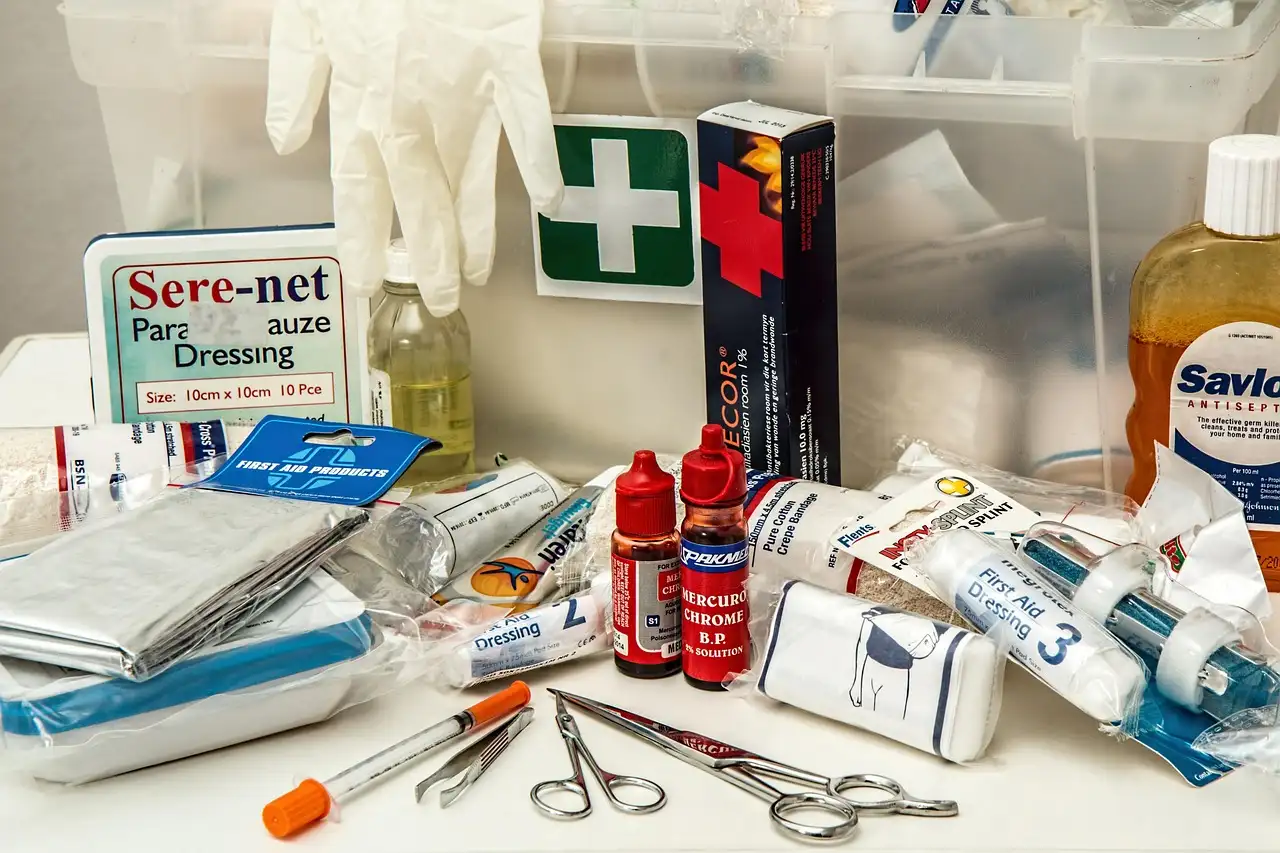
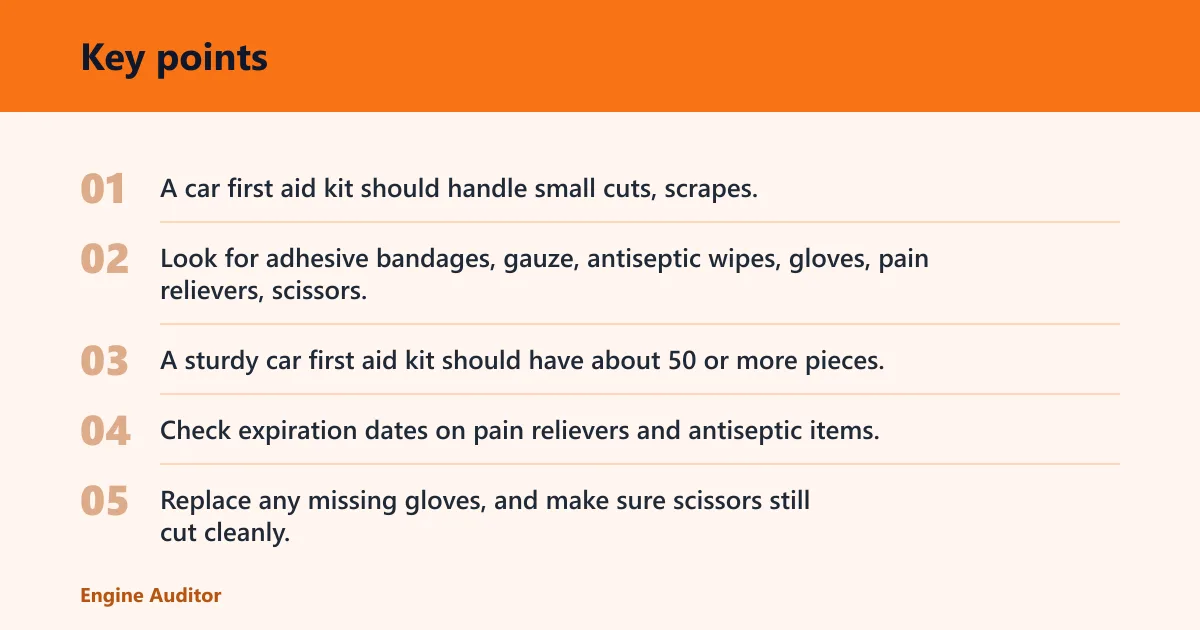
A car first aid kit should handle small cuts, scrapes, and minor burns while you wait for help. Look for adhesive bandages, gauze, antiseptic wipes, gloves, pain relievers, scissors, and tweezers. A sturdy car first aid kit should have about 50 or more pieces, and the supplies should be easy to reach in a cluttered trunk or glove box.
Check expiration dates on pain relievers and antiseptic items. Replace any missing gloves, and make sure scissors still cut cleanly. If the kit is built for adults only, add child-size bandages and any needed medication limits for kids, pets, or a driver with medical needs.
Flashlight or torch
A bright LED flashlight helps with night repairs, tire checks, and signaling other drivers. Keep spare batteries with it, or choose a light with built-in rechargeability so it stays ready after a long wait. A dim phone screen is not a good substitute when you need both hands free.
Picture a flat tire on a dark shoulder with traffic passing close by. A flashlight helps you see the job, and it helps others see you. Keep it where you can reach it without unloading the whole trunk.
Power and restart options
This is where many kits go wrong. Jumper cables and a portable jump starter solve different problems, and both can matter. Cables need another vehicle. A jump starter is a lithium battery pack that can start a car without another vehicle, and many models also charge a phone.
Jumper cables
Use jumper cables for a dead battery when another driver can help. Longer cables reduce parking constraints, and coated clamps or heavy-gauge leads are easier to handle in tight spots. Keep them coiled so the clamps do not scratch trim or tangle with other gear.
Check the insulation for cracks and the clamps for corrosion. Cables that sit for years in a hot trunk can harden or split, which makes them harder to use safely.
Portable jump starter

- Starts dead batteries with 1000 amps
- Integrated LED flashlight with 7 modes
- Recharges in 3 hours
A portable jump starter is the better choice when you often park alone or in cramped lots. Based on the published product details, this NOCO lithium pack can start dead batteries with 1000 amps and includes an integrated LED flashlight with 7 modes. It also recharges in about 3 hours and can double as a power bank.
The tradeoff is cost and upkeep. A jump pack that is left discharged is little help during a real breakdown, so check its charge on a schedule. Also confirm that the clamps, cable, and case are stored together, because a missing lead makes the pack useless.
What should be in a car emergency kit?
The smallest useful setup should fit your commute, your parking situation, and the weather you actually face. For most drivers, a common setup includes first aid, a light, a jump option, water, and a way to warn traffic. If you only buy one kit, build it around those jobs first.
The smallest useful setup
- Pack a 50+ piece first aid kit with bandages, gauze, wipes, gloves, scissors, tweezers, and pain relievers.
- Add a bright LED flashlight with spare batteries or built-in charging.
- Choose either jumper cables or a portable jump starter, then keep the needed leads or charge cable with it.
- Store bottled water and shelf-stable snacks for waiting periods.
- Add a reflective warning set and a high-visibility vest.
A common first-timer mistake is buying one oversized trunk bag and never checking it again. A smaller kit that is inspected twice a year is more useful than a larger one with dead batteries, stale snacks, and missing gloves.
How to choose between cables and a jump starter
Choose cables if cost is the main concern and you usually have access to another vehicle. Choose a jump starter if you often park away from other cars, travel alone, or want a backup that also charges your phone. For many drivers, the jump starter is the better single-item solution.
They are not interchangeable. Cables depend on a second vehicle and a safe park position. A jump starter gives you a self-contained option, but it needs charging and periodic checks.
What to keep in the glove box versus the trunk
Keep smaller, fast-grab items in the glove box or center console: insurance papers, emergency contacts, a phone charging cable, and any essential medication that should not stay in heat for long. Keep the bulkier items in the trunk: water, food, triangles, tools, jumper cables, a spare tire, jack, and lug wrench.
If you have mobility needs, keep any assistive tools where you can reach them without bending or lifting heavy cases. If you travel with children or pets, store age-appropriate snacks, water, wipes, and any needed medications separately so they do not get buried.
What should be in a car emergency kit for winter?
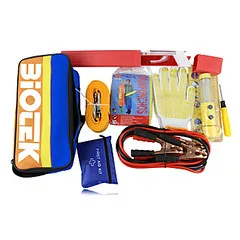
Winter kits should focus on staying warm, getting traction, and waiting safely if the road closes or the car will not move. Add blankets, traction gear, and extra water or food, then keep the whole kit ready before temperatures drop. Cold weakens batteries and turns short delays into longer ones.
Warmth items that matter most
A blanket or Mylar blanket belongs in every winter setup. It helps reduce heat loss while you wait for help and takes very little space. If space allows, add gloves, a hat, and a dry layer that can be reached without unpacking the full trunk.
Red Cross guidance also points to a rain poncho for severe weather car survival kits, which helps if sleet, freezing rain, or wet snow is part of the forecast. Dry outer layers matter as much as insulation.
Traction and cold-weather recovery gear
Winter kits should include a tire inflator or portable air compressor, plus an inflated spare tire, jack, and lug wrench if your vehicle carries them. A shovel and tire repair kit are useful extras on snow-packed roads, especially when a small drift blocks the tires or the car loses pressure overnight.
Roads in winter do not fail politely. Keep traction gear where it can be reached without climbing through slush or digging through baggage.
Food and water for longer waits
Carry bottled water and shelf-stable food that can tolerate vehicle temperatures as well as possible. Water should be rotated, because heat can degrade bottles and taste, and food should be checked for swelling, leaks, or broken packaging before long trips. TruePrepper specifically calls out bagged water for vehicle storage.
Say your commute is only 18 miles, but the road closes for two hours after black ice forms. A blanket, water, and a snack bar turn a short delay into a manageable wait instead of a health risk.
What should be in a roadside emergency kit?
A roadside kit should warn other drivers, help with tires, and keep you reachable while you wait. If the car is stopped in traffic or on a shoulder, visibility gear matters first. After that, add tire tools and a charged way to call for help.
Warning devices for stopped vehicles
Reflective triangles or flares should be placed behind the stopped vehicle, especially at night or in low visibility. Keep at least a set or three pieces so the warning is visible from a distance. A high-visibility vest should be worn outside the car, not left in the trunk.

- Warns other drivers of breakdowns
- Made from durable high-quality materials
- Fits in a small plastic box
This aikko six-pack gives more than the minimum set, which is useful if you want extra warning distance or expect different road setups. The tradeoff is bulk versus simplicity: more pieces mean more setup steps, and that matters when traffic is moving fast.
High-visibility vest
A vest is one of the simplest ways to stand out near traffic. Wear it any time you need to step out to place triangles, check a tire, or move gear on a dark or rural road. It works best when stored in the front of the kit, not underneath heavier tools.
Tools for tire problems
A tyre inflator or portable air compressor can buy enough pressure to reach a garage safely after a slow puncture. Keep an inflated spare tire with a working jack and a lug wrench if the vehicle is set up for a tire change. Those tools need to match the vehicle, not just the wheel size on paper.
Inspect the spare for proper inflation, the jack for smooth movement, and the lug wrench for fit. If any of those pieces are missing, the kit is incomplete even if it looks full.
Communication backup
A charged phone is only useful if it can stay charged. Keep a power bank and the right USB cable or car adapter in the kit so maps, calls, and roadside help stay available when the car battery is weak. If the battery is low, a separate power source can matter more than a wall charger ever will.
Nice-to-have kit
Once the basics are covered, add items that make waiting safer and easier, especially on longer trips or rural roads. These are useful upgrades, but they should not replace the core items. Extra gloves, rain gear, hand tools, and paper directions are good examples.
Extra gloves and rain gear
Working in rain or freezing slush is easier with a spare pair of gloves and a poncho or lightweight rain shell. Wet hands reduce grip and make cold harder to manage. Keep the extras in a sealed pouch so they stay dry.
Basic hand tools
A small set of hand tools can help with loose battery terminals, trim pieces, or other minor fixes. Keep the set simple. The point is to tighten or remove a few fasteners, not to carry a full garage drawer in the trunk.
Paper maps and route notes
Phone navigation is useful until the signal drops or the battery dies. A folded map, written route notes, or a list of exits can help when coverage is poor. This matters most on remote roads, mountain routes, or long nighttime drives.
Consumables and spares
Consumables need a schedule. Water, food, batteries, medication, and first aid items should be checked before long trips and at least seasonally. Hot cars are hard on gear, so do not assume a sealed container means a sealed shelf life.
What to replace on a schedule
- First aid items with expiration dates.
- Flashlight batteries, or recharge the light if it is built that way.
- Jump starter and power bank charge levels.
- Water and food condition.
- Any medication stored in the car that has a heat limit or expiration date.
What heat can damage
Water bottles, snack bars, batteries, and some medications can suffer in hot vehicles. Heat can shorten battery life and make food unpleasant or unsafe to eat. If the car sits in sun for long periods, check these items more often and rotate them sooner.
Suppose the kit stays in a parked sedan through a summer workday. The flashlight still works, but the batteries sag, the snack wrapper is swollen, and the pain reliever bottle is past date. That is the moment to replace the whole group, not just the worst-looking item.
Budget setups
Build the kit to match the risk. A commuter kit can stay small, a winter kit should add warmth and traction, and a road-trip kit needs more water, food, and charging capacity. The table below separates the three setups so you can buy only what fits the trip.
| Setup | Best for | Core items | Notes |
|---|---|---|---|
| Basic commuter kit | Daily driving, city parking, short commutes | First aid kit, flashlight, jumper cables or jump starter, triangles, vest, phone charger, water | Keep it compact and easy to inspect |
| Winter upgrade kit | Cold climates, early mornings, rural roads | Basic kit plus blanket or Mylar blanket, gloves, hat, traction aid, tire inflator, shovel, extra water | Check batteries and water more often in cold weather |
| Road-trip upgrade kit | Long drives, remote routes, nighttime travel | Basic kit plus extra water, more food, power bank, route notes, rain gear, hand tools, spare medication | Pack for longer waits and fewer services |
Starter, mid, and serious builds
Based on the manufacturer’s published price, the AUTODECO kit is the cheapest of the products listed here at $20.89, while the NOCO jump starter is the most expensive at $99.95. The 24/7 First Aid kit sits in the middle at $37.99, and the triangle set and snow brush fill narrower roles.
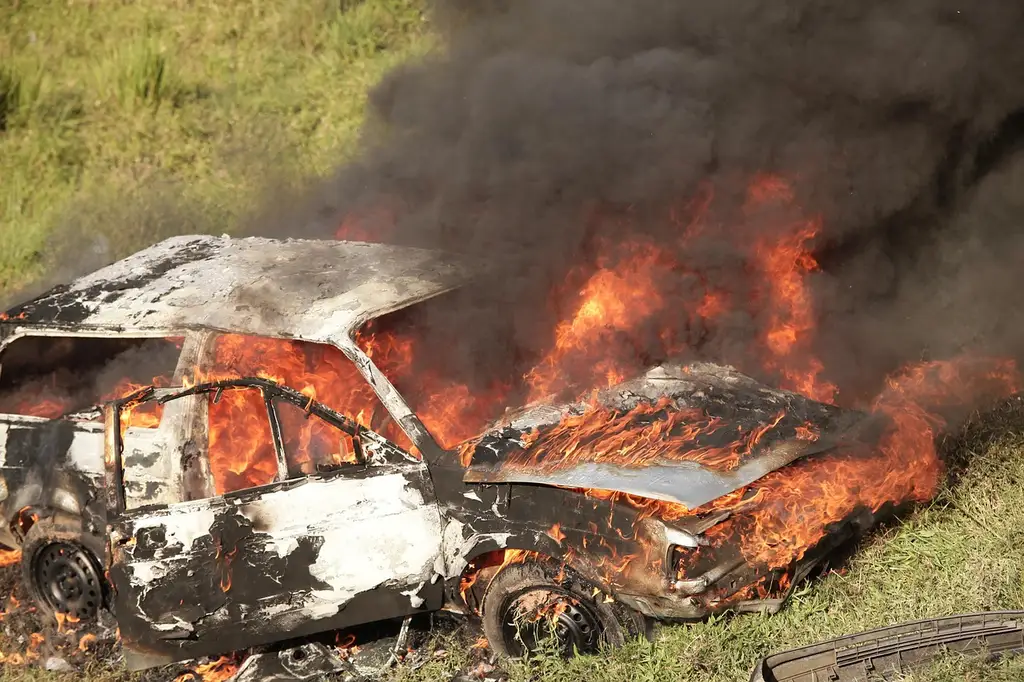
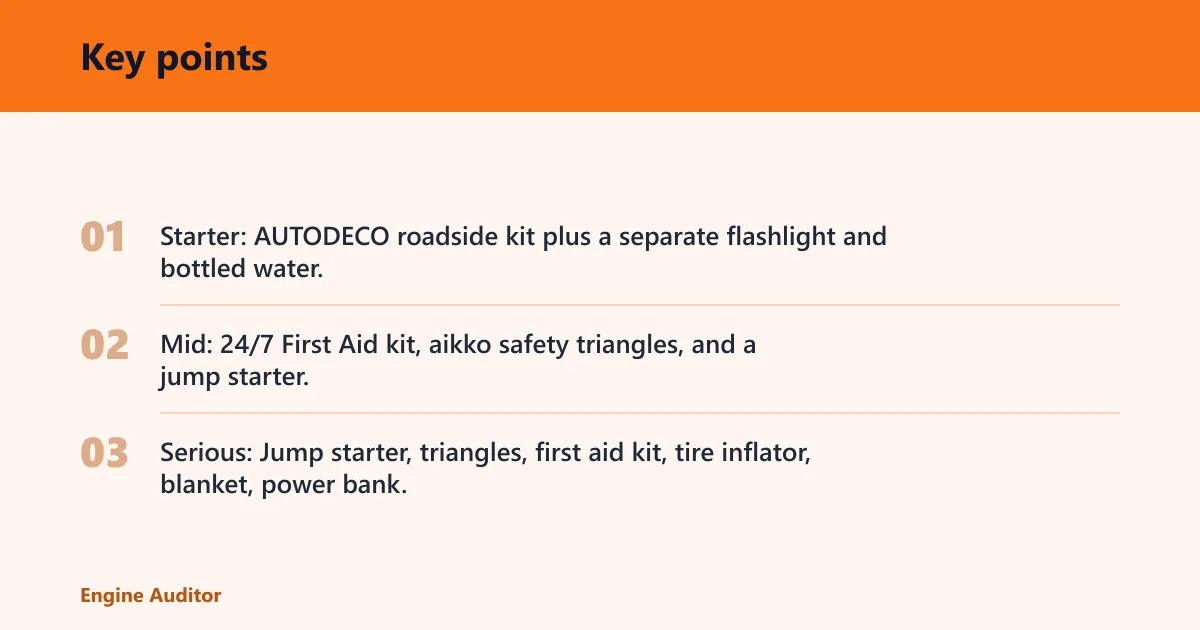
- Starter: AUTODECO roadside kit plus a separate flashlight and bottled water.
- Mid: 24/7 First Aid kit, aikko safety triangles, and a jump starter.
- Serious: Jump starter, triangles, first aid kit, tire inflator, blanket, power bank, and winter tools.
24/7 First Aid kit
This 336-piece OSHA-compliant kit is the most complete first aid option in the product list. The clear cover and compartment layout make supplies easier to find quickly, but the case is bulkier than a slim glove-box kit. That size helps in a trunk; it is less convenient if you want something ultra-compact.
AUTODECO roadside emergency kit

- Fits neatly into an organizer bag
- Essential tools and supplies for emergencies
- Suitable for different occasions
This organizer-bag kit is a simple way to get the basics into one place. The advantage is convenience; the drawback is that bundled kits often need a separate check for battery life, expiration dates, and tire gear, since no single compact bag covers every need well.
PLACHIDAY snow brush and ice scraper
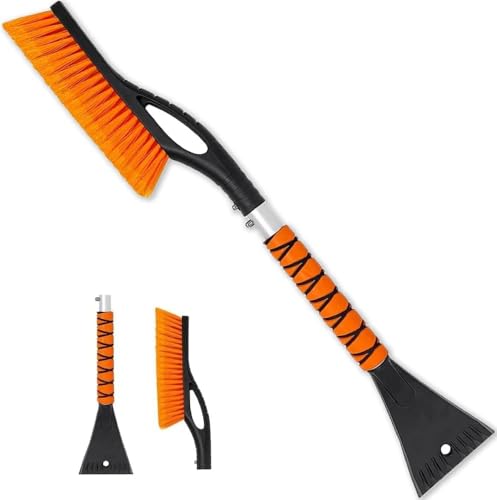
This 27-inch brush-and-scraper tool is useful in winter because it reaches across larger windshields and is rated for very low temperatures. The downside is obvious: it helps clear glass, but it does not replace traction gear, a blanket, or a working battery plan.
Frequently asked questions
What should be in a car emergency kit: at minimum, include a first?
At minimum, include a first aid kit, flashlight, jumper cables or a portable jump starter, reflective triangles or flares, a high-visibility vest, water, and a phone charger or power bank. Add warmth gear and traction items if you drive in winter, and more food and charging capacity for road trips.
What should be in a car emergency kit for winter: winter kits should add?
Winter kits should add a blanket or Mylar blanket, gloves, a hat, water, shelf-stable food, traction gear, and a tire inflator or compressor. If your route is remote, add a shovel and a way to charge the phone for longer waits in cold weather.
What should be in a roadside emergency kit: a roadside kit should include?
A roadside kit should include warning triangles or flares, a high-visibility vest, a flashlight, jumper cables or a jump starter, tire tools, and a phone charger. The goal is to warn traffic, deal with a battery or tire issue, and stay reachable while waiting for help.
What should be included in a car emergency kit?
Include the basics that address the most likely breakdowns first: first aid, light, power, visibility gear, water, and a way to restart the car. Then add seasonal items. A winter driver needs warmth and traction; a road-trip driver needs more food, water, and charging backup.
What should a car first aid kit contain?
A proper car first aid kit should include adhesive bandages, gauze, antiseptic wipes, gloves, pain relievers, scissors, and tweezers. Check expiration dates, keep the kit stocked, and make sure the supplies fit the people in the car, including children or anyone with medication needs.
What does a car emergency kit include?
It includes the items that buy time and reduce risk after a breakdown: first aid, light, visibility gear, a way to restart the vehicle, water, food, and seasonal warmth or traction items. The exact mix should match your commute, climate, and how far you drive from help.
Products related to this article
Sponsored / affiliate links. As an Amazon Associate I earn from qualifying purchases. I may earn additional commission from eligible campaigns.