Car ownership checklist: first 30 days essentials to check
Use the first 30 days to confirm title, registration, insurance, recalls, fluids, tires, brakes, battery, and warning lights. Schedule any missing inspection or service before the first interval. Missed paperwork or a hidden fault can mean fines, breakdowns, or buying repairs too late. This guide ranks what to check immediately, weekly, and before your first service visit.
What should you do first after buying a car?
Start with legality and identity. Before oil, tires, or trim, confirm the car is insured, registered, and matched to the paperwork. Then check the VIN, recall status, and basic safety items so you know what can wait and what needs attention now.
Sort the paperwork before you drive much
Insurance should be active before you drive, and registration should be current before regular use. Keep proof of insurance in the car or somewhere you can reach fast, and note renewal dates for both documents. If the previous owner handled any transfers, confirm that your name and contact details are correct.
Confirm the VIN on the car and documents
The VIN is a 17-character identifier. On many vehicles, it appears on the lower left windshield, and it should match the registration card. It may also appear on the insurance card. If those numbers do not match, stop and sort it out before relying on any other records. (nhtsa.gov)
Use a simple first-week order
- Verify insurance and registration status.
- Match the VIN on the car to the papers.
- Check recalls by VIN or license plate.
- Read the owner’s manual for service and fluid specs.
- Check tire pressure, fluid levels, wiper condition, lights, and warning lamps.
📊 Autozis says air filters should be replaced every 15,000–30,000 km. Source: Car Maintenance Checklist for New Owners: The Complete Beginner’s….
How do you check a car’s identity and recall status?
Find the VIN on the lower left windshield, then compare it with the registration card and any insurance card that lists it. After that, check for open recalls by VIN or license plate. Unrepaired recalls matter because they can involve safety-related defects, and manufacturers may send follow-up communications about needed repairs.
What should the VIN and paperwork match?
The VIN on the dashboard plate or windshield must match the registration card exactly. If the insurance card lists the VIN, compare that too. Match the make, model, and color only as a secondary check; the VIN is the reliable identity marker.
Why recall checks belong in the first month
Recalls can address items tied to braking, steering, airbags, fuel system faults, or other safety-related defects. A car can seem fine and still have an open recall. That is why a VIN or license-plate search belongs in the first month, not sometime later.
What should the owner’s manual tell you in week one?
The owner’s manual gives you the correct maintenance intervals, fluid specs, tire pressure, and service schedule for your exact vehicle. Read the sections on warning lights, fluid capacities, and scheduled checks early. Model-specific cautions often live there, not on generic maintenance charts.
Pull out four details right away
Look for the oil type and specification, tire pressure values, coolant type or mix, and the timing of the first service. If the manual lists special procedures for hybrids, turbocharged engines, or all-wheel-drive parts, note those now. They affect what you check and when you book service.
Use the manual to set your timeline
Many owners rush into a shop without checking the manual first. That can lead to the wrong fluid, the wrong pressure, or a missed inspection point. Use the manual to turn vague reminders into exact tasks with dates and mileage.
What fluids and wear items should you inspect first?
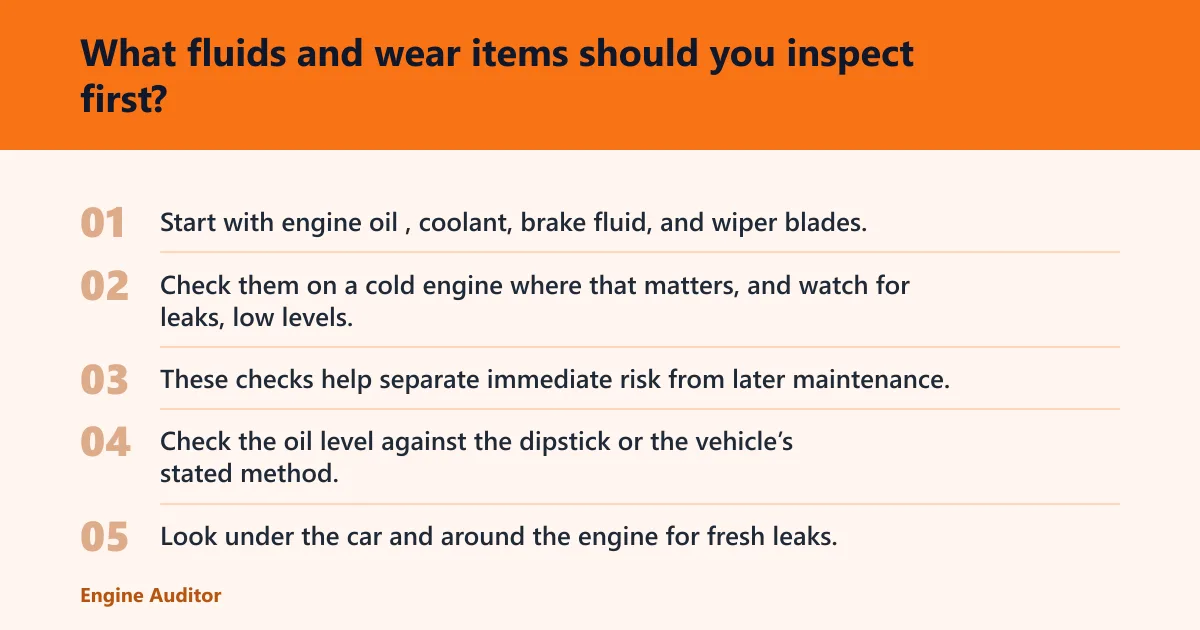
Start with engine oil, coolant, brake fluid, and wiper blades, because those items often show the earliest signs of neglect. Check them on a cold engine where that matters, and watch for leaks, low levels, cracked blades, or dashboard warnings. These checks help separate immediate risk from later maintenance.
Engine oil: level, type, and leak check
Check the oil level against the dipstick or the vehicle’s stated method, and confirm the correct type or specification in the manual. Look under the car and around the engine for fresh leaks. A low level, dark sludge, or a burning-oil smell can point to a problem that should not wait.
Coolant and brake fluid: reservoir level and warning signs
In practice, coolant is best checked with a cold engine. The reservoir should stay between the marked lines, and the mixture should follow the manual. Low coolant can lead to overheat risk. Brake fluid also belongs on the first-month list; check the reservoir level, look for leaks, and pay attention to soft or changing pedal feel.
Wiper blades and washer fluid
Wiper blades should not streak, split, or crack. If they leave broad dry patches or chatter across the glass, replacement is due soon. Top off washer fluid early so you are not driving with a nearly empty reservoir the first time mud or road film hits the windshield.
What tire checks belong in the first 30 days?
Tires are the only contact patch between your car and the road, so check them early. Measure pressure, check tread depth, and inspect the spare tire if the car has one. Compare pressure with the door placard or the manual, then plan rotation timing if the mileage history is unclear.
Pressure and tread depth
Monthly pressure checks are a basic habit. Underinflation can make steering feel vague and can wear the shoulders faster. Uneven tread, cords showing, or one tire much lower than the rest deserves a closer look. A tire that looks fine from the outside can still be unsafe if the tread is near the limit.
Spare tire condition and rotation timing
Do not ignore the spare. Check that it is present, inflated, and usable, and make sure the jack and tool kit are there too. If the car’s service history is unclear, ask when the last rotation happened. Autozis lists tire rotation every 8,000–10,000 km, which gives you a practical booking window if the records are thin.
Common failure signs to watch for
Uneven wear can point to alignment problems, suspension issues, or long periods of low pressure. Cracks in the sidewall, bulges, or cords showing are more urgent. A tire that vibrates at speed can also hint at balance or damage concerns that deserve a shop visit.
What should you do in the first 30 days after buying a car?
Use the first month as a gradual ramp for identity, legality, and safety checks. Immediate tasks are identity, legality, and safety. Weekly tasks are fluid checks, tire pressure, and warning lights. Booking deadlines are for items that need a shop, such as recalls, a first inspection, or service due before the manufacturer’s interval.
Separate immediate from later tasks
Immediate items are the ones that can block safe driving or create legal trouble. Later items are the ones you can monitor for a few weeks if the car is behaving normally. If you have no records, move more items into the urgent group.
Two common first-timer situations
Say your used sedan has a tire-pressure warning and one rear tire looks lower than the others. Check all four tires, compare them with the placard, and book a shop visit if the same tire keeps losing pressure. A slow leak can turn into a roadside stop.
Suppose the oil looks clean but the coolant reservoir is below the mark and there is dried residue near the cap. That is not a detail to park for later. Top priority becomes a cold-engine inspection for leaks, because low coolant can become an overheat problem quickly.
What changes if you bought a used car or have no records?
Missing service history is a reason to inspect sooner, not later. Watch for leaks, uneven tire wear, warning lights, old fluid, and signs that maintenance was delayed. If records are absent or incomplete, a mechanic inspection should move to the front of the queue, especially before the first long trip.
Used-car priorities
Check engine oil, coolant, brake fluid, tires, wipers, battery condition, and all warning lamps. Look for fresh drips under the car after parking. A shop can confirm whether the brakes, battery, and tires need work now or only monitoring.
No-records scenarios
If you cannot verify when fluids were last changed, when the battery was tested, or whether rotation happened on time, treat the vehicle as overdue until proven otherwise. Autozis says engine oil should be checked every month or every 1,000 km, brake inspection should happen every 6 months, and battery health should be tested every 6 months.
Should you book a mechanic inspection right away?
Yes, when records are missing or the car shows warning signs. A mechanic can inspect for leaks, pad wear, tire issues, battery health, and fluid condition in one visit. If the seller gave a full, recent service record and the car checks out cleanly, the inspection can still be useful, but it becomes less urgent.
Use this 30-day ownership action tracker
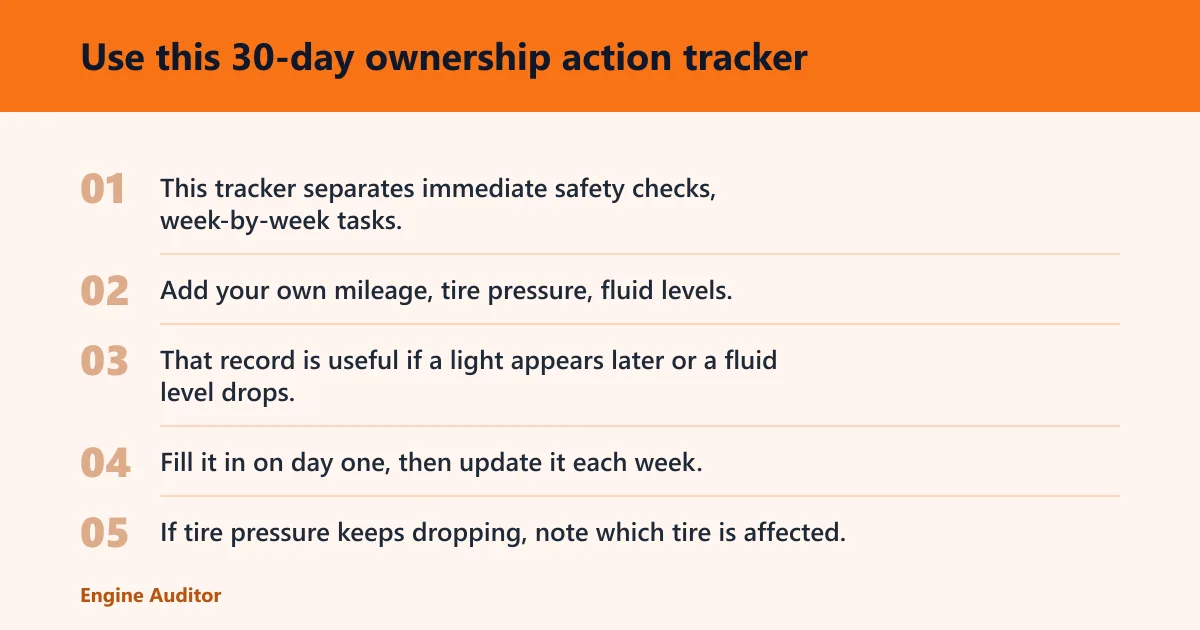
This tracker separates immediate safety checks, week-by-week tasks, and service booking deadlines. Add your own mileage, tire pressure, fluid levels, and warning lights so you can compare week to week. That record is useful if a light appears later or a fluid level drops.
| Immediate safety checks | Week-by-week tasks | Service-booking deadlines | Notes for mileage, tire pressure, fluid levels, and warning lights |
|---|---|---|---|
| Confirm insurance, registration, and VIN match | Week 1: read the owner’s manual, locate the tire placard, and check warning lights | Book recall repair as soon as one is found | Mileage: ____; tire pressure: ____; warning lights: ____ |
| Check tires for visible damage and spare condition | Week 2: inspect engine oil, coolant, brake fluid, and washer fluid | Book inspection sooner if records are missing | Oil level: ____; coolant level: ____; brake fluid: ____ |
| Verify wipers, lights, and dashboard symbols work as expected | Week 3: recheck for leaks, tire pressure loss, and new noises | Book service if fluid drops or a warning lamp returns | Leaks noticed: ____; new noises: ____; lamp status: ____ |
| Check recall status by VIN or license plate | Week 4: review mileage and decide on rotation, battery test, or brake inspection | Plan service before the first interval in the manual | Service date: ____; next check: ____; notes: ____ |
How to use the tracker
Fill it in on day one, then update it each week. If tire pressure keeps dropping, note which tire is affected. If the oil level falls or a warning lamp returns, record the date and mileage before you visit a shop. Small details become useful evidence.
Frequently asked questions
What documents and numbers do I need to keep for a new car?
Keep proof of insurance, the registration card, and any purchase or transfer paperwork. Save the VIN, which is 17 characters long, plus the renewal dates for registration and insurance. It also helps to note the contact details on the policy and the date of your first recall check.
How do I check for open recalls on my car?
Find the VIN on the lower left windshield, then compare it with the registration card and any insurance card that lists it. Use the VIN or the license plate to check for open recalls. If a recall exists, treat it as a priority because unrepaired recalls can involve safety-related defects.
Which fluids should I inspect first after buying a used car?
Start with engine oil, coolant, brake fluid, and washer fluid. Check oil level and type, look for leaks, inspect coolant with a cold engine, and confirm brake fluid level and pedal feel. Washer fluid and wiper condition are simpler, but they still affect daily driving visibility.
What maintenance is urgent in the first month versus later?
Urgent items are anything tied to legality or safety: insurance, registration, VIN match, recalls, tires, warning lights, fluid leaks, and brake concerns. Later items include rotation timing, scheduled filters, and routine service that the manual places farther out. Missing records move more tasks into the urgent group.
Should I book a mechanic inspection right after buying a used car?
Book one right away if service records are missing, warning lights are on, or you see leaks, uneven tire wear, or weak brakes. If records are complete and the car passes the first checks, the inspection can still be scheduled before the first service interval. Early review is safer than waiting.
Products related to this article
Sponsored / affiliate links. As an Amazon Associate I earn from qualifying purchases. I may earn additional commission from eligible campaigns.