Transmission Slips Between Gears: Warning Signs and Fixes
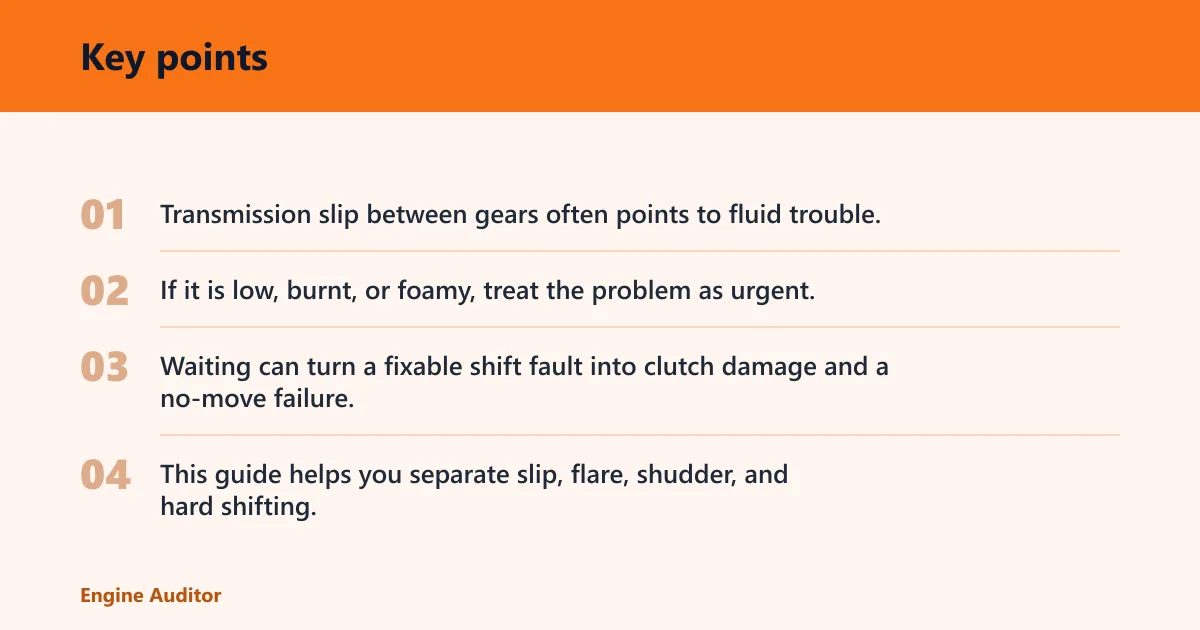
Transmission slip between gears often points to fluid trouble, a sensor or solenoid fault, or internal wear. Check the fluid first. If it is low, burnt, or foamy, treat the problem as urgent. Waiting can turn a fixable shift fault into clutch damage and a no-move failure. This guide helps you separate slip, flare, shudder, and hard shifting, then decide between a fluid check, scan data, or a shop inspection.
Slip vs flare vs shudder vs hard shift


| Symptom | Likely subsystem | Quick checks | Urgency | Next action |
|---|---|---|---|---|
| Slip | Low or wrong fluid, clutch wear, hydraulic pressure loss | Check level, color, smell; look for leaks; note whether RPM rises without speed gain | High if repeated | Stop hard driving, scan codes, inspect for pressure loss |
| Shift flare | Valve body, shift solenoid, hydraulic delay | Watch tachometer during upshift; note a brief RPM jump between gears | Moderate to high | Read codes and live data; check fluid condition |
| Shudder | Torque converter lockup, fluid contamination, overheating | Notice vibration during light cruise or lockup; check for burnt fluid | High if heat is present | Inspect cooler, fluid, and converter operation |
| Hard shift | Control fault, valve body issue, pressure irregularity | Note harsh engagement, bang-like shifts, or wrong-gear feel | Moderate | Scan for faults; test hydraulic control before parts replacement |
| True gear loss | Severe clutch failure, major hydraulic failure, internal damage | Vehicle will not move in a gear or loses more than one gear range | Critical | Stop driving and arrange diagnosis |
What slipping feels like
Slip usually feels like engine revs rising without a matching increase in road speed. A conventional automatic may flare between shifts or hesitate in Drive or Reverse. A manual clutch system can do something similar under load, especially in higher gears, when the engine revs freely but the vehicle barely gains speed.
Common feel patterns
- Delayed engagement: You shift into Drive or Reverse, then wait before the vehicle starts moving.
- RPM flare: The tachometer jumps during an upshift, then the gear catches.
- Wrong-gear feel: The transmission seems to hunt, pick the wrong ratio, or hold a gear too long.
- Harsh shift: The shift lands with a bang or sudden jolt instead of a smooth transition.
- Shudder: A vibration or tremor appears during cruise or lockup.
Say your sedan pulls away normally in first gear, then the RPM jumps during the 2-3 shift while road speed hesitates for a second. That points more toward shift flare or hydraulic control trouble than a simple engine miss. The timing matters.
Picture a pickup that tows a trailer up a grade and then starts shuddering on light throttle in overdrive. That pattern raises concern for converter lockup, heat, or fluid breakdown, especially if the transmission cooler is restricted or the fluid is dark.
Why does my transmission slip between gears?
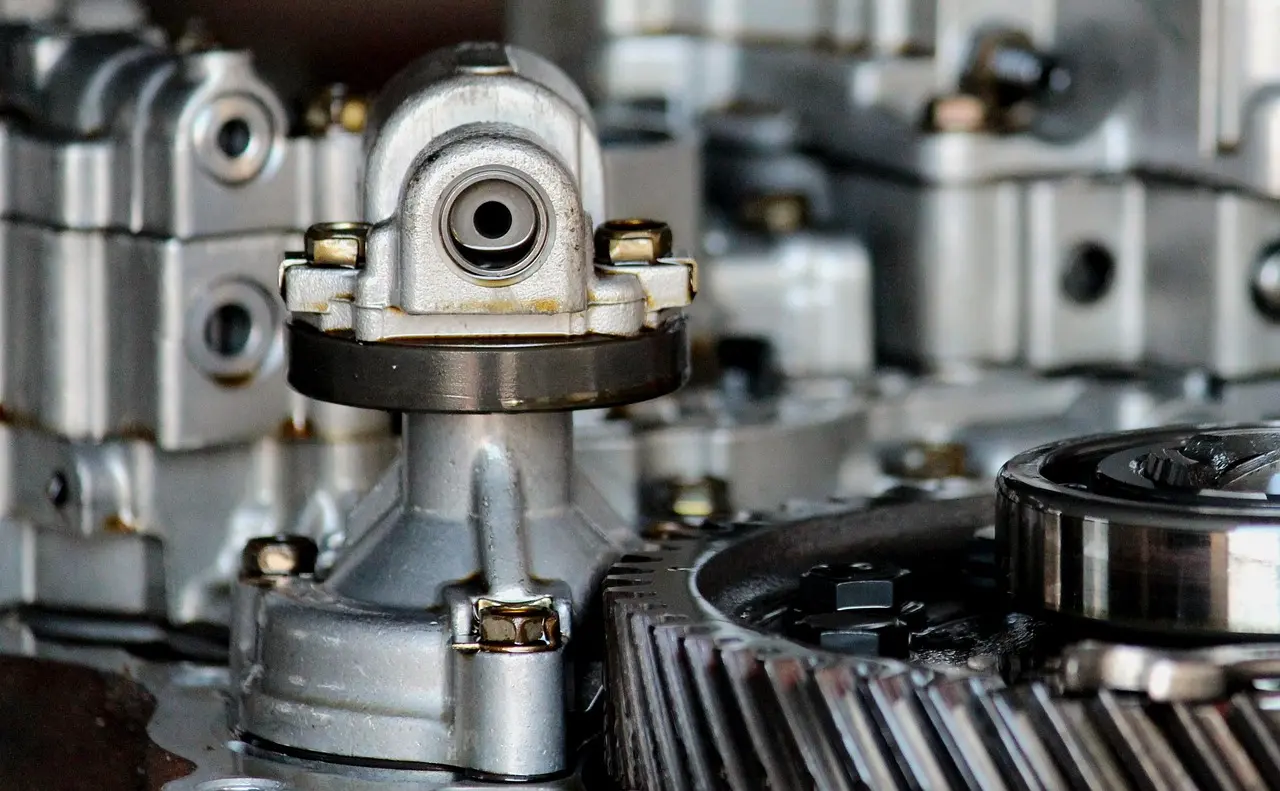
Between-gear slip usually comes from low, old, or wrong-spec fluid, hydraulic control faults in the valve body, shift solenoid or wiring faults, torque converter problems, or worn internal clutches. Modern automatics also rely on electronic control, so a wiring or module fault can imitate mechanical failure.
Fluid and hydraulic causes
Low transmission fluid can cause delayed gear shifting. Some vehicles require a specific type of transmission fluid specified by the manufacturer, so the level alone is not enough. A fluid that is dark, smells burnt, or looks contaminated often points toward heat, wear, or fluid breakdown rather than a simple top-off need.
The valve body controls hydraulic circuits. Sticking valves or worn passages can cause delayed shifts, flare, or wrong-gear selection. That kind of fault often looks like a mechanical problem from the seat, but the pressure path is the real issue.
Electronic and control causes
A shift solenoid controls fluid flow in many modern automatic transmissions. A failed solenoid, damaged wiring, poor connector connection, or control-module fault can cause slipping behavior or a wrong-gear selection. Diagnostic trouble codes help identify a detected circuit or operating condition, but they do not prove one part is failed.
Torque converter and wear
The torque converter transfers engine power in an automatic transmission. It can create shudder, overheating, or delayed engagement that resembles slip. Lockup clutch issues can mimic engine flare, especially at steady cruise. Worn clutch packs, bands, or other internal parts are more concerning because they usually point to deeper damage.
What fluid checks tell you
Fluid checks can narrow the fault quickly if you look at level, color, smell, and contamination together. Keep the fluid at the correct level, in the correct spec, and in clean condition. If the level is off or the fluid is damaged, the rest of the diagnosis changes fast.
What to inspect first
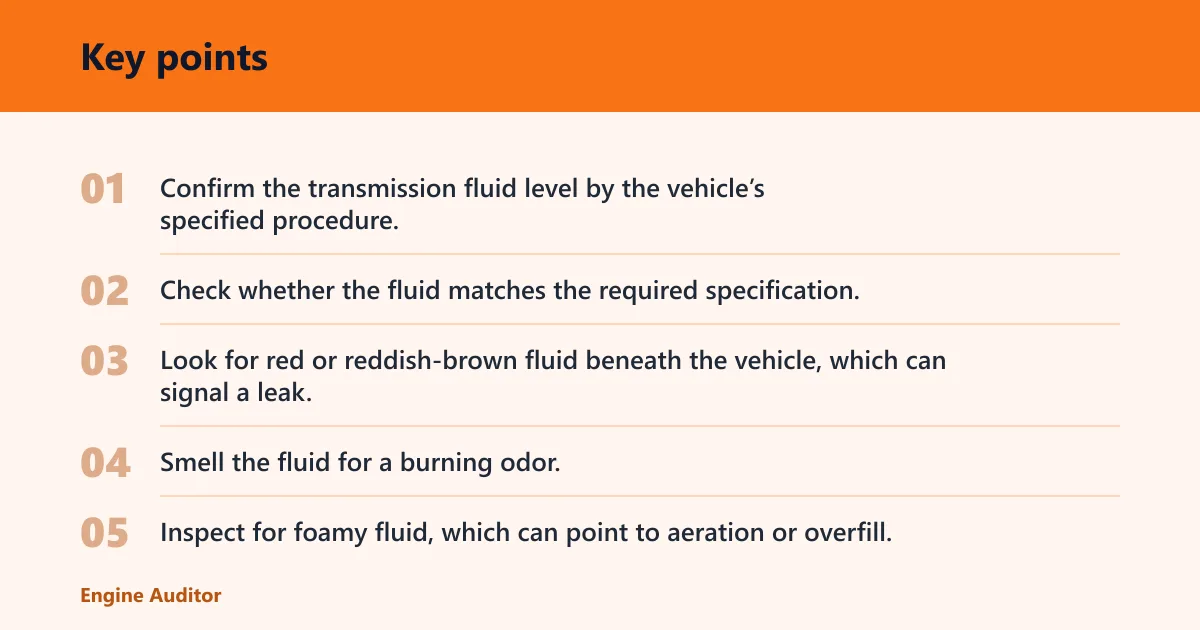
- Confirm the transmission fluid level by the vehicle’s specified procedure.
- Check whether the fluid matches the required specification.
- Look for red or reddish-brown fluid beneath the vehicle, which can signal a leak.
- Smell the fluid for a burning odor.
- Inspect for foamy fluid, which can point to aeration or overfill.
- Note any warning lights on the dash, including a Check Engine Light, Transmission Warning Light, or Powertrain Warning Light.
A burning smell can indicate overheating transmission fluid. That matters even more if the vehicle has been towing, climbing grades, or carrying heavy loads, because heat shortens transmission life. Transmission cooler restriction can make the problem worse by trapping heat in the fluid path.
Fluid leaks may appear as red or reddish-brown fluid beneath the vehicle. If the leak is active and the transmission has begun to slip, do not assume a top-off is enough. Low fluid plus heat can damage clutches quickly.
Why towing and heavy loads matter
Towing and heavy-load use raise fluid temperature and stress the cooler. If the cooler is restricted, the transmission can overheat even when the level looks acceptable. That is one reason repeated slip under load is a red flag, not just an annoyance.
How to narrow the fault
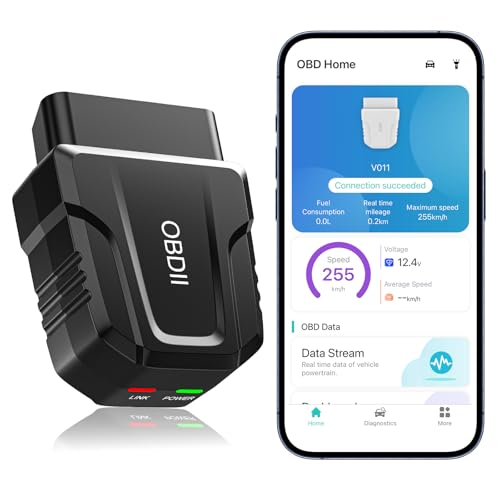
Use codes as clues, not proof. Read live data and compare commanded versus actual behavior, then pair that with pressure testing and a road-test pattern. A code may point toward an electrical circuit, while the real problem is low pressure, a valve body fault, or worn clutches.
What scan data can and cannot do
Diagnostic trouble codes identify a detected circuit or operating condition. They can point you toward a solenoid, sensor, wiring issue, or control fault, but they do not prove the part is the only cause. A pressure test matters because hydraulic control can fail even when the electronics look normal.
Suppose a scan tool shows a solenoid code, but the fluid is also dark and the transmission flares on the 2-3 shift. The code may be part of the story, yet the wear pattern could still involve valve body leakage or clutch damage. One clue is not the whole diagnosis.
Patterns that point to specific subsystems
- Fluid problem: Low level, burnt smell, delayed engagement, and leak evidence.
- Solenoid or wiring fault: Codes plus inconsistent shift timing or wrong-gear selection.
- Valve body issue: Flare, harsh shift, or delayed apply that comes and goes with temperature.
- Torque converter issue: Shudder, heat, or delayed engagement near lockup.
- Internal wear: Repeated slip, poor drive engagement, and pressure loss that does not clear after service.
Transmission repair ladder
The repair risk usually runs from fluid service to internal rebuild. That order matters because a small leak or bad fluid choice can be a cheap fix, while continued driving can spread heat and debris through the cooler and make the next repair far more expensive.
| Likely repair path | Typical scope | Repair risk | What usually justifies it |
|---|---|---|---|
| Fluid service | Correct fluid, level correction, leak repair, filter service where applicable | Lowest | Low level, wrong-spec fluid, mild delayed shift without major debris |
| Sensor or solenoid | Electrical diagnosis, connector repair, solenoid replacement | Low to moderate | Codes, erratic shifting, clear electrical fault evidence |
| Valve body | Hydraulic control repair or replacement | Moderate | Shift flare, harsh shift, wrong-gear selection, pressure irregularity |
| Torque converter | Converter replacement and related cleanup | Moderate to high | Shudder, delayed engagement, lockup fault, heat damage |
| Internal clutch wear | Disassembly, clutch replacement, seals, bands where applicable | High | Repeated slip, debris, poor pressure retention, no improvement after service |
| Rebuild or replacement | Full overhaul or complete unit replacement | Highest | Severe wear, multiple faults, metal contamination, true gear loss |
Will changing transmission fluid fix slipping? Sometimes, but only when the fault is fluid-related, the level is wrong, or the fluid has aged badly without major internal damage. It will not restore worn clutch material, fix a failed converter clutch, or undo a damaged valve body. A fresh fill is a diagnosis step, not a guarantee.
Can I drive with a slipping transmission?
A short trip may be reasonable if the slip is mild, the fluid level is correct, and there are no warning lights or overheating signs. Stop driving now if the slip repeats, the fluid smells burnt, the transmission gets hot, or the vehicle loses drive. Continued driving can spread heat and debris through the cooler.
When to stop driving now
- The engine revs but the vehicle does not move accordingly.
- You see a Check Engine Light, Transmission Warning Light, or Powertrain Warning Light with shifting trouble.
- The fluid is dark, burnt, or foamy.
- You notice a strong burning smell.
- The transmission slips more after towing, hauling, or climbing hills.
- The vehicle starts losing multiple gears or refuses to engage.
What does it mean when the engine revs but the car doesn’t accelerate? In a stepped automatic, that points to slip in the transmission path, often from pressure loss, clutch wear, or converter trouble. In a CVT, the same feeling can happen because the belt or chain and pulleys are not matching engine speed to road speed the way a stepped automatic does.
CVT diagnosis needs a different approach. A CVT may feel as if engine speed rises without a matching increase in road speed, but that does not follow the same shift pattern as a conventional automatic. If the vehicle has a CVT, use the manufacturer’s fluid and diagnostic procedure before guessing at a normal automatic fault.
Frequently asked questions
What are the warning signs of a slipping transmission?
Common warning signs include delayed shifts, sudden RPM increases, loss of acceleration, unusual noises, harsh shifts, and the engine revving while the vehicle does not move accordingly. A leak, burnt fluid, or warning light makes the situation more serious and raises the chance of heat damage.
Can I drive with a transmission that slips between gears?
Only if the problem is mild, brief, and not getting worse. If the slip repeats, the fluid smells burnt, the transmission overheats, or a warning light appears, stop driving and get it checked. Continuing to drive can spread debris and heat through the cooler and turn a smaller repair into major damage.
Is low transmission fluid the reason my car slips when shifting?
Low fluid is a top cause, and it can absolutely cause delayed gear shifting and slip. But you still need to know why the level is low and whether the fluid meets the manufacturer’s spec. A leak, overheating, or wrong fluid can all lead to the same symptom.
Can a bad solenoid cause transmission slipping?
Yes. A shift solenoid controls fluid flow in many modern automatics, so a failed solenoid, damaged wiring, poor connector connection, or control-module fault can cause slipping behavior or wrong-gear selection. Scan codes help point the way, but pressure testing is still needed before replacing parts.
How do I tell if the problem is the transmission or the torque converter?
A torque converter issue often brings shudder, overheating, or delayed engagement, especially near lockup or at light cruise. A transmission or valve body problem is more likely to show flare, wrong-gear selection, or repeated delayed shifts. Fluid condition, scan data, and pressure testing help separate them.
What transmission fluid condition means trouble?
Dark fluid, a burnt smell, foam, or contamination means trouble. Red or reddish-brown fluid under the vehicle also points to a leak. If the fluid is not the correct specification for the vehicle, that is a problem too, even if the level looks acceptable.
When is slipping a sign of internal transmission failure?
Slip points toward internal failure when it keeps coming back after the fluid is corrected, when pressure testing shows loss, when debris is present, or when multiple gears start to fail. If the vehicle loses drive, shows severe flare, or has metal contamination, rebuild or replacement becomes more likely than a simple service.
Products related to this article
Sponsored / affiliate links. As an Amazon Associate I earn from qualifying purchases. I may earn additional commission from eligible campaigns.