Passenger Vehicle Types: Which One Fits Your Needs?
Choose the body type that matches your real use: sedan or hatchback for 1–4 people and tight parking, wagon or compact SUV for mixed cargo and city use, minivan for 5+ passengers or frequent child seats, and larger SUV only if you need its space and ground clearance. Picking the wrong one means paying for unused space, harder parking, worse fuel economy, or cramped trips. This guide compares passenger vehicle types by passenger count, cargo needs, driving environment, and budget.
Passenger vehicle types at a glance
What each body style is in plain language
A sedan is typically described as having four doors, a separate trunk, and a lower roofline. A hatchback keeps the rear cargo area behind a liftgate, so the back seats and cargo space can work together. A wagon stretches the roof farther rearward and gives you a long cargo bay with car-like manners.
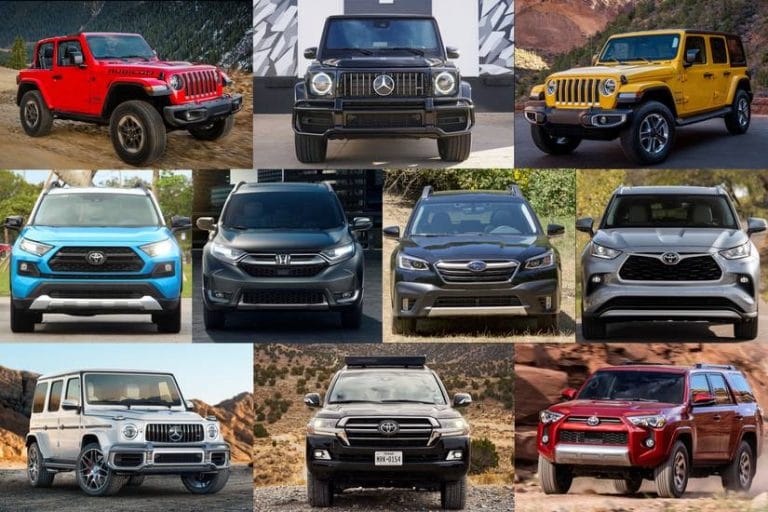
SUVs sit higher and usually offer more ground clearance, with two-row and three-row layouts. Crossovers look similar, but they are built more like cars than truck-based SUVs. Minivans use sliding doors and a boxier shape to maximize seating access and interior volume. Coupes are two-door or sport-oriented, with style taking priority over rear-seat usefulness.
The core tradeoff: space, access, and size
Every passenger vehicle type gives up one advantage to gain another. More room usually means more length, height, or weight. That can help with family duty and cargo runs, but it can also make parking harder, increase fuel use, and complicate child-seat installation if the cabin opening is narrow.
Think in terms of use, not labels. A smaller vehicle can be easier to live with in a dense city. A bigger one can save you from constant folding and shuffling when you carry people, strollers, sports gear, or bulkier luggage.
Quick notes on who each type tends to fit
- Sedan: best when you want a separate trunk, a lower driving position, and simpler parking.
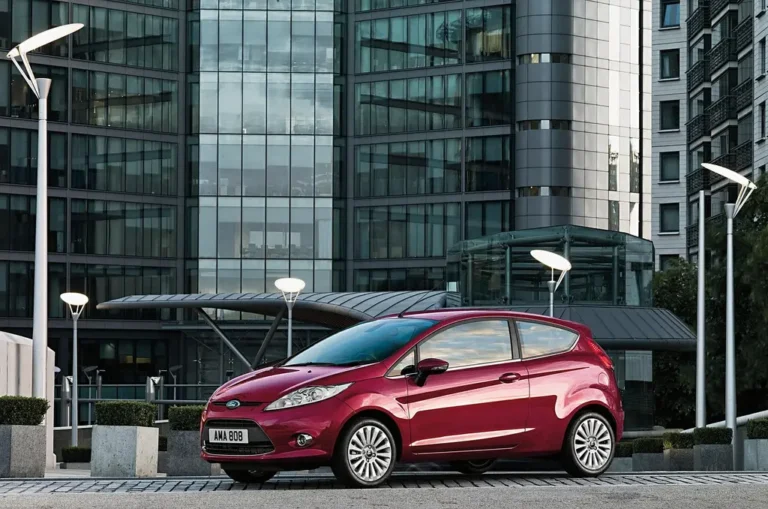
- Hatchback: best when compact size matters, but you still need a flexible cargo area.
- Wagon: best when you want sedan-like driving with more rear storage.
- Crossover: best when you want a car-based ride with SUV styling and a higher seat height.
- SUV: best when you need more ride height, larger seating options, or available AWD/4WD.
- Minivan: best when passenger access and interior space matter more than image.
- Coupe: best when you value style or a sportier layout and rarely need rear-seat access.
Compare the main body styles
Sedan, hatchback, and wagon
Sedans usually have better fuel economy than larger body styles, partly because they are lower and lighter. The trunk is isolated from the cabin, which helps keep luggage out of sight and can reduce cabin noise. The tradeoff is limited opening size, so large boxes and strollers are harder to load.
Hatchbacks keep the cargo area open to the cabin when the rear seats are folded. That makes them more flexible than sedans for tall items, shopping runs, and mixed passenger-cargo use. Wagons go one step farther by stretching the roofline, which often creates a more usable rear space than a sedan without the bulk of many SUVs.
SUV, crossover, and minivan
SUVs are the broadest group. They can come in two-row or three-row versions, often with AWD or 4WD available, and they usually sit higher than cars. That helps with snow clearance, curb approach, and rougher roads, but the added height and mass can reduce fuel economy and make step-in height less friendly for small children.
Crossovers use car-based construction, so they often drive more like a car than a body-on-frame SUV and are usually more fuel-efficient than heavier truck-based models. Minivans are the family specialists here: sliding doors, three rows, and a cabin designed for easy seat access. If you install child seats often, that access matters more than image or stance.
Coupe and where it stops making sense
Coupes trade practicality for a sleeker shape and a sport-oriented feel. They usually have poorer rear-seat access, less usable back seat space, and a smaller cargo opening than a sedan or hatchback. Once rear passengers matter often, the coupe stops being a sensible daily choice.
A common first-timer mistake is choosing a coupe for occasional rear passengers and later discovering that the front seats must be moved every time someone climbs in. That is not a small inconvenience. It changes the whole ownership experience.
Which vehicle type fits your daily needs?
Start with the number of people you carry, then ask how often the cargo area has to work at the same time. A two-seat commute, a four-person school run, and a six-person weekend trip point to different body styles. Parking space and driveway length can matter as much as cabin size.
Passenger count and child-seat access
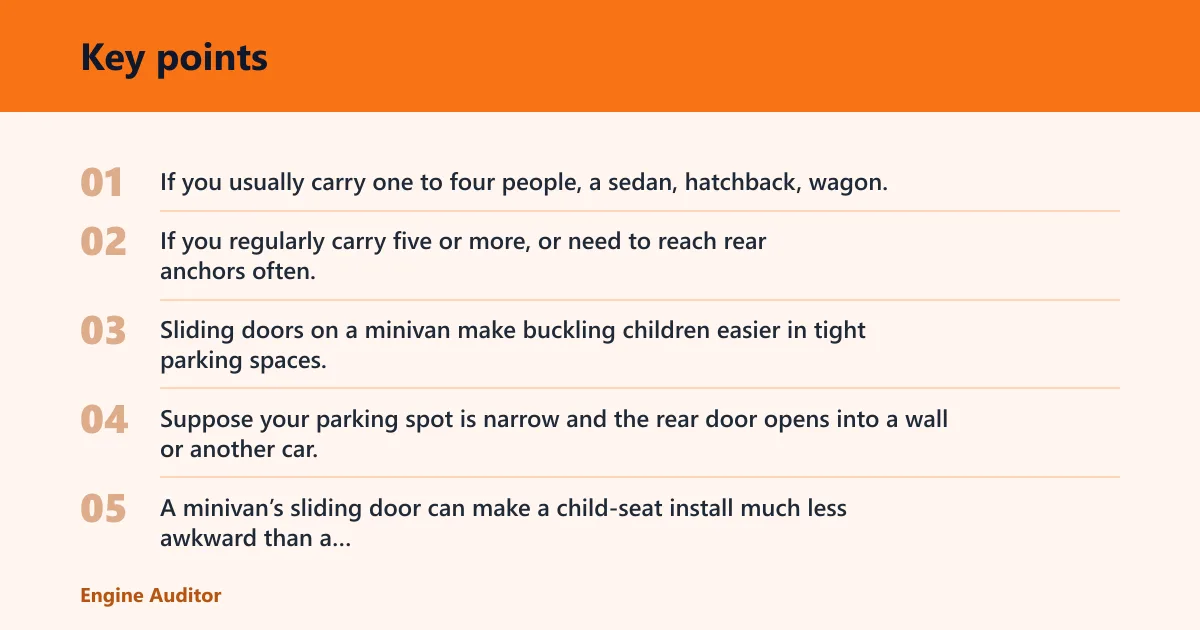
If you usually carry one to four people, a sedan, hatchback, wagon, or compact crossover is usually enough. If you regularly carry five or more, or need to reach rear anchors often, a minivan or three-row SUV is the more practical fit. Sliding doors on a minivan make buckling children easier in tight parking spaces.
Suppose your parking spot is narrow and the rear door opens into a wall or another car. A minivan’s sliding door can make a child-seat install much less awkward than a wide-swinging door. That difference matters on school mornings and in crowded lots.
City parking and tight streets
Smaller footprints are easier in the city. Sedans and hatchbacks usually win for parking ease because they are shorter and lower, which helps with garages, curbside gaps, and tight turns. Coupes can also be compact, but their rear-seat compromise often outweighs that advantage.
Crossovers can still work well in city use if you choose a compact model. Large SUVs and three-row minivans are harder to thread into small parking spaces, even if their cameras and sensors help. Size still matters when the curb cut is short and the garage opening is narrow.
Cargo habits and folded-seat use
Ask what you carry and how often the rear seats must fold. If you transport groceries, suitcases, tools, or sports gear once in a while, a hatchback or wagon may be enough. If you need upright cargo space, flat-folding seats, or easy loading height, the hatchback, wagon, and SUV family usually make more sense than a sedan trunk.
Cargo volume is usually measured in cubic feet, but the number alone does not tell the full story. A tall opening matters when you load a stroller. A low trunk lip matters when you lift heavy bags. Folded seats change usable space more than a brochure headline suggests.
Vehicle type decision matrix
This matrix uses a 1–5 score, where 5 is strongest for that criterion. Scores change with body size, seat layout, and drivetrain, so the notes matter as much as the number. Use it as a filter, not a final verdict.
| Vehicle type | Passenger room | Cargo flexibility | City friendliness | Fuel economy | Winter traction potential | Child-seat access |
|---|---|---|---|---|---|---|
| Sedan | 3 | 2 | 5 | 4 | 3 | 3 |
| Hatchback | 3 | 4 | 5 | 4 | 3 | 3 |
| Wagon | 4 | 4 | 4 | 4 | 3 | 4 |
| Crossover | 4 | 4 | 4 | 3 | 4 | 4 |
| SUV | 4 | 5 | 2 | 2 | 5 | 4 |
| Minivan | 5 | 5 | 3 | 3 | 3 | 5 |
| Coupe | 1 | 2 | 5 | 4 | 2 | 1 |
Passenger room scores
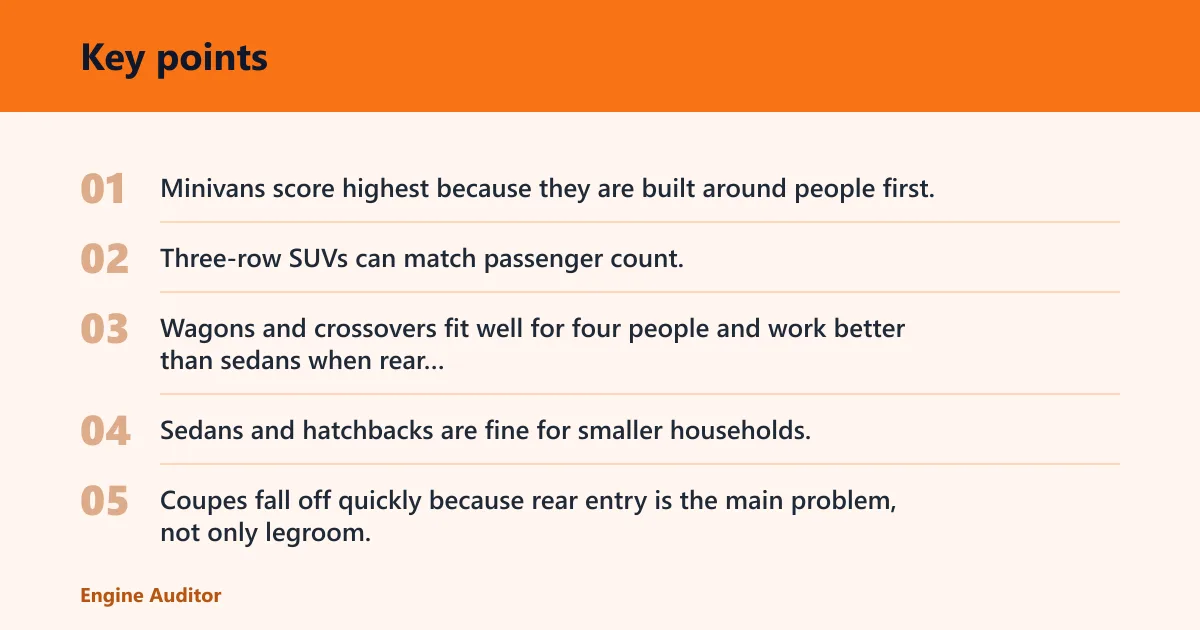
Minivans score highest because they are built around people first. Three-row SUVs can match passenger count, but the last row is often tighter and harder to reach. Wagons and crossovers fit well for four people and work better than sedans when rear passengers need more headroom or easier entry.
Sedans and hatchbacks are fine for smaller households, but rear-seat comfort drops once you add taller adults or frequent booster seats. Coupes fall off quickly because rear entry is the main problem, not only legroom.
Cargo flexibility scores
SUVs, minivans, and hatchbacks lead here because their rear openings make loading easier. Minivans and large SUVs can swallow bulky cargo, but the minivan often does it with less effort because the floor is lower and the cabin shape is more square. Wagons are strong when you want long cargo length without moving to a full-size SUV.
Sedans trail because the trunk opening limits what fits, even if the trunk volume sounds adequate on paper. That is why a sedan can feel cramped for weekly errands while a hatchback with less stated volume feels easier to live with.
City friendliness scores
Sedans and hatchbacks are easiest to park. Their shorter lengths and lower stance help in garages, curbside gaps, and dense neighborhoods. Crossovers usually stay manageable if they are compact, while large SUVs and minivans demand more space to park and turn.
Ground clearance helps over tall curbs and winter slush, but it does not help squeeze into a cramped spot. A taller vehicle can still be the wrong choice for a narrow garage or a busy apartment lot.
Fuel economy, winter traction, and child-seat access notes
Fuel economy usually favors sedans, hatchbacks, and many wagons or crossovers built on car platforms. Larger SUVs and minivans generally use more fuel because they are heavier and less aerodynamic. The exact result depends on engine, weight, and drivetrain.
Winter traction depends on tires, drivetrain, and ground clearance together. AWD or 4WD can help a vehicle move off slick pavement, and higher ride height helps avoid scraping snow ruts. But all-wheel drive does not fix poor tires, and it does not shorten stopping distance on ice.
Child-seat access is best in minivans because the sliding doors and wide openings reduce awkward reaching. Crossovers and SUVs can also work well, especially with wide rear doors. Coupes are the worst fit because access is tight and rear buckles are harder to reach.
How do sedan, hatchback, SUV, and minivan compare?
The core tradeoff is simple: sedan and hatchback usually win on parking and fuel use, while SUV and minivan win on room and access. The right answer depends on how often you carry people, how often you carry bulky cargo, and whether you need winter clearance or easy child-seat installs.
| Criterion | Sedan | Hatchback | SUV | Minivan |
|---|---|---|---|---|
| Best for families | Good for small families | Good for small families with gear | Good for larger families if seat access is acceptable | Best for frequent child seats and 5+ passengers |
| Best for city driving | Strong | Strong | Mixed, better if compact | Mixed, harder in tight lots |
| Best for cargo and road trips | Fair | Strong | Strong | Strongest for people plus cargo |
Best for families
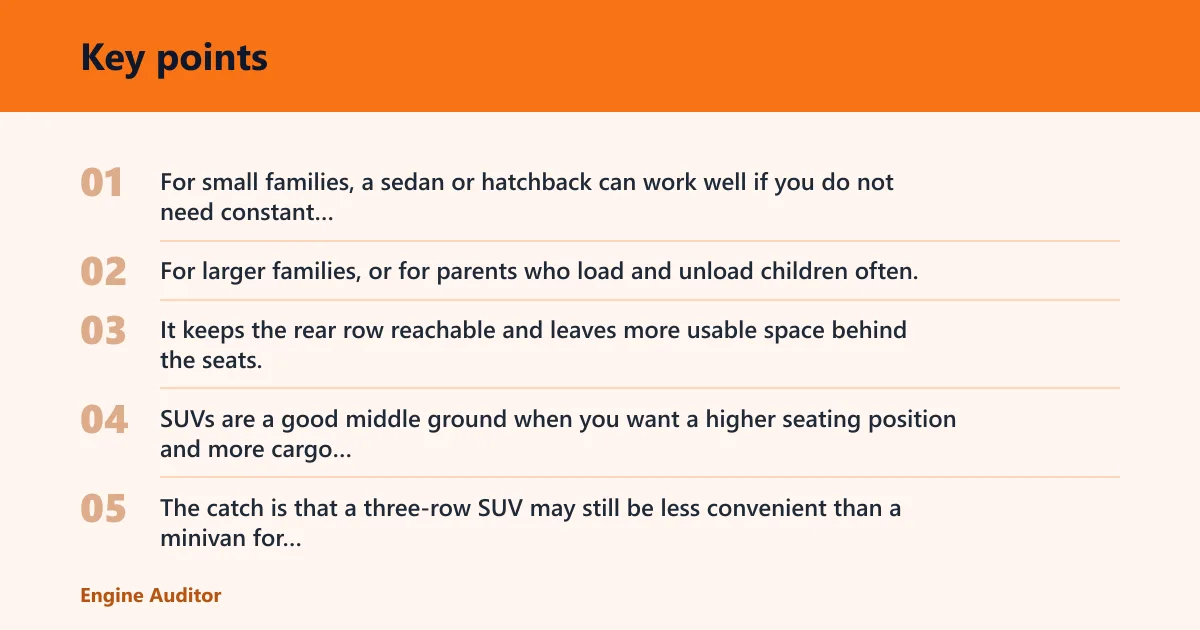
For small families, a sedan or hatchback can work well if you do not need constant child-seat access. For larger families, or for parents who load and unload children often, the minivan is the clearest choice. It keeps the rear row reachable and leaves more usable space behind the seats.
SUVs are a good middle ground when you want a higher seating position and more cargo room than a sedan offers. The catch is that a three-row SUV may still be less convenient than a minivan for day-to-day child-seat use.
Best for city driving
Sedans and hatchbacks usually fit city use best because parking is easier and fuel use is often lower. A compact crossover can also work if you need a slightly higher seat or more cargo flexibility. Full-size SUVs are usually the hardest fit in dense parking.
Picture a 6-foot-wide garage door, a narrow curb lane, and a weekly grocery run. A sedan or hatchback will feel much less awkward than a large SUV, especially if you park often in the same tight spot.
Best for cargo and road trips
For mixed cargo and road trips, hatchbacks, wagons, crossovers, SUVs, and minivans all have a place. The difference is how easily they swallow luggage and how much passenger comfort they preserve at the same time. A wagon can be a sweet spot if you want car-like driving with long cargo room.
If you need both people space and bulky cargo room, minivans and larger SUVs lead. If you mostly carry two to four people and occasional luggage, a hatchback or wagon may be the better balance.
Choose sedan if… / Choose hatchback if…
Choose a sedan if you want a separate trunk, a lower ride height, and a car that is usually easier to park and often better on fuel than larger body styles. Choose a hatchback if you want similar size and drivability but need the rear opening and fold-flat seats for more flexible cargo use.
When a sedan is the better fit
- You usually carry 1–4 people.
- You park in tight garages or crowded street spaces.
- You want a trunk-separated cargo area for luggage or groceries.
- You prefer lower running costs and a simpler shape.
When a hatchback is the better fit
- You want a compact footprint with more cargo flexibility.
- You fold the rear seats often for boxes, gear, or a stroller.
- You still need easy city parking.
- You do not want to move up to a larger SUV just for cargo access.
When to skip both and move up a size
Skip both if rear-seat access is a daily problem, if child seats are installed often, or if you routinely carry bulky gear that will not fit through a sedan trunk or hatchback opening. In those cases, a wagon, crossover, SUV, or minivan solves the real problem instead of hiding it.
What changes the answer: ground clearance and drivetrain
Ground clearance is the height from the road surface to the underside of the vehicle. Higher clearance helps over snow, curbs, potholes, and rougher driveways. That is why SUVs and many crossovers sit higher than sedans and hatchbacks. It helps in winter, but it does not erase the need for good tires.
FWD, RWD, AWD, and 4WD
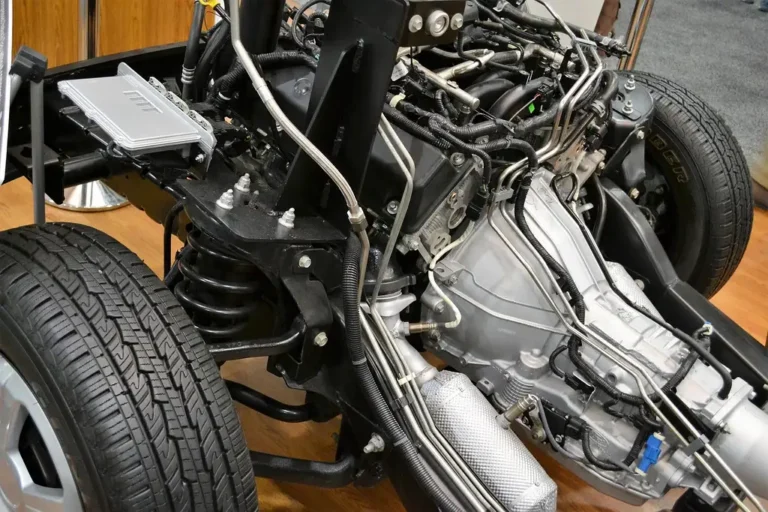
Front-wheel drive is common because it is efficient and handles well in normal commuting. Rear-wheel drive can feel balanced but is usually less common in family-focused models. AWD sends power to more than one axle as needed, which can help on slippery roads. 4WD is usually aimed at harder use and may be more common on traditional SUVs and trucks. (Wikipedia)
The drivetrain affects traction, but not every version of a body style gets the same result. A front-wheel-drive hatchback on winter tires can outperform a rear-wheel-drive SUV on worn all-season tires. Body style is only part of the answer.
Why higher ride height helps in snow and curb use
Extra height can keep the vehicle from plowing into deep slush or scraping over buried curb edges. That matters in unplowed neighborhoods and on rough access roads. It does not mean the vehicle will stop better or turn better on ice.
That distinction matters. A taller vehicle with poor tires can still slide on a snowy hill. Traction comes from the tire contact patch first, then drivetrain, then ground clearance.
Why tires still matter more than badge or body style
Winter tires improve grip, braking, and steering in cold conditions across almost every body style. That is why “safest in snow” should not be read as “highest ride height wins.” For winter use, the best setup is usually the right tires on the right drivetrain for your roads.
Frequently asked questions
What are the main passenger vehicle types?
The main types are sedan, hatchback, wagon, SUV, crossover, minivan, and coupe. Those categories differ by seating layout, cargo opening, ride height, and access. The right one depends on passenger count, parking space, cargo habits, and how often you drive in snow or on rougher roads.
Which passenger vehicle type is best for families?
Minivans are usually best for families that install child seats often or carry five or more people. Crossovers and SUVs work well when you want a higher seat and more cargo room, but they usually give up some child-seat convenience. For smaller families, a hatchback can still be enough.
What type of vehicle is easiest to park and drive in the city?
Sedans and hatchbacks are usually easiest because they are shorter and lower. That makes them simpler to fit into garages, street spots, and tight turns. Compact crossovers can still work in the city, but large SUVs and minivans are harder to place in small spaces.
Which passenger vehicle type gets the best fuel economy?
Sedans often return the best fuel economy among common passenger body styles, with many hatchbacks and some wagons close behind. Crossovers usually trail those cars because they sit higher and weigh more. Larger SUVs and minivans usually use more fuel, especially in heavier trims or with all-wheel drive.
Is a crossover the same as an SUV?
No. A crossover is usually built on car-based construction and often drives more like a car. An SUV may use a truck-based or more rugged platform, though the label is not always strict. The difference matters because it affects ride height, fuel economy, and how the vehicle handles on-road versus rougher use.
Which passenger vehicle type has the most cargo space?
Minivans and larger SUVs usually offer the most cargo space, but minivans often provide the most usable interior space for people plus luggage. A hatchback can surprise buyers because folding the rear seats creates a flexible opening, yet it still usually cannot match a minivan for total people-and-cargo room.
Products related to this article
Sponsored / affiliate links. As an Amazon Associate I earn from qualifying purchases. I may earn additional commission from eligible campaigns.