Can Low Oil Cause Engine Knocking? What to Do
Yes. Low oil can cause knocking by dropping oil pressure, but if the knock does not fade within seconds after topping up, shut the engine off. Continued running can destroy bearings fast. This guide shows how to separate a temporary oil-pressure issue from urgent lubrication failure or existing bearing damage.
Can low oil cause engine knocking?


Yes. Low oil can contribute to engine knocking when the level drops enough to expose the pickup tube, let air into the oil stream, or reduce pressure to the valvetrain and bearings. Oil level and oil pressure are different problems. A dipstick can show a low fill level even while the engine still has enough pressure for a short period.
That is why the first check is always the dipstick on level ground after the engine has sat. Compare the oil film to the minimum and full marks. If the level is low, add the correct oil. If the knock stays after that, do not assume the problem is solved.
What low oil does to lubrication and pressure
Oil pressure depends on enough oil, a working pump, and safe clearances. When the sump level drops, the pump can uncover the pickup tube on hard acceleration, braking, or cornering. That can pull in air and create aeration, which makes pressure unstable instead of steady.
Even slightly low oil levels can create unstable pressure during hard acceleration or steep inclines. That matters because the engine does not need a fully empty sump to lose protection. A low reading can still coexist with serious pressure loss at the bearings.
Why low oil can create ticking, knock, or both
Low oil can produce two different noises. Hydraulic lifters may tick on cold start and fade within 30 to 60 seconds as pressure builds. A deeper knock points lower in the engine and usually reflects rod knock or bearing wear. Those sounds are not treated the same.
An oil pump builds pressure after startup, and a healthy system should recover quickly. If the pump is worn, sludge-blocked, or contaminated, pressure can stay low throughout the engine. That can cause ticking at the top end or a deeper knock from the lower end.
When the noise is from oil starvation versus damage
A brief noise that fades after adding oil often means the engine was starved by a low level, not yet damaged. A knock that rises with engine speed, gets louder under load, or remains when the engine is warm suggests rod knock or bearing damage. At that point, the issue may require repair, rebuild, or replacement.
Picture a compact sedan that starts with a light tick on a cold morning. If the sound fades before the first minute is up and there is no warning light, that pattern fits lifter noise better than rod knock. Now picture the same car making a deep thud that follows RPM and grows on a hill. That is a different problem.
What the sound pattern tells you
The sound pattern gives the fastest clue. A cold-start tick that fades in 30 to 60 seconds points to an oil-fed valvetrain part, often hydraulic lifters. A deep knocking noise that rises with engine speed is a warning sign. If the knock gets worse under load, think lower-end bearing wear or damage first.
Do not guess from volume alone. A loud top-end tick can sound alarming but still be less severe than a deep rhythmic knock. The direction of the sound, how long it lasts, and how it changes with RPM matter more than the sheer loudness.
Cold-start tick that fades in 30 to 60 seconds
This pattern often fits hydraulic lifters or another oil-fed valvetrain component. The key detail is duration. If the noise fades within about 30 to 60 seconds and does not return under load, the engine may just need oil pressure to stabilize after sitting.
That does not mean ignore it forever. Repeated startup ticking can point to low oil, oil thins from fuel dilution, contamination, or a pump that takes too long to build pressure. But the short fade window is different from a persistent knock.
Knock that rises with RPM
A deep knocking noise that rises with engine speed is a warning sign. Rod knock is often described as a deep, rhythmic knocking noise that gets faster as RPM rises. That pattern usually points to crankshaft or connecting rod bearings rather than a valve train tick.
When the sound tracks RPM, do not keep revving the engine to confirm it. Higher speed can increase bearing damage quickly if the oil film is already compromised.
Knock that gets louder under load
Rod knock is most pronounced under load. If the sound becomes sharper when you accelerate, climb a grade, or ask for more throttle, the lower end should be checked. That load sensitivity is one of the clearest clues that the issue is not just a cold-start lifter tick.
A common first-timer mistake is to hear the noise only while driving, then assume it will go away at idle. Persistent load-sensitive knock often means the engine is already wearing metal on metal.
Engine knock triage table
Use this table to sort the symptom before you guess. Start with the sound pattern, then decide whether a top-up is worth trying or whether you should shut the engine off and arrange inspection or towing.
| Sound pattern | Likely cause | Next action | Safe to drive? | Inspect/tow now? |
|---|---|---|---|---|
| Cold-start tick under 60 seconds | Hydraulic lifters or other oil-fed valvetrain parts building pressure | Check the dipstick on level ground; top up if low; listen again after startup | Usually yes if the tick fades quickly and no warning light stays on | Inspect soon if it repeats often |
| Knock that rises with RPM | Rod knock or lower-end bearing wear | Stop revving, check oil level once, then shut down if the knock remains | No, if the knock is persistent | Yes, inspect or tow now |
| Knock under load | Connecting rod or crankshaft bearing damage, or pressure loss under demand | Pull over and check the oil level; do not keep driving if the noise worsens with throttle | No, if it stays under load | Yes, inspect or tow now |
| Noise plus red oil-pressure light | Urgent lubrication failure, pump problem, or severe low oil | Shut the engine off as soon as it is safe | No | Yes, tow now |
| Noise that disappears after adding oil | Low oil level was the cause | Confirm the level is between minimum and full; check for leaks or consumption | Only if the noise is gone and no warning light remains | Inspect soon if it returns |
Use the table without stretching the diagnosis. If the sound is a short cold tick and it stops, that is different from a persistent lower-end knock. If the noise returns after a top-up, treat it as more than a simple low-level problem.
How to check oil the right way
Read the dipstick with the vehicle parked on level ground after the engine has sat. That gives the oil time to drain back and keeps the reading honest. The first diagnostic step starts here because it separates a low level from a deeper mechanical fault.
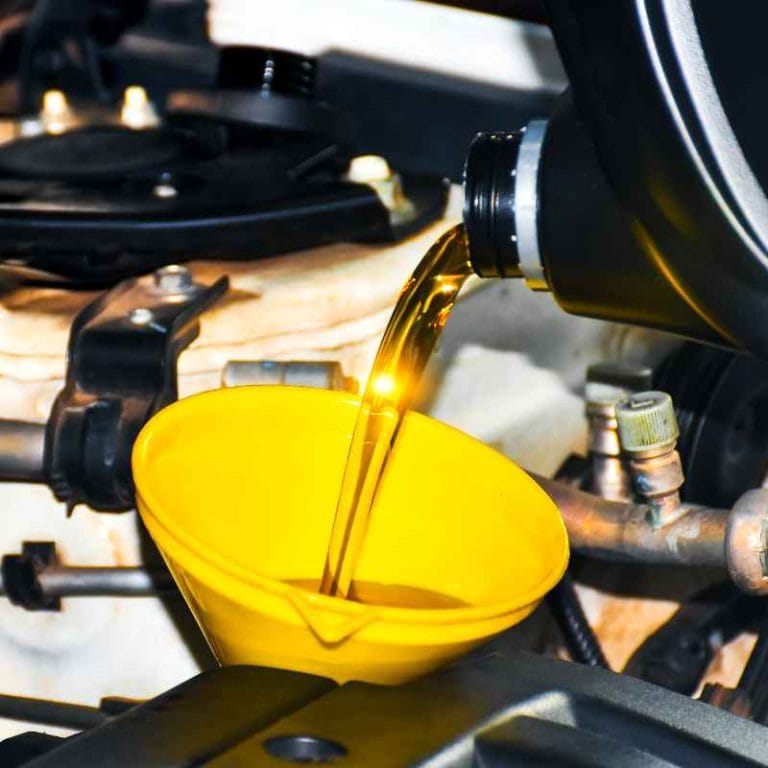
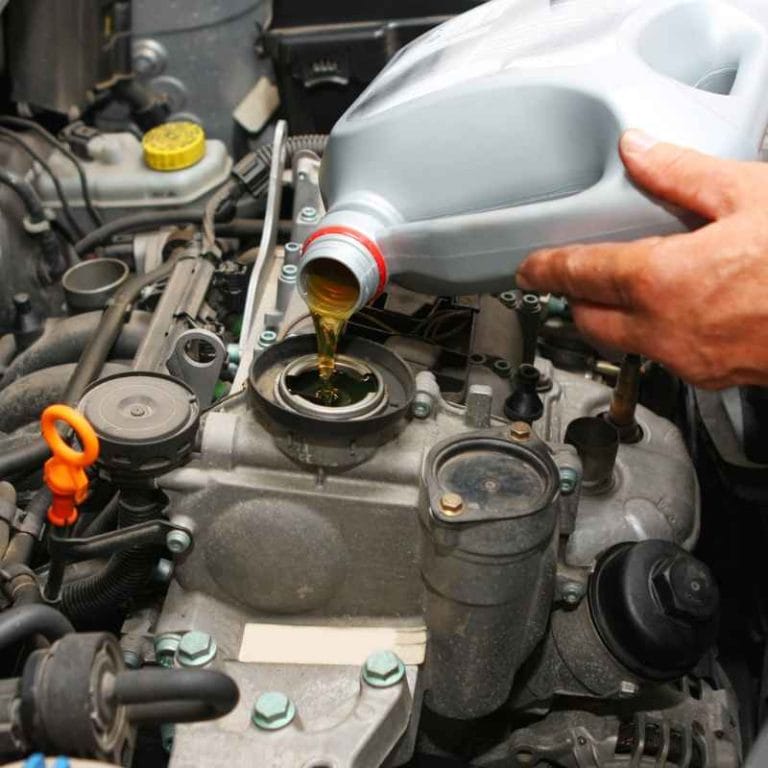
Compare the film to the minimum and full marks. If it is at or below minimum, add the correct oil in small amounts and recheck. Do not fill past the full mark. Too much oil can aerate and create more trouble.
- Park on level ground.
- Let the engine sit long enough for a stable reading.
- Pull the dipstick, wipe it clean, and reinsert it fully.
- Pull it again and read the level against the minimum and full marks.
- Add the correct oil if the level is low.
- Start the engine and listen for the knock again.
Suppose the dipstick shows oil below the minimum mark and the engine has a light tick at startup. After adding oil to the proper range, the tick may fade as pressure recovers. If the same engine still makes a deep rhythmic knock after the top-up, the oil level was not the whole story.
Is the red oil light on?
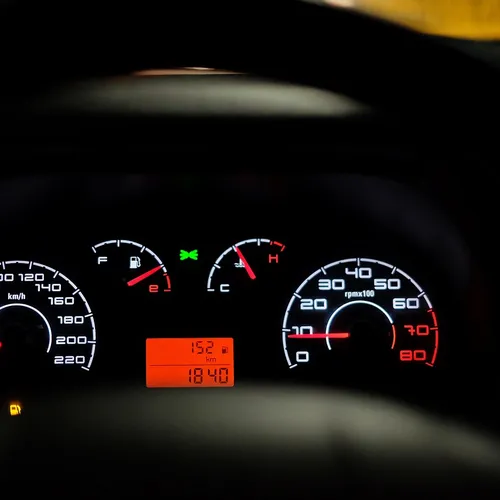
A red oil-pressure light means stop the engine as soon as it is safe. That warning is different from a low-oil level message and different again from an oil-change reminder. If the red pressure light stays on, it suggests pressure loss rather than just a low fill level.
Low oil pressure can damage bearings quickly. The engine may lose power or shut off, and the damage can start before anything is visible from outside. Do not keep driving on a persistent red oil-pressure warning.
Red pressure warning versus oil-change reminder
A red oil-pressure light is urgent. A low oil level message means top up soon and check for leaks. An oil-change reminder only tracks service interval and does not mean the engine is out of oil. Confusing those messages is a common mistake.
The oil-can symbol on many dashboards is the one to treat as stop-now when it is red and persistent. If the symbol comes on with a knock, the problem may already be affecting the bearings.
Why you should shut the engine off at once
Oil pressure is what keeps the crankshaft and connecting rod bearings separated by a thin oil film. Without it, metal contact begins fast. That can score the bearings and crankshaft, and the damage may push the engine toward rebuild or replacement.
If the red light appears while the engine is knocking, pull over and shut it off. Do not try to “see if it clears.” A few more minutes can turn a repairable problem into a much larger one.
Will adding oil stop engine knock?
Sometimes. A top-up can quiet the engine if the problem is only a low oil level and the noise has not progressed to bearing damage. It will not fix rod knock, a failed oil pump, or bearings that are already worn or scored. If the knock persists after refilling, stop the engine.
Adding oil helps only when the engine was short on quantity, not when the pressure system has failed. After refilling, listen for a brief recovery period. If the sound fades quickly and the warning clears, the issue may have been low level. If not, look deeper.
When a top-up can quiet the engine
A top-up is worth trying when the dipstick is low, the red pressure light is not staying on, and the sound is closer to a short tick than a deep knock. In that case, oil level was likely the immediate cause of the poor pressure.
Recheck the dipstick after adding oil. Stay between the minimum and full marks. A small refill is enough to restore pickup coverage in many cases, but it is not a license to keep driving if the noise remains.
When the noise points to rod knock or bearing wear
If the noise is deep, rhythmic, faster with RPM, and stronger under load, think rod knock. That pattern points to the crankshaft and connecting rod bearings, which depend on a pressurized oil film. Once those surfaces are damaged, oil alone cannot reverse the wear.
Do not mistake a quieter idle for recovery. Bearing noise can soften at idle and return on throttle. That pattern still needs inspection.
What to do after refilling the crankcase
After topping up, start the engine only long enough to listen. If the tick disappears, monitor the level and look for leaks or high oil consumption. If the knock stays, or the red oil-pressure light returns, shut it down and arrange inspection or towing.
Do not overfill the engine while trying to “force” the noise away. Excess oil can aerate, and aerated oil can reduce pressure instead of improving it.
Why oil got low in the first place
Low oil usually has a cause. Leaks, burning oil, and skipped maintenance are the common ones. High-mileage engines may consume oil between services, and turbocharged engines can be more sensitive to oil condition and oil level because the turbo depends on steady lubrication.
Sludge and contamination can also block passages or slow pressure recovery. An oil pump with wear or a pickup issue can make the whole engine run low on pressure, even when the dipstick is only slightly low. That is why the cause matters after the immediate fix.
Leaks, burning oil, and neglected maintenance
Check for wet spots under the vehicle, oil around the valve cover or filter area, and smoke from the tailpipe that may suggest burning oil. A neglected service interval can also leave the sump low long before the warning light appears.
If the engine regularly drops from full to minimum, the fix is not just adding oil. The leak or consumption pattern has to be found.
High-mileage engines and turbocharged engines
High-mileage engines often tolerate less margin before pressure issues show up. Turbocharged engines can also punish low oil more quickly because the turbocharger spins on a thin oil supply. A small level drop can matter more in those engines than many drivers expect.
That makes the dipstick reading worth treating seriously, even when the engine still sounds “mostly normal.” The safe range is between minimum and full, not “close enough.”
Sludge, contamination, and oil pump problems
Sludge can reduce flow, slow pump pickup, and starve the top end or bottom end of the engine. Contamination can also damage the pump or clog small oil passages. If pressure is unstable, the problem may be beyond a simple refill.
An oil pump fault can reduce pressure throughout the engine, so the same knock may appear at idle, cruise, and load. That is a strong reason to inspect instead of driving through it.
Frequently asked questions
Can low oil cause engine to make noise?
Yes. Low oil can cause ticking, tapping, or knocking. A short cold-start tick that fades within 30 to 60 seconds often points to lifters, while a deep knock that rises with RPM points more toward rod knock or bearing wear.
How do I tell rod knock from lifter ticking?
Rod knock is usually deep, rhythmic, and faster as RPM rises, then worse under load. Lifter ticking is lighter, often comes on at cold start, and may fade within 30 to 60 seconds. Persistent warm knock is more concerning than brief startup tick.
Is it safe to drive if the oil pressure light is on?
No. A red oil-pressure light means stop the engine as soon as it is safe. If the light stays on, do not keep driving. Shut the engine off, check the oil level only after stopping, and arrange tow or inspection if the warning persists.
What should I do first if my engine starts knocking?
Check the oil level first on level ground after the engine has sat. If it is low, add the correct oil and recheck. If the red oil-pressure light is on, or the knock continues after the top-up, shut the engine off and do not drive it.
Products related to this article
Sponsored / affiliate links. As an Amazon Associate I earn from qualifying purchases. I may earn additional commission from eligible campaigns.