Why Is My Engine Knocking? Causes, Urgency, Checks
Engine knocking is usually detonation, valve train noise, or rod knock; if the knock is deep, gets louder with RPM, or comes with an oil pressure light, shut the engine off. Ignoring the wrong kind can turn a cheap fix into bearing, piston, or crankshaft damage. This guide shows how to identify the sound, judge urgency, and run the first three checks fast.
What engine knock means
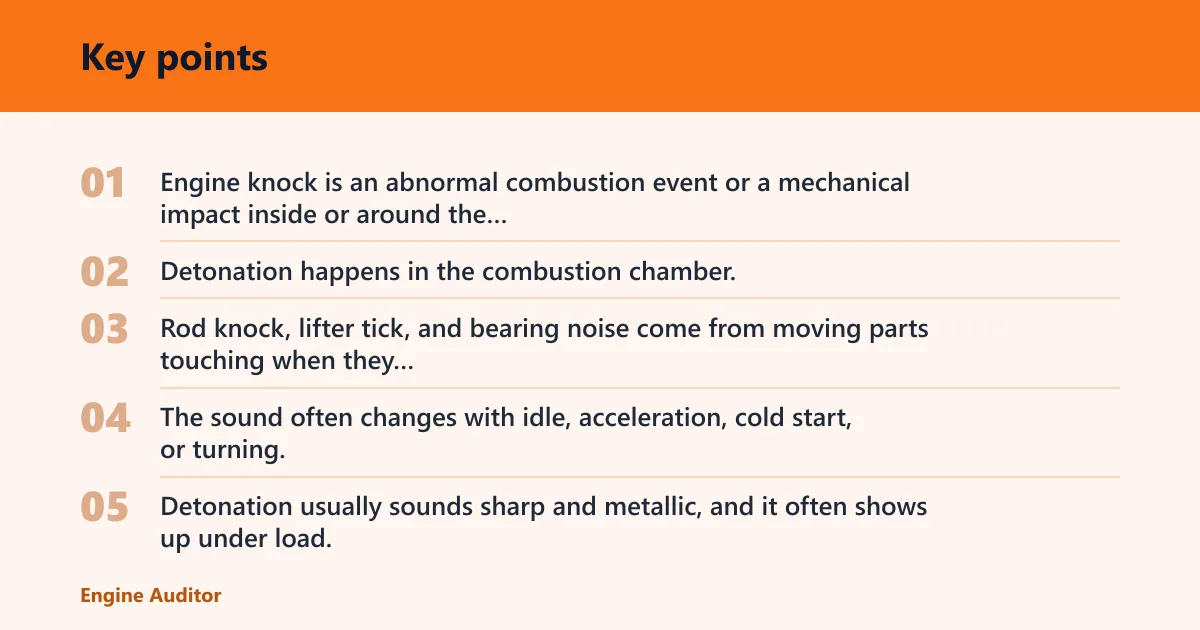

Engine knock is an abnormal combustion event or a mechanical impact inside or around the engine. Detonation happens in the combustion chamber. Rod knock, lifter tick, and bearing noise come from moving parts touching when they should not. The sound often changes with idle, acceleration, cold start, or turning, which is the quickest clue to the source.
Detonation usually sounds sharp and metallic, and it often shows up under load. Rod knock is deeper and more persistent, and it can rise with engine speed. Lifter tick is lighter and often fades after start-up as oil pressure reaches the valvetrain. Do not treat those as the same fault.
Detonation vs mechanical knock
Detonation is combustion happening at the wrong time, often because timing, fuel octane, air-fuel ratio, or sensor input is off. Mechanical knock means parts are striking or loading against each other, such as worn rod bearings or valvetrain wear. The fix is different for each, so the sound pattern matters. For octane requirements, use the owner’s manual or fuel-spec label for the exact engine; if the manual calls for regular fuel, higher octane will not cure a mechanical knock or a bad sensor. For combustion terminology and knock-sensor behavior, see SAE/industry technical references on spark knock and knock control.
How knock sounds change by load and speed
A knock that gets louder with acceleration points you toward combustion timing, fuel quality, or bottom-end wear. A noise that is strongest at idle often points to oil pressure, lifters, or a misfire. A knock during turns often comes from steering or axle parts rather than the engine itself.
When a knock is harmless and when it is not
A brief cold-start tick that fades as oil circulates can be normal on some engines. A deep, persistent knock that stays after warm-up, changes with RPM, or appears with low oil pressure is generally not considered normal. If the oil pressure light is on, the engine is losing power, or the sound is getting worse fast, stop driving.
Quick knock triage table
This table gives you the fastest way to sort the sound. Start with when it happens, then compare the urgency level. If the first check points to oil level, pressure, or a deep bottom-end knock, do not keep running the engine until the cause is known.
| When it happens | Likely cause | Urgency | First check | What a mechanic will test |
|---|---|---|---|---|
| Cold start, then fades in a minute or two | Cold oil delay; lifter tick | Monitor soon if it fades; urgent if it stays loud | Check the oil level and time how long the noise lasts | Oil pressure, lifter operation, oil grade, start-up wear |
| Cold start and stays deep after warm-up | Rod bearings or other bottom-end wear | Stop driving now | Check oil warning light and oil level | Oil pressure measurement, bearing clearance, crankshaft wear |
| Hot restart after a short stop | Marginal oil pressure, hot thin oil, lifter bleed-down, bearing wear | Urgent if persistent | Note whether it appears only hot and whether the idle oil pressure warning comes on | Oil pressure hot, viscosity check, valvetrain inspection, bearing clearance |
| Idle, especially hot idle | Low oil pressure, lifter noise, misfire, knock sensor fault | Book soon; stop if the oil light is on | Check level, leaks, and scan for fault codes | Oil pressure test, ignition check, sensor data, misfire counts |
| Knocking at idle after warm-up | Lifter wear, oil pressure loss, injector noise, misfire | Book soon; stop if it gets deeper or the oil light appears | Listen for whether it is lighter tick or deeper knock, then check oil level | Oil pressure, injector balance, valvetrain wear, misfire data |
| Acceleration or hill climbing | Detonation, low octane for that engine, timing fault, lean mixture | Book soon; stop if knock is heavy or power drops | Check fuel grade and whether the sound appears only under load | Fuel trim, ignition timing, knock sensor input, boost leaks |
| After refueling | Wrong fuel grade, contaminated fuel, evap-related drivability fault | Urgent if the knock is repeated or power is reduced | Confirm the fuel grade used and whether the sound started right after filling | Fuel quality, misfire data, knock retard, evap system checks |
| Turning left or right at low speed | CV joint, track rod, anti-roll bar link, steering component | Book soon | Listen for whether it follows steering angle rather than engine speed | Front suspension play, axle joints, track rods, anti-roll bar links |
| Right after an oil change | Wrong viscosity, low fill, filter issue, priming problem | Stop and recheck before more driving | Confirm fill level and oil grade against the service spec | Oil pressure, filter fit, leak check, drain quantity, priming |
| Knock with shaking | Misfire, spark plug wear, ignition fault, fueling issue | Book soon; stop if the engine is shaking hard | Scan for misfire codes and inspect plugs | Plug condition, coil output, injector function, compression |
| Knock with loss of power | Misfire, detonation, fuel delivery problem, sensor fault | Urgent | Ease off load and check warning lights | Fuel pressure, timing data, knock sensor signal, compression |
| On a turbo engine under boost | Detonation, lean mixture, boost leak, wrong octane | Urgent if the knock is repeated | Back off throttle and check for boost or engine warnings | Boost pressure, air-fuel ratio, knock retard, intercooler leaks |
| Knock only under AC load | Detonation, idle control strain, weak ignition, or an engine that is already borderline | Book soon; urgent if it becomes deep or repeatable | Switch off A/C and see whether the sound stops | Idle speed control, ignition timing, fuel trims, knock sensor data |
| On a diesel at idle or light load | Diesel combustion noise, injector fault, timing issue | Book soon if new or louder than normal | Compare the sound to known diesel clatter and watch for warnings | Injector balance, injection timing, compression, fuel delivery |
How to use the table
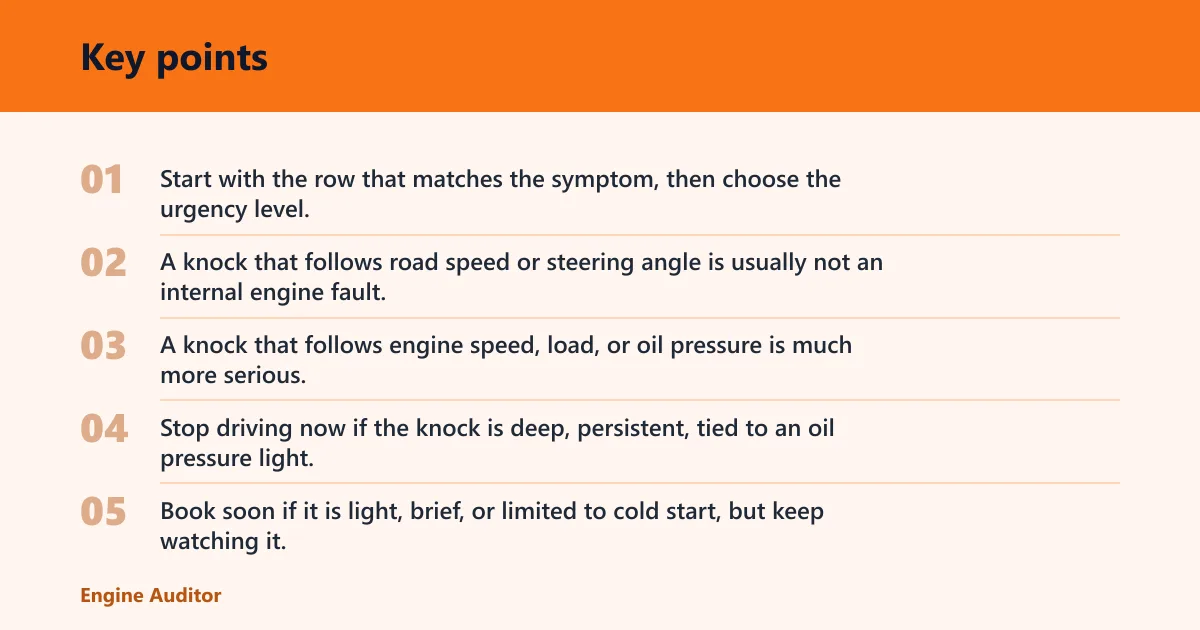
Start with the row that matches the symptom, then choose the urgency level. A knock that follows road speed or steering angle is usually not an internal engine fault. A knock that follows engine speed, load, or oil pressure is much more serious.
Fast read on urgency
Stop driving now if the knock is deep, persistent, tied to an oil pressure light, or paired with loss of power and heavy shaking. Book soon if it is light, brief, or limited to cold start, but keep watching it. If the sound changes fast, treat it as urgent.
What a mechanic will check
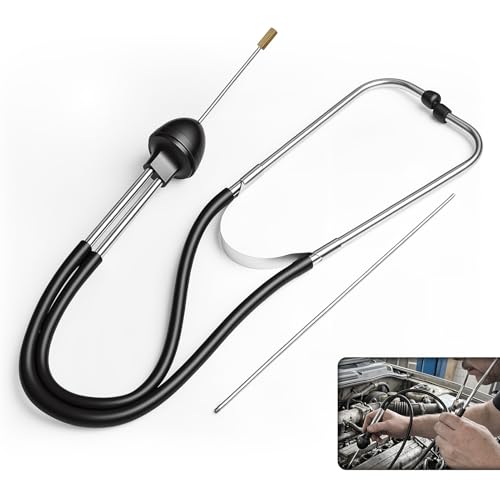
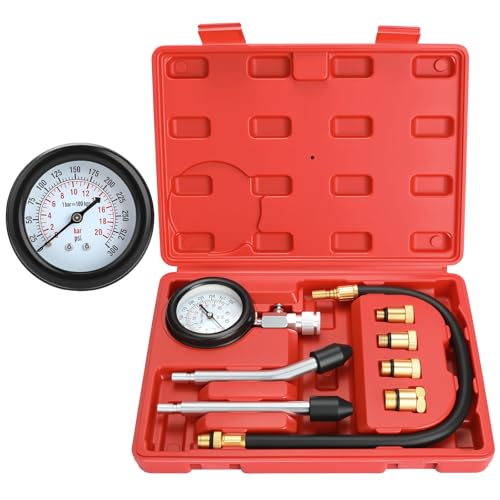
The first professional checks are usually oil pressure, fault codes, ignition data, and a physical inspection for leaks, mounts, and suspension play. A technician may also measure fuel pressure, inspect the timing drive, and listen for rod bearing or lifter noise with the engine at idle and under load.
Why is my engine knocking when I start it?
A start-up knock is often cold oil and delayed lubrication, especially after the car sits long enough for oil to drain back. Valve lifters can tick or knock for a short period until oil pressure fills them. If the sound fades as the engine warms, that pattern is less alarming than a deep knock that stays.
Cold oil and delayed lubrication
Cold oil is thicker, so it moves more slowly through galleries and into the valvetrain. That delay can create a brief tick or light knock at the first start of the day. If the engine quiets down after oil circulation, that points toward start-up lubrication rather than bottom-end damage.
Valve lifters and startup tick
Valve lifters can make a knocking or ticking noise just after start-up, and the noise often fades as oil reaches the top end. Low oil level, dirty oil, or a filter that is not filling properly can make that worse. A timing drive fault can also create a noise that seems more obvious on start, but that is not the same as a worn cambelt causing engine knock in the combustion sense.
When startup noise points to bearing wear
A deep start-up knock that does not fade is more concerning. Rod bearings and other engine bearings can create a heavy sound as pistons and rods move against worn surfaces. If the noise is strongest on start and remains after warm-up, stop driving and get pressure checked.
Why is my engine knocking when I accelerate?
Knocking under acceleration usually points to detonation, low octane fuel for that engine, a timing fault, or an air-fuel problem. Low oil pressure and damaged engine mounts can also make a knock seem worse when load rises. If power drops or the sound repeats under throttle, treat it as urgent.
Detonation under load
Detonation is more likely when cylinder pressure rises under acceleration. A lean fuel mixture can create knocking from uncontrolled combustion. The wrong octane rating can also trigger detonation in some engines. Use the octane grade specified in the owner’s manual or on the fuel-filler label; higher octane only helps when the engine is calibrated for it.
Octane, timing, and air-fuel issues
A knock under load can come from timing that is too advanced, a misfire-related fueling problem, or incorrect spark plug firing order. The ECU may try to correct it using knock sensor input, but a faulty knock sensor can mislead diagnosis or prevent the ECU from reacting correctly. Authoritative service information from OEM manuals and technical engine-control references is the best source for exact knock-control behavior.
Turbo and direct-injection notes
Turbo engines are more sensitive to boost leaks and lean mixtures under load. Gasoline direct injection engines can also show a sharper combustion note that makes true knock easier to miss. A diesel will sound different again, so the question is whether the sound is new, harsher, or tied to loss of power.
Picture a 2.0 turbo engine that only knocks when climbing a hill in third gear. If the sound disappears when the throttle is lifted, that pattern fits load-related detonation or fuel delivery trouble far better than a steering fault. That same pattern is also why a scan for knock retard, fuel trims, and boost leaks matters more than guessing from sound alone.
Why is my engine knocking at idle?
Knocking at idle often points to low oil pressure, worn lifters, misfire, or an incorrect sensor signal. It is less likely to be pure detonation because cylinder load is low. If the noise is present hot and cold, or comes with a warning light, do not assume it is harmless.
Low oil pressure and oil level checks
Low oil pressure is a common culprit. Check the dipstick level first, then look for leaks under the car, around the filter, and near the drain plug. If the level is correct but the idle knock remains, the next step is pressure measurement, not guesswork. If the oil pressure light is on, shut the engine off before the bearings are damaged.
Misfire, spark plugs, and ignition faults
Old spark plugs can contribute to knocking and misfiring. A worn plug can let combustion become uneven, which may sound like a knock or rattle at idle. Spark-plug replacement intervals vary by engine and plug type, so the service schedule in the owner’s manual is the right reference rather than a single mileage number.
Knock sensor input and false diagnosis
The knock sensor sends information to the ECU so it can correct timing or fueling. If that sensor fails, the ECU may chase the wrong problem or miss the real one. That is why a scan tool, misfire data, and oil pressure test are more useful than listening alone. For sensor strategy and diagnostic logic, use manufacturer service data or technical control-system references.
Why is my engine knocking when I turn?
A knock while turning is often steering or suspension noise, not engine knock. Track rods are a likely cause, along with CV joints and anti-roll bar links. If the noise follows steering angle rather than engine speed, look at the front axle and suspension before blaming the engine.
CV joints and axle noise
CV joints can cause clicking or knocking noise when turning, especially at low speed. The sound often gets sharper on full lock and may be more obvious in one direction. That pattern points away from combustion knock and toward a driveline or axle fault.
Track rods and anti-roll bar links
Track rods are listed as a likely cause of knocking when turning. Anti-roll bar link failure can cause knocking, rattling, or clunking noises when turning over uneven ground. These parts can be checked quickly for looseness, torn boots, and play at the wheel.
How to tell steering noise from engine knock
If the sound appears only while turning the wheel and does not change with RPM, it is likely chassis related. If the noise follows engine speed even while stopped, think engine, not steering. A common first-timer mistake is hearing a front-end clunk and assuming the bottom end is failing.
Knock after an oil change
Knocking after an oil change can mean the wrong viscosity went in, the engine is low on oil, or the filter was not fitted or primed correctly. It can also reveal an existing oil pressure problem that fresh oil did not fix. Recheck level and pressure before driving farther.
Wrong viscosity or low fill
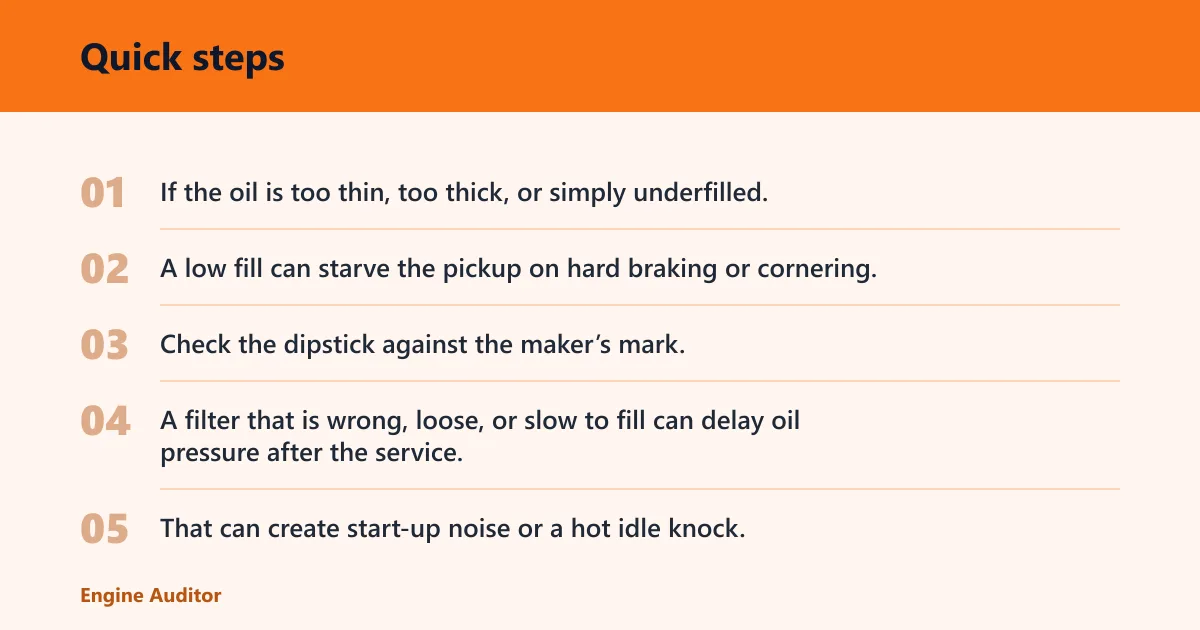
If the oil is too thin, too thick, or simply underfilled, the engine may knock or tick more than before. A low fill can starve the pickup on hard braking or cornering. Check the dipstick against the maker’s mark, and compare the grade to the service specification in the owner’s manual or service bulletin.
Filter and priming issues
A filter that is wrong, loose, or slow to fill can delay oil pressure after the service. That can create start-up noise or a hot idle knock. If the sound appeared right after the change, stop and inspect the filter, drain plug, and oil level before running it again.
When to stop driving and recheck pressure
If the knock starts immediately after the service and the oil pressure light flickers, shut the engine off. A brief noise can be a priming delay, but a persistent knock after an oil change is a pressure problem until proven otherwise. Running it longer can make bearing damage worse.
Frequently asked questions
What does it mean when your engine makes a knocking sound?
A knocking sound usually means the engine has detonation, a valvetrain issue, or a mechanical impact from wear. The clues are where it happens and when. Idle, acceleration, cold start, and turning each point to different causes, so the safest next step is to match the symptom pattern before driving farther.
What to do if your engine is knocking
Check the oil level first, then note whether the knock gets louder with RPM, load, or steering angle. If the oil pressure light is on, shut the engine off. If the sound is light and brief, book a repair soon. If it is deep, persistent, or paired with power loss, stop driving.
Can you fix a knocking engine?
Sometimes yes, but the fix depends on the cause. A bad plug, wrong fuel grade, low oil level, or faulty sensor can be corrected. A worn rod bearing or damaged crankshaft is a far bigger repair. The longer a deep knock runs, the less likely a simple fix will solve it.
What stops engine knocking
The right fix depends on the cause, but the first steps are checking oil level, correcting the fuel grade if the engine needs it, and replacing worn plugs or faulty sensors. If detonation is involved, the ECU may need to correct timing or fueling. If bearing wear is involved, the engine needs repair.
Why is my engine knocking and shaking?
Knocking with shaking usually points to a misfire, ignition fault, fuel delivery issue, or severe detonation. Spark plugs, coils, injector problems, and timing faults are common checks. If the engine shakes hard enough to limit power, treat it as urgent, because misfire and detonation can damage the catalyst and engine parts.
Why is my engine knocking and losing power?
Loss of power with knock often means the engine is misfiring, running lean, or pulling timing because the knock sensor is detecting trouble. It can also mean the sensor itself is faulty, which may mislead the ECU. Back off the throttle and get the fault codes read before the problem spreads.
Products related to this article
Sponsored / affiliate links. As an Amazon Associate I earn from qualifying purchases. I may earn additional commission from eligible campaigns.