Can a Bad Brake Pedal Switch Cause Starting Problems?
On many vehicles, a bad brake pedal switch can stop starting only if the start-enable or shift-interlock circuit needs brake-pedal input; it usually will not prevent cranking on models that do not use that signal. If you guess wrong, you can replace parts, miss a blown fuse or wiring fault, and still have a no-start. This guide shows when the brake switch matters, how brake lights fit in, and how to separate switch, interlock, fuse, wiring, and starter-enable faults.
Brake pedal switch basics


The brake pedal switch usually sits near the brake pedal arm under the dashboard. The pedal arm moves a plunger or body-mounted actuator so the switch can open or close contacts when you press the pedal. If that alignment is off, the circuit may act erratically even when the switch itself is still present.
Electrical contacts inside the switch can wear out over time, and dirt, oxidation, or corrosion can interrupt the connection. The plastic plunger can crack or break with age and use. A bent brake pedal arm may not contact the plunger correctly, and a worn pedal bushing can add sloppy movement that throws off switch travel.
What the switch controls
On many vehicles, the brake pedal switch feeds more than the rear brake lamps. It can also send an input to cruise control logic, shift interlock parts, and the starter enable path on some makes and models. That is why one bad switch can create several symptoms that look unrelated at first.
Can a bad brake pedal switch stop cranking?
On some vehicles, a bad brake pedal switch can stop cranking if the starter enable or shift-interlock circuit needs a brake-pedal signal. That is common on many push-button start systems and on some automatic-transmission setups. On other vehicles, a failed brake switch only affects brake lights or cruise control, while the starter circuit still works normally.
When the fault is elsewhere
A no-crank complaint does not automatically point to the brake switch. If the battery, starter relay, ignition circuit, park/neutral switch, shift interlock, fuse, or wiring is open, the engine may still refuse to crank even with a good brake switch. Model-specific wiring matters here, so the next step is to confirm how that vehicle uses brake input.
Say your push-button SUV lights the dash but does nothing when you press Start. If the brake lamps work and the shifter moves normally, the problem may be in the starter enable circuit rather than the brake switch itself.
Brake switch symptom table
Use symptoms to separate a switch fault from a brake-light-only failure, a wiring issue, or a starter enable problem. The same switch input can affect different circuits, but the quickest check changes with the symptom.
| Symptom | Likely circuit involved | Quickest check | Next step |
|---|---|---|---|
| No crank | Starter interlock / start-enable circuit | Confirm whether the vehicle needs brake input to start | Check fuse, scan for interlock faults, then test switch continuity |
| Intermittent crank | Switch, connector, or wiring loom | Watch for crank changes while pressing the pedal slowly | Inspect alignment, connector pins, and continuity under load |
| Brake lights dead | Brake light circuit | Check the fuse first, then the switch output | Test the switch and inspect the rear lamp wiring path |
| Cruise control disabled | Brake switch input to cruise logic | See whether brake lights also fail | Test switch output before blaming the cruise system |
| Shifter stuck in park | Shift interlock circuit | Confirm brake pedal input reaches the interlock release | Check fuse, switch signal, and interlock wiring |
| Brake lights stay on | Switch adjustment or stuck plunger | Look for pedal arm misalignment or a jammed plunger | Adjust position, inspect the bracket, then replace if damaged |
What brake light failures mean
If the brake lights do not illuminate when the pedal is pressed, a faulty brake light switch is a common possible cause. That said, a blown fuse can mimic switch failure, and a loose connector or frayed wire can break the circuit before the rear lamps ever see power. Driving with malfunctioning brake lights is an obvious safety hazard.
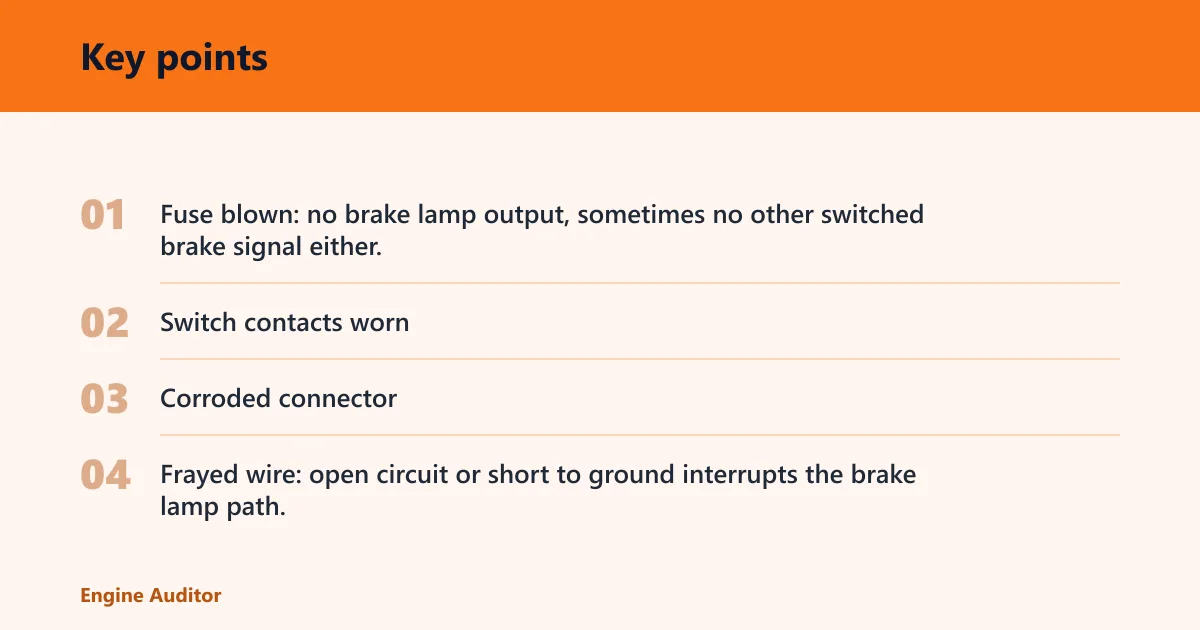
A dead rear lamp circuit points first to the power path, not only the switch. Check the correct fuse rating before replacing parts. If the fuse is good, inspect the wiring loom and connector for looseness, corrosion, pinched insulation, or broken conductors.
Common fault patterns
- Fuse blown: no brake lamp output, sometimes no other switched brake signal either.
- Switch contacts worn: intermittent or missing output when the pedal moves.
- Corroded connector: signal comes and goes with vibration or pedal movement.
- Frayed wire: open circuit or short to ground interrupts the brake lamp path.
Picture a sedan with dead brake lamps, a working center high-mounted stop lamp on a separate path, and a fuse that keeps blowing after replacement. That points more toward a wiring short or connector fault than a simple switch change.
How do you test a brake pedal switch?
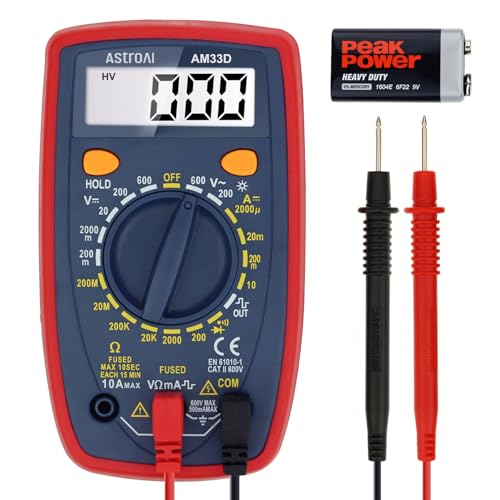
Start with a visual check, because a bent pedal arm or poor plunger alignment can make a good switch look bad. Then use a multimeter to check whether the circuit opens and closes cleanly as you move the pedal by hand. If the contacts are dirty but not damaged, electrical contact cleaner may help. If the plunger or contacts are worn or broken, replace the switch.
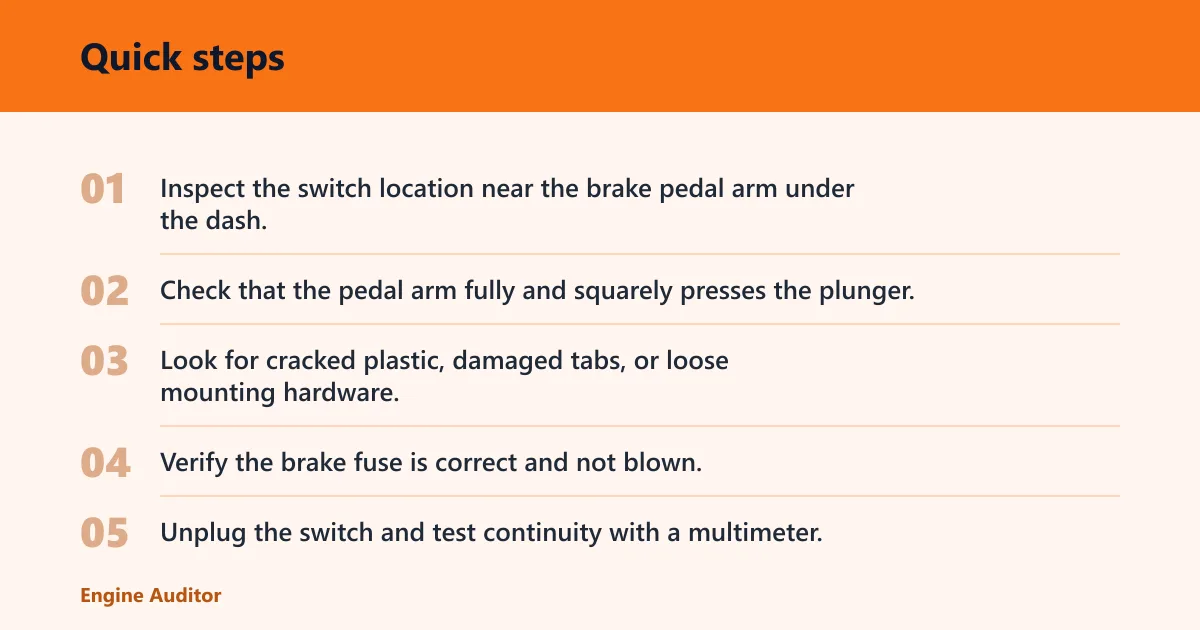
Step-by-step check
- Inspect the switch location near the brake pedal arm under the dash.
- Check that the pedal arm fully and squarely presses the plunger.
- Look for cracked plastic, damaged tabs, or loose mounting hardware.
- Verify the brake fuse is correct and not blown.
- Unplug the switch and test continuity with a multimeter.
- Press and release the plunger while watching for a clean change in state.
- If contacts are dirty only, apply contact cleaner and retest.
- Replace the switch if the readings stay erratic or the plunger is damaged.
What the meter should tell you
On a simple two-state switch, the multimeter should show a consistent open or closed condition depending on pedal position. The exact pin behavior varies by design, so compare the reading with the vehicle’s wiring diagram or connector labels. If the reading changes only when the connector is moved, suspect a wiring loom or pin fit problem rather than the switch body alone.
Could the wiring harness or connector be the real fault?
Yes. A short in the wiring or connector could prevent proper switch operation, and loose pins can create the same symptom as a worn switch. Pinched, frayed, or corroded wires can interrupt the brake signal to the lamps, cruise control, or start-enable circuit. That is why continuity testing matters before you replace the part.
Where wiring faults hide
Look closely at the connector body, terminal tension, and the wiring loom routing near the pedal bracket. Under-dash wiring gets tugged during service and can rub against sharp metal. If the fault appears only when the steering column or pedal loom moves, the issue is often mechanical damage to the wiring path.
Should I replace the brake switch or check wiring first?
Check the fuse first, then confirm pedal and plunger alignment, and only then replace the switch if the circuit test fails. That order avoids replacing a good part when the real fault is a blown fuse, corroded connector, or misadjusted pedal arm. If the switch contacts or plunger are damaged, replacement is the correct fix.
Use the correct part number before installing a new switch. A wrong part can mount in the bracket but still give the wrong plunger travel or contact timing. If a replacement restores the lamps but the brake pedal still feels inconsistent, inspect the pedal arm and bushing for wear or bending before calling the job done.
Replace, adjust, or inspect?
- Adjust: pedal arm and switch alignment are off, but the switch tests correctly.
- Inspect wiring: the meter shows an open, short, or intermittent signal at the connector.
- Replace: contacts are worn, the plunger is cracked, or the switch will not change state cleanly.
Frequently asked questions
Can a bad brake pedal switch cause a no-start condition?
Yes, but only on vehicles that use brake-pedal input for the starter enable or shift-interlock path. Many cars will still crank with a failed brake switch. If the engine will not crank, confirm whether the model needs brake input, then check the fuse, wiring, and interlock circuit before replacing the switch.
What are the symptoms of a bad brake light switch?
Common symptoms include brake lights that do not come on, lights that stay on, cruise control that drops out, a shifter that will not release from park, or an intermittent no-crank complaint on some vehicles. The exact symptom set depends on how the switch signal is used in that model.
Where is the brake pedal switch located?
It is usually mounted near the brake pedal arm under the dashboard. The pedal should press the plunger or actuator directly when you move the pedal. If the switch sits crooked, or the pedal arm is bent or loose, the switch may not operate in the correct range.
How do I test a brake pedal switch with a multimeter?
Disconnect the switch, then check for a clean change in continuity as the plunger moves. Compare the reading with the pedal released and the pedal pressed. If the meter flickers, stays open, or stays closed regardless of position, inspect the contacts, connector, and alignment before replacing the part.
Can a faulty brake switch affect cruise control?
Yes, on some vehicles the cruise control system uses the brake-switch signal and will disable itself if that input is missing or out of range. The symptom may appear with brake-light problems, but not always. That variation is why the brake switch should be tested, not assumed, when cruise control quits.
Products related to this article
Sponsored / affiliate links. As an Amazon Associate I earn from qualifying purchases. I may earn additional commission from eligible campaigns.