Why Is My Clutch Pedal Hard to Press?
A hard clutch pedal usually comes from a binding pedal pivot, a cable that frays or runs off-line, hydraulics that drag or stick, or a worn release fork, bearing, or pressure plate. Find where the force rises, and you can narrow the fault. Ignoring it can leave you with a car that will not disengage cleanly, shift poorly, or strand you with a failed cable, slave, or release bearing. This guide shows the fastest checks for pedal box, cable, hydraulic, and clutch hardware resistance before you replace parts.
This guide is part of our Car pedals: usage, problems and fixes series.
Distinguish between heavy pedal and hard gear engagement
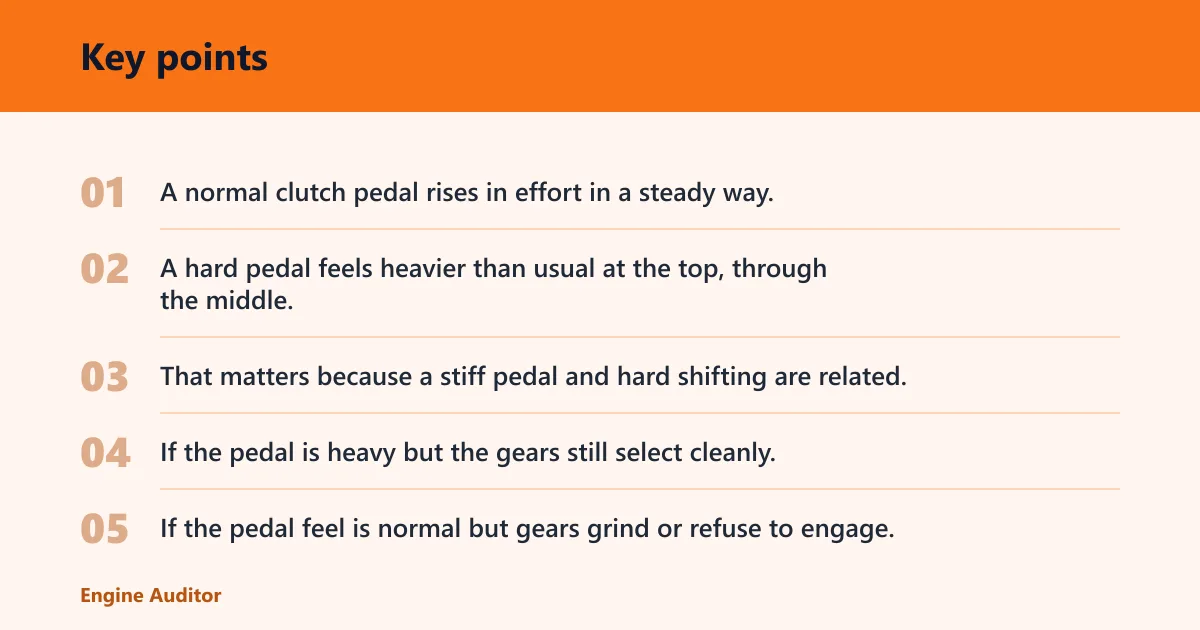

A normal clutch pedal rises in effort in a steady way, then hits a clear point where the clutch begins to release. A hard pedal feels heavier than usual at the top, through the middle, or right near the floor. That matters because a stiff pedal and hard shifting are related, but they do not point to the same part.
Hard pedal versus hard shifting
If the pedal is heavy but the gears still select cleanly, the resistance is often in the pedal box, cable, or release linkage. If the pedal feel is normal but gears grind or refuse to engage, the fault may be in clutch release travel, hydraulic stroke, or a clutch disc that does not separate fully. Do not use shift quality alone as the diagnosis.
Why system type changes the diagnosis
Older cars often use a cable-operated clutch. Many newer vehicles use a hydraulic clutch with a master cylinder, slave cylinder, fluid reservoir, and fluid lines. The same complaint can come from very different faults, so identify the system first. That narrows the check path before any parts come off.
Clutch pedal diagnostic matrix
Use symptom pattern first. Then inspect the matching area. The table below points you toward the most likely source of resistance, the first check, and the result that supports or rules it out.
| Symptom pattern | Likely system area | First check | Result that confirms or rules it out |
|---|---|---|---|
| Pedal heavy all the time | Pedal box, cable, release fork, pressure plate | Inspect pedal pivot, cable routing, and release fork movement | Visible bind, rust, frayed cable, or rough fork travel supports the fault; smooth movement pushes attention to the clutch cover |
| Heavy only near the floor | Hydraulic stroke, slave cylinder, release bearing, pressure plate | Check fluid level and watch slave travel while a helper presses the pedal | Poor slave travel, leakage, or uneven release near the last part of pedal stroke points to hydraulics or release hardware |
| Heavy after warm-up | Cable routing, heat-soaked hydraulics, clutch disc, pressure plate | Check for routing near exhaust heat, line swelling, and drag when hot | Resistance that appears after heat build-up supports a cable sheath issue, swollen hose, or drag in the clutch pack |
| Heavy after sitting | Release bearing, pilot bearing, sticking disc, hydraulic seal drag | Compare the first press after overnight parking with later presses | First-stroke heaviness that improves quickly suggests stiction, corrosion, or seal drag rather than a pure adjustment fault |
| Heavy with creaking or binding | Pedal bushings, pedal pin, spring, fork pivot | Listen at the pedal box and watch the pedal return path | Noise, notchiness, or a slow return supports mechanical friction in the pedal assembly or linkage |
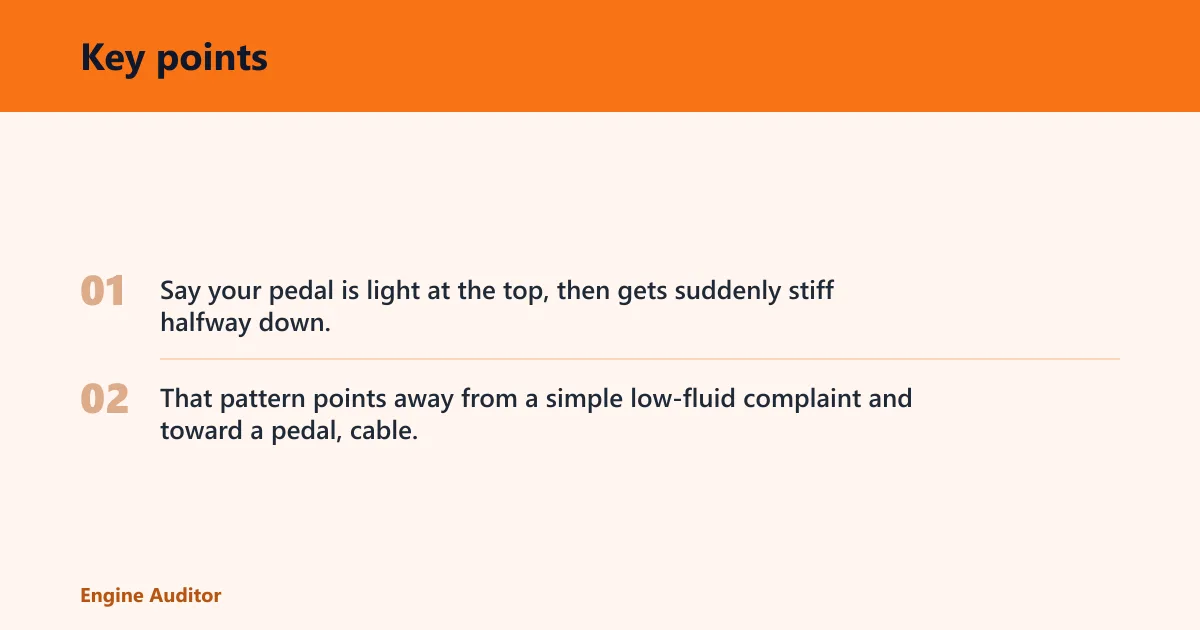
Say your pedal is light at the top, then gets suddenly stiff halfway down, and the car still shifts okay. That pattern points away from a simple low-fluid complaint and toward a pedal, cable, or release geometry issue that changes as the pedal moves.
Is the problem in the pedal box or return spring?
If the pedal feels rough before the cable or hydraulic system even loads, start at the pedal box. Worn bushings, a dry pedal pin, misalignment, corrosion, or a binding return spring can make the pedal feel heavy by itself. That resistance often shows up as creaking, sticking, or a pedal that does not come back smoothly.
Pedal bushings and pin wear
Use a flashlight and mirror to inspect the pedal pivot, bushings, and pin. If the pedal shaft is dry, rusty, or oval-worn, friction climbs fast. A ruler or pedal travel reference helps you compare free movement against the rest position. Side play, scraping, or a gritty feel points to the pedal assembly, not the clutch pack.
Return spring tension and binding
The clutch pedal return spring should pull the pedal back without a catch point. Too much spring tension is rare, but a spring that is twisted, rubbing, or partly seized can make the pedal feel heavier on every stroke. If the pedal moves easier with the spring disconnected, the spring or its mounting points are the problem.
Corrosion and misalignment
Pedal brackets can shift, and worn bushings can let the pedal sit crooked. That misalignment causes the pedal pin and spring to load at an angle. The result is a stiff pedal that may change as the cabin warms up or after the car sits overnight.
Could the cable or hydraulics be making the pedal heavy?
Yes. Cable and hydraulic systems fail in different ways, but both can raise pedal effort. A cable clutch can get stiff from stretch, fraying, poor routing, or an adjuster that holds the cable in a bind. A hydraulic clutch can feel heavy from a failing master cylinder, slave cylinder drag, air in the line, or fluid that is low or contaminated.
Cable stretch, fraying, routing, and adjuster checks
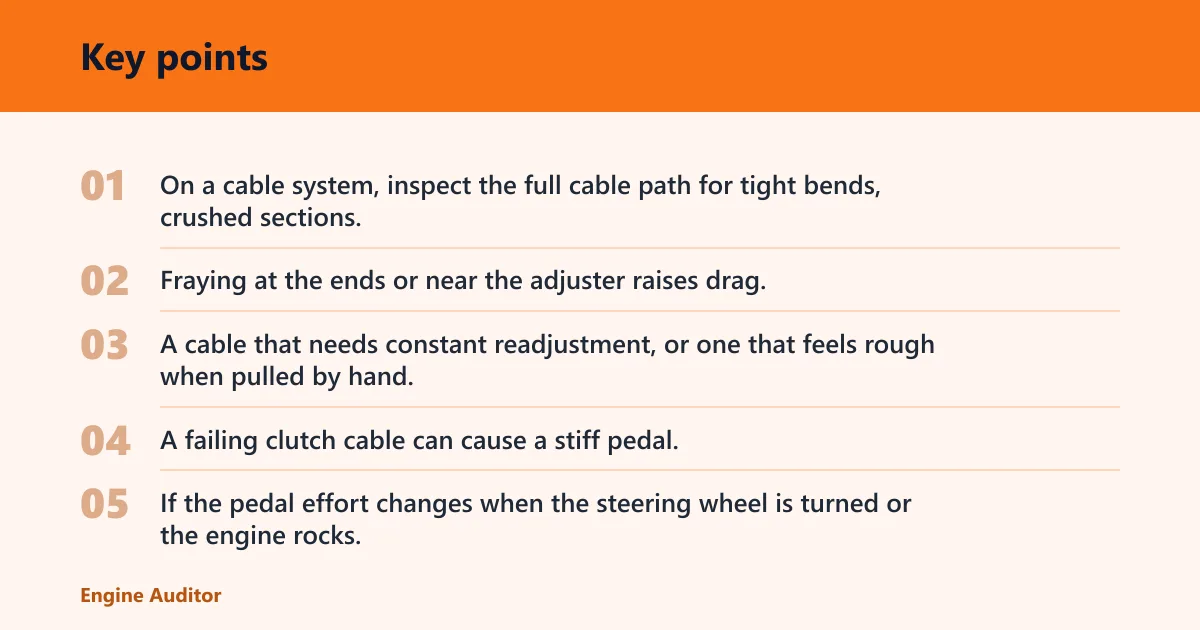
On a cable system, inspect the full cable path for tight bends, crushed sections, melted sheath, and contact with exhaust or sharp brackets. Fraying at the ends or near the adjuster raises drag. A cable that needs constant readjustment, or one that feels rough when pulled by hand, is suspect even if it still works.
A failing clutch cable can cause a stiff pedal, especially if the inner wire is fraying inside the sheath or if the routing forces the cable into a sharp curve. If the pedal effort changes when the steering wheel is turned or the engine rocks, cable routing deserves close attention.
Master cylinder, slave cylinder, and internal bypass checks
In a hydraulic clutch, a worn master cylinder seal can bypass fluid internally. That usually causes poor release or sinking effort, but it can also create an odd heavy or inconsistent feel as the seal drags. A slave cylinder that binds on its bore or pushrod can add resistance at the end of stroke.
Will a bad clutch master cylinder make the pedal heavy? It can, but a heavy pedal is not the classic sign by itself. A bad master more often gives inconsistent engagement, limited release, or pedal travel that changes under pressure. A heavy feel becomes more likely when the piston seal sticks or the bore is damaged.
Fluid level, contamination, and leak inspection
Can low fluid make a clutch pedal hard to press? Low fluid can affect clutch operation, but it does not automatically make the pedal heavy. Check the reservoir level, then inspect for leaks at the master cylinder, slave cylinder, line fittings, and dust boots. Many systems use DOT 3 or DOT 4 fluid. Dark fluid, moisture absorption, or contamination can damage seals and alter feel.
Use a fluid test strip if the service interval is unknown, and scan for dampness along the line. A low reservoir with visible wetness usually means an external leak. A low reservoir with no visible leak points more strongly to a worn seal or fluid lost into a boot or internal cavity.
Hydraulic bleed procedure note
Air in the line often causes a soft or spongy pedal rather than a truly heavy one. Still, bleeding is worth checking if the pedal feel changes after service, hose work, or a leak repair. Bleed the system in the manufacturer’s order, then test the pedal again. If the pedal remains heavy after a proper bleed, look elsewhere.
What clutch release parts can add pedal resistance?
The release mechanism can add real pedal load before the clutch disc even moves. A worn release fork, tight pivot points, a dragging throwout bearing, or a pilot bearing that does not free up can all make the pedal feel harder to press. These faults often create noise, roughness, or a change in effort near the end of travel.
Release fork and pivot points
Check the release fork for cracks, worn contact pads, or binding at the ball stud or pivot. Dry or corroded pivot points create a notch in the pedal stroke. If the fork movement is rough with the cable or slave disconnected, the resistance is in the release hardware, not the cabin side.
Throwout bearing drag
A throwout bearing should move cleanly on its guide. If it drags, the pedal effort can rise and the pedal may feel rough near the release point. Noise when the pedal is depressed, or a feel that changes as the clutch warms, points toward bearing drag or guide wear.
Pilot bearing drag and clutch cover load
A pilot bearing that grips the transmission input shaft can keep the system loaded when the pedal is pressed. That can make disengagement feel stubborn and can increase effort at the last part of travel. When the clutch cover or diaphragm spring is also worn, clamp force can feel abnormally high.
Can the clutch disc or pressure plate make it hard to press?
Yes. The clutch disc and pressure plate can raise pedal effort when the diaphragm spring load increases, the disc sticks to the flywheel, or heat spots and wear change how the assembly moves. This type of problem is usually deeper in the system, and it is more likely when the pedal effort changes with heat, sitting time, or recent slipping.
Diaphragm spring load
The pressure plate diaphragm spring sets much of the pedal force. If the spring fingers are damaged, uneven, or the cover is distorted, the pedal can feel unusually stiff. This is more likely when the clutch has high mileage, has been overheated, or has been operated with repeated slip.
Sticking disc and heat spots
A disc that sticks to the flywheel or pressure plate can make the pedal feel heavy near release because the system is fighting drag. Heat spots and glazing can worsen that behavior. The pedal may feel normal at first, then harder after stop-and-go driving or hill starts.
Suppose the pedal is hardest after a long highway run, then feels a little easier once the car cools for an hour. That heat pattern points toward a cable sheath, hydraulic line, or clutch pack that changes with temperature, not a simple pedal spring problem.
Wear patterns that raise effort
Uneven wear can change clamp force and make release inconsistent. If the pressure plate fingers are uneven or the disc hub is dragging, pedal effort may feel higher near the bottom of the stroke and shifting may also become harder. That is the point where mechanical inspection beats guessing at the slave or master cylinder.
What should you inspect before driving?
Start with a flashlight, a mirror, a ruler or pedal travel reference, a fluid test, and a leak check. Look for damp fittings, broken cable strands, rust at the pedal pin, and any place the pedal or cable rubs. If the pedal suddenly becomes much heavier, or if shifting becomes difficult, stop treating it as a minor annoyance.
- Check pedal free play and return speed.
- Inspect the pedal box for corrosion, worn bushings, and pin wear.
- Trace the cable or hydraulic line for rubbing, kinks, heat damage, or leaks.
- Check clutch fluid level and condition if the car uses hydraulics.
- Watch slave movement or release fork motion while a helper presses the pedal.
- Retest after any bleed, adjustment, or cable routing correction.
Is a hard clutch pedal dangerous to keep driving with? It can be. If the pedal is heavy enough to limit full release, if shifting gets difficult, or if the pedal sticks, the car may not disengage predictably. That can lead to gear clash, rollback on hills, or a sudden failure of the cable, slave cylinder, or release bearing.
Frequently asked questions
Why is my clutch pedal hard to press?
A hard pedal usually points to resistance in the pedal box, cable, hydraulics, or release hardware. Start where the force rises: at the pedal pivot, along the cable or hydraulic line, or near the release fork and pressure plate. That path is faster than replacing a master cylinder on guesswork.
Why is my clutch pedal getting harder to press?
A pedal that gets progressively heavier often has a part that is wearing, drying out, or heating up. Common causes include a fraying cable, dry pedal bushings, a sticking slave cylinder, or a pressure plate that is loading unevenly. A change over time usually means friction is increasing somewhere.
Why is my clutch pedal so hard to push in?
If the pedal is hard to push in from the first inch of travel, look first at the pedal box, cable routing, or return spring. If the heaviness appears only near the bottom, focus on the release fork, throwout bearing, pilot bearing, or clutch cover. Location in the stroke matters.
Can low fluid make a clutch pedal hard to press?
Low fluid can affect clutch operation, but it more often causes poor release, sinking effort, or inconsistent pedal feel than a truly heavy pedal. Check the reservoir, then look for the reason it is low. Leaks, worn seals, or fluid loss into a boot matter more than the level alone.
Will a bad clutch master cylinder make the pedal heavy?
It can, but a bad master cylinder more commonly causes soft, inconsistent, or ineffective pedal action. A heavy pedal usually means sticking seals or internal drag, not only air or low pressure. Compare pedal effort with travel and watch whether the slave cylinder moves smoothly and fully.
Can a failing clutch cable cause a stiff pedal?
Yes. A cable can stiffen when the inner wire frays, the sheath binds, or the routing forces a tight bend. A bad adjuster can also hold the cable in a loaded position. If the pedal is heavier after heat build-up or steering movement, inspect the cable path first.
Products related to this article
Sponsored / affiliate links. As an Amazon Associate I earn from qualifying purchases. I may earn additional commission from eligible campaigns.