How to Compare Car Trunk Space and Cargo Room
Compare cargo space by usable floor shape, opening height, and seat layout first. Use cubic feet only when two vehicles tie on real loading fit. Get this wrong, and a spec-sheet winner can still fail on grocery bags, strollers, or a folded wheelchair. This guide shows a repeatable way to judge sedans, hatchbacks, SUVs, and minivans by access, flatness, and passenger trade-offs.
For the quickest scan, start with the table below. It puts seats-up and seats-folded use next to the loading details that usually decide day-to-day practicality, especially when a vehicle’s published cargo number looks impressive but the opening is tight or the floor is uneven.
| Check | Seats up | Seats folded | Opening width | Liftover height | Flat floor | Behind-third-row bags | Best-use case |
|---|---|---|---|---|---|---|---|
| What to compare first | Room for people plus bags | Long-item length and usable depth | Narrowest point at the cargo mouth | Lower is easier for heavy items | Flat is best for boxes and strollers | Count suitcases or duffels with row up | Pick the layout that fits your most common load without seat contortions |
What you’ll need
- A printed spec sheet or note app for both vehicles
- A tape measure or ruler
- A suitcase, stroller, box, or pet crate you already own
- A list of the cargo items you carry most often
- A phone flashlight for checking the floor and underfloor bin
Compare the specs first
Start with the published cargo figure, but treat it as a label, not a verdict. Most automakers quote volume in cubic feet, yet brands may use different measurement methods, and the number is often listed with seats folded. Some figures also include spaces that do not hold luggage in normal use. SAE cargo-volume conventions exist, but published specs are still not perfectly standardized across brands, so cross-brand numbers need context.
Record the headline number
- Write down each vehicle’s claimed cubic feet.
- Note whether the number is for seats up or folded.
- Mark the source’s measurement standard if it is stated.
Note the standard used
SAE cargo-volume guidance gives manufacturers a common reference point, but it does not guarantee identical testing language on every spec sheet. That makes cross-brand comparisons imperfect. A larger number can be real and still not mean more usable room for your items.
Mark the seat condition
If one vehicle’s figure assumes folded rear seats and the other does not, do not compare them as equal. Compare like with like. If the spec sheet is unclear, assume the number is incomplete until you verify the seat position used.
How do you compare cargo opening size?
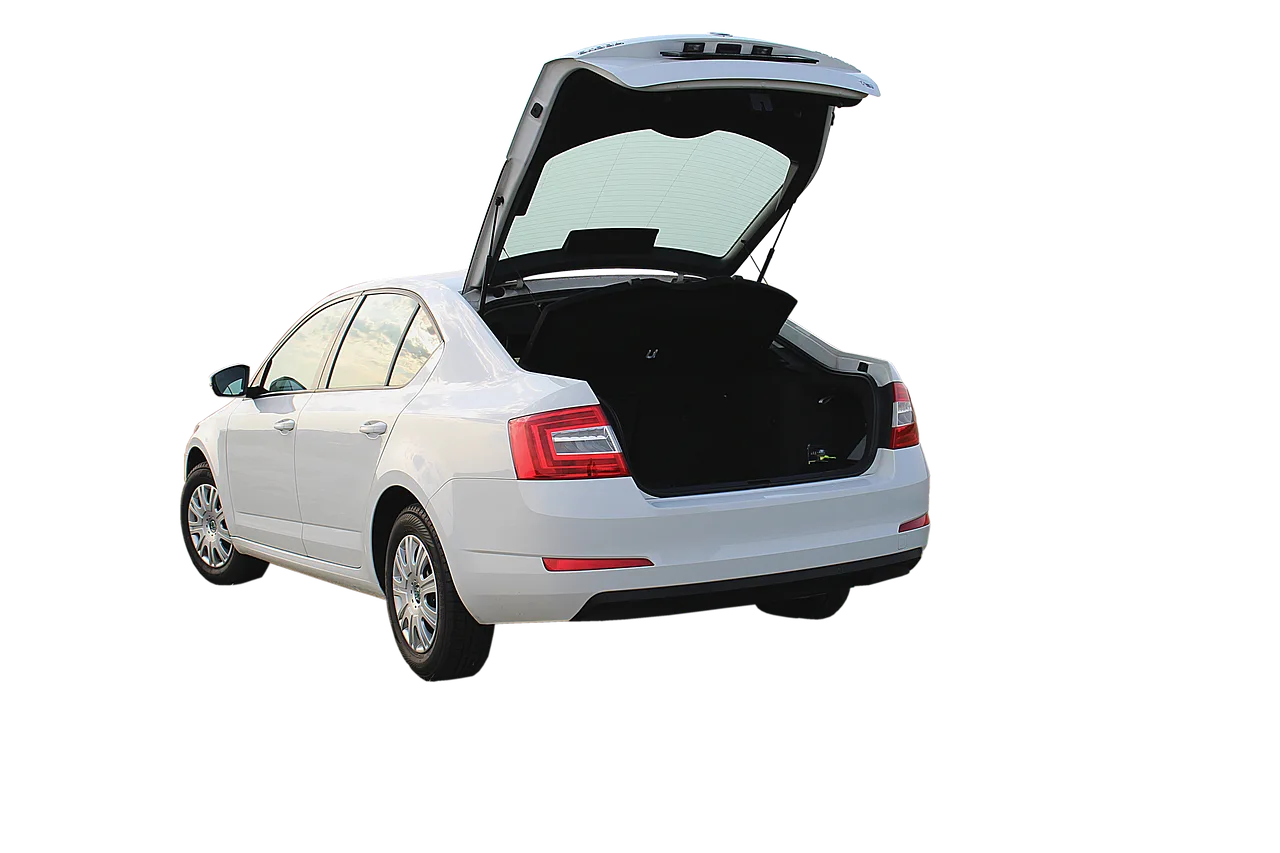
Measure the opening before you judge the volume. Rear cargo opening shape and width decide whether a box, stroller, cooler, or crate can pass through at all. A wide hatch opening can beat a larger cargo number with a tight mouth and awkward corners.
Measure opening width and shape
- Measure the narrowest opening width at the cargo mouth.
- Look at the opening shape from the side and rear.
- Check whether trim panels, hinges, or wheel wells create pinch points.
Check liftover height
Liftover height is the edge items must clear to enter the cargo area. A lower liftover is generally easier for heavy items, especially strollers, bikes, and boxes. A high edge can make a practical cargo bay feel much smaller than the spec sheet suggests.
Watch for blockage points
Some openings are wide at the top but narrow at the floor. Others taper inward near the hatch frame. Those shapes can stop flat-pack furniture, long boxes, or a stroller frame even when the volume number looks strong.
How do you judge cargo room with seats in place?
Judge cargo room with passengers seated first, because many buyers never fold the second row every day. For SUVs and minivans, room behind the raised third row is often the real test. Consumer Reports uses a box-based method that checks usable cargo room, measures the largest item that fits through the opening, and separately measures space behind the raised third row. (Consumerreports)
Measure behind the third row
- Keep the third row upright if the vehicle has one.
- Measure depth from the hatch to the seatback.
- Check whether one duffel, two bags, or a stroller fits without forcing the hatch shut.
Check split-folding and second-row folding
Split-folding increases flexibility because one side can stay up for a passenger while the other side carries cargo. Second-row folding can materially expand usable room, but only if the folded seat creates a long, usable bay. Third-row position changes cargo capacity more than many shoppers expect.
Verify floor shape after folding
Fold the seats and look for steps, slopes, or gaps. A flat load floor helps long items slide in and keeps boxes from rocking. A sloped or stepped floor can make a larger cargo number feel smaller in daily use.
Cargo comparison worksheet
Use this side-by-side worksheet for two vehicles. Fill it with the same items for both. If a field is unknown, mark it unknown rather than guessing.
| Field | Vehicle A | Vehicle B |
|---|---|---|
| Claimed cubic feet | 76.5 cu ft | 145.1 cu ft |
| Measurement standard used | Brand/spec sheet method noted? | Brand/spec sheet method noted? |
| Opening width | Measure in inches | Measure in inches |
| Liftover height | Measure in inches | Measure in inches |
| Floor flatness | Flat / stepped / sloped | Flat / stepped / sloped |
| Rear-seat fold type | 60/40, 40/20/40, one-piece, etc. | 60/40, 40/20/40, one-piece, etc. |
| Behind-third-row space | Suitcases or duffels count | Suitcases or duffels count |
| Underfloor storage | Yes / no / shallow / deep | Yes / no / shallow / deep |
| Stroller or box fit | Fits / does not fit | Fits / does not fit |
| Loading ease score | 1 to 5 | 1 to 5 |
Weighted scoring method
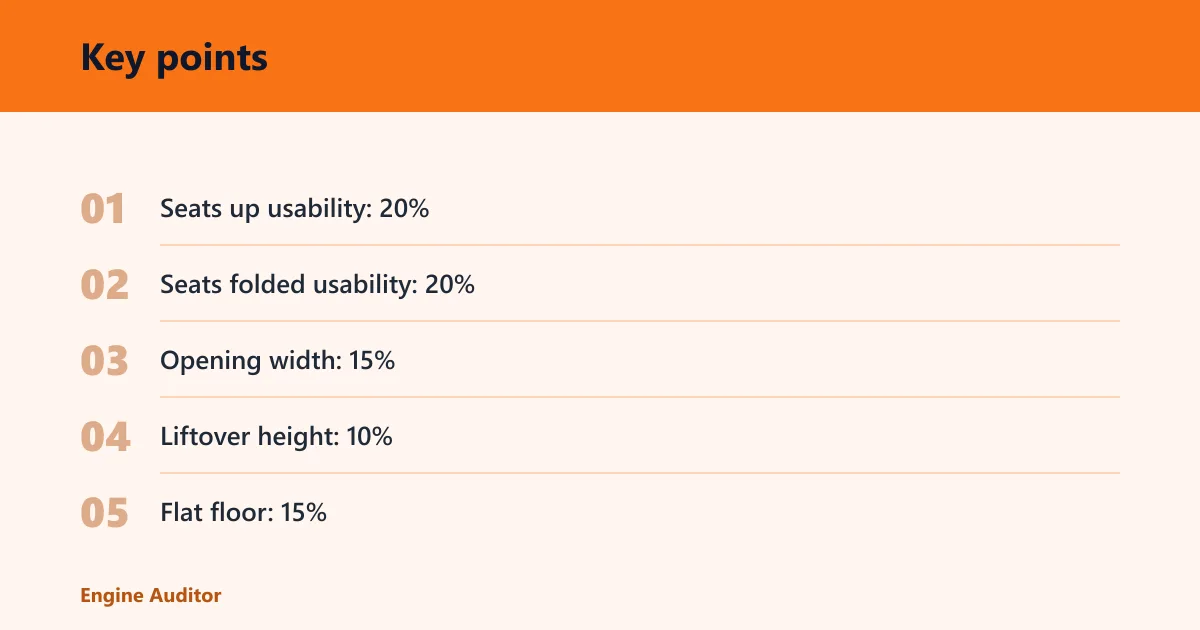
Score each field from 1 to 5, then multiply by the weight below. Add the weighted points to get a practical cargo score. Use the same weights for both vehicles so the comparison stays fair.
- Seats up usability: 20%
- Seats folded usability: 20%
- Opening width: 15%
- Liftover height: 10%
- Flat floor: 15%
- Behind-third-row bags: 10%
- Underfloor storage: 5%
- Stroller or box fit: 5%
- Loading ease score: 5%
Filled example: sedan vs compact SUV
| Field | Sedan | Compact SUV | Example takeaway |
|---|---|---|---|
| Seats up usability | 4 | 4 | Tie if both handle one stroller and groceries |
| Seats folded usability | 2 | 4 | SUV usually wins for long items |
| Opening width | 3 | 4 | SUV hatch often gives easier access |
| Liftover height | 5 | 3 | Sedan trunk edge can be easier to load |
| Flat floor | 4 | 3 | Depends on seat fold and cargo floor design |
| Behind-third-row bags | N/A | 2 | Only relevant if the SUV has a third row |
| Underfloor storage | 2 | 3 | Small bonus for cables and loose gear |
| Stroller or box fit | 3 | 4 | Check your actual item before deciding |
| Loading ease score | 4 | 4 | Parking situation and hatch design can change this |
| Weighted total | — | — | Use the weights above to calculate the winner |
Side-by-side decision summary
Pick the vehicle that fits your most common load without seat contortions. If both fit the same stroller, boxes, or suitcases, choose the one with the lower liftover, wider opening, and flatter floor. Use cubic feet only as the tie-breaker.
What matters more than cubic feet?
For daily use, the most useful cargo space usually comes from shape, access, and how the cabin stays usable with people aboard. A smaller number with a flat floor and wide opening can be more practical than a larger number that forces awkward lifting or seat trade-offs.
Check flat floor and long-item fit
A flat load floor is one of the most important usability clues because it reduces snag points and makes long items easier to slide in. That matters for long boxes, bikes, and flat-pack furniture, which load more easily when the floor stays level. If the floor steps up or slopes sharply, usable space can shrink even when the brochure number is large.
Use underfloor storage for small gear
Underfloor storage helps separate chargers, tie-downs, emergency kits, and small groceries. It adds practical storage beyond headline cubic feet. It also keeps loose items from sliding across the bay when the main area is full.
Consider loading aids in tight spaces
Power liftgates and sliding doors matter most when parking space is tight or when you are loading with one hand. They do not add volume, but they can make the same cargo bay easier to use in a crowded lot or narrow garage.
Use suitcase count as a real-world check
Consumer Reports uses typical-sized suitcases and duffel bags to measure behind-third-row luggage space. That method is more practical than a raw cubic-foot claim because it answers the shopper’s real question: how many bags fit with the seats up?
Related shopping guides
For deeper comparisons, see our SUV cargo rankings, minivan comparisons, folding-seat guides, and family-car buying checklists.
Common mistakes
Most bad comparisons come from using one number too early. Fix that first, and the rest gets easier.
- Trusting one headline cargo number. Check opening width, liftover, and floor shape before you decide.
- Ignoring the opening shape. A large bay with a narrow mouth can still block a stroller or box.
- Forgetting passengers. Compare room with the seats you will actually keep upright most days.
- Comparing different methods as equal. One brand’s cubic feet may not match another’s measurement method.
- Skipping the loading test. Try your suitcase, crate, or stroller before you sign anything.
Published sedan trunk sizes often fall in the low-to-mid teens of cubic feet for compact and midsize models, while some larger sedans can be higher depending on body size and measurement method. Even so, a sedan with a wide trunk opening, low liftover, and a flat floor can sometimes handle two checked bags and a folded stroller more cleanly than a compact SUV with a tighter hatch mouth.
Suppose a three-row SUV has a strong headline volume with the second and third rows folded, but only one small suitcase fits behind the upright third row. For school runs, that smaller behind-row space matters more than the maximum number.
Measure the cargo opening and the height at the sill before you compare the spec sheets. That one step keeps a glossy number from hiding a loading problem.
How do you compare SUV cargo space with seats folded?
Compare folded-seat SUV space by checking the flatness of the cargo floor, the length from hatch to front seatbacks, and whether the second row folds in sections. The best number is the one that still fits your longest item without leaving a step, gap, or steep slope.
Use a long-item test
Check whether the folded cargo bay can fit a folded stroller, an 8-foot board, or a large box without hitting the dash or hatch. Split-folding helps if one passenger seat still needs to stay upright.
How do you compare cargo room behind the third row?
Compare behind-third-row room by bags, not by a brochure number alone. Consumer Reports separately evaluates that area, and it reports the largest item that fits through the opening. Honda Odyssey is listed with 5 suitcases and 2 duffels behind the raised third row.
Use luggage, not assumptions
Count how many standard bags fit with the third row upright, then see whether the hatch closes cleanly. Consumer Reports notes that cargo rankings can be tied and then ordered by third-row-seat comfort, which shows how passenger space and cargo space interact.
What is the average sedan trunk space?
There is no single average that cleanly fits every sedan class, because official trunk figures vary by body size and measurement method. Instead of chasing one universal number, compare sedan trunk capacity by segment and confirm that the opening fits your bags or a folded stroller. Published specs and SAE-style measurement conventions can shift the result enough that a single average is not very useful.
Use sedan trunks as cross-shop data
When you compare sedans against hatchbacks and SUVs, use the same shopping task. Can the trunk swallow a stroller? Does the opening accept a boxed item? A trunk with a higher cubic-foot figure can still be less useful than a hatch if the mouth is too small.
Which cars have the most useful cargo space for daily use?
For daily use, the most useful cargo space usually comes from SUVs, hatchbacks, and station wagons because they give you a wider opening and easier loading. That said, practicality depends on the opening size, floor shape, and seat layout more than body style alone. A smaller hatchback with a low liftover can be easier to live with than a larger SUV that has a steep rear sill or a high floor.
Use body style as a starting point
Do not stop at body style. A hatchback with a low liftover may be easier to live with than a larger SUV that has a steep rear sill or a high floor. The right choice is the one that fits the items you carry most often.
Frequently asked questions
How do you compare car trunk space and cargo room accurately?
Measure the opening, liftover, and floor shape first, then test your own suitcase or box. After that, compare the published cubic feet only if the seats and measurement method are the same. That order keeps the decision tied to actual loading, not just a brochure number.
What matters more: trunk volume or cargo opening size?
For most shoppers, the opening matters more when items are large, rigid, or awkwardly shaped. A wide opening with a low liftover can accept objects that a bigger but narrower trunk cannot. Volume matters next, once you know the item will actually pass through the opening.
How do you tell if a cargo number is misleading?
Watch for a figure that is quoted with the seats folded, a number that differs by brand method, or a claim that ignores the opening and floor shape. If the spec sheet is the only evidence, ask whether the cargo bay can actually take your largest item through the opening.
What should I measure when comparing hatchback, sedan, and SUV cargo room?
Measure opening width, opening shape, liftover height, floor flatness, rear-seat fold type, and underfloor storage. Then test one real item, such as a suitcase, stroller, or box. That gives you a fair cross-body-style comparison that a single cubic-foot number cannot provide.
Products related to this article
Sponsored / affiliate links. As an Amazon Associate I earn from qualifying purchases. I may earn additional commission from eligible campaigns.