Car Comparison Checklist for First-time Buyers
Use a 10-point checklist, a shared test-drive route, and a 15-point scorecard to compare two cars; if a car has a dealbreaker, drop it. Weak comparisons hide comfort, visibility, fuel use, and repair costs that affect you after the sale. This guide covers the checklist, red flags, route method, and simple scoring system.
What should you compare first?
Start with budget fit, safety, and daily-use fit. Then split dealbreakers from nice-to-have features before you score anything. If a car misses your payment limit, safety minimum, or seating needs, remove it before you spend time on trim levels or color.
Budget fit and total ownership cost
Compare purchase price, monthly payment, down payment, insurance, fuel or charging, and maintenance the same way for both cars. Chase says total monthly transportation costs should stay below 15 percent of income, and it recommends a 20 percent down payment for new vehicles and 10 percent for used cars.
Do not stop at sticker price. A lower payment can hide a higher insurance bill, worse fuel economy, or a costlier maintenance schedule. Chase also says a credit score of 670 or higher is generally considered good, which matters when you compare finance offers from two different cars.
Safety, reliability, and daily use
Review IIHS and NHTSA ratings, then check airbags, ESC, and braking stability. After that, compare repair risk, warranty coverage, and any used-car history that points to prior damage or recurring faults. The safest choice on paper still has to fit your commute, parking, and passenger needs.
Must-have features versus dealbreakers
Split the list into two groups: required and optional. Required items are the ones that stop the deal if they are missing, such as a rear seat that fits a child seat or visibility that feels unsafe. Optional items, like a larger screen or wireless phone mirroring, can earn points, but they should not override a major red flag.
Car comparison scorecard
Use one sheet for both cars, one route, and one score. Give each category a weight, mark dealbreakers as pass or fail, and score only the items that make it through the filter. If a car has a dealbreaker, the final recommendation should generally go to the other car, even if the points are close.
| Category | Weight | Car A | Car B | Notes |
|---|---|---|---|---|
| Budget fit | 3 | 0-5 | 0-5 | Price, payment, down payment, monthly total |
| Safety | 3 | 0-5 | 0-5 | IIHS, NHTSA, airbags, ESC, braking stability |
| Space | 2 | 0-5 | 0-5 | Rear seat room, cargo room, hatch or trunk access |
| Comfort | 2 | 0-5 | 0-5 | Seat support, ride feel, cabin noise, controls |
| Visibility | 2 | 0-5 | 0-5 | Mirrors, blind spots, parking view, low-speed sight lines |
| Tech | 1 | 0-5 | 0-5 | Screen use, phone mirroring, button layout, voice control |
| Driver aids | 1 | 0-5 | 0-5 | Cruise control, parking sensors, ADAS, blind-spot help |
| Ownership risk | 1 | 0-5 | 0-5 | Maintenance risk, warranty, history, repair exposure |
Pass/fail dealbreakers
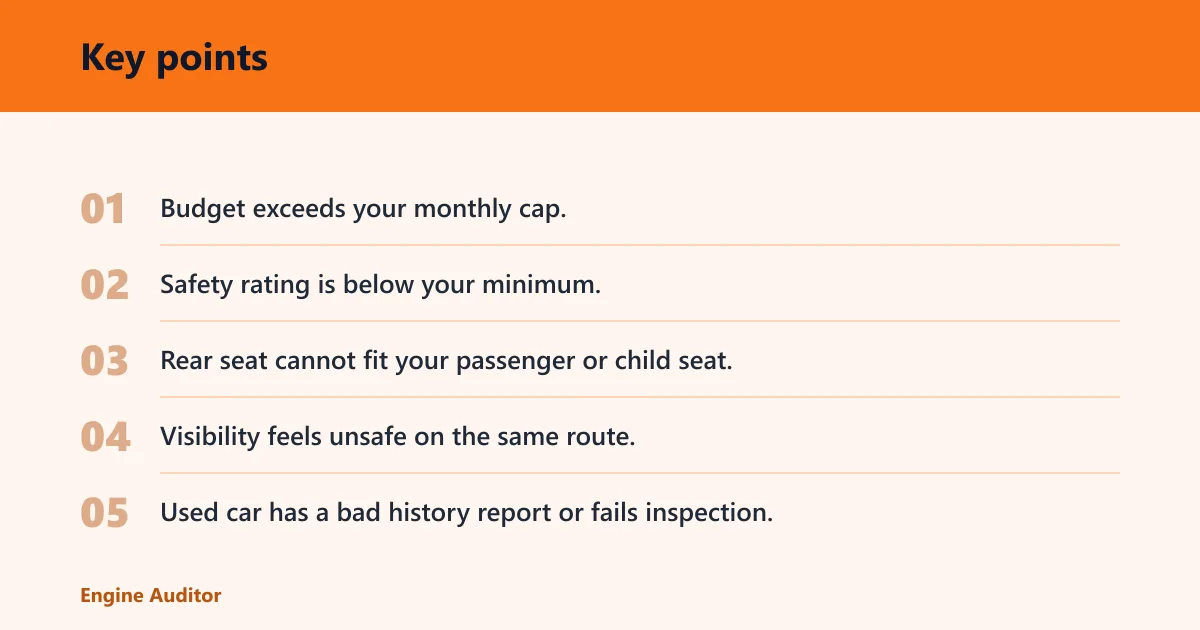
- Budget exceeds your monthly cap.
- Safety rating is below your minimum.
- Rear seat cannot fit your passenger or child seat.
- Visibility feels unsafe on the same route.
- Used car has a bad history report or fails inspection.
Scoring rule: give each category a score from 0 to 5 for each car, then multiply by the weight. Add the weighted totals. Use the final total only after pass/fail items are cleared.
Final recommendation line: Recommend the car with the higher weighted score, unless the lower-scoring car is the only one that passes every dealbreaker.
- Set your budget ceiling and monthly cap.
- Mark pass/fail items before the test drive.
- Score both cars on the same route.
- Add weighted points after the drive.
- Choose the car that passes and scores higher.
Say your budget allows a lower payment on one sedan, but that car also needs pricier insurance and gets worse mileage in city traffic. The scorecard will expose that gap quickly. A cheap sticker price is not a win if the monthly total runs past your limit.
How do you compare safety and reliability?
Use ratings, equipment, and ownership history together. Safety starts with IIHS and NHTSA results, then moves to the equipment that supports crash protection and control. Reliability adds repair risk, warranty coverage, and the record behind a used car. If any one of those is weak, treat the car as a higher-risk buy.
IIHS and NHTSA ratings
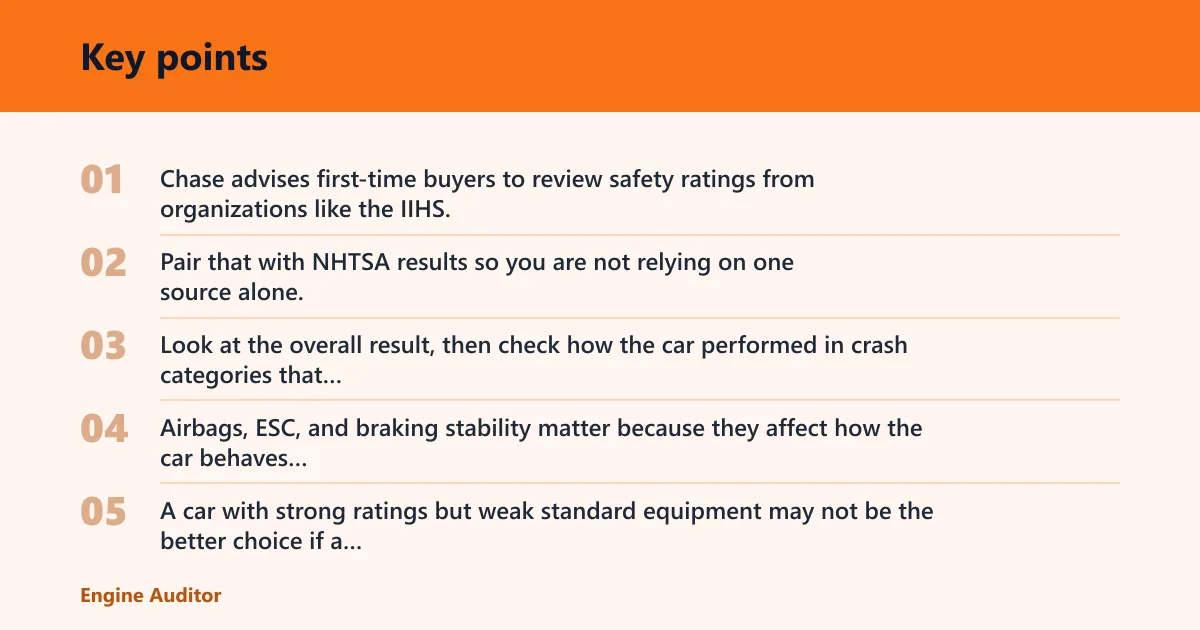
Chase advises first-time buyers to review safety ratings from organizations like the IIHS. Pair that with NHTSA results so you are not relying on one source alone. Look at the overall result, then check how the car performed in crash categories that matter for front, side, and rollover protection.
Also check standard safety gear. Airbags, ESC, and braking stability matter because they affect how the car behaves before and during an emergency. A car with strong ratings but weak standard equipment may not be the better choice if a similar car includes more protection at the same price.
Common repair risk and warranty coverage
Reliability is not a guess. Compare common maintenance issues, the expected repair risk, and how much warranty coverage remains if the car is new or used. A car with a known weak point may still fit the budget, but it should lose points unless the price clearly offsets the added risk.
Used-car history checks
For used cars, check the vehicle history report and an independent inspection before you commit. Look for accident history, title problems, odometer issues, and signs of poor repair work. Cosmetic wear matters too, but it should not distract from mechanical or structural red flags.
Suppose a hatchback looks tidy outside, but the history report shows prior front-end damage and the inspection finds uneven tire wear. That is more than a cosmetic issue. It points to a car that may need alignment work or more expensive repairs later.
How do you compare space, comfort, and visibility fairly?
Judge space and visibility from the driver’s seat and from the rear seat, not from a brochure. Compare legroom, headroom, seat support, cargo room, hatch or trunk access, mirror layout, and blind spots. The best car for a first-time buyer is often the one that feels easier to place on the road and easier to live with after the sale.
Rear seat room and child seat fit
Check rear legroom and headroom with real passengers in mind. If you plan to carry adults, ask whether knees touch the front seat and whether the roof line forces a crouch. If you may use a child seat, confirm that the anchors are easy to reach and the front seat still has usable space.
Cargo room and hatch access
Compare trunk room or cargo room by thinking about luggage, groceries, sports bags, or a stroller. Cargo flexibility matters as much as raw volume. A hatchback may load awkward items more easily, while a sedan may offer a deeper trunk with less flexible opening shape. The right answer depends on what you carry most often.
Driving position, mirrors, and blind spots
Check seat height, steering wheel reach, mirror view, and the size of the blind spots. A compact SUV may sit higher, which can help forward visibility, while a sedan may be easier to place in tight parking spaces. What matters is how quickly you can see lane markers, curbs, and nearby cars without strain.
A common first-timer mistake is choosing the car that feels larger and safer at first glance, then finding out the rear pillars block the view when backing out of a narrow parking space. A smaller car with better glass area and cleaner mirror placement can be easier to live with every day.
What should you check on the test drive?
Use the same route for both cars so the comparison is fair. Include city streets, a rougher low-speed section, a parking lot, and highway speed if possible. Pay attention to braking feel, steering feel, cabin noise, and how much effort each car needs in traffic and in tight spaces.
Same-route setup for both cars
Start with the same cold-start conditions if you can, then drive the same loop in the same order. Use the same driver position and the same mirror settings. If one car gets the city section first and the other gets the highway section first, the comparison is no longer clean.
Low-speed maneuvering and parking ease
In slow traffic and parking lots, watch the turning circle, throttle response, brake smoothness, and how easy it is to place the car next to curbs and lines. Parking sensors can help, but they do not replace good sight lines. Low-speed confidence matters more than most buyers expect.
Highway behavior, braking feel, and steering feel
At higher speeds, listen for wind and road noise, check lane stability, and notice whether the steering feels calm or busy. Brake from normal speed and feel whether the pedal is easy to modulate. A car that feels nervous at 60 mph or jerky when stopping should lose points.
Use a short note for each section of the route. Write down what felt easy, what felt awkward, and what seemed tiring. That note becomes part of the scorecard, and it helps you remember the difference between two similar cars after the drive ends.
Ownership costs, tech, and driver aids
Fuel economy, insurance, and maintenance should be compared car by car, not as broad averages. Then look at infotainment usability and driver-assist value. A car that looks affordable on the window sticker can still cost more each month if it uses more fuel, costs more to insure, or is harder to service.
Fuel economy and fuel cost
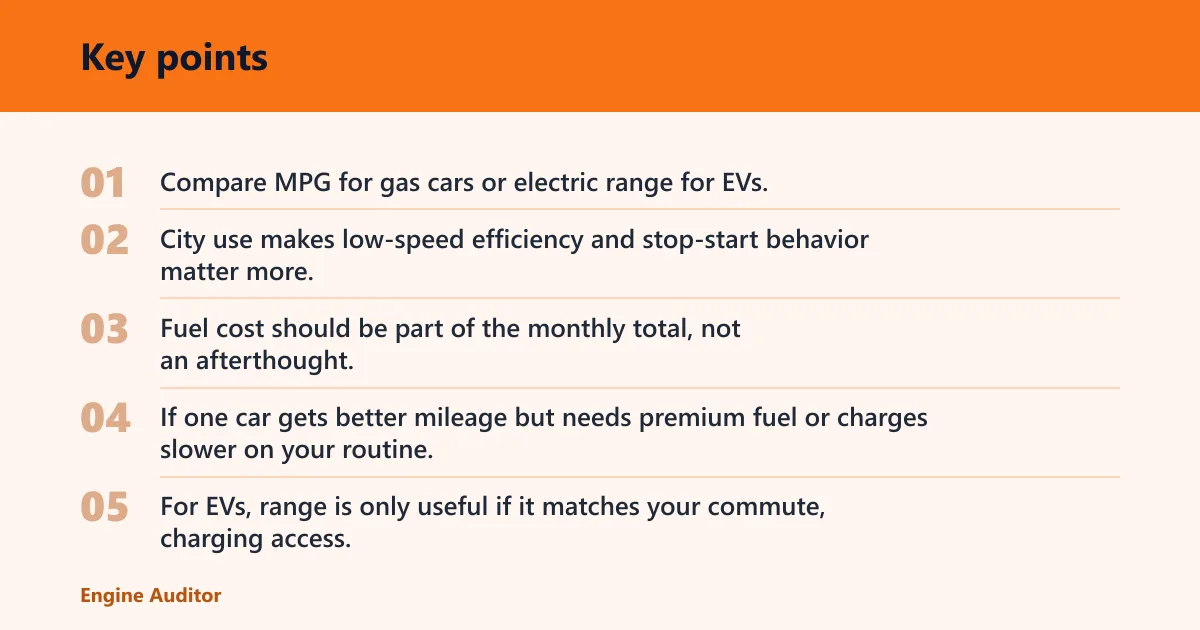
Compare MPG for gas cars or electric range for EVs, then map that to your city and highway driving. City use makes low-speed efficiency and stop-start behavior matter more, while highway driving makes steady-speed fuel use more important. Fuel cost should be part of the monthly total, not an afterthought.
If one car gets better mileage but needs premium fuel or charges slower on your routine, factor that into the comparison. For EVs, range is only useful if it matches your commute, charging access, and winter or highway use.
Insurance and maintenance estimates
Insurance estimates can differ by trim, repair cost, and safety equipment. Maintenance risk changes with parts pricing, service intervals, and known problem areas. Compare the same cost buckets for both cars: insurance, fuel or charging, routine service, and likely repair exposure. That is the only way to see the real monthly burden.
Infotainment usability and driver-assist value
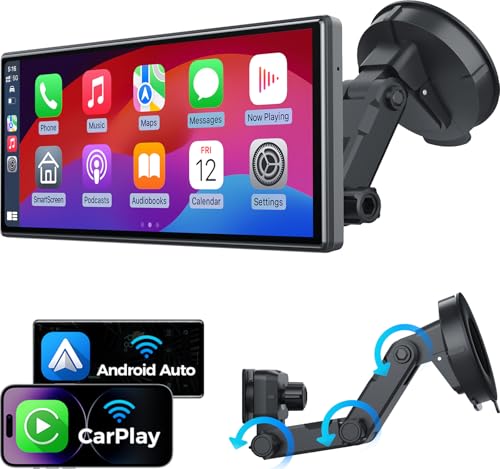
Check screen clarity, phone mirroring, button layout, and voice control. HT Auto says wireless Android Auto and Apple CarPlay are common features in this segment, and it also lists cruise control and parking sensors as common. Common does not mean useful, so test whether the system makes simple tasks easy or distracting.
Driver-assist features should be judged by value, not by spec count. Cruise control helps on longer drives. Parking sensors help in tight spaces. ADAS features and blind-spot visibility matter more if the car has thick pillars or limited side views. If the system is hard to use, it loses value quickly.
The same source says it features 69 cars under 15 lakhs in India, with this budget segment starting at Rs. 7.5 Lakhs. It notes that compact SUVs, sedans, hatchbacks, and entry-level EVs all appear in this price band, and many cars in this segment offer six airbags and ESC. That mix makes side-by-side comparison especially important.
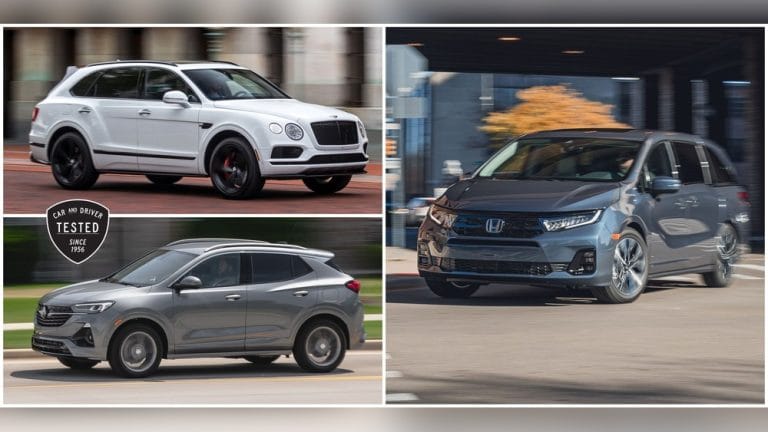
Compare body style against your use case. A sedan may give you a separate trunk and a calmer highway feel. A hatchback often gives easier cargo loading. A compact SUV may offer a higher seating position and easier entry, but it can also bring higher fuel use or a different parking feel. A used car can save money up front, but only if the history and inspection are clean.
Frequently asked questions
What should a first-time buyer compare on two cars before buying?
Compare budget fit, safety, space, comfort, visibility, tech, and ownership risk. Then separate dealbreakers from nice-to-have features. The biggest mistake is comparing only purchase price. You need the monthly total, the rear-seat fit, the cargo space, and the safety and repair picture before you choose.
How do I compare two cars if I only have one test drive?
Use one shared route and a written scorecard. Drive both cars over the same city streets, parking area, and highway stretch, in the same order if possible. Take notes on braking feel, steering feel, visibility, seat comfort, and cabin controls. A fair comparison depends on the same conditions.
What matters more for first-time car buyers: safety, fuel economy, or reliability?
Safety comes first if one car falls below your minimum standard. After that, reliability usually matters more than a small fuel-economy gap because repair risk can erase savings fast. Fuel economy matters most when your driving is long, frequent, or city-heavy. The right order depends on your daily use and budget.
How do I compare total ownership costs between two cars?
Use the same cost buckets for both cars: purchase price, monthly payment, down payment, insurance, fuel or charging, and maintenance. The same source says total monthly transportation costs should stay below 15 percent of income. That is the ceiling. The scorecard should show which car stays under it with the least strain.
What features should be on a car comparison checklist
Your checklist should include budget fit, safety ratings, rear seat room, cargo room, visibility, infotainment, driver aids, fuel economy, insurance, maintenance, and test-drive notes. For used cars, add a vehicle history report, independent inspection, cosmetic wear, and warranty differences. Those items cover both daily use and ownership risk.
How do I compare new vs used cars before I decide?
Start with price, warranty, and history. A new car may bring a 20 percent down payment target, fresh warranty coverage, and the latest tech. A used car may need only a 10 percent down payment, but it should also get a vehicle history report and independent inspection. Compare risk, not just savings.
Products related to this article
Sponsored / affiliate links. As an Amazon Associate I earn from qualifying purchases. I may earn additional commission from eligible campaigns.