What to Do If Automatic Car Brakes Fail
Driving an automatic car is usually pretty smooth and easy, but what happens if something goes wrong with your brakes? It can feel scary, especially if you’re new to driving. Thinking about what to do if automatic car brakes fail is something every driver should know.
This guide will break it down simply, step by step, so you feel ready for anything. We’ll cover what to do right away and how to handle the situation safely until you can get help.
What to Do If Automatic Car Brakes Fail
When your car’s brakes suddenly stop working, it’s a high-stress situation. This section will walk you through the immediate actions you need to take when you realize your brakes aren’t responding. It’s about staying calm and making smart decisions to keep yourself and others safe.

Callahan BRAKE PARTS
Callahan Brake Parts Front Brake Kit for…
- Fits: 2016 SMART FORTWO Electric Vehicle | 2008 2009 2010 2011 2012 2013 2014 2015 SMART FORTWO
- Front Brake Pad and Rotor Kit Includes: 2x Front Drilled & Slotted Brake Rotors + 1x Front Ceramic Brake Pad Set with Hardware
- Exceeds factory OEM specifications for quality and reliability, ensuring consistant performance and durability.
As an Amazon Associate I earn from qualifying purchases.
We will explain the core steps to manage the vehicle while the braking system is compromised.
Recognizing Brake Failure
It’s vital to know the signs that your brakes might be failing. These can include a spongy brake pedal, a grinding noise when you press the pedal, or the brake warning light coming on your dashboard. Sometimes, you might feel a vibration or pulling to one side when you try to brake.
Ignoring these signals can lead to serious problems.
Spongy Brake Pedal: This happens when there’s air in the brake lines or a leak in the system. The pedal feels soft and goes down further than usual before engaging the brakes, if at all. It means less hydraulic pressure is reaching the brake pads, reducing their stopping power significantly.
This is a common indicator that your brake fluid may be low or there’s a leak somewhere in the lines or master cylinder.
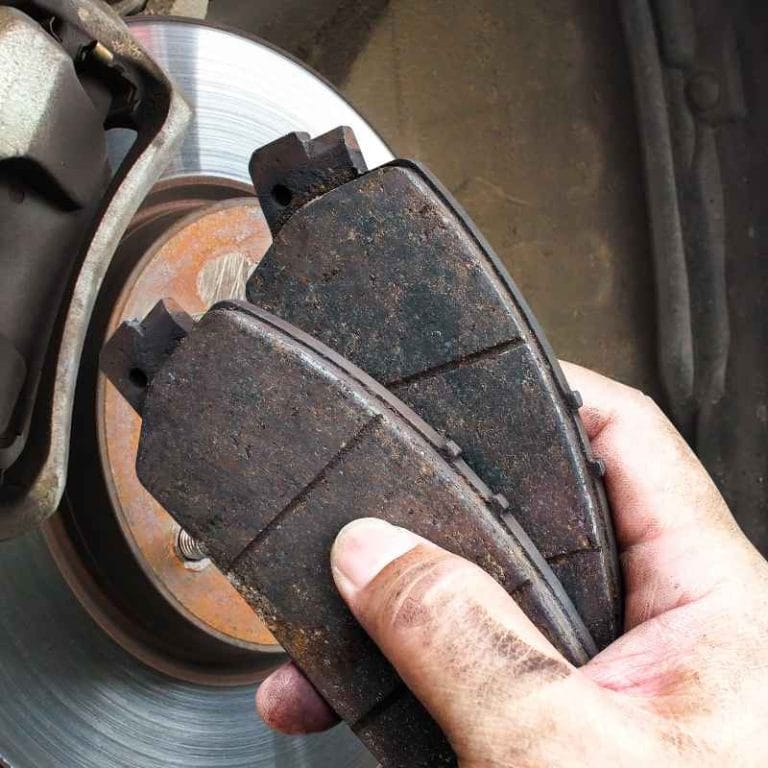
Grinding Noise: A loud, harsh grinding sound often means your brake pads have worn down completely. Metal is rubbing against metal, which is very bad for your rotors and will stop you very poorly. This is a clear sign that your braking system needs immediate attention and likely replacement of brake pads and possibly rotors.
Brake Warning Light: Most cars have a warning light for the braking system. If this light illuminates, it indicates a problem. This could be anything from low brake fluid to a malfunction in the anti-lock braking system (ABS) or a more serious issue like a complete brake failure.
Never ignore this light.
Immediate Actions During Brake Failure
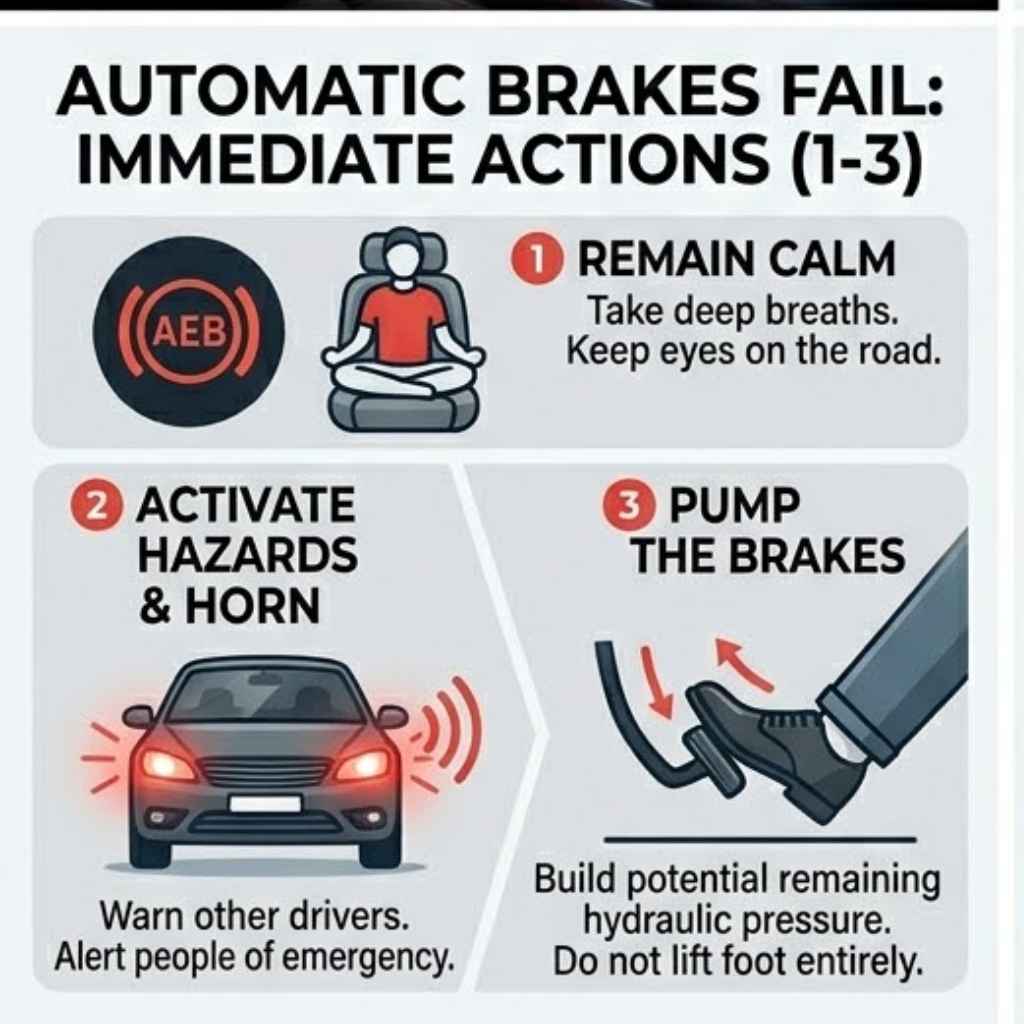
When you discover your brakes are not working, the first and most important step is to remain as calm as possible. Panicking can lead to poor decisions. Immediately take your foot off the accelerator.
You need to start slowing the car down using other methods. This is not the time to swerve or make sudden movements. Focus on controlling the vehicle.
Your car still has other ways to slow down besides the main brakes. Pumping the brake pedal repeatedly can sometimes help build up enough pressure for a temporary stop, especially if the issue is air in the lines. If your car has a parking brake (also known as an emergency brake), you’ll need to engage it.
Do this gradually, not all at once, to avoid locking up the rear wheels and losing control of the steering.
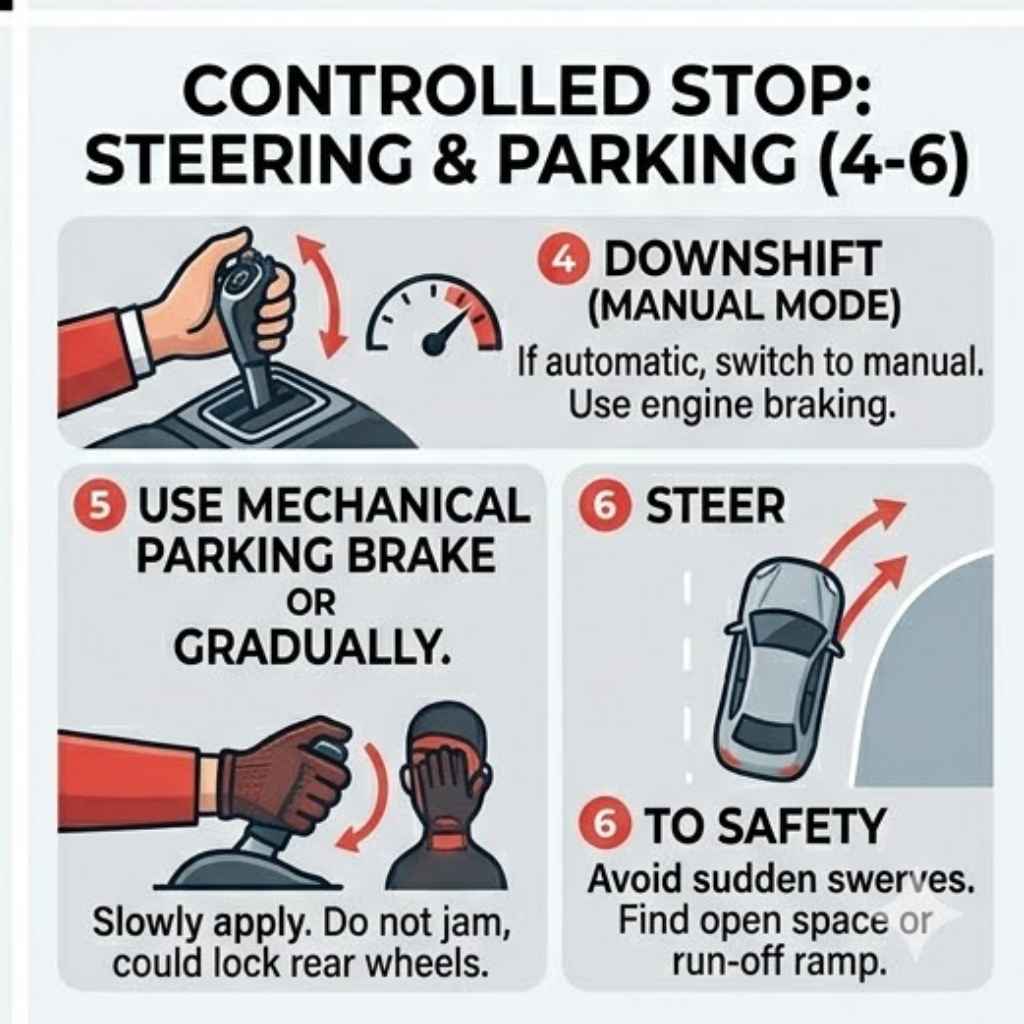
The goal is to reduce your speed safely. Look for a clear path to steer your vehicle. If you’re on a highway, try to move to the shoulder or an emergency lane.
If you’re in a city, look for an open area, a field, or even a gentle downhill slope where you can steer the car to a stop without causing an accident.
Managing Speed Without Brakes
With your primary brakes out of commission, slowing down becomes a different challenge. This section will cover how to use your car’s other systems to help reduce speed and control your vehicle when the brakes fail. These methods are crucial for safely bringing your automatic car to a halt.
Using Engine Braking
Engine braking is a technique that uses the engine’s resistance to slow the vehicle. In an automatic car, this is done by downshifting. You can do this by moving the gear selector from ‘D’ (Drive) to a lower gear like ‘3’, ‘2’, or even ‘L’ (Low) if your car has these options.
This makes the engine work harder to slow the car down.
The effect of engine braking is more noticeable at higher speeds. When you downshift, the engine’s RPMs will increase, and you’ll feel a noticeable drag that helps reduce your speed. This is a much safer way to slow down than relying solely on the parking brake, which can be too abrupt.
Experimenting with different lower gears can give you more control over how quickly you decelerate.
It’s important to downshift gradually. Shifting from ‘D’ directly to ‘L’ might be too harsh and could damage your transmission. Instead, move from ‘D’ to ‘3’, then to ‘2’, and finally to ‘L’ if needed.
Each shift will increase the engine’s braking effect. This method is especially useful on downhill slopes, as it prevents your conventional brakes from overheating and failing even further.
Engaging the Parking Brake Safely
The parking brake, or emergency brake, is designed for holding a car in place but can also be used to help slow down in an emergency. However, it needs to be used with caution, as it usually only affects the rear wheels. Pulling it too hard or too quickly can lock the rear wheels, causing the car to skid and become difficult to steer.
When your main brakes fail, slowly and steadily pull the parking brake lever or press the pedal. Feel for resistance and adjust how hard you’re pulling based on how the car reacts. If you feel the rear wheels starting to lock up and the car begin to slide, ease off the brake slightly.
The goal is to apply enough pressure to slow the car down without losing control.
The effectiveness of your parking brake can vary. Some parking brakes are more powerful than others. Modern cars might have an electronic parking brake, which you activate with a button.
These can sometimes be more precise in their application than a manual lever. Always be aware of your surroundings and the road conditions when using the parking brake to slow down.
Steering and Control
Even without brakes, maintaining control of your steering is vital. Your steering system relies on your car’s momentum and the tires’ grip on the road. You can still steer to avoid obstacles or guide your vehicle towards a safe place to stop.
Remember that at slower speeds, steering will feel more responsive.
If you have to make sudden turns to avoid an accident, do so as smoothly as possible. Abrupt movements can cause the car to lose traction, especially if you’re also using the parking brake. Keep your eyes on the road ahead and anticipate where you need to go.
Look for open spaces or areas that can absorb the impact if a complete stop is impossible.
Finding a Safe Place to Stop
Once you’ve initiated slowing down, the next critical step is to identify and maneuver towards a location where you can bring the vehicle to a complete stop safely. This involves assessing your surroundings and choosing the best possible option to minimize risk.
Assessing Your Surroundings
As you’re slowing down, constantly scan your environment. Look for open fields, empty parking lots, or even a wide shoulder on the road. Avoid areas with heavy traffic, pedestrians, or obstacles like trees or walls.
The more open space you have, the more room you have to maneuver and the less chance of a severe collision.
Pay attention to the terrain. A gentle downhill slope might help you slow down, but a steep one could be dangerous if you can’t control your speed. Conversely, an uphill slope can be very helpful for slowing and stopping the car without relying on brakes.
If you see soft ground like grass or dirt ahead, it can act as a natural brake if you steer onto it carefully.
Think about where other vehicles are. If you’re on a road, try to move to the side of the lane, signaling your intention if possible. If other drivers notice you struggling, they might be able to give you space.
However, don’t rely on them to clear a path for you; your primary responsibility is to control your own vehicle.
Maneuvering to a Stop
Once you’ve identified a potential stopping spot, steer your vehicle towards it. Continue to use a combination of engine braking and gentle application of the parking brake to reduce your speed as much as possible. The goal is to reach the chosen location at the slowest possible speed to reduce the impact of the eventual stop.
If you’re heading towards a soft shoulder or grassy area, be prepared for the car to slow down more rapidly. You might need to correct your steering if the car starts to pull unevenly. If you’re aiming for an open field, try to steer in a straight line as much as possible to maintain stability.
When you are close to stopping, anticipate the final moments. You might need to steer the car into something soft, like bushes or a sand embankment, as a last resort if a complete stop isn’t happening. While this might cause damage, it’s better than a high-speed collision.
The key is to make controlled movements until the car comes to a complete standstill.
After You Have Stopped
Once your vehicle has come to a stop, the immediate crisis is over, but there are still important steps to take. This section will guide you through what to do after the car is stationary to ensure safety and arrange for necessary repairs.
Securing the Vehicle
As soon as the car stops, engage your parking brake firmly. If you have an electronic parking brake, ensure it is activated. Turn off the engine to prevent any further mechanical issues and to conserve fuel, although the primary concern at this point is safety.
Put the gear selector in ‘Park’ (P) if you have an automatic transmission.
Turn on your hazard lights immediately to alert other drivers that you are stopped and experiencing trouble. If you have reflective triangles or flares, place them behind your vehicle at a safe distance to warn approaching traffic, especially if you are on a busy road. This is crucial for preventing secondary accidents.
If it is safe to exit your vehicle, do so cautiously. Exit from the side away from traffic if possible. Once outside, move to a safe location away from the roadway, such as behind a guardrail or on a sidewalk if available.
Never stand directly behind or in front of your disabled vehicle on the road.
Calling for Assistance
Your next step is to contact professional help. Use your mobile phone to call for a tow truck. If you have roadside assistance through an insurance provider or a club membership, call their number.
Be prepared to give your exact location, the make and model of your car, and a description of the problem (brake failure).
If you are in a dangerous location or feel unsafe, call emergency services (like 911 or your local equivalent). They can help secure the scene and arrange for a tow truck. Explain clearly that your brakes have failed and that you need assistance to move the vehicle safely off the road.
It’s also a good idea to let a family member or friend know what has happened and where you are. They can provide support and ensure you are safe while waiting for assistance to arrive.
Common Causes of Brake Failure
Understanding why brakes fail can help drivers be more aware and perhaps prevent such situations. This section explores some of the most common reasons behind brake system malfunctions in automatic cars.
Brake Fluid Issues
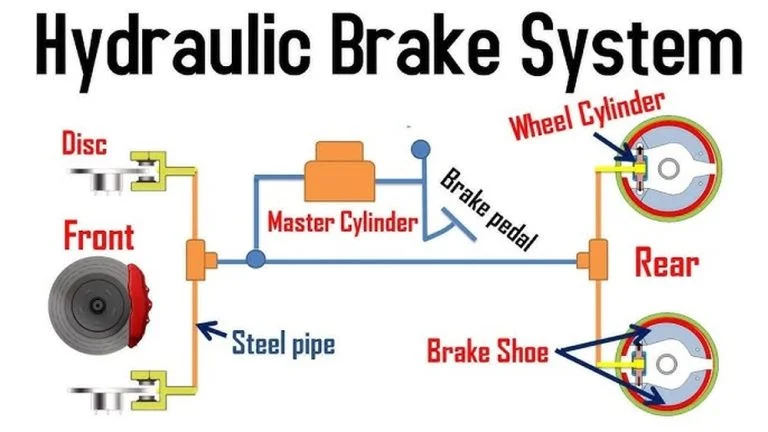
Brake fluid is essential for transmitting the force from your foot on the pedal to the brakes themselves. If the brake fluid level is too low, or if the fluid is old and contaminated, it can lead to brake failure. Low fluid can be caused by leaks in the brake lines or a worn master cylinder.
Air can get into the brake lines, which is particularly problematic. Air is compressible, unlike hydraulic fluid. When you press the brake pedal, if air is present, the fluid will be compressed instead of pushing the brake pads against the rotors effectively.
This results in a spongy pedal and significantly reduced braking power. Regularly checking and replacing brake fluid according to your car’s maintenance schedule is crucial.
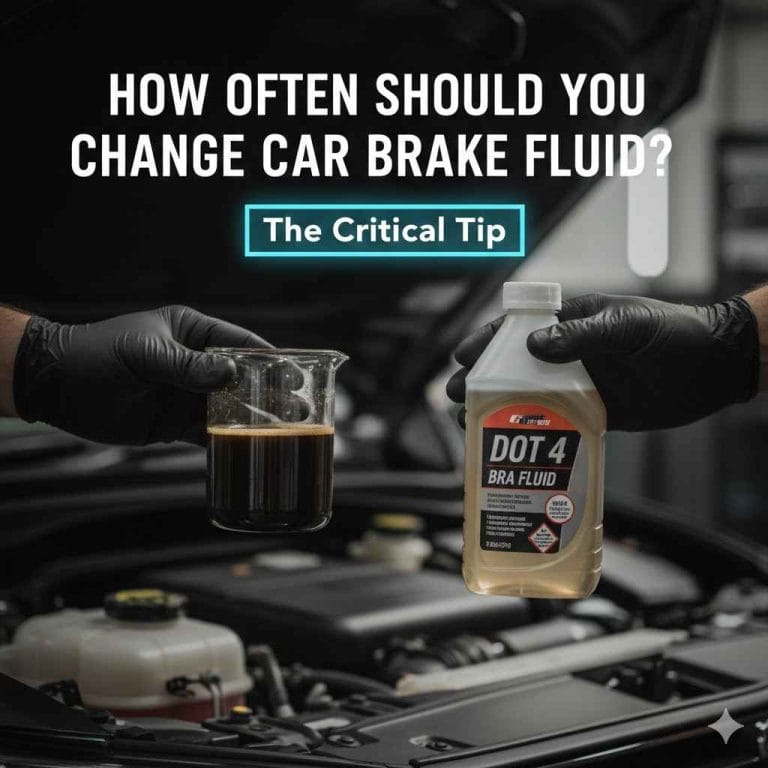
Brake fluid also absorbs moisture over time, which lowers its boiling point. When brakes are used heavily, they generate a lot of heat. If the brake fluid’s boiling point is too low, the fluid can boil, creating steam bubbles.
These steam bubbles are compressible, leading to a sudden loss of braking. This is a critical reason for periodic fluid flushes and replacements.
Worn Brake Components
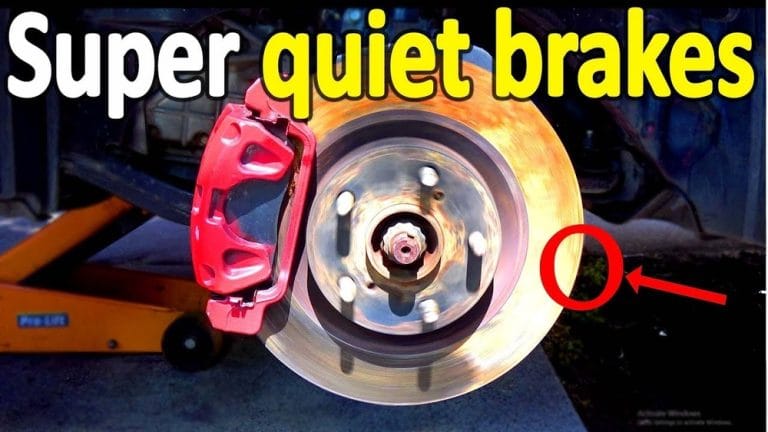
Over time, parts of your braking system will naturally wear out with regular use. The most common components to wear are the brake pads and brake rotors. Brake pads have a friction material that wears down with each application of the brakes.
When this material is completely gone, you’re left with metal on metal contact.
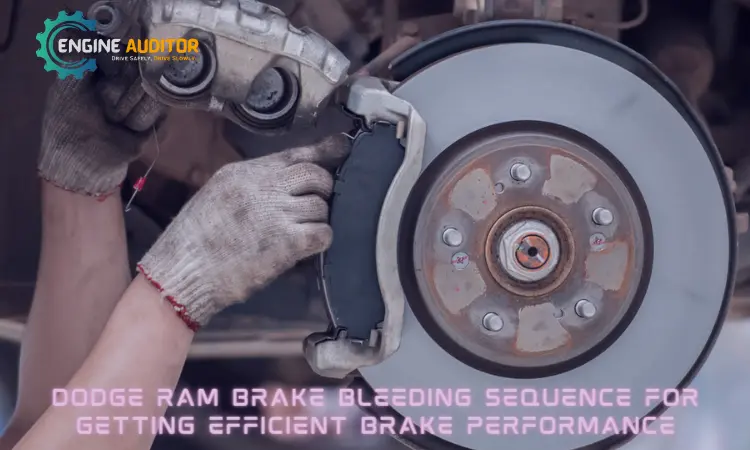
Worn brake pads can lead to a loss of stopping power and can also damage the rotors, which are the metal discs that the pads clamp onto. If the rotors are significantly scored or worn thin, they may not be able to provide enough friction to stop the car effectively. Other components like brake calipers and brake lines can also fail due to wear, corrosion, or damage.
A common sign of worn brake pads is a squealing or grinding noise when you brake. If you hear these sounds, it’s a clear indication that your brake pads are nearing the end of their life and need immediate replacement. Ignoring these warning signs can lead to more expensive repairs and, more importantly, a dangerous loss of braking capability.
System Malfunctions
Beyond fluid and wear, entire brake systems can malfunction. This includes issues with the master cylinder, brake lines, wheel cylinders, or the anti-lock braking system (ABS) module. A ruptured brake line, for instance, will cause a rapid loss of brake fluid and hence, a loss of brake pressure.
The master cylinder converts the physical force from your foot into hydraulic pressure. If it fails, this pressure generation stops. Brake lines can corrode over time, especially in areas where roads are salted in winter, leading to leaks or breaks.
Even seemingly minor components like rubber seals within the system can degrade and cause leaks.
Modern cars also have sophisticated ABS systems. While designed to improve safety, a malfunction in the ABS module or its sensors can sometimes affect the normal operation of the brakes. If the ABS warning light illuminates, it indicates a problem with this system, which may or may not impact your conventional braking ability, but it warrants professional inspection.
Preventative Maintenance for Your Brakes
Regular maintenance is your best defense against unexpected brake failure. This section will highlight key practices to keep your braking system in top condition, ensuring safety and reliability on the road.
Regular Brake Inspections
Scheduled inspections by a qualified mechanic are vital. During these checks, a mechanic will examine your brake pads, rotors, calipers, brake lines, and brake fluid. They can identify potential issues before they become serious problems.
Most car manufacturers recommend specific intervals for brake inspections, often tied to mileage or time. For example, a check might be recommended every 10,000 to 15,000 miles or annually. Don’t wait until you notice a problem to have your brakes looked at.
Proactive checks can save you money and prevent dangerous situations.
When you get your oil changed or other routine service done, ask your mechanic to quickly check the condition of your brakes as well. Many places will do a visual inspection for free. This simple step can catch early signs of wear or leaks that you might otherwise miss.
Fluid Checks and Replacement
Brake fluid should be checked regularly for level and condition. The brake fluid reservoir is usually easy to locate under the hood. If the fluid level is consistently low, it often indicates a leak somewhere in the system that needs to be fixed immediately.
Brake fluid also degrades over time. It absorbs moisture, which lowers its boiling point and can lead to corrosion within the brake system. Most manufacturers recommend flushing and replacing brake fluid every two to three years, or as specified in your owner’s manual.
This process removes the old, contaminated fluid and
When having your brake fluid serviced, ensure the mechanic uses the correct type of fluid specified for your vehicle. Using the wrong type can damage your brake system components. This maintenance step is often overlooked but is critical for the long-term health and performance of your brakes.
Understanding Warning Signs
As mentioned earlier, listening to your car is important. Unusual noises, changes in pedal feel, or dashboard warning lights are all signals that something might be wrong. Educate yourself on what these signs mean and don’t ignore them.
For example, a persistent squealing noise when you brake is usually a sign that your brake pads are worn and need replacing soon. A grinding sound indicates a more severe issue where metal is grinding against metal, potentially damaging your rotors. A spongy or soft brake pedal means there might be air in the system or a leak.
A car pulling to one side when braking can indicate uneven wear or a problem with a brake caliper.
If your ABS warning light comes on, it means there is an issue with the anti-lock braking system. While your regular brakes might still function, the ABS function will be disabled. It’s best to have this system checked by a professional to ensure optimal braking performance, especially in emergency situations.
Frequently Asked Questions
Question: What is the first thing I should do if my automatic car brakes fail while driving
Answer: The very first thing to do is stay calm and take your foot off the accelerator. Then, begin pumping the brake pedal to try and build up pressure, and start gradually engaging your parking brake.
Question: Can I still steer my car if the brakes fail
Answer: Yes, your steering system works independently of your brakes. You will still be able to steer your car to avoid obstacles or guide it to a safe stopping area.
Question: How can engine braking help if my brakes fail
Answer: Engine braking uses the resistance of the engine to slow your car. You can engage it by shifting your automatic transmission to a lower gear (like 3, 2, or L), which increases the engine’s drag on the wheels and helps reduce speed.
Question: Is it safe to drive my car after brake failure
Answer: No, it is not safe to drive your car with compromised brakes. Once stopped, you should call for a tow truck to take your vehicle to a mechanic for inspection and repair.
Question: How often should I have my brakes inspected
Answer: It is recommended to have your brakes inspected regularly, typically as part of your routine vehicle maintenance, or at least once a year. Check your owner’s manual for specific recommendations.
Summary
If your automatic car brakes fail, stay calm. Take your foot off the gas. Pump the brakes and gently pull the parking brake.
Use engine braking by shifting to a lower gear. Steer towards a safe open space to stop. Once stopped, turn on hazard lights and call for a tow truck.
Regular brake checks are key to preventing this. See also how to prevent car brake dust from ruining your wheels.
Related pick: Check today's price on Amazon
Products related to this article
Sponsored / affiliate links. As an Amazon Associate I earn from qualifying purchases. I may earn additional commission from eligible campaigns.
 Roadside Assistance Emergency Kit,Vehicle Truck Car Safety Roadside Emergency Kit with Reflective Warning Triangle Tow Strap Reflective Vest etc
 Roadside Assistance Emergency Kit,Vehicle Truck Car Safety Roadside Emergency Kit with Reflective Warning Triangle Tow Strap Reflective Vest etc
 Kingbolen BF200 Brake Fluid Tester High Precision Car Brake Fluid Detector