How to Start a Car: Steps Plus the 10-15 Second Rule
Starting a car with a key takes a few steps: seatbelt on, transmission in Park (automatic) or Neutral with the clutch pressed (manual), then turn the key to crank the engine. If it does not start within 10-15 seconds, stop and wait 30 seconds before trying again, since holding the key too long can burn out the starter. This guide covers both automatic and manual key starts, plus what to check if it will not turn over.
Understanding How to Start a Car Step by Step
Best Jump Starter Pick
NOCO Boost GB40 – $99.95
This guide’s troubleshooting section says a battery over 3-5 years old may need a jump — keep one of these in the trunk instead of waiting on roadside help.
- Best for: reliably jumping the aging battery this guide’s troubleshooting step flags
- Why we picked it: industry-trusted brand, UltraSafe reverse-polarity protection
- Main drawback: pricier than the budget packs below
Compare more jump starter options
 Option 1 TREKURE 4000A – $35.99
|
 Option 2 AstroAI S8 – $44.98
|
 Option 3 GOOLOO A3 + Compressor – $69.99
|
As an Amazon Associate we earn from qualifying purchases.
Getting your car’s engine to roar to life is a fundamental skill for any driver. It’s the very first action you take before you can go anywhere. While modern cars have made the process much simpler than older models, a clear, step-by-step approach ensures you handle it correctly every time.
This section covers the basic actions and checks involved in starting your vehicle safely and efficiently. We’ll go over everything from your initial position in the driver’s seat to the final turn of the key that brings your car to life.
Getting Ready to Start
Before you even think about turning the key, there are a few important things to do. This preparation helps ensure a smooth start and keeps you and your car safe. It’s like getting ready for any task; a little preparation goes a long way.
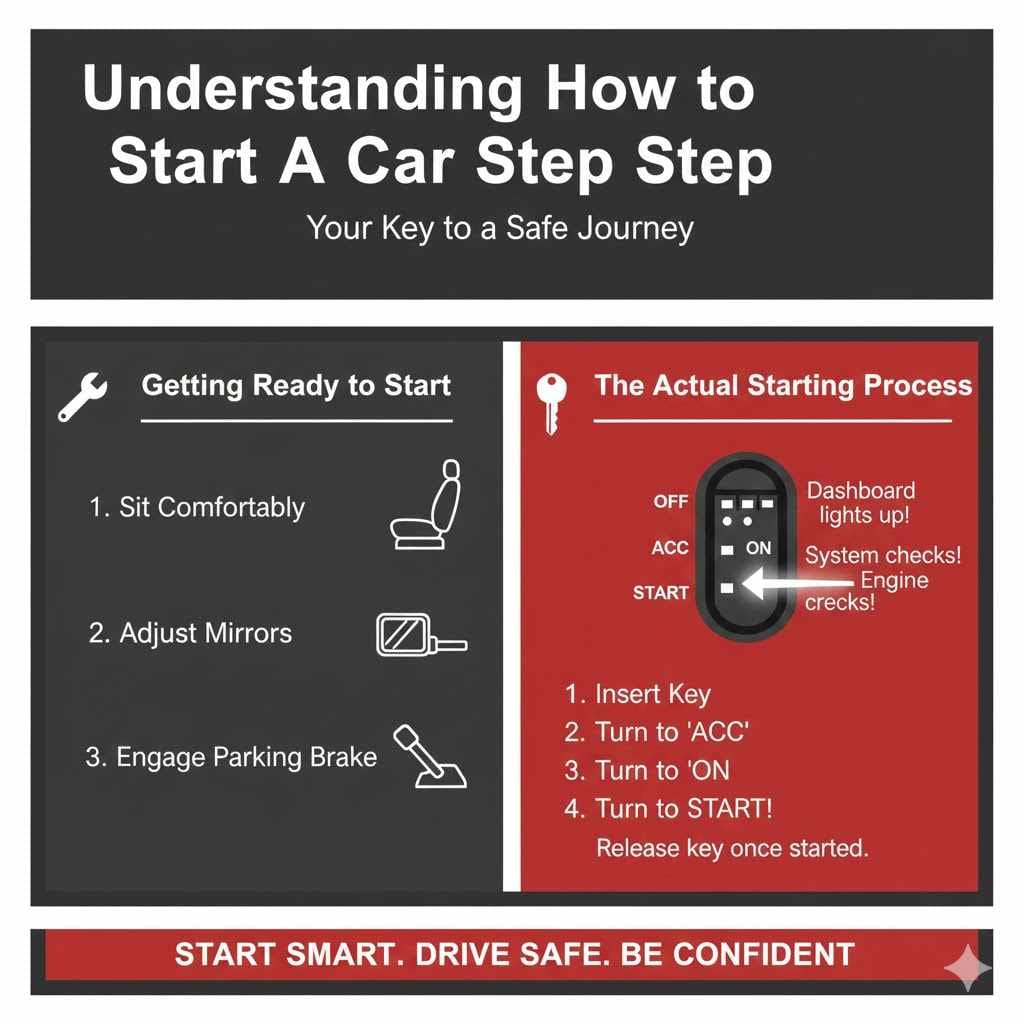
- Sit comfortably in the driver’s seat. Make sure you can reach the pedals easily without stretching too much. Your seat should be adjusted so you have a clear view of the road and all the controls. Good posture helps you react quickly and comfortably.
- Adjust your mirrors. The rearview mirror and side mirrors help you see what’s around your car. Properly adjusted mirrors are key for safe driving and parking. You should be able to see the back window in your rearview mirror and see the sides of your car in your side mirrors.
- Ensure the parking brake is engaged. This is a safety feature that prevents your car from rolling. You’ll usually find a lever between the seats or a button near the dashboard. Always check it’s on before you start the engine, especially if you’re on a slight hill.
The Actual Starting Process
Now that you’re set up, it’s time to actually start the car. This part is quick and straightforward. Follow these steps carefully.
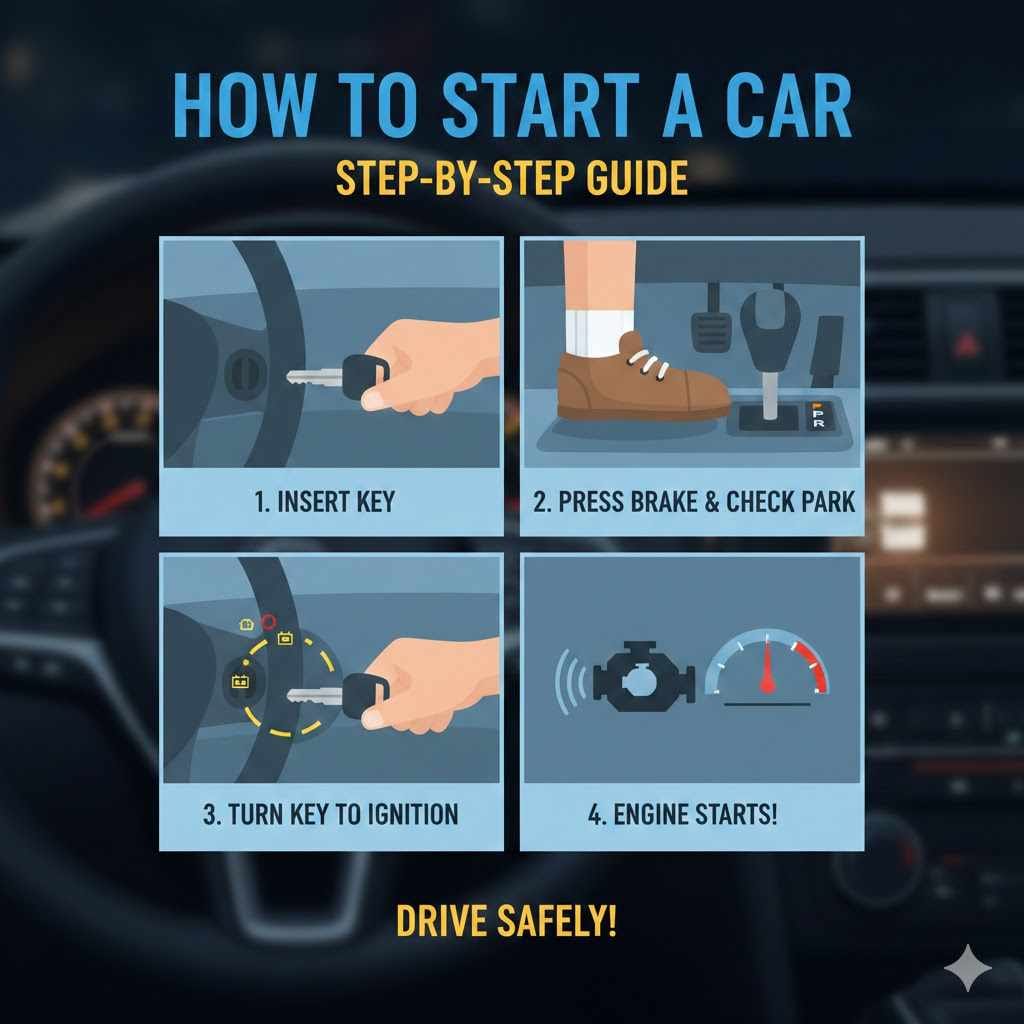
- Insert the key into the ignition. The ignition is usually found on the steering column or the dashboard. Make sure you’re using the correct key for your car.
- Turn the key to the ‘Accessory’ (ACC) position. This is usually the first click. You’ll hear the car’s electrical systems power up, like the radio or the dashboard lights. This step checks that the battery is working.
- Turn the key to the ‘On’ (ON or RUN) position. This is the second click. All the dashboard warning lights will illuminate briefly and then most will turn off. This means the car’s computer is running checks.
- Turn the key further to the ‘Start’ (START) position. You’ll need to hold it here for a few seconds. The engine will crank and then start. As soon as the engine starts, release the key. It will automatically spring back to the ‘On’ position.
Automatic vs. Manual Car Starting
The process of starting a car can vary slightly depending on whether the car has an automatic or manual transmission. Understanding these differences is important for new drivers, as the steps for engaging the gears and starting the engine are distinct. While both aim to get the engine running, the clutch pedal in a manual car adds an extra layer of safety and operation.
Starting an Automatic Transmission Car
Automatic cars are generally considered easier to drive and start because they handle gear changes for you. The starting procedure is designed to be very simple and requires minimal driver input beyond the key turn. The car’s computer manages the engagement of gears once you indicate your intention to drive.
- Ensure the gear shifter is in the ‘Park’ (P) position. This is a critical safety step for automatic transmissions. If the shifter is in ‘Drive’ (D) or ‘Reverse’ (R), the car might lurch forward or backward when the engine starts. The ‘Park’ setting mechanically locks the transmission.
- Press the brake pedal firmly. While not always strictly necessary for starting in ‘Park’, it’s a good habit. This ensures the car won’t move if it were accidentally left in gear and reinforces safe driving practices.
- Turn the key to the ‘Start’ position. As with manual cars, you’ll turn the key from ‘Off’ to ‘Accessory’, then to ‘On’, and finally to ‘Start’. Hold it until the engine fires up, then release it. The car will then be ready to be shifted into ‘Drive’ or ‘Reverse’ after releasing the brake.
Starting a Manual Transmission Car
Manual cars, also known as “stick shifts,” require more active involvement from the driver. The presence of a clutch pedal means you have direct control over the engine’s connection to the transmission. This allows for more precise control but also introduces specific steps for starting safely.
For manual cars, it’s especially important to ensure the car is in neutral. If the car is in gear and you try to start it without pressing the clutch, the engine could cause the car to jump forward suddenly, which is dangerous. This is why the clutch is pressed during the starting process.
- Make sure the gear shifter is in ‘Neutral’ (N). This is the most crucial first step for a manual car. You can usually confirm this by wiggling the gear stick; it should move freely from side to side. If it feels stiff, it might still be in gear.
- Press the clutch pedal all the way down to the floor. This action disconnects the engine from the transmission. It’s a safety measure designed to prevent the car from moving unexpectedly when you start the engine, even if you accidentally leave it in gear. You’ll feel a significant resistance as you push it down.
- Turn the key to the ‘Start’ position. Once the clutch is fully depressed and the car is in neutral, proceed with turning the key as you would in an automatic. Turn it to ‘Accessory’, then ‘On’, and finally hold it in the ‘Start’ position until the engine runs. Release the key immediately after the engine starts.
Troubleshooting Common Starting Issues
Sometimes, your car might not start right away. This can be frustrating, but often, the causes are common and fixable. Knowing these potential problems can save you time and money.
We’ll explore some of the most frequent reasons a car might refuse to start and what you can do about them.
The Engine Won’t Crank
If you turn the key and nothing happens at all – no sound, no clicking – the issue is likely with the electrical system. This means the starter motor isn’t receiving power to turn the engine.
- Check the battery connections. Loose or corroded battery terminals are a very common reason for starting problems. Look at the metal clamps connecting the cables to the battery posts. If they look dirty or loose, they might need cleaning or tightening. Corrosion often looks like a white or bluish powdery substance.
- Test the battery itself. Car batteries have a limited lifespan, typically 3-5 years. If your battery is old or has been drained by leaving lights on, it might not have enough power to start the engine. You might need a jump start or a new battery. A mechanic can test your battery’s health.
- Inspect the ignition switch. While less common, a faulty ignition switch can prevent power from reaching the starter. If the dashboard lights don’t come on when you turn the key to ‘Accessory’ or ‘On’, this might be the culprit.
The Engine Cranks But Doesn’t Start
This is when you hear the engine turning over (the whirring sound) but it doesn’t actually catch and run. This usually means the engine is getting power but isn’t getting the right mix of fuel and air, or there’s no spark.
- Check the fuel level. It sounds simple, but it’s easy to forget to refuel. Your car might not be starting because it’s out of gas. The fuel gauge might be inaccurate if the car’s electrical system is having issues, so it’s worth double-checking.
- Listen for the fuel pump. When you turn the key to the ‘On’ position, you should hear a faint humming or whirring sound from the back of the car for a few seconds. This is the fuel pump priming the system. If you don’t hear it, there might be a problem with the fuel pump or its fuse.
- Consider spark plugs. Spark plugs ignite the fuel-air mixture in the engine. If they are old, fouled, or faulty, they won’t create a strong enough spark. This requires a mechanic to diagnose and replace.
A Clicking Sound When Trying to Start
A rapid clicking sound often means the battery has some power, but not enough to fully engage the starter motor. The starter solenoid is trying to engage but can’t complete the circuit.
- Attempt a jump start. This is the most common solution for a weak battery. Connect jumper cables to another car’s battery and then to your car’s battery. Let the running car charge your battery for a few minutes before trying to start yours.
- Check battery terminals again. Even a slight looseness can cause this clicking. Ensure the connections are clean and tight. Sometimes, corrosion can prevent a good electrical connection, leading to this symptom.
Safety Precautions When Starting Your Car
Safety is paramount every time you get behind the wheel, and starting your car is no exception. These precautions are simple but vital for preventing accidents and ensuring a smooth experience. They are designed to protect you, your passengers, and other road users.
Pre-Start Safety Checks
Before you even insert the key, take a moment to confirm your surroundings. This includes checking for people or objects that might be in your car’s path. If the engine does not start within 10-15 seconds of cranking, stop and wait about 30 seconds before trying again — holding the key too long can overheat the starter motor.
- Ensure no one is in front of or behind the vehicle. Visually check your surroundings. A quick walk around the car can catch anything you might have missed. Children or pets can sometimes be hard to spot.
- Be aware of your environment. If you are parked on a hill, always engage the parking brake firmly. For automatic cars, ensure the gear selector is firmly in ‘Park.’ For manual cars, ensure the transmission is in ‘Neutral’ and the clutch is fully depressed.
During the Starting Procedure
Once you’re in the driver’s seat and ready to go, there are still safety steps to keep in mind. These help prevent unintended movement of the vehicle.
- Never try to start the car while it’s in gear (unless it’s a manual car and you are pressing the clutch). For automatics, this means always starting in ‘Park.’ For manuals, always starting in ‘Neutral’ with the clutch engaged is the standard procedure.
- Release the key once the engine starts. Holding the key in the ‘Start’ position after the engine has fired up can damage the starter motor. The ignition system is designed to automatically return to the ‘On’ position.
Real-Life Scenarios and Examples
To truly understand how to start a car step by step, seeing it in action with common situations can be very helpful. These scenarios cover typical experiences new drivers might encounter.
Scenario 1: First Time Driving
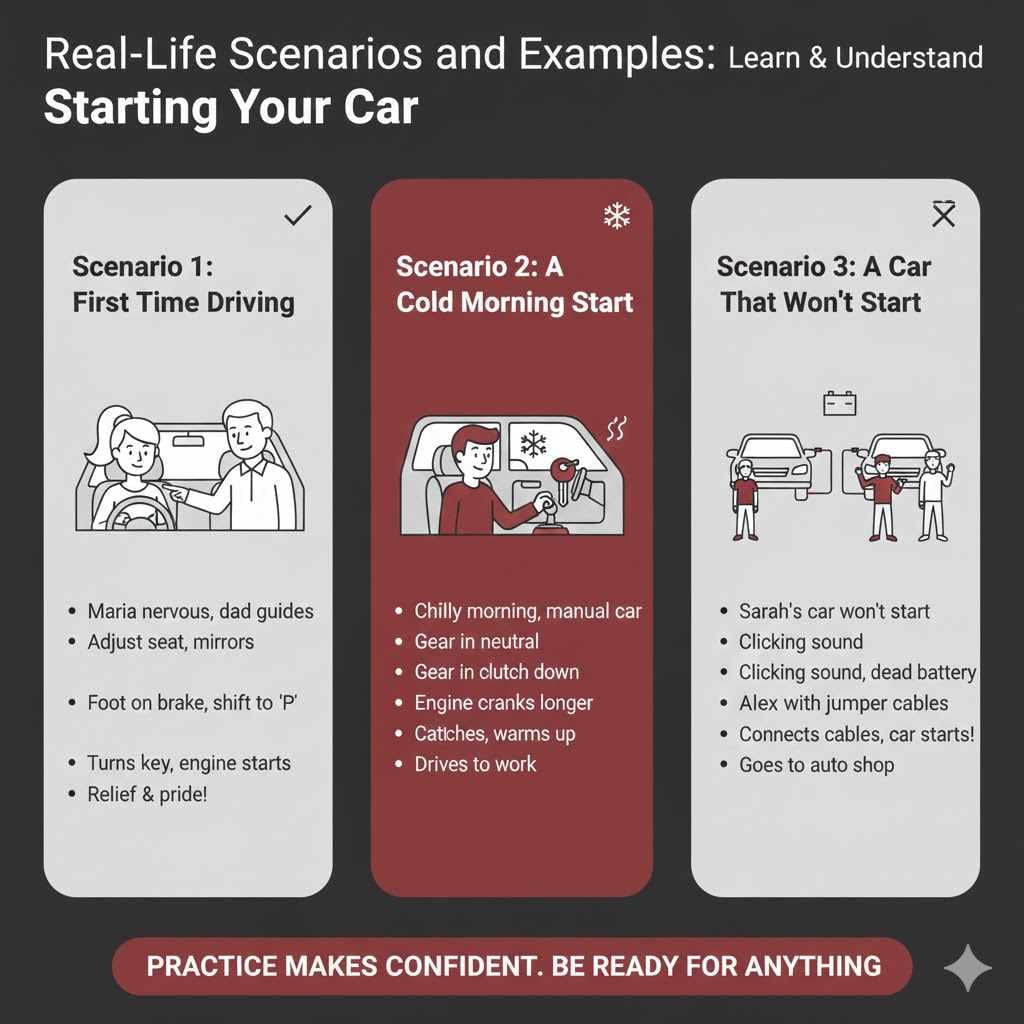
Maria is about to drive her dad’s car for the very first time. She’s a bit nervous. Her dad reminds her to sit down, adjust the seat, and check her mirrors.
He points out the ignition and tells her it’s an automatic. Maria remembers to put her foot on the brake pedal, shift the gear selector to ‘P’, and then turns the key. The engine starts smoothly.
She feels a wave of relief and pride.
Scenario 2: A Cold Morning Start
It’s a chilly morning, and David needs to get to work. He gets into his manual transmission car. He makes sure the gear stick is wiggling freely in neutral.
He pushes the clutch pedal all the way down. He turns the key, and the engine cranks a little longer than usual before catching. David knows that on cold mornings, engines sometimes need a bit more effort to start.
He lets the engine run for a minute to warm up before putting it into gear.
Scenario 3: A Car That Won’t Start
Sarah is trying to start her car, but all she hears is a clicking sound. She remembers leaving her headlights on overnight. She suspects the battery is dead.
She calls her friend Alex, who brings jumper cables. Alex shows her how to connect the cables to both cars. After a few minutes of charging, Sarah tries starting her car again, and this time, the engine roars to life.
She immediately turns off the headlights and drives to an auto shop to get her battery checked.
Frequently Asked Questions
Question: What is the difference between the ‘Accessory,’ ‘On,’ and ‘Start’ positions on my car’s ignition?
Answer: The ‘Accessory’ position powers non-essential electronics like the radio. The ‘On’ position powers most of the car’s systems, including the dashboard lights and fuel pump. The ‘Start’ position engages the starter motor to crank the engine.
Once the engine is running, you release the key, and it springs back to the ‘On’ position.
Question: Why do I need to press the clutch pedal when starting a manual car?
Answer: Pressing the clutch pedal disconnects the engine from the transmission. This prevents the engine from making the car move forward or backward unexpectedly when you start it, even if the transmission is accidentally left in gear. It’s a crucial safety feature for manual vehicles.
Question: Can I start my automatic car if the gear selector is in ‘Drive’?
Answer: No, you should never try to start an automatic car if the gear selector is in ‘Drive’ or ‘Reverse.’ Most automatic cars have a safety interlock that prevents the engine from starting unless the transmission is in ‘Park’ (P) or ‘Neutral’ (N). Trying to start it in gear can cause the car to lurch violently.
Question: What should I do if my car makes a clicking sound when I try to start it?
Answer: A clicking sound usually means your car battery is low on power. You can try jump-starting your car using jumper cables and another vehicle’s battery. If that doesn’t work, or if it happens frequently, your battery might need to be replaced or your charging system checked by a mechanic.
Question: How long should I hold the key in the ‘Start’ position?
Answer: You only need to hold the key in the ‘Start’ position until the engine begins to run. This is usually just a few seconds. As soon as the engine catches and starts running smoothly, release the key.
It will automatically return to the ‘On’ position. Holding it longer can damage the starter motor.
Wrap Up
Learning how to start a car step by step is a key skill for any driver. We covered everything from seating position to the actual key turn, including differences for automatic and manual cars. We also looked at common problems like a car that won’t crank or won’t start.
Remember these simple steps for a confident start every time. See also how to fix car brakes squeaking works on most vehicles .
Products related to this article
Sponsored / affiliate links. As an Amazon Associate I earn from qualifying purchases. I may earn additional commission from eligible campaigns.
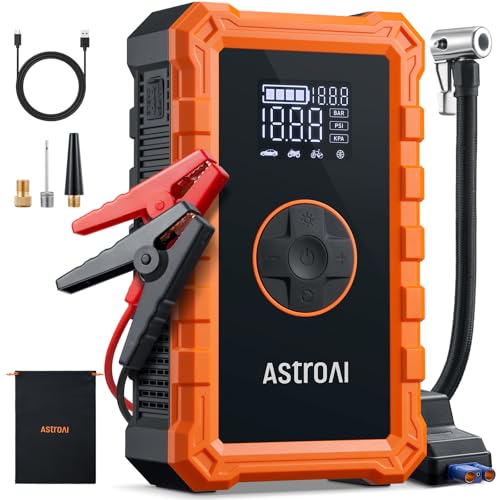 AstroAI S8 Air 3000A Jump Starter with Air Compressor, 12V Jump Box | Car Battery Booster Pack for 9L Gas/6.5L Diesel - 150PSI Auto-Off Tire Inflator - 2.4" Large Screen
 GOOLOO A3 12V 3000A Portable Jump Starter with Air Compressor | Supersafe Car Battery Booster Pack (9L Gas/6.5L Diesel) - BOOST for Dead Battery - 150 PSI Auto-Off Tire Inflator - LED Light