How a Car Tyre Inflator Works (Simple Guide for Drivers)
A flat tire on a deserted road, the pressure warning light flickering on during a long drive, or the slow hiss that signals a slow leak—these are scenarios every driver dreads. Yet, with a compact car tyre inflator tucked in your trunk, these stressors become manageable.
As driving technology advances, so too do the tools that empower everyday motorists to maintain their vehicles. The car tyre inflator, once relegated to the domain of professional garages, is now a common and essential accessory for drivers worldwide.
Understanding how a car tyre inflator works not only demystifies this powerful little device, but also enables drivers to handle emergencies, extend tire life, and maximize fuel efficiency. This guide delivers a clear, comprehensive look at the mechanics, types, real-world usage, and tips for choosing and maintaining a car tyre inflator—equipping every driver with the confidence and knowledge to keep their journeys safe and smooth.
Key Takeaways
- Car tyre inflators use electric or manual power to compress air and refill under-inflated tires quickly and efficiently.
- Understanding the different types (manual, 12V electric, cordless, heavy-duty) helps drivers choose the best inflator for their needs.
- Proper use and maintenance of tyre inflators can improve safety, fuel economy, and tire longevity.
- Modern inflators offer features such as digital pressure gauges, automatic shutoff, and portability for user convenience.
- Regularly checking and maintaining tire pressure with a quality inflator is a cost-effective way to prevent breakdowns and accidents.

Credit: www.kiaofdaphne.com
The Science Behind Car Tyre Inflators
The effectiveness of a car tyre inflator hinges on fundamental principles of physics and engineering. By converting power (either manual or electric) into compressed air, these devices offer a portable, reliable solution for tire maintenance.
How Air Compression Works
At its core, a tyre inflator is a miniature air compressor. It works by drawing in ambient air, compressing it, and then forcing it into the tire at a pressure higher than atmospheric. The inflator’s motor (electric or manual) drives a piston or diaphragm that compresses the air in a small chamber. As the chamber’s pressure rises, the air is pushed through a hose into the tire via the valve stem.
- Electric inflators use a DC motor connected to the vehicle’s 12V power outlet or an internal rechargeable battery.
- Manual inflators use hand or foot pumps to drive the piston.
This process is governed by Boyle’s Law, which states that for a given mass of gas at constant temperature, the pressure and volume are inversely proportional. By decreasing the volume in the compression chamber, the inflator increases the air pressure, allowing it to move into the higher-pressure environment of the tire.
For example, when using a hand pump, each downward stroke decreases the chamber volume, pushing air into the tire. In electric models, the process is automated, enabling rapid and consistent inflation with minimal effort. The efficiency of this process depends on the design and power of the inflator, as well as the integrity of the seals and hoses involved.
Pressure Measurement And Regulation
Accurately inflating a tire requires knowing its correct pressure—usually measured in pounds per square inch (PSI) or bar. Most inflators include a built-in pressure gauge, either analog or digital, to provide real-time feedback.
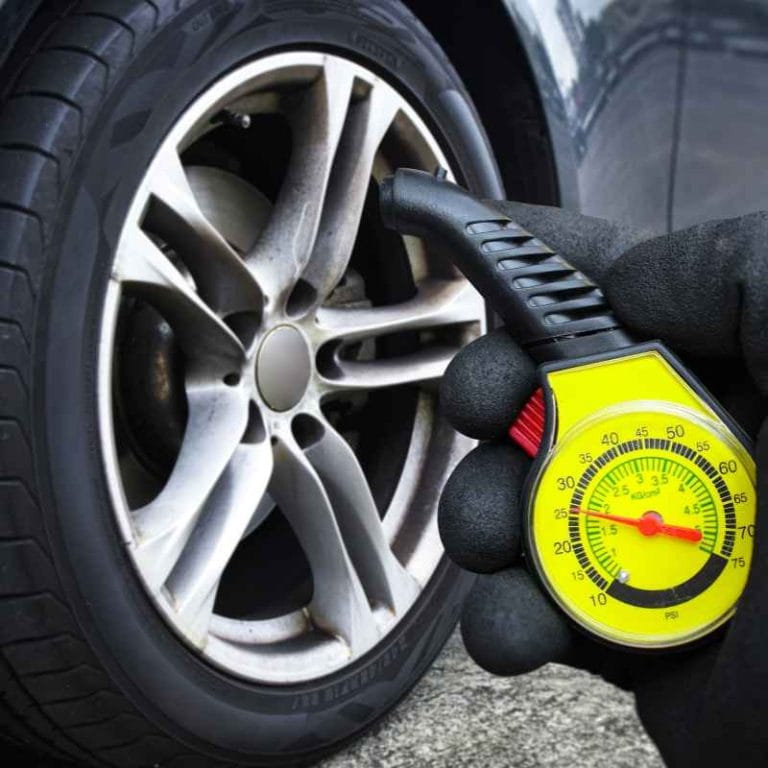
- Analog gauges: Use a needle and dial, offering durability and simplicity. They are less susceptible to battery failure and can function in extreme temperatures, making them reliable in a variety of conditions.
- Digital gauges: Provide precise, easy-to-read pressure readings, often with backlit displays for improved visibility in low-light environments. These gauges may also offer additional features such as preset pressure settings and error indicators.
Some advanced inflators feature automatic shut-off: when the pre-set pressure is reached, the device stops inflating, minimizing the risk of over-inflation and tire damage. This not only safeguards your tires but also allows for a more hands-off experience, letting you focus on other safety checks while the device operates.
Airflow Rate And Efficiency
The rate at which air is delivered—measured in liters per minute (L/min) or cubic feet per minute (CFM)—is a critical metric. Higher airflow rates mean faster inflation, especially important for larger tires. Compact inflators typically deliver 15-30 L/min, while heavy-duty models can exceed 60 L/min.
The airflow rate directly impacts how quickly a flat or under-inflated tire can be brought back to optimal pressure. For example, a 30 L/min inflator may take just a few minutes to inflate a standard car tire from 20 PSI to 32 PSI, while a lower-rated inflator might take significantly longer, which can be inconvenient or even unsafe in emergency situations.
Key Components Of A Tyre Inflator
- Motor or pumping mechanism: Provides the force needed to compress air.
- Compression chamber: The space where air is pressurized before being sent to the tire.
- Air hose and valve connector: Facilitates the transfer of compressed air from the inflator to the tire, often with a secure locking mechanism to prevent leaks.
- Pressure gauge: Displays real-time pressure readings, crucial for accuracy.
- Power source (cord, battery, or manual): Determines the inflator’s portability and usage scenarios.
- Cooling system (in advanced models to prevent overheating): Prolongs the lifespan of the inflator by managing the heat generated during operation.
The design and quality of these components influence the inflator’s overall performance, reliability, and ease of use. For more technical details, see the comprehensive breakdown at Wikipedia: Compressor.

Credit: us.gooloo.com
Types Of Car Tyre Inflators: Comparison And Features
Not all tyre inflators are created equal. The right choice depends on your vehicle type, frequency of use, and desired convenience. Below, we compare the main types of inflators available to drivers today.
Manual Tyre Inflators
Manual inflators are simple, reliable, and do not require electricity. They are ideal for emergencies or locations without power access.
Pros:
- No power required
- Low cost and low maintenance
- Lightweight and portable
Cons:
- Slow inflation, especially for large tires
- Requires physical effort
Manual inflators remain a favorite for cyclists and for situations where electrical power is unavailable, such as camping or remote travel. Their straightforward design means fewer parts that can break, making them incredibly durable. However, users should be prepared for a workout if inflating a fully flat tire.
12v Electric Tyre Inflators
The most popular type for car owners, 12V electric inflators plug into the vehicle’s cigarette lighter socket.
Pros:
- Quick and efficient inflation
- Compact and portable
- Affordable for most drivers
Cons:
- Dependent on car battery
- Not suited for very large tires (trucks, RVs)
These inflators strike a balance between speed and portability, making them ideal for everyday drivers. Many models include storage compartments for cords and hoses, built-in lights for nighttime use, and user-friendly controls. They are best suited for cars, sedans, and small SUVs.
Cordless/battery-powered Inflators
Cordless inflators are powered by rechargeable lithium-ion batteries, offering maximum portability.
Pros:
- Cord-free convenience
- Usable anywhere, even away from the car
- Often feature digital controls
Cons:
- Limited battery life per charge
- May be pricier than 12V models
Cordless models have become increasingly popular with advancements in battery technology. They are especially useful for multi-vehicle households or those who need to inflate tires or other items away from a power source. However, users should remember to keep batteries charged and consider purchasing extra battery packs for extended use.
Heavy-duty/professional Inflators
Designed for SUVs, trucks, and commercial vehicles, these inflators deliver higher airflow and pressure.
Pros:
- Rapid inflation for large tires
- Durable, often with cooling systems
Cons:
- Heavier and bulkier
- More expensive
Heavy-duty inflators are essential for those who regularly travel off-road, tow trailers, or operate commercial vehicles. They can handle sustained use, larger tire volumes, and higher pressures without overheating. Many also feature alligator clips for direct battery connection, bypassing lighter sockets for maximum power.
Comparison Table: Tyre Inflator Types
| Type | Power Source | Inflation Speed | Portability | Price Range | Best For |
|---|---|---|---|---|---|
| Manual | Human Power | Slow | High | $10–$30 | Occasional, Emergency Use |
| 12V Electric | Car Power Outlet | Moderate | High | $25–$70 | Everyday Car Owners |
| Cordless/Battery | Rechargeable Battery | Moderate | Very High | $40–$120 | On-the-Go, Versatile Use |
| Heavy-Duty | Car Battery/AC Power | Fast | Low–Moderate | $80–$300 | Trucks, SUVs, Commercial |
For in-depth product comparisons and reviews, visit Consumer Reports: Tire Inflators.
Key Features To Consider
When selecting a tyre inflator, consider these features:
- Maximum Pressure (PSI): Should exceed your tire’s maximum requirement. For example, passenger cars may need up to 35 PSI, while trucks and RVs may require 80 PSI or more.
- Airflow Rate (L/min or CFM): Determines how quickly it can inflate your tires. A higher rate is better for large tires or for inflating multiple tires in succession.
- Gauge Type: Analog vs. digital for accuracy and readability. Digital gauges are easier to read, especially in low light.
- Automatic Shut-Off: Prevents over-inflation, reducing risk of tire damage and freeing you from constant monitoring.
- Power Cord and Hose Length: Longer cords/hose provide flexibility to reach all tires, even on larger vehicles.
- Additional Accessories: Nozzle adapters, carrying case, LED lights, built-in storage for cables and hoses, and even USB ports for device charging.
Look for models with thermal protection to prevent overheating during extended use, and check for water and dust resistance if you expect to use your inflator outdoors or in adverse conditions.
Step-by-step: How To Use A Car Tyre Inflator
Knowing how to operate your tyre inflator correctly is crucial for safety and efficiency. Follow these steps for a typical electric inflator:
1. Preparation And Safety Checks
- Park your car on a level surface and turn off the engine. This ensures accurate pressure readings and reduces the risk of accidental movement.
- Engage the parking brake.
- Check the recommended tire pressure—usually found on the driver’s door jamb, inside the fuel door, or in the owner’s manual.
- Inspect the inflator for damage, frayed wires, or leaks. If any issues are found, do not use the device until repairs are made.
For added safety, keep reflective triangles or safety vests in your car, especially if you need to inflate a tire on the roadside.
2. Connecting The Inflator
- Plug the inflator’s power cord into your vehicle’s 12V socket or ensure the battery is charged for cordless models.
- Remove the valve cap from the tire. Store it somewhere safe to avoid losing it.
- Attach the air hose connector securely to the tire valve stem. Most connectors use a lever lock or screw-on fitting. Ensure a tight seal to prevent air leaks during inflation.
If you’re using a heavy-duty model with alligator clips, connect them directly to the battery terminals, observing correct polarity (red to positive, black to negative).
3. Setting The Desired Pressure
- If your inflator has a digital display, use the buttons to set the target pressure (PSI or bar). Some inflators allow you to toggle between units.
- For analog gauges, monitor the needle as you inflate, referencing your target pressure.
Double-check your vehicle’s recommended pressure, as over- or under-inflation can compromise safety and performance.
4. Starting Inflation
- Switch the inflator ON. The motor should run smoothly and without excessive noise or vibration.
- Watch the pressure gauge as the tire inflates. Be patient, as the process may take several minutes depending on the size of the tire and the inflator’s power.
- If equipped, the inflator will automatically shut off at the set pressure. If not, manually turn it off once the desired pressure is reached, being careful to avoid over-inflation.
During inflation, periodically check the temperature of the inflator’s housing. If it becomes very hot, pause to let it cool, especially for smaller portable models.
5. Disconnecting And Finishing Up
- Remove the hose from the valve stem carefully—some air escape is normal, but work quickly to minimize pressure loss.
- Replace the valve cap to keep out dirt and moisture.
- Unplug the inflator and store it, coiling the hose and power cord neatly to avoid damage.
6. Double-check
- Use a separate, high-quality pressure gauge to verify accuracy, especially with analog models.
- Inspect all tires to ensure even pressure. Uneven tire pressure can affect handling and tire longevity.
Tips For Best Results
- Only inflate tires when they are cold (driven less than 2 miles). Tire pressure increases with heat, giving false readings if checked after driving.
- Inflate in small bursts to avoid over-inflation.
- Allow the inflator to cool down after continuous use (per manufacturer guidelines). This preserves motor life and prevents overheating.
For a visual demonstration, check out this video guide from Bridgestone Tires.

Credit: wolfbox.com
Benefits Of Using A Car Tyre Inflator
Car tyre inflators offer multiple benefits that go beyond mere convenience. Regular use can positively impact your wallet, your safety, and the environment.
Enhanced Safety
Under-inflated tires are a leading cause of blowouts and accidents. According to the National Highway Traffic Safety Administration (NHTSA), over 11,000 tire-related crashes occur annually in the US alone.
Properly inflated tires ensure:
- Optimal traction and handling, reducing the likelihood of losing control in emergencies or adverse weather.
- Reduced risk of tire failure, especially at highway speeds or under heavy loads.
- Shorter braking distances, enhancing your ability to react safely in sudden stops.
Many insurance providers acknowledge that regular tire maintenance, including proper inflation, contributes to fewer claims and safer roads.
Improved Fuel Efficiency
The US Department of Energy estimates that every 1 PSI drop in all four tires can lower gas mileage by 0.2%. Keeping tires at recommended pressures can improve fuel economy by up to 3%—saving drivers hundreds of dollars over a car’s lifespan.
For a vehicle that averages 25 miles per gallon and is driven 12,000 miles per year, this could mean saving up to 14 gallons of fuel annually, simply by maintaining correct tire pressure.
Prolonged Tire Life
Under-inflation increases tread wear and sidewall stress, shortening tire lifespan by up to 25%. Regular checks and top-ups with a quality inflator help you get the most out of your investment. Considering that a set of new tires can cost $400 or more, regular inflation checks offer significant long-term savings.
Convenience And Cost Savings
- Avoid waiting for roadside assistance, which can take hours and may be expensive if not covered by your policy.
- Save on service station fees for tire inflation, which can accumulate over time.
- Handle slow leaks or seasonal pressure changes quickly at home, ensuring you’re always ready for spontaneous trips.
A personal inflator can also be used to maintain proper pressure in spare tires, which are often neglected but crucial in emergencies.
Environmental Impact
Proper tire pressure reduces CO₂ emissions by optimizing fuel consumption and decreasing tire waste. According to the Rubber Manufacturers Association, properly inflated tires can reduce national gasoline consumption by more than 1.2 billion gallons annually in the US alone.
Reduced fuel consumption means fewer greenhouse gases released per mile driven, helping drivers minimize their environmental footprint.
For further reading, see the official statistics from the NHTSA: Tire Safety.
Real-world Examples And Case Studies
Understanding the practical value of a tyre inflator is easiest through real-world scenarios. Here are three cases illustrating their importance:
Example 1: The Highway Emergency
Situation: Sarah, a commuter, noticed her tire pressure warning light during a morning drive. She pulled over, used her 12V inflator, and restored her tire to the recommended 32 PSI in under 5 minutes.
Outcome: Sarah avoided a potential blowout, arrived at work safely, and later repaired a small puncture before it became dangerous.
This scenario highlights how having a tyre inflator can turn a stressful situation into a minor inconvenience, keeping your schedule intact and avoiding costly towing services.
Example 2: Off-road Adventure
Situation: Mike and his family enjoy off-roading in their SUV. After lowering tire pressure for sand driving, he used a heavy-duty inflator to restore all four tires to highway pressure before driving home.
Outcome: The inflator prevented excessive tire wear, ensured safe handling, and allowed the family to travel long distances without searching for a service station.
Off-roaders often need to adjust tire pressures for different terrains. A portable, high-capacity inflator is indispensable for transitioning from off-road to on-road driving, ensuring safety and performance.
Example 3: Cold Weather Drop
Situation: In winter, Jane noticed all four tires were 4 PSI under-inflated due to a temperature drop. With her cordless inflator, she topped up each tire in her garage, improving fuel efficiency and handling during icy conditions.
Outcome: Jane avoided uneven tire wear and improved her car’s cold-weather safety.
Tire pressure can drop 1 PSI for every 10°F decrease in temperature, making regular checks and adjustments essential during seasonal changes. A personal inflator saves the hassle of visiting service stations in bad weather.
These examples underscore the versatility and reliability of personal tyre inflators for everyday drivers, outdoor enthusiasts, and families alike.
Maintenance And Troubleshooting Tips
To maximize the lifespan and reliability of your tyre inflator, routine care is essential. Here’s how to keep your device in optimal condition:
Regular Maintenance
- Inspect hoses and connectors: Look for cracks, leaks, or wear. Replace damaged parts to prevent loss of pressure and air leaks.
- Clean the air intake: Dust and debris can impair performance. Use compressed air or a soft brush to keep vents clear.
- Check the power cord: Ensure there are no exposed wires or fraying. Faulty cords can cause malfunctions or electrical hazards.
- Test the gauge accuracy: Compare with a standalone gauge annually. Calibrating or replacing inaccurate gauges maintains safety.
- Recharge batteries: For cordless models, keep batteries topped up. Store spare batteries for long trips or emergencies.
Developing a habit of inspecting your inflator every few months ensures it’s ready when you need it most.
Storage Best Practices
- Store the inflator in a dry, cool location to prevent corrosion.
- Keep all accessories (adapters, hose, instructions) together in a case for easy access.
- Avoid leaving the inflator in extreme temperatures (very hot trunks or freezing garages), as this can degrade seals and electronic components.
- If your inflator has a lithium-ion battery, store it at partial charge (40–60%) when not in use for extended periods to prolong battery life.
Troubleshooting Common Issues
- Inflator won’t turn on: Check power source, fuse, or battery charge. Replace blown fuses and ensure the lighter socket is functional.
- No air output: Inspect for hose blockages or leaks. Clean or replace the hose as needed.
- Inaccurate gauge: Calibrate or replace the gauge if necessary. Some manufacturers offer calibration services or replacement parts.
- Overheating: Allow the inflator to cool between uses; avoid exceeding the recommended duty cycle to prevent permanent motor damage.
- Unusual noises or vibrations: These may indicate internal damage. Discontinue use and consult the manufacturer or a repair specialist.
When To Replace Your Inflator
- Irreparable damage to the motor or compressor
- Persistent leaks or loss of pressure
- Faulty or unreadable pressure gauge
- Consistent failure to reach desired pressures
For more troubleshooting tips, visit CAA: Air Compressor Troubleshooting.
Choosing The Right Tyre Inflator For Your Vehicle
Selecting the ideal tyre inflator depends on several factors, including vehicle type, usage frequency, budget, and preferred features.
1. Assess Your Vehicle’s Needs
- Passenger cars: Most 12V inflators suffice, especially for sedans, hatchbacks, and compact SUVs.
- SUVs and trucks: Opt for heavy-duty models with higher pressure and airflow, designed for larger tire volumes.
- Motorcycles, bicycles: Compact or manual inflators are adequate and easier to carry.
Consider your tire size, the maximum PSI required, and the typical conditions in which you’ll use the inflator.
2. Consider Usage Patterns
- Frequent travelers: Look for portable, fast inflators with automatic shut-off, a reliable battery, and a built-in light for night use.
- Urban drivers: Compact models with digital gauges add convenience for quick checks and top-ups.
- Outdoor enthusiasts: Cordless or heavy-duty models offer flexibility for off-road, camping, or adventure travel.
If you regularly transport heavy loads or tow trailers, select an inflator rated for sustained use and higher pressures.
3. Budget And Value
While price is important, consider long-term value. Investing in a reputable, durable inflator can save money on tire replacements and service calls. Cheap, unreliable models may fail when you need them most, potentially resulting in greater inconvenience and expense.
4. Reviews And Reliability
Read user reviews and check for certifications (e.g., CE, UL, or ETL) to ensure safety and reliability. Look for brands known for quality customer support and accessible replacement parts. For a roundup of top-rated models, see Autoblog: Best Portable Tire Inflators.
5. Side-by-side Feature Comparison
| Model | Type | Max PSI | Airflow Rate | Gauge | Auto Shut-Off | Price |
|---|---|---|---|---|---|---|
| DeWalt DCC020IB | Cordless | 160 | 30 L/min | Digital | Yes | $120 |
| EPAuto 12V DC | 12V Electric | 100 | 15 L/min | Digital | Yes | $35 |
| Viair 88P | Heavy-Duty | 120 | 35 L/min | Analog | No | $70 |
| Slime 40026 | Manual | Not Specified | Slow | Analog | No | $20 |
6. Must-have Features Checklist
- Maximum pressure suitable for your tires
- Durable, flexible hose for easy maneuvering
- Accurate gauge (digital preferred for precision)
- Sufficient cord/hose length for all tires
- Automatic shut-off for safety and convenience
- Compact size for storage in your trunk or glove box
- Built-in LED light for night-time emergencies
- Multiple nozzle adapters for versatility
Frequently Asked Questions
What Is The Ideal Tire Pressure For My Car?
The ideal tire pressure varies by vehicle and is specified by the manufacturer. It is typically listed on a sticker inside the driver’s door jamb, in the owner’s manual, or on the fuel cap. For most passenger cars, the range is 30–35 PSI. Always use the vehicle’s recommended value rather than the maximum printed on the tire sidewall.
Can I Use A Car Tyre Inflator For Other Inflatables?
Yes, most car tyre inflators come with multiple nozzle adapters for inflating items such as bicycle tires, sports balls, air mattresses, and pool toys. However, check the manufacturer’s guidelines for compatibility and avoid over-inflating small items. Some inflators offer preset modes for different inflatables, providing added safety and convenience.
How Long Does It Take To Inflate A Flat Tire?
The time required depends on the inflator’s airflow rate and the tire size. For a standard car tire (from 0 to 32 PSI), a typical 12V inflator takes 4–8 minutes. Heavy-duty models can be faster, while manual pumps may take much longer. Always refer to your inflator’s manual for estimated times and avoid running the inflator continuously beyond its recommended duty cycle.
Is It Safe To Leave The Inflator Unattended During Use?
No. Unless your inflator has an automatic shut-off feature, you should never leave it unattended while operating. Over-inflation can damage the tire or cause it to burst, posing safety risks. Stay nearby and monitor the progress, ready to turn off the device if necessary.
How Accurate Are Built-in Pressure Gauges On Inflators?
Built-in gauges are generally accurate within ±1–2 PSI, but quality varies between models. For critical applications, verify pressure with a standalone, calibrated gauge after inflation. Regular calibration checks can help ensure continued accuracy.
Resources And Further Reading
For more information, explore these authoritative resources:
- NHTSA: Tire Safety
- Wikipedia: Tire Pressure
- Consumer Reports: Tire Inflators
- Autoblog: Best Portable Tire Inflators
- CAA: Air Compressor Troubleshooting
- Bridgestone Tires: How to Use a Tire Inflator
A car tyre inflator is more than a convenience—it’s an essential tool that empowers drivers to take control of their safety and vehicle maintenance. By understanding how these devices work, selecting the right model, and using it properly, you can save time, money, and avoid roadside emergencies.
Make tire care part of your regular vehicle routine, and every journey will be smoother, safer, and more enjoyable.
Products related to this article
Sponsored / affiliate links. As an Amazon Associate I earn from qualifying purchases. I may earn additional commission from eligible campaigns.