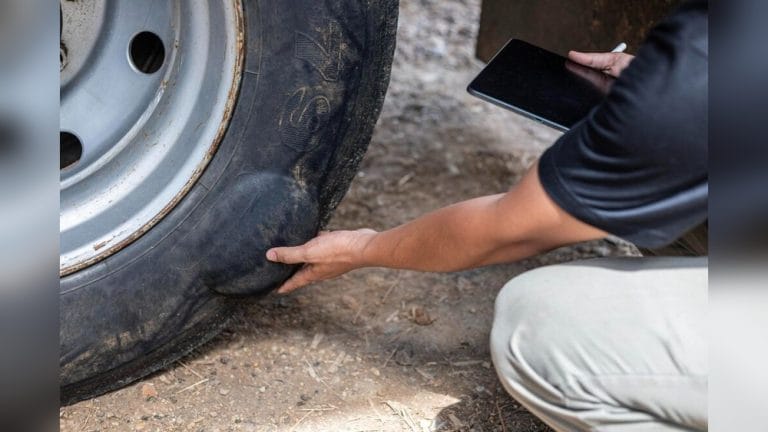
What Car Tire Pressure Is Too High? Know Your Limits
It can be really frustrating when you’re trying to take good care of your car. You know keeping your tires properly inflated is important. But sometimes, you might wonder if you can actually put too much air in them. That’s a valid concern. Overinflating tires can cause problems, and it’s good to know where that line is. We’ll break down what car tire pressure is too high and what you need to watch out for.
Understanding what car tire pressure is too high is key to vehicle safety and performance. Overinflation can lead to a rougher ride, uneven tire wear, and increased risk of blowouts. Knowing the safe PSI limits for your specific vehicle prevents these issues and ensures optimal handling and fuel efficiency.
Understanding Tire Pressure Limits
Tires need air to work. Air gives them their shape. It also helps them grip the road.
Plus, it makes your ride smoother.
But there’s a limit to how much air a tire can hold safely. Too much air makes the tire stiff. It can’t flex like it should.
This is where knowing your car’s tire pressure limits becomes very important.
Car tires have a maximum pressure. This is listed on the tire itself. It’s usually on the sidewall.
This number is the absolute highest pressure the tire can safely handle. It’s not the recommended pressure for driving, though. That recommended pressure is different.
The recommended tire pressure is what your car maker suggests. This helps the tires perform best. It also keeps them from wearing out too fast.
This is usually found on a sticker. The sticker is often on the driver’s side doorjamb. You can also find it in your car’s owner’s manual.
When we talk about what car tire pressure is too high, we mean exceeding these safe limits. This can be the maximum on the tire. It can also be much higher than the recommended pressure.
Both situations are risky.
Why Too Much Air is a Problem
When tires are overinflated, the center of the tire bulges out more. The edges don’t touch the road as well. This changes how your car handles.
It can make steering feel weird. Braking might not be as effective.
Overinflation also makes the ride bumpy. The tires can’t absorb bumps. Every little crack in the road feels bigger.
This is tough on your car’s parts too. Shocks and struts can wear out faster.
The biggest worry is tire failure. Overinflated tires are more likely to blow out. This can happen suddenly.
It can cause you to lose control of your car. This is very dangerous, especially at higher speeds.
Personal Experience: The Day I Overlooked My Tires
I remember one sweltering summer afternoon. I was heading out on a road trip. My old sedan was packed.
I was eager to hit the highway. I did a quick walk-around, but I totally skipped checking my tire pressure. I figured they looked fine.
About an hour into the drive, I started noticing it. The car felt… jumpy. Every tiny road imperfection felt like a jolt.
It was like riding a bucking bronco, not a smooth cruising vehicle. I kept thinking the road must be in terrible shape. But other cars seemed to be gliding along just fine.
Then, as I took a curve a bit faster than usual, the steering felt mushy. It didn’t feel responsive. A little voice in my head started whispering that something was wrong.
I pulled over at the next rest stop. I had a small air gauge in my glove box. I took a look.
To my horror, the rear tires were way overinflated. I had put air in them a few weeks prior and must have added way too much without checking the gauge properly. They were sitting at nearly 50 PSI!
The doorjamb sticker said 35 PSI. That’s a huge difference.
I let some air out of both rear tires. Immediately, the ride smoothed out. The steering felt normal again.
It was a huge relief. That day taught me a valuable lesson. Never assume your tires are okay.
Always check the pressure. Knowing what car tire pressure is too high saved me from a potentially dangerous situation.
Tire Pressure Quick Check Guide
When to Check: Always check when tires are cold. This means before you drive far. Or after the car has sat for at least three hours.
What You Need: An accurate tire pressure gauge. They are small and inexpensive.
Where to Find Info: Check the sticker on the driver’s doorjamb. Your owner’s manual also has this information.
The Process: Unscrew the valve cap. Press the gauge onto the valve stem. Read the number.
Compare it to your car’s recommended PSI.
The Numbers Game: PSI Explained
PSI stands for Pounds per Square Inch. This is how we measure air pressure. Tire pressure is measured in PSI.
Your car has a recommended PSI. This is the sweet spot. It ensures your tires grip well.
It helps them last longer. It also makes your car handle right.
Where do you find this number? Look for a sticker. It is usually on the driver’s side door frame.
Sometimes it’s in the glove box or gas cap door. Your owner’s manual is another good source.
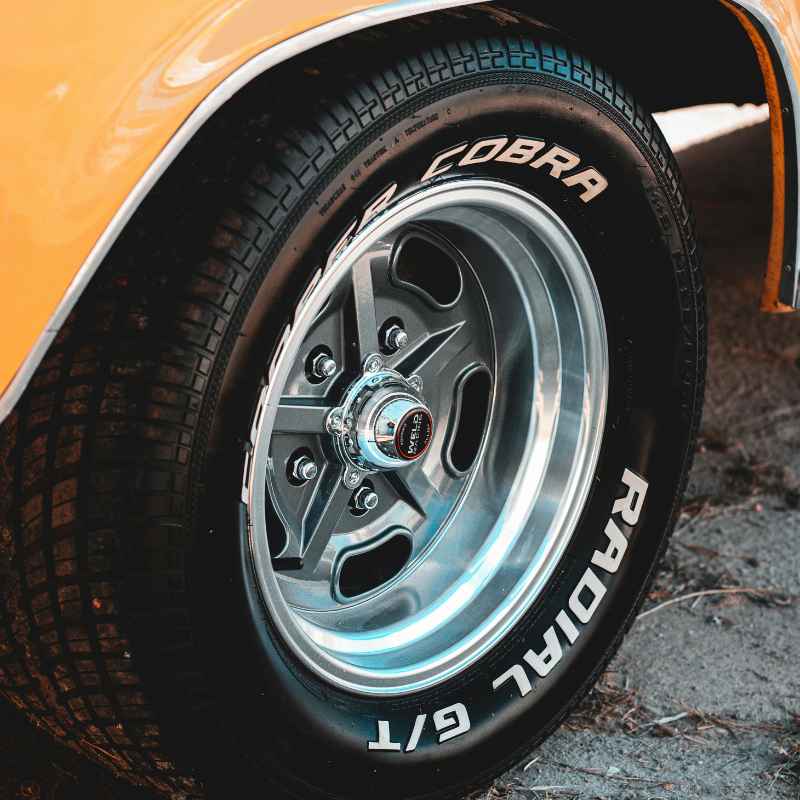
Tires also have a maximum PSI. This is printed on the tire’s sidewall. It looks like “MAX.
PRESS. 51 PSI”. This is the highest the tire can safely hold.
You should almost never go this high.
If your tire pressure is higher than the recommended PSI, it’s too high for normal driving. If it’s higher than the MAX. PRESS.
number, it’s dangerous. This is when you have a problem.
Recommended PSI vs. Maximum PSI
It’s crucial to know the difference. The recommended PSI is for driving. It’s about comfort and safety for your car.
It’s what the car maker wants for best performance.
The maximum PSI is a safety limit for the tire itself. It tells you the most air the tire can hold without breaking. Driving at the maximum PSI is usually very uncomfortable.
It also causes uneven wear. It can make your car harder to control.
Most cars recommend a PSI between 30 and 35. Some might be a little lower or higher. This is normal.
The maximum PSI on a tire is often much higher, like 44 PSI, 50 PSI, or even 60 PSI.
So, if your car’s sticker says 35 PSI, and your tires have “MAX. PRESS. 51 PSI”, reaching 40 PSI is too high for driving.
Reaching 51 PSI is extremely dangerous.
Signs Your Tires Might Be Overinflated
Harder Ride: You feel every bump and crack in the road.
Bouncy Feeling: The car seems to bounce more than usual.
Reduced Traction: Especially in wet conditions, the tires might slip more.
Uneven Wear: The center of the tire tread wears down faster.
Stiff Steering: The steering wheel might feel lighter or less responsive.
What Car Tire Pressure Is Too High?
Let’s get specific. What car tire pressure is too high?
First, any pressure above the recommended PSI on your car’s sticker is too high for everyday driving. This is the most common situation people face.
For example, if your car says 32 PSI is recommended, then 35 PSI is too high. 40 PSI is definitely too high. Even 33 PSI is slightly over the ideal range for that car.
Second, and more critically, any pressure above the maximum PSI listed on the tire’s sidewall is dangerously too high.
So, if the tire says “MAX. PRESS. 51 PSI”, then 52 PSI or anything above that is unsafe.
You are pushing the limits of the tire’s construction.
Why does this happen? People sometimes add too much air by mistake. They might overfill them at a gas station.
Or they might not check the gauge properly.
Sometimes, people think more air means better gas mileage. Or they think it makes the tires last longer. While slightly higher pressure can help a little, going too high causes more harm than good.
Here’s a simple way to think about it: The recommended PSI is your target. The maximum PSI is your absolute hard limit. Anything above your target is not ideal.
Anything above your hard limit is dangerous.
Common Scenarios of Overinflation
I’ve seen people get confused at gas stations. They see two numbers: the one on their car and the one on the tire. They might think the higher number is better.
Or, maybe they went to a shop and the mechanic overinflated them. This can happen if the mechanic is in a rush. They might set all tires to a standard high pressure.
Temperature also plays a role. Air expands when it’s hot. So, tires can gain PSI on a hot day.
If you check pressure in a cool garage and then drive out into the hot sun, the PSI will rise. This is normal. But if you add air when it’s hot, you could be adding too much for cooler conditions later.
Another thing to consider is tire age and condition. An older tire might be more stressed. Pushing it to its absolute maximum pressure is riskier.
Overinflation vs. Underinflation
Overinflation:
- Pros (Minor): Slightly better fuel economy, potentially longer tread life (if not extreme).
- Cons (Major): Rough ride, reduced traction, increased risk of damage from impacts, higher blowout risk, uneven wear (center).
Underinflation:
- Pros (Very Minor): Slightly better grip in some conditions.
- Cons (Major): Poor fuel economy, excessive tire wear (edges), overheating, risk of tire failure/blowout, poor handling, increased wear on suspension.
Why Checking Your Tire Pressure Matters
Checking your tire pressure isn’t just a chore. It’s a vital part of car maintenance. It directly affects your safety.
When your tires are properly inflated, your car handles better. It stops more effectively. You get better gas mileage.
Your tires last longer. This saves you money.
But when pressure is too high, these benefits disappear. Your car might be harder to control. Your stopping distance could increase.
You’re risking a blowout.
Let’s think about the U.S. roads. From the smooth highways of California to the bumpy country roads of Maine, tire pressure is key.
Extreme temperatures, from desert heat to snowy winters, put extra stress on tires. Proper inflation helps your tires cope.
The National Highway Traffic Safety Administration (NHTSA) emphasizes the importance of correct tire inflation. They state that underinflation or overinflation can lead to tire failure.
The Consequences of Overinflation
We’ve touched on this, but let’s list the main problems clearly.
1. Rough Ride: Overinflated tires act like solid blocks. They can’t absorb road imperfections.
Every pebble feels like a boulder.
2. Reduced Traction: The center of the tire is the main contact point. When overinflated, this part wears down faster.
The edges lift off the road. This means less rubber is touching the pavement. This is bad, especially in rain or snow.
3. Uneven Tire Wear: The middle of the tread wears out much faster than the sides. This means you’ll need to replace your tires sooner.
You’re not getting the full life out of them.
4. Increased Risk of Damage: A tire that is too hard is more likely to be damaged by potholes or road debris. It’s like hitting a wall instead of a cushion.
5. Tire Blowout Risk: This is the most severe risk. An overinflated tire is under more stress.
If it hits something sharp, or if it’s already weakened, it can burst suddenly. This can cause a loss of control.
6. Decreased Fuel Efficiency (Counterintuitive): While some believe overinflation saves gas, extreme overinflation can actually make the engine work harder in some situations. The car fights the stiff tires.
Also, reduced traction means more slipping, which wastes energy.
7. Impact on Steering and Braking: Steering can feel vague. Braking distances can increase because the tire isn’t making full contact with the road.
When to Be Extra Cautious
Hot Weather: Air expands. If you check pressure on a cool morning and drive into heat, pressure will rise.
Heavy Loads: If you’re carrying a lot of people or cargo, your car might need slightly different tire pressure. Check your owner’s manual.
High Speeds: Driving fast increases heat and stress on tires. Correct pressure is critical.
Long Trips: If you’re driving for many hours, tire pressure can fluctuate due to heat buildup.
Real-World Context: Tires in Different Conditions
Think about your car’s tires. They are the only part touching the road. They have to handle everything.
This includes different weather and road surfaces.
In the dry heat of Arizona, tires can get very hot. This increases pressure. If you started with a slightly high pressure, it could become too high.
This increases the risk of a blowout.
In the cold of Minnesota, tires lose pressure. Air contracts in the cold. If your tires were at the perfect pressure in summer, they might be underinflated in winter.
This leads to other problems, but it shows how temperature affects PSI.
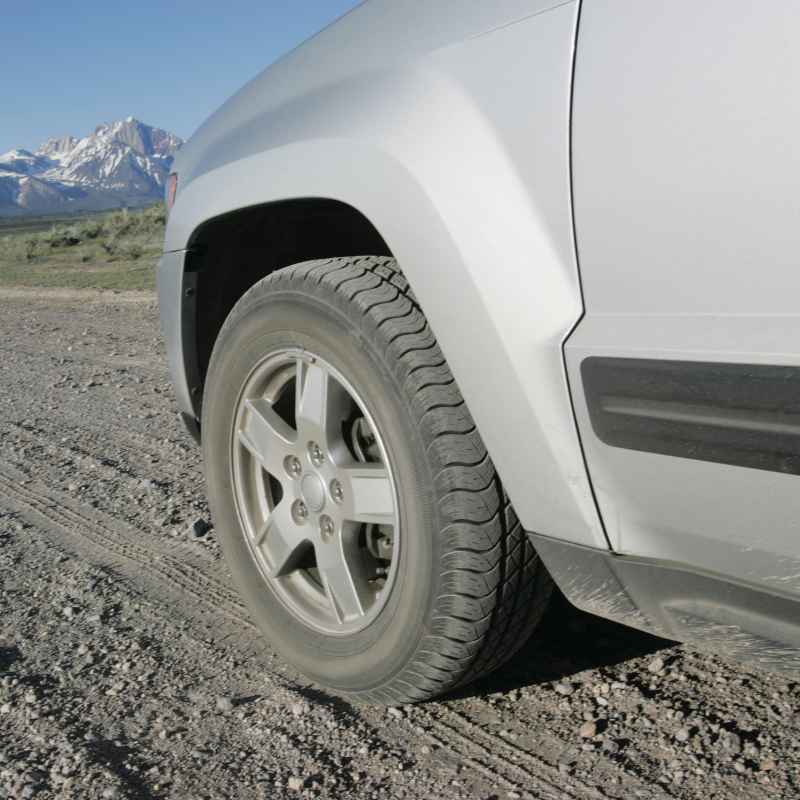
When driving on gravel roads, the tire needs to flex. It needs to grip. Overinflated tires can’t do this well.
They might bounce more. This can make the car unstable.
On a wet highway, good traction is essential. Overinflated tires, with less contact patch, can lose grip much faster. This is a major safety concern.
The Consumer Reports organization often highlights how tire condition and pressure impact safety in various conditions.
The tread pattern on your tires is designed to work with a certain amount of air. This allows the tread to flex and grip. Overinflating stiffens the tire.
It prevents the tread from doing its job effectively.
Consider a family road trip. You’ve got the kids, luggage, maybe a roof carrier. The car is heavy.
This extra weight pushes down on the tires. Properly inflated tires can handle this. Overinflated tires might feel even more rigid and less stable under load.
Quick Guide to Tire PSI Numbers
Recommended PSI:
- Found on driver’s doorjamb sticker or owner’s manual.
- Ideal for normal driving, comfort, and wear.
- Usually 30-35 PSI for most cars.
Maximum PSI:
- Found on the tire sidewall.
- The absolute highest safe pressure for the tire.
- Rarely should you approach this number.
- Often 44-60 PSI or more.
What is Too High?
- Any pressure above your Recommended PSI.
- Anything above the Maximum PSI is dangerous.
What This Means for You
So, what does all this mean for you and your car? It means being aware is key.
When is it Normal? It’s normal for tire pressure to be at the recommended PSI on your car’s sticker. It’s normal for it to fluctuate slightly with temperature. It’s also normal for the number on the tire’s sidewall to be much higher than the recommended PSI.
When Should You Worry? You should worry if your tire pressure is consistently higher than the recommended PSI, especially if it’s approaching the maximum PSI on the tire. You should also worry if you notice any of the signs of overinflation: a very bumpy ride, poor handling, or uneven wear patterns (center of the tread wearing down fastest).
Simple Checks:
- Check your tire pressure at least once a month.
- Check it when the tires are cold.
- Always use a reliable tire pressure gauge.
- Compare the reading to the recommended PSI on your car’s sticker.
- Never exceed the maximum PSI listed on the tire sidewall.
If you find your tires are overinflated, don’t panic. Most gas stations have air compressors with gauges. You can safely let out air by pressing the small metal pin in the center of the valve stem with your gauge or a small tool.
Just a short press at a time. Check the pressure again and repeat until you reach the recommended PSI.
Tire Pressure Safety Check
1. Find Recommended PSI: Driver’s doorjamb sticker or owner’s manual.
2. Find Maximum PSI: Tire sidewall (labeled MAX. PRESS.).
3. Check Cold Tires: Before driving or 3+ hours after.
4. Use a Gauge: Get an accurate reading.
5. Compare: If pressure is above Recommended PSI, let some air out.
6. Never Exceed: Do not go above Maximum PSI on the tire.
Quick Fixes and Tips
The best “fix” for overinflated tires is prevention and regular checking. But if you find they are too high, here’s what to do.
Tip 1: Invest in a Good Gauge. Don’t rely on the gauges at gas stations. They can be inaccurate. Get a digital or sturdy pencil-style gauge.
They are affordable and more reliable.
Tip 2: Check When Cold. This is the golden rule. Tire pressure increases by about 1 PSI for every 10°F (5.5°C) rise in temperature. Checking when cold gives you the baseline.
Then, if you drive and the PSI goes up, it’s usually within a safe range.
Tip 3: Know Your Tire’s Limits. Always remember the maximum PSI on the tire is a safety limit. It’s not a target to hit. Your car’s recommended PSI is what you aim for.
Tip 4: Don’t Just Guess. It’s easy to think “a little more air won’t hurt.” But even a few PSI over the recommendation can impact your ride and tire wear.
Tip 5: Understand Temperature Changes. If you notice a significant drop in temperature, your tire pressure will drop too. You might need to add a bit of air to get back to the recommended PSI.
Tip 6: Consult Your Manual. For specific situations, like towing or carrying heavy loads, your owner’s manual might suggest different tire pressures. Always follow that advice.
Frequent Questions
What is the maximum tire pressure I can put in my car tires?
The maximum tire pressure is listed on the sidewall of your tire. It will usually say “MAX. PRESS.” followed by a number in PSI.
For example, it might say “MAX. PRESS. 51 PSI”.
You should never exceed this number.
How do I know the correct tire pressure for my car?
The correct tire pressure, also known as the recommended PSI, is found on a sticker. This sticker is typically on the driver’s side doorjamb. You can also find it in your car’s owner’s manual.
It’s important to use this number, not the maximum pressure on the tire.
Can overinflated tires cause them to wear out faster?
Yes, overinflated tires wear out faster, but in a specific way. The center part of the tire tread wears down much quicker than the edges. This is because the center is making more contact with the road.
This leads to needing new tires sooner.
What happens if my tires are overinflated in hot weather?
In hot weather, air inside the tires expands, increasing the pressure. If your tires are already overinflated, this expansion can push the pressure to dangerous levels. This significantly increases the risk of a tire blowout.
Is it okay to put air in my tires when they are hot?
It’s best to check and adjust tire pressure when tires are cold. This means the car hasn’t been driven for at least three hours or has been driven less than a mile at moderate speed. If you must add air when hot, know that the pressure will be higher than when cold.
You may need to adjust again when they cool down.
Can I just match the tire pressure on the tire sidewall to my car’s recommended PSI?
No, you should never match the tire pressure on the sidewall to your car’s recommended PSI. The sidewall number is the maximum safe pressure for the tire itself, not the ideal pressure for your car. Your car’s recommended PSI is on the sticker inside the doorjamb or in the owner’s manual.
How much air can I safely let out of an overinflated tire?
You can safely let out air until you reach your car’s recommended PSI. Do this gradually by pressing the valve stem pin briefly. Check the pressure with your gauge after each small release.
Stop when you reach the target number.
Conclusion
Keeping your tires at the right pressure is vital for safety and your car’s health. Knowing what car tire pressure is too high helps you avoid common problems. Always check your car’s recommended PSI and the tire’s maximum PSI.
Regularly checking your tires ensures a smoother, safer ride. It also saves you money in the long run.
Products related to this article
Sponsored / affiliate links. As an Amazon Associate I earn from qualifying purchases. I may earn additional commission from eligible campaigns.