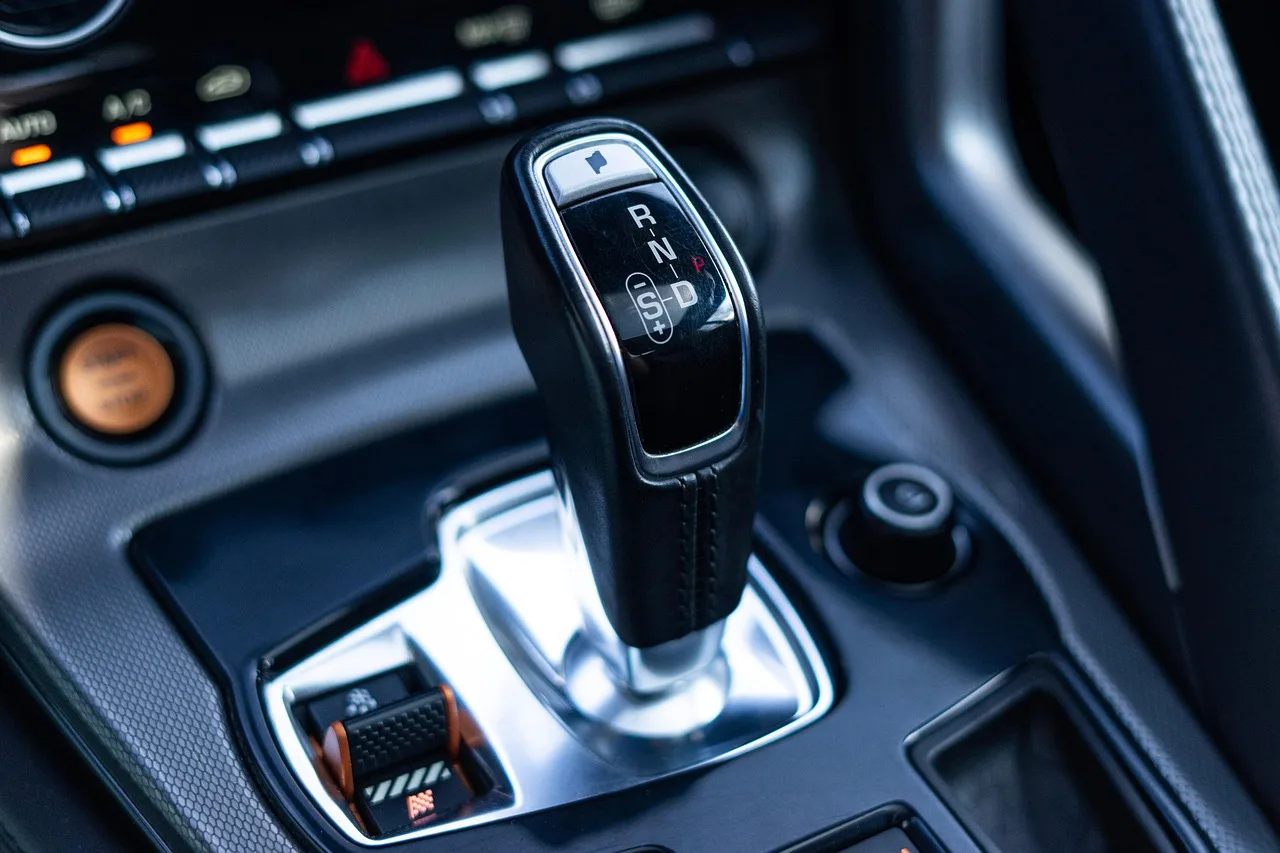
Delayed Shifting and Harsh Shifts: Transmission Control
Delayed and harsh shifts can come from bad vehicle-speed or turbine-speed data. If scan data is erratic or implausible, suspect the signal path before the transmission itself. Ignoring it can mean repeated limp mode, burnt fluid, and unnecessary parts replacement. This guide shows how speed-signal faults, wiring issues, and internal transmission problems each change shift timing and firmness.
Why one bad speed signal changes shift feel


Transmission control uses real-time speed data to decide when to shift. If the control unit sees speed data that is delayed, noisy, or impossible, it can choose the wrong shift point and then correct abruptly. That is why one bad signal can create both lazy upshifts and sudden, harsh gear changes.
Modern vehicles often use multiple speed sensors. A passive magnetic speed sensor operates without an external power supply, while the Hall-effect speed sensor requires a power supply. That matters because a failure in one sensor, one connector, or one module path can distort the data the control unit trusts most.
When inputs do not make sense, the control module may protect itself. Limp mode is a fallback that can leave the vehicle in one gear or a limited range of gears while the system waits for credible speed information. That response is protective, not proof of a failed transmission.
Which speed sensors can affect shifting?
Several speed inputs can shape shift quality. A vehicle speed sensor may provide input/output shaft speed or a vehicle-speed source, and it can cause delayed or hard shifts when the signal is erratic. On many vehicles, wheel speed data from ABS sensors also reaches other modules, so a fault at the wheel end can echo into shift control.
Vehicle speed sensor and shared vehicle-speed data
Some vehicles rely on a vehicle speed sensor as the main road-speed source. Others share that data across modules through the network. If the signal drops out, jumps, or reads implausibly, the transmission controller can misjudge vehicle motion and choose the wrong shift timing.
Input and output speed sensors inside the transmission
The transmission input speed sensor compares shaft speed to output speed and helps calculate gear ratio. The transmission output speed sensor can feed vehicle-speed or ratio data and may work with the input sensor for ratio checks. Loss of either signal can create late shifts, harsh shifts, or gear hunting when the controller cannot confirm what gear the transmission is actually in.
Wheel speed or ABS sensors on networked vehicles
Bad wheel-speed data can trigger harsh shifts and delayed shifts, and it can trigger limp mode on vehicles that share speed information with the transmission module. A bad ABS sensor can cause transmission problems indirectly on vehicles that share wheel-speed data. That is why an ABS light or traction light alongside a shift complaint deserves immediate attention.
Say your car starts shifting late on a cold morning, then slams the 2-3 upshift after a few miles. If the scan tool shows the transmission speed input flicking in and out while engine rpm stays steady, that pattern points first to signal trouble, not to a worn clutch pack.
What symptoms point to signal trouble?
Signal trouble usually shows up as a pattern, not one isolated symptom. Delayed upshifts, harsh shifts, gear hunting, odd downshifts, speedometer glitches, ABS warnings, traction warnings, and limp mode all fit the same basic problem: the control module is getting speed data it cannot trust.
When the speedometer drops to zero for a moment and then recovers, that can be a clue that the vehicle-speed source is unstable. If the ABS light and traction-control light come on together with shifting problems, the shared speed-data path rises on the suspect list. If the vehicle falls into one gear after a speed sensor dropout, limp mode is often the expected fallback.
Why the same fault can feel lazy and brutal
A bad signal can make one shift happen too late, then make the next one hit too hard. That is because control logic is reacting to wrong information, then correcting abruptly when the signal changes again. The result can feel inconsistent, which is one reason sensor faults get mistaken for internal transmission damage.
Shift diagnosis matrix
This table gives a text-only diagnosis path. Start with the symptom set you actually have, then follow the likely source, the first live-data check, and the next physical inspection. Do not jump straight to parts replacement if you have not checked the signal path first.
| Symptom combination | Most likely signal source | First live-data checks | Next physical inspection |
|---|---|---|---|
| Delayed shifts only, no warning lights | Transmission input speed sensor, output speed sensor, or vehicle speed sensor | Compare commanded shift point with actual shift; watch input speed and output speed for dropouts or spikes | Check cable movement at the transmission case, connector pins, and sensor mounting |
| Harsh shifts plus ABS or traction light | Wheel speed sensor or shared wheel-speed data path | Read ABS and transmission codes; compare each wheel speed against vehicle speed during a slow roll | Inspect the hub area, tone ring, sensor gap, and wheel bearing play |
| Limp mode with speedometer glitch | Vehicle speed sensor, networked speed data, or communication fault | Look for implausible vehicle-speed readings and module communication codes in both modules | Check connectors, ground points, and harness routing near the wheel wells and transmission case |
| Delayed and harsh shifts after ABS light appears | Wheel speed sensor, tone ring, or hub assembly | Compare wheel-speed live data side to side and note any wheel that drops to zero or lags behind the others | Inspect the tone ring for cracks, dirt, rust, or missing teeth; check bearing play and sensor gap |
| Speedometer glitch plus gear hunting | Vehicle-speed source or output speed sensor | Check output speed against road speed and compare the command vs actual shift behavior | Inspect wiring continuity, connector corrosion, and any fluid intrusion around the transmission case |
How do you check live data first?
Start with an OBD2 scanner that can read both transmission and ABS modules. Scan the transmission and ABS modules before approving repair, then look at live data, not only stored codes. The goal is to see whether the speed signal is missing, erratic, delayed, or impossible compared with the vehicle’s actual motion.
- Pull codes from the transmission, ABS, and any related network modules.
- Note whether the shift complaint matches an ABS light, traction light, speedometer glitch, or limp mode.
- View live input speed, output speed, vehicle speed, and wheel speed together.
- Compare commanded shift point with actual shift behavior.
- Watch for one wheel speed that drops out while the others stay steady.
- If a reading spikes, flatlines, or disagrees with the others, follow that branch first.
Use the live data check as a separator. Clean live data means speeds rise smoothly, stay believable, and track vehicle motion without sudden zeros, spikes, or long gaps. Intermittent dropouts often point to wiring, connector, or sensor-gap problems; a stable but wrong reading points more toward plausibility faults or a module issue.
Suppose the scanner shows a steady vehicle speed but one front wheel speed falls to zero during a slow parking-lot turn. That points more toward a wheel-speed sensor, tone ring, or hub issue than toward a transmission clutch fault.
What should you inspect next?
After live data points you to a branch, move to the hardware that can corrupt the signal. Wiring harness and connector problems are common near wheel wells and the transmission case, where corrosion, water, heat, and movement can interrupt the circuit. A sound-looking sensor still fails if its connector has green corrosion or a rubbed-through wire.
Harness, connector, and module checks
Inspect the harness routing for pinch points, rubbing, or heat damage. Tug gently at connectors and look for loose locks, bent terminals, and fluid contamination. If the problem comes and goes with movement, the fault may be in the wiring rather than the sensor body.
Tone ring and hub checks
A damaged, cracked, or dirty tone ring can distort speed signals and mimic a failed sensor. On wheel-speed branches, inspect the ring near the hub for rust scale, missing teeth, debris, or a crack that opens as the ring turns. A worn wheel bearing or hub assembly can add play, change sensor gap, and create intermittent dropouts.
Use a simple separation checklist to keep the fault tree straight. First, decide whether the bad data is on one sensor, one corner, or every speed source. Second, decide whether the signal is noisy, missing, or believable but wrong. Third, check whether the dropout happens over bumps, turns, heat, or movement. Fourth, stop driving if limp mode returns repeatedly or if engagement becomes severely harsh.
When is the transmission the likely fault?
The transmission becomes the stronger suspect when sensor data looks clean, wheel speeds match, and wiring checks out, but shift control is still wrong. In that case, the problem may be internal hydraulic or mechanical damage, or a module that is not commanding shifts correctly despite believable inputs. That is a different path from a speed-signal fault.
At that point, deeper diagnosis may require pressure testing, solenoid checks, or professional transmission analysis. If the module sees good data but the unit still slips, flares, or bangs shifts under load, the fault has likely moved past the sensor path and into the transmission itself.
What should you check first if shifts got worse after the ABS light came on?
Start with the ABS and transmission modules, then compare wheel-speed live data side by side. If the ABS light came on first, and the shifting changed right after, treat the wheel-speed path, tone ring, hub, and wiring as the first suspects. Shared speed data can push the transmission into harsh shifts or limp mode without any internal transmission damage.
Frequently asked questions
Why is my transmission shifting late and hard at the same time?
Late and hard shifts often come from the same bad speed signal. If the control unit gets delayed, noisy, or implausible speed data, it may schedule a shift too late and then apply it sharply. That pattern often points to sensors, wiring, or shared wheel-speed data before internal transmission failure.
Can a bad speed sensor cause delayed shifting?
Yes. The speed sensor generates an electrical signal that reflects rotational velocity, and the transmission control unit uses speed data as the primary input for shift timing. If that signal is missing or erratic, the module can hold a gear too long or shift at the wrong time.
Can an ABS sensor cause harsh shifts or limp mode?
Yes, on vehicles that share wheel-speed data with the transmission. Bad wheel-speed data can trigger harsh shifts and delayed shifts, and it can trigger limp mode as well. An ABS light with a traction light and shifting complaints is a strong reason to inspect the wheel-speed path first.
What codes should I scan for when shifting gets rough?
Scan transmission codes, ABS codes, and any communication-related codes from modules that share speed data. Look for codes tied to vehicle speed, input speed, output speed, wheel speed, or plausibility faults. A code in one module can explain symptoms in another, so do not stop at the transmission module alone.
How do I tell if the problem is a transmission issue or a sensor issue?
Start with live data. If input speed, output speed, wheel speed, and commanded shift behavior are erratic or disagree with each other, the signal path comes first. If the data is clean but the unit still slips, flares, or bangs shifts, deeper hydraulic or mechanical transmission diagnosis becomes more likely.
Can a wheel speed signal affect automatic transmission shift timing?
Yes. On many modern vehicles, wheel-speed data is shared with other modules, and that can affect shifting. A bad ABS sensor, damaged tone ring, or hub play can distort the signal enough to cause delayed shifts, harsh shifts, or limp mode even when the transmission hardware is still sound.
Products related to this article
Sponsored / affiliate links. As an Amazon Associate I earn from qualifying purchases. I may earn additional commission from eligible campaigns.