Carburetor Fuel Bowl Problems Explained
Carburetor fuel bowl problems usually show up as leaks, overflow, hard starting, or lean stalling. A wet bowl or fuel smell points to the bowl first. Left alone, they can flood the engine, foul plugs, and hide a pump, filter, or vent fault. This guide separates leak, overflow, starvation, and float-control symptoms, then shows when cleaning, gasket replacement, float service, or a rebuild is the right next step.
What the fuel bowl does


The float bowl is the carburetor’s fuel reservoir. It holds fuel at the carburetor’s normal level, stays open to atmospheric pressure, and feeds the jets and internal passages through the main body. In many designs, the bowl is fastened with detachable mounting bolts and sealed by a gasket at the side wall.
That fuel level matters. If it is too low, the mixture goes lean and the engine can stall. If it is too high, the carburetor can run rich or flood. Some bowl designs also route fuel passage sections above the normal level, so the gasket is not sitting in static fuel head all the time.
How fuel level controls mixture
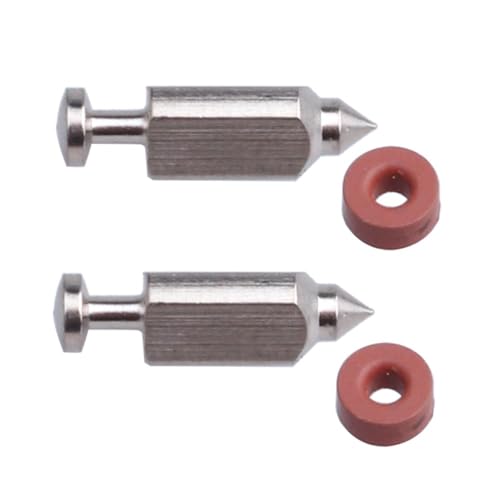
The float rises and falls with the fuel level. As the bowl fills, the float closes the needle valve; as fuel drops, it opens the valve again. A float that sticks, a needle valve that does not seal, or a float that has sunk from corrosion, a crack, or fuel inside it can all break that control loop.
Jets meter fuel through calibrated openings. The pilot jet typically affects idle and low-speed running. The main jet matters most at wide-open throttle. A low bowl level can starve either circuit, while a high bowl level can make both circuits run rich.
What a failing bowl looks like
Start with the symptom pattern, not the cleaning solvent. External seepage at the gasket points to a sealing problem. Fuel pouring from the throat points more toward overflow. Hard starting after storage often points to varnish or degraded fuel. A high-throttle stumble with a dry bowl points to starvation upstream, not a bad gasket.
Say your small engine leaks fuel around the bowl lip after shutdown, but the carb throat stays dry. That points first to the bowl gasket, a damaged mating surface, or an over-tightened bowl bolt, not automatically to the float. A wet throat changes the diagnosis.
External seepage at the gasket
A gasket leak usually shows as dampness, drips, or fuel stains at the bowl-to-body joint. It can come from age, debris trapped in the seal, poor installation, or a warped sealing face. It is a different fault from fuel running out of the carb throat.
Overflow from the carb throat
Overflow usually means the bowl is filling past its intended level. The needle valve may not be sealing, the float may be stuck, or the float may have sunk. On some machines, excess fuel can also come from a fuel inlet that keeps feeding harder than the bowl can control.
Lean running from low fuel level
Low bowl level can cause weak acceleration, hanging idle, surging, or a stall under load. If the engine runs better with the choke partly on, that is another hint of a lean condition. The fault may be inside the carburetor, or it may be a restricted fuel delivery path upstream.
Why is gas coming out of the carburetor?
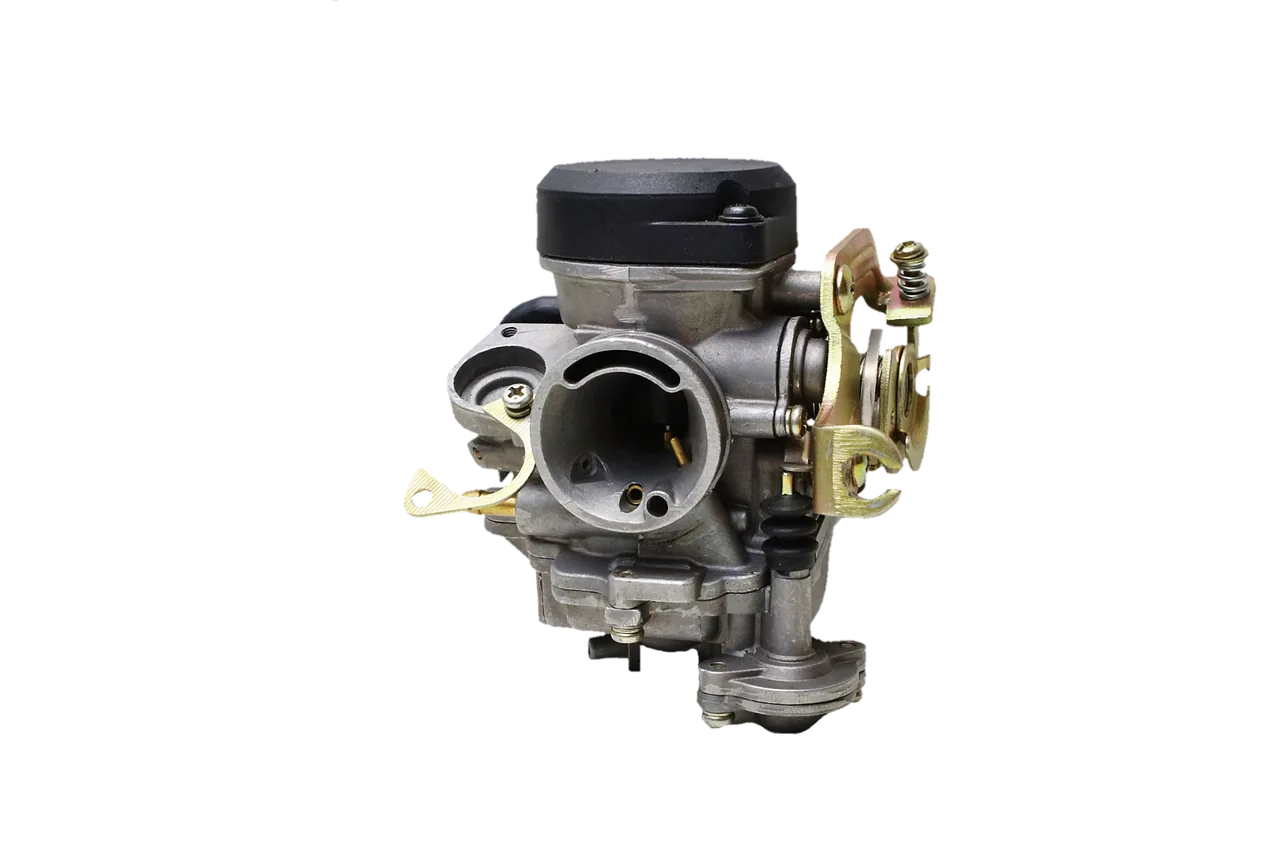
Gas coming out of the carburetor usually means fuel level control has failed, so fuel reaches a path that should stay dry. The most common causes are a float stuck open, a sunk float, a needle valve that will not seal, or a fuel level set too high. The leak location tells you which part to inspect first.
If fuel comes from the throat or air horn, the bowl is overflowing internally. If it comes from the seam, drain, or a fitting, the fault may be a gasket, drain screw, or inlet issue. Do not treat every wet carburetor as the same failure.
Common causes to separate first
- A float that sticks on its hinge.
- A float that has fuel inside it or has corroded.
- A worn needle valve tip or damaged seat.
- A fuel inlet that is supplying too much pressure for the design.
- A bowl gasket that is leaking at the joint rather than from the fuel level.
Why is my carburetor not getting gas?
A carburetor that seems dry may be starved by the fuel supply, not the bowl itself. A clogged line, filter, petcock, or pump can leave the bowl empty. A sticking float can also stay closed and block filling. If fuel reaches the bowl but the engine still runs dry, the problem may be varnish in the passages or clogged jets.
On gravity-fed small engines, a weak head of fuel or a kinked line can act like a carb fault. On pumped systems, a bad pump or restricted inlet can do the same. The carburetor is often blamed first because the symptom shows up there.
Upstream limits that mimic carburetor failure
Check the fuel inlet and delivery path before disassembling the bowl. A clogged filter, collapsed hose, blocked tank vent, or weak pump can all starve the carburetor. That matters on older motorcycles as much as on lawn equipment, especially when the engine dies under load but restarts after sitting.
Blocked passages and jets
Varnish and degraded fuel can clog the bowl, pilot circuit, or main jet after storage. The engine may idle badly, then fall flat as throttle opens. Sea Foam says gasoline treated with its product can stay stable for up to two years, and it recommends 1 ounce per gallon for regular maintenance or 2 ounces or more per gallon for cleaning a fuel system.
Fuel bowl diagnostic matrix
Use the symptom pattern to narrow the fault before you replace parts. The same carburetor can show more than one symptom, but one symptom usually points more strongly to one part of the fuel path than to the rest.
| Symptom | Likely failure | Quick confirmation check | Repair action |
|---|---|---|---|
| External seepage at bowl seam | Float bowl gasket leak | Wipe dry, then watch the gasket edge with fuel on | Replace gasket; inspect mating surface and bolts |
| Fuel dripping from carb throat | Needle valve not sealing or float stuck open | Tap the bowl lightly; see whether dripping stops | Clean or replace needle and seat; free the float |
| Overflow after shutdown | Float sunk or needle leaking | Remove the bowl and shake the float for fuel inside | Replace float or needle assembly |
| Hard starting after storage | Varnish / degraded fuel in bowl and passages | Inspect for gum, stains, or stale fuel odor | Clean bowl, passages, and jets; refill with fresh fuel |
| Stall at high throttle | Low fuel level or restricted fuel inlet | Check fuel flow to the carb and bowl refill rate | Clear line, filter, tank vent, or pump fault |
| Rich idle | Fuel level too high or pilot circuit wet | Look for black smoke, fuel smell, or plug fouling | Reset float height; clean pilot jet and needle seat |
| Lean surge | Fuel level too low | See if partial choke improves running | Check float level, inlet supply, and bowl fill |
| Intermittent flooding | Float sticking open | Move the float through its travel by hand | Clean pivot, replace worn float or needle |
| Dry bowl after sitting | No fuel supply to inlet | Disconnect inlet and verify fuel reaches the carb side | Repair upstream restriction or pump issue |
| Wet bowl but no start | Jets blocked by varnish | Check whether fuel is in the bowl but not in the passages | Clean jets and internal passages |
| Fuel smell with no visible leak | Internal overflow into throat or vent path | Inspect throat, overflow tube, and venting | Inspect float, needle, and fuel level |
| Fuel leak that returns after tightening | Warped bowl, damaged gasket, or debris on seal | Check for scratches, dents, or a pinched gasket | Clean surfaces; replace gasket or bowl if damaged |
How to inspect the bowl, float, and needle
Inspect parts in this order: bowl and gasket, float condition and movement, then needle valve and seat. That order finds the simplest leak first and avoids replacing parts that are not at fault. On a gravity-fed small engine, a bowl that fills too fast can look like a flood even when the issue is only a damaged seat.
-
Drain the bowl. Shut off fuel if the system has a valve, then drain the bowl into a safe container. This keeps fuel from spilling during removal and shows whether debris or stale fuel is present.
-
Remove the bowl. Loosen the detachable mounting bolts evenly and lower the bowl straight off the carb body. Do not pry against the sealing face; that can damage the gasket surface.
-
Inspect the gasket. Look for cuts, flattening, brittleness, or debris embedded in the seal. A float bowl gasket seals the bowl to the carburetor body, so even a small nick can cause seepage.
-
Check the float. Move it through its travel by hand and listen for fuel inside a hollow float. A float that sticks, drags, or sinks can hold the needle open or closed.
-
Examine the needle seat. Look at the tip of the needle and the seat it closes against. Grooves, wear rings, or dirt on the sealing surface can let fuel keep flowing past the correct level.
-
Clean the passages. Remove varnish and deposits from the bowl, jets, and nearby passages with a carburetor-safe cleaner. Pay attention to the pilot jet and the main jet, since each controls a different operating range.
Suppose an older motorcycle starts, idles, and then dies at half throttle, while the bowl is clean and fuel reaches the inlet. That pattern points away from the gasket and toward a restricted main jet, low bowl level, or a delivery limit that shows up only when demand rises.
How do I fix a leaking carburetor bowl?
A leaking carburetor bowl is usually fixed by matching the repair to the leak path. Clean residue and seal surfaces first. Replace the gasket when it is damaged. If the leak comes from overflow, repair the float, needle, or inlet fault instead of only resealing the bowl.
-
Clean the joint surfaces. Remove fuel residue, varnish, and old gasket material from both mating faces. A clean surface lets the gasket seal fully and keeps debris from holding the bowl slightly open.
-
Replace the gasket. Install a new gasket if the old one is hard, torn, flattened, or swollen. If the design uses the gasket opening for a fuel passage, make sure the gasket is aligned exactly as the carb body expects.
-
Correct the fuel level fault. Repair a stuck float, worn needle, or sunk float if fuel is overflowing. A gasket alone will not stop a bowl that is overfilling from the inside.
-
Verify normal fill. Reassemble and confirm the bowl fills to the designed level without seepage or overflow. If fuel still leaks, check for a warped bowl, damaged seat, or a supply problem that pushes the level too high.
A bowl leak after storage often has two causes at once: a brittle gasket and varnish on the needle seat. Cleaning helps, but a hard gasket or worn float parts usually means the leak will come back unless those parts are replaced.
When cleaning is enough and when to rebuild
Cleaning is usually enough when the bowl is dirty, the gasket is still pliable, the float moves freely, and the needle tip still seals. Rebuild-level work is more likely when the float is sunk, the seat is pitted, the gasket face is warped, or repeated overflow returns after cleaning.
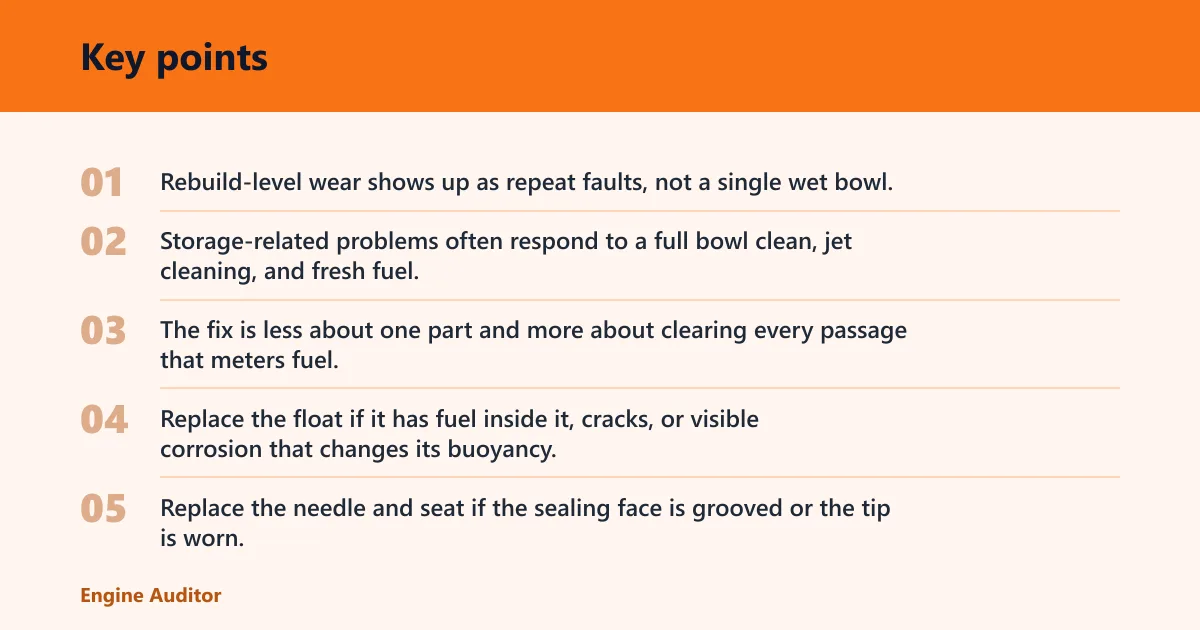
Rebuild-level wear shows up as repeat faults, not a single wet bowl. If the engine runs fine for a few minutes, then floods again, or if the bowl fills only after tapping the carburetor, the float circuit is likely worn enough that cleaning alone will not hold.
Varnish and stale fuel cleanup
Storage-related problems often respond to a full bowl clean, jet cleaning, and fresh fuel. That is especially true when the carburetor has sat with degraded fuel long enough to leave sticky deposits. The fix is less about one part and more about clearing every passage that meters fuel.
Wear signs that point to rebuild work
Replace the float if it has fuel inside it, cracks, or visible corrosion that changes its buoyancy. Replace the needle and seat if the sealing face is grooved or the tip is worn. If the bowl, gasket surface, or mounting edge is distorted, a gasket swap alone will not hold the seal.
How do I remove a carburetor bowl?
Remove the bowl by shutting off fuel if possible, draining the bowl, and loosening the mounting bolts evenly so the bowl drops straight off the carb body. Keep the gasket face clean and avoid prying on the sealing edge, since that can bend the bowl or scar the surface.
Frequently asked questions
Why is my carburetor overflowing with fuel?
Overflow usually means the float is stuck, sunk, or unable to close the needle valve. A worn needle seat or a float set too low can also let the bowl overfill. If the leak is from the throat, treat it as an internal level-control fault, not just a gasket issue.
How do I know if the float bowl is causing flooding?
Flooding is likely if fuel comes from the carb throat, the engine smells strongly of gas, or the plug fouls quickly after starting. A float bowl fault usually shows a high fuel level, a stuck float, or a needle that will not seal. A dry bowl points elsewhere.
Can a carburetor bowl gasket cause a fuel leak?
Yes. The gasket seals the bowl to the carburetor body, and a damaged or misaligned gasket can leak at the joint. That kind of leak usually shows as external seepage, not overflow from the throat. Debris, age, and poor installation are common reasons.
What causes carburetor problems?
Common causes include stale fuel, varnish, debris, worn float parts, a leaking gasket, and restrictions in the fuel inlet path. A carburetor can also seem bad when the real fault is upstream, such as a clogged filter, weak pump, or blocked tank vent.
Fuel injection system vs carburetor
A fuel injection system meters fuel with injectors and electronic controls, while a carburetor uses airflow, jets, a float, and a needle valve. Carburetors are more sensitive to bowl level, varnish, and storage issues, so diagnosis starts with the float bowl, fuel supply, and jet cleanliness.
Products related to this article
Sponsored / affiliate links. As an Amazon Associate I earn from qualifying purchases. I may earn additional commission from eligible campaigns.