Is It Ok To Put Car Tires On A Trailer
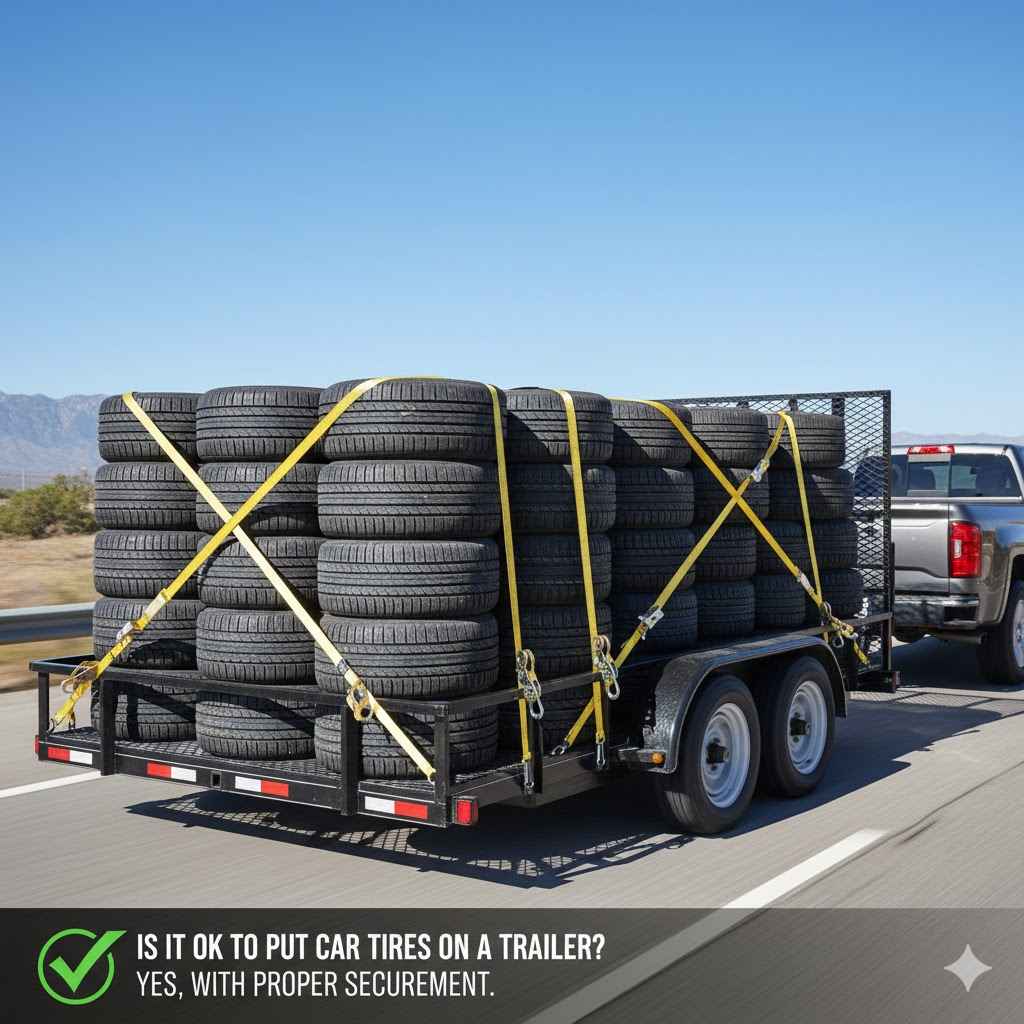
Many people wonder, is it ok to put car tires on a trailer? It’s a common question, especially for those new to towing. You might look at your car’s extra tires and think they’d be a perfect fit.
But trailers have different needs than cars. We’ll break this down simply so you know exactly what to do. Get ready for clear steps to make the right choice for your trailer.
Understanding Trailer Tire Requirements
Trailer tires are built differently from car tires. This section explains why. We will look at the specific demands placed on trailer tires.

Libra Trailer Parts
Free Country HD Trailer Tires ST205/75R15 10PR…
- Premium FREE COUNTRY Heavy Duty 10 ply rated, load Range E, 2400LBS capacity!
- FULL nylon cap ply overlay cross entire tread area, significant upgrade from most other products on the market have nylon strips o…
- Featured "Scuff Guard" ring on tire wall for better tire side protection
As an Amazon Associate I earn from qualifying purchases.
You will learn how these demands differ from what car tires are designed for.
Load Capacity Differences
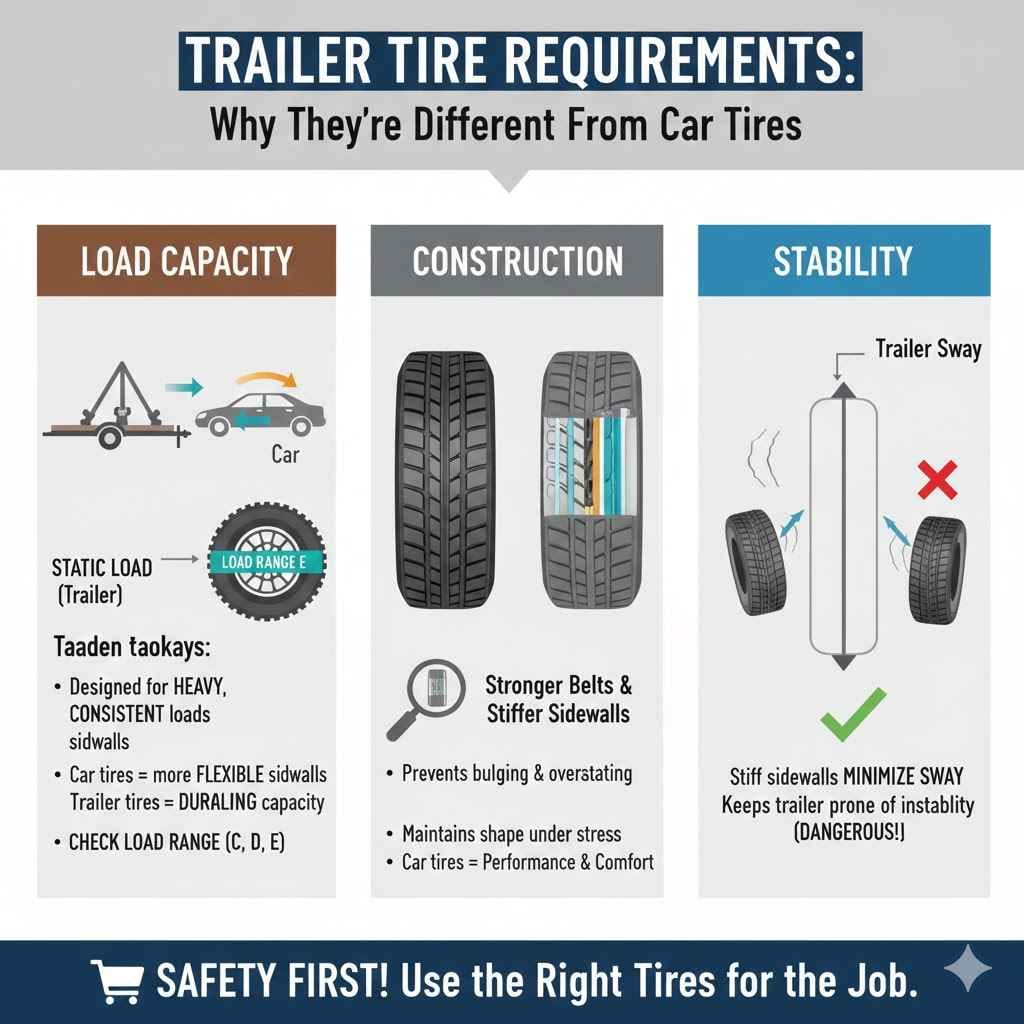
Trailer tires must handle heavy, consistent loads. Cars, on the other hand, have tires designed for dynamic weight. The car’s weight shifts with driving and braking.
A trailer’s weight is usually static or changes less dramatically. Car tires are made for comfort and varied road conditions. Trailer tires focus on durability and carrying capacity.
A car tire’s sidewall is often more flexible. This flexibility helps absorb bumps for a smoother ride. For a trailer, this flexibility can be a problem.
Too much flex under a heavy load can lead to overheating. Overheating can cause tire blowouts, which are very dangerous.
Load Range is a key term here. It tells you how much weight a tire can safely support. Trailer tires have specific load ranges printed on their sidewalls, often indicated by letters like C, D, or E.
Car tires typically have lower load ranges. Using a car tire on a trailer that requires a higher load range is unsafe.
Construction and Sidewall Strength
The internal structure of trailer tires is usually more robust. They have stiffer sidewalls and stronger belts. This design prevents excessive bulging when under a heavy, constant load.
Car tires are built for a balance of performance, comfort, and fuel efficiency. They are not engineered for the sustained pressure of carrying cargo.
Imagine a trailer loaded with lumber or heavy equipment. The tires must support this weight for long periods. A car tire would likely sag and overheat under such stress.
The stronger construction of trailer tires helps them maintain their shape and integrity.
Stiff Sidewalls for Stability
Stiff sidewalls also contribute to trailer stability. When a trailer is overloaded or the tires flex too much, it can sway. This swaying motion, known as trailer sway, can be very dangerous.
It makes the trailer difficult to control and can lead to accidents.
Trailer tires with stiff sidewalls help minimize this swaying. They keep the trailer tracking straight behind the tow vehicle. Car tires, with their softer sidewalls, are more prone to this instability.
This is a critical safety difference that many people overlook.
Is It Ok To Put Car Tires On A Trailer Safety Concerns
The main reason you might hesitate to put car tires on a trailer is safety. There are significant safety risks involved. This section will detail these risks.
We will explore what can go wrong and why it’s usually not a good idea.
Risk of Overheating and Blowouts
As mentioned, car tires can overheat when used on trailers. Trailers carry a consistent, heavy load. This puts continuous stress on the tire.
Car tires are not designed for this sustained pressure. The friction generated from constant flexing can build up extreme heat.
When a tire overheats, the rubber can degrade. This can lead to a sudden blowout. A tire blowout on a trailer, especially at highway speeds, can cause a loss of control.
The trailer can swerve violently, potentially flipping over or causing a collision.
A study by the National Highway Traffic Safety Administration (NHTSA) found that tire failures are a significant cause of trailer accidents. Many of these failures are due to improper tire selection or maintenance. Using car tires on a trailer falls under improper tire selection.
Tire Ply and Load Rating Mismatches
Tires have a ply rating and a load index. These are crucial for matching the tire to the application. Trailer tires typically have higher ply ratings.
This means they have more layers of reinforcing cords, making them stronger.
The load index is a numerical code that indicates the maximum weight a tire can support. Car tires have a load index suited for passenger vehicles. Trailer tires have a higher load index appropriate for their intended use.
Putting a car tire on a trailer means the tire’s load capacity is likely insufficient for the trailer’s gross vehicle weight rating (GVWR).
For example, a typical car tire might have a load index of 90-100. This translates to a load capacity of around 1300-1800 pounds per tire. A small utility trailer might have a GVWR of 2000 pounds.
If it has two axles, each tire needs to support at least 1000 pounds, and this is before accounting for factors like weight distribution and margin of safety. A larger trailer could easily exceed the capacity of car tires.
Impact on Trailer Handling and Stability
Car tires have softer sidewalls than trailer tires. This difference directly impacts how a trailer handles. Softer sidewalls can flex more.
This extra flex can make the trailer feel unstable. It can sway more during turns or when passing larger vehicles.
Trailer manufacturers design their trailers with specific tire types in mind. They select tires that provide the right balance of load capacity and sidewall stiffness for stable towing. Swapping to car tires disrupts this balance.
It can lead to unpredictable behavior from the trailer.
This instability is not just uncomfortable; it’s dangerous. A swaying trailer can be difficult to correct. It can increase the risk of jackknifing or losing control of the entire vehicle combination.
When Car Tires Might Seem Like An Option
Despite the general advice against it, there are specific, limited situations where car tires might seem like a viable option. It’s crucial to understand these scenarios are exceptions. They often come with significant caveats and potential risks.
Light-Duty Trailers and Low Speeds
For extremely light-duty trailers used for very short distances at low speeds, the risk might be lower. Think of a small trailer used to move garden waste around a large property. These trailers might not reach high speeds.
The loads are also typically much lighter than what a trailer is rated for.
However, even in these cases, it’s important to be cautious. The trailer’s GVWR is still a critical factor. If the combined weight of the trailer and its contents approaches or exceeds the load capacity of the car tires, it becomes unsafe.
Low speeds can also be deceptive. A sudden stop or sharp turn at even a moderate speed can put unexpected stress on the tires.
Many small utility trailers have a GVWR of 1000 pounds or less. If you are using car tires that can support 700-800 pounds each, you might be close to the limit. It’s always best to consult the trailer’s manual or specifications.
Temporary or Emergency Use
In a true emergency, if a trailer tire blows out and a compatible trailer tire is unavailable, a car tire might be used as a temporary fix. This is not a permanent solution. The car tire should only be used to get the trailer to a safe location or a repair shop.
It’s essential to drive very slowly and cautiously in such situations. Avoid highways and heavy traffic if possible. The goal is to minimize stress on the temporary tire.
As soon as possible, the car tire must be
Here is a sample scenario for emergency use:
- Your trailer tire blows out while on a remote road.
- You have a spare car tire that fits the wheel bolt pattern.
- Carefully remove the damaged trailer tire.
- Mount the car tire, ensuring it is properly inflated.
- Drive at a reduced speed, ideally below 40 mph, directly to the nearest service station.
This is a last resort measure and not a recommended practice for regular use.
The Proper Trailer Tire Solution
Now that we’ve explored the risks, let’s focus on the right way to equip your trailer with tires. This section will guide you toward the best practices for trailer tire selection and maintenance. It emphasizes safety and longevity for your towing needs.
Choosing the Right Trailer Tire Type
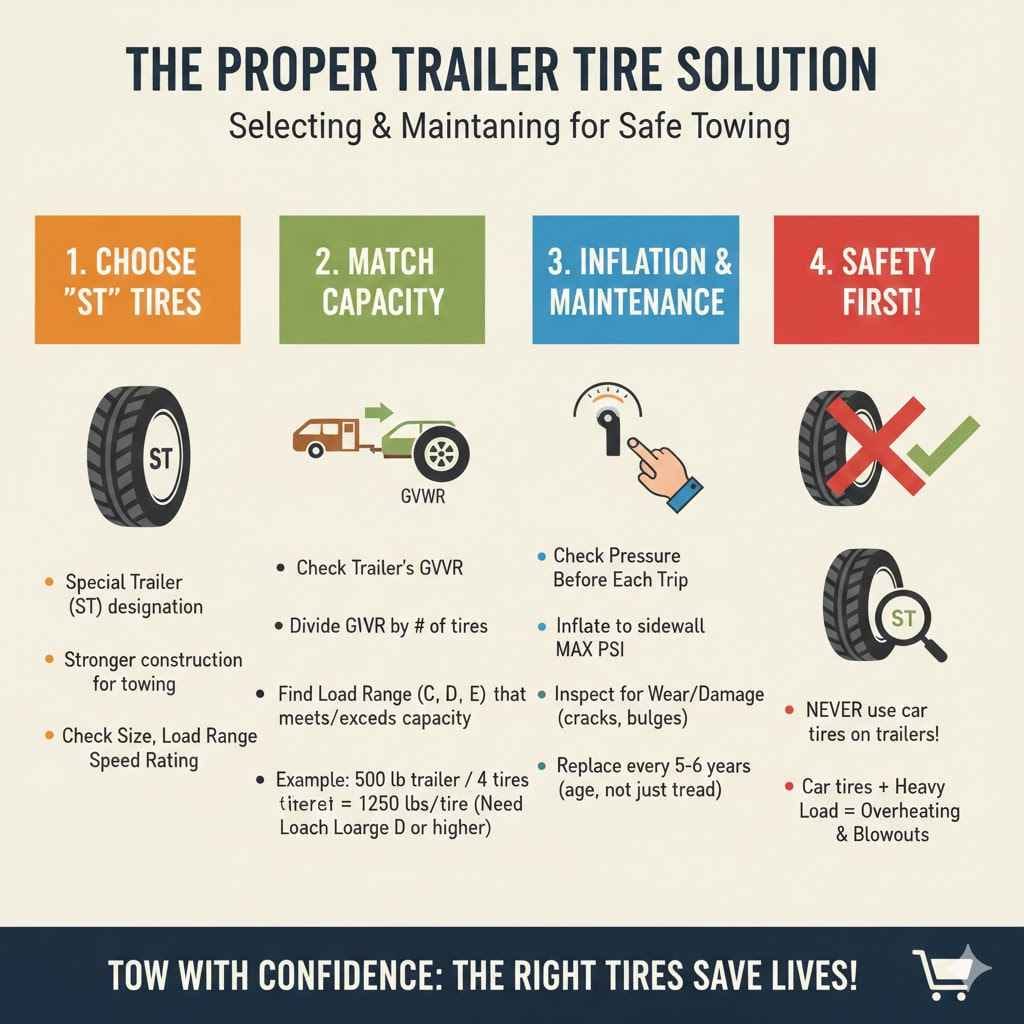
Trailer tires are specifically designed for the job. They are categorized as “ST” tires, which stands for Special Trailer. These tires have stronger construction and are built to handle the demands of towing.
When selecting trailer tires, look for the ST designation on the sidewall. You will also need to consider the tire’s size, load range, and speed rating. The size will match your trailer’s wheel rim.
The load range must meet or exceed the trailer’s GVWR. The speed rating should be sufficient for the speeds at which you intend to tow.
For example, if your trailer has a GVWR of 7,000 pounds and two axles, each tire needs to support at least 3,500 pounds. You would need tires with a load range that accommodates this weight. A common ST tire for this application might be an ST225/75R15 with a Load Range D or E.
Understanding Load Range and Speed Rating
Load range indicates the maximum weight a tire can safely carry. Trailer tires use a letter system (C, D, E, etc.) to denote load range. A higher letter means a higher load capacity.
- Load Range C: Typically supports around 1,750-2,000 pounds per tire.
- Load Range D: Typically supports around 2,100-2,500 pounds per tire.
- Load Range E: Typically supports around 2,700-3,000 pounds per tire.
It’s vital to match the load range to your trailer’s GVWR. Always aim for a load range that meets or slightly exceeds the requirement for safety. Never go with a lower load range.
The speed rating tells you the maximum safe speed for a tire under its specified load. For ST tires, common speed ratings are L (75 mph) and M (81 mph). Always ensure your chosen tires have a speed rating suitable for your towing speeds.
Matching Tires to Trailer Specifications
The most important step is to check your trailer’s specifications. This information is usually found on a VIN plate or in the owner’s manual. It will clearly state the trailer’s GVWR.
Once you have the GVWR, you can determine the required load capacity per tire. Divide the GVWR by the number of tires on the trailer. For example, a 5,000 lb GVWR trailer with two axles (four tires) needs each tire to support at least 1,250 lbs.
Then, find tires that meet or exceed this capacity. Consider the tire size and rim diameter. Common trailer tire sizes include ST175/80R13, ST185/80R13, ST205/75R14, ST205/75R15, and ST225/75R15.
A case study involving a boat trailer highlights this. A boat owner used car tires on his trailer, thinking it would be fine. The trailer’s GVWR was 4,000 lbs.
The car tires he used had a load capacity of only 1,200 lbs each. Under load, the tires flexed excessively, leading to a blowout on the highway, damaging the trailer and nearly causing an accident. After replacing them with appropriate ST tires rated for 2,000 lbs each, the trailer tracked much more stably.
Proper Inflation and Maintenance
Even the correct trailer tires need proper care. Tire pressure is critical. Always inflate trailer tires to the pressure recommended on the tire sidewall or trailer manufacturer’s plate.
Do not use the pressure listed for your tow vehicle.
Regularly check tire pressure before each trip. Underinflated tires can overheat, wear unevenly, and lead to blowouts. Overinflated tires can reduce traction and lead to a harsh ride.
Inspect tires for wear and damage. Look for cuts, cracks, bulges, or embedded objects. Uneven wear can indicate alignment or suspension issues.
Replace tires that show significant wear or damage, even if they still have tread.
Trailer tires, especially ST tires, can degrade over time even if not used heavily. Check the manufacturing date on the sidewall. Most experts recommend replacing trailer tires every 5-6 years, regardless of tread depth, as the rubber can become brittle and prone to failure.
Frequently Asked Questions
Question: Can I use tires from a car that is the same size as my trailer wheel?
Answer: While the wheel size might match, car tires are not built for the constant heavy load and heat generated by trailers. They have softer sidewalls that can flex too much, leading to overheating and blowouts. Always use tires specifically designed for trailers (ST tires).
Question: What is the difference between ST tires and regular car tires?
Answer: ST stands for Special Trailer. These tires have stronger sidewalls and internal construction to handle the sustained, heavy loads of trailers. Car tires are designed for a balance of comfort, performance, and fuel efficiency, with more flexible sidewalls not suited for constant trailer duty.
Question: How do I know what kind of trailer tires I need?
Answer: Check your trailer’s Gross Vehicle Weight Rating (GVWR) and the specifications on its VIN plate or in the owner’s manual. You need tires with an appropriate load range that meets or exceeds the trailer’s GVWR and a size that fits your trailer’s wheels.
Question: Is it ever okay to put car tires on a trailer in an emergency?
Answer: In a true emergency, a car tire might be used as a temporary, very short-term solution to move a trailer to a safe location or repair shop. Drive very slowly and cautiously.
Question: How often should I replace my trailer tires?
Answer: Trailer tires, especially ST tires, should be replaced every 5-6 years from their manufacturing date, even if they have good tread. The rubber can degrade over time, becoming brittle and prone to failure, regardless of mileage.
Summary
Using car tires on a trailer is generally not recommended and can be unsafe. Trailer tires (ST tires) are specifically built for the demands of towing, offering superior load capacity and structural integrity. Always consult your trailer’s specifications for the correct tire size and load range.
Prioritize safety by using proper trailer tires for stable and secure towing.
Related pick: Check today's price on Amazon
Products related to this article
Sponsored / affiliate links. As an Amazon Associate I earn from qualifying purchases. I may earn additional commission from eligible campaigns.