Car Battery Drains Overnight: Likely Electrical Causes
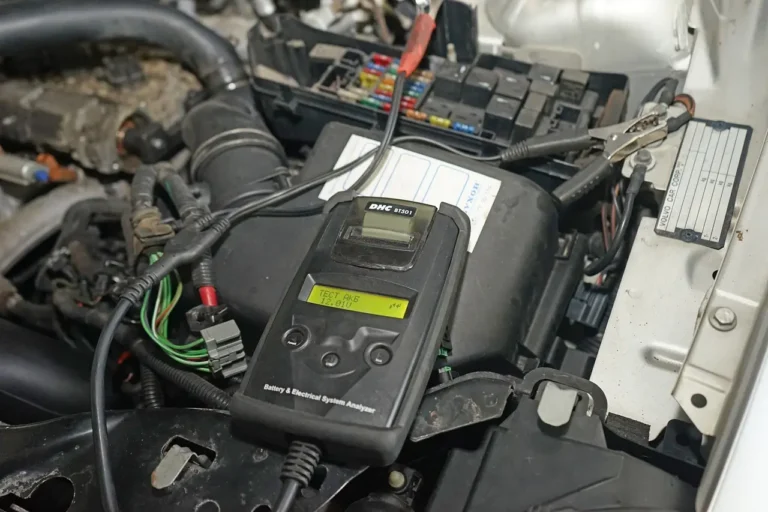
If a battery is dead after one night, start with battery state first: a resting voltage near 12.6 volts is generally considered full, below 12.2 volts is weak, and a resting draw above about 50 milliamps may point to a parasitic drain. Skip that order and you waste time, risk replacing a good battery, and can leave the charging fault or drain unfixed. This guide gives a symptom-to-cause path for battery health, charging-system checks, and overnight electrical drain.
What you’ll need


- Digital multimeter set to DC current
- Basic hand tools
- Fuse puller or needle-nose pliers
- Battery terminal brush or cleaner
- Safety gloves and eye protection
📊 Firestone lists 8 things that can drain a car battery. Source: Firestonecompleteautocare.
Why is my car battery dead in the morning?
Start with the pattern, not the guess. A dead battery after one night can come from a weak battery, a charging problem that left it underfilled after the last drive, or an actual overnight draw that kept pulling current while the car was parked. Clean and tighten both battery terminals first, because loose or corroded connections can mimic a drain.
Start with the easiest checks
- Inspect both battery terminals for looseness, white crust, or green corrosion.
- Clean and tighten the clamps until they do not rotate by hand.
- Measure resting battery voltage before any other test.
A resting battery near 12.6 volts is generally considered fully charged. Below 12.2 volts, the battery may already be weak enough to complicate diagnosis. If the car starts after a jump but dies again after sitting, the drain or recharge problem is still there.
Separate the three fault types
Battery health problems show up as an old or weak battery that cannot hold charge. Charging problems show up after driving, especially on short trips. Parasitic draw shows up only after the key is off and the modules should be asleep.
What electrical problem drains a car battery overnight?
The usual cause is a parasitic draw: normal background current exists with ignition off, but a component stays awake or powered and pulls too much current. Common sources include relays stuck closed, interior or cargo lights left on, control modules that never sleep, chargers plugged into constant-power outlets, and wiring faults. Short-trip use is different; the battery may not be recharged enough, even if nothing is drawing it down overnight.
Rule out the simple loads first
- Check dome, glove box, trunk, vanity, and door lights.
- Look for a stuck switch or a latch that does not fully close.
- Unplug aftermarket chargers and accessories from constant-power outlets.
Say your trunk light stays on because the latch switch never clicks shut. The battery may be fine, but the light can flatten it by morning. Suppose a dash cam is wired to constant power instead of switched power; the camera may keep drawing after the car is parked.
Then look at battery age and use
A car battery can be weak, old, or unable to hold charge. Battery life is often about 3 to 5 years, though heat, cold, and repeated deep discharges shorten that span. Firestone says a battery can last up to five years, but harsh conditions can cut that to two to three years. (Firestonecompleteautocare)
Check for short-trip charging deficits
If the car is used for very short drives, the alternator may not restore what starting took out. That is not the same as parasitic drain. A healthy battery can often sit four to eight weeks with a normal draw, but repeated deep discharges shorten battery life.
How do you find a parasitic draw on your car?
Use a multimeter, but only after the car has gone to sleep. A parasitic draw test uses a digital multimeter set to DC current, connected in series with the negative battery cable. Wait 10–15 minutes for modules to sleep, and sometimes up to an hour, before trusting the reading.
Measure current the right way
- Turn the car off, remove the key, and close the doors or latch the door switches.
- Disconnect the negative battery cable.
- Connect the meter in series between the negative post and the cable.
- Wait for the parked current to settle before reading it.
Normal parasitic draw on a modern car is often 20–85 mA. Over 100 mA of parked draw means the circuit should be investigated. That range gives you a useful line between normal memory power and a fault that can flatten a battery overnight.
Isolate the circuit with fuse pulls
- Check the meter reading with all fuses installed.
- Pull one fuse at a time with a fuse puller or needle-nose pliers.
- Watch for the current to drop sharply when the bad circuit opens.
- Record the fuse position before moving to the next one.
That fuse-pull method points you to the circuit, not just the symptom. A stuck relay can keep a circuit powered. Modules, chargers, infotainment units, alarms, trackers, and remote starters wired to constant power are all common parasitic-draw sources.
Can a bad alternator drain the battery when the car is off?
Yes, but split the alternator into two problems. A weak charging output can leave the battery undercharged after driving. A bad diode can allow back-drain while the car is parked. Healthy charging voltage is commonly reported around 13.5 to 14.5 volts when the engine runs.
Check output first
- Start the engine and measure charging voltage at the battery.
- Compare the reading to the 13.5 to 14.5 volts range.
- If it is low, inspect belts, connections, and the alternator circuit.
If the running voltage is low, the battery may never recover from the last drive. That creates a dead battery in the morning without any overnight drain. If the voltage is normal but the battery still dies after sitting, look harder at diode back-drain or another parked draw.
Test for back-drain when parked
- Repeat the parasitic draw setup with the car off.
- Pull the alternator fuse or disconnect the alternator B+ lead only if the service procedure allows it.
- Watch for the parked current to drop.
Battery drain decision table
| Symptom pattern | Most likely electrical cause | First test to run |
|---|---|---|
| Dome light still on in the morning | Interior light or stuck switch | Close the door, then inspect the dome and door jamb switch |
| Trunk stays slightly open on the latch | Trunk light or latch switch fault | Confirm the trunk light goes out when the latch is fully closed |
| Battery dies after short trips only | Charging deficit, not true overnight draw | Measure charging voltage at idle and after a drive |
| Battery dead immediately after parking | Heavy parasitic draw or charging failure | Measure resting current after sleep and check battery voltage |
| Battery dies after several hours, not instantly | Moderate parasitic draw | Wait for sleep mode, then read current in series |
| Clicking no-crank after an overnight sit | Weak battery or high draw that emptied it | Load-test the battery and check terminal tightness first |
| Dim lights with engine off | Low battery state or poor connections | Check terminals, then measure battery voltage |
| Brand-new battery still dies | Parasitic draw or charging fault | Do a parked-current test before replacing anything else |
| Aftermarket dash cam present | Accessory wired to constant power | Pull the accessory fuse or unplug the camera feed |
| Aftermarket tracker or alarm added recently | Module or wiring tied to constant power | Inspect the accessory fuse and splices first |
| Battery drains more in hot or cold weather | Weak battery with reduced reserve | Check battery age and resting voltage |
| Alternator warning light appeared before the battery died | Charging-system fault | Measure charging voltage with the engine running |
| Fuse pull makes current drop sharply | Circuit-specific parasitic draw | Trace the components on that fuse, starting with lights and relays |
| Battery dies after a jump, then fails again next day | Drain still present or battery cannot hold charge | Repeat the parked-current test and check battery age |
| Current changes only after 20 minutes | Intermittent wake-up after sleep timers expire | Keep the meter connected and watch for delayed spikes |
Common mistakes
Skipping the battery terminal check wastes time. Testing before the car sleeps gives a false reading. Replacing the battery first hides the real fault if a relay, module, or light is still awake. Missing intermittent wake-up faults is another common miss, especially when the drain appears only after sleep timers expire.
Another error is treating every dead battery as the same problem. A weak battery, a charging deficit from short trips, and a true overnight parasitic draw need different fixes. They can feel similar at the key, but they do not fail the same way.
Frequently asked questions
Should I replace the battery or test for an electrical drain first?
Test for the drain first unless the battery is clearly weak, swollen, or older than its useful window. A good order is terminals, resting voltage, charging voltage, then parked current. That sequence keeps you from buying a battery when a light, relay, or accessory circuit is still pulling current.
Can loose or corroded battery terminals cause overnight drain?
They do not create a true parasitic draw, but they can mimic one by blocking a proper charge and causing a no-start after sitting. Clean the posts and clamps, then tighten them so they cannot move. If the battery still drops, move on to a parked-current test.
How do I know if a glove box light is killing my battery?
Check the light with the glove box closed and the interior dark. If the bulb stays on, the switch or latch is not shutting off. Pulling the glove box fuse should make the current drop if that circuit is the culprit. A stuck vanity or door light can fail the same way.
What current draw is normal for a parked car?
Normal parasitic draw on a modern car is often 20–85 mA. Over 100 mA is enough to investigate the circuit. The meter must be in series with the negative battery cable, and the vehicle needs time to sleep before the reading is meaningful.
Products related to this article
Sponsored / affiliate links. As an Amazon Associate I earn from qualifying purchases. I may earn additional commission from eligible campaigns.