Can A Transmission Control Module Be Reprogrammed? Yes!
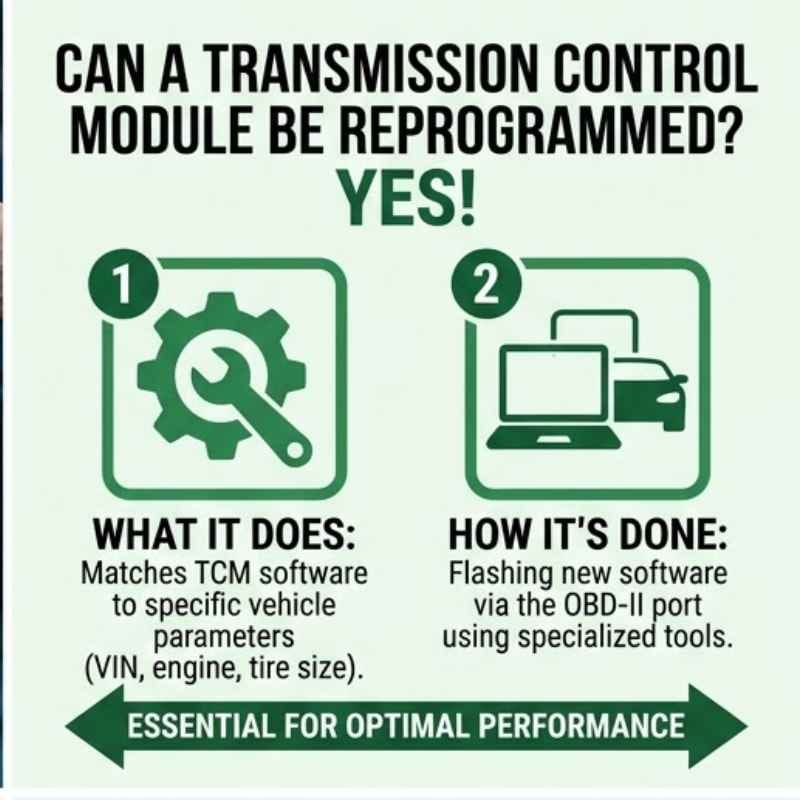
Yes, a Transmission Control Module (TCM) can absolutely be reprogrammed. This process, often called flashing or updating, allows technicians to install new software. It can fix shifting issues, improve performance, and update the module with the latest factory settings for better efficiency and reliability.
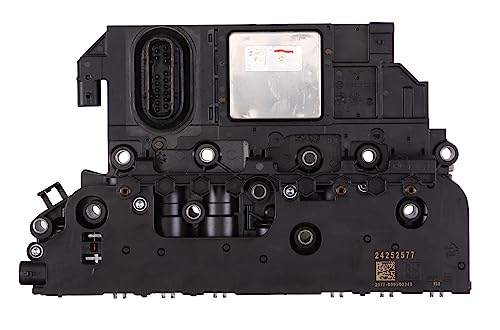
Understanding the Transmission Control Module (TCM)
Think of your car’s TCM as the conductor of an orchestra. The orchestra is your transmission. The TCM receives signals from many places.
These include engine speed, vehicle speed, throttle position, and even brake pedal input. It then tells the transmission exactly when to shift gears.
This control is super important. It makes sure your car shifts smoothly. It also helps your engine run its best.
Good shifting means better gas mileage. It also means a more comfortable ride for you. The TCM manages everything from the line pressure within the transmission to the timing of gear changes.
Modern transmissions have many gears. They also have complex internal workings. The TCM’s job is vital.
It needs to be precise. Old cars had mechanical controls. They were simpler.
But they were also less efficient. Today’s technology relies on electronic control. The TCM is the heart of this system.
Why Would You Reprogram a TCM?
There are several good reasons to consider reprogramming your TCM. It’s not just for fixing broken things. Sometimes, it’s about making good things even better.
The main goal is usually to improve how the transmission performs.
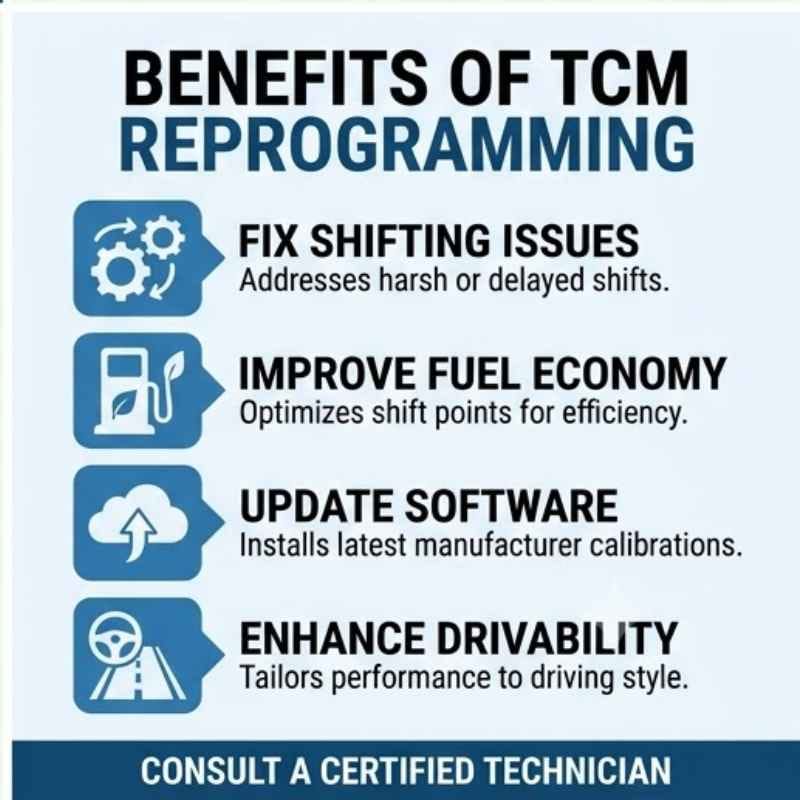
One common reason is to fix transmission shifting problems. Maybe your car is harsh when it shifts. Or it might hesitate.
Sometimes it feels like it’s slipping. The original software in the TCM might have had bugs. Or maybe it just wasn’t programmed perfectly for your driving style or local conditions.
Manufacturers often release software updates. These updates can improve transmission performance. They might smooth out shifts.
They can also help with fuel economy. This is like updating an app on your phone. New versions often bring better features and fewer glitches.
These updates are especially common for newer vehicle models.
Sometimes, after a repair or
There are also performance-oriented tunes. These can change shift points. They can increase line pressure.
This can lead to faster, firmer shifts. This is often done by performance shops. It’s not usually a factory update.
It’s for drivers who want a sportier feel. It can make the car feel more responsive.
So, whether it’s a fix, an upgrade, or a necessary step after a repair, reprogramming offers a way to fine-tune your car’s most complex system.
The Reprogramming Process Explained
Reprogramming a TCM isn’t something you can do in your garage with basic tools. It requires specialized equipment. It also needs someone with technical knowledge.
It’s usually done by a dealership or a specialized automotive repair shop.
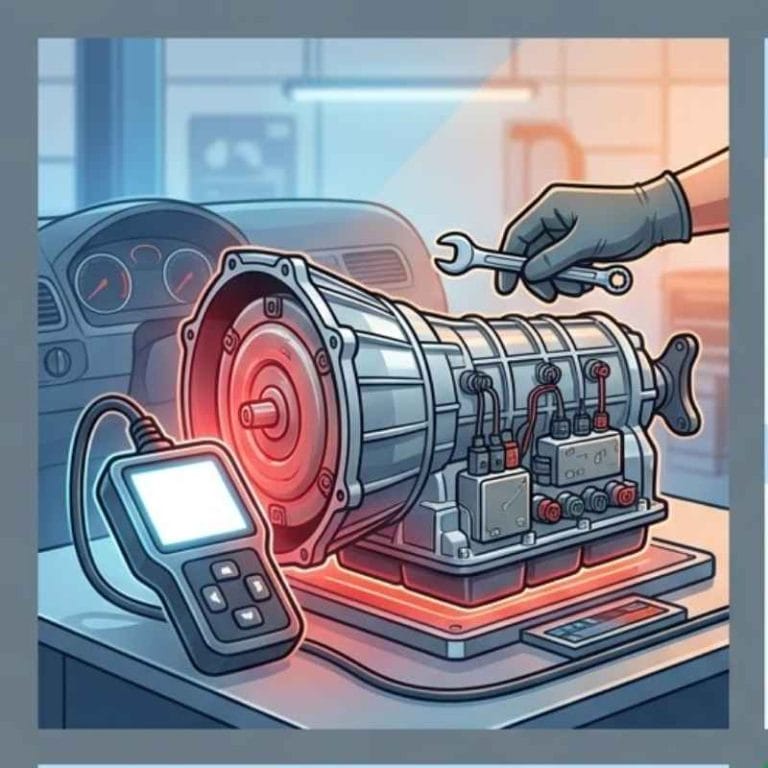
The first step involves connecting a diagnostic tool. This tool hooks up to your car’s onboard computer system. It communicates with the TCM.
The technician will then access the module’s current software. They check its version number. They also look for any error codes related to its function.
Next, the technician will obtain the correct software file. This file comes from the vehicle manufacturer. It’s specific to your car’s make, model, year, and sometimes even its VIN (Vehicle Identification Number).
Using the wrong software could cause serious problems. It’s critical to get the right one.
The diagnostic tool then uploads this new software to the TCM. This process can take some time. It’s important that the car’s battery has enough power.
A sudden power loss during programming can be disastrous. It can corrupt the module. It might even render it completely unusable.
During the programming, the technician monitors the process closely. They make sure everything is going smoothly. Once the new software is loaded, the technician usually has to perform a calibration or adaptation process.
This helps the TCM learn its new parameters. It also helps it adapt to the specific transmission and drivetrain components.
Finally, a test drive is conducted. This is to ensure the transmission is shifting correctly. They check for any unusual noises or behaviors.
They also clear any temporary error codes that may have appeared during the process.
The whole procedure is quite technical. It needs to be done by trained professionals. They have the right tools and knowledge.
It ensures your TCM gets updated properly and safely.
Here’s a quick look at what’s involved:
Reprogramming Steps
- Connect Diagnostic Tool: Specialist equipment links to your car’s computer.
- Access TCM Software: The current program is identified.
- Obtain Manufacturer Software: The correct update file is downloaded.
- Upload New Software: The update is transferred to the TCM.
- Calibration/Adaptation: Module learns new settings.
- Test Drive: Performance is checked, and errors are cleared.
Can a DIY Reprogramming Work?
In short, for most car owners, the answer is a resounding no. While there are many DIY car repair guides and tools available, reprogramming a TCM falls into a category that requires specialized expertise and equipment.
Some advanced enthusiasts might have access to professional-grade scan tools. These tools might offer TCM programming functions. However, this is not like changing a setting on your home computer.
The risks are extremely high.
If you make a mistake, you could end up with a non-functional TCM. This is a costly part. You might also cause damage to your transmission.
The cost to replace a damaged TCM can be substantial. It can run into hundreds or even thousands of dollars.
The process requires an uninterruptible power supply. It also needs specific software licenses. These are usually not available to the general public.
The software itself is proprietary to the car manufacturers.
Beyond just uploading the file, the adaptation and calibration steps are crucial. These are often complex. They need to be done precisely.
Without proper calibration, the transmission might not shift correctly. It could lead to performance issues or even internal damage over time.
So, while the idea of a DIY fix is appealing, it’s best to leave TCM reprogramming to the professionals. They have the training, the tools, and the right software. This ensures the job is done safely and effectively.
It’s really about avoiding a much bigger problem. A small mistake can turn into a huge repair bill. Trusting the experts is the smarter path here.
DIY vs. Professional Reprogramming
DIY Reprogramming:
- Risks: Very High
- Equipment: Specialized, expensive tools needed
- Software: Difficult to obtain legally
- Knowledge: Requires deep technical understanding
- Outcome: High chance of damage or failure
Professional Reprogramming:
- Risks: Low (when done by qualified techs)
- Equipment: Dealership or specialized shop has it
- Software: Access to manufacturer-specific updates
- Knowledge: Technicians are trained for this
- Outcome: Usually successful, reliable results
Signs Your TCM Might Need Attention
Sometimes, your car will give you hints that something isn’t right with the TCM or its programming. These signs can be subtle at first. But they often get worse over time.
Paying attention to these signals can save you from bigger problems down the road.
One of the most common signs is erratic shifting. This could mean the transmission shifts too early or too late. It might feel jerky or rough.
You might experience delayed engagement when you put the car in gear. Sometimes, it feels like the transmission is stuck in a gear.
A check engine light or a transmission warning light is another big clue. While these lights can point to many issues, they are often triggered by TCM malfunctions or software glitches. A mechanic can read the codes these lights trigger.
This can point directly to the TCM.
Strange noises from the transmission are also concerning. You might hear clunking, grinding, or whining sounds that weren’t there before. These sounds can indicate that the transmission isn’t operating as it should.
The TCM might be commanding it to do something it can’t handle smoothly.
A slipping transmission is a very serious sign. This is when the engine revs up, but the car doesn’t speed up as it should. It feels like the engine is disconnected from the wheels for a moment.
This can be caused by a TCM not properly controlling the transmission’s clutches or bands.
You might also notice a loss of power. This can happen if the transmission is stuck in a higher gear. It makes acceleration difficult.
It also impacts fuel economy. The TCM might be telling the transmission to stay in a gear it shouldn’t be in.
In some cases, the transmission might refuse to shift into certain gears at all. This is often a safety feature. The car might go into a “limp mode.” This reduces power and limits shifting.
It’s to prevent further damage. The TCM is usually responsible for activating this mode.
If you experience any of these symptoms, it’s wise to get your car checked by a professional. They can diagnose whether the issue is with the TCM itself, its programming, or another component of the transmission system.
I remember one time, my old sedan started acting up. It was a little hesitation before it would shift into drive. Then, on the highway, it felt like it would sometimes lose power for a second.
The check engine light came on, and it scared me. I took it to the shop, and they said the TCM was throwing a bunch of codes. They ended up reprogramming it with an update.
After that, it drove like a new car again. It was amazing how much difference a simple software update made.
Experience with a Reprogrammed TCM
I’ve had a few experiences where a transmission control module reprogramming made a noticeable difference. One instance that really stands out was with a mid-size SUV I owned a few years back. It was about five years old at the time.
For months, I’d noticed the transmission seemed a bit… lazy.
When I’d accelerate from a stop, there was a slight delay. Then, the gears would shift with a bit of a jolt. It wasn’t terrible, but it wasn’t the smooth, seamless experience I expected.
It made city driving feel a little more stressful than it needed to be. I’d chalked it up to just how that particular model felt.
Then, one day, I saw a service bulletin online. It mentioned a software update for the TCM on my specific model. It was supposed to improve shift quality and fuel economy.
I figured, why not? I had nothing to lose.
I scheduled an appointment at the dealership. I mentioned the service bulletin. The service advisor confirmed they could do the update.
They connected their specialized laptop to my car. I waited in the waiting area, sipping coffee and reading a magazine. It took about an hour, maybe a little more.
When I drove out of the dealership, the difference was immediate. It was like night and day. The hesitation was gone.
The shifts were incredibly smooth. It felt like the transmission was lighter and more responsive. It even seemed to pick up speed more eagerly.
The fuel economy also saw a small, but welcome, improvement on my next few fill-ups.
That experience really showed me the power of these updates. It wasn’t a repair in the traditional sense. Nothing was broken.
But the software correction made a huge positive impact on the car’s performance and my driving experience. It was a perfect example of how a TCM reprogramming can solve subtle issues and enhance an otherwise perfectly good vehicle.
Another time, a friend’s car started having serious shifting problems. It would sometimes refuse to shift out of second gear. They were worried about a massive repair bill.
The mechanic suggested trying a TCM reprogram first. It was much cheaper than a transmission rebuild. To their surprise, the update fixed the issue entirely.
It was a massive relief for them.
Signs Your Transmission Might Be Unhappy
- Rough or Jerky Shifts: The car lurches when changing gears.
- Delayed Engagement: Takes too long to shift into Drive or Reverse.
- Slipping: Engine revs, but car speed doesn’t increase proportionally.
- Warning Lights: Check Engine or Transmission lights illuminate.
- Loss of Power: Car struggles to accelerate or feels sluggish.
- Stuck in Gear: Transmission won’t shift to higher or lower gears.
When is Reprogramming NOT Enough?
While reprogramming a TCM can solve many transmission-related issues, it’s not a magic bullet for everything. There are times when the problem lies deeper within the transmission’s mechanical components, or the TCM itself is faulty.
If the transmission has physical damage, a software update won’t help. This includes issues like worn-out gears, damaged clutch packs, or a failing torque converter. These problems require mechanical repairs.
They need parts to be replaced or rebuilt. The TCM can only control what’s mechanically possible.
Sometimes, the TCM module itself can fail electronically. It might have damaged internal circuits. Or it might have suffered water damage.
In such cases, the module might need to be repaired or completely replaced. Once a new or repaired TCM is installed, it will likely need to be programmed. But the reprogramming alone cannot fix a dead module.
Severe fluid leaks or very old, burnt transmission fluid can also point to more serious issues. If the fluid is burnt, it indicates overheating. This can damage the transmission’s internal seals and friction materials.
A fluid change and filter
A mechanic will usually perform a thorough diagnostic assessment. They’ll check for trouble codes. They’ll also look at transmission fluid condition.
They might do a manual inspection of components if possible. This helps determine the root cause of the problem.
If the diagnosis shows that the transmission’s internal parts are worn or broken, then reprogramming the TCM won’t fix it. You’ll be looking at a more involved and expensive repair. This could mean a transmission rebuild or replacement.
It’s always important to have a qualified technician properly diagnose the issue. They can tell you whether a simple software update is likely to resolve the problem. Or if more extensive repairs are necessary.
Relying on expert diagnosis is key to avoiding unnecessary costs and frustration.
For example, if your car is shuddering badly under load, and the diagnostic shows no TCM specific codes, but instead indicates clutch slippage on multiple gears, then the problem is likely mechanical. The TCM might be trying its best with worn parts. But it can’t overcome worn-out friction materials.
The Cost of TCM Reprogramming
The cost to reprogram a Transmission Control Module can vary. It depends on several factors. The main ones are the type of vehicle and where you get the service done.
At a dealership, you can expect to pay more. This is because they have direct access to manufacturer-specific software and tools. They also have highly trained technicians.
Prices can range from $100 to $300, sometimes even a bit more. This often includes the diagnostic time and the update itself.
Independent specialty repair shops that focus on transmissions or automotive electronics might be more affordable. They often have specialized equipment too. Their prices might fall between $75 and $200.
It’s a good idea to call around and get quotes from a few reputable shops in your area.
The price can also depend on the complexity of the update. Some updates are simple. Others might involve more extensive calibration procedures.
The time it takes the technician to perform the work is a big factor.
It’s important to remember that this cost is usually much lower than replacing a faulty TCM or rebuilding a transmission. If reprogramming solves the issue, it’s a very cost-effective solution. It can save you thousands of dollars compared to more extensive repairs.
Before agreeing to the service, always ask for a detailed estimate. Make sure you understand what the cost includes. Does it include diagnostics?
Is it just for the flashing procedure? Clarifying these points will help avoid surprises.
Consider it an investment in your car’s performance and longevity. A well-functioning transmission is crucial. Making sure its control module is up-to-date is a smart maintenance step.
It’s a much better option than ignoring transmission problems.
Cost Comparison
- Dealership: $100 – $300+
- Independent Specialist: $75 – $200
- Factors: Vehicle make/model, update complexity, labor rates.
Note: This cost is significantly less than TCM replacement or transmission repair.
The Future of TCM Reprogramming
The role of the Transmission Control Module is only growing. As cars become more complex, the need for advanced control systems increases. This means TCM reprogramming will likely become even more common and important.
Manufacturers are constantly developing new software. They aim to improve efficiency, safety, and driver experience. Over-the-air (OTA) updates, like those seen on smartphones and some high-end vehicles, might become more prevalent for TCMs.
This would allow updates to be downloaded wirelessly.
This could mean fewer trips to the dealership for routine software updates. However, more complex issues might still require a professional visit. The ability to diagnose and perform these updates remotely is still developing for critical vehicle systems.
We’re also seeing more advanced transmission types. Dual-clutch transmissions (DCTs) and continuously variable transmissions (CVTs) rely heavily on sophisticated electronic controls. Their TCMs are complex.
They will likely need frequent software adjustments to optimize their unique performance characteristics.
The trend towards electric vehicles (EVs) also impacts this. While EVs don’t have traditional multi-gear transmissions, they still have complex control units for their powertrains. These units manage power distribution, regenerative braking, and thermal management.
The principles of software updates and optimization will still apply.
For traditional internal combustion engine vehicles, expect TCM reprogramming to remain a key part of maintenance. It’s a way to keep your car running optimally. It ensures you benefit from the latest factory improvements.
It’s a testament to how software is transforming even the most mechanical parts of a car.
This continuous improvement cycle means that a car’s performance can evolve over its lifespan. What might feel a little rough today could be smoothed out with a software update tomorrow. It’s an exciting prospect for car owners.
When to Worry About Transmission Issues
While a TCM reprogramming can fix many problems, some transmission issues are more serious. You should always pay attention to warning signs. And don’t hesitate to seek professional help.
If you notice loud grinding or banging noises coming from your transmission, stop driving the car immediately if possible. These sounds often indicate severe internal damage. Continuing to drive could cause irreparable harm and lead to very expensive repairs.
A significant and persistent fluid leak is also cause for concern. Transmission fluid is vital for lubrication and cooling. A major leak means the system is not getting enough fluid.
This can quickly lead to overheating and component failure. You should have it checked right away.
If your transmission is slipping consistently and a TCM reprogramming doesn’t fix it, it’s likely a mechanical issue. This could be worn clutch plates, a faulty valve body, or other internal problems. These require more than just a software update.
Any unusual smells, like burning oil, are a strong indicator of trouble. This often means the transmission fluid is overheating. It could be due to excessive friction or a lack of proper lubrication.
This situation requires immediate professional attention.
Finally, if your car goes into limp mode and stays there, even after potential reprogramming, it suggests a serious fault. Limp mode is designed to protect the transmission. But if it can’t be exited, it means the underlying problem is significant.
My neighbor had a transmission that started leaking a lot of fluid. He ignored it for a few weeks, thinking it was minor. Then one day, his car just stopped moving.
He ended up needing a whole new transmission. It was a really expensive lesson. He told me he wished he had gotten it checked much sooner.
The key takeaway is to address transmission concerns promptly. Early detection and repair are always cheaper and easier than dealing with a complete failure. Trust your instincts and get it checked if something feels off.
Frequently Asked Questions About TCM Reprogramming
What is a Transmission Control Module (TCM)?
The Transmission Control Module (TCM) is a computer that controls the functions of your car’s automatic transmission. It monitors various sensors and tells the transmission when to shift gears, how to apply pressure, and manages other vital operations for smooth and efficient driving.
Can reprogramming a TCM fix all transmission problems?
No, reprogramming a TCM can fix issues related to software glitches or outdated programming. However, it cannot fix mechanical problems like worn-out gears, damaged clutch packs, or a physically broken TCM module. These require mechanical repair or replacement.
How long does it take to reprogram a TCM?
The process typically takes about one to two hours. This includes connecting the diagnostic tools, uploading the new software, and performing any necessary calibration or adaptation procedures afterward. The exact time can vary depending on the vehicle and the complexity of the update.
Will reprogramming void my car’s warranty?
Reprogramming a TCM with manufacturer-approved software is generally not covered under a voided warranty. In fact, it’s often recommended by manufacturers to keep the TCM up-to-date. However, if the reprogramming is done with aftermarket tuning software, it could potentially affect certain warranty aspects.
What happens if the TCM reprogramming fails?
If a TCM reprogramming fails, it could leave the module in an unrecoverable state, meaning it needs to be
Can I reprogram my TCM myself?
It is strongly advised against attempting to reprogram a TCM yourself. It requires specialized diagnostic tools, manufacturer-specific software, and a deep understanding of automotive electronics. Incorrect procedures can lead to serious damage to the TCM and transmission, resulting in expensive repairs.
Final Thoughts on TCM Reprogramming
The ability to reprogram your car’s Transmission Control Module is a powerful tool. It offers a way to enhance performance, fix subtle shifting issues, and keep your vehicle running at its best. It’s a testament to how modern automotive technology relies on software.
Remember, this isn’t a DIY job. It requires specialized knowledge and equipment. Always turn to a qualified technician or dealership for this service.
When done correctly, it can bring new life to your transmission.
See also how to build a homemade speed controller step by step.
Products related to this article
Sponsored / affiliate links. As an Amazon Associate I earn from qualifying purchases. I may earn additional commission from eligible campaigns.