Can A Transmission Control Module Be Tested At Home? Yes!
Ever get that sinking feeling when your car acts up? You know something’s wrong, but you can’t quite pinpoint it. It’s like your car is speaking a foreign language.
One of the trickiest parts of your car to figure out is the Transmission Control Module, or TCM. It’s the brain behind your car’s gears. When it goes wonky, it can cause all sorts of problems.
Many people think you need a fancy shop to check it. But what if you could do some basic tests yourself? This guide will help you understand if your TCM is giving you trouble.
We’ll walk through how to tell what’s going on without needing a special mechanic. You’ll learn the signs to look for and simple ways to check. It’s about empowering you to understand your car better.
Yes, you can test a Transmission Control Module (TCM) at home using basic tools and by observing your vehicle’s symptoms. While a full professional diagnosis involves specialized equipment, homeowners can perform initial checks. These include visual inspections, scanning for diagnostic trouble codes (DTCs) with an OBD-II scanner, and testing sensor inputs and outputs. Understanding the common signs of a failing TCM is the first step to home testing.
Understanding Your Car’s Transmission Control Module (TCM)
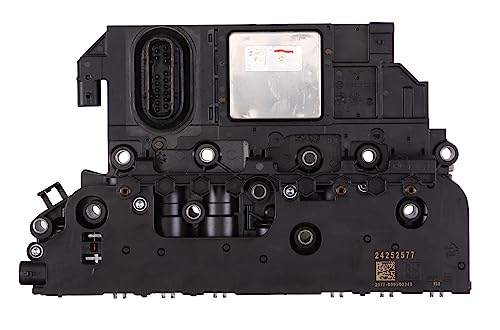
Your car’s transmission is a marvel of engineering. It helps your engine’s power reach the wheels. The Transmission Control Module, or TCM, is like the conductor of this orchestra.

WWEIQI
LF8M189E1G Transmission Control Module, Tested Programmed TCM…
- 【Part Number】LF8M189E1E, LF8M189E1A, LF8M189E1B, LF8M189E1C, LF8M189E1D, LF8M189E1F, LF8M189E1G, LF8M189E1H, LF8M-18-9E1E, LF8M-18…
- 【Compatible Vehicle】Compatible with 2010-2011 Mazda 3 i /GS/GX /I Touring Sedan/GS/GX Hatchback 2.0L, Tested Programmed TCM Start…
- 【High Quality】Engineered From High-Quality Materials To Improve Reliability And Durability, it can still run stably under severe w…
As an Amazon Associate I earn from qualifying purchases.
It tells the transmission exactly when to shift gears. It uses information from various sensors. This information includes engine speed, vehicle speed, and throttle position.
The TCM then tells the transmission solenoids what to do. These solenoids control fluid pressure. This fluid pressure shifts the gears.
Without a working TCM, your transmission can’t shift properly. It might get stuck in one gear. Or it might shift very roughly.
Sometimes, it might not shift at all.
The TCM itself is a small computer. It’s usually located near the transmission. Or it can be inside the transmission housing itself.
This makes it vulnerable to heat and vibration. Over time, these conditions can cause it to fail. It can also be damaged by electrical issues.
Or by fluid leaks. When the TCM starts to go bad, it doesn’t always die suddenly. Often, it shows signs.
These signs can be confusing at first. They can mimic other car problems. That’s why knowing what to look for is so important.
Think of it like your own brain. If your brain isn’t sending the right signals, your body won’t work right. The TCM does the same for your transmission.
It processes data from many sources. Then it sends commands to the transmission’s actuators. These are the parts that physically move the gears.
When the TCM gets confused, or stops working, the commands are wrong. This leads to transmission problems. These can range from minor annoyances to major drivability issues.

My Own TCM Scare: A Night I Won’t Forget
I remember one particularly frustrating evening. I was driving home from a long trip. Suddenly, my car’s transmission felt… weird.
It was like it was trying to shift but just couldn’t. The engine revved high, but the car barely moved forward. I pulled over, my heart pounding.
Was it out of gas? No, the gauge was fine. Was it the engine?
It sounded okay. Then, a warning light flickered on the dashboard. It was the check engine light, and a transmission warning light too.
Panic started to set in. I’m usually pretty hands-on with my car, but the transmission always felt like a black box. I pictured a huge towing bill and a mechanic shaking his head sadly.
I managed to limp the car home in a very limited gear. It was slow and bumpy. The next morning, I hooked up my OBD-II scanner.
I expected a dozen codes. But to my surprise, there were only a couple. One pointed towards an electrical issue in the transmission circuit.
Another was a general transmission performance code. This didn’t immediately scream “bad TCM” to me. But I started researching.
I read forums, watched videos. I learned that a failing TCM can cause these exact symptoms. It was a moment of realization.
Maybe this complex part wasn’t completely out of my reach to diagnose. It gave me the courage to dig deeper.
I decided to start with the simplest things. I checked the transmission fluid level and condition. It looked okay.
Then, I looked closely at the TCM itself, if I could find it. It was tucked away, but I managed to get a look. I saw no obvious signs of damage.
This told me that sometimes, the problems with a TCM aren’t visible. They’re internal. That’s when I knew I needed to understand more about how to test it, even without taking it out.
Signs Your TCM Might Be Failing
Sudden Gear Changes: Your car might shift abruptly or unexpectedly. It feels like a hard jolt.
Stuck in One Gear: The transmission might refuse to shift out of a particular gear. Often, it’s stuck in “limp mode” (usually second or third gear).
Check Engine or Transmission Light: These warning lights are common indicators.
Delayed Shifting: There’s a noticeable pause before your car shifts gears.
Overheating Transmission: The transmission fluid might smell burnt, and the transmission can overheat.
Car Won’t Start: In some cases, a faulty TCM can prevent the engine from starting.
Common Symptoms of a Bad TCM
A failing Transmission Control Module doesn’t always give a clear “I’m broken” message. Instead, it often throws a bunch of confusing symptoms at you. This is where home testing starts.
The first thing many people notice is a change in how their car shifts. This can be a big one. You might feel the gear changes becoming rough.
It’s like someone is stomping on the gas and brakes slightly when it shifts. This is because the TCM isn’t sending the right signals to the transmission’s hydraulics.
Another common sign is the car getting stuck in “limp mode.” This is a safety feature. When the TCM detects a serious problem, it puts the transmission into a default gear. This is usually a low gear.
It’s designed to let you drive slowly and carefully to a repair shop. You’ll notice the car feels sluggish. It won’t accelerate well.
The engine might be revving high, but you won’t go fast. This is often accompanied by the check engine light or a specific transmission warning light.
Sometimes, the problem is even simpler to observe. You might notice a delay when you try to shift from Park to Drive. Or from Drive to Reverse.
There’s a pause. It feels like the car is thinking about it. This hesitation is a red flag.
The TCM isn’t telling the transmission to engage the gear fast enough. You might also smell a burnt odor. This is often from overheating transmission fluid.
The TCM’s incorrect commands can cause the transmission to work harder than it should. This generates extra heat.
Finally, and this is less common but still possible, the TCM can prevent your car from starting. If the TCM isn’t communicating properly with the engine’s computer, it might not allow the starter motor to engage. These symptoms can overlap with other transmission issues.
That’s why a systematic approach to testing is key.
How to Test Your TCM at Home
Testing your TCM at home is all about observation and using the tools you have. You don’t need to be a master mechanic. You just need to be patient and systematic.
The first step is always the easiest and often the most revealing: observation. What is your car doing differently? Are the shifts rough?
Is it stuck? Are warning lights on?
Once you’ve noted the symptoms, it’s time to bring in some tools. The most important tool for home testing is an OBD-II scanner. You can buy these online or at auto parts stores for a reasonable price.
Most cars made after 1996 have an OBD-II port. This port is usually located under the dashboard, near the steering column. Plug the scanner into the port.
Turn your car’s ignition to the “on” position (don’t start the engine). The scanner will communicate with your car’s computer.
It will then display any stored diagnostic trouble codes (DTCs). These codes are like the car’s secret messages. They tell you what the computer has detected as a problem.
For TCM issues, you’ll often see codes starting with “P07.” For example, P0740 might relate to a torque converter clutch circuit. P0715 could be about the input speed sensor circuit. Look up the specific codes on your scanner’s manual or online.
They will give you a clue about which part of the transmission system is having an issue. Some codes directly point to TCM problems or its communication with other modules.
Quick Scan: Common DTCs Related to TCMs
- P0740: Torque Converter Clutch Circuit Malfunction
- P0715: Input/Turbine Speed Sensor Circuit Malfunction
- P0720: Output Speed Sensor Circuit Malfunction
- P0741: Torque Converter Clutch Circuit Performance or Stuck Off
- P0742: Torque Converter Clutch Circuit Stuck On
- P0750: Shift Solenoid A Malfunction
- P0780: Automatic Transmission Shift Position Sensor Circuit Malfunction
After scanning for codes, a visual inspection is next. Locate your TCM. Its location varies by make and model.
Sometimes it’s under the hood, near the battery or firewall. Other times, it’s under the dashboard. Some are integrated into the transmission itself.
Look for any obvious signs of damage. Are there any burnt wires? Any signs of corrosion on the connectors?
Is the casing cracked? If you see any physical damage, this is a strong indicator that the TCM may be the culprit. Be careful when inspecting.
Make sure the car is off and the battery is disconnected if you are going to touch any electrical connectors.
Next, consider checking the transmission fluid. Open the hood and find the transmission fluid dipstick. If your car doesn’t have one, you might need to look up how to check it for your specific model.
The fluid should be a clear or reddish-brown color. If it’s dark brown or black, and it smells burnt, this indicates a problem within the transmission. This could be related to the TCM, or it could be a separate issue.
Low fluid levels can also cause shifting problems. Always top up with the correct type of fluid recommended for your vehicle.
One more step you can take involves checking the sensors that communicate with the TCM. The TCM relies on input from various sensors, like the vehicle speed sensor (VSS) and the throttle position sensor (TPS). Your OBD-II scanner can often read live data from these sensors.
Watch the readings as you operate the vehicle (safely, of course). Do the sensor readings make sense? For example, does the VSS reading increase as you drive faster?
Does the TPS reading change as you press the accelerator? If a sensor is giving erratic or no readings, it could be sending bad information to the TCM. This would cause the TCM to react incorrectly.
Sometimes, it’s the sensor itself that’s bad, not the TCM.
If you’re feeling a bit more adventurous and have a multimeter, you can perform basic electrical tests. This requires some knowledge of automotive electrical systems. You’ll need to find a wiring diagram for your TCM.
You can then test for voltage at the TCM connector. You can also test for continuity of wires going to and from the TCM. This helps rule out simple wiring breaks or shorts.
However, if you’re not comfortable with electrical testing, it’s best to leave this to a professional. Incorrect testing can damage the module further.
Infographic-Style: Step-by-Step Home TCM Check
Step 1: Observe Symptoms
Note rough shifts, limp mode, or warning lights.
Step 2: Scan for Codes
Use OBD-II scanner. Look for P07xx codes.
Step 3: Visual Inspection
Check TCM for burnt wires or corrosion.
Step 4: Check Fluid
Inspect color, smell, and level of transmission fluid.
Step 5: Sensor Data (Optional)
Use scanner to check VSS and TPS readings.
Real-World Scenarios: When the TCM is Likely the Culprit
Let’s look at some specific situations where a TCM is highly suspected. Imagine you’re driving on the highway. Suddenly, your car feels like it lost power.
The engine is revving, but your speed isn’t increasing. The check engine light comes on, flashing. You manage to pull over.
After shutting the car off for a few minutes and restarting, it drives okay for a while. But then it happens again. This on-again, off-again behavior, especially on the highway, is a classic sign.
The TCM might be overheating or experiencing intermittent electrical faults. It’s struggling to keep up with the demands of higher speeds.
Another scenario: you’re trying to back out of your driveway. You put the car in Reverse, but nothing happens. You try Drive, and still nothing.
You pump the gas pedal. Then, with a lurch, the transmission engages. This kind of “lazy” engagement or complete lack of engagement in certain gears points towards a faulty TCM.
It’s failing to signal the correct solenoids to activate. The problem is especially concerning if it happens consistently. It means the TCM is not reliably performing its core function.
Consider a car that feels like it’s constantly slipping. When you accelerate, the engine RPMs go up, but the car doesn’t gain speed proportionally. It feels like the transmission is “slipping” between gears.
This can happen if the TCM is not correctly controlling the line pressure of the transmission fluid. The fluid is what makes the gears engage. If the pressure is wrong, the gears can’t grip properly.
This can lead to a burning smell from the transmission fluid. This is a very serious symptom that strongly implicates the TCM or its control over the transmission.
What about a car that will only drive in one gear? This is the common “limp mode” situation. You start the car, put it in Drive, and it only goes forward slowly, never shifting into higher gears.
The transmission feels sluggish and underpowered. The diagnostic trouble codes will often point to a general transmission system fault. However, if other common transmission issues like low fluid, worn clutches, or clogged filters have been ruled out, the TCM becomes a prime suspect.
It’s the “brain” that’s decided to lock the transmission for safety.
Contrast Matrix: Normal vs. Concerning Transmission Behavior
| Behavior | Normal | Concerning |
|---|---|---|
| Gear Shifts | Smooth, almost unnoticeable changes. | Jerky, hard, or delayed shifts. |
| Acceleration | Steady gain in speed as gears shift. | Engine revs high but speed doesn’t increase (slipping). |
| Warning Lights | None. | Check engine light, transmission light, or limp mode indicator. |
| Starting | Car starts without issue. | Car cranks but won’t start (in some TCM failures). |
| Response to Gear Selection | Immediate engagement of Drive or Reverse. | Delayed engagement or no engagement in any gear. |
What This Means for You: When to Worry
So, you’ve done some home checks. You’ve scanned for codes. You’ve observed your car’s behavior.
When should you really start to worry about your TCM? If you are seeing multiple symptoms on the list, it’s time to pay attention. For example, if you have rough shifts and a check engine light with transmission-related codes, your TCM is a strong suspect.
Don’t ignore these signs. They can lead to more serious and expensive transmission damage if left unchecked.
It’s important to know when a problem is minor and when it’s major. A single, old code that disappears after clearing it might not be a big deal. But persistent codes, especially those related to circuits or performance, are concerning.
If your car is frequently going into limp mode, or if it’s unsafe to drive due to shifting issues, then you should definitely worry. This isn’t just an inconvenience; it’s a safety issue. Your car needs to shift correctly to be predictable on the road.
Also, consider the age and condition of your vehicle. Older cars are more prone to electrical component failures. Heat, moisture, and vibration take their toll.
If your TCM is original and your car has high mileage, it might be nearing the end of its lifespan. However, even newer cars can have TCM failures. Sometimes it’s due to manufacturing defects or external factors like voltage spikes.
One simple check you can do is to monitor the behavior of your car after clearing the DTCs. If the codes come back quickly, or if the symptoms return very soon, it points to an ongoing problem. If the codes stay clear for a long time and the symptoms don’t return, it might have been a temporary glitch.
But with transmission issues, it’s usually not a fluke. Always err on the side of caution.
Quick Fixes and Tips for TCM-Related Issues
While you can’t “fix” a broken TCM at home without specialized knowledge and equipment, you can address related issues. The most common “quick fix” is to clear the diagnostic trouble codes using your OBD-II scanner. Sometimes, a temporary glitch in the system can trigger a code.
Clearing it might resolve the symptom for a while. This gives you time to diagnose further or get to a mechanic. However, if the underlying problem isn’t fixed, the code will reappear.
Ensuring your transmission fluid is at the correct level and is clean is a vital tip. Low or old fluid can cause a multitude of transmission problems, and the TCM can get confused by the poor performance. Always use the specific fluid recommended by your car manufacturer.
Using the wrong type can cause significant damage.
If you find any corrosion on the TCM connectors, you can try cleaning them. Use an electrical contact cleaner. Gently scrub the pins and sockets with a small brush.
Make sure the connectors are completely dry before reconnecting them. Sometimes, poor electrical connections are the root cause of TCM errors.
For more advanced users, checking grounds can be helpful. The TCM, like all electronic components, needs a solid ground connection to the car’s chassis. If a ground wire is loose or corroded, it can cause all sorts of electrical gremlins.
Locate the ground wires associated with the TCM and ensure they are clean and tightly secured.
If your OBD-II scanner shows that a sensor related to the TCM is faulty (e.g., VSS, TPS), replacing that sensor might solve your problem. Often, a bad sensor will send incorrect data to the TCM, causing it to behave erratically. A faulty sensor is usually much cheaper and easier to
Finally, and this is a crucial tip: document everything. Keep a log of the symptoms you experience, the DTCs you retrieve, and any actions you take. This information is invaluable if you eventually need to take your car to a professional.
It helps them diagnose the problem faster and more accurately. It also helps you track your own troubleshooting efforts.
Quick Tip Box: What to Do If You Suspect Your TCM
Don’t ignore the symptoms. Transmission problems can worsen quickly.
Scan for codes immediately. This gives you valuable clues.
Check transmission fluid. It’s a common cause of many issues.
If unsure, consult a professional. Transmission work is complex.
Research your specific vehicle. TCM locations and common issues vary.

Frequent Questions About TCM Testing
Can I test the TCM without a scanner?
You can perform basic observations and visual checks without a scanner. However, an OBD-II scanner is essential for retrieving diagnostic trouble codes (DTCs). These codes are critical for identifying specific issues the car’s computer has detected, many of which relate to the TCM.
Without a scanner, you’re largely guessing.
How much does it cost to test a TCM at a mechanic?
Mechanics typically charge a diagnostic fee, which can range from $75 to $150. This fee usually covers plugging in their advanced scan tools and performing initial tests. Some shops might offer a free initial scan, but detailed diagnosis will incur costs.
If they need to do further testing or remove components, that will add to the cost.
What is the difference between a TCM and an ECM/PCM?
The Engine Control Module (ECM) or Powertrain Control Module (PCM) controls the engine. The Transmission Control Module (TCM) specifically controls the automatic transmission. On some vehicles, these functions are combined into a single unit called a PCM.
However, many vehicles have separate modules for the engine and transmission.
How do I know if my TCM is bad or if it’s just a sensor?
This is where diagnostic codes and live sensor data are key. If the DTCs point directly to the TCM or its communication circuits, it’s more likely the TCM. If the codes point to a specific sensor (like the input speed sensor or output speed sensor) and the live data from that sensor is erratic or shows no reading, then the sensor is a more probable cause.
Ruling out sensors is an important step before concluding the TCM is bad.
Can a bad TCM cause my car to stall?
Yes, in some cases, a severely malfunctioning TCM can cause stalling. If the TCM is sending incorrect signals or is not communicating properly with the engine control module, it can disrupt the engine’s operation to the point of stalling. This is less common than shifting issues but is a possible symptom.
Is it possible to test the TCM on the bench?
Testing a TCM on a bench requires specialized equipment called a “TCM tester” or “diagnostic bench.” These are expensive tools that simulate the signals the TCM would receive from the vehicle’s sensors. While professionals use these, they are not practical for home use. Home testing relies on observing the vehicle’s behavior and using accessible diagnostic tools like OBD-II scanners.
Conclusion and Final Thoughts
Figuring out if your car’s Transmission Control Module is the source of its problems can feel daunting. But by understanding the common symptoms and following a few basic home testing steps, you can gain valuable insight. Observing your car’s behavior, using an OBD-II scanner to check for trouble codes, and performing simple visual checks are powerful tools.
These steps can help you narrow down the possibilities. Even if you can’t definitively diagnose a bad TCM yourself, this knowledge empowers you. It helps you communicate better with your mechanic.
It also prevents unnecessary repairs. Remember, a healthy transmission is key to a reliable vehicle. Don’t hesitate to investigate when something feels off.
See also transmission vs drivetrain what is the real difference .
Related pick: Check today's price on Amazon
Products related to this article
Sponsored / affiliate links. As an Amazon Associate I earn from qualifying purchases. I may earn additional commission from eligible campaigns.