How Many Transmission Control Solenoids are There? Explained Simply
Most drivers don’t think much about their car’s transmission until something goes wrong. But there’s a complex world inside every automatic transmission, and one of the most important parts is the transmission control solenoid. These small electronic valves manage the flow of transmission fluid, making sure your car changes gears smoothly.
If you’ve ever wondered how many transmission control solenoids are in your car—or why this number matters—you’re not alone. Many people are surprised to learn that there’s no single answer. It depends on your car’s make, model, and transmission type.
In this article, you’ll discover exactly how many transmission control solenoids are commonly found in different vehicles, how they work, why their number matters, and what can go wrong if even one fails. We’ll break down the technical details in simple language, offer real-world examples, and help you understand what to look for if you suspect a solenoid problem.
Whether you’re a car owner, a DIY mechanic, or simply curious, by the end of this guide, you’ll have a clear picture of the role these solenoids play and how they affect your driving experience.
What Is A Transmission Control Solenoid?
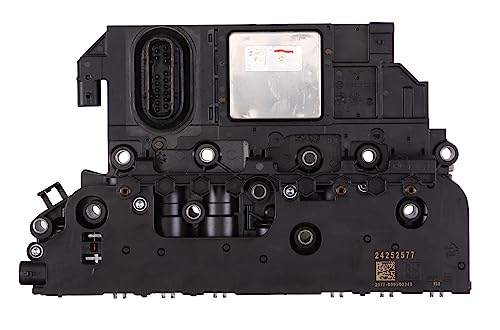
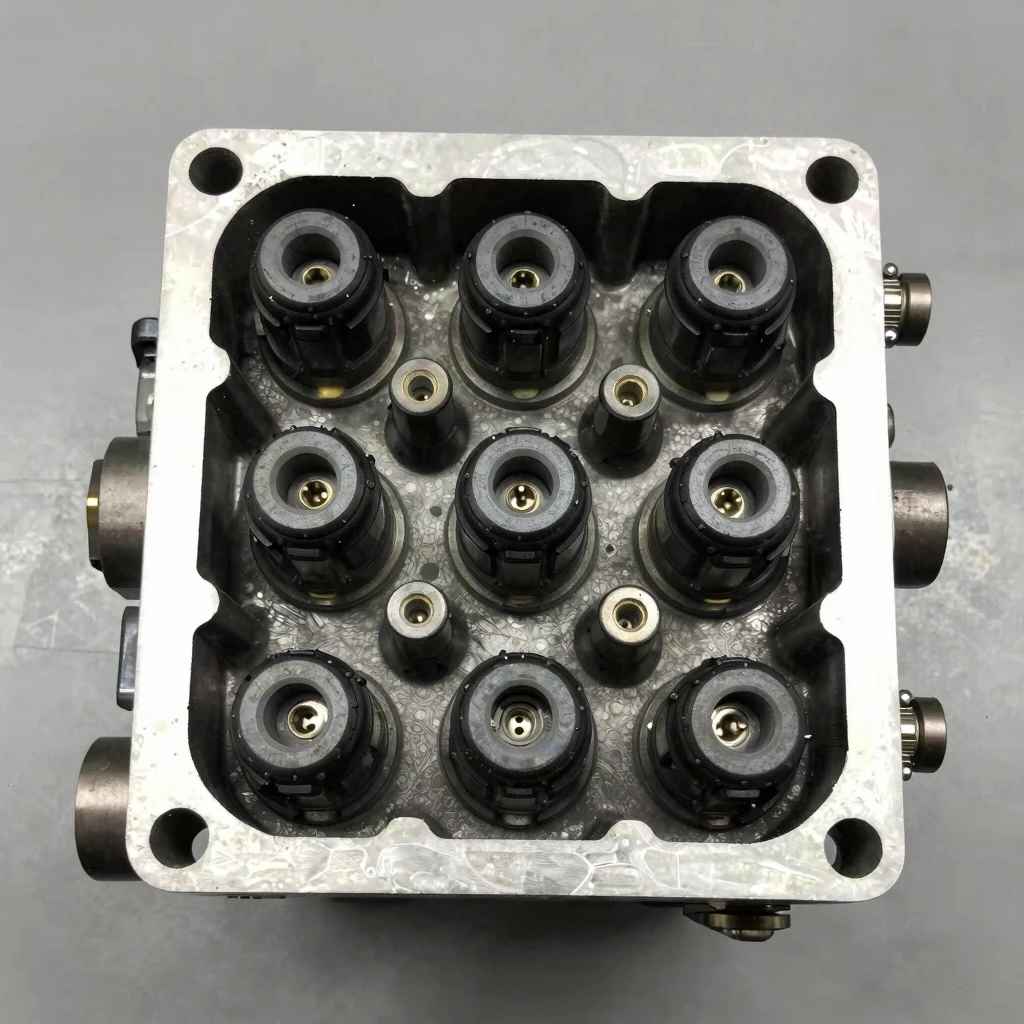
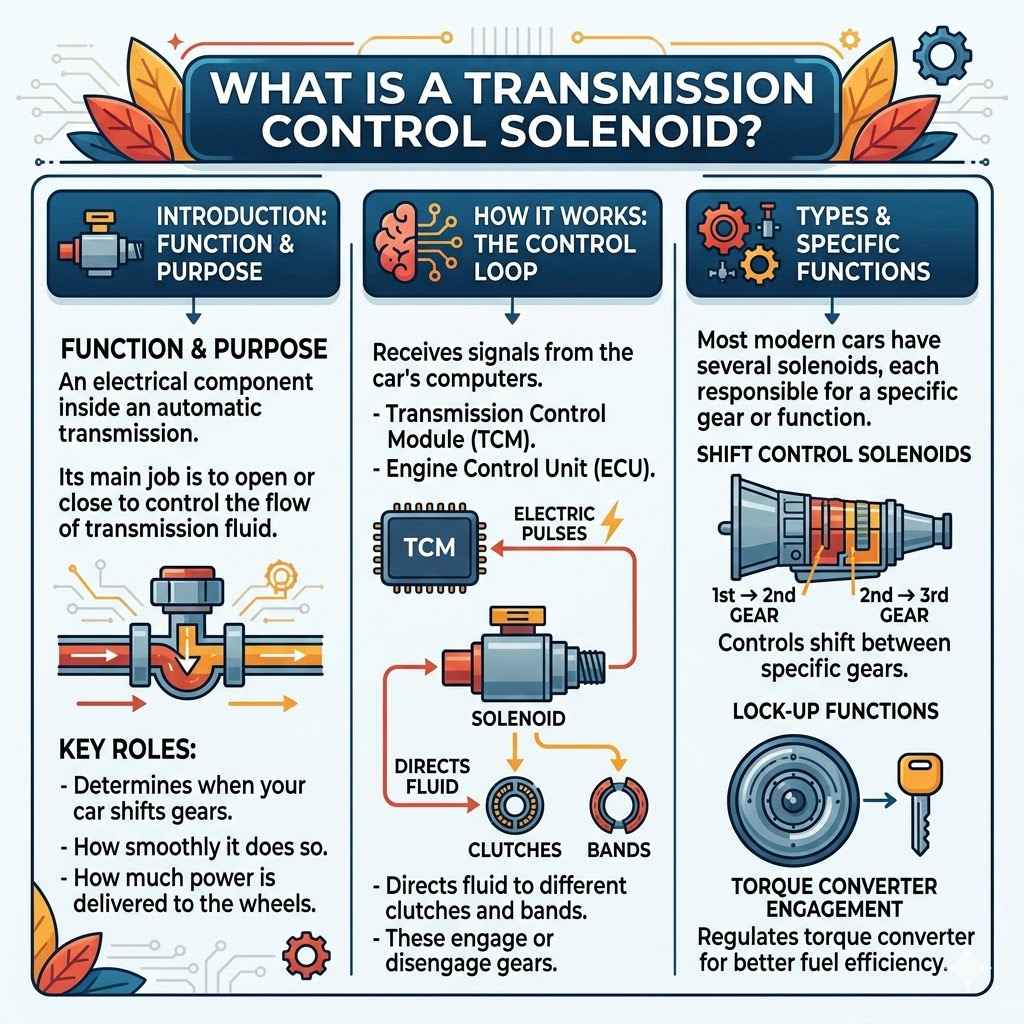
A transmission control solenoid is an electrical component inside an automatic transmission. Its main job is to open or close to control the flow of transmission fluid. This fluid pressure determines when your car shifts gears, how smoothly it does so, and even how much power is delivered to the wheels.

A-Premium
A-Premium Transmission Shift Solenoid
- [Vehicle Fitment]: Compatible with Chrysler Aspen 2007-2009, Compatible with Dodge Dakota 2004-2010, Durango 2004-2009/2011-2013,…
- [Reference Number]: 5170877AA, 5170877AB, 5170877AC, 5170877AD, 5170877AF, 52119435AA, 52119435AF, 68353383AB, 68353383AC, 609-040…
- [Specifications]: ①Terminal Quantity: 21 ② Terminal Gender: Male; ③ Terminal Type: Blade
As an Amazon Associate I earn from qualifying purchases.
Each solenoid receives signals from the car’s transmission control module (TCM) or engine control unit (ECU). The TCM sends electric pulses that tell each solenoid when to open or close. By doing so, the solenoids direct fluid to different clutches and bands inside the transmission, which then engage or disengage gears.
Most modern cars have several solenoids, each responsible for a specific gear or function. For example, one solenoid might control the shift from first to second gear, while another handles the shift from second to third. Some solenoids are also responsible for lock-up functions, regulating torque converter engagement for better fuel efficiency.
How Many Transmission Control Solenoids Are There?
The number of transmission control solenoids depends on several factors:
- The type of transmission (automatic, CVT, DCT)
- The number of gear ratios (3-speed, 4-speed, 6-speed, etc.)
- The car’s make, model, and year
- The sophistication of the transmission’s electronic control system
Typical Numbers By Transmission Type
Let’s look at some common examples across different transmission types.
| Transmission Type | Common Solenoid Count | Example Vehicles |
|---|---|---|
| 3-speed Automatic | 2-3 | Older Toyota Corolla, Honda Civic (1980s-1990s) |
| 4-speed Automatic | 3-4 | Chevrolet 4L60E, Ford AOD-E |
| 5-speed Automatic | 4-5 | Honda Accord (2000s), Toyota Camry (early 2000s) |
| 6-speed Automatic | 5-7 | Ford 6R80, GM 6L80 |
| CVT (Continuously Variable) | 2-4 | Nissan Altima CVT, Honda Civic CVT |
| Dual-Clutch Transmission (DCT) | 4-7 | Volkswagen DSG, Ford PowerShift |
In most modern automatics, you’ll find four to seven solenoids. High-end transmissions, such as 8-speed or 10-speed automatics, may have up to eight or more solenoids to handle additional gear changes and advanced features.
Why The Number Changes
Car manufacturers design transmissions for different driving needs and fuel efficiency targets. More gears often mean more solenoids because each gear may need its own control mechanism. Also, as transmissions become more sophisticated, they require more precise fluid control, leading to a higher solenoid count.
Some transmissions use “shift solenoids,” each controlling a specific shift or gear. Others use “on/off” and “pressure control” solenoids for more flexible control. This mix can change the total number from one model to another.
For instance, a simple 3-speed automatic from the 1980s might have only two solenoids—one for shifting and one for lock-up. A new 8-speed automatic in a luxury sedan may have up to eight or nine, each with a dedicated role.
Main Types Of Transmission Control Solenoids
Not all solenoids are the same. Understanding the main types helps explain why you might find more in certain transmissions.
1. Shift Solenoids
Shift solenoids are the most common type. Each controls the flow of fluid for a specific gear shift. For example, “Shift Solenoid A” might manage the move from first to second gear. If your car has more gears, you’ll likely have more shift solenoids.
2. Pressure Control Solenoids
These solenoids don’t just turn on or off. They adjust the amount of hydraulic pressure inside the transmission. This helps the transmission shift more smoothly and can adapt to different driving conditions. High-end transmissions often have multiple pressure control solenoids.
3. Lock-up Solenoids
Lock-up solenoids control the torque converter lock-up clutch. This clutch “locks” the engine and transmission together at certain speeds, improving fuel efficiency. Most automatics have at least one lock-up solenoid.
4. Line Pressure Solenoids
These regulate the overall hydraulic pressure in the system. Some complex transmissions use a separate solenoid just for this purpose, especially in six-speed and up models.
5. Overdrive Solenoids
Some transmissions have a dedicated solenoid for the overdrive gear, allowing the car to cruise at lower engine speeds on the highway.
Solenoid Configuration Example
Let’s look at a typical modern 6-speed automatic transmission. It might have the following solenoids:
- Shift Solenoid A
- Shift Solenoid B
- Shift Solenoid C
- Pressure Control Solenoid 1
- Pressure Control Solenoid 2
- Lock-Up Solenoid
That’s a total of six solenoids. Some may have even more if separate solenoids are used for each gear.
What Affects The Number Of Transmission Solenoids?
Several key factors determine the exact number of transmission control solenoids in a vehicle:
1. Number Of Forward Gears
Generally, more gears mean more solenoids. A transmission with eight forward gears will almost always have more solenoids than a basic three-speed model. Each gear may need its own shift solenoid, and extra gears often need extra pressure or line control.
2. Transmission Design Philosophy
Some carmakers use a “modular” design, where one solenoid handles several functions. Others use a “dedicated” design, with each solenoid responsible for one task. This choice affects the total solenoid count.
3. Year And Electronic Complexity
Older automatics (before the 1990s) often used only two or three solenoids. As electronics improved, newer transmissions gained more precise controls and added more solenoids. Today, even small cars often have four or more.
4. Added Features
Features like manual shift mode, hill-hold assist, and adaptive shift logic can require extra solenoids. For example, a transmission that lets you manually select gears often needs more control solenoids to override normal shifting patterns.
Common Examples: How Many Solenoids In Popular Cars?
To make things clearer, let’s look at some real-world examples.
Honda Accord (2008–2012, 5-speed Automatic)
- Total solenoids: 5
- Types: 3 shift solenoids, 1 lock-up solenoid, 1 pressure control solenoid
Toyota Camry (2012–2017, 6-speed Automatic)
- Total solenoids: 6
- Types: 4 shift solenoids, 1 lock-up solenoid, 1 pressure control solenoid
Ford F-150 (2015–2020, 6r80 6-speed Automatic)
- Total solenoids: 7
- Types: 5 shift/pressure solenoids, 1 line pressure solenoid, 1 torque converter lock-up solenoid
Nissan Altima (2013–2018, Cvt)
- Total solenoids: 3
- Types: 2 step motor solenoids, 1 line pressure solenoid
Volkswagen Jetta (2015–2020, Dsg 7-speed Dct)
- Total solenoids: 6
- Types: 4 shift solenoids, 2 pressure solenoids
As you can see, even among similar vehicles, the solenoid count can change based on transmission type and features.
Why Does The Number Of Solenoids Matter?
You might wonder why the exact number of transmission control solenoids is important. Here’s why it matters:
1. Diagnostics And Repairs
When a transmission problem occurs, knowing how many solenoids are inside helps mechanics diagnose issues faster. If your car has seven solenoids and you get a code for “Solenoid D,” a service manual can help pinpoint which one needs attention.
2. Repair Costs
More solenoids usually mean higher repair costs. If you have a transmission with seven or eight solenoids and several fail, replacement parts and labor can add up quickly. In some cars, the entire solenoid pack is replaced as a unit, while others allow individual solenoid replacement.
3. Performance And Reliability
Transmissions with more solenoids can shift more smoothly and adapt better to driving conditions. However, more parts also mean more things that can go wrong over time. Regular maintenance, like changing transmission fluid, is even more important in complex systems.
4. Understanding Trouble Codes
Modern cars use OBD-II systems that report trouble codes. These codes often point to a specific solenoid (“P0750: Shift Solenoid A Malfunction”). Knowing how many solenoids your car has makes it easier to understand these codes and what they mean for your vehicle.
Signs Of A Bad Transmission Solenoid
A faulty solenoid can cause a range of problems. Some symptoms are easy to spot, while others may feel like general transmission trouble.
- Delayed shifting: The car takes too long to shift gears.
- Skipping gears: The transmission jumps from one gear to another, missing steps.
- Stuck in gear: Sometimes the car won’t come out of a particular gear.
- Check Engine Light: Many solenoid problems trigger the check engine light and store a code.
- Noisy or rough shifts: Harsh or clunky shifting can mean a solenoid isn’t opening or closing properly.
- Limp mode: The car may enter a safety mode to prevent damage, keeping the transmission in one gear.
Ignoring these signs can lead to bigger problems, so it’s wise to get the transmission checked if you notice them.
How Are Transmission Solenoids Replaced?
The process depends on your car and its transmission design:
- Diagnosis: Use an OBD-II scanner to check for trouble codes related to specific solenoids.
- Remove transmission pan: Most solenoids are accessible after removing the pan and transmission fluid.
- Identify the faulty solenoid: A wiring diagram or service manual helps locate the correct one.
- Unplug and remove: Carefully unplug the electrical connector and unbolt the solenoid.
- Install new solenoid: Place the new solenoid, bolt it in, and connect the wiring.
- Reassemble and test: Replace the pan, refill fluid, and test drive the car.
Some transmissions use a solenoid pack, meaning all solenoids are mounted together and must be replaced as one unit. This can be more expensive but may save time.
Non-obvious Insights About Transmission Solenoids
Many beginners overlook two key points:
- Not all transmission problems are caused by solenoids. Sometimes, a solenoid code is triggered by dirty or low fluid, wiring issues, or even a failing transmission control module. Always check fluid level and condition before replacing solenoids.
- Solenoids can fail intermittently. A solenoid may work fine when cold but stick or fail when hot. This makes diagnosis tricky, as the problem may only appear after driving for a while.
If you’re troubleshooting your car, keep these factors in mind before spending money on new parts.
Comparison: Solenoid Count Vs. Transmission Complexity
Let’s compare how solenoid counts tend to rise with more complex transmissions.
| Transmission Complexity | Gears | Approximate Solenoid Count |
|---|---|---|
| Basic Automatic (1980s) | 3 | 2-3 |
| Standard Automatic (1990s-2000s) | 4-5 | 3-5 |
| Modern Automatic (2010s+) | 6-8 | 5-8 |
| High-End Automatic (Luxury/Sports) | 8-10 | 7-10 |
| CVT/DCT | Variable/7 | 2-7 |
As you can see, newer transmissions with more gears usually have more solenoids to handle extra control and shifting needs.
Practical Tips For Car Owners
- Check your owner’s manual for your specific transmission model and solenoid count.
- Change transmission fluid regularly to prevent solenoid sticking or failure.
- If you experience shifting issues, scan for codes before replacing parts.
- Don’t ignore warning signs—delayed shifting or rough gear changes can mean a failing solenoid.
- For DIY repairs, always disconnect the battery before working on transmission electronics.
When Should You Worry About Solenoids?
If your car is shifting fine and there are no warning lights, you usually don’t need to worry. Solenoids are designed to last many years. However, if you notice any symptoms mentioned earlier, have your transmission checked soon. Prompt action can save you from expensive repairs down the road.
Also, if you’re buying a used car, ask about previous transmission repairs. A car with frequent solenoid issues may have deeper transmission problems.
The Future: How Many Solenoids Will Tomorrow’s Cars Have?
Transmission design is always changing. As cars move toward hybrid and electric powertrains, the role of traditional solenoids may shrink. Electric vehicles (EVs) often use single-speed gearboxes with no solenoids at all.
However, as long as automatic transmissions are common, solenoids will remain a key part of shifting. Expect future transmissions to use even more sophisticated solenoid arrangements for better performance and fuel efficiency.
For more technical insight into transmission design, you can check the overview at Wikipedia.

Frequently Asked Questions
How Do I Find Out How Many Solenoids My Car Has?
The best source is your car’s owner’s manual or a factory service manual. You can also look up your transmission model online or ask a trusted mechanic. The number varies by year, make, and model.
Can I Drive With A Bad Transmission Solenoid?
You can sometimes drive short distances, but it’s not recommended. A bad solenoid can cause poor shifting, stuck gears, or even put the car into limp mode, reducing performance and potentially causing further damage.
Are Transmission Solenoids Expensive To Replace?
Individual solenoids can cost $50–$200 each for parts. Labor adds more, especially if the transmission must be removed. Some cars use solenoid packs, which can cost $400–$800 or more. Always get a repair quote for your specific car.
Will Changing Transmission Fluid Fix A Solenoid Problem?
Sometimes, yes. Dirty or old fluid can cause a solenoid to stick or malfunction. If the fluid is very dark or has debris, a fluid change might solve the issue. However, if the solenoid is broken or has an electrical fault, it will need replacement.
Do Manual Transmissions Have Solenoids?
No. Manual transmissions use mechanical linkages and don’t require solenoids for shifting gears. Only automatic, CVT, and dual-clutch transmissions use electronic solenoids to manage gear changes.
Understanding how many transmission control solenoids are in your car—and why this number matters—can help you make better decisions when it comes to repairs and maintenance. With today’s more advanced transmissions, knowing the basics could save you both time and money.
If you keep up with fluid changes and pay attention to warning signs, your transmission (and its solenoids) should keep your car running smoothly for years to come.
Related pick: Check today's price on Amazon
Products related to this article
Sponsored / affiliate links. As an Amazon Associate I earn from qualifying purchases. I may earn additional commission from eligible campaigns.