Brake Pedal Feels Normal but Car Won’t Slow Down: What’s Wrong?
If the brake pedal feels normal but the car barely slows, suspect friction loss first; if the pedal sinks or changes height, think hydraulic trouble. Ignoring it can lengthen stopping distance enough to cause a crash. This guide separates pad and rotor problems, hydraulic faults, brake booster issues, and ABS or stability-control faults before you replace parts.
Why the pedal can feel normal


A normal pedal does not prove the brakes are making full clamping force. A master cylinder can build pressure, a booster can still assist, and the pedal can still feel firm while one axle has weak friction, one circuit has a leak, or an electronic system is interfering with brake application.
What normal pedal feel can hide
The pedal is only one clue. If friction material is thin, glazed, or contaminated, hydraulic pressure can be present without much stopping force. If a caliper is sticking or a hose is restricting flow, one wheel may do very little work while the pedal still feels acceptable.
How stopping distance tells the real story
Stopping distance is the symptom that matters most. On a dry road, a healthy vehicle should slow hard and predictably with steady pedal force. If the car now needs much more road to stop, or if one corner feels like it is not helping, the fault is already affecting safety even if pedal feel seems unchanged.
First clue: one axle may be doing little work
Friction loss often shows up as heat or wear differences. One front wheel may stay much cooler than the other after a normal stop. In rear-drum or rear-disc setups, the rear axle may contribute little while the front brakes carry most of the load, which can make the car feel weak without changing pedal height.
Say your compact sedan stops straight but takes noticeably longer from 30 mph on the same dry street, and the front-left wheel has much less brake dust than the front-right. That points away from pedal feel and toward a friction-side problem at that corner.
Brake pad and rotor diagnosis
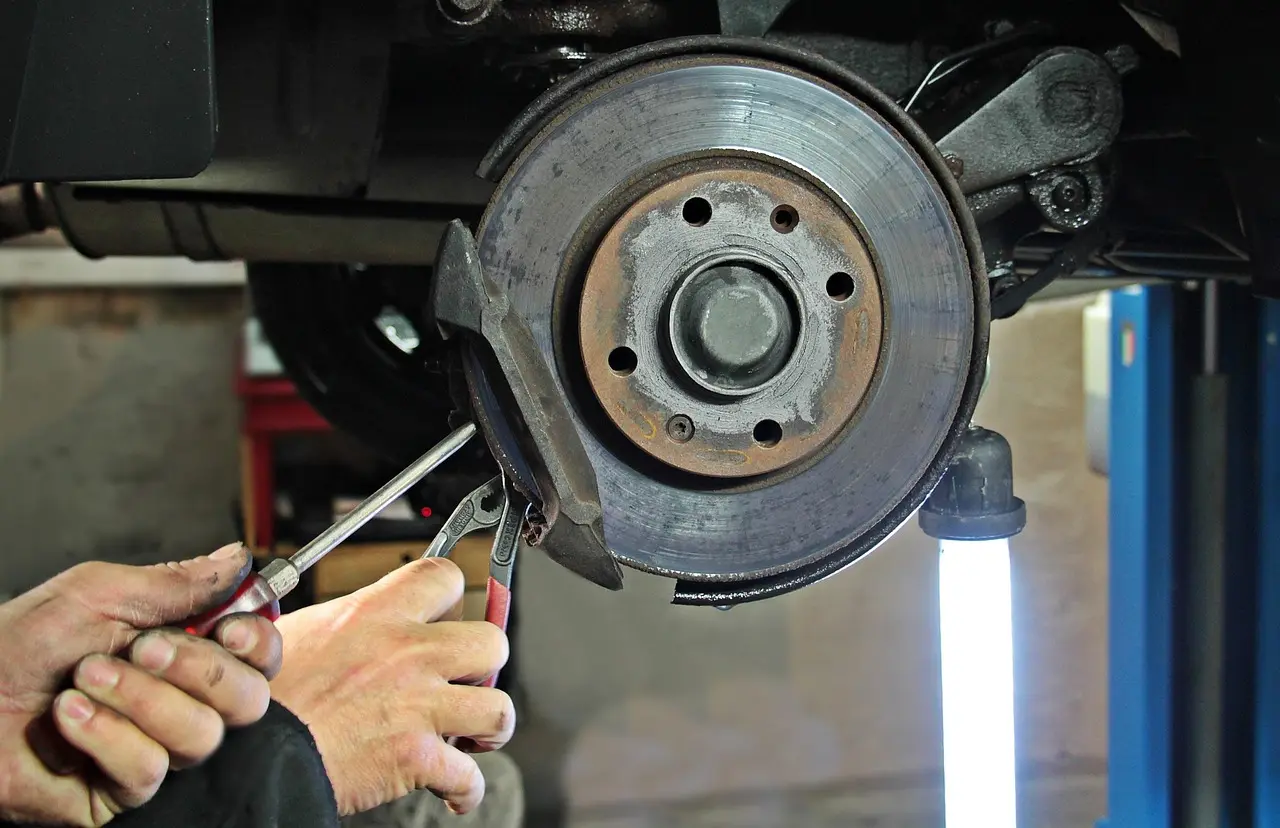
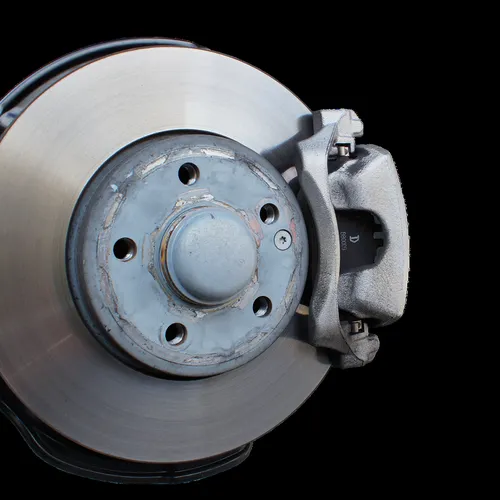
Pad and rotor wear can reduce braking force without changing how the pedal feels. The hydraulic system may still work normally, but the friction surfaces can no longer convert pressure into stopping power efficiently. That is why pad and rotor checks belong near the front of the diagnosis, not at the end.
Pad thickness, glazing, and wear indicators
Most manufacturers call for pad replacement before the friction material reaches the backing plate. Pads are commonly replaced around 3 mm or less, though the exact minimum varies by design. Look for glazing, where the surface turns hard and shiny, and check for wear indicator contact that creates a squeal.
Uneven wear matters too. If one pad is much thinner than its mate, the caliper may be sticking or the slide pins may be dry. That can cut braking force on one side and leave the pedal feeling ordinary.
Rotor thickness, scoring, and heat spots
Rotors can lose effectiveness from wear, heat damage, and surface defects. Rotors have a minimum thickness cast or stamped into the hat or service data. If the rotor is below that limit, it should be replaced. Deep scoring, blue heat spots, and a rough contact face can also reduce pad bite.
Scoring usually means the pad has been running too close to the backing plate or debris has entered the contact area. Heat spots suggest the rotor has been overheated, often from a dragging caliper or parking brake problem.
Warping versus thickness variation
Drivers often call every brake shudder “warping,” but true rotor warp is uncommon on modern cars. Many cases are thickness variation or pad material transfer, which creates pulsation and uneven braking. Either condition can make the car stop poorly even if the pedal feels firm.
| Part | What to look for | Common sign | Next step |
|---|---|---|---|
| Brake pads | Thickness near 3 mm or less, glazing, uneven wear, wear-indicator contact | Squeal, weak bite, one side doing more work | Inspect both pads on the same axle and compare wear |
| Brake rotors | Below minimum thickness, scoring, heat spots, thickness variation | Shudder, longer stops, reduced bite | Measure thickness and inspect the full friction face |
Brake fluid and hydraulic loss
Brake fluid problems can reduce braking without making the pedal soft right away. The system may still feel normal until the fluid level falls far enough, a leak grows, or the fluid boils under heat. That is why fluid checks should be paired with leak inspection and a pedal test.
Fluid level, leaks, and moisture contamination
Check brake fluid level in the reservoir before anything else. Low fluid can mean worn pads, but it can also mean an external leak. Inspect the master cylinder, lines, hoses, calipers, wheel cylinders, and brake backing plates for wetness. Brake fluid also absorbs moisture over time, which lowers boiling point and can create fade after repeated stops.
How low fluid can still leave pedal feel normal
Low brake fluid does not always create a soft pedal. If enough fluid remains in the master cylinder, the pedal can feel firm while the system has lost reserve capacity or is feeding on a leaking circuit. If the leak is small, the first symptom may be a longer stop, not a mushy pedal.
Master cylinder bypass and dual-circuit failure
An internal bypass in the master cylinder can let pressure leak past the seals. A pedal-hold test helps here: press the pedal firmly and hold it. If it slowly sinks, internal bypass is a strong possibility. Many vehicles use a dual-circuit brake system, so one circuit can fail while the pedal still feels present because the other circuit is still working.
Suppose a midsize SUV needs a longer run to stop after a mountain descent, and the reservoir is low but the pedal still feels firm at a stoplight. That pattern fits a hydraulic reserve problem or a leak that has not yet produced a soft pedal.
Brake caliper and hose faults
A caliper or hose fault can leave the pedal feeling normal while brake force drops at one wheel. If a piston sticks, a slide pin seizes, or a hose collapses internally, the hydraulic pressure does not translate into even clamping force. The result is weak braking, pull, or drag.
Sticking piston and seized slide pins
A sticking caliper piston can fail to apply or release properly. Seized slide pins can keep the caliper from centering on the rotor. Both faults create uneven pad wear, hot spots, and a wheel that does less work than expected.
Collapsed hose or pressure restriction
An internally collapsed brake hose can act like a one-way valve. Pressure may reach the caliper under pedal application, but release can be delayed or restricted. Look for external cracking, bulges, or age-related deterioration, especially on flexible hoses that flex with steering and suspension travel.
Uneven clamping force and drag symptoms
Uneven clamping force often shows up as a pull to one side, a wheel that runs hotter than the others, or a pad that wears faster on one edge. A dragging brake may also create fuel economy loss and a hot smell after a short drive.
Brake booster problems
Booster faults usually change pedal effort, not just stopping distance. A failed brake booster does not always create a hard pedal immediately, but vacuum assist loss should make the pedal feel noticeably heavier. If the pedal effort has changed, the booster belongs in the diagnosis.
Vacuum assist and pedal effort change
The booster uses engine vacuum to reduce the force your foot must apply. When assist drops, you need more leg force for the same stop. Vacuum leak symptoms can include hissing, a harder pedal, and a change in idle quality on some vehicles.
Engine-off test for booster function
With the engine off, pump the brake pedal several times until it feels firm. Hold light pressure on the pedal and start the engine. A working booster should let the pedal drop slightly when vacuum assist comes in. If it does not, the booster, check valve, or vacuum supply needs inspection.
Vacuum leak symptoms to note
Listen near the booster hose and check the one-way check valve. A vacuum leak can leave the pedal normal at rest but make repeated stops feel harder, especially after a few applications with the engine idling or after engine shutdown. That still points to assist loss, not friction loss.
Brake diagnosis decision tree
Use the symptom pattern first, then one simple driveway test, then the next inspection step. That order avoids random part swapping and separates friction loss from hydraulic loss and assist or electronic problems.
| Branch | Exact symptom pattern | One driveway test | Next inspection step |
|---|---|---|---|
| Friction problem | Pedal feels normal; stopping distance is longer; one wheel is cooler, dustier, or louder; possible squeal, grind, or pull | After a short, careful stop from low speed, compare wheel temperatures by hand near the center of each wheel without touching hot parts | Inspect pad thickness, glazing, wear indicators, rotor thickness, scoring, and heat spotting |
| Hydraulic problem | Pedal may stay firm or change height; reservoir may be low; fluid may be wet near a line, hose, caliper, or master cylinder; stopping distance increases | Hold steady pressure on the pedal for 30 seconds; note any sinking, then check for fluid loss | Inspect for leaks, collapsed hoses, and master cylinder bypass; verify fluid condition and level |
| Assist or electronic problem | Pedal effort changes, ABS light is on, or braking feels as if it cuts in and out; stopping may be erratic rather than simply weak | Perform the engine-off booster test and check dash warning lights before moving the car again | Scan for ABS or parking brake faults, inspect wheel speed sensors, and check booster vacuum supply |
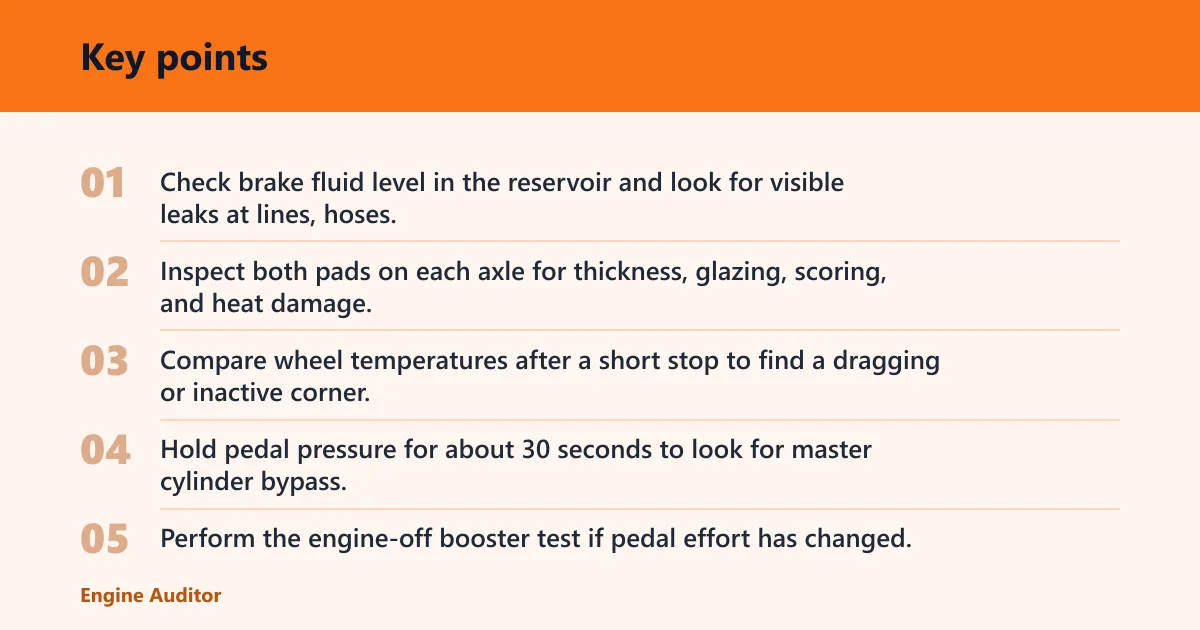
- Check brake fluid level in the reservoir and look for visible leaks at lines, hoses, calipers, wheel cylinders, and the master cylinder.
- Inspect both pads on each axle for thickness, glazing, scoring, and heat damage, and measure rotor thickness against the service limit.
- Compare wheel temperatures after a short stop to find a dragging or inactive corner.
- Hold pedal pressure for about 30 seconds to look for master cylinder bypass.
- Perform the engine-off booster test if pedal effort has changed.
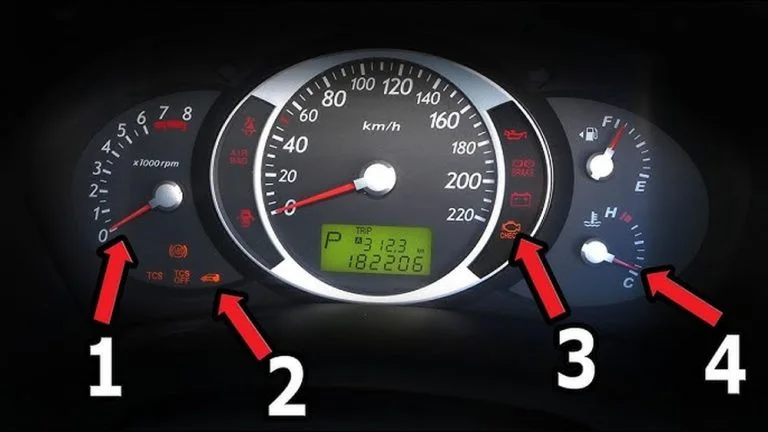
- Check ABS, traction control, and parking brake warning lights before driving farther.
Can ABS or the parking brake cause weak braking?
ABS faults can reduce effective braking when a wheel speed sensor, modulator, or control fault causes unwanted intervention. A partially engaged parking brake can also create rear drag or uneven braking. Both can leave the pedal feeling normal while stopping distance gets worse.
ABS warning light, sensor faults, and modulator issues
If the ABS light is on, read the fault code before guessing. A wheel speed sensor fault can make the system think a wheel is locking when it is not. A modulator issue can also interfere with pressure control. In that case, the base hydraulic brakes may still work, but the system may not deliver full stopping performance as expected.
Intermittent ABS intervention during normal braking
Some faults show up only during light or moderate stops. The driver may feel a brief buzz or pressure release when the road is dry and the tires are not near lockup. That is not normal. It can point to a bad sensor signal, damaged tone ring, or control issue that reduces braking on command.
Partially engaged parking brake and rear drag
A parking brake that is partly engaged can drag the rear brakes and raise stopping distance. Cable adjustment problems, rusted hardware, or an electronic parking brake fault can keep the rear brakes from fully releasing. Rear drag is especially important on vehicles with rear drums or rear electronic parking brakes, because the rear axle can be quietly doing too little or too much work.
A common first-timer mistake is assuming a normal pedal rules out the parking brake. On a rear-drum car, a slightly applied parking brake may still let the car move freely enough around a driveway, yet it can lengthen every stop and overheat the rear brakes after a few miles.
Frequently asked questions
Why does my brake pedal feel normal but the car won’t slow down?
A normal pedal can coexist with weak stopping when the problem is in friction, not hydraulic pressure. Thin or glazed pads, worn rotors, a sticking caliper, a collapsed hose, or ABS intervention can all reduce braking force while the pedal still feels firm and predictable.
Can low brake fluid cause braking loss without a soft pedal?
Yes. Low fluid can come from worn pads or a leak, and the pedal may still feel normal until the reserve is nearly gone or the failing circuit becomes obvious. Check the reservoir, then inspect for wetness at the master cylinder, lines, hoses, calipers, and wheel ends.
Could worn pads or rotors make braking weak even if the pedal feels fine?
Yes. Pad thickness near the wear limit, glazed friction material, and rotors that are below minimum thickness or heat-damaged can all cut stopping power without changing pedal feel much. Compare both sides of the axle and look for dust, heat spots, scoring, or uneven wear.
How do I know if the brake booster is failing?
The clearest clue is a change in pedal effort. If the pedal gets harder, perform the engine-off test: pump the pedal, hold pressure, then start the engine. A good booster should let the pedal drop slightly. No change suggests a vacuum supply, check valve, or booster problem.
Can a stuck caliper cause the car to keep rolling or pull?
Yes. A sticking piston or seized slide pins can keep one wheel from clamping properly, or they can create drag and heat on one side. The car may pull, stop poorly, or feel as if one corner is doing much less work than the others.
Is it safe to keep driving if the brakes feel normal but stopping is weak?
No. Weak stopping is a safety problem even when pedal feel seems normal. If the car needs more distance on dry pavement, or if the brake warning light is on, limit driving and get the system inspected. A failure that is mild today can become severe quickly.
Can ABS or traction control problems reduce braking power?
Yes. A wheel speed sensor fault, modulator issue, or intermittent electronic intervention can interrupt braking when it should not. That may feel like pulsing, brief release, or inconsistent stop distance. If the ABS light is on, scan the system before replacing pads or rotors.
What should I check first if the brake pedal feels okay but stopping distance got longer?
Check brake fluid level and visible leaks first, then inspect pad thickness, rotor condition, and wheel temperatures. If the pedal effort changed, test the booster. If warning lights are on, read ABS or parking brake faults. That order sorts the likely causes before parts are replaced.
Products related to this article
Sponsored / affiliate links. As an Amazon Associate I earn from qualifying purchases. I may earn additional commission from eligible campaigns.