Why Does My Accelerator Pedal Not Return Fully?
A throttle pedal that will not return fully is usually caused by a floor mat, debris, pedal hinge binding, or a failing electronic throttle sensor; if the pedal is free by hand but the engine still hangs, suspect the throttle system. A stuck pedal can send the engine speed higher than expected, upset shift timing, and leave the car unwilling to settle back to idle. This guide gives a quick fault-isolation path that separates physical blockage, pedal hardware binding, and electronic throttle faults before you replace parts.
Why the pedal may not return
Start by separating three different failures: the pedal is physically blocked, the pedal hardware is binding, or the pedal returns but the engine does not respond correctly. Those are different faults. A pedal that feels stuck under your foot needs a mechanical check first. A pedal that moves freely by hand but leaves the engine hanging points toward throttle control or sensor trouble.
Symptoms that point to obstruction
If the pedal stops short, drags near the floor, or changes feel when you move the mat, carpet, or your foot position, suspect interference first. That includes incorrect mat fitment, stacked mats, a mat sliding under the pedal, carpet edge contact, or loose sound-deadening material under the dash. Symptoms that worsen when turning, braking, or going over bumps often point to something shifting into the pedal path.
Symptoms that point to electronic control
If the pedal moves normally by hand but the car hesitates, cuts power, or enters limp mode, the accelerator pedal position sensor or throttle control system becomes more likely. On drive-by-wire vehicles, the pedal signal goes to the ECU or PCM, which then commands the throttle body. A sensor fault can change engine response without changing the feel of the pedal itself.
Accelerator pedal diagnostic table
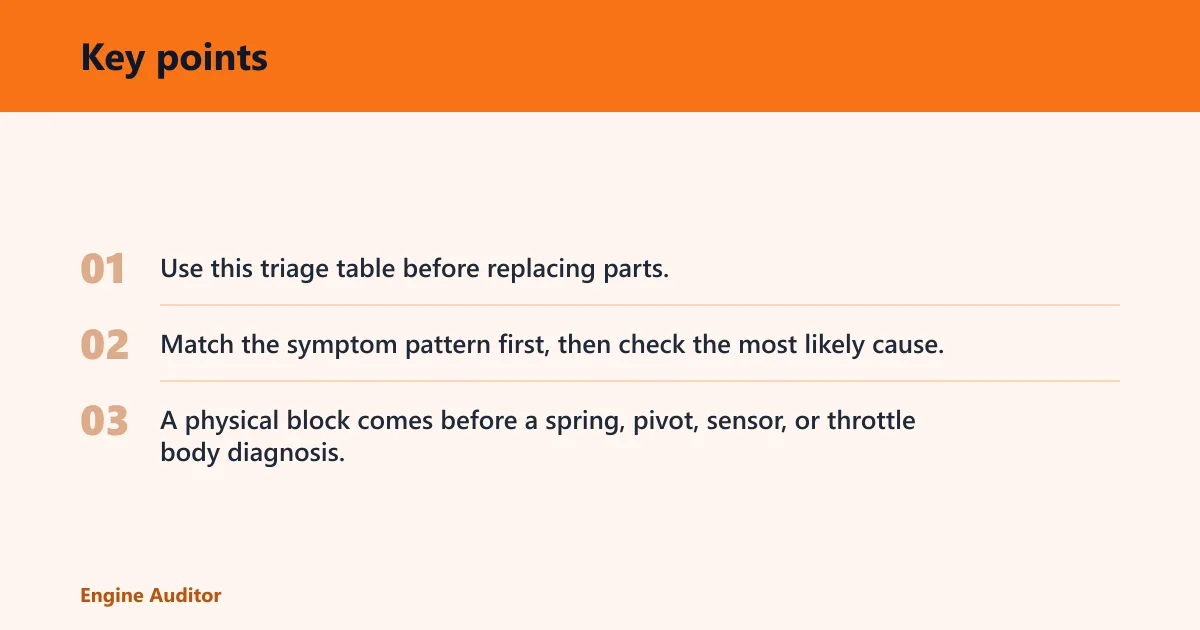
Use this triage table before replacing parts. Match the symptom pattern first, then check the most likely cause. A physical block comes before a spring, pivot, sensor, or throttle body diagnosis.
| Symptom pattern | Most likely cause | Next check |
|---|---|---|
| Pedal returns most of the way, then stops short | Carpet edge, mat lip, or under-dash interference | Remove the mat and inspect pedal clearance at full travel |
| Pedal returns slowly but does come back | Pedal pivot friction, weak return spring, or contamination | Move the pedal by hand and feel for rough spots or drag |
| Pedal hangs at one spot and then releases | Debris in the hinge, worn bushing, or bent pedal arm | Inspect the hinge, pivot, and mounting points for damage |
| Pedal will not return unless lifted by hand | Severe mechanical binding or broken return spring | Check spring condition and look for a twisted arm or loose bracket |
| Pedal feels normal, but engine speed stays up | Throttle body sticking or electronic throttle control fault | Scan for codes and inspect the throttle body plate movement |
| Pedal feels normal, but car enters reduced-power mode | APP sensor plausibility fault or ECU/PCM safety cutoff | Check for sensor codes and compare dual-track signal data |
| Sticking changes when turning left or right | Floor mat shift, carpet edge interference, or pedal cluster contact | Turn the wheel and recheck pedal clearance with the engine off |
| Sticking changes when braking | Brake pedal cluster adjacency or shared-bracket interference | Press the brake while watching for contact with the accelerator arm |
| Sticking changes after hitting bumps | Loose mat, shifted carpet, or unsecured sound-deadening material | Inspect the under-dash area for anything that can move upward |
| Problem appears after wet shoes or spilled drink | Debris, sticky contamination, or corrosion in the pivot | Check the pedal hinge for residue and corrosion |
| Pedal feels loose, then catches near the end of travel | Wear in the pivot or bushing, or loose mounting points | Wiggle the pedal arm and inspect for side play |
| Only one vehicle mode or one driving position shows the issue | Pedal cluster packaging, seat position, or pedal geometry interference | Compare pedal clearance with the seat fully fore and aft |
What should you inspect first?
Inspect the floor mat, carpet, and pedal clearance first, then move to the brake and clutch area, then inspect the pedal hardware itself. That order catches the simplest and most common causes before you start replacing sensors or throttle parts. A pedal that looks faulty may only be rubbing on a mat edge or carpet flap.
Floor mat fitment and retention hooks
Check for incorrect mat fitment, stacked mats, and a mat that can slide forward under the accelerator pedal. Make sure the driver-side retention hooks are engaged if the vehicle uses them. A mat that sits even slightly too far forward can stop the pedal from reaching full return.
Carpet edge, sound deadening, and under-dash interference
Lift the edge of the carpet near the pedal box and look for loose sound-deadening material, torn trim, wiring, or insulation that can touch the pedal arm. Pay attention to the pedal at full travel and near the top of travel. Some faults only appear when the arm moves to one end of its range.
Brake and clutch pedal cluster clearance
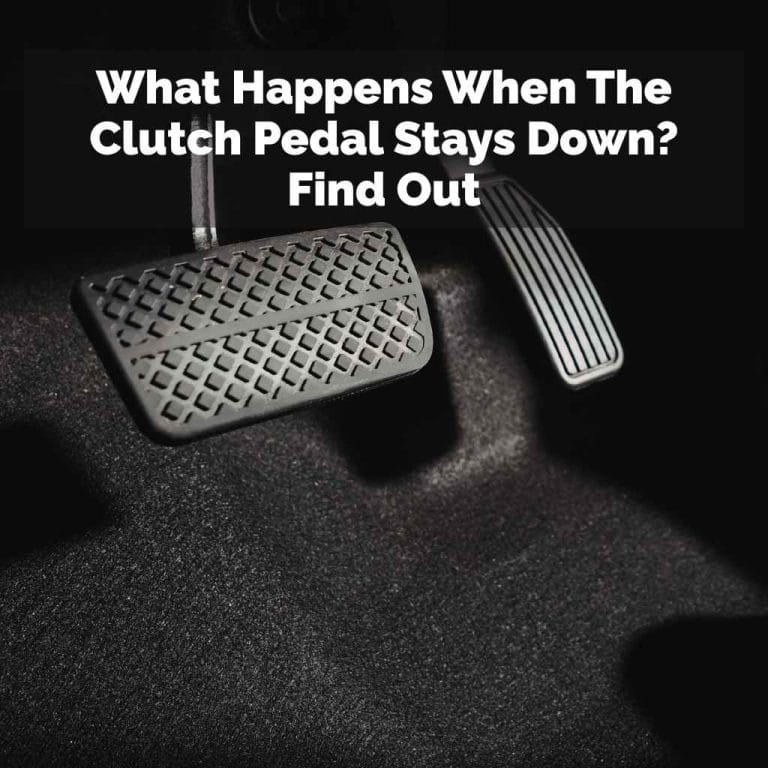
Check whether the accelerator arm can contact the brake pedal or clutch pedal cluster, especially on vehicles with tight shared-bracket packaging. Shared mounting points can let one pedal interfere with another if a bracket bends or a bushing wears. Compare the gap with the engine off and the seat in normal driving position.
Say your mat is only 1 cm out of place, but the pedal drags only when the seat is moved back. That points away from a sensor and toward a fitment problem or pedal-to-mat contact.
Pedal assembly faults
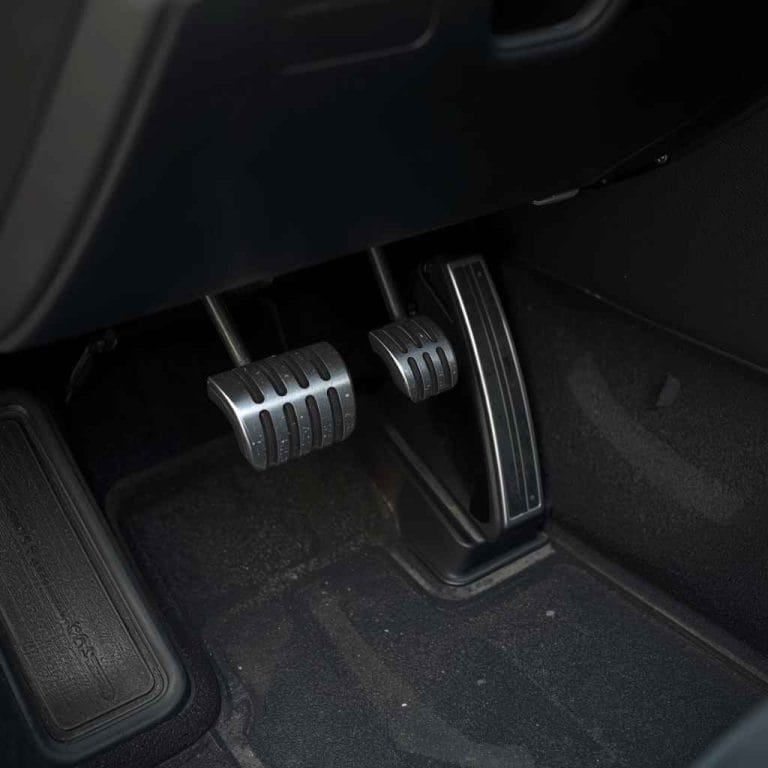
If the obstruction check is clean, inspect the accelerator pedal assembly. Look at hinge movement, the return spring, the pedal arm, and the mounting points. Mechanical return force comes from the pedal design itself on some vehicles, so a broken or weak spring, corrosion, or bushing wear can create a slow or incomplete return.
Hinge or pivot wear and bushing friction
A worn pivot or dry bushing can create drag through part of the pedal stroke. Move the pedal by hand and feel for roughness, notchiness, or side-to-side play. Binding at full travel can happen when the pivot is worn enough that the arm shifts out of line under load.
Return spring damage or corrosion
Look for a broken, weak, or corroded return spring where the vehicle uses a spring at the pedal assembly. If the spring has lost tension, the pedal may return slowly or stay low after release. Do not assume every vehicle uses a visible spring in the same way; design varies by model.
Bent pedal arm or loose mounting points
A bent pedal arm can scrape the floor carpet or change the return angle enough to create drag. Loose mounting points can let the whole assembly shift under pedal load. Check that the bracket sits square and that the arm does not rub the surrounding trim.
Debris intrusion and contamination
Coins, grit, spilled drinks, and sticky residue can enter the hinge and change the pedal feel. Dirt can also collect around the pivot and bushing and make a smooth pedal feel gritty. If the symptom began after a spill or after muddy shoes, contamination deserves a close look.
Could the throttle body be the cause?
Yes, on drive-by-wire vehicles a dirty throttle body can make the gas pedal feel stuck, even when the pedal hardware is fine. Carbon buildup can slow the throttle plate or make the plate stick near closed or part-open. That affects return behavior and airflow, so the engine may respond late or stay at a higher speed than expected.
Carbon buildup and plate sticking
Carbon around the throttle bore can create a sticky edge at the throttle plate. That is a throttle body problem, not a pedal hinge problem. If the pedal moves freely but the engine hangs after release, the throttle plate should be inspected for binding and contamination.
Electronic throttle control behavior
In an electronic throttle control system, the ECU or PCM interprets the pedal signal and commands the throttle plate. A fault in that command path can trigger safety cutoffs or limp-home behavior. The pedal may feel normal while the engine output is limited, delayed, or inconsistent.
Suppose the pedal feels smooth with the engine off, but the car will not accelerate cleanly and the check engine light is on. That pattern fits control-system trouble more than a stuck pedal hinge.
How airflow faults can mimic a stuck pedal
A restricted throttle body can act like a pedal that will not return because the engine does not drop speed as expected. The driver feels the same symptom, but the root cause is airflow control, not pedal motion. That is why pedal feel and engine response must be separated before parts are replaced.
Could the pedal sensor be causing it?
Yes, the accelerator pedal position sensor can cause a pedal-related complaint even when the pedal itself moves normally. Many pedals use a dual-track sensor design so the ECU or PCM can compare two signals for plausibility. If the signals disagree, the system may enter limp mode or limit throttle response.
Signal plausibility and fault codes
When the two sensor tracks do not agree, the vehicle may set a fault code and reduce power. That does not usually change the mechanical return force of the pedal, but it can make the pedal seem ineffective. The driver may press normally and get little or no engine response.
Limp mode symptoms and driver feel
Limp mode can feel like a pedal that stays down because the engine response is delayed or capped. The pedal itself may spring back normally. If the engine will not respond but the pedal motion is clean, the diagnosis shifts toward sensor or control faults rather than obstruction.
What to do before driving again
If the pedal does not return fully, do not keep driving until you know whether the problem is mechanical or electronic. If the pedal can hang open, stop driving. If the pedal is physically free but the engine response is wrong, a short move to a repair shop may be possible only if the car responds predictably and you can maintain control. Tow it if the pedal binds, the engine races, or the vehicle enters unpredictable limp behavior.
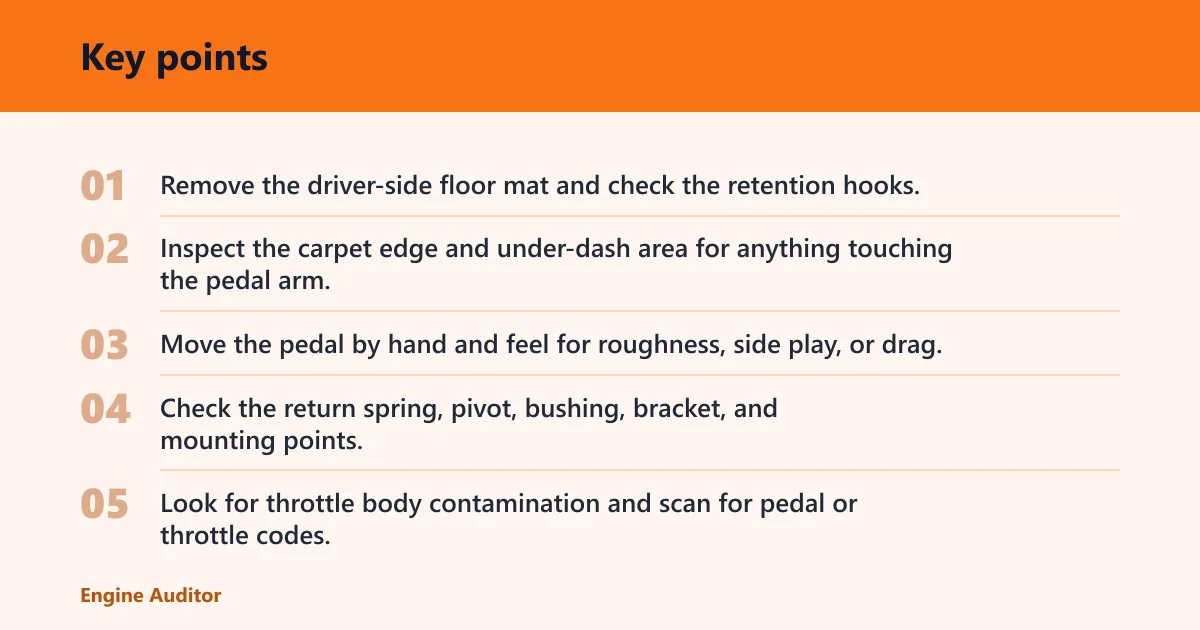
- Remove the driver-side floor mat and check the retention hooks.
- Inspect the carpet edge and under-dash area for anything touching the pedal arm.
- Move the pedal by hand and feel for roughness, side play, or drag.
- Check the return spring, pivot, bushing, bracket, and mounting points.
- Look for throttle body contamination and scan for pedal or throttle codes.
- Confirm whether the symptom is physical pedal binding or poor engine response.
What should a repair shop verify next? They should confirm pedal movement, scan for APP and throttle codes, inspect the throttle body plate, and compare live sensor signals for plausibility. On electronic throttle systems, the ECU or PCM may be the decision point, but the mechanical checks still come first.
How to reset accelerator pedal
There is no universal accelerator pedal reset. If a vehicle needs one, it is usually a learned adaptation or throttle relearn set by the manufacturer after a battery disconnect, throttle cleaning, or sensor replacement. Follow the service procedure for your exact model rather than guessing with pedal pumps or ignition cycling.
How to fix accelerator pedal sensor
A pedal sensor fix depends on the fault. A plausibility failure can come from wiring, connector damage, sensor wear, or pedal assembly replacement. Start with codes and live data, then follow the vehicle-specific test plan. If the sensor is part of the pedal assembly, the whole assembly may need replacement rather than a separate sensor swap.
Frequently asked questions
Why does my accelerator pedal not return fully?
Most often, something is blocking it or the pedal mechanism is binding. Check the mat, carpet edge, and under-dash area first, then inspect the pivot, return spring, and mounting points. If the pedal moves freely by hand but the car still acts wrong, look at the throttle body or pedal sensor.
What causes an accelerator pedal to stick or bind?
Common causes include a misfit floor mat, carpet interference, debris in the pedal pivot, worn bushings, a bent pedal arm, or a weak return spring. On drive-by-wire vehicles, throttle body sticking can create a similar complaint, but that usually affects engine response more than pedal motion.
Can a dirty throttle body make the gas pedal feel stuck?
Yes, on electronic throttle systems a dirty throttle body can make the engine behave as if the pedal is stuck, especially if the throttle plate hangs near closed or part-open. The pedal may move normally while the engine speed stays high or drops slowly after release.
Can a floor mat stop the accelerator pedal from returning?
Yes. An incorrect mat, a stacked mat, or a mat that slips under the pedal can stop full return. Check the driver-side retention hooks and make sure the mat cannot slide forward. Carpet edge interference can create the same symptom, especially near the top or bottom of travel.
Should I drive if the accelerator pedal feels stuck?
No, not if the pedal can hang open or bind. A short move to a shop is only reasonable when the pedal is physically free and the engine response is predictable. If the car races, loses power unexpectedly, or enters limp mode, towing is the safer choice.
How do I check if the pedal spring is broken?
Inspect the pedal assembly for a visible broken, weak, or corroded spring if your vehicle uses one. Move the pedal by hand and compare the return force through the full stroke. A broken spring often leaves the pedal slow to return or unable to come back cleanly without help.
Do electronic throttle problems make the pedal feel like it won’t return?
They can make it seem that way because the engine response does not match pedal movement. The pedal may be returning normally, but the ECU or PCM is limiting throttle opening because of a sensor fault or safety cutoff. That is a control problem, not always a pedal hardware problem.
What should I inspect first if the accelerator pedal feels loose or sticky?
Inspect the floor mat, carpet edge, and any under-dash interference first, then check the brake and clutch pedal cluster for contact. After that, inspect the pedal pivot, bushing, spring, and mounting points. Those checks separate obstruction from hardware wear before you look at sensors or the throttle body.
Products related to this article
Sponsored / affiliate links. As an Amazon Associate I earn from qualifying purchases. I may earn additional commission from eligible campaigns.
 Ftoghe Accelerator Pedal Position Sensor 53032456AE fits for Dodge Ram 1500 2500 3500 5.7L V8 5.9L L6 2003-2004
 MecXora 13584094 Accelerator Pedal Sensor Connector Wiring Harness Compatible with Chevy Silverado 1500-3500 Equinox,GMC Sierra 1500-3500,Yukon,Buick Enclave,Cadillac Escalade & More Replaces 645-595