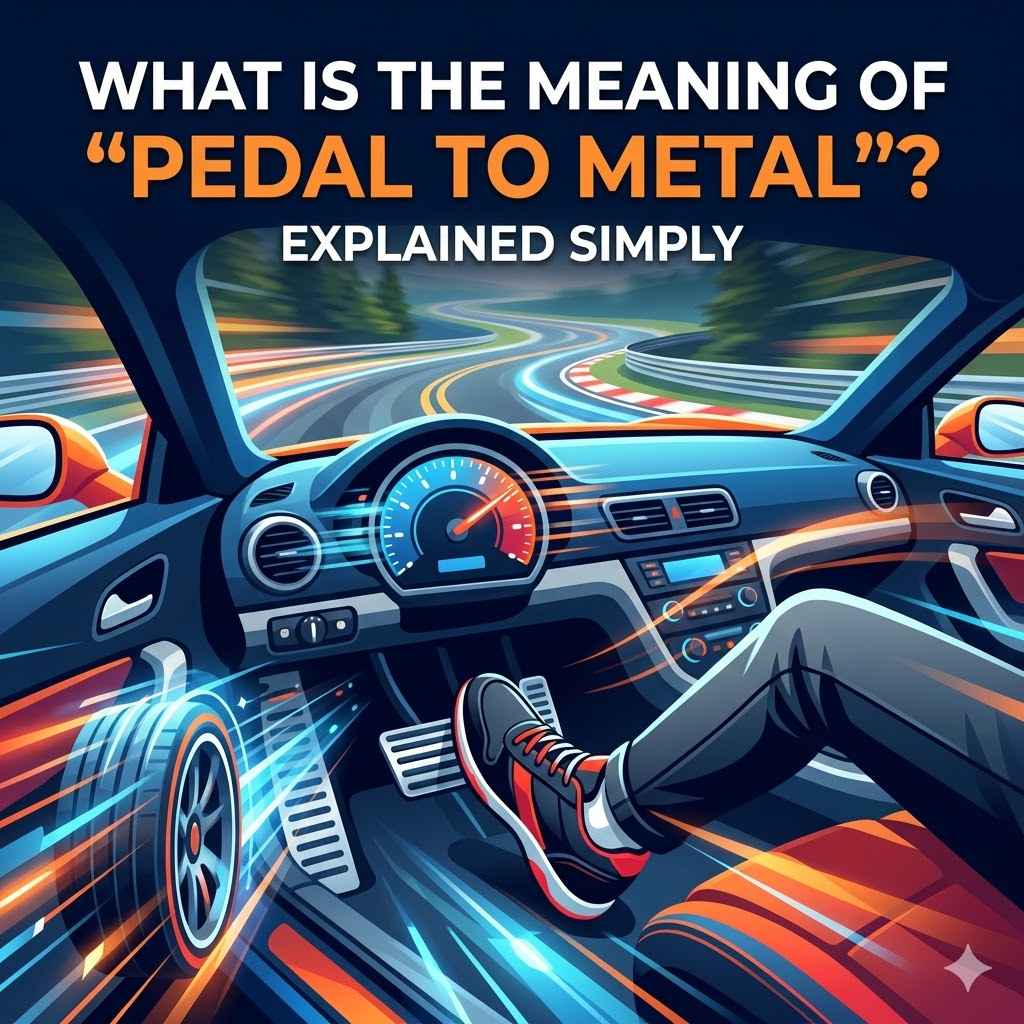
What is the Meaning of Pedal to Metal? (Simple Explanation)
When you hear someone say, “put the pedal to the metal,” you might imagine a race car speeding down a track or a driver accelerating on the highway. This colorful phrase isn’t just about driving fast—it’s a vivid way to talk about giving your absolute best effort, moving with urgency, and not holding back.
This guide covers where the phrase comes from and how it is used both literally and figuratively today.
The Literal Meaning Of “pedal To The Metal”
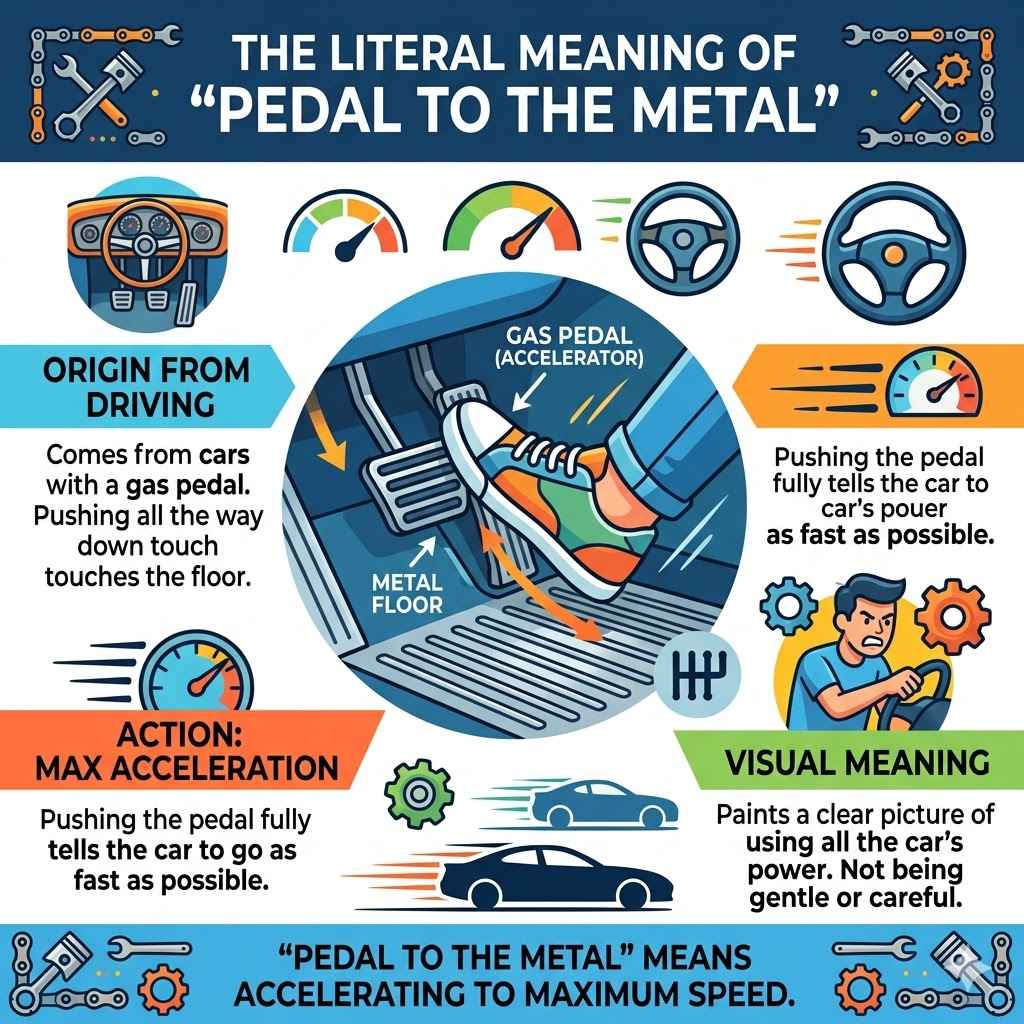
At its core, “pedal to the metal” is a phrase that comes from the world of driving—specifically, cars with a gas pedal (also called an accelerator). When a driver pushes the gas pedal all the way down, it touches the metal floor of the car. This action tells the car to go as fast as possible. In simple terms, putting the pedal to the metal means accelerating to the maximum speed.
This phrase paints a clear picture: the driver is not being gentle or careful. They want the car to use all its power. The “pedal” is the part you step on to make the car go, and the “metal” is the floor beneath it. The harder you press, the faster you go—until the pedal cannot go any further.
From Cars To Everyday Life: The Figurative Meaning
Over time, “pedal to the metal” has moved beyond cars. People now use it to describe many situations where someone is working extremely hard or moving very quickly. For example, a manager might say, “Let’s put the pedal to the metal and finish this project by Friday.” In this case, it means everyone should increase their effort and speed to meet the deadline.
This figurative use is common in business, sports, and even personal life. It’s a way to encourage people to stop hesitating and give their full energy to a task.
Historical Origins Of The Phrase
The phrase “pedal to the metal” became popular in the United States during the 1960s and 1970s, a time when car culture was booming. Muscle cars, drag racing, and movies like “Smokey and the Bandit” made speed and power exciting themes. The phrase likely came from the real experience of drivers who felt the pedal hit the metal floor when they accelerated hard.
Old newspaper articles and car magazines from the 1970s often used the phrase to describe both literal speeding and pushing boundaries in other areas. Over time, the idiom entered everyday English and became a favorite way to talk about going all-out.
How “pedal To The Metal” Is Used Today
You’ll hear “pedal to the metal” in many different places. Here are some common uses:
- Driving: “As soon as we hit the open road, he put the pedal to the metal.”
- Work and Business: “The sales team put the pedal to the metal to meet the quarterly target.”
- Sports: “In the last quarter, the basketball team put the pedal to the metal and won the game.”
- Personal Goals: “I need to put the pedal to the metal if I want to finish my studies on time.”
The phrase often signals a turning point—when someone decides to stop holding back and give their maximum effort.
Key Elements That Make The Phrase Memorable
Why has “pedal to the metal” lasted so long? There are a few reasons:
- Visual Imagery: It creates a strong mental picture.
- Rhythm and Rhyme: The words sound good together, making them easy to remember.
- Emotion: The phrase carries excitement and urgency.
These qualities help it stand out, even among other common idioms.
Idioms With Similar Meanings
English has many phrases that mean something similar to “pedal to the metal.” Some examples include:
- Full throttle: Often used in motorsports, meaning to use full power or effort.
- Give it your all: To try as hard as possible.
- Go all out: To use all your energy or resources.
- Step on it: A driving phrase that means to hurry up.
These idioms show that English speakers often use driving and speed as metaphors for effort and urgency.
How Context Changes The Meaning
“Pedal to the metal” can sound positive or negative, depending on the situation:
- Positive: When used to encourage action or celebrate effort.
- Example: “We’re so close—let’s put the pedal to the metal and finish strong!”
- Negative: If it suggests risk, recklessness, or ignoring safety.
- Example: “He always puts the pedal to the metal, even when it’s dangerous.”
Understanding the context is important. Sometimes, pushing too hard can lead to mistakes or burnout.
Real-world Examples
Let’s look at some situations where “pedal to the metal” is used, both in speech and writing.
- In the News: A headline might read, “Tech Giants Put the Pedal to the Metal in AI Race.”
- In Movies: Action films love this phrase. For example, a character might shout, “Pedal to the metal!” during a chase scene.
- In Sports: Commentators often use it when a team starts playing much more aggressively.
These examples show that the phrase is flexible and easy to understand, even if you’re not a native English speaker.
The Science Behind Acceleration
Let’s step back and look at the actual process behind “pedal to the metal” in cars. When you press the gas pedal:
- The pedal is connected to the throttle, which controls how much air and fuel go into the engine.
- Pressing harder lets in more air and fuel.
- The engine burns this mixture faster, making the car go faster.
Car designers make sure the pedal can’t go past the metal floor, both for safety and control. This simple design is what inspired the whole phrase.
Comparing Related Idioms In Other Languages
Many languages have similar expressions. For example:
- German: “Vollgas geben” (give it full gas)
- French: “Appuyer sur le champignon” (press the mushroom—referring to the shape of old gas pedals)
- Spanish: “A fondo” (to the bottom)
These idioms show that the idea of pushing hard is universal, even if the exact words are different.
When Not To Put The Pedal To The Metal
While this phrase sounds exciting, it’s important to know when not to use it. In driving, pushing the car to its limits can be dangerous. In work or life, always going full speed can lead to stress or mistakes. Here are some cases where you should be careful:
- Driving in bad weather: Speeding is unsafe.
- Complex tasks: Rushing can cause errors.
- Personal health: Working too hard can lead to burnout.
Sometimes, slow and steady wins the race.
The Psychology Of “pedal To The Metal”
Why do people love phrases like “pedal to the metal”? Psychologists say that speed and action create excitement. When you use this phrase, you encourage a sense of urgency and energy. In a group, it can build motivation and teamwork.
But it can also create pressure if used too often.
Leaders and coaches often use this idiom to inspire people to push past their limits. But smart leaders also know when to slow down and recover.
The Phrase In Popular Culture
“Pedal to the metal” appears in music, movies, and even advertisements. For example:
- Music: Many rock and country songs use the phrase to talk about living life fast.
- Movies: Car chase scenes often include someone shouting it.
- Ads: Car companies use it to sell the idea of power and speed.
This wide use keeps the phrase fresh in people’s minds.
Data: Usage Trends Over Time
The popularity of “pedal to the metal” has changed over the years. Let’s look at how often it appears in books and online articles.
| Decade | Usage Frequency (per million words) |
|---|---|
| 1970s | 2.1 |
| 1980s | 4.5 |
| 1990s | 6.2 |
| 2000s | 5.7 |
| 2010s | 4.0 |
| 2020s | 3.2 |
The phrase peaked in the 1990s and is still common today, though not as popular as before. The growth of car culture in the late 20th century helped it become part of everyday speech.
Practical Tips For Using This Idiom Correctly
If you want to use “pedal to the metal” in conversation or writing, here are some useful tips:
- Know your audience: It’s informal, so it fits best in casual speech or writing.
- Use it for urgency: The phrase works when you want to encourage speed or maximum effort.
- Avoid overuse: Using it too often can make it lose impact.
- Be careful with tone: It can sound too aggressive if used in the wrong situation.
- Don’t use in formal documents: It’s better for emails, speeches, or friendly discussions.
Here’s an example of good use: “We’re almost at the deadline. Let’s put the pedal to the metal and wrap this up!”
Common Mistakes And Misunderstandings
Some people misuse this idiom or misunderstand its meaning. Here are a few things to watch out for:
- Confusing it with “metal to the pedal”: The correct order is “pedal to the metal.”
- Thinking it only means driving: Remember, it’s also about effort and urgency in many areas.
- Using it in the wrong context: For example, in a medical setting, it might sound strange or unprofessional.
Non-native speakers sometimes mix up the words, so it helps to practice the phrase until it feels natural.
The Role Of Car Culture In Language
Why do so many English idioms come from driving or cars? In the 20th century, cars became a big part of life, especially in the United States. Driving meant freedom, speed, and control. It’s not surprising that many phrases—like “step on it,” “full throttle,” and “in the driver’s seat”—come from this world.
As car technology changes, some idioms may become less common. But “pedal to the metal” is still strong, even as cars become more advanced and automatic.
Comparing “pedal To The Metal” With Other Speed Idioms
Let’s see how “pedal to the metal” compares with other phrases about speed and effort.
| Idiom | Meaning | Typical Use |
|---|---|---|
| Pedal to the metal | Maximum speed or effort | Driving, business, sports |
| Full throttle | All power, no holding back | Motorsports, projects |
| Step on it | Go faster, hurry up | Driving, urgent tasks |
| Go all out | Maximum effort | Sports, competitions |
| Hit the ground running | Start quickly and energetically | New projects, jobs |
These idioms share a focus on speed, action, and determination. However, “pedal to the metal” is especially strong for moments when you want to push to the limit.
Non-obvious Insights About The Idiom
There are a few things about “pedal to the metal” that many beginners don’t realize:
- It’s not just about speed: While it started with cars, the phrase is now more about determination and intensity.
- It signals a change in attitude: People often use it when they decide to stop holding back.
- It can motivate or warn: Depending on your tone and context, the idiom can either inspire action or caution against reckless behavior.
- It’s a cultural marker: Using this phrase can show you understand not just English, but also a bit of American culture and humor.
- It works best with action: Pairing this phrase with a clear goal or action makes it more powerful.
How To Practice Using “pedal To The Metal”
If you want to get comfortable using this idiom, try these exercises:
- Role-play: Imagine you’re a coach or team leader. Give a short speech using “pedal to the metal” to motivate your group.
- Write examples: Create your own sentences for work, school, or sports.
- Listen for it: Watch English movies or TV shows. Notice when and how the phrase is used.
- Ask for feedback: Use it in conversation and see how native speakers react.
Practicing in different settings will help you use the idiom naturally and confidently.
When The Phrase Might Fade Away
Language changes over time. As cars become more automatic and driving less central to life, some idioms may slowly disappear. Already, new generations might not think of “pedal to the metal” in a literal way. However, for now, the phrase remains popular, especially in American English.
It may evolve, but its spirit—pushing to the limit—will likely stay in the language.
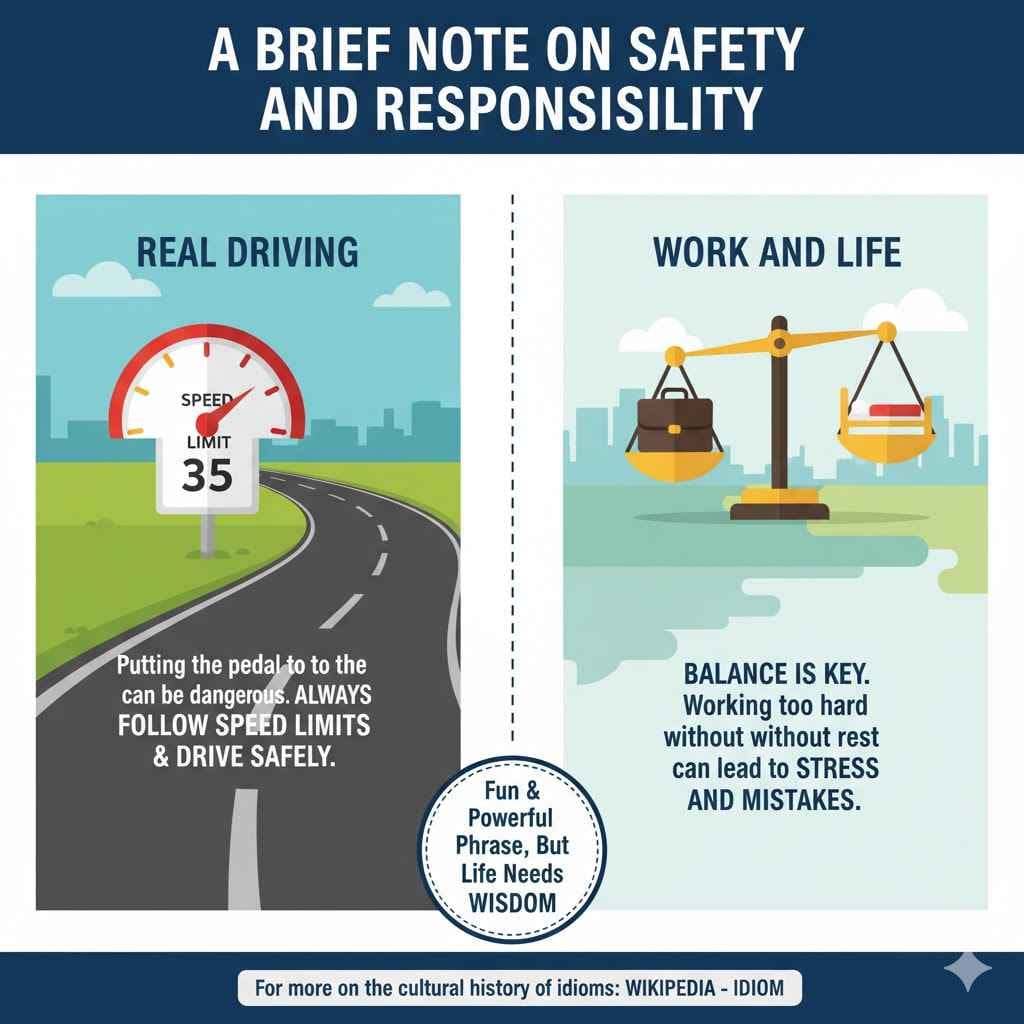
A Brief Note On Safety And Responsibility
It’s important to remember that, in real driving, putting the pedal to the metal can be dangerous. Always follow speed limits and drive safely. In work and life, balance is key. Working too hard without rest can lead to stress and mistakes.
The phrase is fun and powerful, but real life needs wisdom.
For more on the cultural history of idioms, you can check this resource: Wikipedia – Idiom.
Frequently Asked Questions
What Does “pedal To The Metal” Mean?
“Pedal to the metal” means to go as fast as possible or give your maximum effort. It started with cars, where pressing the gas pedal all the way down makes the car go its fastest, but now it’s used for any situation where you want to push to the limit.
Can “pedal To The Metal” Be Used In Formal Writing?
No, it’s best to use this phrase in informal speech or writing. It’s great for conversations, emails, or casual presentations, but it may sound out of place in formal documents or academic papers.
Are There Other Idioms With A Similar Meaning?
Yes, English has many similar idioms, such as “full throttle,” “step on it,” “go all out,” and “give it your all. ” These all suggest moving quickly or trying your hardest.
Is “pedal To The Metal” Used Outside Of The United States?
The phrase is most common in American English, but it is understood in many English-speaking countries. Other languages have similar expressions, often linked to cars or speed.
Can Using “pedal To The Metal” Have Negative Effects?
Yes, if you always “put the pedal to the metal,” you may risk burnout or make mistakes. In driving, it can be unsafe. The idiom encourages speed and effort, but it’s important to know when to slow down.
Stepping back, “pedal to the metal” is more than just an idiom about speed—it’s a window into how we push ourselves, how language grows, and how culture shapes what we say. Use it when you need energy or motivation, but always remember: sometimes, the best move is to ease off the gas and enjoy the ride. See also how to use a sustain pedal properly beginner piano guide .
Products related to this article
Sponsored / affiliate links. As an Amazon Associate I earn from qualifying purchases. I may earn additional commission from eligible campaigns.
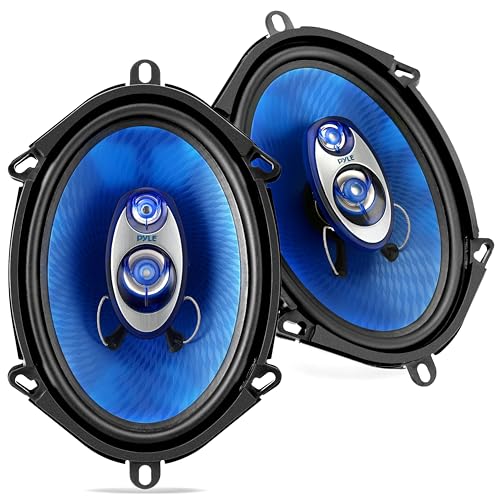 Pyle 5"x7"/6"x8" 3-Way Triaxial Car Speaker Pair - 300W Max/150W RMS, Blue Poly Injection Cone, Butyl Rubber Surround, 1" ASV Voice Coil, 4 Ohm, 80Hz-20kHz - PL573BL
 Pyle 6.5" Three-Way Sound Speaker System-180 W RMS/360W Power Handling w/4 Ohm Impedance and 3/4'' Piezo Tweeter for Car Component Stereo,Round Shaped Pro Full Range Triaxial Loud Audio