Best Cars for Towing a Small Trailer: Capability Compared
For a small trailer, midsize SUVs, body-on-frame SUVs, and half-ton pickups usually do the job best when they leave at least 1,000 lb of payload margin and a tow rating that exceeds trailer weight by 20%. Skip payload and cooling checks, and you can overload the rear axle, invite sway, or lose braking margin long before you reach the brochure tow limit. This guide compares cars, SUVs, hybrids, minivans, pickups, and 4x4s by payload, stability, drivetrain, and daily use, then narrows the field to the best fit.
Top pick for small trailers
The Land Rover Defender leads because it combines a 3,500kg maximum braked tow capacity with an eight-speed automatic gearbox that has low ratios for towing. That matters when the road turns steep, hot, or windy. The Defender plug-in hybrid is rated at 3,000kg, so it still fits many small trailers, but it gives up some margin versus the non-PHEV versions.
Where it still has limits
Payload can still be the first limit, especially with a loaded family aboard. A trailer’s tongue weight counts against the vehicle’s payload, so a high tow rating does not automatically mean the setup will be legal or stable once passengers, luggage, and hitch equipment are added.
If you need a daily driver first and a tow vehicle second, the Defender is strong but not the cheapest or smallest answer. It is the cleaner choice for frequent towing, hills, and rough weather than for short, occasional runs with a light camper.
Quick picks for different buyers
Choose by use case, not badge appeal. A small trailer can be handled by many mainstream vehicles, but the right pick changes once you add four passengers, a boot full of gear, and a hot uphill motorway pull.
- Best for occasional weekend towing: Toyota Highlander Hybrid, if the trailer is light and the family load is modest.
- Best for family comfort and towing: Volvo XC60 B5 mild-hybrid, when you want a refined daily driver with useful tow capacity.
- Best for frequent heavy-use towing: Land Rover Defender, especially if you need stability, gearing, and higher headroom.
- Best value if you need daily practicality: Ford Ranger, if you can live with pickup packaging and want broad towing margin.
Small trailer towing decision table
This table focuses on vehicles that shoppers often cross-shop for a small trailer. Read it as a capability filter, not a ranking of luxury or badge status. A loaded family setup is the key test, because that is where payload, tongue weight, and heat management often separate “can tow” from “tows well.”
| Vehicle type and example | Tow rating | Payload risk | Hill and heat behavior | Daily-driver comfort | Best use case | Loaded family use |
|---|---|---|---|---|---|---|
| Small hatchback | About 1,000kg on some models | High once passengers and tongue weight are added | Fine only on flat, light-duty trips | Very easy to park and live with | Very small teardrops and occasional short trips | Fail |
| Family hatchback | About 1,000kg on some models | Moderate to high | Can run out of margin on hills | Best on-road comfort and economy | Light popup or compact camper | Fail |
| Compact crossover | Usually modest unless specially rated | Often the first limit | Can feel strained in hot weather | Strong urban comfort | Very light trailers only | Borderline |
| Volvo XC60 B5 mild-hybrid | Up to 2,400kg | Moderate | Good for smaller caravans and hilly roads | Refined and quiet | Family SUV towing a small camper | Pass |
| Volvo XC60 plug-in hybrid | 2,250kg | Moderate | Good, but check battery and payload trade-offs | Excellent commuting comfort | Light to mid-weight trailers | Pass |
| Toyota Highlander Hybrid | 3,500 pounds | Moderate | Acceptable for light towing, not heavy-duty work | Comfortable and fuel-efficient for commuting | Occasional small camper use | Pass, with limits |
| Minivan | Most top out at 3,500 pounds | Often the deciding factor with full seats | Usually stable at sensible speeds | Best family space and easy access | Light trailers and family road trips | Pass, if lightly loaded |
| Ford Ranger | Up to 3,500kg | Lower than many crossovers | Strong on grades and in heat | Less car-like than an SUV | Frequent towing and mixed-use work | Pass |
| Land Rover Defender | 3,500kg | Usually manageable, but still check sticker values | Among the strongest here for hills and stability | Comfort varies by trim and wheel choice | Heavier small caravans and mixed terrain | Pass |
| Body-on-frame 4×4 | Often high, trim dependent | Usually better than smaller SUVs | Built for load, heat, and rough roads | Less composed than a crossover unloaded | Regular towing in tough conditions | Pass |
How to read the table
The “pass” label means the vehicle type can work for loaded family use if the specific model, trim, and handbook figures support the setup. “Fail” means it may tow the trailer itself, but the family plus gear plus hitch load commonly pushes it out of safe margin.
What cars can tow a small trailer safely?
Small trailers under about 1,000kg or 3,000 pounds are often considered the easier end of towing. Teardrops, A-frame campers, and popup trailers often sit in that band. Many cars can handle that weight on paper, but the safer choices are the ones with enough payload, wheelbase, braking reserve, and cooling for the route you plan to drive.
Which body styles usually cope best?
Midsize SUVs, minivans, body-on-frame SUVs, and pickup trucks usually cope better because they leave more room for passengers and hitch weight. A longer wheelbase also helps calm trailer movement at highway speed. Short, light cars can tow a small trailer, but they are more likely to run out of payload first.
Picture a family of four, 150kg of passengers and bags, plus a 75kg tongue weight from a small camper. Even with a modest trailer, the vehicle’s remaining payload can disappear quickly. That is why the door-jamb sticker matters more than the brochure headline once the trip is loaded.
Is payload or tow rating more important for towing a small trailer?
Payload is often the first limit on SUVs, minivans, and some crossovers because it must cover passengers, cargo, hitch hardware, and tongue weight. Tow rating tells you what the vehicle can pull in general. Payload tells you whether the trip is still legal and balanced once everything is loaded.
Why tongue weight eats into payload
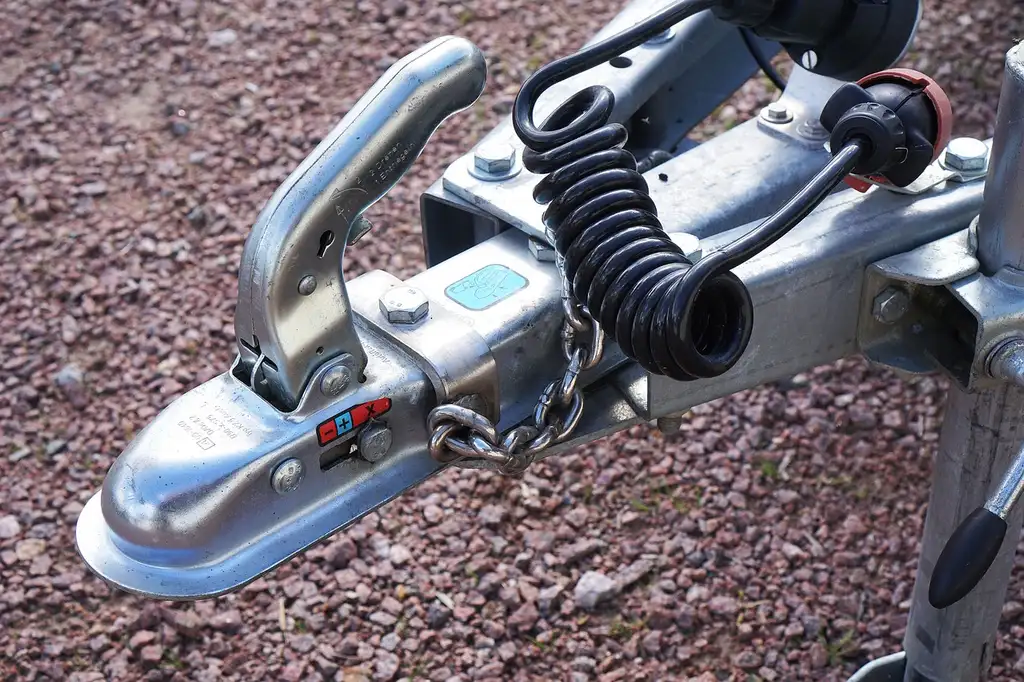
Tongue weight presses down on the hitch and counts against payload. If the trailer is loaded nose-heavy, that number climbs. Too little tongue weight can cause sway, but too much can overload the rear axle or push the vehicle over GVWR before the trailer even starts moving.
Suppose the door-jamb sticker says your SUV has 600kg of payload left. Add three adults, a child seat, bags, and a 75kg tongue load. You may still be under the tow rating, yet you can be over the vehicle’s payload and GVWR. That is a trip-stopper.
How much towing capacity do you need for a small trailer?
Match the trailer’s actual loaded weight with headroom. For a small trailer, a commonly recommended target is a vehicle whose tow rating is about 20% above the trailer’s actual weight. That gives room for passengers, hills, weather, and imperfect loading without living on the edge of the limit.
Matching capacity to trailer weight with headroom
If your trailer weighs about 1,000kg loaded, a tow rating of around 1,200kg or more is a common rule of thumb for margin. More is better, but only if payload, cooling, and wheelbase also fit the job. A stronger rating without those supporting factors can still be the wrong tool.
Why the strongest rating is not always the best match
A 3,500kg-rated pickup may solve the tow chart, but it can be excessive for a tiny camper that only moves a few weekends a year. A lighter SUV or hybrid may be easier to park, cheaper to run, and more comfortable every day while still towing the same small trailer safely.
Best vehicles by type
Small SUV and crossover options
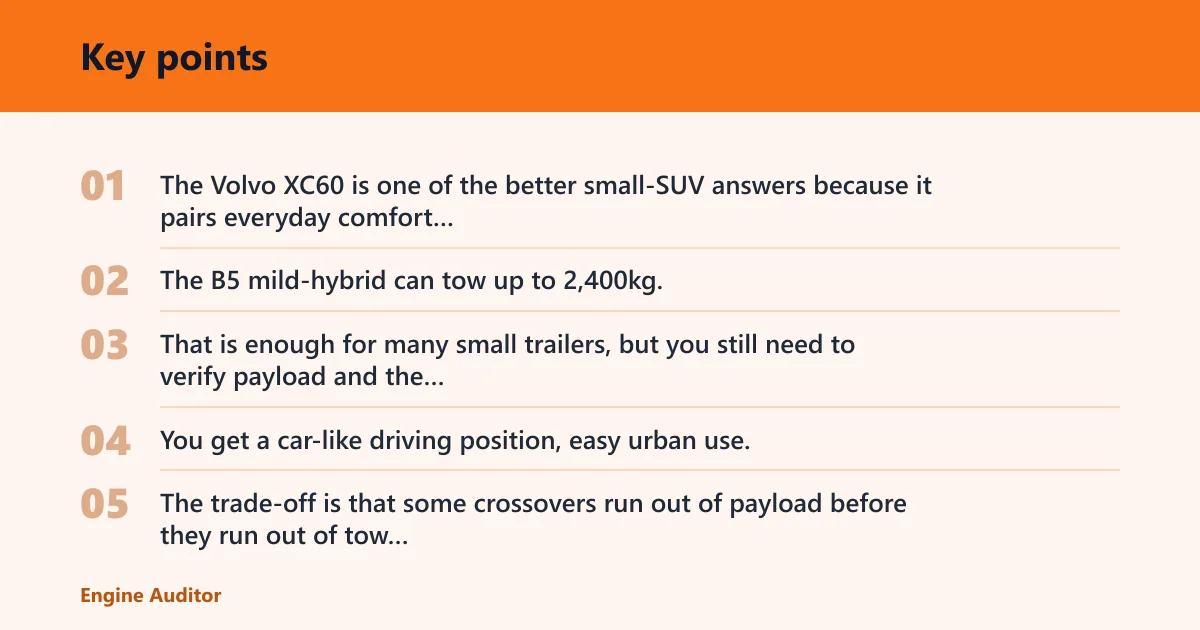
The Volvo XC60 is one of the better small-SUV answers because it pairs everyday comfort with useful towing ability. The B5 mild-hybrid can tow up to 2,400kg, while the plug-in hybrid models are rated at 2,250kg. That is enough for many small trailers, but you still need to verify payload and the exact trim rating.
The key advantage is balance. You get a car-like driving position, easy urban use, and enough reserve for a small camper. The trade-off is that some crossovers run out of payload before they run out of tow rating.
Hybrid and plug-in hybrid options
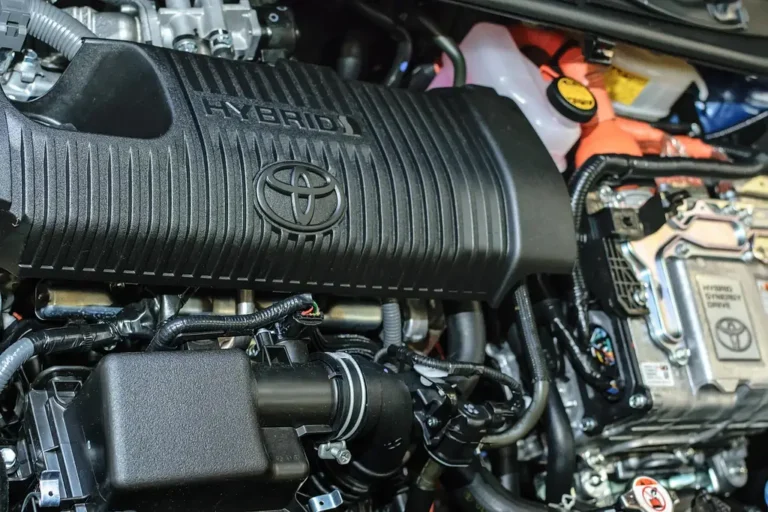
The Toyota Highlander Hybrid is a sensible family choice if the trailer is genuinely small. The gasoline Highlander can tow up to 5,000 pounds, while the Highlander Hybrid can tow up to 3,500 pounds. That makes the hybrid better suited to light trailers and occasional towing than to heavy-duty work.
Hybrids can tow a small trailer without losing all efficiency, but towing always increases fuel use. The main question is whether the hybrid’s lower tow rating still covers your loaded trailer with reserve. If it does, the daily-driving benefits can be worth it.
Pickup and body-on-frame options
The Ford Ranger can tow up to 3,500kg and is available in Single Cab and Double Cab body styles. That gives it serious headroom for small trailers and occasional heavier loads. It is also easier to justify if you tow often, face steep grades, or want a tougher rear suspension base.
A pickup is not mandatory for a small trailer. It is a tool for buyers who need margin, utility, or repeated towing. If your trailer is light and the family load is modest, a well-rated SUV may be the more sensible daily choice.
Larger 4×4 options
The Land Rover Defender stands out because its 3,500kg maximum braked tow capacity is backed by an eight-speed automatic gearbox with low ratios for towing. The Defender plug-in hybrid is rated at 3,000kg. That combination makes it a strong answer for steep routes, crosswinds, and heavier small caravans.
It still needs the same checks as everything else: payload, hitch weight, and the handbook limits for the exact model. High tow capacity does not erase the need to stay within GVWR and GCWR.
How to choose the right tow vehicle
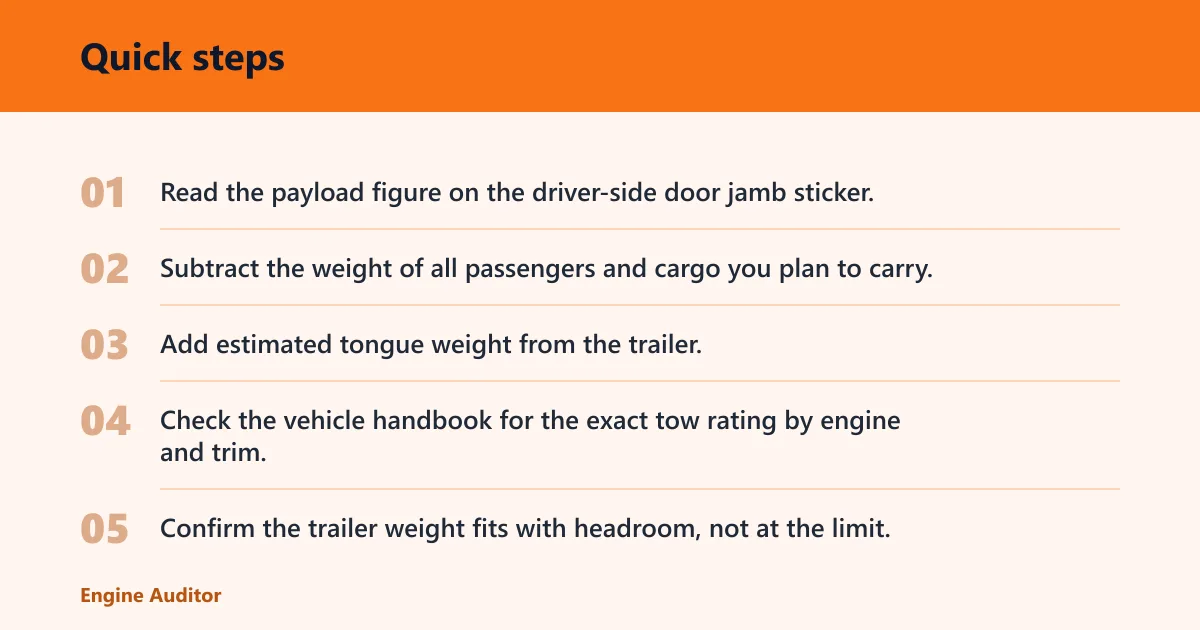
Start with the door-jamb sticker and the handbook. Then work through payload, GVWR, GCWR, and tongue weight before you buy. That order matters because the trailer may fit the tow rating but still fail the load math once people, luggage, and hitch hardware are added.
Check the door-jamb sticker and handbook
- Read the payload figure on the driver-side door jamb sticker.
- Subtract the weight of all passengers and cargo you plan to carry.
- Add estimated tongue weight from the trailer.
- Check the vehicle handbook for the exact tow rating by engine and trim.
- Confirm the trailer weight fits with headroom, not at the limit.
Compare GVWR, GCWR, and tongue weight
GVWR is the maximum weight of the loaded vehicle itself. GCWR is the maximum combined weight of the vehicle and trailer together. Tongue weight must be included in the vehicle’s payload calculation, not treated as a separate bonus allowance. Those three figures tell you whether the setup is legal and stable.
A common first-timer mistake is choosing a vehicle by tow rating alone and then discovering the family load pushes it over GVWR. Another is loading the trailer too light at the nose to “save” payload, which can make sway worse at speed.
Choose by towing frequency, not bragging rights
If you tow only a few times a year, a well-rated crossover, hybrid, or minivan may be enough for a small trailer. If you tow often, in heat, or on hills, step up to a stronger platform with more cooling and stability. For regular use, the calmer vehicle is usually the better buy.
For loaded family use, the safest answer is usually the vehicle that leaves the most real payload after passengers and tongue weight are counted. That is often a midsize SUV, a body-on-frame SUV, or a pickup, not the smallest vehicle with the biggest brochure number.
Frequently asked questions
Is payload or towing capacity more important for towing a small trailer?
Payload is often more important in real use because it is the first limit to fail on many SUVs and crossovers. Tow rating still matters, but passengers, luggage, and tongue weight all count against payload. You need both numbers to work at the same time.
Can an SUV tow a small trailer better than a car?
Usually yes, because an SUV often has more payload margin, a longer wheelbase, and more stable suspension tuning. That said, a very capable car can still tow a light trailer safely if the rating, payload, and cooling all line up. The body style is only part of the answer.
Can a hybrid tow a small trailer without losing efficiency?
A hybrid can tow a small trailer and still remain efficient compared with a non-hybrid, but towing always raises fuel use. The more important issue is whether the hybrid’s tow rating and payload fit your actual trailer and family load. Some hybrids are ideal for light towing; others are not.
Do I need a pickup truck just to tow a small trailer?
No. A pickup is useful when you need extra margin, frequent towing, or rough-road capability, but it is not the default answer for a small trailer. Many SUVs, hybrids, and minivans can handle a teardrop, A-frame camper, or popup trailer with less daily compromise.
Products related to this article
Sponsored / affiliate links. As an Amazon Associate I earn from qualifying purchases. I may earn additional commission from eligible campaigns.