Best Car Batteries for Older Vehicles and Weekend Drivers
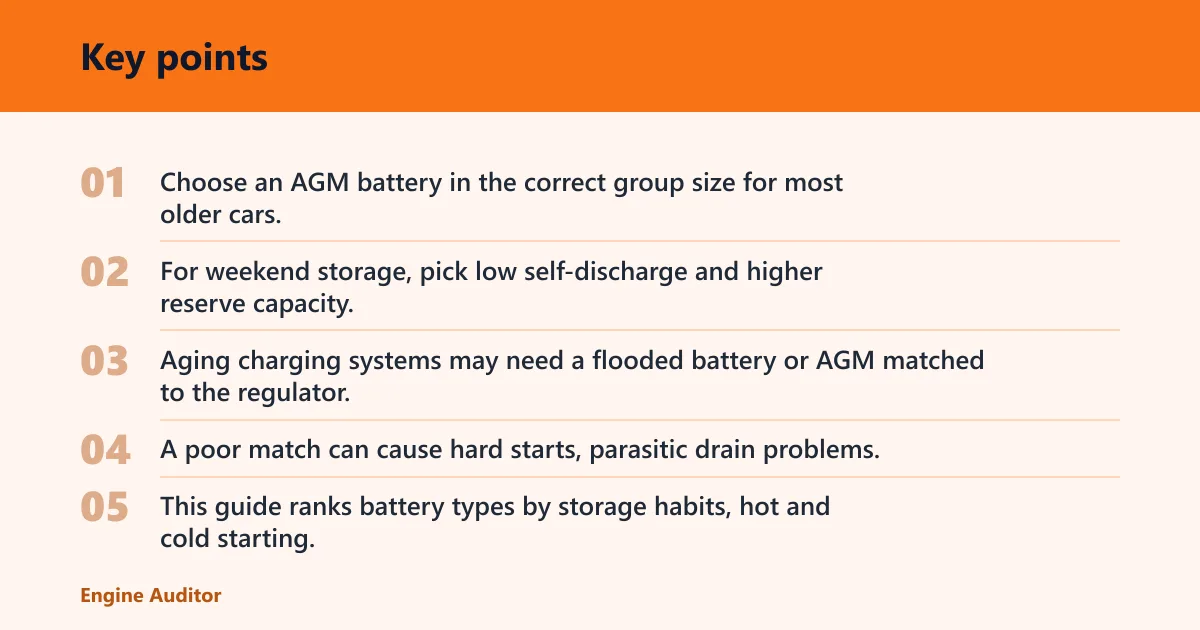
Choose an AGM battery in the correct group size for most older cars. For weekend storage, pick low self-discharge and higher reserve capacity. Aging charging systems may need a flooded battery or AGM matched to the regulator. A poor match can cause hard starts, parasitic drain problems, and premature battery failure. This guide ranks battery types by storage habits, hot and cold starting, and fitment needs.
The top pick for most older vehicles is an AGM battery in the factory group size, because it usually gives the best mix of starting strength, vibration resistance, and tolerance for short-trip use without requiring top-off maintenance.
Match battery type to driving habits


Quick picks
| Best for | Recommended battery type | What to prioritize | Main caution |
|---|---|---|---|
| Weekend-only driver | AGM | Higher reserve capacity, low self-discharge, correct group size | Check for parasitic drain before blaming the battery |
| Older car with weak charging support | Flooded lead-acid or AGM matched to the charging system | Fitment, proper charging voltage, reasonable CCA | Undercharging shortens life fast |
| Cold-weather starter | AGM | Higher CCA within the correct fitment | Terminal position and hold-down still matter |
| Budget replacement | Flooded lead-acid | Correct size, acceptable CCA, warranty terms | Usually less vibration resistance and more upkeep |
Top pick for weekend storage
An AGM battery is usually the safest choice for an older car that sits between drives. It self-discharges more slowly than a basic flooded battery, handles short periods of storage better, and is less fussy if the car sees only occasional starts.
Look for enough reserve capacity to cover clock memory, alarm draw, and brief storage gaps between starts. Reserve capacity matters here because a battery that starts well on paper can still fade faster after several days or weeks of low use.
Top pick for short trips and parasitic draw
For a car that makes short trips or has known parasitic draw, choose AGM first. It usually handles repeated partial charging better than a standard flooded battery and gives more buffer when the alternator does not have much time to recover the battery after each drive.
If the car still goes flat, the battery is only part of the problem. You also need a parasitic drain check and a charging-system check, because a battery cannot fix a weak alternator or a fault that keeps drawing current with the key off.
Top pick for cold starts
For cold starts, choose the battery that fits the car and offers the stronger CCA rating within that fitment. CCA matters most when the engine oil is thick, compression is higher, or the starter needs extra current on a cold morning.
Do not chase the highest CCA on the shelf if the case size, terminal layout, or hold-down does not match. The right battery that fits cleanly is better than a larger battery that shifts, rubs, or sits under the wrong clamp.
Top pick for aging charging systems
Older charging systems need caution. If voltage regulation is weak or the alternator output is lower than it should be, a flooded battery may be the simpler match, while an AGM can still work if the charging system is healthy enough to bring it up fully.
Before buying, verify charging behavior and look for signs of undercharging or overcharging. If the system does not hold a stable voltage, even a good battery will age early.
How this guide was chosen
The picks below are based on manufacturer specs, listing details, and published buyer feedback.
📊 GM’s EV1 had an onboard charger that took 12 to 14 hours to recharge batteries on 110 volts. Source: Stanford.
Car battery decision matrix
Use the table below to match the battery type to the way the car is actually driven. The right answer depends less on brand and more on storage time, starting load, and whether the car spends long stretches parked.
| Use case | Best battery type | Minimum CCA range | Reserve capacity priority | Risk notes for weekend-only use |
|---|---|---|---|---|
| Weekend-only storage | AGM | Match the factory spec range or slightly above | High | Self-discharge and parasitic draw matter more than raw starting power |
| Short-trip driving | AGM or a premium flooded battery if charging is weak | Factory spec range or slightly above | Medium to high | Short drives may not fully recharge the battery |
| Parasitic drain risk | AGM with higher reserve capacity | Factory spec range or slightly above | High | Drain checks matter more than buying a bigger label number |
| Cold-start focus | AGM | Choose the higher end of the approved fitment range | Medium | Cold cranking is useful only if the case and terminals fit correctly |
| High-mileage older car | AGM if the charging system is healthy; flooded if the system is marginal | Factory spec range | Medium | Age, heat, and voltage regulation often decide service life |
Which battery type fits an older car?
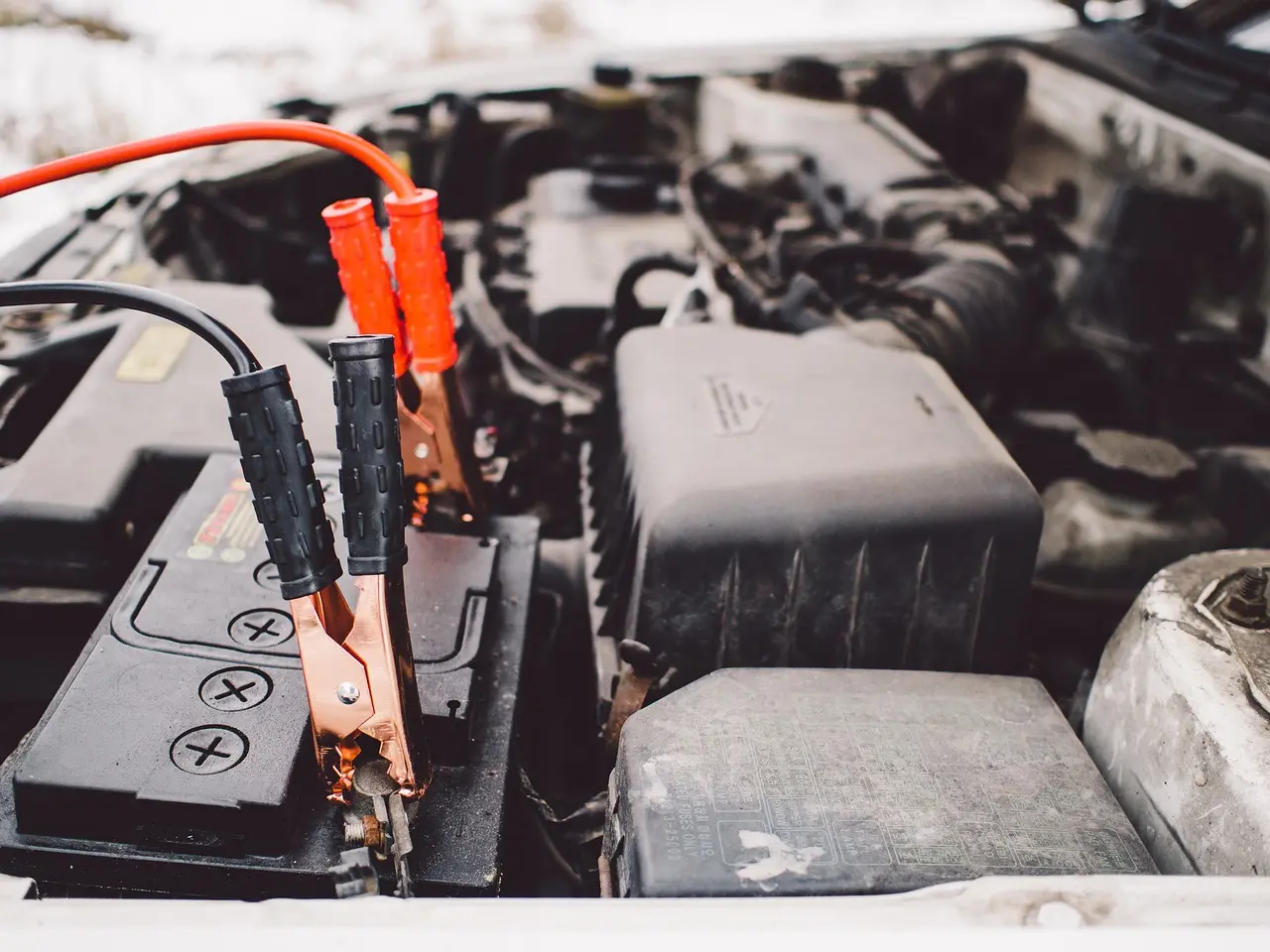
For most older cars, AGM is the best all-around choice because it is maintenance-free, resists vibration better, and handles repeated partial discharge better than a basic flooded lead-acid battery. Flooded batteries cost less and can work well, but they usually need more attention and are less forgiving of short use.
Flooded lead-acid vs AGM
Flooded lead-acid batteries are the budget option. They are common, widely available, and can fit many older vehicles without surprises, but they are more sensitive to neglect and often lose performance sooner if the car sits.
AGM batteries cost more, but they are sealed, maintenance-free, and better suited to occasional use. They usually handle vibration better and recover from repeated shallow discharge more gracefully, which matters in older cars that are driven less often.
Maintenance needs and spill risk
Flooded batteries may need periodic electrolyte checks if they are serviceable. AGM batteries do not need that routine maintenance, and their sealed construction reduces spill risk during normal use.
If the battery sits near a cabin, trunk, or carpeted area, spill resistance matters. If the battery lives in a vented engine bay and the vehicle is driven often, a flooded battery can still be a reasonable budget choice.
Vibration resistance and deep-cycle tolerance
Older vehicles can transmit more vibration than newer ones. AGM batteries are generally reported to tolerate vibration better, and they are also often considered better suited to deeper discharge cycles than standard flooded batteries.
That said, a deeper-cycle-friendly battery is not a cure for a bad charging system. If the alternator cannot restore charge, even a tough battery will wear out early.
Cost tradeoffs
Flooded batteries usually win on price. AGM batteries usually win on service life under stop-start use, storage, and rougher conditions. For a weekend car, the higher upfront cost of AGM can make sense if it prevents early replacement.
A common first-timer mistake is buying the cheapest battery that fits the tray, then discovering it cannot keep up with an alarm, clock memory, or a weak charging system. The lower sticker price can turn into a shorter cost-per-year result.
How do you choose the right size?
Choose the correct BCI group size first, then compare case dimensions, terminal placement, and hold-down fit. Reserve capacity matters here too, because a higher-capacity battery may fit physically yet still create clearance issues or terminal conflicts if the case shape is different.
BCI group size basics
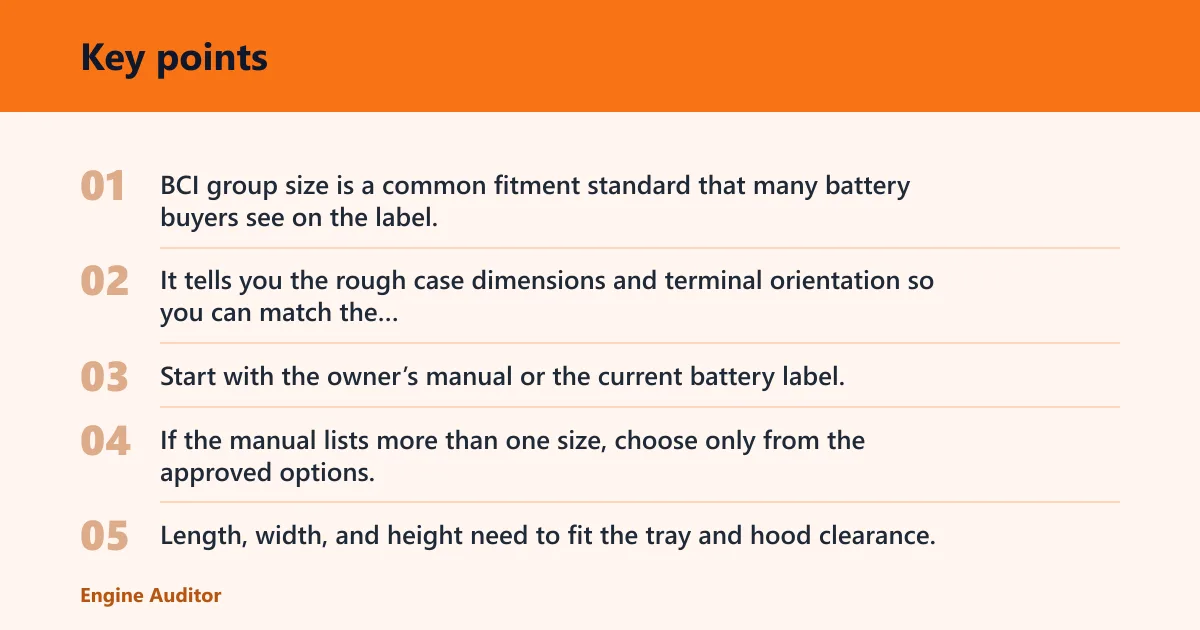
BCI group size is a common fitment standard that many battery buyers see on the label. It tells you the rough case dimensions and terminal orientation so you can match the battery to the tray and cables.
Start with the owner’s manual or the current battery label, then confirm the replacement matches the same group or an approved cross-reference. If the manual lists more than one size, choose only from the approved options.
Case length, width, and height
Length, width, and height need to fit the tray and hood clearance. A battery can have the right group number and still hit the hood, pinch a cable, or sit too tall for the hold-down hardware.
Measure the space before you buy if the old battery has been changed before. Older cars often carry non-original trays or replacement brackets that make the listed size only part of the answer.
Terminal position and hold-down fit
Terminal orientation affects cable reach and the chance of strain on the clamps. Wrong terminal position can force the cable to cross the case, touch metal, or sit under tension.
The hold-down matters just as much. A battery that cannot be secured correctly may move under vibration, which can damage terminals and shorten battery life.
Reserve capacity and physical fit
Reserve capacity helps with storage and short-trip driving because it gives the car more backup power when charging time is limited. But a larger reserve-capacity battery may also be physically larger, so you still need to confirm the tray and clearance before choosing it.
Suppose an older coupe takes a Group 34 battery and the owner wants more reserve capacity for weekend use. A taller case may look attractive on paper, but if the hood brace sits close to the battery, the safer move is the size that fits cleanly, not the biggest label number.
What specs matter most for older vehicles?
For older vehicles, CCA, reserve capacity, shelf life, and charging-system health matter more than marketing language. The best battery is the one that fits, starts the engine reliably, and survives the car’s actual drive pattern.
CCA for starting
CCA measures starting performance in cold conditions. It matters most when the engine needs a hard crank, the oil is thick, or the weather drops and starting loads rise.
Use the factory recommendation as the baseline. A slightly higher CCA can help, but only if the case, terminal layout, and hold-down remain correct.
Reserve capacity for storage and short trips
Reserve capacity is the number of minutes a battery can support the car’s electrical load if the charging system is not providing much charge. It matters for weekend cars because short trips and long storage gaps leave less time to recover charge.
If the car has a clock, alarm, or known draw with the key off, reserve capacity becomes more important. It gives the battery more buffer before voltage falls too low for a clean start.
Shelf life before installation
Battery age matters before installation. Lead-acid batteries self-discharge over time, so a battery that has sat on a shelf too long may already be partly depleted before installation.
Check the manufacture or stock date when possible and choose the freshest battery available. For a weekend car, a battery that starts life stale is more likely to disappoint early.
Charging system and parasitic drain checks
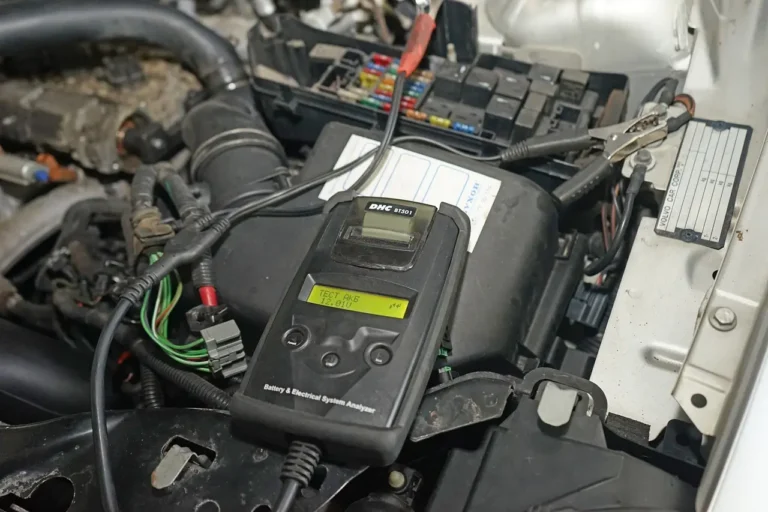
Before replacing a battery, it is a good idea to check that the alternator output and voltage regulation are within the vehicle’s specifications. A weak charging system can make a new battery look bad, while a parasitic drain can flatten even a healthy battery overnight.
Say your older sedan starts fine after a long highway drive but struggles after two days parked. That pattern points more toward drain or undercharging than a pure battery-size problem, so the battery choice should be paired with a system check.
How to compare warranty and value
Warranty matters, but the best value for an older car is not always the longest warranty on the box. A battery with the right fit, the right type, and the right reserve capacity can cost less per year than a cheaper battery that fails early.
Free-replacement period
The free-replacement period is the part of the warranty that matters most if the battery fails early. A longer free-replacement window can be useful for a weekend vehicle, where problems may take longer to show up.
Prorated coverage
Prorated coverage usually matters later in the warranty term. It does not replace the battery for free, so treat it as backup value rather than the main reason to buy.
Registration and proof of purchase
Some warranties require registration or proof of purchase. Keep the receipt and record the date, because an unregistered battery can be harder to claim if it fails within the warranty period.
Cost per year for low-mileage use
For a low-mileage car, divide the purchase price by expected service life, not just by the warranty length. A more expensive AGM battery can still be the better value if it lasts longer in storage and reduces jump-start trouble.
The lowest-cost battery is often the one you replace twice. For weekend cars, that usually makes a mid-priced AGM a better value than a bargain flooded unit if the car sits often or has any drain.
Frequently asked questions
What car battery is best for an older vehicle that sits a lot?
An AGM battery with the correct group size is usually the best fit for an older car that sits a lot. It handles storage better than a basic flooded battery, resists vibration well, and is less likely to need maintenance between drives. Check for parasitic draw if the battery still goes flat.
Do weekend drivers need a maintenance-free battery?
Yes, most weekend drivers benefit from a maintenance-free battery because the car is not driven often enough for constant attention to pay off. AGM is the cleanest option here. It reduces upkeep, handles low-use patterns better, and is less sensitive to occasional missed charging opportunities.
Is AGM worth it for an older car?
AGM is worth it when the car sits, sees short trips, or needs stronger resistance to vibration and shallow discharge. It is also a smart choice when the battery is hard to reach. If the charging system is weak, though, confirm the alternator and regulator first.
How do I choose a battery for a car that only gets driven on weekends?
Start with the factory group size, then choose AGM if the car sits more than it drives. Give reserve capacity more weight than an oversized CCA number, and make sure the battery is fresh. Weekend use punishes batteries that self-discharge quickly or cannot recover from short trips.
Which battery lasts longest in a car that isn’t driven daily?
AGM usually lasts longest in a non-daily driver because it tolerates storage and repeated partial discharge better than a standard flooded battery. Longevity still depends on charging health, parasitic draw, and heat. A good battery in a poor charging system will still fail early.
How do I tell if my old car needs a standard flooded battery or AGM?
If the car is driven often, has a healthy charging system, and lives in mild conditions, a flooded battery may be enough. If it sits, sees short trips, or has vibration or drain concerns, AGM is usually the safer pick. Confirm fitment first, then match use case to battery type.
What should I look for in a battery for a high-mileage older car?
Look for correct fitment, solid CCA, enough reserve capacity for the car’s electrical load, and a warranty that fits your risk tolerance. High mileage alone does not decide the battery choice. Charging-system health, underhood heat, and maintenance history matter just as much.
Products related to this article
Sponsored / affiliate links. As an Amazon Associate I earn from qualifying purchases. I may earn additional commission from eligible campaigns.