Best Car Batteries for Older Vehicles (2026): We Compared
The best overall pick for most older vehicles is an AGM battery that matches the exact group size, terminal layout, and hold-down hardware, with CCA at or above factory spec and enough reserve capacity for the car’s real electrical load. For many aging cars, fitment and charging-system health matter more than chasing the biggest CCA number.
Quick comparison
| Product | Badge | Best for | Price | ||
|---|---|---|---|---|---|
 |
Weize Platinum AGM Battery BCI Group 24F AutomotiveWEIZE | Our pick | Group 24F · 710 CCA · AGM | $161.99
Price as of 25 Oct 2026
|
View |
 |
OPTIMA® Batteries High Performance 25 REDTOP® Sealed AGMOPTIMA | Upgrade pick | SAE terminal · 720 CCA · AGM | $252.96
Price as of 25 Oct 2026
|
View |
The safest choice is the battery that fits the tray and terminals first, then meets the car’s starting and reserve needs. If the alternator is weak or the car sits for long stretches, inspect the charging system before paying extra for a higher-end AGM.
How we chose
The shortlist starts with fitment. Older cars can use Group 35, 47/H5, 48/H6, 75/25, or 94R, but the tray, hold-down style, and terminal location still have to line up.
Next comes starting power and reserve capacity. CCA helps with cold cranking, while reserve capacity matters when the car has accessory drain, short trips, or an alternator that is not keeping up.
Battery chemistry matters too. AGM suits vibration-prone classics and cars with higher accessory load, while flooded lead-acid still makes sense for some older vehicles that want lower cost and simpler replacement.
Warranty is a last-pass filter, not the first one. A 36-month warranty is a common benchmark in this set, but it means little if the battery group size or terminal layout is wrong.
Which battery type fits older cars?
AGM fits many older cars best when vibration, short trips, or accessory drain are part of the picture. Flooded lead-acid still fits some vehicles better when cost matters more and the charging system is simple and healthy.
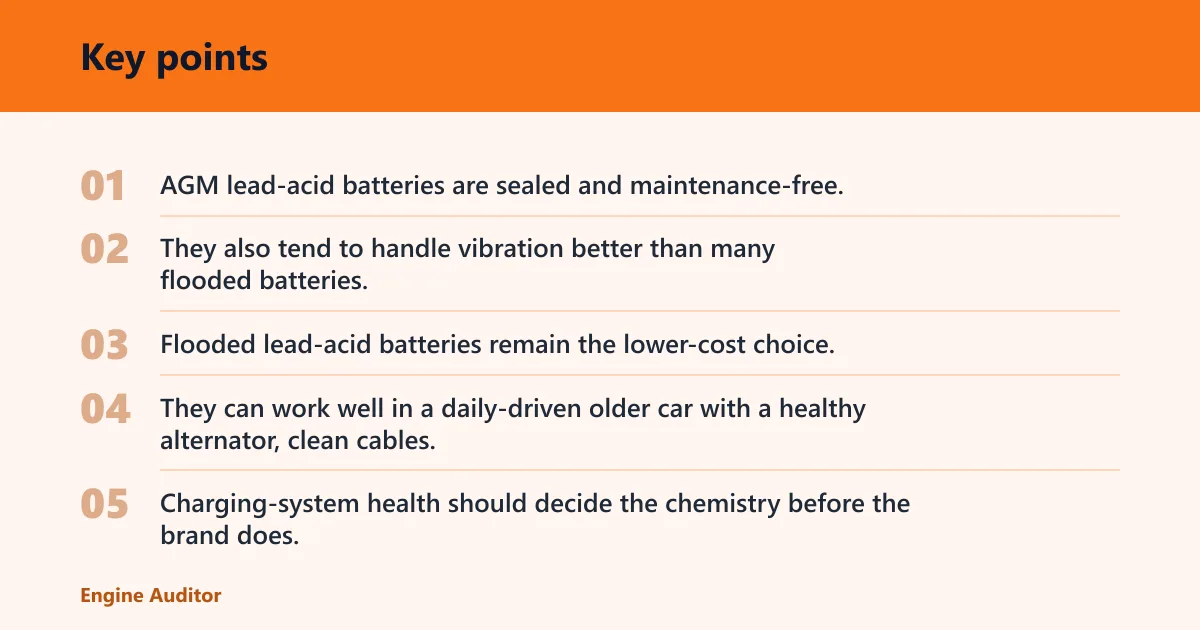
AGM lead-acid batteries are sealed and maintenance-free, which cuts down on water checks and spilled electrolyte. They also tend to handle vibration better than many flooded batteries, which helps in rough-road use and in older cars with less refined mounting hardware.
Flooded lead-acid batteries remain the lower-cost choice. They can work well in a daily-driven older car with a healthy alternator, clean cables, and no unusual electrical load, but they ask for more maintenance and usually tolerate vibration less well than AGM.
Charging-system health should decide the chemistry before the brand does. If the alternator is undercharging, the grounds are weak, or cable resistance is high, an expensive AGM can still end up chronically low on charge.
Think about the car before the battery
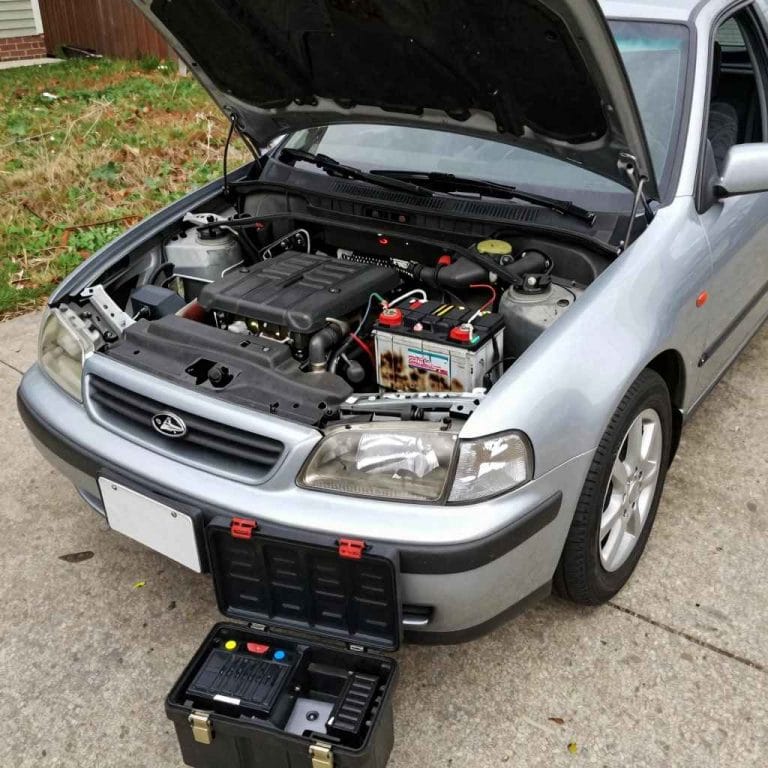
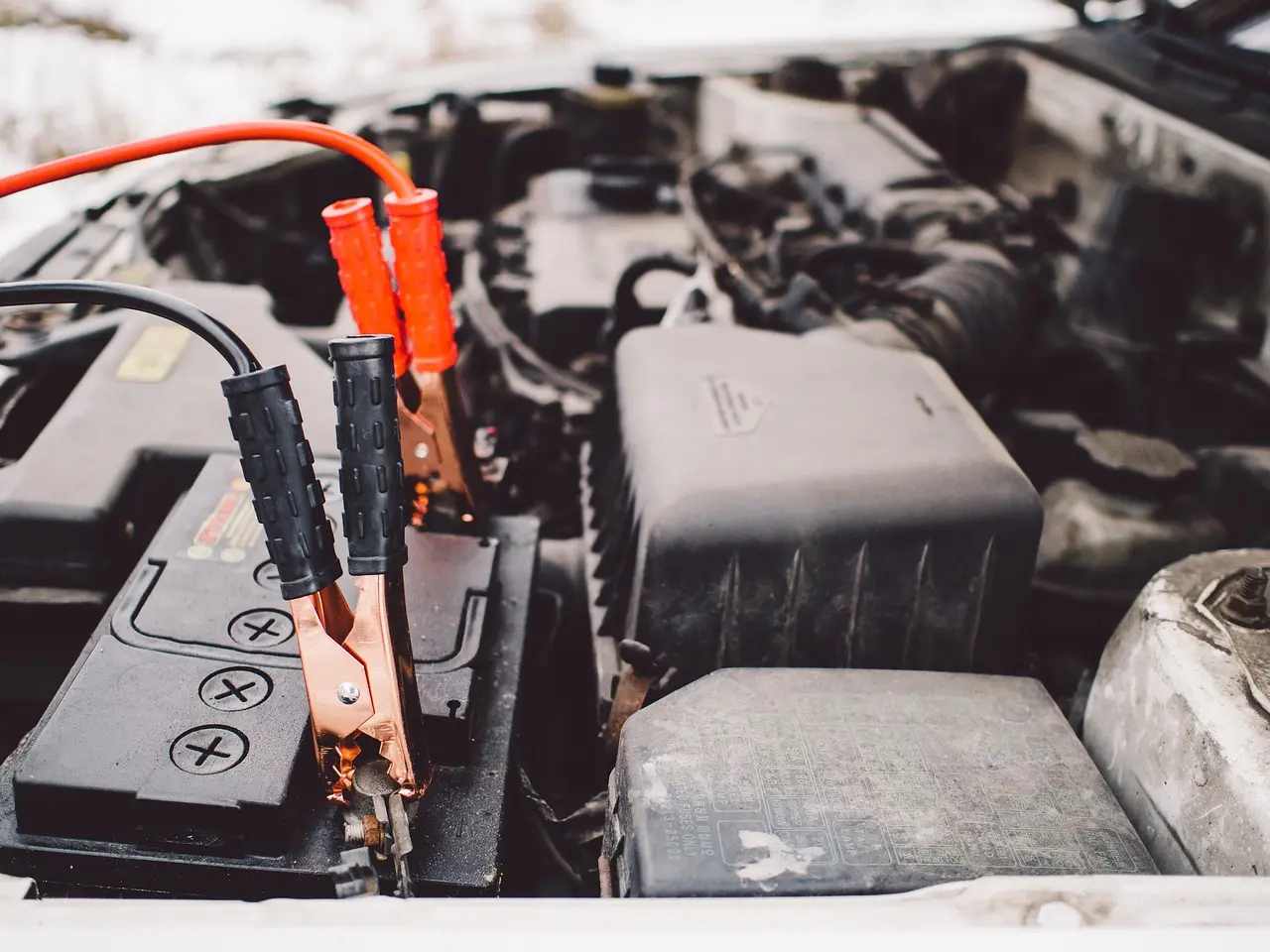
Older vehicles fail for reasons that look like “bad battery” but often are not. Parasitic drain, corroded cable ends, weak grounds, loose hold-downs, and undercharging can drain even a good battery.
Suppose a 1998 sedan needs a Group 35 battery and cranks slowly after a two-day sit. If the replacement battery is correct but voltage at the battery stays low while the engine runs, the next step is cables and charging output, not a bigger battery.
Start with the vehicle manual, battery tray, and cable layout. The right battery has to clear the hood, sit in the tray without force, and accept the correct terminal orientation without stretching the cables.
Then look at how the car is used. A daily-driven older car with short trips and winter starts wants more cold-cranking margin than a garage-kept classic, while a seasonal car with key-off drain wants more reserve capacity and better self-discharge behavior.
AGM is worth the extra cost when vibration, storage, or accessory load makes battery life harder. It is less attractive when the alternator is tired, the grounds are corroded, or the car has a simple electrical system that a flooded battery can handle at lower cost.
Brand and warranty matter after those checks. A 36-month warranty is a useful benchmark, but it should not override fitment, chemistry, or the vehicle’s real charging behavior.
Inspect these items before buying
- Tray length, width, and height clearance
- Group size and terminal layout, including reversed terminals
- Hold-down style and clamp depth
- Alternator output and charging voltage
- Battery cables, ground straps, and corrosion at the posts
- Parasitic draw if the car loses charge while parked
Older car battery decision table
| Vehicle condition | Typical symptoms | Recommended battery type | Fitment checks | When to inspect charging/cables first |
|---|---|---|---|---|
| Daily-driven older car with weak cold starts | Slow cranking on cold mornings, battery recovers after driving, radio presets may reset after short sits | AGM if the tray and charging system fit it; flooded lead-acid if the car is simple and cost matters | Match group size, terminal layout, and hold-down; common older sizes include Group 35, 47/H5, 48/H6, 75/25, and 94R | Inspect first if voltage falls under load, the alternator warning light flickers, or cables feel warm after cranking |
| Garage-kept classic with occasional use | Starts after storage but goes flat between outings, or needs a charger before each drive | AGM with higher reserve capacity | Check tray clearance, terminal orientation, and hold-down depth before buying a sealed battery | Inspect first if the battery repeatedly discharges while the car is parked, which points to parasitic draw or storage loss |
| Seasonal vehicle with accessory drain or parasitic draw | Clock loss, low cranking after storage, dim accessories, frequent jump starts | AGM with strong reserve capacity, or flooded only if the draw is fixed and load is modest | Confirm group size and terminal placement, then check whether the battery needs side posts, top posts, or a reversed layout | Inspect first if the battery loses charge while parked, because a draw, weak ground, or undercharging will defeat a premium battery |
This table is the fastest way to avoid a bad buy. If the car has oddball classic-car dimensions or reversed terminals, fitment comes before chemistry.
Best batteries by use case
OPTIMA RedTop: best for strong starting power
Choose the OPTIMA RedTop 25 if you want a sealed AGM option with strong starting output and better vibration resistance for an older car that sees regular road use. Its SpiralCell design, 720 CCA rating, and 90 minutes of reserve capacity make it a good fit for drivers who want dependable starts without constant maintenance.
It is also one of the cleaner choices for rough-road or vintage use, where vibration can shorten battery life. The drawback is simple: this is a pricier option, and its 75/25 layout still has to fit the tray and cable routing exactly. The published dimensions are 9.38 by 6.81 by 7.75 inches, so the box shape matters as much as the spec sheet.
ACDelco Gold 48AGM: best for Group 48 fitment and warranty
Pick the ACDelco Gold 48AGM when the car calls for Group 48 sizing and you want a sealed AGM with a mainstream warranty signal. It uses Group 48 sizing, carries a 36-month warranty, and is described as AGM lead-acid, with silver calcium alloy and high-density negative paste claims in the listing.
This makes it a sensible choice for older vehicles that need the common Group 48 footprint and a maintenance-free design. The drawback is that it is only the right answer when the tray and terminals match; a Group 48 battery that does not fit cleanly is the wrong battery, no matter how good the warranty looks.
Mighty Max AGM: best for reserve capacity and higher-output needs
Mighty Max AGM batteries are the better match when reserve capacity matters more than saving a little money. The MM-H5 is listed with 680 CCA and 100 minutes of reserve capacity, while the MM-H7 is listed with 850 CCA and 140 minutes of reserve capacity, which gives it more backup time for accessory load and older charging systems.
That reserve can help in cars that sit often, run extra electrical loads, or show signs of mild undercharging. The tradeoff is weight and fitment sensitivity, because a bigger AGM still has to clear the tray and line up with the terminals. If the car’s charging system is marginal, inspect it first instead of assuming a larger battery will fix the problem.
What CCA and RC matter most?
For older vehicles, CCA matters most when the engine cranks slowly in cold weather or has a higher compression load from age and wear. Competitor picks for older cars commonly land between about 570 CCA and 850 CCA, and that range makes sense when the engine, climate, and cable condition vary so much.
Reserve capacity matters when the car spends time idling, running accessories, or sitting between drives. Common older-vehicle examples include 90, 100, 120, and 140 minutes, and those numbers matter more when the alternator is weak, the car is seasonal, or parasitic draw is part of the problem.
Higher numbers only help when the battery fits and the charging system can keep up. A bigger battery with the wrong group size, reversed terminals, or a weak alternator can still leave you stranded.
A common first-timer mistake is buying the highest CCA battery on the shelf and ignoring the tray. If the terminals point the wrong way or the hold-down cannot clamp the case, installation problems start before the first crank.
Choose by the car’s electrical reality
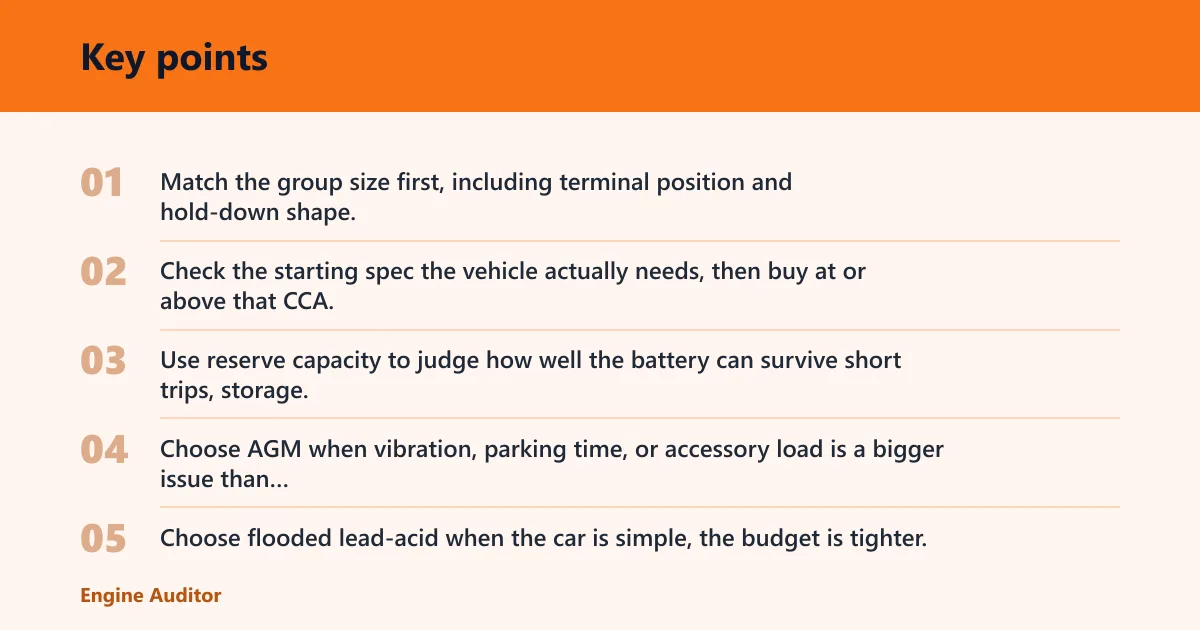
- Match the group size first, including terminal position and hold-down shape.
- Check the starting spec the vehicle actually needs, then buy at or above that CCA.
- Use reserve capacity to judge how well the battery can survive short trips, storage, or accessory drain.
- Choose AGM when vibration, parking time, or accessory load is a bigger issue than purchase price.
- Choose flooded lead-acid when the car is simple, the budget is tighter, and the charging system is healthy.
Which one should you buy?
Buy the OPTIMA RedTop if the car needs strong starting power, sealed AGM construction, and better vibration resistance, and if the 75/25 fitment works. Buy the ACDelco Gold 48AGM if the car calls for Group 48 and you want a mainstream AGM with a 36-month warranty. Buy the Mighty Max AGM if reserve capacity is the bigger issue and the vehicle can use the larger fitment.
If budget is tight and the car has a healthy alternator, a flooded lead-acid battery can still be the sensible call. That is especially true for an older daily driver with simple accessories and no history of vibration-related battery damage.
If the alternator or cables need attention first, fix that before choosing a premium battery. A stronger AGM can hide a weak system for a while, but it will not cure undercharging, bad grounds, or parasitic drain.
Picture a weekend coupe that sits for two weeks, uses a Group 48 tray, and has a dim dome light after storage. That car wants an AGM with a reserve advantage and a charging-system check, not the cheapest flooded battery on the shelf.
Frequently asked questions
What’s the longest lasting car battery
There is no single longest-lasting car battery for every older vehicle. AGM often lasts longer than flooded lead-acid in rough use or storage-heavy use, but a healthy alternator, proper fitment, and low parasitic drain matter just as much. A neglected charging system can shorten the life of either type.
Which car batteries last the longest?
AGM batteries often last longer in older vehicles that face vibration, short-trip use, or long sits because they are sealed and less sensitive to spill and shake. That said, the longest service life usually comes from the battery type that matches the car’s charging system, climate, and parking pattern.
Should I keep my old car battery?
Keep the old battery only if testing shows strong cranking voltage and the car’s starting problem comes from cables, grounds, or charging output instead. If the battery is weak, swollen, leaking, or repeatedly discharged, replacement is the better move. Older vehicles often have more than one fault at the same time.
Where to store old car battery
Store an old car battery in a cool, dry place on a stable surface, away from sparks and direct sun. Keep it upright, off the floor if possible, and away from metal items that could short the terminals. If you plan to reuse it, top it off periodically with a compatible charger.
Products related to this article
Sponsored / affiliate links. As an Amazon Associate I earn from qualifying purchases. I may earn additional commission from eligible campaigns.