Best Car Batteries for High-Accessory Cars (2026): We Compared
For most high-accessory cars, start with a sealed AGM battery with high cranking output and solid reserve capacity; use LiFePO4 only in systems built around DC-DC charging, a compatible BMS, and low-temperature limits, and add dual batteries when accessory loads can outdraw the engine’s charging margin at idle. Wrong matches lead to cranking failures, audio clipping, warning lights, and shorter battery life. This guide compares battery types by electrical demand, alternator behavior, reserve capacity, and setup thresholds for audio-heavy builds. (Battery Council International on CCA/Ah usage; Clarios on AGM behavior; U.S. DOE on Li-ion low-temperature charging limits; battery OEM guidance on BMS protection.)
Quick comparison
Use the comparison table to sort by load, idle behavior, and charging support before you chase a brand name. The right battery is the one your alternator can keep charged at the voltage your system needs. (U.S. DOE on charging limits; alternator and voltage-drop guidance from OEM electrical service materials.)
| Product | Badge | Best for | Price | ||
|---|---|---|---|---|---|
 |
OPTIMA® Batteries D34M BLUETOP® Dual Purpose Boat and RVOPTIMA | Our pick | Group 34 · 750 CCA · Dual-purpose AGM | $339.99
Price as of 10 Nov 2026
|
View |
 |
Mighty Max Battery 12V 100AH Lithium Replacement BatteryMighty Max Battery | Upgrade pick | Group 30H · 100 Ah · LiFePO4 | $509.99
Price as of 10 Nov 2026
|
View |
 |
Deka 9A34 AGM Intimidator BatteryDeka | Budget pick | Group 34 · AGM · Intimidator series | $266.02
Price as of 10 Nov 2026
|
View |
How we chose
We compared sealed AGM, LiFePO4, and dual-purpose batteries on published use case, reserve behavior, starting strength, and fitment flexibility. We also weighed charging-system limits, vibration resistance, and whether the battery type fits a daily driver, truck, or high-burst audio build. (Clarios on AGM construction; U.S. DOE on lithium charging behavior; battery OEM fitment guidance.)
For audio-heavy cars, brand reputation matters less than system match. A battery with strong CCA can still be a poor fit if the alternator cannot recover it fast enough after bass-heavy playback. CCA is a starting metric, while Ah and reserve capacity describe longer support under load. (Battery Council International; major battery manufacturer technical guides.)
OPTIMA D34M BLUETOP: best for daily-driver audio support
- SpiralCell tech delivers consistent high power
- 15× vibration resistance vs flooded batteries
- 120-min reserve capacity for audio loads
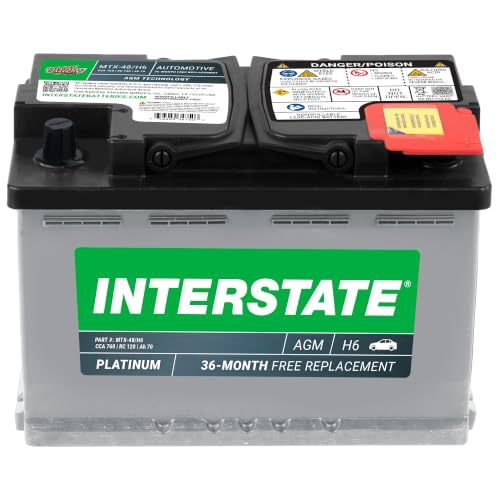
The OPTIMA D34M BLUETOP is a strong fit for daily drivers that need sealed AGM support, 750 CCA, and 120-minute reserve capacity in a Group 34 footprint. That combination suits cars with added accessories because it balances starting strength with reserve without requiring a lithium-specific charging setup. Fitment caveat: confirm tray length, terminal orientation, and terminal style before buying. (Manufacturer specs; AGM technical guidance from Clarios and other OEMs.)
Why this pick fits this load band: it works when the vehicle still needs dependable starting, but the accessory load is high enough that reserve capacity matters too. The CCA is high enough for daily-driver cranking, while the reserve helps stabilize short accessory use; it still depends on a healthy alternator and low voltage-drop wiring. (Battery Council International; alternator/voltage-drop guidance in OEM electrical service manuals.)
The drawback is cost. It also is not a cure for an undersized alternator, so voltage drop can still show up if the charging system cannot keep up at idle. AGM batteries tolerate repeated discharge better than flooded lead-acid, but they still need recharge time to avoid premature sulfation. (Clarios AGM guidance.)
Mighty Max 100Ah Lithium: best for lighter high-demand builds
- LiFePO4 chemistry; lighter than lead-acid
- Built-in BMS protects against over-discharge
- Drop-in replacement for Group 30H
The Mighty Max 100Ah Lithium battery suits builds that want lower weight and strong reserve, especially where a LiFePO4 pack makes sense. The listing identifies it as a LiFePO4 battery with 100 Ah capacity, a built-in BMS, and a drop-in Group 30H fit. LiFePO4 offers flat discharge voltage and fast recharge acceptance, but most passenger vehicles still need a charging plan that respects the battery and BMS limits. (U.S. DOE on lithium charging behavior; BMS manufacturer guidance.)
Why this pick fits this load band: its Ah rating supports sustained accessory use better than a starter-focused battery, and the chemistry’s low internal resistance helps under high demand. That said, CCA is not the main reason to choose LiFePO4 here; fitment, BMS compatibility, and charging voltage control matter more than headline cranking numbers. (Battery Council International; lithium OEM charging guidance.)
The drawback is that lithium is less forgiving than AGM in a casual swap. If the alternator profile, cold-weather use, or vehicle charging logic is not right, the battery choice becomes a problem instead of a solution. Many LiFePO4 batteries should not be charged below freezing unless the pack has low-temperature charge protection. (U.S. DOE; battery OEM instructions.)
Deka 9A34 AGM Intimidator: best for value-minded audio upgrades
- AGM spill-proof design for versatile mounting
- Vibration resistant for mobile audio installs
- Maintenance-free sealed construction
The Deka 9A34 AGM Intimidator fits owners who want a sealed, maintenance-free AGM battery without moving into lithium pricing. It is aimed at mobile audio installs that need vibration resistance and spill-proof construction, which are both useful in trunk or hatch setups. AGM batteries are also more tolerant of underhood heat and routine charging than lithium in a standard car electrical system. (Clarios AGM guidance; battery OEM fitment notes.)
Why this pick fits this load band: it is a sensible middle ground when the system needs reserve and daily-driver reliability more than extreme output. Ah and reserve behavior matter more here than raw CCA bragging, and its sealed construction makes fitment more forgiving in non-ideal mounting locations. Fitment caveat: confirm case size, terminals, and hold-down hardware. (Battery Council International; manufacturer fitment guidance.)
The drawback is that it is still an AGM battery, so it will not match lithium’s weight savings or rapid charge acceptance in extreme builds. It also will not solve a charging path problem by itself. If voltage drop is excessive, the battery can only do so much before the alternator and cabling become the bottleneck. (OEM charging-system diagnostics.)
What battery is best for a car with a big audio system?
For most big audio systems, the best starting point is an AGM battery with enough reserve and starting strength to hold voltage during bass peaks. If the system draw is high enough that the alternator cannot recover voltage quickly, a secondary battery or lithium support battery becomes the better answer than a simple larger starter battery. (Battery Council International; alternator sizing and voltage-drop guidance.)
That is the key split many buyers miss. A stronger starter battery helps cranking and short bursts. A true audio-support setup has to hold voltage through repeated demand, and that depends on the alternator, wiring, and idle behavior as much as the battery label. (Clarios AGM guidance; OEM charging-system diagnostics.)
Quick picks
- Best daily-driver audio support: OPTIMA D34M BLUETOP
- Best budget AGM upgrade: Deka 9A34 AGM Intimidator
- Best lighter lithium route: Mighty Max 100Ah Lithium
Say your hatchback has a 1,000-watt amp and the headlights dim at idle with the bass up. An AGM upgrade can help, but if the alternator cannot hold system voltage while parked in traffic, the fix needs wiring or charging support too. A system that sags at idle is signaling alternator margin loss, not just battery weakness. (Alternator voltage-drop guidance; car audio electrical troubleshooting references.)
Suppose a truck runs a sub amp, a winch, and off-road lighting. That setup is closer to a charging-system problem than a battery-size problem, so a dual-battery layout is usually a better match than chasing a higher CCA number alone. CCA covers starting; it does not replace alternator output or reserve energy for repeated accessory use. (Battery Council International; secondary-battery wiring guidance.)
Do you need AGM or lithium?
AGM is enough when the car is still a daily driver, the audio system is upgraded but not extreme, and you want a sealed, maintenance-free battery that handles repeated discharge better than flooded lead-acid. Lithium makes sense when weight, cycle life, and rapid recharge matter enough to justify charging-system planning. (Clarios AGM guidance; lithium OEM technical literature.)
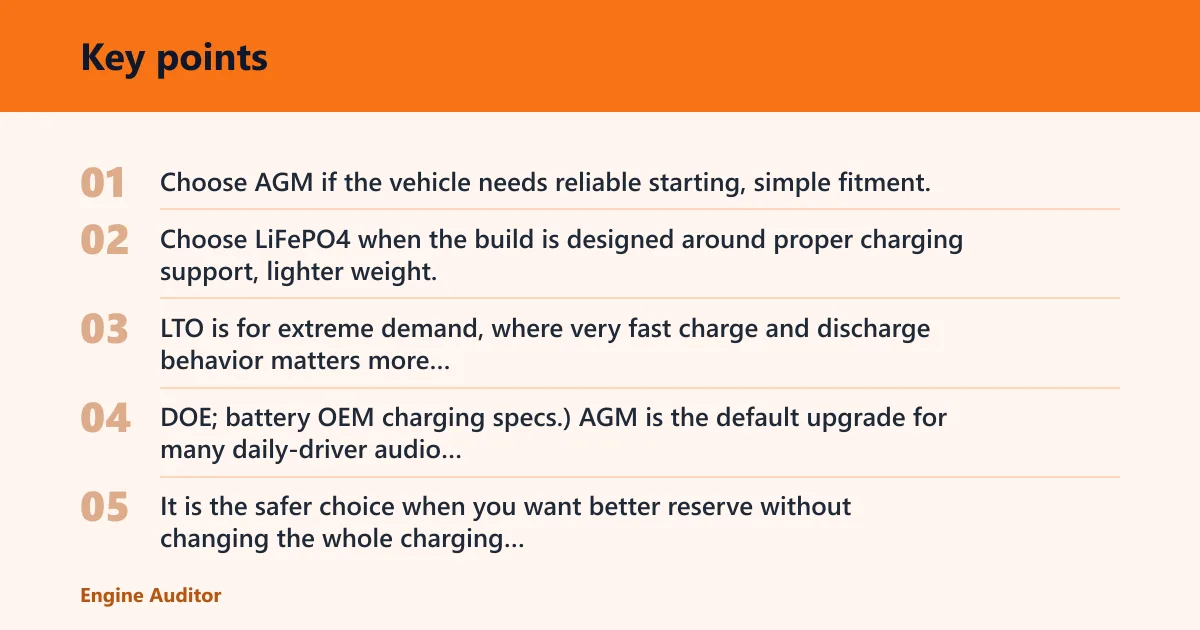
Choose AGM if the vehicle needs reliable starting, simple fitment, and normal cold-weather use. Choose LiFePO4 when the build is designed around proper charging support, lighter weight, and long cycle life. LTO is for extreme demand, where very fast charge and discharge behavior matters more than price or ordinary fitment. (U.S. DOE; battery OEM charging specs.)
When AGM is enough
AGM is the default upgrade for many daily-driver audio builds because it is sealed and maintenance-free, resists vibration, and handles deeper discharge better than flooded lead-acid. It is the safer choice when you want better reserve without changing the whole charging strategy. AGM also tends to be more tolerant of ordinary alternator regulation than lithium. (Clarios AGM guidance.)
When LiFePO4 makes sense
LiFePO4 works best in serious audio builds that already account for charging limits and BMS protection. It offers high power density, lower weight than AGM, and long cycle life. That makes it a strong fit for compact installs and high-draw systems that need repeatable recovery, provided charge voltage and low-temperature rules are respected. (U.S. DOE; battery OEM BMS guidance.)
When LTO is worth the jump
LTO is for extreme audio demand, especially burst-heavy systems that need very rapid charge and discharge capability. It is usually reserved for specialized setups, because the battery choice only pays off when the rest of the charging path is built to support it. LTO still needs proper system design; it is not a substitute for alternator capacity. (Lithium technology references; automotive electrical system guidance.)
Should you add a second battery?
Add a secondary battery when accessory load or audio draw can pull system voltage down faster than the alternator can recover it. That is common in trucks with lights, winches, refrigerators, or large amplifiers that stay active at idle. A second battery is support, not a substitute for charging capacity. (Secondary battery wiring guides; alternator sizing guidance.)
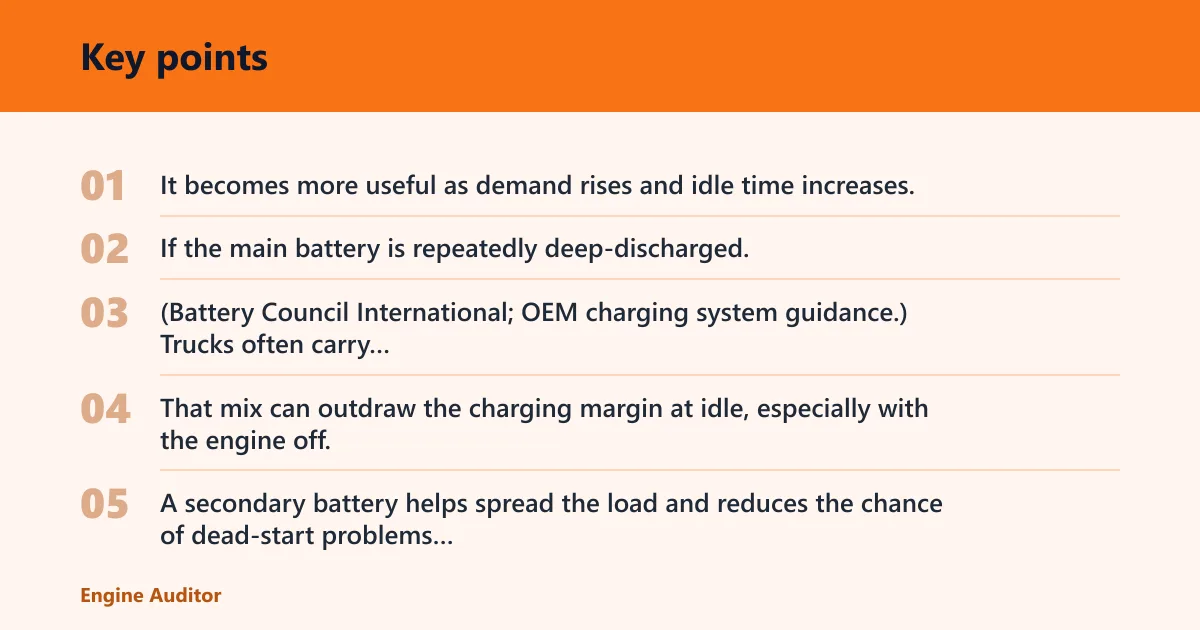
It becomes more useful as demand rises and idle time increases. If the main battery is repeatedly deep-discharged, or the system still sags after a proper AGM upgrade, a second battery is often the cleaner fix than piling on more starter battery capacity. (Battery Council International; OEM charging system guidance.)
Accessory-heavy trucks
Trucks often carry lighting, winches, audio, and camping gear. That mix can outdraw the charging margin at idle, especially with the engine off. A secondary battery helps spread the load and reduces the chance of dead-start problems after accessory use. (Secondary battery wiring guidance; OEM alternator sizing procedures.)
High-watt audio builds
When amplifier demand climbs, especially during long bass runs, a second battery can stabilize voltage near the amp rack. That does not excuse weak ground points or a small alternator, but it helps buffer demand during brief peaks and idle playback. For best results, it should be paired with proper cable sizing and charging-path upgrades. (Car audio electrical guides; voltage-drop and grounding guidance.)
When a capacitor is not enough
A car audio capacitor can help with short bursts near an amplifier and can smooth momentary dips. It is not a battery replacement. If the system has sustained voltage sag, repeated cutout, or deep discharge, the fix needs battery and charging support, not just a capacitor. Capacitors do not add meaningful reserve capacity; they mainly buffer brief transients. (Car audio capacitor technical guides.)
LiFePO4 and LTO: best for high-demand builds
LiFePO4 and LTO lithium batteries are high-performance options for car audio systems, but they belong in different jobs. LiFePO4 is the more practical step for lighter weight and long cycle life. LTO is the specialty answer for extreme demand and very fast recharge cycles. (Lithium chemistry literature; U.S. DOE basics on battery behavior.)
Both need the charging system to make sense. Both need protection. A lithium swap without a compatible BMS and charging profile can create overcharge risk, poor recovery, or compatibility problems that a sealed AGM would never cause. (Battery OEM BMS documentation; U.S. DOE guidance on lithium charging.)
BMS and charging requirements
A Battery Management System protects lithium packs from overcharge and overdischarge. That matters because audio systems often create repeated load swings. If the BMS, alternator output, and vehicle charging logic do not agree, the battery may never deliver its advertised benefit. BMS protection is central to lithium safety and usability, especially in automotive service. (Battery OEM BMS guidance; DOE lithium safety notes.)
When lithium beats AGM
Lithium becomes attractive when the build needs lower weight, fast recovery, and high cycle life, and when the owner is ready to support it with proper charging hardware. It is a better fit for systems that are already beyond a normal daily-driver upgrade. For cold climates, low-temperature charge protection matters just as much as capacity. (U.S. DOE; lithium OEM cold-weather guidance.)
Audio battery decision table
| Audio scenario | Estimated wattage band | Likely symptoms | Preferred battery approach | Secondary battery needed? | Red flags |
|---|---|---|---|---|---|
| Stock radio plus small amp | Under 500 watts | Occasional dimming, mild idle sag | AGM upgrade | Usually no | Weak grounds, undersized alternator, poor terminal contact |
| Daily driver with upgraded speakers and sub | 500 to 1,500 watts | Headlight dimming, amp clipping near idle, slow recovery after bass hits | AGM with reserve focus | Maybe | Idle voltage below target, charging path voltage drop, repeated deep discharge |
| Truck with audio plus accessories | 1,000 to 2,500 watts | Voltage sag at stoplights, accessory drag, warning lights | AGM plus secondary battery | Often yes | Alternator too small, poor grounding, trunk or bed mounting issues |
| Serious audio build with charging support | 2,500 to 5,000 watts | Rapid sag, repeated cutout, heat, clipping during long playback | LiFePO4 with BMS | Often yes | Alternator undersized, incompatible charging profile, weak cable routing |
| Extreme burst system | Above 5,000 watts | Sharp voltage dips, recovery lag, deep discharge damage | LTO or specialized battery bank | Usually yes | No charging headroom, poor thermal control, mounting and service access limits |
The table above remains a useful starting point, but current draw is the more actionable math. Estimated continuous current is roughly wattage divided by 13.8 volts at a charging-system voltage, so a 1,000-watt system is about 72 amps and a 2,500-watt system is about 181 amps before efficiency losses. If engine-off or idle current exceeds alternator margin, AGM reserve, lithium recharge behavior, or dual batteries become necessary. (Ohm’s law basics; audio amplifier efficiency guidance; alternator sizing references.)
How to choose
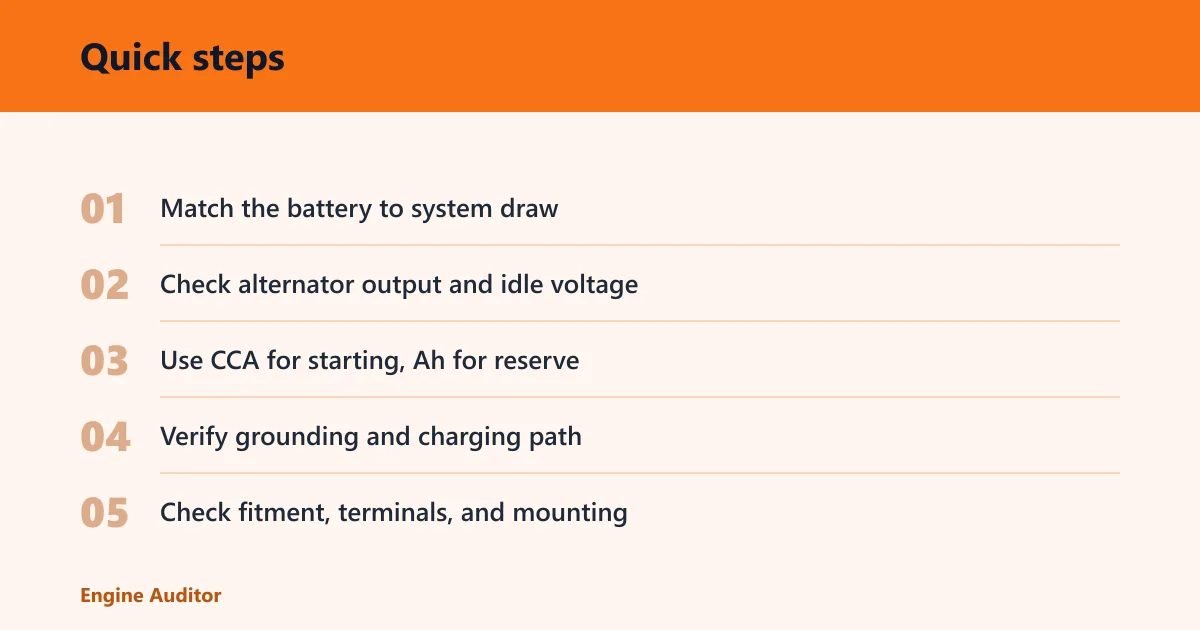
- Match the battery to system draw. Estimate amplifier demand and accessory load before you shop. A battery that looks strong on paper can still be wrong for the load pattern.
- Check alternator output and idle voltage. If voltage falls at idle with the system on, the alternator or wiring is part of the problem. A battery upgrade alone will not fix that.
- Use CCA for starting, Ah for reserve. CCA matters when daily-driver starting is important. Ah matters more when the system needs reserve and repeated discharge handling.
- Verify grounding and charging path. The Big 3 upgrade is a common companion mod because it reduces voltage drop in the charging path and helps the system deliver current where it is needed.
- Check fitment, terminals, and mounting. Trunk, truck bed, and compact tray installs can limit battery choices. Terminal layout and case size matter as much as chemistry.
Picture a compact sedan with a small battery tray, a 1,200-watt sub amp, and a trunk-mounted enclosure. If the owner buys a battery that does not fit the tray or forces awkward terminal routing, the install becomes harder and the charging path often gets worse too. Fitment is not cosmetic; it affects cable routing, service access, and hold-down security. (Fitment guidance from battery manufacturers.)
A common first-timer mistake is buying a bigger battery because the bass makes the dash lights flicker. If the alternator is already weak, the better path is to fix voltage drop, confirm idle charging, and then choose AGM, lithium, or dual batteries based on the actual load. (Alternator sizing and voltage-drop guidance; car audio electrical troubleshooting references.)
Alternator sizing guide, Big 3 upgrade guide, car audio capacitor guide, and secondary-battery wiring guide are the next steps when the battery alone cannot hold system voltage. These upgrades address the charging path, not just the storage side.
Frequently asked questions
Do I need AGM or lithium for high-accessory cars?
AGM is the safer choice for many high-accessory daily drivers because it tolerates abuse, fits like a normal automotive battery, and does not demand the same charging discipline as lithium. Lithium makes sense when the build is planned around BMS protection, proper charging behavior, and lower weight. Cold-weather use also pushes many owners toward AGM. (U.S. DOE; battery OEM guidance.)
How many amps does a car audio battery need?
There is no single amp number that fits every build. The better question is whether the battery can support the system’s load while the alternator recovers voltage. For audio use, reserve behavior and recharge rate matter as much as starting output, so compare Ah, CCA, and charging support together. (Battery Council International; alternator sizing guidance.)
Will a stronger battery stop my headlights from dimming with bass?
Not always. A stronger battery can help, but dimming usually means the system is pulling current faster than the alternator and wiring can supply it. If grounding is weak or the alternator is undersized, the lights may still dim even after a battery upgrade. (Voltage-drop and grounding guidance; OEM electrical diagnostics.)
Should I add a second battery for my audio system?
Add a second battery when the main battery cannot hold voltage through heavy demand, especially in trucks or custom installs with audio and accessories. It helps buffer load, but it works best when paired with adequate alternator output, solid grounds, and proper cable sizing. (Secondary battery wiring guides; alternator sizing guidance.)
Can a capacitor replace an upgraded battery for car audio?
No. A capacitor can help with short bursts near the amplifier and may reduce brief voltage dips, but it is not a replacement for a proper battery or charging upgrade. If the system has sustained sag or repeated deep discharge, you need more than a capacitor. (Car audio capacitor technical guidance.)
Which battery is better for repeated deep discharge from audio use?
AGM handles repeated deep discharge better than flooded lead-acid and is the right default for many audio-heavy daily drivers. LiFePO4 can be even better in serious builds when the BMS and charging system are compatible. LTO is the extreme option for very fast cycling and heavy burst demand. (Clarios AGM guidance; lithium OEM guidance.)
Products related to this article
Sponsored / affiliate links. As an Amazon Associate I earn from qualifying purchases. I may earn additional commission from eligible campaigns.