When Is The Best Time To Sell An Electric Car: Proven Tips
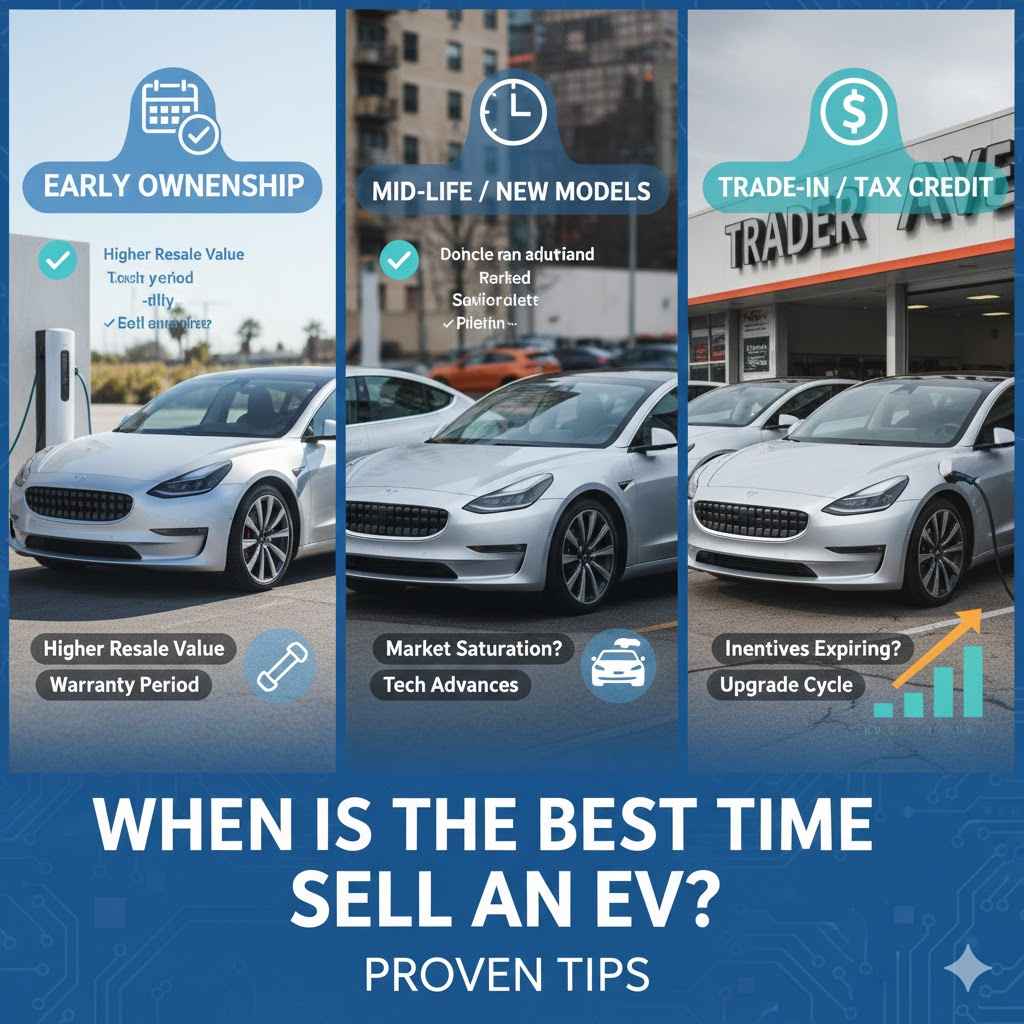
The best time to sell an electric car is typically within the 3 to 5-year mark, while it’s still under the original battery warranty. Aim for spring or early fall when car demand is high, and try to sell before a newer version of your model is released to maximize your car’s value.
Hi, I’m Dustin Hall, your friendly guide in the world of cars. Thinking about selling your electric vehicle (EV) can feel a bit confusing. Unlike gas cars, EVs have different things to think about, like battery health and new technology. It’s easy to wonder if you’re picking the right moment to sell. Don’t worry, you’re in the right place! I’m here to make it simple. This guide will walk you through everything, step-by-step, so you can feel confident and get the best possible price for your car. Let’s get you ready for a successful sale.
Understanding Electric Car Depreciation: The Biggest Factor
Before we dive into the “when,” let’s talk about the biggest thing that affects your car’s value: depreciation. It sounds like a big word, but it just means how much value your car loses over time. All cars lose value, but EVs have their own unique recipe for it. Understanding this helps you sell at the smartest time.
Why EVs Are Different
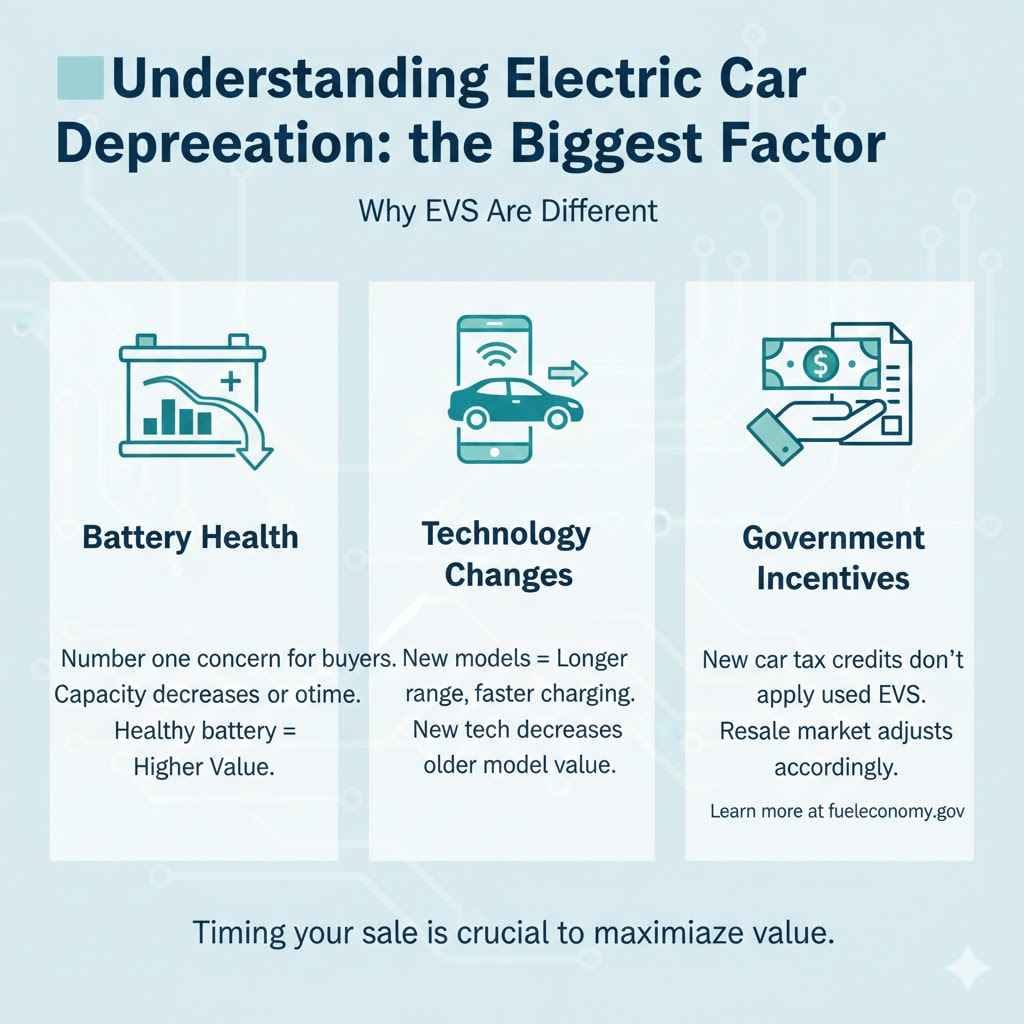
With a regular gas car, depreciation is mostly about age, mileage, and condition. For an electric car, two extra ingredients are thrown into the mix: battery health and technology speed.
- Battery Health: This is the number one concern for any used EV buyer. A battery’s ability to hold a charge slowly decreases over its life. A car with a healthy battery is worth much more than one with a tired battery.
- Technology Changes: EV technology is moving at lightning speed! New models come out with longer ranges, faster charging, and cooler features. When a brand-new, better version of your car is announced, the value of the older models can drop.
- Government Incentives: Those tax credits you might have received when you bought your EV new can also play a role. Because buyers of used EVs often don’t qualify for the same new-car credits, the resale market adjusts. You can learn more about federal tax credits for new and used vehicles at fueleconomy.gov.
Thinking about these factors helps you see why timing your sale is so important. You want to sell when your car’s best features—like its battery life and current tech—are still highly valuable to the next owner.
The “When” Factors: Timing Your Sale for Maximum Value
Timing is everything. Selling at the right moment can mean thousands of dollars more in your pocket. Let’s break down the key moments that create the perfect window to sell your electric car.
1. The Age and Mileage Sweet Spot
Just like with people, there’s a prime age for selling a car. For most EVs, the sweet spot is between 3 and 5 years old. Here’s why:
- It’s Still “Modern”: At this age, the car’s technology hasn’t been completely outdated by newer models yet. It still feels fresh and has the features buyers are looking for.
- Depreciation Slows Down: A car loses the most value in its first couple of years. After year three, the drop in value starts to flatten out, so you aren’t losing money as quickly.
- Warranty Is Active: Most importantly, the car is likely still covered by its original battery warranty, which is a huge selling point (more on this next!).
Mileage is the other half of this equation. Try to sell before you hit a major mileage milestone. A car with 48,000 miles on it often looks much more appealing to a buyer than one with 52,000 miles. Keeping it under 60,000 miles is a great goal.
| Car Age | General Condition | Typical Resale Value Impact |
|---|---|---|
| 1-2 Years | Almost new, but has taken the biggest depreciation hit. | Lower return on investment for the original owner. |
| 3-5 Years (Sweet Spot) | Well-maintained, tech is still relevant, warranty likely active. | Excellent balance of use and retained value. Often the best time to sell. |
| 6-8 Years | Shows more wear, technology may feel dated, battery warranty is ending. | Value drops more significantly as the battery warranty expiration nears. |
| 8+ Years | Out of battery warranty, potential for battery degradation is higher. | Value is much lower; becomes a budget-focused buy. |
2. Battery Health and Warranty
The battery is the heart of your EV. A healthy heart makes for a valuable car. The battery’s “State of Health” (SOH) tells a buyer how much life it has left. A report showing 90% or higher SOH is a golden ticket for your sale.
Even more important is the battery warranty. Most manufacturers offer an 8-year/100,000-mile warranty on the battery pack. This is a massive safety net for a new owner. Selling your car while it still has several years or tens of thousands of miles left on that warranty gives the buyer incredible peace of mind. It tells them that if the most expensive part of the car fails, they’re covered. Selling a car that is out of its battery warranty is much, much harder.
How to Check Battery Health:
- Dealership Visit: You can ask your dealership to run a battery health diagnostic. They will give you an official printout you can show to potential buyers.
- Third-Party Apps: Some apps, when paired with a compatible OBD2 scanner, can give you a SOH reading. This is a great option for your own knowledge.
3. Seasonal Demand: The Best Months to Sell
Believe it or not, the seasons affect car sales. People are more likely to shop for cars when the weather is nice and when they have extra cash.
- Spring (March to June): This is often the best time. The weather is improving, people are receiving tax refunds, and they’re feeling optimistic about making a big purchase.
- Late Summer & Early Fall (August to October): This is another strong period. Families are preparing for the back-to-school season, and people want to get a new car before the bad weather of winter sets in.
Winter is generally the slowest season. Cold weather can temporarily reduce an EV’s range, and shoppers are often more focused on holidays than car buying.
4. Market Trends and New Model Releases
The EV market moves fast. Pay attention to the news! If you hear that the manufacturer of your car is about to release a brand-new version with a much bigger battery or a major redesign, that’s your cue. The value of your current model will likely drop once the new one is available. The best time to sell is before that new model hits the showrooms.
By staying a little bit ahead of the curve, you sell your car when it’s still the latest and greatest, rather than the “old version.”
5. Gas Prices and Economic Conditions
External factors you can’t control can also create a perfect selling opportunity. When gas prices spike, interest in electric cars skyrockets. Everyone starts thinking about how much money they could save by ditching the pump. If you see gas prices climbing, that’s a fantastic time to list your EV. The higher demand can lead to a quicker sale and a better price.
The “How” Factors: Preparing Your EV for a Top-Dollar Sale
Knowing when to sell is half the battle. The other half is preparing your car so it shines for potential buyers. A little effort here can make a huge difference in your final sale price.
Step 1: Get Your EV Looking Its Best
First impressions are everything. A clean, sparkling car looks like a well-cared-for car.
- Wash and Wax: Give the exterior a thorough wash and a coat of wax. Make the paint shine.
- Clean the Wheels: Dirty wheels can make a whole car look grimy. Use a wheel cleaner to get rid of brake dust.
- Detail the Interior: This is critical. Vacuum everything—floors, seats, and trunk. Wipe down all surfaces, including the dashboard and center console screen. Clean the windows inside and out.
- Fix the Small Stuff: Consider using a touch-up paint pen for small scratches or having a professional fix any small dings. It’s a small investment that can pay off big.
Step 2: Gather All Your Important Documents
Being organized shows buyers you’re a responsible owner. Get all your paperwork together in a neat folder.
- Vehicle Title: This is the most important document. Make sure you have it and it’s ready for transfer.
- Service Records: Did you get the tires rotated or the cabin air filter changed? Print out any records you have. This proves the car was maintained.
- Battery Health Report: If you got one from the dealer, this is your secret weapon. It answers the biggest question a buyer has.
- Original Window Sticker: If you still have it, include it! It lists all the features and options your car came with.
- Charging Cables: Make sure you have all the charging equipment that came with the car.
Step 3: Understand Your Car’s True Value
Pricing your car correctly is key. Too high, and no one will call. Too low, and you leave money on the table.
- Use Online Tools: Websites like Kelley Blue Book (KBB) and Edmunds provide excellent valuation tools. Be honest about your car’s condition to get an accurate estimate.
- Check Local Listings: Search for cars just like yours (same year, model, trim, and similar mileage) in your area. This shows you what buyers are actually seeing and what your competition is.
- Adjust for Your Car’s Features: Does your car have a special feature like a premium sound system, a panoramic sunroof, or advanced driver-assist software? These can add to its value, so be sure to factor them in.
| Factor | Impact on Price | How to Leverage It |
|---|---|---|
| Overall Condition | High | A clean, well-maintained car justifies a higher price. Mention its “excellent condition” in your ad. |
| Battery Health (SOH) | Very High | Provide a battery health report. A high SOH is your biggest selling point. |
| Remaining Warranty | Very High | Clearly state how many years/miles are left on the battery and bumper-to-bumper warranties. |
| Trim Level & Options | Medium | List all premium features, like a larger battery pack, all-wheel drive, or a premium interior. |
| Service History | Medium | Show buyers your organized service records to prove you took great care of the vehicle. |
Step 4: Take High-Quality Photos and Write a Great Ad
Your online ad is your car’s storefront. Make it inviting!
Photo Checklist:
- Take photos in a nice location (like an empty parking lot or a park) during the day when the light is good.
- Get shots from every angle: front, back, both sides, and three-quarter views.
- Interior shots are a must: driver’s seat, dashboard (turn the car on to show the mileage and any warning lights are off), back seats, and trunk.
- Take close-ups of special features and the wheels.
- Be honest. If there’s a small scratch, take a photo of it. Buyers appreciate transparency.
Writing the Ad:
Keep your description clear and easy to read. Start with the basics (year, make, model, trim, mileage, price). Then, write a short paragraph highlighting the best things about your car. Mention the battery health, remaining warranty, and any cool features. Use bullet points to list options so it’s easy to scan.
Step 5: Choose the Right Place to Sell
You have a few options for where to sell your car, each with its own pros and cons.
- Private Sale: This will almost always get you the most money. However, it requires more work. You have to create the ad, talk to buyers, arrange test drives, and handle the paperwork.
- Dealership Trade-In: This is the easiest and fastest option. You just drive your car to the dealer and they give you a value for it towards a new car. The downside is that you will get less money than in a private sale.
- Instant Cash Offer: Companies like CarMax, Carvana, and Vroom will give you an instant offer online. This is also very easy, but the offer might be lower than a trade-in or private sale. It’s a great way to get a baseline value, though.
- EV-Specific Marketplaces: Some websites specialize in selling used EVs. This can be a great option because you’re reaching an audience that is specifically looking for what you have.
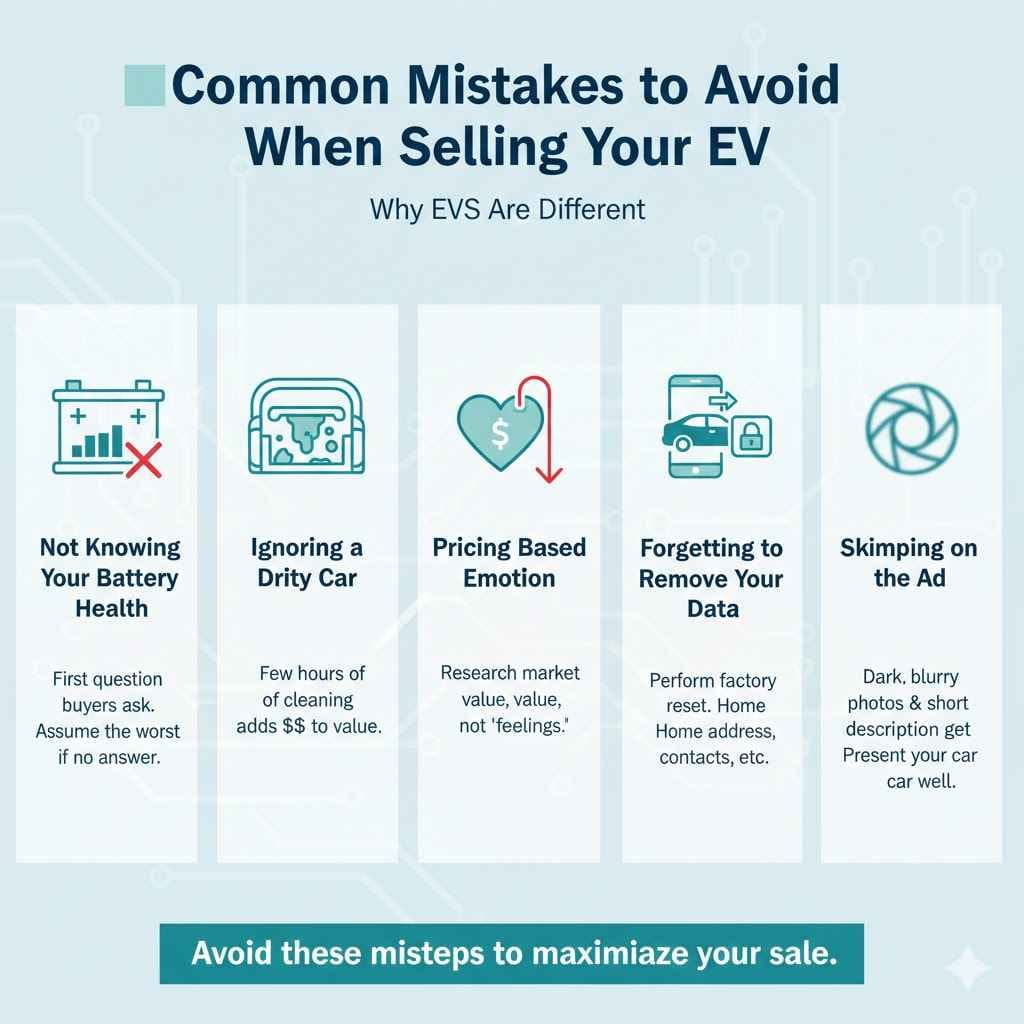
Common Mistakes to Avoid When Selling Your EV
A few simple missteps can cost you time and money. Here are the most common ones to watch out for:
- Not Knowing Your Battery Health: This is the first question a savvy EV buyer will ask. If you don’t have an answer, they may assume the worst and offer you less money.
- Ignoring a Dirty Car: A car covered in dirt, with a cluttered interior, screams “I don’t care about this car.” A few hours of cleaning can add hundreds of dollars to its perceived value.
- Pricing Based on Emotion: You may love your car, but its value is determined by the market. Price it based on research, not on what you “feel” it’s worth.
- Forgetting to Remove Your Data: Your car’s infotainment system stores a lot of personal information, like your home address, phone contacts, and garage door codes. Be sure to perform a factory reset before you hand over the keys.
- Skimping on the Ad: Dark, blurry photos and a one-sentence description will get your ad ignored. Take your time to present your car in the best possible light.
Frequently Asked Questions (FAQ)
Do electric cars lose value faster than gas cars?
It can vary. In the past, some EVs depreciated faster due to rapidly changing technology and government incentives on new models. However, as EV technology has matured and demand has grown, many popular EV models now hold their value very well, sometimes even better than comparable gas cars.
What is the most important factor for an EV’s resale value?
Battery health is, by far, the most important factor. A buyer’s biggest fear is having to replace an expensive battery pack. Proving your car’s battery is in excellent shape with a high State of Health (SOH) gives them confidence and significantly boosts your car’s value.
How can I prove my EV’s battery is in good shape?
The best way is to get a professional battery health check from your car’s dealership. They can provide an official report that you can show to potential buyers. This document is powerful proof that your car’s most vital component is healthy.
Should I sell my EV before the battery warranty expires?
Yes, absolutely if you can. The battery warranty (typically 8 years/100,000 miles) is a huge safety net for buyers. Selling your car with a few years of warranty remaining is a major selling point and can make your car much more attractive than one that is out of warranty.
Is it harder to sell an EV in the winter?
It can be. Cold weather can temporarily reduce an EV’s range, which can make some buyers hesitant. Generally, the car market is slower in the winter anyway. Spring and fall are usually the best seasons for selling any type of vehicle, including an EV.
Do government tax credits affect my car’s resale value?
Yes. The large federal tax credits available for new EVs can lower the effective price of buying new, which in turn can push down the resale value of used models. When credits change or expire, it can shift the market, so it’s good to be aware of the current incentive landscape.
Where is the best place to sell my used EV?
For the highest price, a private sale through sites like Autotrader or Facebook Marketplace is often best. For the easiest and fastest sale, trading in at a dealership or getting an instant cash offer from a service like Carvana or CarMax is a good choice, though you’ll likely get less money.
Conclusion: Your Roadmap to a Successful Sale
Selling your electric car doesn’t have to be a guessing game. By understanding what makes your EV valuable and picking the right moment, you can take control of the process and ensure you get a great return on your investment. Remember the key takeaways: aim for the 3-to-5-year sweet spot, leverage that all-important battery warranty, and pay attention to the seasons and market news.
Combine that smart timing with a little preparation—a clean car, organized paperwork, and a great online ad—and you’ll be in the perfect position. You now have a clear roadmap to navigate the sale with confidence. You’ve got this!
Related pick: Check today's price on Amazon