Best Car Batteries for Music Systems (2026): we compared
For most audio builds, start with an AGM battery rated in a moderate CCA and Ah range; move to an AGM or lithium auxiliary battery when amplifier draw gets into the higher-power range, and consider a second battery or alternator upgrade for the largest systems. Skip the electrical path and you get dimming at idle, voltage sag on bass hits, shortened playtime, and charging stress. This guide matches battery type to wattage, idle behavior, engine-off playtime, and charging limits.
Quick comparison
| Product | Badge | Best for | Price | ||
|---|---|---|---|---|---|
 |
XS Power D3400R 3300 Amp AGM Battery with M6 TerminalXS Power | Our pick | 3300A · 80Ah · Group 34R · AGM | $419.99
Price as of 14 Oct 2026
|
View |
 |
Optima Batteries 8050-160-FFP D31T YellowTop Dual PurposeOPTIMA | Also great | 900 CCA · 155 min RC · Dual purpose | $399.99
Price as of 14 Oct 2026
|
View |
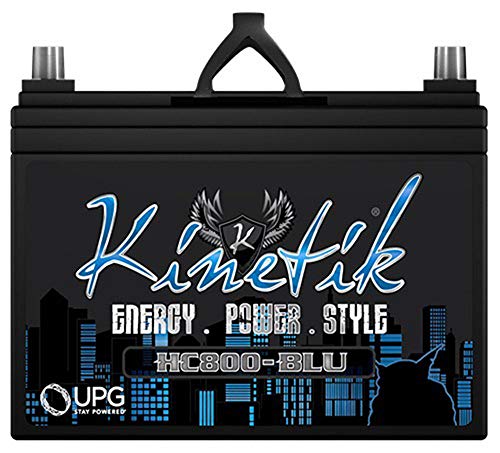 |
Kinetik HC800 BLU 800W 12V High Current AGM Car AudioKinetik | Budget pick | 800W · 12V · AGM Power Cell | $114.99
Price as of 14 Oct 2026
|
View |
 |
Stinger SPP2150 12V 100Ah Sealed Lead Acid ReplacementUPS Battery Center | Upgrade pick | 12V · 100Ah · Sealed Lead Acid | $289.99
Price as of 14 Oct 2026
|
View |
Use the comparison table to match the battery to the failure mode, not to a vague “more power” goal. The right fix for idle dimming is often different from the right fix for engine-off listening.
How we chose
We compared battery chemistry, reserve capacity, amp-hour rating, fitment flexibility, and charging compatibility. We also weighted the failure mode each setup solves: idle dimming, bass transients, shutdowns with the engine off, or all-day voltage stability.
We favored setups that pair cleanly with the Big-3 wiring upgrade, proper fusing, and common group sizes. That keeps the choice practical instead of theoretical.
Quick picks
- Stock system or mild load: EFB or a quality AGM. Best when you want a low-cost step up without changing the charging system.
- 600W to 1,000W daily build: AGM with a Big-3 wiring upgrade. This gives strong idle support and steady voltage for common daily systems.
- 1,500W+ or long engine-off playtime: AGM plus a second battery, or LiFePO4 with DC-DC charging.
- SPL bursts and hard bass hits: AGM or LiFePO4 with an ultracap bank for transient support.
Say your sedan has a 1,000W system and the headlights pulse at stoplights. A better battery may help, but the first fix is usually the charging path, not a bigger box of storage.
Suppose a hatchback runs a DSP, amplifiers, and a subwoofer for two hours with the engine off. That is a reserve-capacity problem first, and a cranking-amp problem last.
What car battery is best for music systems and extra power?
- AGM battery and powercell design
- Includes M6 terminal hardware
- Reverse polarity configuration available
AGM is the best fit for most music systems and extra electrical load because it has low internal resistance, stable voltage under heavy bass hits, and sealed construction. For high discharge and faster voltage recovery, LiFePO4 is better, but it needs correct charging and a BMS. For mild upgrades, EFB is the budget step.
If you want one answer for most daily drivers, start with AGM. It is the safest fit when you want better idle voltage support without reworking the whole charging system.
AGM battery: best all-rounder for daily audio upgrades
- Designed for 800W car audio systems
- 12V high current power cell
- BLU series with black case and blue logo
AGM batteries are usually the first upgrade for car audio because they tolerate repeated discharge better than standard flooded batteries and keep voltage steadier when the bass hits. They are spill-proof, work well in heat or cold, and can support moderate amplifier loads without asking for specialty charging.
That low internal resistance matters at idle. It helps reduce the quick voltage drop that causes dimming when the system asks for current in short bursts.
The limit is simple. AGM is excellent for daily use and moderate loads, but it is still a storage device. It cannot fix a weak alternator that is already falling behind at cruising speed or at idle.
When AGM beats flooded and when it does not
AGM beats standard flooded batteries when you need steadier voltage, better cycling, and safer mounting in tight spaces. It is the cleaner choice for trunk-mounted audio batteries and for cars that sit in hot or cold weather.
It does not beat a charging system problem. If the alternator cannot supply enough current, a larger AGM only delays the sag.
Do you need AGM or lithium for a car audio system?
Choose AGM if you want simple installation, broad vehicle compatibility, and lower risk. Choose LiFePO4 if you need very high discharge, fast recovery after big bass hits, and better voltage support for heavy accessory loads. LiFePO4 also needs a BMS, and DC-DC charging is often the right match.
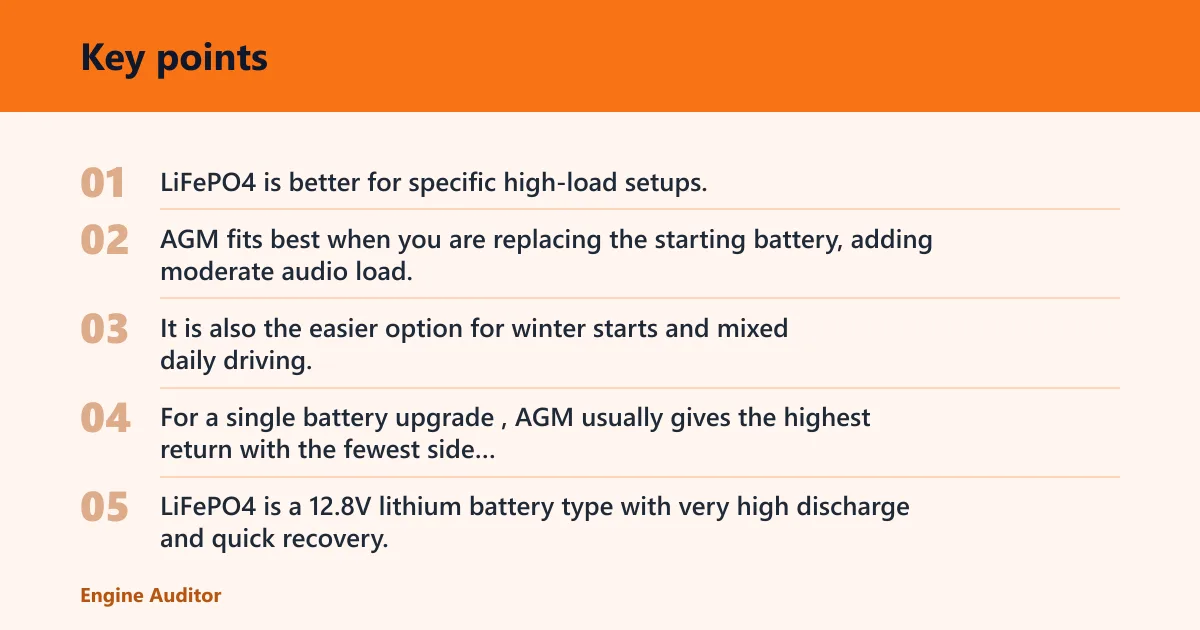
The choice comes down to charging design. AGM is easier. LiFePO4 is better for specific high-load setups, but it is less forgiving of poor charging rules.
Choose AGM for simple installs and budget control
AGM fits best when you are replacing the starting battery, adding moderate audio load, or keeping the factory alternator and electrical layout mostly intact. It is also the easier option for winter starts and mixed daily driving.
For a single battery upgrade, AGM usually gives the highest return with the fewest side effects.
Choose LiFePO4 for high discharge and fast recovery
LiFePO4 is a 12.8V lithium battery type with very high discharge and quick recovery. That makes it useful for large audio systems that pull hard on peaks, then need voltage to rebound fast between hits.
It is not a casual drop-in for every car. A BMS is required, and DC-DC charging is often preferred, especially in dual-battery systems or mixed-chemistry layouts.
Build-tier decision table: what to buy for your wattage range
| Audio load | Minimum battery setup | Wiring upgrade | Charging method | Alternator warning signs |
|---|---|---|---|---|
| Stock head unit | Quality EFB or OEM AGM | Check grounds first | Factory charging is usually fine | No dimming, no idle drop, no shutdowns |
| Up to about 600W RMS daily driver systems | Quality AGM starting battery | Big-3 first if voltage dips | Factory alternator acceptable if healthy | Lights dim at idle, bass hits pull voltage down |
| Roughly 600–1500W RMS with dimming at idle | Larger or dedicated AGM | Big-3 with 1/0 or 4-gauge OFC | Monitor alternator output under load | Idle sag, slow recovery, voltage drops with HVAC on |
| About 1500–3000W RMS | AGM aux plus ultracap bank or high-discharge LiFePO4 | Big-3 plus upgraded feed and grounds | DC-DC for LiFePO4, smart isolator for AGM-to-AGM | Headlights pulse, bass clips sooner, voltage falls after a few notes |
| 3kW+ SPL builds | LiFePO4 main or multi-AGM bank | Heavy cable, upgraded alternator path | Proper charging and alternator upgrade | Voltage crash during repeats, system shuts down, battery never recovers |
The 1200W RMS Class D example is estimated at about 108A peak draw, which is why current delivery matters more than raw cranking amps. A battery cannot supply what the charging system never replaces.
How many amps can a car battery support for audio?
A car battery can support a lot of audio current for short periods, but that is not the same as supplying it continuously. A 1200W RMS Class D example is estimated at about 108A peak draw, and larger systems can ask for far more during bass transients. Reserve capacity and charging output decide how long that stays stable.
The practical question is not “how many amps can the battery hold,” but “how long can voltage stay in range while the alternator keeps up.”
Use reserve capacity and amp-hours for the right job
Reserve Capacity, or RC, measures playtime with the engine off and helps indicate voltage stability at idle. Amp-hour, or Ah, is the bigger sizing number for engine-off listening and for estimating how long the battery can feed current draw.
For audio, RC helps when you care about idle behavior and short engine-off sessions. Ah matters more when you want longer playtime without starting the car.
When should you add a second battery for your sound system?
Add a second battery when engine-off playtime, bass transients, or total accessory load outgrow the main battery’s reserve capacity. A second battery is also useful when you want the system to recover faster between hard hits, but it should follow a healthy charging system and proper fusing.
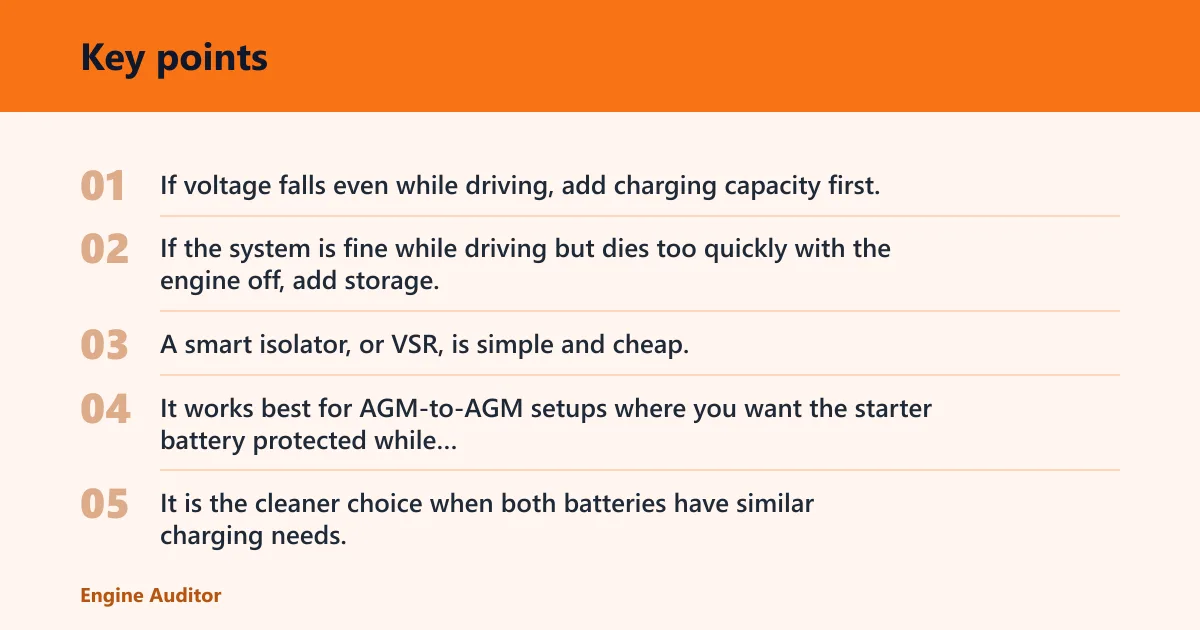
If voltage falls even while driving, add charging capacity first. If the system is fine while driving but dies too quickly with the engine off, add storage.
Use a smart isolator for AGM-to-AGM dual-battery systems
- 155-minute reserve capacity for constant performance
- Fifteen times more vibration resistant
- Optimal starting power even in bad weather
A smart isolator, or VSR, is simple and cheap. It works best for AGM-to-AGM setups where you want the starter battery protected while the auxiliary battery feeds audio.
It is the cleaner choice when both batteries have similar charging needs. For mismatched chemistries, use a different method.
Use a DC-DC charger for LiFePO4 or mixed chemistries
DC-DC chargers are the preferred choice for LiFePO4 because they handle charging rules better and can cope with mixed battery types. They are also a better match when the auxiliary battery is in the trunk or when cable runs are long.
Think of them as the control layer, not just the wire. They regulate how the battery gets charged instead of hoping the alternator behaves well enough.
What battery size or group size works best for car audio?
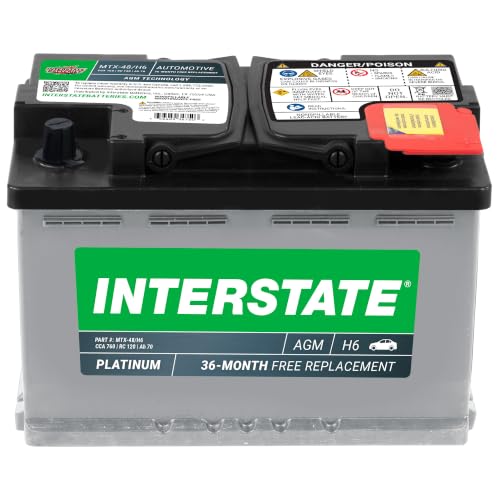
Group size should match the space, terminal layout, and airflow you actually have, not just the amp rating you want. Group 24F and Group 35 are compact choices; Group 48 (H6) and Group 94R (H7) are common OE-plus fits; Group 31 gives the most reserve when space allows.
For trunk use, battery size also has to clear enclosure panels, carpet, and any amp rack. A battery that fits on paper can still fail in a trunk with a shallow spare-tire well.
Common fitment notes for group sizes
Group 24F and Group 35 often fit smaller engine bays and lighter builds. Group 48 (H6) and Group 94R (H7) are common in performance and OE-plus layouts, with enough room for a practical upgrade without a full custom tray.
Group 31 is the strong reserve option, but it needs more room and a stronger hold-down. Check terminal orientation before buying, especially if the positive post would sit against a brace or cover.
For trunk mounting, verify venting, tie-down points, and enclosure clearance. Some audio batteries fit the tray size but conflict with sub box depth, amp racks, or rear-seat hardware.
Do I need a capacitor bank with my audio battery?
You do not need a capacitor bank for every audio system. Ultracap banks are excellent for bass transients, but they are not a battery. They help most when short, sharp current spikes are causing audible dip or clipping, and they work best alongside AGM or LiFePO4 storage.
Use ultracaps as a supplement, not as a replacement for battery capacity or alternator output.
When ultracaps make sense
Ultracaps can help a system that sounds strong on steady notes but dips hard on kick-drum hits. They charge and discharge very fast, so they can smooth the current demand that hits during transient bass passages.
They are less useful for long engine-off listening. That job belongs to RC and Ah, not a capacitor bank.
Big-3 wiring and fuse protection
The Big-3 upgrade improves current delivery by upgrading alternator positive to battery positive, battery negative to chassis, and engine block to chassis. Use 1/0 or 4-gauge OFC cable kits. Fuse both ends of any run, with fuses placed 7–12 inches from the battery and ANL holders where appropriate.
Do the Big-3 before buying a second battery if the car already shows idle dimming. Wiring fixes often restore more usable voltage than a larger battery alone.
Install order that avoids wasted money
- Check the battery’s age and state of charge.
- Inspect the alternator output and chassis grounds.
- Install the Big-3 with proper OFC cable and fusing.
- Measure voltage at idle with the system on.
- Add storage or charging hardware only after the base path is sound.
A common first-timer mistake is buying a Group 31 battery because the subwoofer is loud, then discovering the alternator cannot recharge it between drive cycles. That gives longer playtime once, then a tired battery the next day.
Frequently asked questions
Will a bigger battery stop my lights from dimming?
Sometimes, but not always. If dimming happens because the battery lacks reserve capacity, a bigger or better battery can help. If dimming happens because the alternator cannot keep up, the real fix is charging capacity, wiring upgrades, or both.
How do I know if my alternator is the real problem?
If voltage stays low while driving, not just at idle, the alternator is likely the bottleneck. If the system only dims during short bass hits but recovers quickly, storage may be the issue. A healthy Big-3 upgrade and a voltage check under load help separate the two.
Products related to this article
Sponsored / affiliate links. As an Amazon Associate I earn from qualifying purchases. I may earn additional commission from eligible campaigns.