Why Does My Fuel Pump Make a Buzzing Sound?
A fuel pump can buzz normally for about 1 to 3 seconds at key-on. If the sound is loud, runs continuously, or changes with engine load, treat it as a fault. Ignoring it can leave you stranded, damage the pump, or cause a no-start. This guide shows how to tell a normal prime from a load-related buzz and when to stop driving.
How to tell if a fuel pump buzz is normal

A normal fuel pump buzz is usually a brief, steady hum from the tank area when you turn the key on. It often lasts about 1 to 3 seconds while the pump primes the rail, then fades once pressure is built. That sound alone is not a failure sign.
Key-on prime behavior
Many electric fuel pumps are in-tank units, though some vehicles use an inline pump. Both are motor-driven and should make some sound during prime. The pump raises fuel pressure to the level the engine control system expects, then cycles less once the engine is running.
A quiet hum at key-on is common. A harsh whine, grinding tone, or buzz that keeps going after start-up deserves attention. A pump that suddenly sounds louder than it has before is often working against restriction, low fuel, heat, or wear.
When the noise is normal
Brief sound at key-on is normal. A light hum at idle can also be normal if the vehicle’s rear seat or cargo area makes the tank easier to hear. Injectors click too, and that ticking can be mistaken for pump noise when you stand near the engine bay.
When is fuel pump noise a warning sign?
Fuel pump noise becomes a warning sign when it is loud, continuous, or paired with driveability problems. Hard starts, long cranking, stalling, sputtering under acceleration, or a loss of power can point to pressure trouble rather than normal pump operation.
Noise plus symptoms
A buzzing pump that gets louder when the tank is low, the weather is hot, or the engine is under load can often mean the pump is struggling. If the sound changes with acceleration, the system may be losing pressure faster than the pump can maintain it.
Stalling at stops, a lean surge on the highway, or a no-start after heat soak can point to a weak pump, a clogged filter, a faulty regulator, or an electrical supply issue. The noise is a clue. The symptoms tell you how serious it is.
Do not ignore these signs
If the vehicle stalls, starts only after long cranking, or loses power when merging or climbing a hill, treat the problem as urgent. That is the point where driving becomes a risk, not a convenience issue.
| When the buzz happens | What it sounds like | Likely causes | Quick checks | Safe to drive? | Outcome |
|---|---|---|---|---|---|
| Key-on for 1 to 3 seconds | Soft hum or brief whirr | Normal prime, fuel rail pressurizing | Confirm it stops after prime; compare to previous sound | Yes | normal |
| Key-on, but loud and rough | Harsh buzz or whining | Low fuel, restriction, worn pump, voltage drop | Check fuel level, fuse, relay, filter history | Usually, but monitor closely | monitor |
| Idle with rough running | Busy buzz, steady whine, or cycling noise | Low pressure, clogged filter, weak regulator, failing pump | Look for lean codes, misfires, pressure drop | Maybe for a short trip only | monitor |
| Acceleration or hill load | Buzz rises, then engine stumbles | Pump cannot keep up, restriction, wiring voltage loss | Check pressure under load, scan fuel trims | No, plan repair soon | urgent |
| Hot restart after heat soak | Loud hum, long crank, then start or no-start | Vapor-related strain, weak pump, failing regulator, electrical fault | Listen for prime, check pressure, scan codes | No if it stalls or will not restart reliably | urgent |
Can low fuel or a clogged filter make it louder?
Yes. Low fuel can make the pump louder because fuel helps cool and cushion the pump inside the tank. A clogged filter also raises pump effort, which can make the sound sharper or louder while fuel pressure drops downstream.
Low fuel level effects
When the tank is near empty, the pump may echo more through the tank shell and run hotter. The pickup and swirl pot still have to supply fuel, but there is less liquid around the pump to absorb noise and heat. That can make a healthy pump sound harsher.
Suppose the tank is near a quarter full and the buzz starts after a long uphill drive on a hot day. The extra heat and low fuel can magnify normal pump sound. If the same noise vanishes after refilling, that points toward load and cooling effects rather than immediate pump failure.
Fuel filter restriction
A restricted fuel filter forces the pump to work harder to move fuel through the system. That can increase pump noise and lower pressure at the rail. Service interval matters here, because a filter overdue for replacement can mimic a failing pump.
If the engine hesitates on throttle, loses power at speed, and the pump sounds strained, a filter restriction is a realistic suspect. A clogged fuel filter can also make the pump draw harder and raise current, which can make the sound sharper while the rail pressure falls.
Fuel pressure regulator behavior
A fuel pressure regulator keeps system pressure in range. If it sticks open, pressure drops and the engine may run lean, crank longer, or stumble. If it sticks closed, pressure can climb too high, which may cause rich running, fuel smell, and poor mileage.
Either fault can make the pump sound busier than normal. A pump that is commanded to hold pressure against a bad regulator may hum harder because it is fighting the wrong pressure target.
What else sounds like a bad fuel pump?
Several noises near the tank or engine can imitate pump noise. Injector clicking, EVAP venting, relay chatter, and tank resonance are common look-alikes. The timing of the sound is the fastest way to separate them.
Injector ticking
Injectors click as they open and close. That clicking is normal and often sounds faster than a fuel pump hum. If the noise is clearly from the top of the engine and changes with RPM, it is more likely injector activity than a failing pump.
EVAP vent and purge sounds
The evaporative emissions system can make hiss, buzz, or brief cycling noises during tank venting and purge events. Those sounds may come from the rear of the vehicle and are often mistaken for pump noise. They are not the same fault.
Relay chatter and wiring noise
A fuel pump relay that chatters can make a rapid clicking or buzzing sound and cause intermittent power to the pump. Wiring damage, poor grounds, or a weak fuse connection can also create a noise that seems like pump failure but is really an electrical supply issue.
Tank resonance
Some tanks and body panels amplify normal pump operation. That resonance is more noticeable when the tank is low or the fuel is sloshing. If the sound changes with fuel level but not with engine load, resonance is a stronger clue than pump wear.
What should you check first?
Start with the electrical supply, then verify pressure. Check the fuse and relay, then test fuel pressure with a gauge, and then read OBD-II data for clues. That order catches many faults before you replace parts blindly.
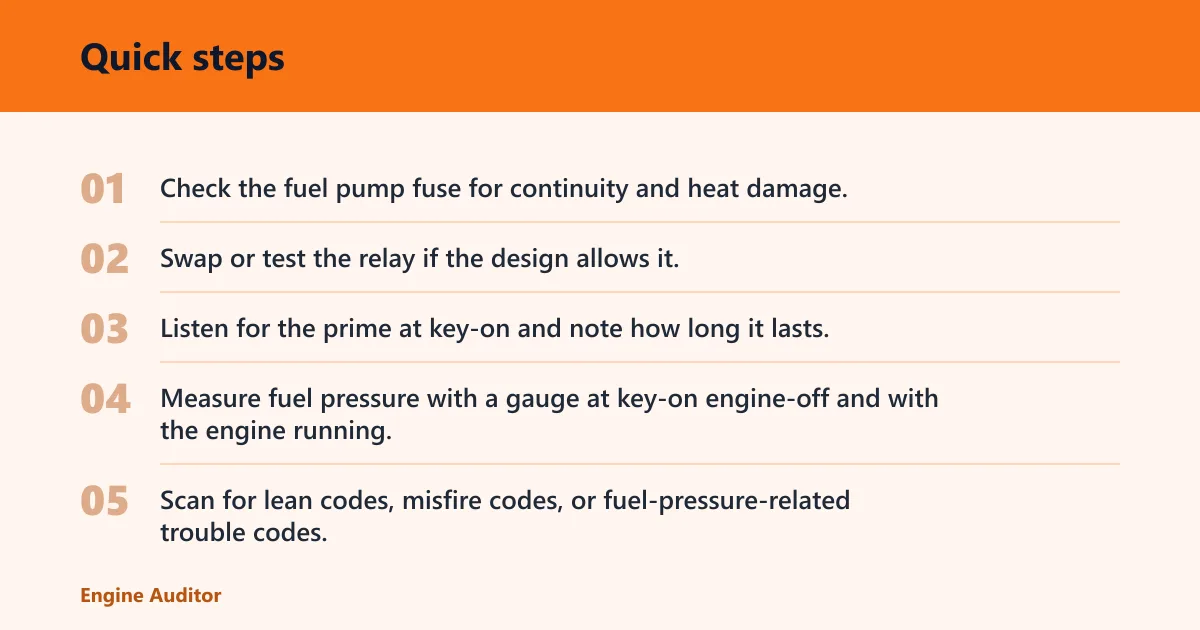
- Check the fuel pump fuse for continuity and heat damage.
- Swap or test the relay if the design allows it.
- Listen for the prime at key-on and note how long it lasts.
- Measure fuel pressure with a gauge at key-on engine-off and with the engine running.
- Scan for lean codes, misfire codes, or fuel-pressure-related trouble codes.
- Compare live fuel trims and pressure data if the vehicle supports it.
Fuel pressure test
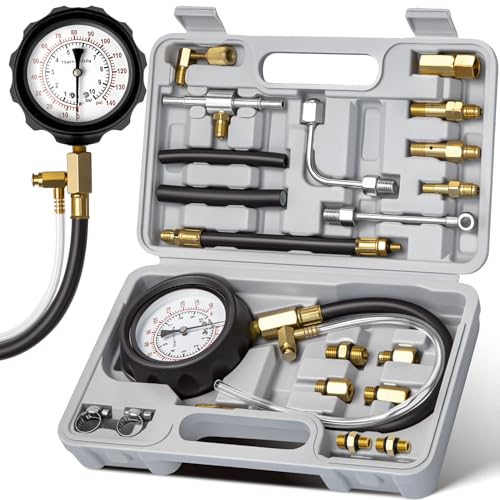
A fuel pressure gauge shows whether the system meets the vehicle’s psi specification. Most manufacturers list a specific target, and the reading should be checked both key-on engine-off and with the engine running. The running value should hold close to spec unless the engine is designed to vary pressure under load.
If key-on pressure is low and stays low with the engine running, suspect the pump, filter, or electrical supply. If pressure rises too high, look at the regulator or return path. A gauge turns a guess into a sequence of checks.
Scan tool and OBD-II data
Fuel trims and stored codes help narrow the fault. Lean codes can fit a weak pump, clogged filter, vacuum leak, or pressure loss. Misfire codes may appear after the mixture goes lean, and some vehicles will set fuel-pressure-related codes directly.
Live data matters because a pump can sound normal and still fail under load. If trims climb lean during acceleration, the pump may not be keeping up even though it primes at key-on.
What the next step usually tells you
If fuse, relay, and wiring checks are good, and the gauge shows low pressure, the problem usually sits in the fuel delivery path. That can be the pump itself, the filter, or the regulator. Replacing the pump first is not the right move unless pressure and supply checks point there.
A common first-timer mistake is hearing a loud hum after the tank drops below one-eighth full and assuming the pump has failed. A refill may reduce the noise, but the real fix is still a pressure test if the engine also cranks longer or hesitates on throttle.
Frequently asked questions
Why is my fuel pump making a buzzing sound?
A fuel pump can buzz normally during the brief prime at key-on, but a loud or continuous buzz usually means the pump is working too hard or losing supply voltage. Low fuel, a clogged filter, a weak regulator, or a worn pump are the usual suspects.
Why does my fuel pump make a humming noise?
A humming noise often comes from the electric motor inside the pump. A soft hum for 1 to 3 seconds at key-on is normal. If the hum gets louder with acceleration, hot weather, or low fuel, check pressure, wiring, and filter condition.
Is a buzzing fuel pump normal when I turn the key on?
Yes, a short buzz or hum at key-on is usually normal because the pump primes the fuel system. It should stop after a few seconds. If it keeps running loudly, or if the engine cranks long, stalls, or loses power, treat it as a warning sign.
Can a clogged fuel filter cause the fuel pump to buzz?
Yes. A clogged fuel filter increases resistance in the fuel path, so the pump works harder and may sound louder or sharper. That restriction also lowers pressure at the rail, which can cause hesitation, lean codes, and reduced power.
Can low fuel level make the fuel pump louder?
Yes. Low fuel can amplify pump noise because there is less liquid around the pump to cool it and damp sound. The tank may also resonate more when fuel is sloshing. If the noise eases after refueling, low level was likely part of the problem.
How long can I drive with a noisy fuel pump?
If the pump is only noisy at brief key-on prime and the vehicle drives normally, you can usually keep using it. If the noise is continuous, or the engine starts hard, stalls, or loses power, do not keep driving long. Those signs call for prompt diagnosis.
Products related to this article
Sponsored / affiliate links. As an Amazon Associate I earn from qualifying purchases. I may earn additional commission from eligible campaigns.