Chevy Equinox Ticking Noise: Normal or Serious?
A light, rhythmic tick on a Chevy Equinox is often normal fuel-injector noise, but a tick that gets louder when hot, follows one cylinder, or comes with a check-engine or oil-pressure warning needs prompt diagnosis. Ignoring the wrong sound can let a small leak, valvetrain wear, or oiling fault turn into a much costlier repair. This guide shows you how to sort normal ticking from urgent exhaust, valvetrain, and oil-pressure problems by location, temperature, and RPM behavior.
Is the ticking normal or urgent?
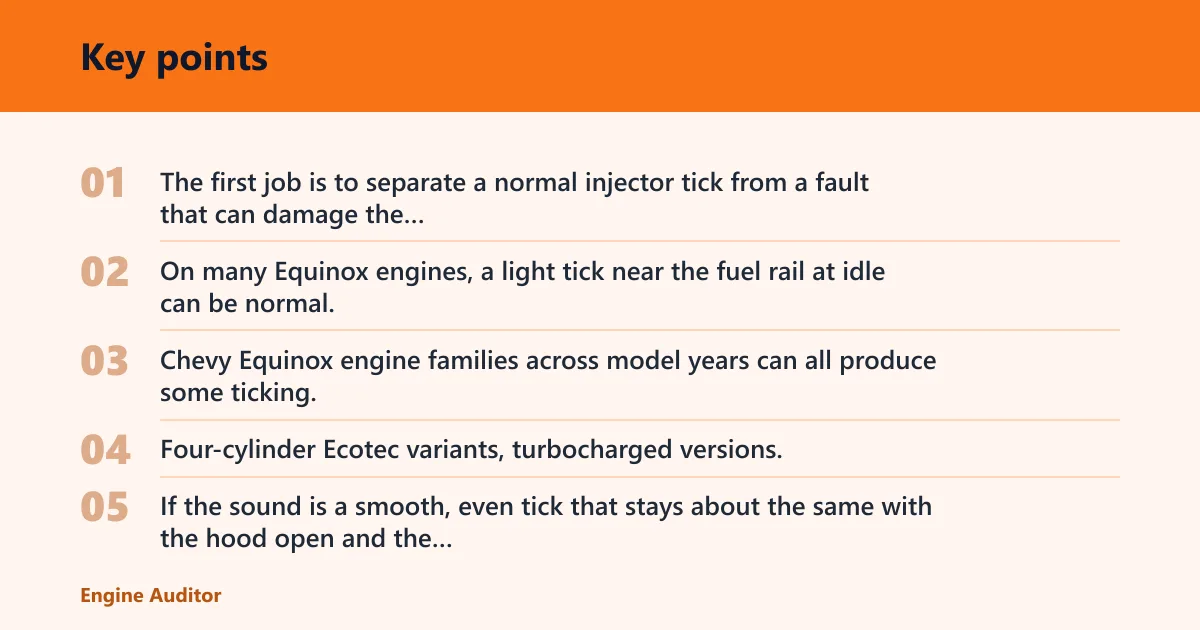


The first job is to separate a normal injector tick from a fault that can damage the engine. On many Equinox engines, a light tick near the fuel rail at idle can be normal, while a deeper tick from the top of the engine, a hot idle tick, or any noise paired with oil-pressure loss, misfire, or power loss needs fast attention.
Chevy Equinox engine families across model years can all produce some ticking, but the source changes by design and wear pattern. Four-cylinder Ecotec variants, turbocharged versions, and V6 models can all make distinct mechanical sounds, yet the same rule still applies: location, temperature, and RPM behavior tell you whether the sound is expected or a warning.
Ticking noise triage table
| Sound pattern | Likely source | Quick check | Urgency level | Next step |
|---|---|---|---|---|
| Light, fast tick at idle with hood open | Fuel injector tick | Listen near the fuel rail; sound stays even and does not change with throttle blips | Low | Monitor unless new symptoms appear |
| Cold-start tick that fades in 30 to 60 seconds | Oil drain-back, light lifter noise, or exhaust contraction | Check oil level and note whether it disappears after warm-up | Low to medium | Check oil service history and recheck sound hot |
| Hot-idle tick that gets louder after full warm-up | Lifter wear, oil-pressure issue, or exhaust leak | Listen after 10 to 15 minutes of driving; compare cold and hot idle | Medium to high | Scan codes and inspect oil level, pressure, and exhaust sealing |
| Tick rises and falls with engine speed | Accessory pulley, belt noise, or exhaust leak under load | Blip throttle in Park; note if frequency follows RPM exactly | Medium | Inspect belt, tensioner, and idler pulley |
| Rapid tapping from top of engine | Valve lifter or valvetrain noise | Use a mechanic’s stethoscope or hose on valve cover area | High | Do not delay if noise persists hot |
| Ticking from exhaust side, louder on cold start | Exhaust manifold leak | Look for soot, burnt smell, or puffing near the manifold | Medium to high | Inspect manifold, gasket, and fasteners |
| Tick after shutdown | Heat shield, exhaust contraction, or cooling components | Note whether the noise is thin and metallic and fades as parts cool | Low unless very loud | Check shields and exhaust hangers |
| Idle-only tick with check-engine light | Misfire, plug, or coil problem | Read stored and pending codes; look at misfire counts | Medium to high | Diagnose ignition and fuel faults before more driving |
If the sound is a smooth, even tick that stays about the same with the hood open and the engine warm, that points more toward injector noise than mechanical damage. If the same sound turns into a harsher tapping from the valve cover after a long idle, the diagnosis shifts toward oiling or valvetrain trouble.
Where is the sound coming from?
Top-of-engine noise usually points to injectors, lifters, or valvetrain parts. Noise from the front cover, belt area, or under the car points elsewhere. A hood-open listen can help, because injector tick is often easier to hear from the top of the engine, while an exhaust leak or heat shield problem may seem louder from below.
Top of engine versus exhaust side
A rapid tapping from the valve cover area is more concerning than a faint rhythmic click near the injectors. If the sound seems to come from one cylinder bank or one corner of the engine, that helps separate a lifter problem from a normal all-over injector sound.
Front cover, belt area, or under the car
A tick near the belt drive can come from an idler pulley, tensioner, or worn belt edge. A sound under the car, especially near the exhaust tunnel or manifold area, raises suspicion for a leak or loose heat shield. Do not assume every tick comes from inside the engine.
What changes with temperature or RPM?
Cold-start tick and hot-idle tick do not mean the same thing. A brief tick on startup can come from oil draining back overnight or exhaust parts shrinking when cold. A hot idle tick that appears after the engine reaches operating temperature deserves more concern, especially if it stays present in Drive.
Cold start and first minute after startup
Injector noise is usually present right away and stays steady. Exhaust leaks are often louder cold because metal contracts and gasket gaps open slightly. Timing chain rattle can also show up briefly at startup if oil pressure has not built yet.
Hot idle after a full warm-up
If the noise grows after about 10 to 15 minutes of driving, look harder at oil condition, lifter wear, or an exhaust leak that may open with heat. A warm engine should often be quieter, not louder. A repeat tick after recent service can matter if the wrong oil viscosity, a low oil fill, or sludge has affected oil flow.
Noise that rises with engine speed
If the tick speeds up exactly with RPM, accessory pulleys and belt drive parts move up the list. Injector tick can also track RPM, but it stays light and even. A harsher, load-sensitive tick or chirp from the front of the engine points more toward a pulley or tensioner issue.
Oil, lifters, or timing trouble
Low oil level, wrong oil viscosity, and overdue oil service can all create ticking on an Equinox. Oil pressure sensitivity matters because lifters and timing components depend on fast oil flow. If the oil-pressure warning light appears, treat that as urgent, not as a routine maintenance reminder.
Low oil level and wrong viscosity
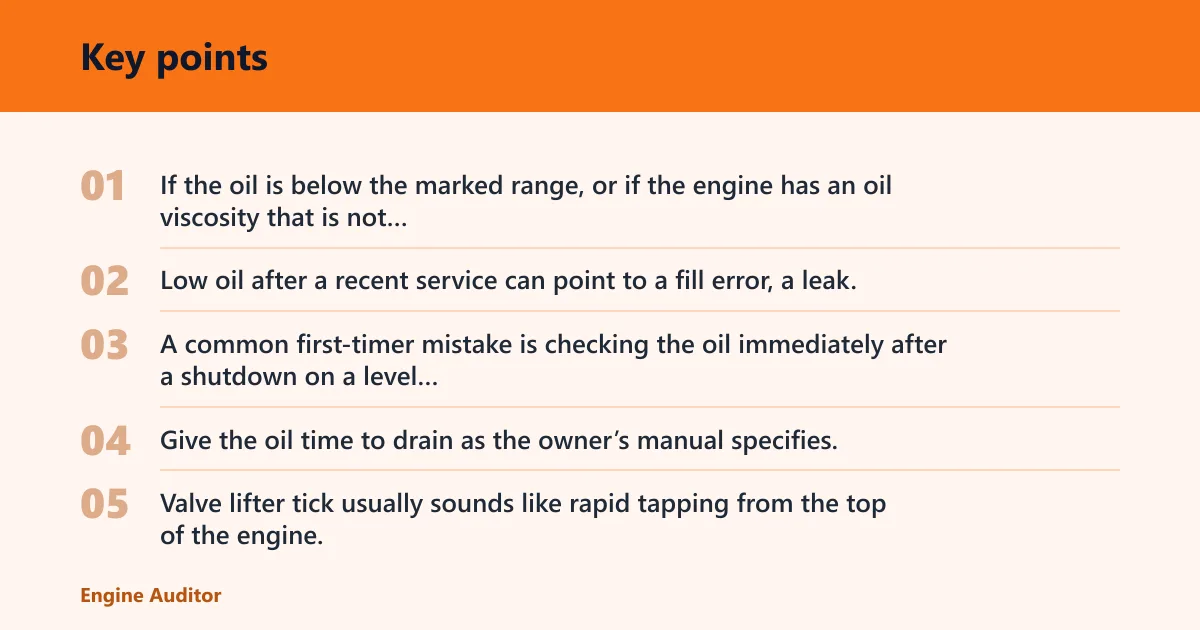
Check the dipstick first. If the oil is below the marked range, or if the engine has an oil viscosity that is not suited to the model and temperature, hydraulic parts may tick at startup or idle. Low oil after a recent service can point to a fill error, a leak, or consumption that needs tracing.
A common first-timer mistake is checking the oil immediately after a shutdown on a level engine and assuming the reading is final. Give the oil time to drain as the owner’s manual specifies, and compare the reading to the marked range rather than guessing from appearance.
Valve lifter tick and sludge risk
Valve lifter tick usually sounds like rapid tapping from the top of the engine. It can be worse cold, then stay audible hot if a lifter is sticking or oil flow is poor. Sludge can keep a lifter from moving freely, and repeated ticking after an oil change can mean the underlying problem was not fixed.
Timing chain noise and startup rattle
A timing chain issue can sound like a brief rattle or a sharper tick near startup, especially if oil pressure builds slowly. That is different from a steady injector click. On engines that depend heavily on oil control for cam timing, chain noise combined with rough running or cam/crank correlation codes deserves prompt diagnosis.
Oil pressure warnings and why they matter
If the oil-pressure warning light comes on, stop the engine as soon as it is safe. Low pressure can damage lifters, timing components, bearings, and cams very quickly. A ticking noise plus a pressure warning is generally treated as a stop-drive condition until the cause is found.
Exhaust, belt, or pulley noise?
Exhaust-side ticking often gets louder cold and may ease as the metal expands. Belt-drive problems usually follow engine speed and can change with electrical load or steering input. A heat shield can make a thin metallic rattle that sounds like ticking, especially around certain RPMs or when the engine rocks.
Exhaust manifold leak clues
Look for a puffing sound on cold start, soot near the manifold or gasket, and a burnt smell under the hood. Broken manifold bolts and leaking gaskets are common failure points on many engines. If the tick is strongest near the firewall or wheel well on the exhaust side, inspect that area first.
Heat shield rattle or tick
A loose heat shield often makes a thin, metallic tick or rattle that changes with RPM and load. It may quiet down at idle and return during light acceleration. A simple inspection can reveal a bent shield touching the exhaust pipe or body panel, and a careful bend-back repair may stop the noise.
Serpentine belt, idler pulley, and tensioner checks
Look for belt glazing, cracking, frayed edges, or wobble at the idler pulley and tensioner. A worn pulley can make a ticking, chirping, or clicking sound that seems engine-related because it matches RPM. If the noise changes when the engine is loaded, the accessory drive deserves attention.
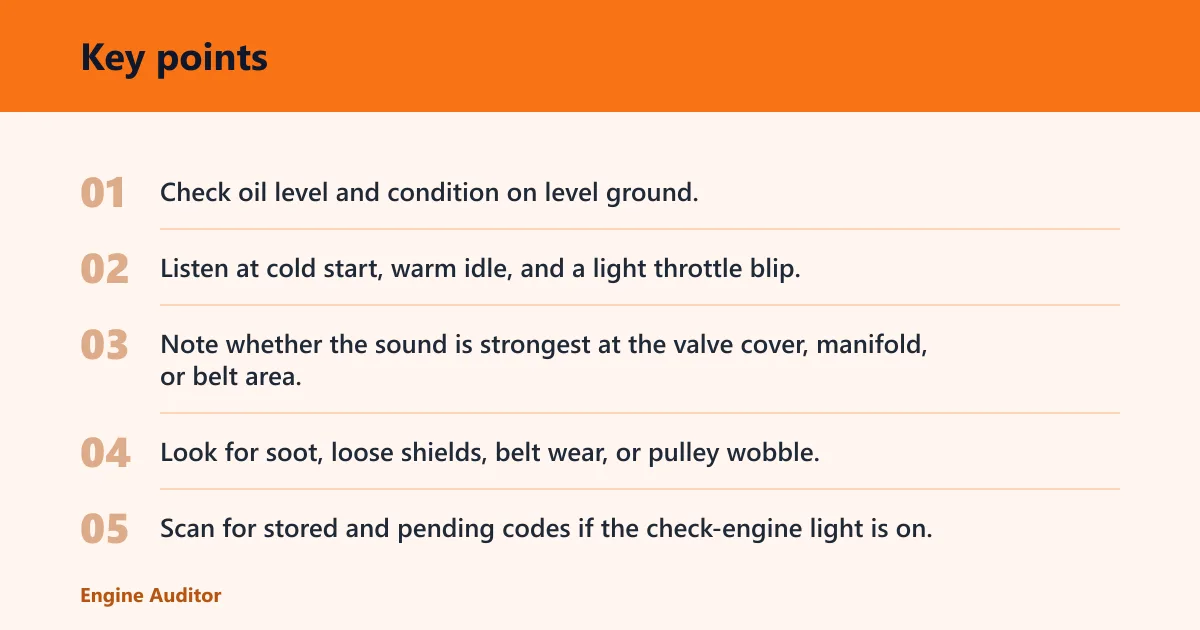
- Check oil level and condition on level ground.
- Listen at cold start, warm idle, and a light throttle blip.
- Note whether the sound is strongest at the valve cover, manifold, or belt area.
- Look for soot, loose shields, belt wear, or pulley wobble.
- Scan for stored and pending codes if the check-engine light is on.
Can ignition or misfires sound like ticking?
Yes. Spark plug wear, wrong gap, and coil-on-plug failure can create a noise that owners describe as ticking, especially when a misfire is present. The sound may be accompanied by rough idle, a blinking or steady check-engine light, and reduced power under load.
Spark plugs and ignition components
Worn plugs can misfire and make the engine sound uneven, which some drivers call ticking or clicking. A damaged plug, cracked insulator, or failing coil can create a sharp rhythmic miss rather than a true mechanical tick. If the check-engine light is on, plug and coil checks move up the list.
OBD-II scan tool use
Use an OBD-II scan tool to check stored codes, pending codes, misfire counts, and live engine RPM. Codes related to misfire, cam timing, or oil pressure help narrow the search fast. If one cylinder shows repeated misfires, focus on plug, coil, injector, compression, and valve-train checks for that cylinder.
When should you stop driving if your Equinox is ticking?
Stop driving if the tick becomes a knock, the oil-pressure warning light comes on, the engine loses power, or the sound is paired with flashing misfire codes. A brief injector tick or light heat-shield rattle can wait for diagnosis, but severe knocking, loud top-end tapping, or oil-pressure loss can cause rapid damage.
Picture a 2.4-liter Equinox that starts with a faint tick on a 20-degree morning, then quiets after 45 seconds and never returns hot. That leans toward normal injector sound or minor cold-start behavior. A second vehicle that ticks louder at hot idle, shows P0016, and feels weak on acceleration needs immediate inspection.
Repair cost depends on the fault. A loose heat shield or belt issue may be a small diagnostic and labor job, while a manifold gasket, lifter problem, timing chain repair, or oiling fault can move into much higher labor time. Diagnostic labor is still worth paying for when the sound changes with temperature, RPM, or engine load.
Frequently asked questions
Why is my Chevy Equinox making a clicking noise?
A clicking noise on a Chevy Equinox is often normal fuel injector operation, especially at idle with the hood open. If the click is louder hot, comes from the top of the engine, or matches a misfire, it may point to lifters, ignition parts, or an exhaust leak instead.
Why is my Chevy Equinox making a knocking noise?
A knocking noise is more serious than a light tick. If the sound is deep, gets worse with throttle, or comes with oil-pressure warnings or power loss, stop driving and inspect the engine immediately. A true knock can indicate low oil pressure, bearing damage, or severe internal wear.
Why is my vehicle making a ticking noise?
Any vehicle can tick from injectors, exhaust leaks, heat shields, pulleys, or valvetrain parts. The fastest way to narrow it down is to note where the sound is loudest, whether it starts cold or hot, and whether it changes with RPM. Those three clues usually separate normal from harmful noise.
Why is my car making a ticking noise when I turn it off?
A ticking noise after shutdown is often normal metal cooling, especially from the exhaust, catalytic converter area, or heat shields. If the sound is very loud, lasts a long time, or is joined by burnt smells or visible damage, inspect the exhaust and shields for looseness or contact points.
Is a ticking noise from the engine normal on a Chevy Equinox?
Yes, some engine ticking can be normal on a Chevy Equinox, especially injector noise at idle. The key is whether the sound is light and even or harsh and new. A tick that gets louder hot, follows one cylinder, or appears with warning lights should not be treated as normal.
Can low oil cause a ticking noise in a Chevy Equinox?
Yes. Low oil can reduce oil pressure to lifters, timing components, and other top-end parts, which can create ticking or startup rattle. Check the oil level first, and treat any oil-pressure warning light as urgent. If the noise started after an oil change, verify the fill level and viscosity.
Could a lifter or valvetrain problem make my Equinox tick?
Yes. A valve lifter or valvetrain problem can cause rapid tapping from the top of the engine, often louder at cold start or hot idle. Sludge, low oil, or oil-pressure issues can make it worse. If the noise persists warm, do not wait for it to get louder before diagnosing it.
Is the ticking noise from the exhaust manifold or a heat shield?
It could be either. An exhaust manifold leak often sounds louder cold and may come with soot or a burnt smell, while a heat shield makes a thin metallic rattle or tick that changes with RPM. Listen from under the hood and under the car to find the loudest point.
Can an accessory belt or pulley cause ticking at idle?
Yes. A worn serpentine belt, idler pulley, or tensioner can create a tick, chirp, or click that follows engine speed. Look for belt wear, pulley wobble, or noise that changes when the engine is loaded. If the sound tracks RPM closely, the accessory drive should be inspected.
When should I stop driving if my Equinox is ticking?
Stop driving if the ticking turns into knocking, the oil-pressure light comes on, the engine loses power, or the check-engine light flashes with misfires. Those signs point to a problem that can get worse quickly. A light injector tick without other symptoms is usually less urgent, but it still deserves monitoring.
Why is my chevy equinox making a clicking noise: a clicking noise is often?
A clicking noise is often normal injector sound on an Equinox, especially at idle and with the hood open. If the clicking is new, gets louder as the engine warms, or comes from the exhaust side or valve cover, it may be a leak, lifter issue, or accessory problem that needs a closer look.
Why is my chevy equinox making a knocking noise: a knocking noise?
A knocking noise is a warning sign, not a normal engine sound. If it deepens with RPM, comes with low oil pressure, or is paired with rough running and power loss, stop driving and diagnose it right away. On an Equinox, severe knock can mean oiling trouble or internal engine damage.
Products related to this article
Sponsored / affiliate links. As an Amazon Associate I earn from qualifying purchases. I may earn additional commission from eligible campaigns.