Why Does My Car Squeal When Accelerating?
A car that squeals on acceleration usually has a slipping belt, a worn pulley or tensioner, a brake that drags, or a tire or wheel bearing noise that changes with load. The quickest rule is to separate belt-driven noise from noises that change when you turn, brake, or shift into neutral. If you ignore it, you can end up stranded, cook accessory components, wear brakes faster, or turn a cheap fix into a failed pulley, alternator, or bearing. This guide gives a sound-to-system decision tree for temperature, load, steering, and brake overlap so you can narrow the cause before buying parts.
Why the sound changes matter

The same high-pitched noise can come from different systems, so timing matters more than the word “squeal.” A true belt squeal often rises with engine load, while a wheel, brake, or tire sound usually follows vehicle speed more closely than engine rpm.
Use the sound pattern first. A squeal is usually a sharp, steady pitch. A squeak can be lighter and shorter. A chirp often comes in pulses. A whine is lower and smoother. A screech is harsher and often more urgent.
Stop-driving signs vs. monitorable noise
Stop driving if the sound comes with charging-system warning lights, overheating, burning rubber smell, loss of steering assist, or a wheel that feels hot after a short drive. Those clues point to a belt, pump, brake, or bearing problem that can fail quickly.
You can usually monitor a brief, cold-only squeal that vanishes within seconds and does not return once warm. You should still plan a repair if it repeats, gets louder, or starts happening during normal acceleration.
Load, temperature, and speed clues
If the noise appears on cold start, suspect belt slip, pulley drag, or exhaust ticking before you suspect a wheel bearing. If it gets louder with AC on, steering input, or a hard merge, the accessory drive is under more load. If it changes mostly with road speed, move wheel-end parts higher on the list.
Car squeal diagnosis matrix
This table sorts the noise by sound, driving condition, likely system, and the fastest check you can do without tools.
| Sound type | When it happens | Likely system | Quick check | Urgency | Typical next repair |
|---|---|---|---|---|---|
| Squeal | Acceleration from a stop | Serpentine belt | Listen with the hood closed and then turn the AC on; note whether the pitch rises with engine load | Schedule soon | Belt replacement and inspection of the drive path |
| Squeal or chirp | Cold start | Belt, tensioner, or idler pulley | See whether the sound fades as the engine warms and the belt dries | Schedule soon | Belt, tensioner, or pulley replacement |
| Whine | Turning and accelerating | Power steering pump | Compare full-lock turns at idle with straight-ahead acceleration | Prompt check | Fluid service, leak repair, or pump replacement |
| Screech | Hard acceleration or slipping under load | Serpentine belt or accessory bearing | Look for belt glazing, cracks, or a tensioner that flutters | Prompt check | Belt and possibly tensioner or accessory repair |
| Squeal | Wet weather or damp morning | Belt slip | See whether the noise appears after rain and then fades as the engine bay dries | Monitor if brief; otherwise schedule soon | Belt replacement or tensioner correction |
| Squeak or chirp | Acceleration from a stop or highway merge | Idler pulley or tensioner bearing | Note whether the sound comes and goes with rpm changes, not road speed alone | Schedule soon | Pulley or tensioner replacement |
| Humming, squealing, or grinding | Speed increases or steering load changes | Wheel bearing | Listen for change when gently steering left or right at steady speed | Prompt check | Wheel bearing replacement |
| Squeal or tick | Acceleration, especially cold start | Exhaust leak | Check for ticking on cold start and any exhaust odor near the cabin or hood line | Prompt check | Gasket, pipe, or manifold repair |
| Brake squeak | Rolling away, then easing off the throttle | Brake pads | Lightly brake at low speed and note whether the sound changes immediately | Prompt check | Pad and hardware inspection, rotor service if needed |
| Tire squeal | Sharp turn or poor traction in wet or painted areas | Tires | Compare a parking-garage turn with dry straight-line driving | Monitor unless underinflated or worn | Inflation correction, tire inspection, or replacement |
Is it the belt, tensioner, or pulley?
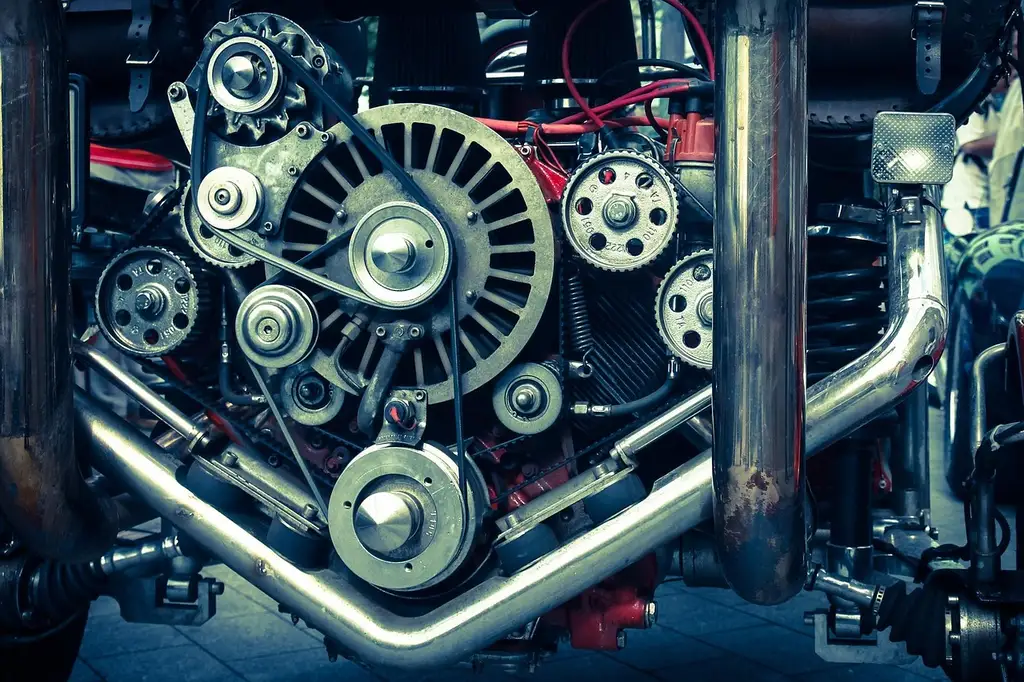
A worn serpentine belt is one of the most common reasons for a squealing sound while accelerating. The serpentine belt powers the alternator, power steering pump, air conditioning compressor, and water pump, so any slip can become louder when load increases.
Serpentine belt wear or slip
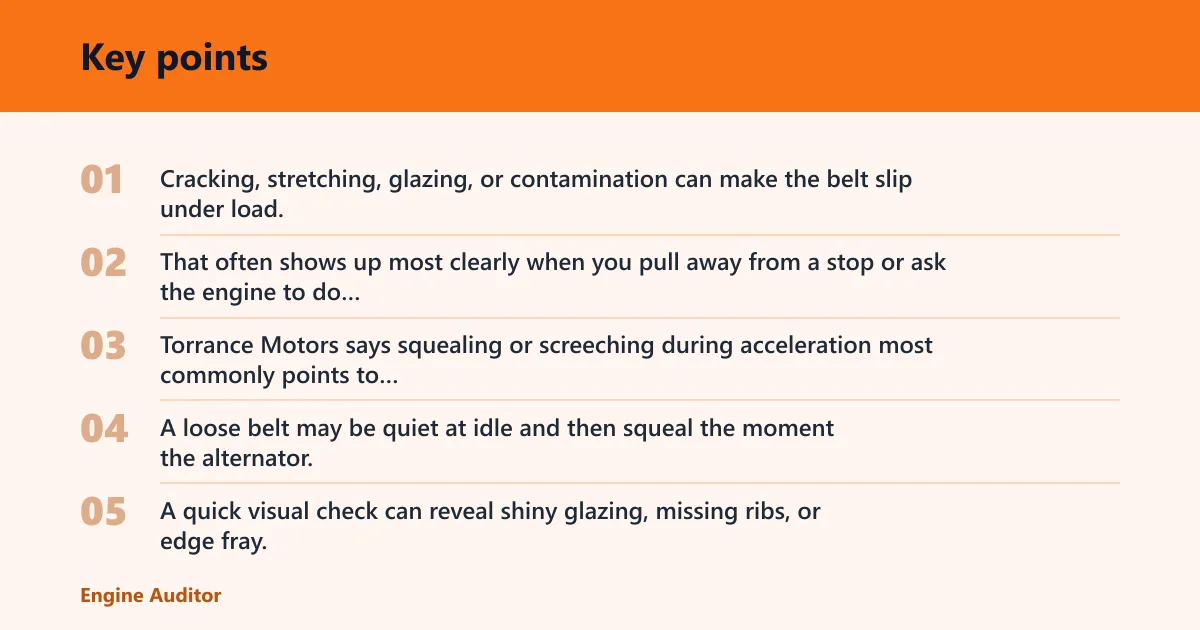
Cracking, stretching, glazing, or contamination can make the belt slip under load. That often shows up most clearly when you pull away from a stop or ask the engine to do more work during a merge. Torrance Motors says squealing or screeching during acceleration most commonly points to a worn-out serpentine belt.
A loose belt may be quiet at idle and then squeal the moment the alternator, AC compressor, or power steering pump adds drag. A quick visual check can reveal shiny glazing, missing ribs, or edge fray.
Belt tensioner failure
A belt tensioner keeps tension on the belt path. When its spring force weakens or its pulley misaligns, the belt can flutter or slip. Christian Brothers Automotive also names a dry or loose serpentine belt tensioner as a cause.
The noise can sound like belt squeal, but the root issue is often the tensioner pulley bearing. If the belt looks fine yet the sound comes and goes with engine load, the tensioner deserves close attention.
Idler pulley bearing noise
An idler pulley guides the belt path, and a failing bearing can add a squeak or chirp that blends into a belt complaint. A failing pulley or belt tensioner can create a high-pitched squeak or chirping sound. That is why parts replacement should follow the sound pattern, not the guess.
Say your car makes a brief chirp only when you accelerate from a stop with the AC off. If the sound stays tied to rpm rather than road speed, an idler pulley or tensioner bearing is more likely than a tire issue.
Alternator bearing clues
Alternator bearings can produce squeals during acceleration, and Christian Brothers Automotive lists alternator bearings as a cause of squeals while accelerating. The alternator sits in the accessory drive, so its noise can travel through the belt path and sound like a belt problem.
If the belt is not cracked and the tensioner looks steady, but the noise tracks engine load and changes with electrical demand, the alternator bearing moves up the list.
Does turning, braking, or AC change the noise?
Changes in steering, braking, and AC load are useful separators. They help you tell whether the sound comes from the accessory drive, the brake corner, or a wheel-end part. That matters because two noises can happen during the same acceleration event.
Power steering pump clues
A power steering pump can squeal or whine when fluid is low or the belt is loose, and the sound may become clearer while turning and accelerating. If the noise grows louder during a parking-lot turn but eases on a straight road, the steering load is part of the clue.
Check fluid level if your vehicle uses a hydraulic system. A low fluid level, air in the system, or a slipping belt can all make the pump sound strained.
AC load and accessory drag
Turn the AC on and off while the car is idling or rolling slowly. If the squeal appears only with AC on, the compressor load, belt slip, or tensioner weakness is more likely. This is one of the simplest no-tool checks.
Because the serpentine belt powers the air conditioning compressor, added drag can expose a belt that is already marginal. The same test also helps separate a sound that follows engine load from one that follows road speed.
Brake pad noise that seems tied to acceleration
Brake pads can wear in a way that creates a squeaking sound that seems related to acceleration because the noise appears when the car starts rolling. Brake wear can sometimes seem like acceleration-related squeal, and it should not be ignored.
A common first-timer mistake is to hear the sound during takeoff and assume the engine is at fault. If the noise changes the moment you apply the brakes lightly at low speed, the brake corner is a better suspect than the belt drive.
Cold start, rain, and highway merge clues
Cold, wet, and high-load conditions each point to different failures. Use them to narrow the cause before you replace parts. One sound can mean belt slip in the morning and a bearing issue later in the day.
Cold start squeal
A brief cold-start squeal often points to belt slip, a pulley bearing, or an exhaust leak. Exhaust leaks near manifold gaskets or cracked pipes can sound like a squeal under acceleration, and they may also cause ticking noises during cold starts. Exhaust odor is another clue.
Picture a sedan that squeals for three seconds on a cold morning, then goes quiet after the first block. If the sound fades as the engine warms, the belt drive or an exhaust leak climbs above a wheel-bearing fault.
Wet-weather slip
Moisture can make a marginal belt squeal more easily. A belt that only squeals after rain or on damp mornings may be slipping rather than failing catastrophically, but it still deserves attention because the root cause can worsen.
Hi-Tech Car Care says underinflated tires are probably the most likely cause of squealing tires, and it also notes that driving on a painted surface or in a parking garage can cause normal tire squeal. That matters because some “acceleration squeals” are really traction noise, not engine noise.
Acceleration from a stop versus highway merge
Noise at takeoff usually points toward belt slip, brake drag, or tire squeal. Noise during a highway merge can still be belt-related, but wheel bearing and tire-speed noise move higher on the list because road speed is higher and the sound has more time to build.
If the sound gets louder with speed even after you ease off the throttle, wheel-end issues are a common first place to check. If it spikes when the engine loads up and then fades, think accessory drive first.
When the sound points to wheel-end or exhaust problems
Do not treat every squeal as a belt issue. Wheel bearings, brakes, tires, and exhaust leaks can all create sounds that seem tied to acceleration, and some of those problems carry more safety risk than a belt noise.
Wheel bearing noise
Wheel bearing problems can produce squealing, humming, or grinding noises. The sound may change with speed or when turning, and that has a direct safety implication because bearing wear can worsen quickly. If the noise changes when you steer gently left or right, suspect the loaded side of the vehicle.
Because wheel bearing noise often tracks road speed rather than engine rpm, it can fool you during acceleration. A bearing may seem quiet at idle and then grow louder only as the car gains speed.
Exhaust leak under load
An exhaust leak can sound like a squeal or squeak under acceleration, especially near a manifold gasket or cracked pipe. It may also bring ticking on cold start and a faint exhaust odor. Those clues are more useful than the sound alone.
Exhaust noise often changes with engine load, but it does not usually respond to turning or braking the way a steering or brake problem does. That makes it easier to separate once you compare conditions.
Why these need prompt inspection
Brake wear and wheel bearing trouble can become safety issues, and exhaust leaks can affect cabin air quality and engine performance. A squeal that is tied to wheel speed, braking, or a hot smell should move ahead of a simple maintenance delay. A mechanic should inspect it if the source is unclear.
What to check before you book a repair
You can narrow the problem by comparing conditions in a fixed order. Keep the checks brief. The goal is to sort the symptom, not to diagnose every part by sight.
- Start the engine cold and listen for a squeal, tick, or whine before moving.
- Turn the AC on and off at idle and note any change in pitch.
- Turn the wheel gently left and right at low speed and listen for a steering-linked whine.
- Brake lightly at low speed and see whether the sound changes at the same moment.
- Compare a pull-away from a stop with a steady highway cruise.
- Look for belt cracks, glazing, fray, or contamination.
- Check for fluid leaks, burning smell, or a hot wheel after driving.
- Match the symptom to the table above and choose the fastest next repair.
If the sound is clearly belt-driven, the usual repair path is belt inspection first, then tensioner or pulley replacement if the belt itself is not the whole story. If the noise changes with steering, braking, or road speed, the fastest repair may be elsewhere. Regular maintenance and timely repairs help keep the issue from growing into a bigger failure.
Frequently asked questions
Why does my car squeal when accelerating?
A squeal during acceleration usually comes from a slipping serpentine belt, a failing tensioner or pulley, a steering load issue, or a wheel-end problem that gets louder as speed rises. The best first check is whether the sound changes with AC, turning, braking, or road speed rather than engine load alone.
Why does my car whine when accelerating?
A whine during acceleration often points to the power steering pump, an accessory bearing, or a wheel bearing. If it gets louder while turning, the steering system moves up the list. If it changes mainly with road speed, the wheel bearing becomes more likely than the belt drive.
Why does my car screech when accelerating?
Screeching is often a harsher version of belt slip and can mean the serpentine belt is badly worn, loose, or glazed. It can also come from accessory drag or a failing pulley. If the sound is brief but repeatable, schedule inspection soon before the belt or tensioner fails.
Why does my car squeak on acceleration?
A squeak on acceleration can come from a belt, idler pulley, tensioner, brake pad wear, or a bearing with a lighter chirp-like note. The key is whether it follows engine rpm, road speed, or steering input. That separation usually points you to the right system faster than guesswork.
Why does my car squeal when I accelerate and turn?
When acceleration and turning both bring out the noise, the power steering pump and serpentine belt move high on the list. Low fluid, belt slip, or a worn tensioner can all sound louder under that combined load. A quick steering test at low speed is often the fastest clue.
Why is my car squeaking when accelerating?
A squeaking noise during acceleration may come from a belt with light slip, a pulley bearing, a brake pad that only whispers as the car starts moving, or a wheel-bearing noise that changes with load. Compare cold start, AC on, turning, and braking to separate the source before replacing parts.
Products related to this article
Sponsored / affiliate links. As an Amazon Associate I earn from qualifying purchases. I may earn additional commission from eligible campaigns.