Why Is My Car Grinding When I Turn? Causes by Sound
Grinding that changes with steering usually points to a worn CV joint, brake hardware, tire rub, or a failing wheel bearing; if the noise is loud, constant, or gets worse with braking, stop driving and inspect it. Ignoring it can mean brake damage, axle failure, or a wheel bearing failing badly enough to create a major safety risk. This guide maps the noise to the most likely part and the safest next check for right turns, left turns, braking, and full-lock maneuvers.
Turn noise diagnosis table
| Sound | When it happens | Likely side | Most likely part | Quick driveway test | Urgency rating |
|---|---|---|---|---|---|
| Clicking, popping, or grindy chatter | Sharp right turns, especially on throttle | Left side | Outer CV joint | Turn full right in an empty lot and creep forward; if the sound gets sharper under light acceleration, suspect the left CV joint | Prompt service |
| Clicking, popping, or grindy chatter | Sharp left turns, especially on throttle | Right side | Outer CV joint | Turn full left in an empty lot and roll slowly; a louder rhythm on acceleration points toward the right CV joint | Prompt service |
| Grinding or humming that changes with turn load | Only while turning, often grows louder on one direction | Outside wheel of the turn | Wheel bearing | At low parking-lot speed, weave gently left and right; if the noise changes as weight shifts side to side, a bearing is likely | Prompt service; tow if severe |
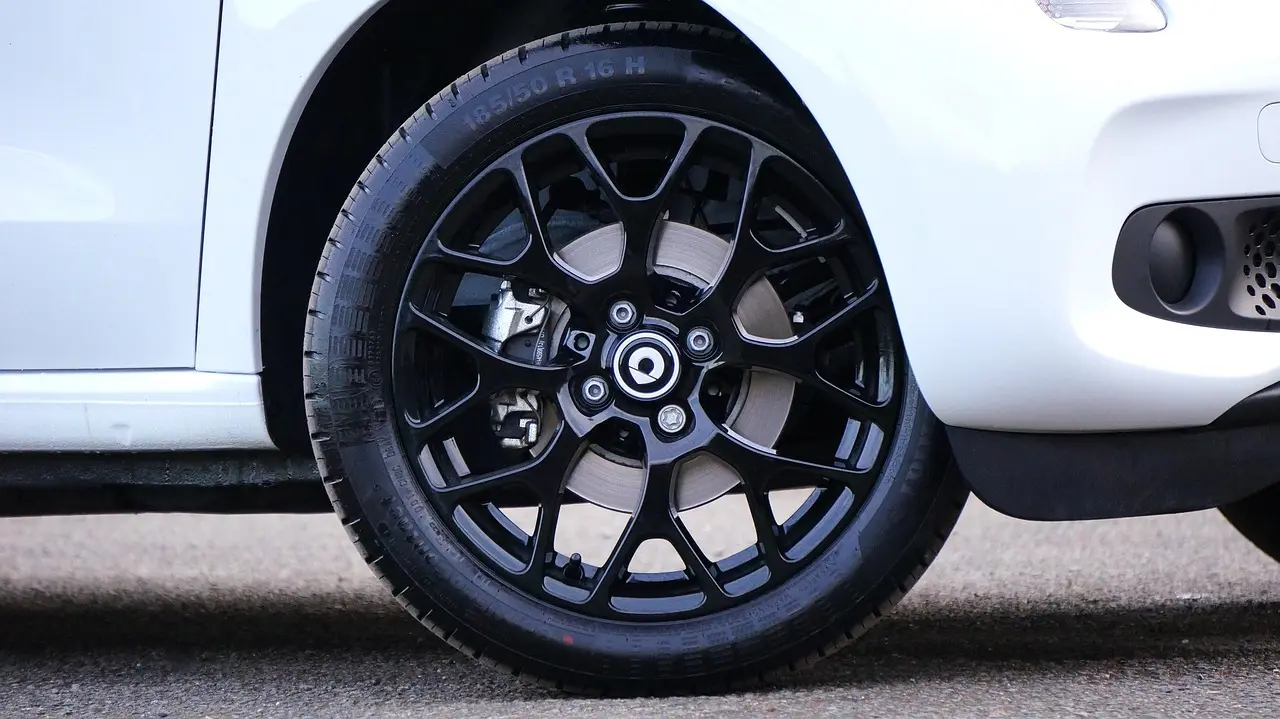
| Scraping metal-on-metal | One wheel area, sometimes constant or worse after a turn | Same corner as the scrape | Bent brake dust shield | Look behind the wheel at the thin metal shield near the rotor; a slight bend can rub the disc and leave shiny contact marks | Short-drive only if light |
| Groan, whine, or squeal | While turning the wheel at low speed or at a stop | Usually front of car, not one wheel only | Low or contaminated power steering fluid, or power steering pump | Check the reservoir if the car has one; low fluid, foaming, or leaks point to hydraulic steering trouble | Prompt service |
| Clunk, looseness, or harsh squeak | During steering input, bumps, or lane changes | Can be either side | Tie rod end, ball joint, control arm bushings, or steering rack | With the car parked, turn the wheel slightly left and right; a loose feel or delayed response points to steering or suspension wear | Inspect soon; severe looseness is tow-worthy |
| Grinding that changes with speed | Any time the car moves, then changes during turns | Usually one corner | Wheel bearing or brake contact | Note whether the sound rises with road speed even on straight roads; a speed-linked grind often points away from steering fluid | Prompt service |
Why does the side change with turn direction?
Turn direction changes the load on the car. In a right turn, the left side tends to carry more weight; in a left turn, the right side tends to do the same. That shift helps sort a wheel bearing, CV joint, or suspension fault from a brake shield rub or steering issue.
How load shifts to the outside wheel
The outside front wheel does more work in a corner, so a worn wheel bearing often gets louder when that corner is loaded. A worn wheel bearing may get louder when you turn, and the noise can become clearer as steering load rises. A worn CV joint can also become noisier on the loaded side, especially on sharp turns.
What that means for right turns and left turns
If a right turn makes the sound louder, check the left front corner first. If a left turn does it, check the right front corner first. That rule is not perfect, but it is a useful first pass for grinding, clicking, and humming that changes with steering angle.
Say your sedan grinds only on a tight right turn out of a parking space. The sound gets a little sharper when you press the accelerator, which points more toward the left outer CV joint than a brake shield rub.
Why is my car grinding when I turn right?
A right-turn grind often points to the left side, especially the left outer CV joint or left wheel bearing. If the sound is more like scraping metal, a bent brake dust shield on the left corner is another common check. In a right turn, the left side carries more load.
Left-side wheel bearing clues
A wheel bearing can grind or hum, and the noise often changes as the corner loads up in a turn. If the sound grows when the car leans into the right turn, the left bearing becomes a strong suspect. Severe wear can create wobble, heat, and looseness, so do not keep driving on a loud, worsening bearing.
Left outer CV joint clues
The constant-velocity joint sits at each end of the drive shaft. A worn CV joint is a common cause of turning noise. It can click, pop, or grind on sharp turns, and a boot failure can let grease escape and dirt enter. The noise often shows up more under acceleration.
Brake shield rub on the left front or rear
A bent brake dust shield can scrape the rotor after a pothole, curb tap, or brake job. It often sounds like steady metal-on-metal rubbing at one wheel area rather than a rhythmic click. Grinding noises can also come from stones caught between the back plate and discs, which can mimic a bent shield.
Suppose the noise is a steady scrape only while rolling through a right turn, then it fades when you straighten out. That pattern fits shield contact or debris near the rotor more than a CV joint, which usually changes with steering angle and throttle.
Why is my car grinding when I turn left?
A left-turn grind usually points to the right side, with the right outer CV joint and right wheel bearing often near the top of the list. If the noise is a scrape at one wheel area, look for a bent dust shield or rotor contact. A left turn loads the right side more.
Right-side wheel bearing clues
A bad wheel bearing may produce a quiet grinding sound all the time, then get louder when the load shifts in a turn. If the right side is the noisiest during a left turn, that corner deserves a close look. A failing wheel bearing can create wobble, heat, and noise, and in extreme cases it can lead to hub or wheel separation.
Right outer CV joint clues
The outer CV joint on the right side can make clicking, popping, or grinding on sharp left turns. If the sound gets louder in a tight circle and is stronger while accelerating, the joint and its boot deserve attention. Grease loss and dirt entry make the problem worse over time.
Suspension or hub contact to check
If the sound is more of a clunk, pop, or harsh scrape than a click, the fault may be outside the axle. Tie rod end wear can cause looseness, ball joint wear can cause popping or clunking, and control arm bushings can cause clunks, squeaks, vibration, or wandering. A hub-area rub can also come from a bent shield.
Why is my car making noise when I turn the wheel?
If the noise happens while turning the wheel at a stop or at very low speed, look at the steering system first. If your car has hydraulic steering assist, low fluid can cause a whine or groan, a pump can whine or squeal under load, and a steering rack problem can also make noise. Some newer cars use electric steering and have no reservoir.
Power steering fluid and pump checks
Hydraulic steering assist uses power steering fluid. Low fluid, leaks, or contamination can cause a whine or groan, and a worn power steering pump can squeal or whine under load. If the reservoir is present, check the level and for foamy or dirty fluid. If the car uses electric steering, there may be no reservoir at all.
Steering rack noise and when to suspect it
A steering rack can be part of a whine or groan complaint when the wheel is turned at rest. If the noise is centered in the front of the car and the wheel feel changes, the rack needs inspection. A loose or inconsistent feel is more worrying than a brief groan at full lock.
Electric steering cars with no fluid reservoir
If there is no hydraulic reservoir, do not chase a fluid problem that does not exist. Electric steering can still fail, but the checks shift toward tie rod ends, ball joints, bushings, the rack, and any rubbing at the wheels. That keeps the diagnosis grounded in the hardware the car actually has.
What if it grinds when braking and turning?
Braking while turning raises the chance of overlapping faults. Pad wear, dust shield rub, hub contact, and CV noise can all show up together, so do not assume the brakes are the only problem. If the grind appears only when the pedal is down, check the rotor area first, then the axle and bearing.
Pad wear and rotor contact
Worn pads can let the backing plate touch the rotor and make a grinding noise. That sound may get louder when the car turns because the load shifts and the wheel moves slightly in its bearings and suspension. If the noise changes immediately with brake pedal pressure, brake hardware moves up the list.
Bent dust shield and hub-area rubbing
A dust shield can touch the rotor at one wheel area and make a scrape that sounds like metal-on-metal. A stone trapped between the back plate and disc can do the same thing. Both can get worse while braking and turning because the rotor and shield sit closer under load changes.
When brake noise points beyond the brakes
If the sound continues after the brake pedal is released, or if it changes with steering angle more than with braking, think beyond pads. A wheel bearing, CV joint, or suspension joint can mimic brake noise. Persistent grinding after a brake check is a good reason to stop guessing.
Full-lock turns and parking-lot noise
Full-lock parking-lot turns are useful because they stress parts at maximum steering angle. That makes a worn CV joint chatter, a strut mount bind, or a splash shield rub show up more clearly. If the sound only appears at full lock, the fault may not be present during normal cornering.
CV joint chatter at maximum steering angle
A CV joint often complains most at full lock. If you hear clicking, popping, or grinding only during tight U-turns or parking maneuvers, that is classic CV territory. A boot crack or grease sling near the axle is a strong clue.
Strut mount or suspension binding
Some noises at full lock come from the top of the strut or from suspension parts binding as the wheel reaches its stop. A popping or groaning sound here can feel like the steering is sticking, even when the wheel itself is fine. That is a different pattern from a wheel-speed grind.
Splash shield and liner contact
Wheel-well liners and splash shields can rub a tire or wheel at full steering angle, especially after a curb strike or a loose fastener. That tends to sound like plastic scraping or light metal brushing, not a deep bearing grind. Check for fresh scuff marks near the tire shoulder and inner liner.
Turn car grinding checklist
Use this short checklist in an empty lot, at idle or very low speed. Do not jack the car up, remove wheels, or drive fast. The goal is to narrow the fault safely before booking service.
- Turn the wheel full left, then full right, and listen for which side gets louder.
- Repeat at very low speed while coasting, then with light acceleration.
- Brake gently while turning and note whether the noise starts only with pedal pressure.
- Listen for clicking, scraping, groaning, or humming, since each points to a different part.
- Look through the wheel openings for a bent dust shield, fresh scuff marks, or grease near the axle boot.
- Check whether the sound changes with road speed on straight roads, which can point toward a bearing.
A common first-timer mistake is to call every turn noise a CV joint problem. A quiet hum that rises with speed is more like a wheel bearing, while a scrape at one wheel often points to shield contact or debris. Matching the sound to the condition matters more than the noise alone.
When to drive, when to stop, and when to tow
A short drive to a shop is usually reasonable for a light scrape from a dust shield or a mild groan from steering assist. If the sound is only occasional and does not get louder, it is usually a good idea to inspect it soon, ideally before the next long drive. A loud grind, a noise that gets worse quickly, or any sign of looseness calls for prompt inspection. If the wheel bearing sounds severe or the steering feels unstable, do not keep driving.
A failing wheel bearing can become a wheel-control problem, and steering or suspension wear can affect how the car tracks. If the noise changes with braking and turning at the same time, or if the car pulls, shakes, or feels loose, treat it as a safety issue rather than a nuisance.
Frequently asked questions
Why is my car grinding when I turn right: a right-turn grind usually points?
A right-turn grind usually points to the left side because that corner carries more load in the turn. The most likely parts are the left outer CV joint, left wheel bearing, or a bent brake dust shield. If the sound gets louder under acceleration, the CV joint moves higher on the list.
Why is my car grinding when I turn left: a left-turn grind often points?
A left-turn grind often points to the right side for the same load-shift reason. Start with the right outer CV joint and right wheel bearing, then check for shield rub or rotor contact at that corner. A speed-linked hum that changes with turning leans toward a bearing.
Why is my car grinding when I turn the wheel?
If the noise happens while turning the wheel at a stop, the steering system is a strong suspect. If your car has hydraulic steering assist, low or contaminated power steering fluid, a worn pump, or a steering rack issue can cause whine, groan, or squeal. Electric steering cars can still have rack or linkage trouble, just without a fluid reservoir.
Why is my car grinding when I brake and turn?
Brake-and-turn noise often mixes pad wear, rotor contact, dust shield rub, and CV or bearing noise. If the sound starts only with brake pedal pressure, look at the pads and rotor first. If it changes more with steering angle than with braking, the axle or bearing deserves attention.
Why is my car making a noise when I turn to the right?
A noise on right turns usually comes from the left side, especially if it is a grind, click, or hum that gets louder under load. Check the left CV joint, left wheel bearing, and left brake dust shield. A scrape at one wheel area points more toward shield contact than a joint.
Why does my car grind when I turn it?
If the sound starts at startup rather than during steering, it may be unrelated to the turn itself. A damaged water pump can make a grinding noise, and a worn alternator can also cause grinding noise. An air conditioning compressor can make grinding if the AC is on, so separate startup noise from steering noise before chasing the wrong part.
Products related to this article
Sponsored / affiliate links. As an Amazon Associate I earn from qualifying purchases. I may earn additional commission from eligible campaigns.