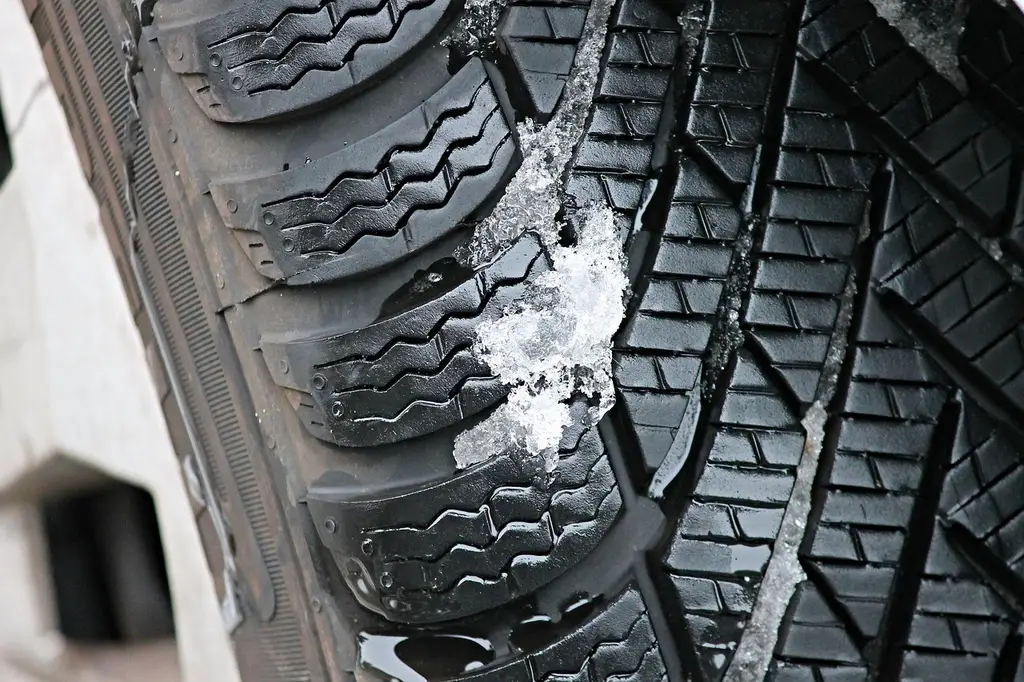
What Temperature Is Too Cold for All-Season Tires?
All-season tires lose useful grip as temperatures sit at or below 7°C (45°F) for long stretches, especially on wet, snowy, or slushy roads (Transport Canada; Michelin technical guidance; Continental technical guidance). Tread depth and day-to-day temperature swings still matter. Ignore that cutoff and you give up grip, lengthen stopping distances, and invite more slip in cold weather. This guide explains the 7°C rule, when all-season tires stop being the best choice, and how all-weather and winter tires compare.
Cold-weather decision table


This table turns the 7°C / 45°F rule into a route-based decision. Use the temperature you actually drive in, not the noon forecast. If your commute starts before sunrise, the road may be cold enough for winter tires even when the afternoon looks mild. Transport Canada and tire manufacturers both frame this as a practical winter-prep threshold, not a hard cutoff.
| Scenario | Recommended tire choice | Risk level | Exact reason to switch or wait |
|---|---|---|---|
| Cold dry morning | Winter tires if the cold pattern lasts; otherwise all-season may be acceptable for short use | Moderate | Below 7°C, all-season rubber stiffens and braking distance grows on dry pavement before snow arrives (Transport Canada; Michelin; Bridgestone). |
| Freeze-thaw commute | Winter tires or 3PMSF all-weather tires | High | Morning ice, shaded patches, and refreezing after wet roads create traction loss that a warm afternoon forecast does not remove (Transport Canada; NHTSA). |
| Urban slush | Winter tires; all-weather only if routes are short and plowed | High | Slush needs tread depth and siping for evacuation, and worn tires below 5/32 inch lose winter usefulness (Tire Rack; Bridgestone; Michelin). |
| Rural untreated roads | Winter tires on a full set of four | Very high | Snow, packed snow, and untreated intersections punish all-season tires more than city pavement does, especially in stop-and-go driving (Transport Canada; Consumer Reports). |
| Mild coastal winter | All-season tires may remain workable; all-weather tires are a stronger cold-weather choice | Low to moderate | If roads stay above freezing most days and snow is rare, the lower risk may not justify a full winter swap (Transport Canada; tire manufacturer winter guidance). |
Say your morning commute is about 18 minutes, the car sits outdoors, and the road is wet around 6°C before dawn. That is a different decision from a sunny 11°C afternoon return trip. The colder trip matters more because it sets the traction you need for braking, turning, and lane changes, especially when temperature swings are large overnight (Transport Canada; Michelin technical guidance).
What the 7°C rule means
The 7°C / 45°F threshold is a planning line, not a hard cliff. It marks the point where winter tires vs all-season tires becomes a meaningful cold-weather decision because all-season compounds begin losing flexibility as temperatures fall, especially on cold pavement and during morning commutes (Transport Canada; Michelin; Continental).
The useful temperature is the one your tires see on the road surface. A forecast high above 7°C does not erase a freezing dawn, a shaded bridge deck, or a road that has not warmed yet after overnight cold. Transport Canada and tire makers both stress that road temperature and driving time matter more than the daily high when deciding when to switch tires.
Why it is a planning threshold
All-season tires are a compromise tire type for dry pavement, rain, and light winter use. That works in mild weather. It works less well once the rubber hardens enough that steering response and braking margin start to fade in normal cold traffic (Transport Canada; Michelin; Bridgestone).
Winter tires are designed for cold pavement below 7°C. Their softer cold-weather compound stays more flexible, and that flexibility matters before any snow appears (Transport Canada; Nokian Tyres technical guidance).
Why commute-time temperatures matter
Most drivers feel the issue first in the morning. Overnight temperatures can drop below the when to switch to winter tires decision point, then the road stays cold through the first part of the commute. If that is your routine, the daily low matters more than the afternoon high (Transport Canada; Bridgestone).
Picture a driver who leaves at 7 a.m. and returns at 6 p.m. The afternoon may be mild, but the tires still need to handle the colder departure, which is often when emergency braking and tight following gaps matter most. Safety agencies consistently frame tire choice around the conditions when driving actually happens, not the warmest part of the day.
Why daily lows matter more than a forecast high
A cold spell with one warm midday window still leaves bridges, shaded corners, and untreated side streets cold. If the overnight low keeps dipping below 7°C, the pavement may stay cold enough for longer stopping distances and reduced grip during the exact hours you drive (Transport Canada; NHTSA).
Why all-season rubber loses grip in cold
All-season tires begin to lose elasticity below 7°C, and that is why they lose useful grip in cold weather (Transport Canada; Michelin technical docs; Continental technical guidance). As the rubber stiffens, the tire conforms less to pavement texture, so grip drops even on dry roads. That is why the first warning sign is often longer braking, not spinning in snow.
Cold rubber also changes steering feel. The tire can feel slower to respond, less sure in quick lane changes, and less forgiving if you brake hard on a wet or cold surface. Snow is not required for that effect; cold pavement alone is enough to reduce the available margin (Transport Canada; NHTSA).
Compound stiffening below 7°C
All-season tires can stiffen when temperatures fall below 45 degrees Fahrenheit, which is why many manufacturers use the 7°C guidance as a practical switch point (Michelin; Bridgestone; Continental). Once that happens, the tread is less able to flex into the road surface. Winter tires use a softer cold-weather compound for that reason.
Winter tires are not simply “snow tires.” They are built for cold pavement too, which is why they start making sense before the first storm (Transport Canada; Nokian Tyres).
Longer braking on cold pavement
Braking distance grows as all-season rubber hardens. That matters on a dry road with no snow at all. The issue is not only traction in a drift; it is also the extra room needed to stop in an emergency (Transport Canada; NHTSA).
At just below freezing, winter tires can shorten stopping distances by as much as 30% versus all-season tires in manufacturer-published and safety-body winter comparison testing contexts. That gap is most valuable when traffic slows suddenly or a turn lane appears late (consumer safety testing and tire manufacturer winter performance data; source summaries vary by vehicle, surface, and tire model).
Handling changes before snow starts
Drivers often wait for snow to change tires, but the first safety drop can happen sooner. Wet cold pavement, early frost, and cold intersections can all expose the weaker side of a hardening all-season compound (Transport Canada; Michelin; Continental).
A common mistake is assuming a dry-looking morning commute is safe for all-season tires, even though a mountain road in the high 30s can still make them grip and stop worse than expected. Safety bodies emphasize that temperature, shade, and surface moisture can matter as much as visible snowfall.
When should you switch to winter tires?
Switch when your daily driving pattern keeps pavement near or below 7°C, especially before sunrise or after sunset. If you repeatedly see overnight freezing, slush, or untreated roads, winter tires become the safer choice sooner than a calendar date would suggest (Transport Canada; tire manufacturer winter guidance).
Install winter tires as a full set of four. That keeps front and rear grip closer together and avoids unstable handling from mixing levels of winter traction (Transport Canada; NHTSA; tire manufacturer fitment guidance).
Early-morning commute patterns
If your commute begins in the coldest part of the day, plan the change before the first icy week. The right question is not “Will it snow today?” but “What temperature am I driving in when the road is coldest?” That is the practical interpretation used by Transport Canada and major tire makers.
Repeated overnight freezing
Repeated freeze-thaw cycles are a strong signal. Melted water can refreeze overnight on ramps, bridges, and shaded bends. Those spots are common failure points for all-season tires because they combine cold rubber with sudden surface slickness (Transport Canada; NHTSA).
Regional road-treatment differences
Where roads are plowed and salted quickly, all-weather tires may be enough for some drivers. Where roads stay untreated longer, winter tires are the better match. Rural routes, steep hills, and mountain roads push the decision toward winter rubber much sooner (Transport Canada; Consumer Reports; tire manufacturer guidance).
All-season, all-weather, and winter tires
All-season tires are the broad compromise. Winter tires are the cold-weather specialist. All-weather tires sit between them, because some can carry the 3PMSF symbol and improve cold-weather performance without becoming a full winter-only tire set (Transport Canada; U.S. tire labeling guidance; major manufacturer technical documents).
Use the symbol on the sidewall, not marketing language, to judge winter capability. The 3PMSF symbol indicates a standardized snow traction test was passed, while M+S generally refers to mud and snow and is usually based on tread design rather than a specific snow or ice performance test (Transport Canada; NHTSA tire labeling guidance; Rubber Manufacturers Association historical marking guidance).
Where 3PMSF fits
All-weather tires can carry the 3PMSF symbol and outperform basic all-season tires in slush and moderate snow. That makes them a practical middle option for drivers who see real winter, but not long periods of severe snow or ice (Transport Canada; tire manufacturer technical docs).
If you want one set for year-round use in a mild climate, 3PMSF all-weather tires are often the better cold-weather compromise than standard all-season tires. The symbol matters more than the category name when winter grip is the priority.
Why M+S is weaker evidence
M+S stands for mud and snow, but it does not verify ice or deep-snow performance. It can appear on tires that are still poor choices for serious winter driving. Treat it as a broad marking, not proof of strong winter grip (Transport Canada; NHTSA tire marking guidance).
When all-weather tires make sense
All-weather tires make sense when you want better cold-weather traction than standard all-season tires, but you do not need a dedicated winter set for several months of severe conditions. They are a useful middle ground for mixed urban and suburban winter use (Transport Canada; tire manufacturer winter product guidance).
Tread depth and winter readiness
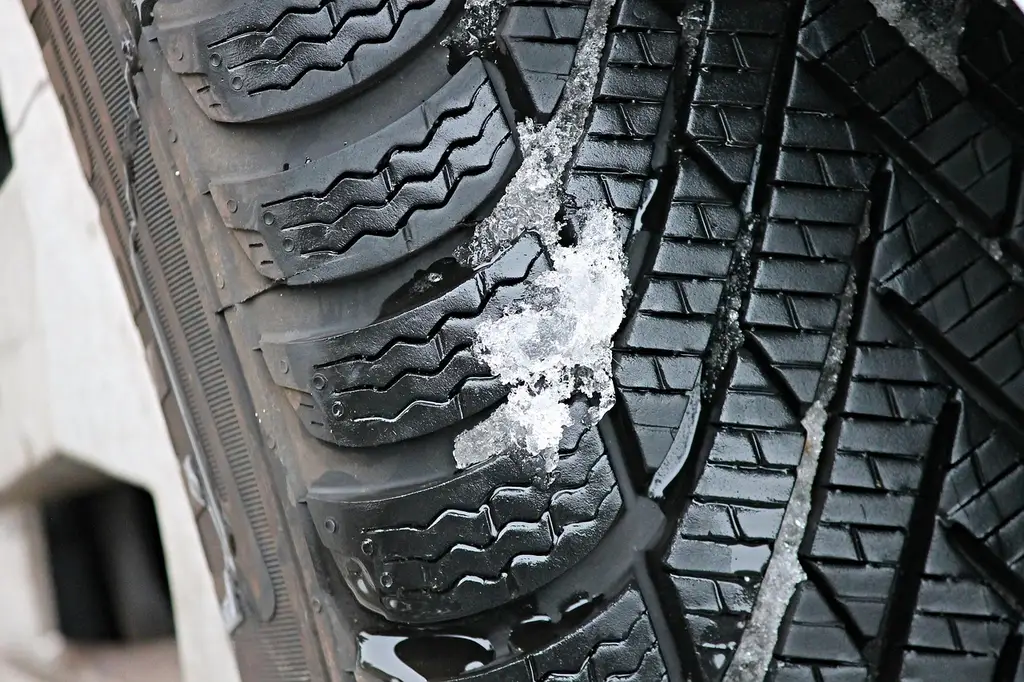
Tread depth matters more as winter gets messy. Deep tread helps with packed snow and slush evacuation, while worn tread leaves less channeling space for water and slush to escape. That is why a tire can still look usable in dry weather but be weak for winter travel (Tire Rack; Michelin; Bridgestone; Transport Canada).
Worn tires below 5/32 inch of tread lose winter usefulness. If your tread is near that point before the cold season starts, the swap becomes more urgent even if the forecast is only “cool” rather than snowy (Tire Rack; Bridgestone winter wear guidance).
Why 5/32 inch matters
The depth threshold matters because winter driving is not only about grip on bare pavement. It is also about moving slush out of the contact patch and maintaining bite in packed snow. A shallow tread has less room to do that work (Tire Rack; Michelin).
How wear changes slush evacuation
Shallow tread channels fill sooner. Once that happens, the tire is more likely to skim over slush instead of clearing it. The result is weaker steering feel and more uncertainty during braking and lane changes (Tire Rack; Bridgestone).
When worn tires should be replaced before winter
If tread depth is already below 5/32 inch, do not wait for the first storm to make a decision. That tire may still be legal in some places, but it is no longer a strong winter choice (Tire Rack; consumer safety guidance).
- Check tread depth before the cold season starts.
- Compare your earliest commute temperatures with the 7°C / 45°F threshold.
- Look at your road type: dry urban streets, slush, untreated rural roads, or bridge-heavy routes.
- Choose winter tires if cold mornings, freezing nights, or snow and slush are common.
- Choose all-weather tires if you need better cold-weather traction but do not face sustained severe winter.
- Keep all-season tires only if your winter is mild, your roads are mostly dry, and tread depth is still healthy.
Can you stay on all-season tires all winter?
You can in some mild climates, but only if winter stays mostly dry, roads are treated quickly, and your route avoids repeated freezing, slush, and snow. That is the narrow case where all-season tires remain an acceptable compromise rather than the best cold-weather choice (Transport Canada; tire manufacturer guidance).
Do not treat “all winter” as one weather pattern. The answer changes with where you drive, how early you leave, and how often the pavement freezes. Safety organizations and tire manufacturers consistently advise matching the tire to the coldest, most challenging conditions you actually face.
Dry cold roads
On dry roads, all-season tires may remain workable in a mild winter, but the safety margin shrinks as temperatures stay below 7°C. The first penalty is usually stopping distance, followed by less precise handling (Transport Canada; Michelin; NHTSA).
Light snow only
All-season tires can cope with very light, short-lived snow in some areas, but they are not equal to winter tires on snow and ice. If the snow sticks, compacts, or turns to slush, the gap becomes more obvious (Transport Canada; Consumer Reports winter testing summaries; manufacturer data).
Mountain and rural routes
Mountain, rural, and heavily snowy routes call for winter tires. Those routes create the worst mix of untreated pavement, shade, colder road temperatures, and packed snow. A full set of four winter tires is the safer setup there (Transport Canada; NHTSA).
Suppose a sedan on 205/55R16 all-season tires faces a rural road with drifting snow and a shaded bridge. That is exactly the kind of route where a winter set or a 3PMSF-capable alternative matters more than the weather app’s daytime high. Tire choice should follow road condition, not just ambient forecast.
Frequently asked questions
What temperature is too cold for all season tires?
All-season tires are generally too cold once temperatures sit at or below 7°C for long periods, especially when the road is wet, slushy, or icy (Transport Canada; Michelin; Continental). That is the point where the rubber stiffens enough that grip and braking margin begin to fall away.
What temperature was identified as being too cold for all season tires?
The commonly cited planning threshold is 7°C, or 45°F. It is not a hard scientific cliff, but it is a useful switch point for winter tire decisions because all-season tires begin to lose elasticity below that range (Transport Canada; tire manufacturer technical guidance).
At what temperature do all season tires stop working?
They do not stop working at one exact number. They keep rolling in cold weather, but traction drops as rubber hardens. The practical warning line is 7°C, especially if you drive in the early morning or on roads that stay cold all day (Transport Canada; Michelin).
Do all-season tires lose grip below 7°C?
Yes. All-season tires begin to lose elasticity below 7°C, and that loss shows up first as longer braking and less confident steering. The effect can appear on dry pavement before any snow falls, so do not wait for winter conditions to notice it (Transport Canada; Bridgestone; NHTSA).
Can I drive all winter on all-season tires if roads are dry?
Only in a mild winter, and even then with caution. Dry roads reduce the penalty, but cold rubber still hardens below 7°C. If your commute is early, your road has bridges or shade, or freeze-thaw is common, winter or all-weather tires are the safer choice (Transport Canada; Michelin; NHTSA).
Are all-weather tires better than all-season tires in cold weather?
Usually yes. All-weather tires can carry the 3PMSF symbol and perform better in slush and moderate snow than basic all-season tires. They are not a substitute for dedicated winter tires in severe conditions, but they are a stronger cold-weather option (Transport Canada; NHTSA tire marking guidance; tire manufacturer technical docs).
Products related to this article
Sponsored / affiliate links. As an Amazon Associate I earn from qualifying purchases. I may earn additional commission from eligible campaigns.