How Does Road Salt Damage Brake Lines and Rotors?
Road salt speeds corrosion on steel brake lines, caliper hardware, and rotor surfaces. A pitted line or stuck caliper needs prompt inspection, while light rotor rust after a drive is usually normal. Ignored damage can cause leaks, seized brakes, vibration, longer stops, and costly repairs. This guide explains the salt-to-failure chain and how to tell harmless rust from unsafe corrosion.
Road salt and brake corrosion


Road salt is usually sodium chloride, sometimes blended with calcium chloride or magnesium chloride. It lowers the freezing point of water, so slush stays wet longer and can form an electrolyte solution that speeds corrosion on exposed metal. That matters most on the underside, where salt spray dries into crust.
Brake hardware sits in that spray path. Wheels throw contaminated water into wheel wells, seams, and the brake assemblies near the wheels, and steel lines run along the underside where direct spray from the tires keeps attacking coatings and fittings. Older, high-mileage, and salt-belt vehicles see the worst exposure.
What salt does to metal
Dry salt is only part of the problem. Wet salt bridges moisture and metal, so the corrosion process keeps going after the road surface looks dry. Once coatings are breached, rust starts on edges, seams, clips, and flares, then spreads under the protective layer.
Which brake parts get hit first?
Brake lines, caliper slide pins, rotor hats, and pad hardware are common first targets because they sit low and collect slush. The rotor friction faces can also pick up flash rust and pitting after repeated wet drives. The issue is not cosmetic when the part carries fluid or must move freely.
Can road salt rust through brake lines?
Yes. Brake lines sit in the spray zone where salt attacks coatings and fittings, and corrosion can thin a line from the outside in until a hard brake application pushes fluid through the wall. Moisture and salt can hide a leak until pedal feel changes suddenly, so the first symptom may be a soft pedal.
How brake lines fail
Steel brake lines run along the underside and are exposed to direct salt spray from wheels. Pitting starts small, often near clips, unions, and bends where grime stays wet. Over time, the wall gets thinner, and a line that looks only rusty on the outside may already be weak enough to fail under pressure.
Rusty brake lines can be a safety hazard severe enough to require replacement. Cleaning helps only when corrosion is light and limited to surface oxidation. Deep scaling, flaking, damp spots, or swelling at a flare or fitting usually means replacement, not cleanup.
Warning signs of a thinning line
- Brake fluid loss on the driveway or along a line, fitting, or union
- A pedal that sinks lower than normal
- Delayed braking response after a hard stop
- Wetness or staining on a line, fitting, or union
- Rust concentrated at one spot instead of uniform surface oxidation
Say your compact sedan starts requiring extra pedal travel after a week of slushy commutes, and you spot a damp line near the rear axle. That is not a normal winter nuisance. It is a check-before-driving issue because a corroded line can fail without much more warning.
When rust means replace, not clean
If the line is pitted enough to catch a fingernail, or shows flaking, weeping fluid, or visible thinning at a bend, replacement is usually the right call. Cleaning cannot restore wall thickness. On many vehicles, the most common brake line size mentioned is 3/16-inch, and 4.75mm is approximately the same common size.
Brake rotors in winter salt
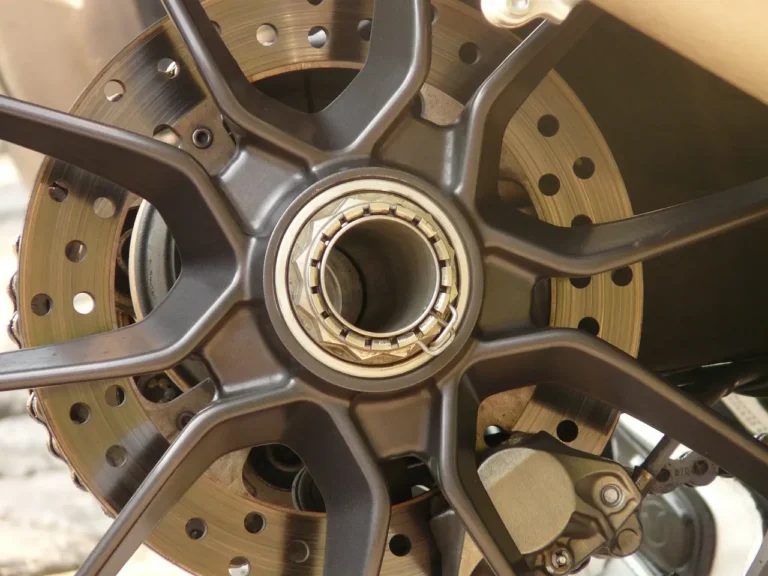
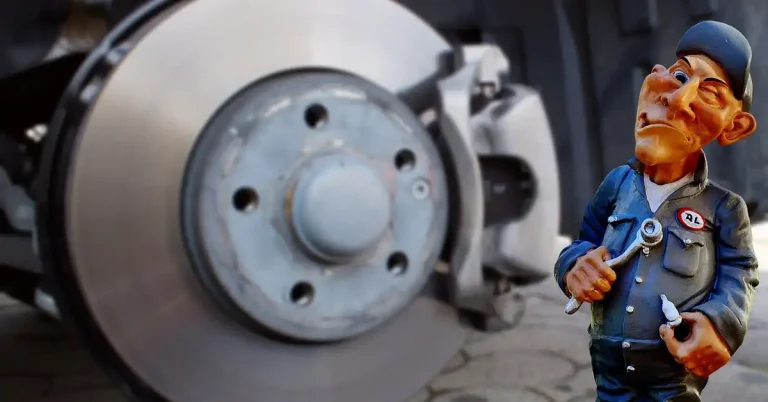
Rotors can develop surface rust, pitting, and uneven friction from wet salt exposure. Light rust after sitting is common and usually clears on the first brake application. Deep pitting is different. It can change pad contact, create vibration under braking, and make the rotor feel warped even when it is not truly warped.
Surface rust versus pitting
Surface rust is a thin film on the non-swept areas or on a rotor that has sat through a wet night. Pitting cuts into the iron and leaves tiny cavities. That roughness can make braking noisy or uneven, especially if the pad sweeps across a corroded patch every wheel revolution.
Why vibration is not always rotor warp
Drivers may feel vibration under braking even when the rotor isn’t truly warped. Pitting, pad material transfer, and sticky slide pins can all create a pulse through the pedal or steering wheel. The fix depends on the cause. Machining or replacing a rotor will not solve a seized caliper bracket. In diagnostics, that distinction matters because rotor runout checks, pad inspection, and caliper-slide movement usually need to be verified before parts are replaced.
Suppose a pickup starts shaking only during moderate braking after a storm, and one front wheel shows more rust than the others. The likely cause may be pad transfer or a sticking slide pin, not a bent rotor. That distinction matters because the repair path is different.
How moisture changes brake feel
Wet salt on a rotor can temporarily change friction and cause a brief scrape or squeal, then the noise fades as the pads clean the face. Persistent vibration, however, points to a deeper issue: pitting, uneven deposits, or hardware that keeps one pad from floating normally.
Why calipers start dragging
Salt and grit can bind caliper slide pins so one pad drags. When the caliper cannot slide, one pad stays pressed harder than the other. That creates heat, glazing, squeal, and uneven pad wear. Salt can also cause corrosion that leads to seized calipers or leaking brake lines.
Slide pins and seized hardware
Slide pins need clean movement. When corrosion or dried grease locks them up, the caliper cannot center itself over the rotor. The result may be one inner pad wearing faster, or a wheel that feels slightly held back after a stop. That is a mechanical fault, not just winter grime.
How drag damages pads and rotors
Dragging pads run hot. Heat hardens the friction material, so the pads glaze and lose bite. The same heat can darken or score the rotor face and make the brakes squeal after snow and slush. If the drag continues, you can end up with uneven pad thickness and rotor wear on one side.
Why brakes squeal after snow and slush
After wet winter driving, squeal often comes from a combination of moisture, surface rust, and hardware that no longer moves freely. A light squeal that clears after a short drive can be normal. A persistent squeal paired with pull, heat, or uneven wear usually means sticky hardware needs service.
What warning signs matter most?
The most important warning signs are fluid loss, a soft pedal, one wheel running hot, and brake behavior that changes after wet or stormy conditions. Squeal alone can be harmless. Squeal plus vibration, drag, pull, or a drop in pedal feel deserves inspection because those signs point to corrosion that affects function.
Soft pedal or fluid loss
A soft pedal or visible brake fluid loss can indicate a line is corroded through or a fitting may have started to seep. Moisture and salt can hide a brake leak until pedal feel changes suddenly. If the pedal sinks farther than usual, do not assume it is only worn pads.
Squeal, vibration, or pull
Squeal after snow can come from surface rust or glazed pads. Vibration can come from pitting, pad transfer, or sticky slides. A pull to one side often points to one caliper dragging harder than the other. Those symptoms are useful because they narrow the likely fault before parts are replaced.
Heat, smell, or one wheel running hot
A hot wheel, sharp brake smell, or one rotor much warmer than the others points toward a dragging caliper or seized slide pin. That should be treated as urgent, because heat shortens pad life and can damage hoses, seals, and bearings nearby. It is not a normal winter condition.
When is winter brake corrosion an emergency?
It is an emergency when corrosion affects brake fluid, pedal feel, heat, or steering stability. Do not keep driving if you have a soft pedal, visible seepage, a burning smell, one wheel that is much hotter than the others, or a line that looks swollen, flaking, or wet. Those are failure, not maintenance, signs.
Brake corrosion triage table
| Symptom | Likely cause | Urgency | DIY check | Recommended action |
|---|---|---|---|---|
| Light orange rust on rotor face after sitting | Normal surface rust | Low | Drive gently and see whether noise clears in a few stops | Monitor; no repair if braking is smooth and even |
| Steady vibration under braking | Pitting, pad transfer, or slide-pin binding | Medium to high | Check whether one wheel has heavier rust, heat, or uneven pad wear | Inspect rotors and caliper hardware before replacing parts |
| Squeal after snow and slush | Moisture, glazed pads, or sticky hardware | Medium | Look for pad thickness mismatch and rust on pins or brackets | Clean and service hardware if movement is stiff; replace pads if glazed |
| Soft pedal or fluid loss | Brake line corrosion or leak | High | Check for wet lines, puddles, and a drop in reservoir level | Do not drive far; have lines inspected and replace damaged sections |
| One wheel very hot, burning smell, or pull | Seized caliper or stuck slide pins | High | Carefully compare wheel temperatures after a short drive | Stop driving until the caliper and hardware are repaired |
| Heavy flaking rust on brake line or fitting | Advanced external corrosion | High | Look for wetness, swelling, or rust at bends and clips | Replace, not clean |
How do you protect brakes from salt?
A high-pressure undercarriage wash is a common recommendation after heavy salt exposure, especially on the underside, wheel wells, and brake area. It removes brine from line routes, brackets, and seams before crust builds up. Use care around damaged coatings, electrical connectors, and packed rust so you do not force water into vulnerable areas. It will not fix damage, but it can slow the next round of corrosion.
Wash the underside, not only the body
A normal exterior rinse misses the brake line routes, wheel wells, and lower seams. A high-pressure undercarriage wash reaches the areas that stay wet longest. After a heavy salt event, that rinse matters more than a quick pass through a tunnel wash with little underbody coverage.
Rustproofing, undercoating, and cavity wax
Oil-based rustproofing works into seams and joints. Rubberized undercoating creates a barrier on exposed underside panels. Cavity wax protects inside door panels and rocker sections. These products are prevention tools, not a fix for rusted-through brake lines or seized calipers.
They are most useful before corrosion gets deep. Once a line is flaking or a caliper is sticking, coating over the problem hides it instead of solving it. That is why inspection comes before protection on older cars.
When to inspect
- Inspect before winter if the vehicle lives in a salt belt or has high mileage.
- Inspect again after the first few heavy salt storms.
- Look for rust spots on rotors, calipers, and lines.
- Check for brake fluid loss, wetness, and changes in braking feel.
- Act immediately on leaks, drag, or severe vibration.
Why drilled and slotted rotors?
Drilled and slotted rotors are not a cure for corrosion, and they will not fix seized hardware or rusted brake lines.
When they help and when they do not
They do not solve rotor pitting caused by salt exposure, and they do not prevent pad drag from a stuck caliper. If the real issue is corrosion, the repair belongs in the hardware, not the rotor style.
Frequently asked questions
How does road salt damage brake lines and rotors?
Salt lands on the underside, mixes with moisture, and forms an electrolyte that speeds corrosion. On brake lines, that can thin the steel wall and lead to leaks. On rotors, it causes surface rust, pitting, and uneven friction that may feel like warp even when the rotor is not bent.
Can road salt cause brake lines to rust through?
Yes. Brake lines sit in the spray zone where salt attacks coatings and fittings, and corrosion can thin them from the outside in. A line may look only rusty until it starts weeping fluid or fails during a hard stop. If rust is deep or flaking, replacement is safer than cleaning.
Can salt make rotors wobble or feel warped?
Salt can make a rotor feel warped without true warpage. Pitting, pad transfer, and sticky slide pins can all create vibration under braking. The right fix depends on the cause. A rotor replacement alone will not cure a seized caliper or a bracket that keeps one pad dragging.
What are the warning signs of salt-damaged brakes?
Watch for a soft pedal, brake fluid loss, squeal after snow, vibration under braking, one wheel running hot, or a pull to one side. Light surface rust is normal after wet driving. The concern starts when the symptom affects pedal feel, heat, fluid, or even braking.
How fast can brake lines corrode in winter salt?
In salt-belt use, corrosion can build faster on older, high-mileage vehicles that see repeated slush, short trips, and infrequent washing. Damage often hides until the line is thin enough to leak or fail under pressure.
Should I replace rusty brake lines or just clean them?
Clean them only if the rust is light surface corrosion and the steel is still sound. Replace them if there is pitting, flaking, swelling, dampness, or visible thinning, especially near fittings and bends. Rusty brake lines can be a safety hazard severe enough to require replacement.
Why do brakes start squealing after snow and slush?
After snow, squeal often comes from moisture, surface rust, glazed pads, or hardware that no longer moves freely. If the squeal disappears after a short drive, it may be temporary. If it persists with vibration, pull, or heat, sticky slide pins or dragging pads are likely involved.
How do I protect my brakes from road salt this winter?
Use a high-pressure undercarriage wash after heavy salt exposure, especially on the underside, wheel wells, and brake area. Add rustproofing before corrosion gets deep. Oil-based rustproofing, rubberized undercoating, and cavity wax help slow future damage, but they do not repair rusted lines or seized calipers.
Products related to this article
Sponsored / affiliate links. As an Amazon Associate I earn from qualifying purchases. I may earn additional commission from eligible campaigns.