Chevy Tire Pressure Light Won’t Turn Off? Here’s Why
If your Chevy tire pressure light stays on after you add air, check every tire against the door-jamb placard, usually within about 1–2 psi, then run the TPMS relearn if the model requires one; if the light still stays on, suspect a failed sensor or weak sensor battery. A Chevy TPMS light that blinks at startup usually means the system has a fault, and ignoring a low tire can leave the vehicle underinflated, trigger false warnings, and hide a real TPMS problem that needs service. This article shows the checks to try first, which Chevy models need relearn steps, and when a sensor or module is the real problem.
What you’ll need


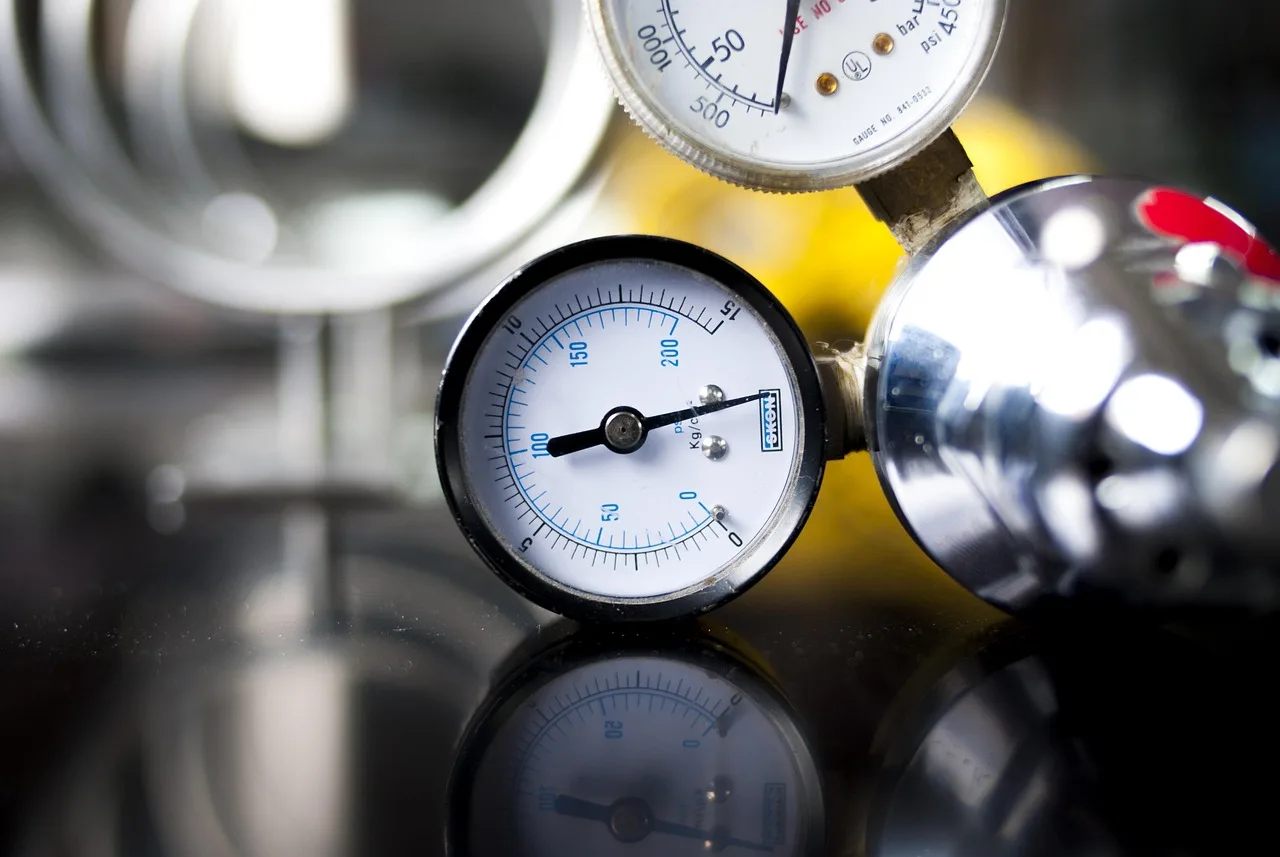
- Tire pressure gauge that reads accurately in psi
- Air source at home or at a service station
- Chevrolet owner’s manual
- Doorjamb tire pressure placard
- Optional TPMS scan tool or relearn tool
📊 A pressure drop of about 25 percent can trigger the warning light. Source: Consumerreports.
Why the light stays

A Chevy TPMS light can stay on for three broad reasons: one or more tires are still low, the system needs a relearn after service, or the TPMS hardware has a fault. A light that flashes at startup and then stays on points to a system fault, while a solid light usually points to low pressure or a pressure-related mismatch.
Solid light after inflation
- Check all four tires with a gauge after the vehicle has sat at least 3 hours.
- Set each tire to the doorjamb placard pressure, not the sidewall number.
- Drive a short distance and see whether the light clears after the system updates.
Say your Silverado placard calls for 35 psi and one front tire is still at 31 psi after topping off. That one tire can keep the warning on, even though the others look fine. A TPMS light is a warning system, not a maintenance reminder, so the gauge reading matters more than the dash display.
Blinking at start, then solid
A light that flashes at startup and then stays on indicates a TPMS system fault. That can mean a sensor did not respond, a wheel position changed without a relearn, or the vehicle lost communication with part of the system. Low pressure can still be present, but the blinking pattern means the system itself needs attention.
Light that returns after driving
If the light goes off while driving and comes back later, think slow leak first. Heat from driving can raise pressure enough to hide a loss that shows up again after the truck sits overnight. A puncture, valve leak, or bead leak can do that, and those problems need repair before the warning will stay off.
Check cold tire pressure first
Measure cold tire pressure after the tires have sat for at least 3 hours. Tire pressure changes with outdoor temperature swings, and Consumer Reports says pressure changes about 1 psi per 10°F. A drop of about 25 percent can trigger the warning light, so a cold snap can push a marginal tire below the threshold.
Set pressure to the placard
- Read the front and rear psi on the doorjamb placard.
- Inflate each tire to that spec, then recheck with the gauge.
- Repeat after 10–15 minutes if the gauge changes after the tire warms or cools.
- Inspect the valve stem, tread, and sidewall for nails, cuts, or slow seepage.
Suppose a Colorado morning drops from 60°F to 30°F. That 30-degree change can move pressure enough to trigger the light on a tire that was already near the low side. Top it up to the placard spec cold, then look for a leak if the pressure falls again the next day.
Inspect for a slow leak or puncture
Use soapy water on the valve stem, tread, and bead area if a tire keeps losing pressure. Any repeat loss after a proper fill points away from the sensor and toward the tire itself. That is a safety issue, because a slow leak can turn into a flat or damage the wheel if ignored.
What does a blinking Chevy TPMS light mean?
A blinking Chevy TPMS light usually means the system has a fault, not only low air. In many GM setups, the vehicle may have direct TPMS with a pressure sensor in each wheel, or indirect TPMS that uses wheel-speed sensors from the ABS system. Different systems fail in different ways, so the reset path is not the same on every model.
Sensor or communication fault
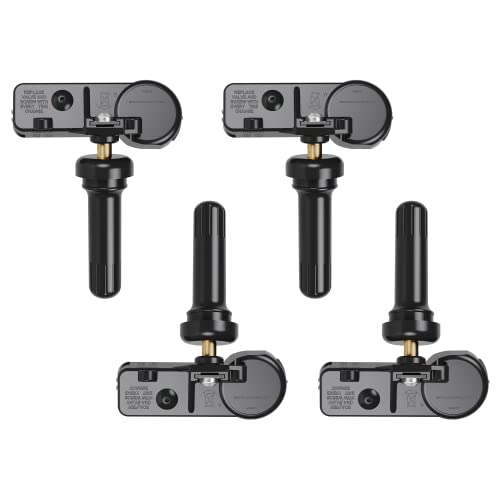
Direct TPMS uses a pressure sensor/transmitter mounted to the wheel, usually attached to the end of the valve stem inside the tire chamber. If that sensor battery is weak or the signal drops out, the module may flag a fault. Sensor batteries commonly last about 10 years, and a dead battery may require replacing the whole sensor. (Consumerreports)
Relearn not completed
After tire or wheel changes, a new wheel size, or a sensor replacement, the TPMS relearn may be required. If the system still has the old sensor IDs or wheel positions, it can keep the warning on even when all four tires are at the right pressure. That is common after rotations and wheel swaps.
Low-voltage warning behavior
A weak car battery can cause TPMS misbehavior. Low voltage can interrupt sensor communication or leave the module confused at startup, which may trigger a warning even when tire pressure is fine. If the dash also shows slow cranking, dim lamps, or other electrical oddities, battery testing belongs on the list.
How do you reset a Chevy tire pressure light?
Some Chevy models may need a manual relearn after tire rotation, sensor replacement, or wheel changes; others may clear on their own after the correct pressure is set and the vehicle is driven. The owner’s manual is the right source for the model-specific procedure, and some trucks and SUVs need a scan tool or dealer-level relearn to finish the job.
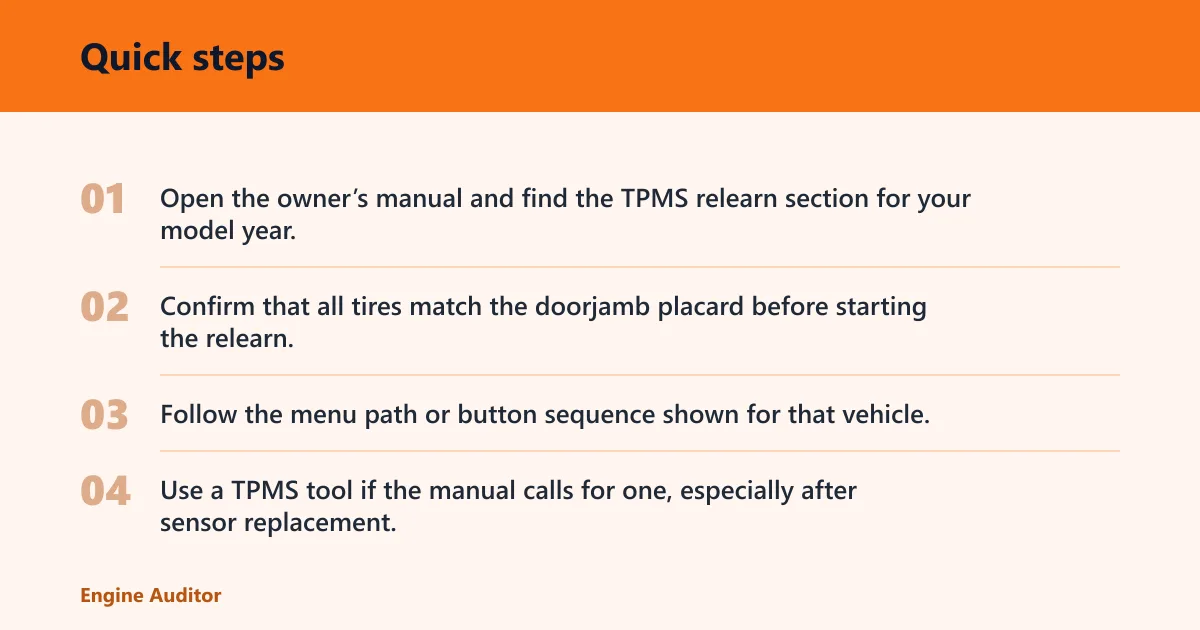
Use the manual or scan-tool path
- Open the owner’s manual and find the TPMS relearn section for your model year.
- Confirm that all tires match the doorjamb placard before starting the relearn.
- Follow the menu path or button sequence shown for that vehicle.
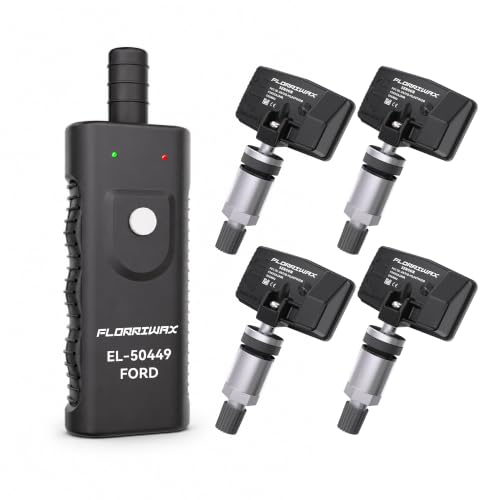
- Use a TPMS tool if the manual calls for one, especially after sensor replacement.
On some Chevy models, a relearn starts through the Driver Information Center or infotainment menus. On others, the system listens for each wheel in a specific order. If the procedure times out or the horn/chime never confirms a wheel, the shop-level scan tool is usually faster than guessing.
Know when a shop reset is faster
If the light remains on after correct pressure, a proper relearn, and a battery check, the next step is scan-based diagnosis. A tire shop or dealer can read TPMS sensor IDs, check receiver communication, and confirm whether one sensor is dead. That is the point where parts replacement becomes more likely than another manual reset.
TPMS troubleshooting matrix
This matrix separates the most common Chevy TPMS cases so you can match the symptom to the next check. Start with pressure, then relearn, then hardware. That order keeps you from replacing sensors before confirming a tire problem or a setup issue.
| Symptom | Likely cause | What to check first | Reset or relearn need | Likely shop-level fix |
|---|---|---|---|---|
| Solid light | One or more tires low | Cold psi at the doorjamb placard | Usually no, unless service was recent | Repair leak, inflate, verify pressure hold |
| Blinking at start, then solid | TPMS system fault | Battery voltage, sensor communication, warning messages | Often yes | Scan TPMS, relearn, replace failed sensor |
| Light after tire rotation | Sensor ID mismatch or relearn timeout | Manual pressures and rotation order | Yes | Perform relearn with scan tool or manual procedure |
| Light after a cold snap | Temperature-driven pressure drop | Cold psi after 3 hours parked | Maybe, after pressure is corrected | Inflate to placard, inspect for marginal tire or leak |
| Light that returns after driving | Slow leak or puncture | Repeat pressure loss overnight | Usually no at first | Find puncture, valve leak, or bead leak and repair tire |
Common mistakes
Do not inflate to the number molded on the tire sidewall. That number is a maximum for the tire, not the Chevy’s recommended pressure. Use the doorjamb placard for front and rear specs, then confirm with a gauge.
- Do not skip the cold-pressure check after 3 hours parked.
- Do not ignore a blinking light at startup; it can mean a system fault.
- Do not replace sensors before confirming relearn status after service.
- Do not stop at one tire if the light comes back the next day.
Frequently asked questions
Why won’t my Chevy tire pressure light turn off after I added air?
Check the cold pressure on all four tires and set each one to the doorjamb placard, then drive enough for the system to update. If the light stays on after that, run the model-specific relearn in the owner’s manual or have a shop scan for a sensor fault.
How do I reset the tire pressure light on a Chevy?
Open the owner’s manual, find the TPMS section, and follow the relearn steps for your exact model. Some vehicles use a menu command, some require a button sequence, and some need a TPMS tool. A shop can finish the relearn faster if the system times out.
Can cold weather make my Chevy TPMS light stay on?
Yes. Tire pressure changes with outdoor temperature swings, and a cold snap can lower pressure enough to trigger the light. Check the tires cold after 3 hours parked, add air to the placard spec, and recheck the next morning if the pressure was near the threshold.
What does a blinking tire pressure light mean on a Chevy?
A flashing light at startup that then stays on indicates a TPMS system fault. That can involve a sensor communication problem, a relearn issue, or low vehicle voltage. It does not point only to low air, so the system needs diagnosis if pressures are correct.
Do I need new TPMS sensors after changing tires on my Chevy?
Not usually. Tire changes alone do not automatically mean new sensors. You may only need a relearn if the existing sensors are still working, but a sensor with a dead battery or physical damage does need replacement. Sensor batteries commonly last about 10 years.
Could a bad Chevy battery cause the tire pressure light to stay on?
Yes. A weak car battery can cause TPMS misbehavior and communication faults. If the truck also cranks slowly or shows other electrical oddities, test the battery and charging system before replacing TPMS parts. Low voltage can create false warnings.
Products related to this article
Sponsored / affiliate links. As an Amazon Associate I earn from qualifying purchases. I may earn additional commission from eligible campaigns.