Can You Charge an EV in the Rain Safely?
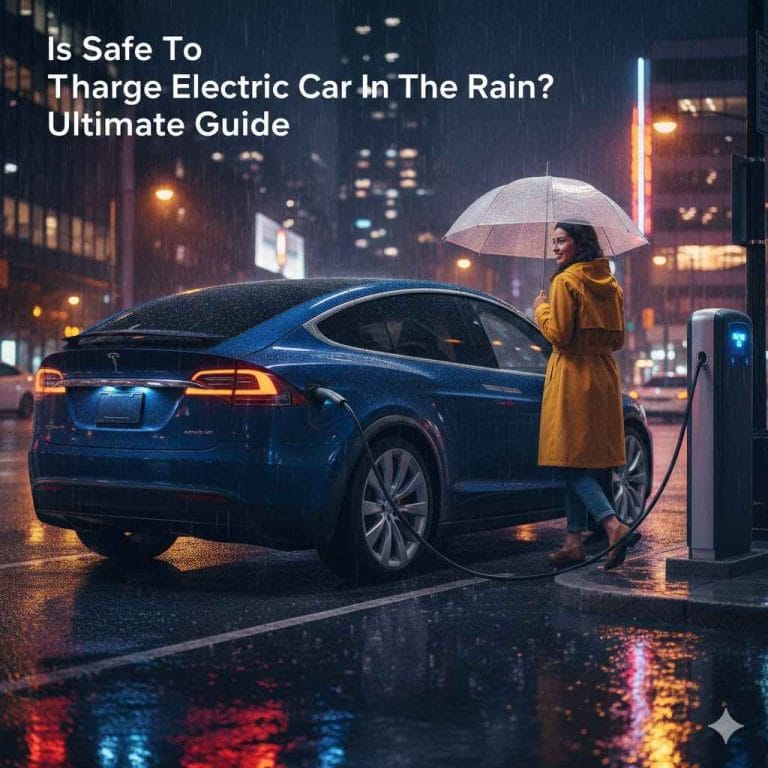
Yes, you can charge an EV in rain if the EV, cable, plug, and charger are intact, rated for outdoor use, and you are not in a flooded or waterlogged area. Wet-weather mistakes can trip breakers, damage equipment, or create shock risk. This guide explains rain, puddle, and thunderstorm rules for home, public, and 3-pin charging.
Can you charge an EV in the rain?
Yes. Ordinary rain is acceptable for EV charging when the equipment is undamaged and built for outdoor use. The answer changes if you see flooding, obvious wear, loose parts, or thunderstorm conditions. In those cases, waiting is the better call.
What changes the answer
The real risk is not rain alone. The risk rises when water gets into a damaged connector, a cracked housing, a worn seal, a wet socket, or a flooded charge area. Those are the failure points that matter.
Say your driveway wallbox is under a small canopy and the cable jacket is intact, but the bay has standing water around your shoes. The charger may be fine, but you should not use charging equipment in a flooded or waterlogged area. Move to a dry area or wait until the water clears.
When to stop and wait
Stop and wait if you see exposed metal, scorch marks, damaged insulation, cracked plastic, a wet 3-pin socket, or water pooling around the charge point. Also wait during severe wind, heavy storm conditions, or lightning nearby. Those are separate from normal rain.
Why EV charging stays protected
EV charging equipment is built with multiple safety layers. Chargepoints are designed for outdoor use, connectors use recessed pins and seals, and the car and charger check each other before power flows. If a fault occurs, protection devices can cut power fast.
Recessed pins and rubber seals
Type 2 and CCS connectors are commonly built with recessed pins and rubber seals to help keep moisture out. The charging port on the car is also designed to manage wet weather, so brief rain on the outer surfaces is expected in normal use.
Weatherproof chargepoints and connectors
Home, public, and workplace chargers are built for outdoor conditions. That does not make them immune to damage. It means the enclosure, seals, and connector design are intended to handle rain and splashes when used correctly.
Fault protection that cuts power
A residual current device, or RCD, protects against ground faults. A ground fault circuit interrupter, or GFCI, does the same job in the same protection family. If moisture causes a short circuit or leakage fault, these devices cut power quickly. (Wikipedia)
What IP ratings mean
An IP rating is a two-digit grading system. The first digit shows protection against solids such as dust. The second digit shows protection from liquids such as water. Higher numbers mean better resistance, but they do not make damaged equipment safe.
First digit: solids and dust
The first digit tells you how well the enclosure resists dust and other solid particles. A higher first digit means better protection against particles getting into the device. That matters for outdoor chargers exposed to grit, dirt, and road spray.
Second digit: water resistance
The second digit tells you how well the unit resists water. A higher second digit means better sealing against water exposure. It does not mean the charger should sit in floodwater or that a wet socket is fine to use.
Common ratings on chargers
| Rating | What it means in practice | Typical use you may see |
|---|---|---|
| IP54 | Dust protection level 5, water splash protection level 4 | Common on many home and public chargers |
| IP65 | Higher weather sealing against water exposure | Some outdoor DC chargers |
| IP67 | Higher sealing for tougher water exposure conditions | Some outdoor DC chargers |
| IP68 | Higher sealing than lower-rated units | Some outdoor DC chargers |
The enclosure rating applies to the housing and sealed parts of the charger or connector, not to a flooded bay, a wet socket, a damaged cable, or a worn plug. Even with a good IP rating, visible damage or water around the equipment means you should not use it.
Home charging in rain
Can you charge an EV in the rain at home? Yes, if the professionally fitted charger is in good condition and the area is not flooded. Home wallboxes are commonly designed for outdoor rain use, but the connector, cable, and wall unit still need a quick check.
Driveway and wallbox checks
Look at the charger case, cable jacket, connector, and the area around the parking space. The unit should have no cracked housing, loose parts, or visible wear. If the cable drapes through standing water, wait.
Wet sockets and damaged housings
If a home setup uses a socketed 3-pin cable, the socket should be dry before connection. For wallboxes, any wet socket, damaged seal, or broken flap is a stop sign. A damaged enclosure can turn a normal shower into a fault event.
A common first-timer mistake is assuming a roof over the car is enough. If the socket, plug, or connector is wet, or the charger face is damaged, the setup may be out of bounds even when the rest of the driveway looks fine.
When to wait instead
Wait if you see water inside the connector area, a broken latch, an exposed wire, or the charger has a fault light that the manual treats as unsafe. Check the vehicle manual too, since model-specific charging guidance is the most accurate source for unusual conditions.
Public charging in heavy rain
Can you use a public charger in heavy rain? Usually yes, if the unit is intact and the bay is not flooded. Public chargers are built for outdoor use, but you still need to inspect the connector, cable, and ground around the pedestal before you start.
What to inspect before plugging
Check for cracked housings, torn insulation, exposed metal, loose cable boots, wet sockets, and visible scorch marks. Make sure the connector locks normally and the cable is not lying in standing water. If the charger looks damaged, choose another unit.
Flooded bays and visible faults
Flooded charge areas are generally a no-go. So are chargers with broken screens, damaged plugs, dangling covers, or signs of impact. If water is around the base of the unit or you have to step through water to reach it, wait or move to another charger.
When a charger is out of bounds
Do not use a charger if the cable insulation is cut, the connector shell is cracked, the charge bay is flooded, or the cabinet looks compromised. Public equipment may be weatherproof, but weatherproof is not the same as fault-proof.
3-pin charging in rain
Is it safe to charge a 3-pin EV charger in the rain? This setup needs more caution than a sealed wallbox. The plug and socket should be dry before connection, and the cable route should avoid puddles and wet openings.
Extra caution for sockets and plugs
A 3-pin charging cable relies on a standard socket, so the weakest link is often the outlet itself. Check the plug, socket face, and cable for moisture, heat damage, looseness, or staining. If the socket is damp, do not connect it.
Dry before connecting
Wipe only the accessible outer surfaces if the manufacturer allows it, then wait for the plug and socket to dry. Do not force a wet plug into a socket, and do not use a damaged extension or an improvised outdoor setup. Those shortcuts raise risk fast.
Why this setup needs stricter checks
3-pin charging is less forgiving because it depends on household hardware that was not always installed for outdoor exposure. If the cable has to pass through an open door or window, protect it from pinch points, water ingress, and strain.
Wet-weather EV charging go/no-go guide
This checklist turns the safety rules into a simple decision tool. Use the section that matches your setup, and stop at the first red-flag condition. If any item fails, wait until the equipment and area are safe.
Charge ev checklist
| Check | Proceed if | Wait if |
|---|---|---|
| Chargepoint housing | No cracks, loose covers, or visible damage | Cracked case, broken flap, or missing part |
| Connector and cable | Insulation intact and seal undamaged | Cut jacket, frayed section, or torn seal |
| Ground area | Dry footing and no standing water | Flooded driveway or puddles where you must stand |
| Power and faults | No warning lights and the manual allows outdoor use | Scorch marks, fault alert, or unclear manual guidance |
Charge ev checklist
| Check | Proceed if | Wait if |
|---|---|---|
| Cabinet and display | No impact damage or broken parts | Loose panel, damaged screen, or visible fault |
| Connector face | Dry, clean, and free of exposed metal | Wet socket, cracked shell, or debris in the port |
| Charge bay | No standing water around the pedestal | Flooded bay or deep puddles near the unit |
| Cable condition | Jacket intact and no scorch marks | Damaged insulation, burn marks, or loose boot |
Charge ev checklist
| Check | Proceed if | Wait if |
|---|---|---|
| Socket | Dry, firm, and not heat damaged | Wet socket, loose fit, or scorch marks |
| Plug | Dry and free of visible damage | Moisture on pins, cracked body, or bent parts |
| Cable path | Clear of puddles and pinching points | Running through water, doors, or sharp edges |
| Weather | Normal rain only | Thunderstorm, flooding, or severe wind |
If you want the shortest version: dry hardware, no visible damage, no flooded or waterlogged area, and no severe storm. Anything outside that list means wait.
Lightning and storm edge cases
Heavy rain is one issue. Lightning and thunderstorms are another. Outdoor charging should be reconsidered during severe storm conditions, especially when wind, lightning, or nearby flooding makes the area unsafe to approach.
Heavy rain versus thunderstorms
Ordinary rain usually does not stop safe charging on intact equipment. Thunderstorms change the risk profile because lightning and storm damage can affect power lines, chargers, and the area around them. The safer move is to defer charging until the storm passes.
Flooding and standing water
If the charge area is flooded, stop. Standing water around the plug, socket, or pedestal is a clear no-go. Even if the charger is weatherproof, water at ground level can make access unsafe and may hide damage or faults.
Suppose a public charger sits at the edge of a lot after a sudden downpour, and water is pooled around the base of the unit. That is not a rain-only problem anymore. Wait for drainage or use a different charger.
Frequently asked questions
Is it safe to charge an electric car in the rain?
Yes, in normal rain it can be safe. EV charging systems are built with outdoor weatherproofing, recessed pins, seals, and fault protection. Do not treat that as permission to ignore damaged parts, wet sockets, or flooding near the charging area.
Can you charge an EV in the rain at home?
Yes. Professionally fitted home chargers can be used outdoors in rain if they are in good condition and the surrounding area is not flooded. A wallbox, cable, and connector should be checked before use, and the vehicle manual should be followed for model-specific instructions.
Can you use a public charger in heavy rain?
Usually yes, because public chargers are built for outdoor use. Heavy rain alone is not the deciding factor. Visible faults, flooded bays, damaged connectors, or water around the base are the real reasons to stop and choose another charger.
Is it safe to charge a 3-pin EV charger in the rain?
This setup needs extra caution. The plug and socket should be dry before connecting, and the cable should not run through standing water or damaged openings. If the socket is wet, wait until it dries.
Should I avoid charging during lightning or a thunderstorm?
Yes. Lightning and severe thunderstorms are different from ordinary rain. Outdoor charging should be deferred if storms are active, wind is severe, or flooding is present. The risk is not only the charger; it is also the surrounding area and power network.
Products related to this article
Sponsored / affiliate links. As an Amazon Associate I earn from qualifying purchases. I may earn additional commission from eligible campaigns.