What Causes a Brake Pedal to Pulse or Bounce?
A brake pedal that pulses usually points to rotor thickness variation, pad deposits, or ABS activation; if the pulse appears only during hard stops or on slippery pavement, suspect ABS first. Ignoring it can stretch stopping distance, hide a failing wheel speed sensor, and send you after parts that still measure fine. This guide shows how to separate rotor, ABS, and hydraulic causes, and what to inspect before buying rotors or calipers.
What a pulsing brake pedal usually means


Brake pedal pulsation is a symptom, not a diagnosis by itself. You may feel it in the pedal, the steering wheel, or the seat, and that location often points to the source. Rotor surface irregularity is the most common friction-side cause, but ABS, calipers, hub runout, and hydraulic faults can produce a similar complaint.
Pedal pulse versus steering-wheel shake versus seat vibration
A pedal-only pulse usually points to the front or rear brake torque changing rhythmically at the wheel end. Steering-wheel shake during braking often points toward the front axle because the steering system can transmit that movement. Seat vibration during braking can come from the rear axle, but it can also come from a strong front issue that is felt through the body shell.
PowerStop notes that pulsating brakes can be felt in a shaking steering wheel, a pulsating brake pedal, or in the seat. That pattern matters because it tells you where to inspect first, not which part to replace first.
Steady rhythmic pulse versus ABS-style rapid tapping
A steady rhythmic pulse that repeats with wheel speed usually fits rotor runout, pad-transfer high spots, or a hub problem. ABS activation feels different: rapid tapping, chatter, or a short burst of noise during low-traction stops. The key split is whether the pulse tracks wheel rotation or the traction limit.
Do not treat every bounce at the pedal as a warped rotor. ABS can make a healthy brake system feel rough for a moment on gravel, snow, wet paint, or during a split-friction stop where one wheel has less grip than the others.
Why speed, heat, and brake pressure matter
Speed helps separate geometric issues from hydraulic ones. A high-speed pulse that fades at walking pace often points to rotor or hub runout, since a small deviation repeats faster as wheel speed rises. Heat matters because hot rotors can build deposits, glaze the pad surface, and create a stronger pulse after repeated stops.
Brake pressure matters too. If the pulse shows up only with light braking, the pads may be skimming high spots or the ABS may be pulsing at the edge of lockup. If the pedal feels soft, sinking, or inconsistent, start with the hydraulic brake system instead of the rotors.
Brake rotor and pad causes
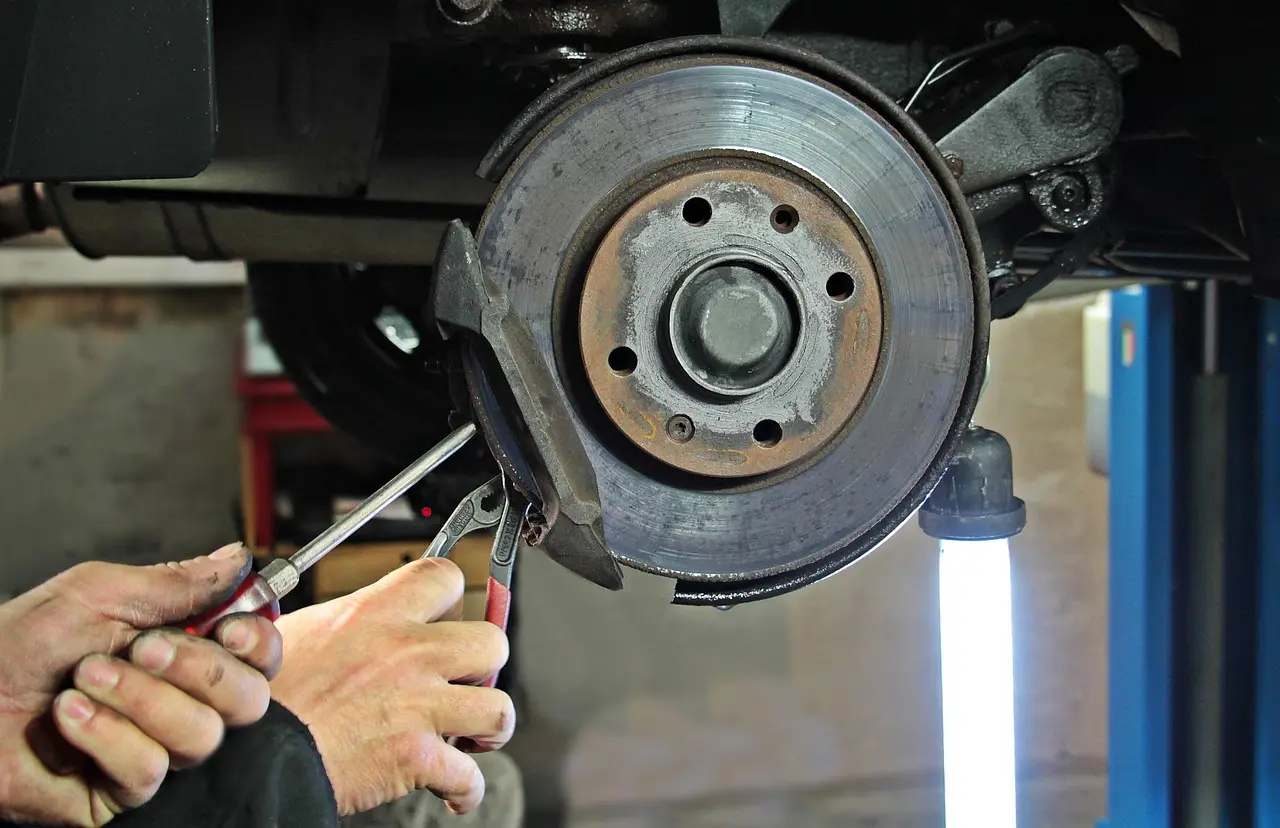
The disc brake friction surface is where most pedal pulse complaints begin. Rotor surface runout, thickness variation, glazing, and uneven pad deposits can all create the same basic feel: a repeating push-back through the pedal as the pads sweep over high and low spots.
Surface runout and thickness variation
Rotor runout means the disc does not turn perfectly true. Thickness variation means one section of the rotor is effectively thicker as it rotates past the pads. Both can create pulsation felt in the pedal or steering wheel, and both can be checked before any part is replaced.
The same source says only .0007 inches can start to feel pulsation. That is small enough that hub runout, rust under the rotor hat, or uneven torque on the wheel can matter as much as the rotor itself.
Pad transfer, glazing, and hot-stop imprinting
Brake pad material can transfer to the rotor in a thin layer. The same source says the resin in the pad can create deposits, and that hot rotors often reach temperatures in excess of 1400 degrees F. When a driver holds the brake pedal down after a hard stop, the pad can imprint its shape onto a hot rotor and leave a high spot.
Glazing changes the pad surface too. The resin binder can harden when overheated, which reduces bite and can make the friction change less even from one revolution to the next. That is why a pedal pulse often starts after a series of hot stops rather than after a single gentle stop.
When machining helps and when replacement is smarter
Machining can help if the rotor still has enough thickness, the hub face is true, and the problem is limited to mild surface variation or light deposits. Replacement is smarter when the rotor is near minimum thickness, has heat checking, or the underlying cause is a sticking caliper or a runout problem that would return after machining.
A common mistake is assuming a pulsing brake pedal means the new pads are bad when the real problem is a warped wheel hub or rust buildup behind the rotor. If the mounting surface is dirty or uneven, the new rotor can inherit the same pulse on the next brake application.
Brake caliper and hub faults
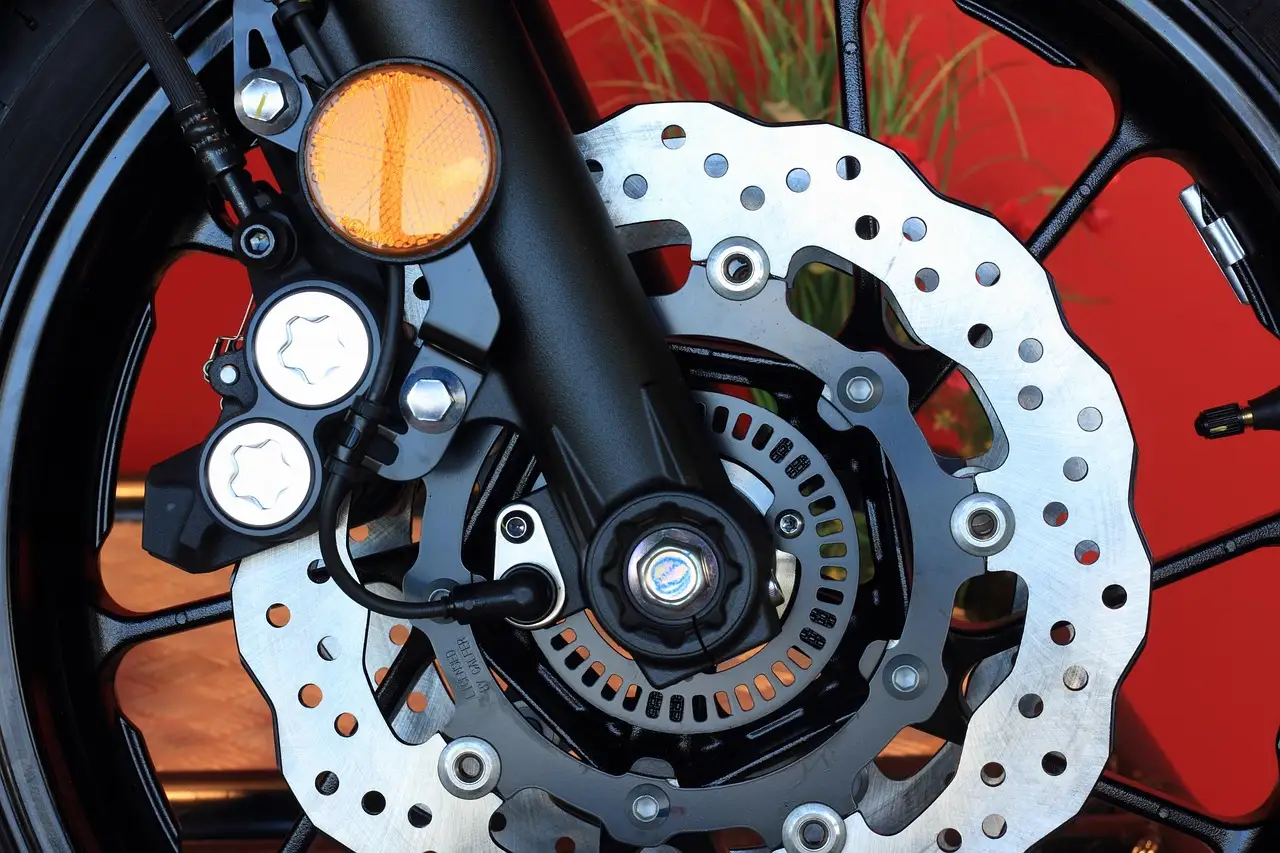
Hidden mechanical faults can mimic a rotor problem. A sticking caliper, seized slide pin, wheel bearing play, or rotor mounting-surface runout can make one wheel brake harder than the others and create a pulse that looks like a bad rotor at first glance.
Sticking slide pins and uneven clamping force
The brake caliper clamps the pad onto the rotor. If the slide pins bind or the piston does not retract cleanly, the pads may not contact evenly, and one side of the rotor can heat more than the other. That uneven force can leave contact marks that repeat as a rhythmic judder.
Check pad wear pattern on both pads at the affected wheel. Uneven taper, one pad wearing much faster, or a pad that looks shiny on one edge can point to caliper drag rather than rotor damage.
Hub, wheel bearing, and mounting-surface runout
The rotor can only run true if the hub does. Rust flakes, dirt, bent hub flanges, and wheel bearing play can push the rotor side to side even when the rotor is new. That is why hub runout is a frequent miss on jobs that “fixed” the brakes for a week and then pulsed again.
One axle can pulse while the other feels normal because each side wears and heats on its own. A front-left bearing with play can create a steering-wheel shake, while a rear issue may be felt more through the seat and floor pan.
Why one axle can pulse while the other feels normal
Each axle sees a different load, heat pattern, and brake torque split. Front brakes usually do more work during stopping, so front issues are more common, but rear drum brakes, parking brake drag, or rear disc issues can create their own pulse. EV regenerative braking can also change how often the friction brakes engage, which may hide a light rotor problem until the system blends in friction braking at lower speed.
Performance brake setups add another wrinkle. Larger rotors and multi-piston calipers can be more sensitive to pad choice, bedding, and torque pattern on the wheel studs, so a vibration there does not always mean the rotor is warped.
Could ABS be causing the pulse?
Yes, and that is one of the main reasons to sort the symptom pattern before replacing parts. ABS intervention can feel like pulse, but it usually shows up as rapid tapping or chatter during a hard stop on a low-traction surface, not as a smooth rhythmic bounce on dry pavement.
How ABS feels during low-traction stops
ABS is designed to release and reapply brake pressure quickly when a wheel is close to locking. The pedal can kick back or chatter, and the sound may change from a steady drag to a fast machine-gun pulse. That behavior is normal during intervention and often disappears as soon as traction returns.
If the pulse only appears on wet leaves, gravel, snow, or painted lines, ABS is a better first suspect than rotor runout. A wheel speed sensor fault can also confuse the system and cause unusual ABS activity.
How to tell ABS chatter from rotor judder
Rotor judder usually tracks wheel speed and may happen on many stops once the rotor is hot or uneven. ABS chatter usually appears when the tires are near slip, and it often comes with a sudden loss and return of grip. Rotor issues do not need a slippery surface to show up.
Suppose a car pulses every time it slows from 60 mph to a stop on dry pavement, and the steering wheel shakes at the same time. That pattern favors rotor or hub runout. If the same car only chatters on a wet downhill stop, ABS is higher on the list.
When ABS behavior points to a sensor or tire issue
If ABS activates too early on dry pavement, inspect tire size, tire condition, wheel speed sensors, tone rings, and wiring before blaming the rotors. Mismatched tire diameters or a damaged sensor can make one wheel seem to lock sooner than the others, which triggers unnecessary ABS action.
Brake fluid and hydraulic faults
Hydraulic faults do not usually create a true rhythmic pulse, but they can distort pedal feel enough that drivers mistake them for rotor trouble. Brake fluid is hygroscopic, so it absorbs moisture over time, and contaminated fluid lowers the boiling margin and can worsen brake feel issues under heat.
Air in the hydraulic brake system
Air compresses. Fluid does not. Air in the hydraulic brake system usually causes a soft or spongy pedal rather than a steady pulse. Direct Brakes says a soft pedal is a hydraulic failure, and it identifies air in the brake lines as the most common cause of a soft pedal.
Direct Brakes also notes that the pump test can reveal air in the brake lines. If the pedal firms up after several quick pumps, suspect air or internal hydraulic bypass before rotors.
Brake bleeding after service or component replacement
Brake bleeding removes trapped air from the hydraulic system and restores firm hydraulic response when air is present. A four-wheel bleed may be needed after caliper replacement, hose work, master cylinder replacement, or other repairs that open the system. Skipping it can leave a long pedal that feels unrelated to the original job.
Master cylinder wear, internal bypass, and pedal sink
The master cylinder creates hydraulic pressure from pedal force. Internal seal wear can let pressure leak past the seals without any external drip, which can cause a sinking pedal or one that slowly drops under steady foot pressure. Bear Valley Auto lists air, moisture-boiled fluid, master cylinder seals, and leaks as usual suspects when pedal feel goes bad.
That failure pattern is different from rotor pulsation. A sinking or soft pedal is a hydraulic problem first, while a steady pulse under braking is usually a friction-surface or mechanical issue first.
Brake pulse matrix
Use this matrix to narrow the next check before you buy parts. Start with the symptom pattern, then follow the inspection order listed in the last column. The repair path tells you whether cleaning, machining, replacement, or bleeding is the better next move.
| Symptom pattern | Likely causes | Next checks | Likely repair path |
|---|---|---|---|
| High-speed pulse, worse above 45 mph | Rotor runout, thickness variation, hub runout | Check rotor face, hub flange, wheel torque, bearing play | Clean hub, measure runout, machine or replace rotor if needed |
| Low-speed pulse, near the last 10 mph | Pad deposits, glazing, rear brake drag, ABS at very low grip | Inspect pad surface, rotor spots, rear brakes, road surface | Bed pads, clean or replace affected parts, verify ABS only if traction is low |
| Only after heat or repeated stops | Pad imprinting, hot spots, caliper drag | Check caliper slide pins, pad wear, rotor color change, smell | Free the caliper, replace damaged pads, machine or replace rotor |
| Only during light braking | Pad transfer, rotor high spots, early ABS on slippery pavement | Repeat stop on dry pavement, inspect deposits, compare front and rear feel | Clean or resurface if thickness allows; inspect ABS if it appears only on low-traction stops |
| Only on one axle | One bad rotor, caliper issue, axle-specific hub runout | Swap inspection side to side, check rotor thickness, bearing play, pad wear | Repair the affected axle only if the other axle is normal |
| Pedal pulse with steering-wheel shake | Front rotor or hub issue | Inspect front rotors, front hubs, tire balance, front wheel bearing | Front hub clean-up, rotor service, bearing repair if loose |
| Pedal pulse with seat vibration | Rear rotor issue, rear drum problem, rear hub runout | Inspect rear brakes, parking brake hardware, rear wheel bearing | Rear brake service, drum adjustment or rear rotor repair |
| Rapid tapping, chatter, or kickback on slick pavement | ABS intervention, sensor or tire issue if it happens too early | Check traction conditions, tire sizes, wheel speed sensors, tone rings | No rotor repair unless a separate brake pulse exists; fix the ABS cause if it is abnormal |
| Soft, sinking, or inconsistent pedal | Air, moisture-boiled fluid, master cylinder seals, leaks | Inspect fluid level, bleed system, perform pump test, check for leaks | Bleed system, repair leak, replace master cylinder if pressure bypass is found |
How to inspect the brakes before replacing parts
This order keeps you from replacing a good rotor while the real fault stays in the hub or hydraulic system. It also helps separate true pulsation from ABS activity and from a soft pedal caused by trapped air or a worn master cylinder.
-
Verify the symptom pattern.
Test the car on dry pavement first, then note speed, heat, and brake pressure. Write down whether the shake is in the pedal, steering wheel, or seat, because that location guides the next inspection.
-
Check tire and wheel basics.
Confirm tire size matches side to side and that the wheels are torqued correctly. A loose wheel, wrong-size tire, or tire with damage can mimic a brake pulse and make the diagnosis noisy.
-
Inspect the hub and bearing.
Look for rust on the mounting face, damaged studs, and wheel bearing play. Clean the hub face thoroughly before measuring or reinstalling anything, because debris can create rotor runout even with new parts.
-
Examine rotor and pad contact.
Check for glazing, uneven deposits, scoring, and uneven pad wear. If one pad is tapered or one side is much hotter than the other, a sticking caliper or seized slide pin deserves attention before rotor replacement.
-
Assess hydraulic feel.
If the pedal is soft, sinks, or firms after pumping, shift to the hydraulic brake system. Check fluid level, look for leaks, and bleed the system when air may be trapped or after a component change.
-
Choose the repair path.
Machine rotors only if thickness remains in spec and the problem is limited to mild surface issues. Replace rotors when they are too thin, heat damaged, or likely to return to the same fault pattern. Clean and service calipers or hubs when the underlying cause is mechanical rather than friction-related.
Say your sedan pulses only after three highway exits in a row, and the steering wheel shakes with each stop. That points first to heat-related rotor or hub issues, not to air in the lines. If the same car later develops a soft pedal that firms only after two pumps, the hydraulic side needs its own check.
Frequently asked questions
What causes a pulsating brake pedal?
The usual causes are rotor runout, thickness variation, pad deposits, ABS activation, and less often caliper or hub faults. If the pedal pulse happens with steering-wheel shake or seat vibration, inspect the braking surface and mounting hardware before assuming the rotors are warped.
Why does my brake pedal pulsate?
It usually pulsates because the pads are sweeping across a surface that changes height or friction as the wheel turns. That change can come from rotor high spots, pad transfer, a sticking caliper, or a hub that does not run true. The pattern of the pulse tells you which one is most likely.
Is brake pedal pulsation a rotor problem?
Often, yes, but not always. Rotor issues are the most common cause, especially when the pulse tracks wheel speed and appears on dry pavement. Hub runout, bearing play, and caliper drag can create the same feel, so the rotor should not be blamed before those checks are done.
Can warped rotors cause a pulsing brake pedal?
Yes, if “warped” is used to describe rotor runout or uneven thickness that pushes the pads back rhythmically. In practice, many pulse complaints are caused by pad deposits or mounting-surface problems rather than a rotor that has literally bent. Measure before replacing.
Is it safe to drive with brake pedal pulsation?
Mild pulsation is usually less urgent than a soft or sinking pedal, but it still deserves prompt inspection. It can lengthen stopping distances, hide a caliper or hub issue, and worsen over time. If the pedal sinks, the fluid leaks, or ABS behaves abnormally, treat it as a higher-priority problem.
What causes brakes to pulse when stopping?
Brakes pulse when stopping because the friction force is changing as the wheel turns. The most common reason is rotor surface irregularity from runout or pad deposits, but ABS can also pulse the pedal during low-traction stops. The repair path depends on whether the pulse is steady or rapid and whether it happens on dry pavement.
Products related to this article
Sponsored / affiliate links. As an Amazon Associate I earn from qualifying purchases. I may earn additional commission from eligible campaigns.