Transmission Control Module Warranty: What’s Usually Covered
A transmission control module is usually covered only when the warranty names electronic control units or the transmission assembly. Wear, damage, software updates, and diagnosis are often excluded. Miss the exact wording, and a dealer can deny the claim or charge you for programming, labor, and teardown. This guide explains where TCM coverage ends, what factory, CPO, and extended warranties usually pay for, and which documents to submit with the claim.
What does a TCM warranty usually cover?
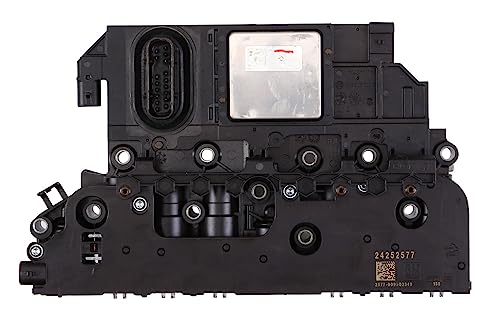
A TCM warranty usually covers the module itself when the plan names the electronic controller, transmission electronics, or the transmission assembly. It often does not cover software programming, diagnostic time, fluid service, or unrelated hard parts unless the warranty text says so.
Where hardware coverage usually starts
The TCM is the electronic transmission controller. If the part fails electrically, many claims are handled as a transmission electronics or powertrain defect when the vehicle is still within the covered time and mileage. The same claim can be rejected if the dealer finds a wiring fault, a damaged connector, or a code caused by a separate transmission problem.
Where software coverage usually ends
Software is a different boundary. A dealer may approve a reflash or module programming when the bulletin or warranty claim ties it to a defect, but a routine update can be billed if it is outside the defect path or outside the warranty terms. That split is where many owners get surprised.
How do dealers decide if the fault is covered?
Dealers usually decide coverage by matching the symptom to the failed part, then checking the VIN, service history, and warranty booklet. They often ask whether the complaint points to the TCM, the valve body, mechatronics, the torque converter, or a software issue before approving replacement or programming.
TCM versus valve body diagnosis
Harsh shifts, delayed engagement, or wrong-gear behavior can point to a valve body instead of the TCM. That matters because a dealer may find the control module healthy and the hydraulic side faulty, which changes the claim path and the covered labor. If the valve body is the root cause, the TCM replacement can be denied.
Mechatronics and torque converter claims
Mechatronics units are often grouped with gearbox electronics and can sit close to the TCM decision point. Torque converter faults are different again, since they are usually treated as transmission or drivetrain internals when the plan includes them. Audi coverage can include gearbox internals, mechatronics, and the torque converter, but that does not mean every brand lists them the same way.
When a software update becomes the fix
If the symptom matches a known defect, the dealer may use a technical service bulletin and a VIN lookup to decide whether a software update or reflash is the approved repair. Audi warranty claims may include required software updates, which is why the bulletin number and exact complaint code matter as much as the part number.
Transmission warranty types and coverage limits
Coverage changes by plan. Factory powertrain warranty, certified pre-owned extension, and third-party used-parts coverage do not pay the same way, and their claim rules are not interchangeable. The same symptom can be approved under one plan and rejected under another.
Factory powertrain warranty
A powertrain warranty usually covers the engine, transmission, and drivetrain components named in the booklet, but the exact scope depends on brand, model year, and region. For Audi, listed coverage can be limited by the vehicle’s in-service date and mileage, and the coverage may vary by model year and region. That is why the booklet and dealer VIN lookup need to match.
CPO extensions
Certified pre-owned coverage often extends factory terms, but it still follows plan language. A CPO claim may cover the TCM or mechatronics only when those parts are named or when the transmission assembly is the covered unit. If the extension excludes programming or wear items, the owner can still owe for part of the repair.
Third-party used-parts warranties
Used-parts coverage is usually narrower. Selected used transmission control modules come with a 90-day warranty, and the used-parts marketplace says it has sold more than 5 million parts and lists over 150,000 parts. That kind of warranty may cover the module only, not shop diagnosis, coding, or vehicle downtime.
TCM warranty checklist
Use this checklist before opening a claim. It helps you separate a module claim from a transmission internals claim and gives the dealer the documents most likely to support approval.
| Symptom | Likely covered component category | What proof to bring |
|---|---|---|
| Hard 2-3 shift with stored transmission codes | TCM or software | VIN lookup, DTCs, TSB number, service record |
| Delayed reverse engagement after cold start | Valve body or mechatronics | VIN lookup, DTCs, in-service date, mileage |
| Slip, flare, or shudder under load | Torque converter | VIN lookup, DTCs, service record, mileage |
| Intermittent no-shift or limp mode | TCM or mechatronics | VIN lookup, DTCs, TSB number, in-service date |
| Known shift complaint with bulletin repair | Software | VIN lookup, TSB number, in-service date, mileage |
How do you check if your TCM is still covered?
Check the VIN, in-service date, mileage, and booklet first. Warranty status can be checked by a dealer using the VIN, and that lookup is the fastest way to confirm whether the TCM, transmission assembly, or software update is still inside the time and mileage window.
-
Pull the VIN first.
Give the dealer the full VIN before asking about the TCM. The VIN lookup ties the car to the correct warranty terms, software campaigns, and region-specific coverage. -
Confirm the in-service date.
Compare the in-service date in the booklet with the dealer’s record. For many claims, that date starts the warranty clock, and a few months can decide whether the claim is approved. -
Check mileage against the limit.
Write down the current odometer reading and compare it with the booklet limit. Audi coverage can be limited by mileage, so the number on the dash needs to match the claim file. -
Gather service records.
Bring maintenance invoices, especially fluid-change proof and any transmission-related work orders. Service intervals and proof of maintenance can affect coverage, and missed fluid changes can limit or void protection.
Say your sedan starts shuddering in third gear at about 42,000 miles, and the dealer finds a transmission bulletin tied to the VIN. If the warranty booklet covers the transmission assembly and the in-service date is still inside the limit, the claim can move toward a software reflash or a mechatronics repair instead of a full module bill.
What can limit or void coverage?
Coverage can narrow fast when the dealer sees missed maintenance, tuning, or a wear item rather than a defect. Missed fluid changes can limit or void protection, and modified ECUs can limit or void protection. The claim usually turns on proof, not on how loud the symptom is.
Missed maintenance
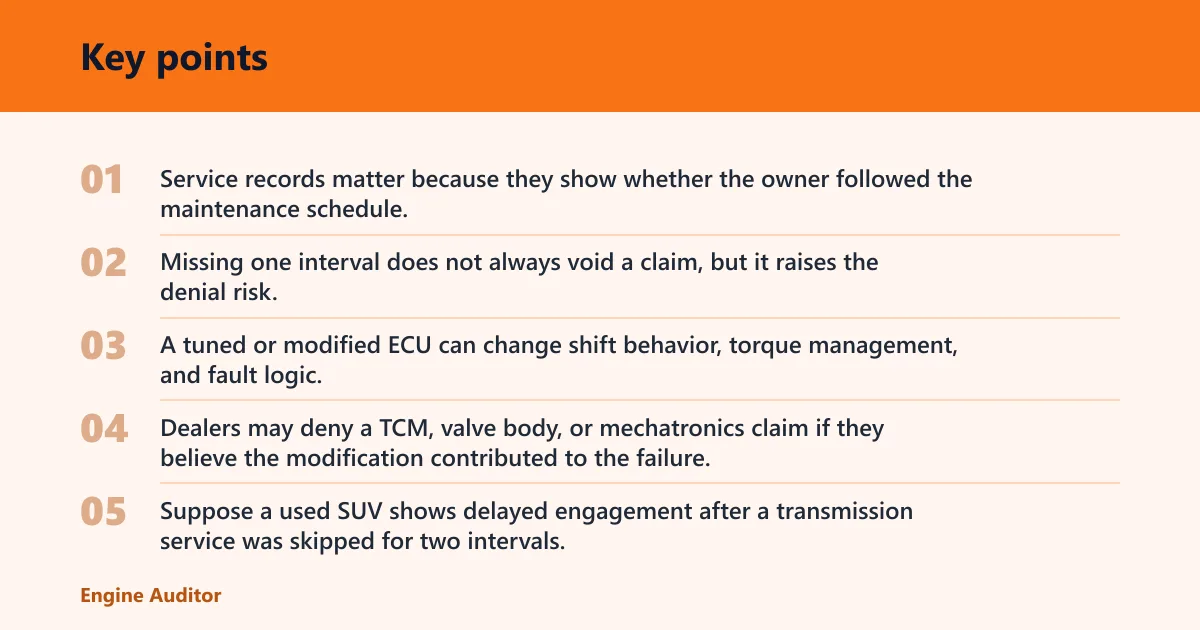
If the transmission service interval was missed, the dealer may argue that the failure followed neglected fluid condition rather than a covered defect. Service records matter because they show whether the owner followed the maintenance schedule. Missing one interval does not always void a claim, but it raises the denial risk.
Modified ECU or tuning
A tuned or modified ECU can change shift behavior, torque management, and fault logic. Dealers may deny a TCM, valve body, or mechatronics claim if they believe the modification contributed to the failure. That is a common denial reason when the symptoms and the calibration do not line up with factory settings.
Wear items versus defects
Clutch wear is rarely covered. It is usually treated as a wear item unless a separate defect damaged it. The same logic applies to disputes over slipping or shuddering: if the dealer calls it wear, the claim may be denied even when the symptom feels transmission-related.
Suppose a used SUV shows delayed engagement after a transmission service was skipped for two intervals. In that case, the dealer may inspect the fluid history first, then decide whether the issue points to wear, fluid condition, or a covered control fault. The missing records can matter as much as the code scan.
Is a software update or reflash covered?
A software update or reflash may be covered when it is tied to a defect and listed in warranty or bulletin guidance for that VIN. It is more likely to be approved when the update is the required repair for shift quality, harsh shifting, or a known calibration fault. If it is routine programming, it may be billed separately.
Programming tied to a defect
When the bulletin says the update corrects a documented transmission issue, the dealer can often submit it under warranty along with the rest of the repair. The key documents are the VIN lookup, the TSB number, the DTCs, and the in-service date. Those four items tie the software fix to the covered complaint.
When the update is billable
If the TCM update is part of a customer-requested visit, a tune correction, or a non-defect software refresh, the dealer may charge for programming and diagnosis. That is especially common when the symptom is not duplicated or when the bulletin does not apply to the exact vehicle configuration.
Frequently asked questions
Is a transmission control module covered under powertrain warranty?
Often yes, but only when the plan includes the transmission assembly, transmission electronics, or electronic control units. A powertrain warranty usually includes the engine, transmission, and drivetrain components named in the booklet, yet the exact language controls the claim. If the booklet is vague, the dealer can narrow coverage to hardware only or deny programming.
Does warranty cover transmission control module software updates?
Sometimes. A software update is more likely to be covered when a technical service bulletin or defect bulletin says it is the required repair for that VIN. If the update is unrelated to a warranty fault, the dealer may bill diagnosis or programming separately, even when the transmission itself remains covered.
Is a TCM covered if the failure is caused by a valve body or mechatronics issue?
Not always. Dealers usually identify the root cause before approving the repair, and a valve body or mechatronics fault can be treated as the covered part instead of the TCM. If the module was not the failed component, replacing it may be denied, even when the symptom looked electronic at first.
What does a used transmission control module warranty usually cover?
A used-parts warranty usually covers the part itself for a short period, not the whole repair. Selected used transmission control modules come with a 90-day warranty. That coverage often stops at the module and may exclude coding, labor, fluids, or any damage caused by installation or vehicle-side faults.
Does warranty cover seals, hardware, or labor for a TCM replacement?
It depends on the plan. Some factory or CPO claims cover labor and related seals when the TCM is part of the approved repair path, while third-party used-parts warranties often do not. Ask whether diagnostics, programming, seals, and labor are paid separately before the work starts.
Can missed maintenance void transmission control module coverage?
Yes. Missing fluid changes or other required service can limit or void protection if the dealer believes the neglected maintenance contributed to the failure. Service records are the best defense. Bring invoices, dates, and mileage so the claim file shows the vehicle followed the required intervals.
Is clutch wear covered under transmission or powertrain warranty?
Usually not. Clutch wear is rarely covered because it is treated as a wear item rather than a defect. A claim becomes more likely only if a separate covered fault damaged the clutch or the transmission failed in a way that fits the warranty language, not just normal wear.
Products related to this article
Sponsored / affiliate links. As an Amazon Associate I earn from qualifying purchases. I may earn additional commission from eligible campaigns.