Vehicle Types for Contractors: Best Trucks and Vans for Tools
Choose a cargo van when you move loose tools every day. Pick a half-ton or service-body truck when towing is part of the job, and use a service-body truck when you need lockable outside-access storage for gear. A mismatched body style adds time at every stop, raises theft risk, and can push you into trailer upgrades you do not need. This guide compares trucks and vans by tool volume, towing, city access, and cargo security.
Top pick for daily tool hauling

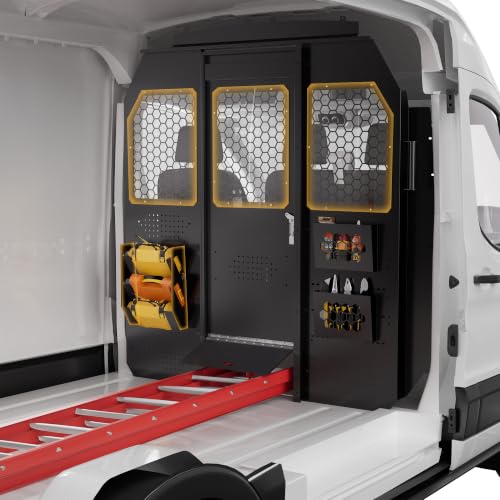

The best work van for most residential contractors in 2026 is the Ford Transit T-250 mid-roof with a 148-inch wheelbase. It gives you standing-height access, organized shelving, and a cargo van layout that fits daily tool hauling better than a pickup bed for most solo operators.
Why a cargo van fits most solo contractors
A cargo van usually wins when your load repeats: hand tools, fasteners, small power tools, service parts, and a ladder or two. You get weather protection, better security, and less time loading and unloading loose items from a bed.
The Ford Transit T-250 mid-roof 148-inch wheelbase lands at $48,400 base and roughly $58,000-$65,000 fully upfit. That price makes more sense when the van replaces a tool trailer, a box topper, or a daily stop-and-start setup that needs shelving and partitions.
When a service-body truck beats a van
A service-body truck is the better answer when towing is part of the workday, or when your tools are too large, dirty, or awkward for interior shelving. The Ford F-250 Utility Body is aimed at towing-heavy work and carries an 18,200-pound tow rating with 4,302 pounds of payload.
That body style is also easier when you need outside-access compartments for hoses, fittings, gas cans, or weld gear. It is the right call when the bed has to work as a mobile rack, not just a covered box.
Quick picks by contractor need
| Need | Best fit | Key spec | Price / economy |
|---|---|---|---|
| Most solo residential tool hauling | Ford Transit T-250 mid-roof 148-inch wheelbase | Cargo van configuration; standing-height access | $48,400 base; about $58,000-$65,000 fully upfit |
| Tight city routes | Ram ProMaster 1500 Cargo | Front-wheel drive, tall interior height | $48,965 base; 18-21 MPG |
| Premium work van with AWD | Mercedes-Benz Sprinter 2500 Cargo | Diesel-only, AWD availability | $53,125 starting price; 22-24 MPG diesel |
| Towing-heavy contractor work | Ford F-250 Utility Body | 18,200-pound tow rating; 4,302 pounds payload | Higher operating cost than a van when not towing |
| Lowest buy-in budget | Chevy Express 2500 Cargo | Body-on-frame design | $39,000-$43,000; 14-16 MPG |
Cheapest budget pick
The Chevy Express 2500 Cargo is the budget answer when purchase price matters more than fuel use or modern packaging. It starts around $39,000-$43,000 and is listed at 14-16 MPG. That makes it a simpler buy, but fuel and operating costs rise if the route is long or stop-heavy.
Tight-city pick
The Ram ProMaster 1500 Cargo is favored for tight urban routes because its front-wheel-drive layout and tall interior help with curbside loading and parking. The ProMaster’s 3.6L Pentastar V6 is listed at 18-21 MPG, which helps on dense routes with frequent stops.
Towing-heavy pick
The Ford F-250 Utility Body is the right fit when the trailer does the heavy lifting. If your day includes a dump trailer, equipment trailer, or long runs to job sites, the truck’s tow rating and exterior compartment access matter more than enclosed cargo volume.
High-security pick
The Mercedes-Benz Sprinter 2500 Cargo fits buyers who want a premium work van with AWD availability and diesel range. It starts at $53,125, and the diesel version is described as hitting 22-24 MPG. That combination makes sense when cargo protection and longer service intervals matter.
Vehicle decision matrix
Use the matrix below before comparing badges. It ties body style to cargo shape, trailer use, route type, and security needs, then calls out the failure case that usually causes regret later.
| Trade type | Daily payload shape | Trailer frequency | City vs rural routes | Security needs | Recommended vehicle class | Top failure case to avoid |
|---|---|---|---|---|---|---|
| Plumber | Bins, fittings, pipe offcuts, wet gear | Occasional | Mixed, often city-heavy | High | Cargo van | Open bed that leaves small parts exposed |
| Electrician | Cases, reels, wire, ladders | Low | City-heavy | High | Mid-roof cargo van | Cab-over or low-roof layout that kills standing access |
| Residential remodeler | Mixed tools, trim, sheet goods, hardware | Occasional | Mixed | Medium | Transit-style cargo van | Truck bed that turns every stop into a re-stack job |
| HVAC service | Parts totes, cylinders, recovery gear | Moderate | Mixed, often rural | Medium | Cargo van or service body | Vehicle with too little interior height for organized shelving |
| Landscape or excavation support | Dirty, bulky, awkward tools | High | Rural-heavy | Low to medium | Service-body truck | Van that gets beaten up by wet or abrasive cargo |
| Generator, compressor, or tow rig work | Heavy, long, trailer-dependent loads | Frequent | Rural-heavy | Medium | Heavy-duty truck | Van that forces oversized trailer use for routine jobs |
Which vehicle fits your trade?
Pick the vehicle from how the work moves, not from the badge. A tight service route with hand tools points to a cargo van. A trailer-led schedule or frequent material towing points to a truck or service body. A long, awkward load points to the body shape that can carry it without constant rework.
Plumbers and electricians
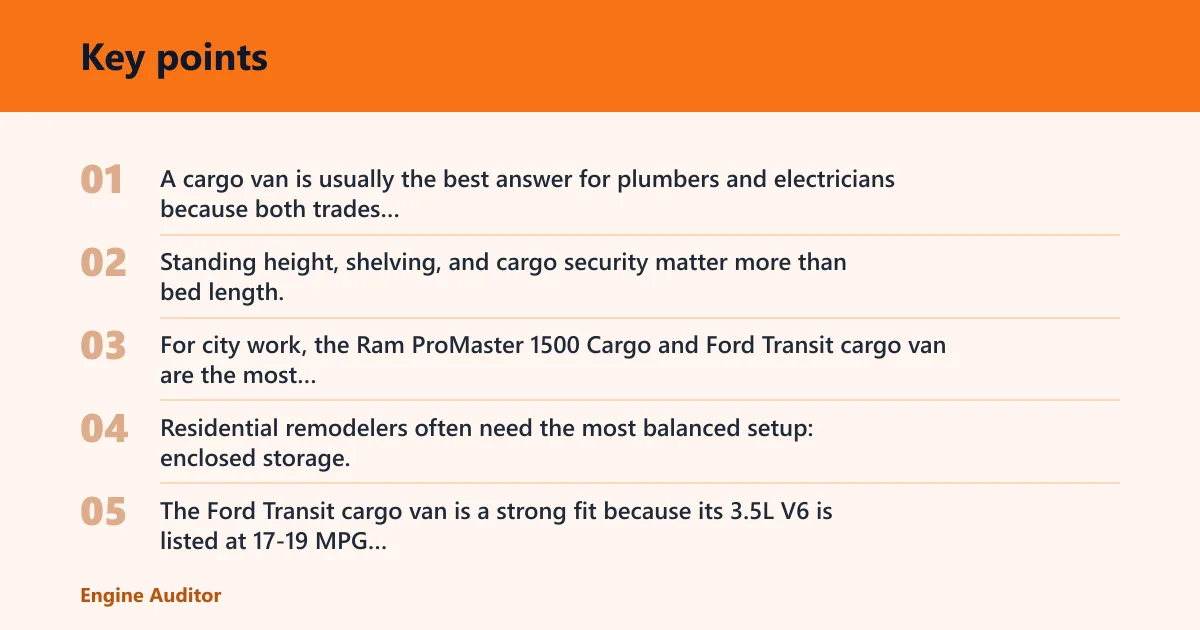
A cargo van is usually the best answer for plumbers and electricians because both trades carry many small items that disappear in an open bed. Standing height, shelving, and cargo security matter more than bed length. For city work, the Ram ProMaster 1500 Cargo and Ford Transit cargo van are the most practical fits.
Residential remodelers
Residential remodelers often need the most balanced setup: enclosed storage, a clean floor, and enough room for saws, trim, and fasteners. The Ford Transit cargo van is a strong fit because its 3.5L V6 is listed at 17-19 MPG combined, while the EcoBoost version is listed at 16-18 MPG. AWD drops to 15-17 MPG.
Towing-heavy trades
Towing-heavy trades should start with the Ford F-250 Utility Body. The 18,200-pound tow rating and 4,302 pounds of payload put the emphasis where it belongs: trailers, equipment, and exterior access. If the trailer is on the hitch more days than not, a van is often the wrong shape.
Crews with bulky gear
Crews with large, dirty, or awkward gear often outgrow a standard cargo van before they outgrow a truck. The failure case is simple: the van gets packed floor-to-ceiling, and every stop becomes a sort-and-shift job. At that point, a service body or larger truck saves time.
Say your route is 12 city stops a day, with a meter bag, parts bins, and two ladders. A tall cargo van works because the load is predictable and the tools stay secure between stops. A pickup would force more time managing loose cargo at each stop.
Suppose your day includes a 20-foot equipment trailer and one long rural run to a jobsite. A service-body truck fits better because the tow rating matters more than enclosed shelving. In that case, the van becomes the wrong tool even if it looks cleaner on paper.
Best cargo vans for contractors
Ford Transit T-250 mid-roof 148-inch wheelbase
This is the default choice for most residential contractors who haul tools daily. The body gives you a clean cargo box, standing access, and an upfit path that makes sense for shelving, partitions, and ladder storage. Its $48,400 base and roughly $58,000-$65,000 fully upfit cost are easier to justify when the van replaces a trailer and keeps gear secured.
Ram ProMaster 1500 cargo
The ProMaster starts at $48,965 base and is favored for tight urban routes. Its front-wheel drive helps package the van for curbside work, and its tall interior height makes it easier to stack bins and move inside the cargo area. The 18-21 MPG figure is useful for dense stop-and-go routes.
Mercedes-Benz Sprinter 2500 cargo
The Sprinter starts at $53,125 and is the premium work-van option when AWD or diesel range matters. The diesel version is described at 22-24 MPG, and AWD adds value where winter routes, gravel access, or longer service runs are part of the job. It costs more up front, so the use case has to justify the premium.
Chevy Express 2500 cargo
The Chevy Express 2500 Cargo is the cheapest reliable-style buy in this group at $39,000-$43,000. Its body-on-frame design is familiar and simple, but 14-16 MPG means the operating bill can climb fast. It makes the most sense for a buyer who needs a lower entry price and can live with older packaging.
Best pickup and service-body options
Ford F-250 utility Body
The F-250 Utility Body is the clearest truck answer for towing-heavy contractor work. It offers the 18,200-pound tow rating and 4,302 pounds of payload, which shifts the decision toward trailer control, outside-access compartments, and rough-site use. It is less efficient for pure tool hauling than a van.
Full-size vans vs pickup trucks
Full-size vans win on organized storage, weather protection, and security. Pickup trucks win on towing, off-road access, long awkward loads, and seat count. If your tools need shelves and lockable interior space, the van is usually better. If your workday is built around a hitch, the truck deserves a harder look.
When a pickup is the wrong answer
A pickup becomes the wrong answer when you spend more time protecting tools than using them. Loose cases in the bed, wet weather, and repeated stop-and-go loading all cost minutes. If the load is small, valuable, and frequent, an open bed is usually the weaker fit.
How to choose the right work vehicle
Start with payload and route, then check cargo shape. A van is better when the load is many small items, a truck is better when the load is long, dirty, or trailer-led. If your route is mostly city streets, look hard at height, turning, and parking before you look at horsepower.
Payload, towing, and cargo shape
Payload is not the whole story. A van may carry the same weight as a truck in practice, but if the cargo is loose and small, the van’s shelving saves time. A truck makes more sense when the load is long materials, equipment, or a trailer that comes with the job.
Load-floor height, standing height, and long materials
Load-floor height matters when you lift boxes all day. Standing height matters when you work inside the van more than outside it. Long materials matter when drywall, trim, pipe, or conduit is part of the regular load. If a 10-foot item becomes a daily problem, the body style is wrong.
Fuel use and total cost over time
Fuel economy is only part of total cost. The Transit’s 17-19 MPG combined, the ProMaster’s 18-21 MPG, and the Sprinter diesel’s 22-24 MPG can change the math over time, but so can upfit cost, tire wear, and downtime.
Upfit and storage planning
Plan shelves, partitions, racks, and secure bins before the purchase. A cheap van with a poor upfit can waste more time than a more expensive van with the right layout. The goal is to reduce handling at every stop, not to fill the cargo area to the ceiling.
A common first-timer mistake is buying a van that is too short inside. If the tech has to crawl, kneel, or unload half the cargo to reach the back wall, the vehicle is too small for the route. Another common mistake is buying a truck for a small-parts trade and then adding a trailer just to keep tools secure.
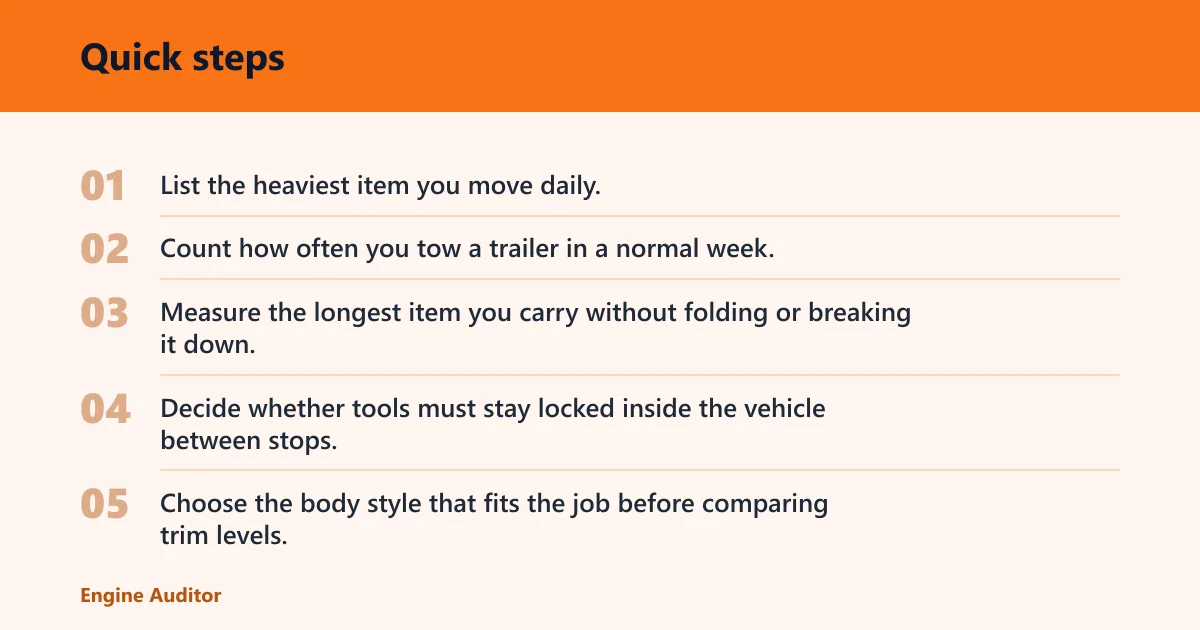
- List the heaviest item you move daily.
- Count how often you tow a trailer in a normal week.
- Measure the longest item you carry without folding or breaking it down.
- Decide whether tools must stay locked inside the vehicle between stops.
- Choose the body style that fits the job before comparing trim levels.
Frequently asked questions
What is the best truck or van for contractors hauling tools every day?
The best default choice is the Ford Transit T-250 mid-roof 148-inch wheelbase for most residential contractors. It gives you enclosed storage, standing access, and a layout that fits daily tool hauling better than an open bed. Choose a truck only if towing or outside-access gear changes the job.
Should I buy a truck or van for my contracting business?
Buy a van if your tools are small, valuable, and moved often. Buy a truck if your work leans on towing, long materials, or rough access. The right answer depends on route type, cargo shape, and whether security matters more than bed access.
Which work van is best for plumbers and electricians?
The Ram ProMaster 1500 Cargo and Ford Transit cargo van are the strongest fits for plumbers and electricians. Both work well when you need standing height, shelving, and enclosed security for bins, wire, fittings, and hand tools. Tight city routes favor the ProMaster.
Which truck is best for towing-heavy contractor work?
The Ford F-250 Utility Body is the clear choice when towing drives the purchase. Its 18,200-pound tow rating and 4,302 pounds of payload make it better for trailer work than a cargo van. It also gives you exterior compartments for gear that should not live inside the cab.
How do I choose the right contractor vehicle by payload and route?
Start with the shape of the load, then match the route. Small, secure, frequent loads point to a van. Long, dirty, or trailer-led loads point to a truck. Tight city routes favor compact packaging and easy parking, while rural routes can justify bigger trucks and AWD.
What is the cheapest reliable work van for a contractor?
It is attractive for lower entry cost, but its 14-16 MPG means fuel cost is part of the decision. It fits buyers who want a simple work van without paying premium-van pricing.
What contractor vehicle works best in tight city streets?
The Ram ProMaster 1500 Cargo is the strongest city pick because it is favored for tight urban routes. Its front-wheel-drive layout and tall interior help with curbside loading, and its 18-21 MPG V6 economy helps on stop-heavy routes. It is a practical city tool-hauler.
Do I need a heavy-duty truck or a cargo van for my trade?
Choose the cargo van if you need weather protection, security, and shelf organization. Choose the heavy-duty truck if the job depends on towing, rough access, or long awkward loads. If your trailer is constant, the truck usually wins. If your tools are constant, the van usually wins.
Products related to this article
Sponsored / affiliate links. As an Amazon Associate I earn from qualifying purchases. I may earn additional commission from eligible campaigns.