Transmission Control Fuse Location: How to Find and Check It
The transmission control fuse is usually in the under-hood fuse box or interior fuse panel. Use the owner’s manual or fuse-box diagram, then pull and inspect the fuse labeled TCM, TRANSMISSION, or ECM/PCM, if that labeling appears. A bad guess can waste time, keep the car in limp mode, or blow the new fuse again if the real fault is a short. This guide shows how to find the fuse, test it correctly, and tell when the problem is not the fuse.
What you’ll need
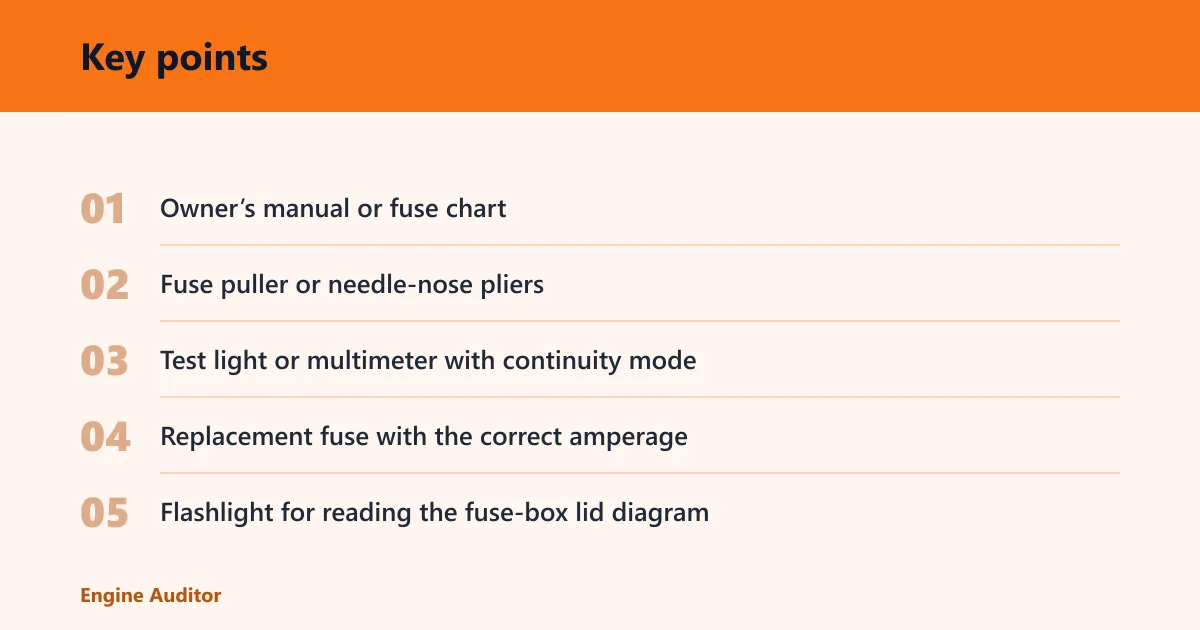

- Owner’s manual or fuse chart
- Fuse puller or needle-nose pliers
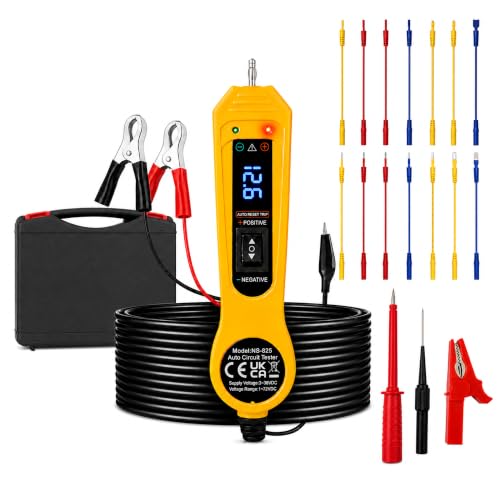
- Test light or multimeter with continuity mode
- Replacement fuse with the correct amperage
- Flashlight for reading the fuse-box lid diagram
Where is the transmission control fuse?
The transmission control module fuse is usually in the vehicle’s main fuse box, often under the hood or under the dashboard. Some vehicles place related fuses in the cabin or trunk. The exact spot varies by make, model, and year, and some vehicles power the TCM through a relay or direct battery feed instead of a dedicated fuse.
Common placement patterns
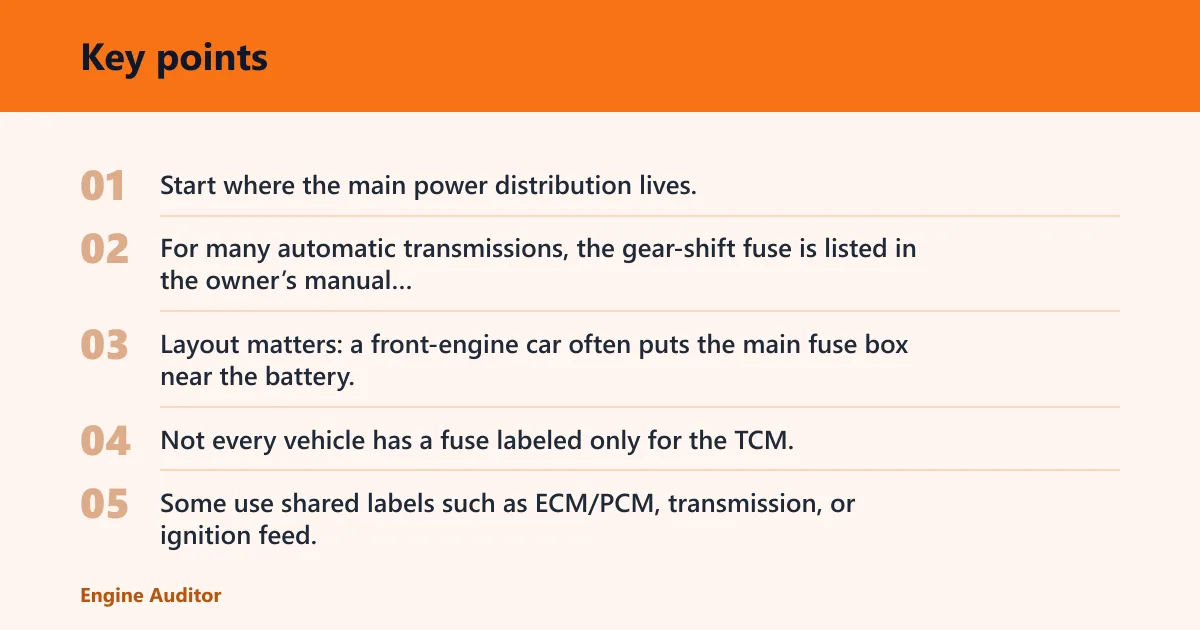
Start where the main power distribution lives. For many automatic transmissions, the gear-shift fuse is listed in the owner’s manual and is usually under the hood, but transmission control module fuses may also be inside the vehicle. Layout matters: a front-engine car often puts the main fuse box near the battery, while cabin and trunk panels may carry body and control circuits.
When there is no dedicated TCM fuse
Not every vehicle has a fuse labeled only for the TCM. Some use shared labels such as ECM/PCM, transmission, or ignition feed. Others route power through a relay. That is why the label on the fuse box lid matters more than guessing by symptom alone.
Step 1: Check the owner’s manual
The owner’s manual gives the fuse number before you remove a cover. It lists the fuse location and often the amperage rating. It may also note whether the TCM shares power with another control unit or is fed through a relay.
- Open the index and find the fuse chart or electrical system section.
- Match the label to TCM, transmission, ECM, or PCM.
- Write down the fuse number and amperage before removing a panel.
- Look for relay notes or shared-feed notes beside the fuse listing.
Say your manual lists “TCM 10A” in the under-hood box. That means the search starts there, not in the cabin panel, and the replacement should match the 10A rating listed for that fuse. Using a higher rating can defeat protection and hide the real fault.
Step 2: Use the fuse box diagram
The fuse-box lid diagram identifies the correct fuse number and often the amperage. Compare the diagram on the lid with the one in the manual, because some vehicles have both engine-bay and interior fuse panels. The same label can appear in more than one box, and only one may feed the TCM.
- Remove the fuse-box cover and read the lid diagram.
- Find the fuse position that matches the manual’s number and label.
- Confirm the amperage printed on the lid or fuse chart.
- Check both the engine-bay box and the cabin box if the first panel does not match.
Suppose the lid shows “ECM/TCM” in the engine compartment and a separate “TRANS” fuse under the dash. Use the manual to identify which one actually powers the transmission control module. Guessing from the label alone can send you to the wrong panel.
Step 3: Inspect and test the fuse
A fuse that looks intact is not proof that it is good. Pull the fuse, inspect the metal element, and then check continuity with a meter. If the fuse is blown, replace it only with the correct amperage listed in the manual or on the lid diagram.
- Switch the ignition off and remove the key or smart fob from the vehicle.
- Pull the identified fuse with a fuse puller or needle-nose pliers.
- Look through the body for a broken strip, darkening, or melted plastic.
- Set the meter to continuity and probe both blades of the fuse.
- Install only the same amperage rating if the fuse is open.
A fuse can look normal and still fail continuity. That is why the meter matters. If the replacement blows at once, stop treating the fuse as the root cause and move to the short-circuit search.
Step 4: Find the cause if it blew
Replacing a blown fuse is the required first fix, not the end of the diagnosis. If the new fuse fails again, inspect the circuit for a short, damaged wiring, corroded connectors, or a relay fault. Some vehicles also have battery-feed power designs that can fail upstream of the fuse itself.
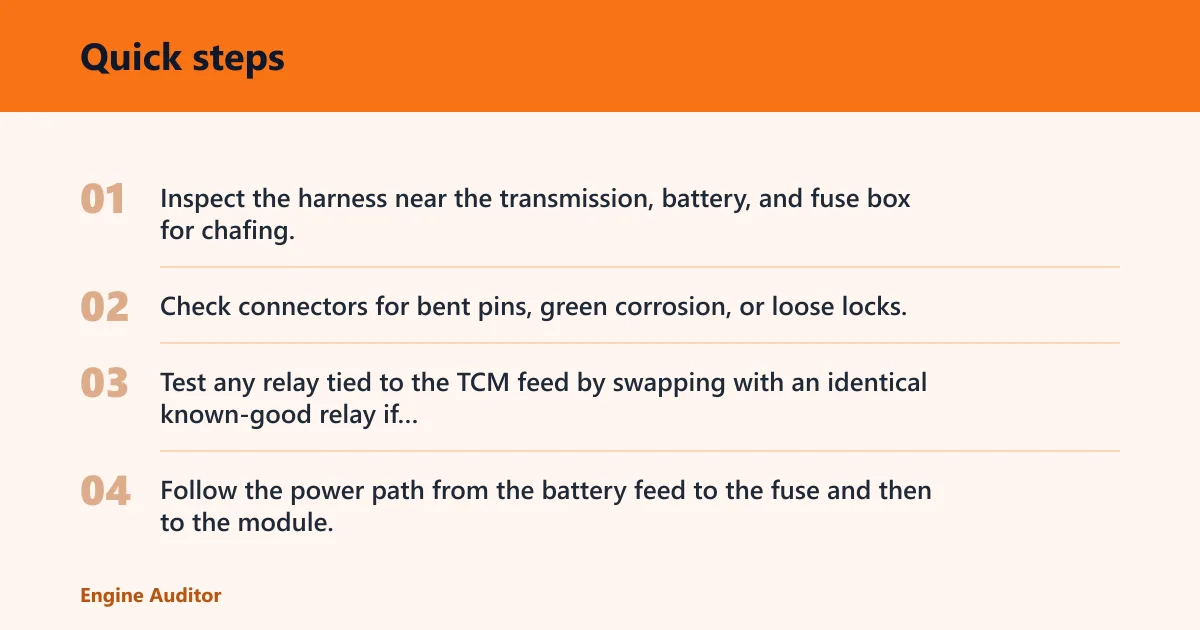
- Inspect the harness near the transmission, battery, and fuse box for chafing.
- Check connectors for bent pins, green corrosion, or loose locks.
- Test any relay tied to the TCM feed by swapping with an identical known-good relay if the box layout allows it.
- Follow the power path from the battery feed to the fuse and then to the module.
Picture a car that shifts into second gear and stays there after a rainstorm. If the replacement fuse fails again, water intrusion in a connector or rubbed-through wiring is more likely than a bad fuse. That is the point where the circuit, not the fuse, becomes the problem.
TCM fuse check matrix
| Symptom | Likely fuse-related cause | Likely non-fuse cause | Where to inspect next | Safe to drive? |
|---|---|---|---|---|
| Stuck in gear / limp mode | Open TCM fuse or dead power feed | Failed sensor, wiring fault, or module problem | Manual, lid diagram, then TCM power and relay circuit | No, only to move a short distance if needed |
| Hard or delayed shifting | Intermittent fuse contact or poor fuse seating | Low system voltage, bad solenoid, or wiring damage | Battery voltage, fuse terminals, related connectors | Use caution |
| Check Engine Light or transmission warning light | TCM power loss from fuse fault | Stored transmission code unrelated to fuse | Scan codes, then check the power circuit | Depends on drivability |
| Poor fuel economy | TCM not controlling shift strategy correctly | Engine issue, tire pressure, or drag | Confirm fuse, then scan engine and transmission data | Usually yes, but diagnose soon |
Common mistakes
Most misdiagnoses come from skipping the manual and replacing the wrong fuse. Another common error is using the wrong amperage because the fuse “fits.” That can create a new failure or mask the real fault. A fuse that blows twice is a circuit problem until proven otherwise.
- Replacing a fuse by shape, not by fuse number and amperage
- Ignoring the lid diagram and checking only one fuse box
- Assuming a shiny fuse is a good fuse without a continuity check
- Stopping after the first replacement instead of tracing the short
- Missing relay power paths on vehicles without a dedicated TCM fuse
Frequently asked questions
Where is the transmission control fuse located?
It is usually in the main fuse box, often in the engine compartment or under the dashboard. Some vehicles also place related power feeds in the cabin or trunk. The owner’s manual and fuse-box lid diagram give the exact location for your vehicle, which is safer than guessing by symptom.
How do I find the transmission control module fuse in my car?
Use the owner’s manual first, then match the fuse-box lid diagram to the fuse number and label. Look for TCM, TRANSMISSION, ECM, or PCM markings. If the first panel does not match, check the other fuse box locations listed in the manual before removing anything.
Which fuse controls the transmission control module?
The controlling fuse is usually the one labeled TCM, TRANSMISSION, ECM, or PCM, depending on how the vehicle is wired. Some models do not use a separate TCM fuse at all and instead power the module through a relay or shared feed. The manual is the deciding reference.
How do I know if the transmission control fuse is blown?
Remove the fuse and test it with a multimeter in continuity mode. A visible break in the metal strip is also a clear sign, but a fuse can look intact and still be open. If the replacement fails immediately, the fuse was only the symptom.
Can a blown TCM fuse cause limp mode?
Yes. A loss of TCM power can put the transmission into limp mode, leave it stuck in gear, or prevent normal shifting. If that happens, the next step is to verify the correct fuse and then check the power supply, relay, and wiring before driving further.
Can the TCM be powered by a relay instead of a fuse?
Yes. Some vehicles power the TCM directly from the battery or through a relay, so there may not be a dedicated fuse labeled only for the module. If the diagram shows a relay, check that circuit next and confirm the fuse rating before replacing parts.
Products related to this article
Sponsored / affiliate links. As an Amazon Associate I earn from qualifying purchases. I may earn additional commission from eligible campaigns.