Transmission Control Fluid Temperature Sensor Symptoms
A failing transmission control fluid temperature sensor is commonly associated with implausible live data, harsh shift strategy, delayed lockup, or limp mode; if the scanner temperature stays fixed, jumps, or is off by about 20°F/11°C or more from reality, suspect the sensor or its wiring. Left alone, it can lead to overheating misdiagnosis, unnecessary parts replacement, and transmission damage from missed cooling or fluid faults. This guide shows symptom patterns, scan-data checks, wiring tests, and when to blame the sensor, the wiring, or actual overheating.
Temperature signal and shift control
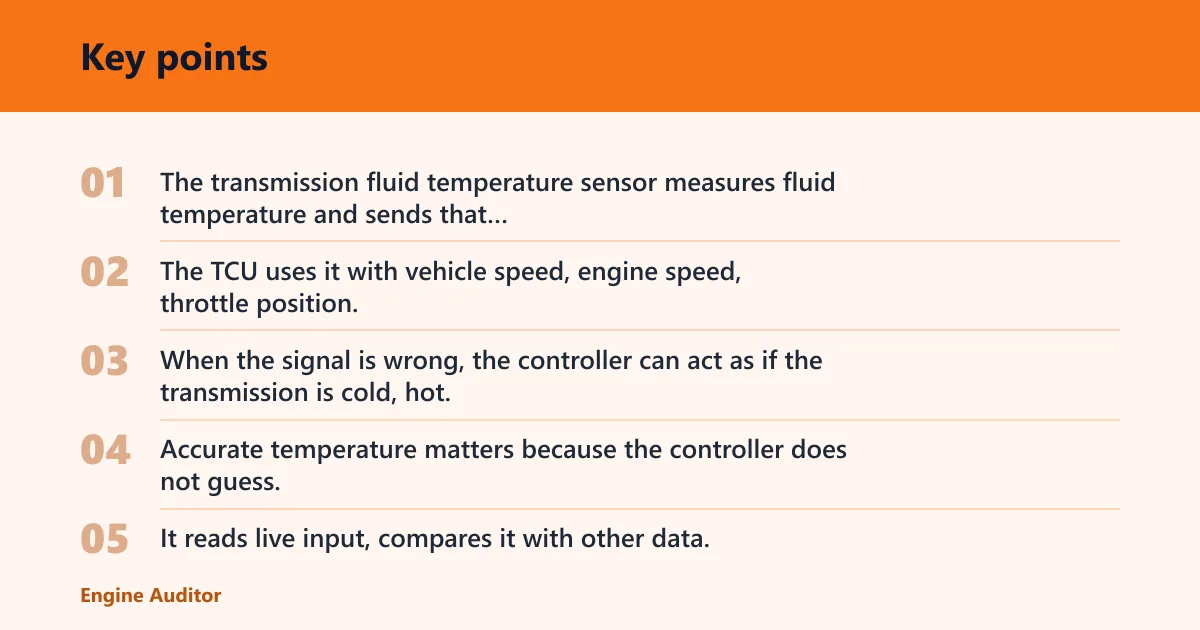


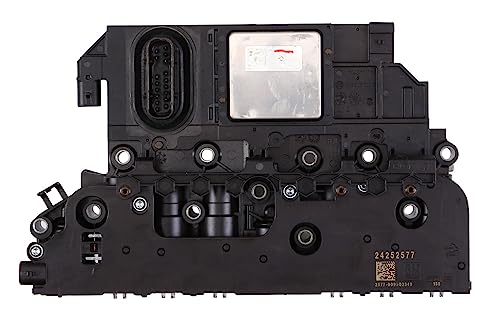
The transmission fluid temperature sensor measures fluid temperature and sends that signal to the transmission control unit. The TCU uses it with vehicle speed, engine speed, throttle position, and other operating-condition signals to set shift timing, lockup, and protection strategy. When the signal is wrong, the controller can act as if the transmission is cold, hot, or failing electronically.
Accurate temperature matters because the controller does not guess. It reads live input, compares it with other data, and adjusts transmission behavior when the number looks implausible. A bad sensor, open circuit, short, or connector problem can therefore create symptoms that look like a mechanical fault even when the fluid is fine.
On some systems, the temperature sensor is only one part of a larger control strategy. Yamaha’s electronically controlled continuously variable transmission uses an electric motor to control pulley position, a pulley position sensor, and a Transmission Control Unit. The TCU continuously receives input signals and calculates transmission ratio. That is a good reminder that control modules depend on clean data, and that diagnosis cannot rely solely on conventional CVT mechanical experience.
What goes wrong when the signal is wrong
Bad temperature data can trigger protection logic, late shifts, harsh shifts, delayed torque-converter lockup, or a transmission warning light. It can also push the TCU into limp mode if the input looks impossible or communication drops out. Some vehicles set faults immediately; others wait until the reading is inconsistent for a longer period.
Model differences matter. One vehicle may keep shifting with a fixed substitute value, while another may cap gear range, disable overdrive, or hold a single ratio. Do not assume every fail-safe feels the same.
What are the symptoms of a bad transmission fluid temperature sensor?
A bad transmission fluid temperature sensor usually shows up as implausible scanner data, shift quality changes, warning lights, or limp mode that do not match the actual fluid condition. The most telling clue is a temperature reading that is frozen, erratic, or clearly out of step with ambient temperature and the vehicle’s warm-up pattern.
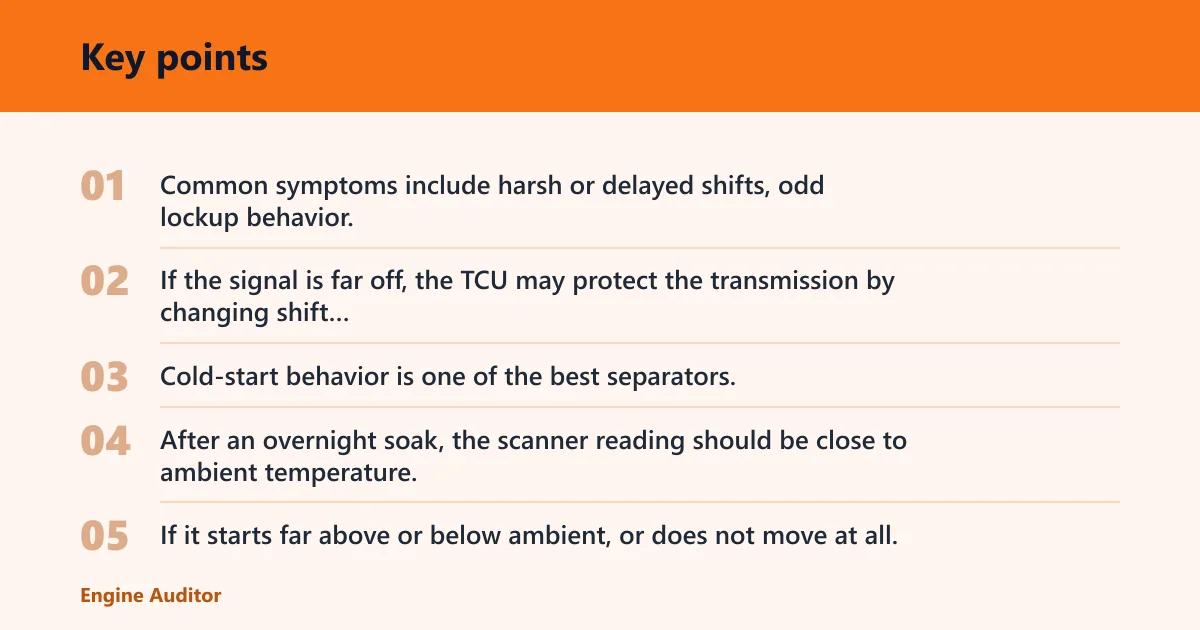
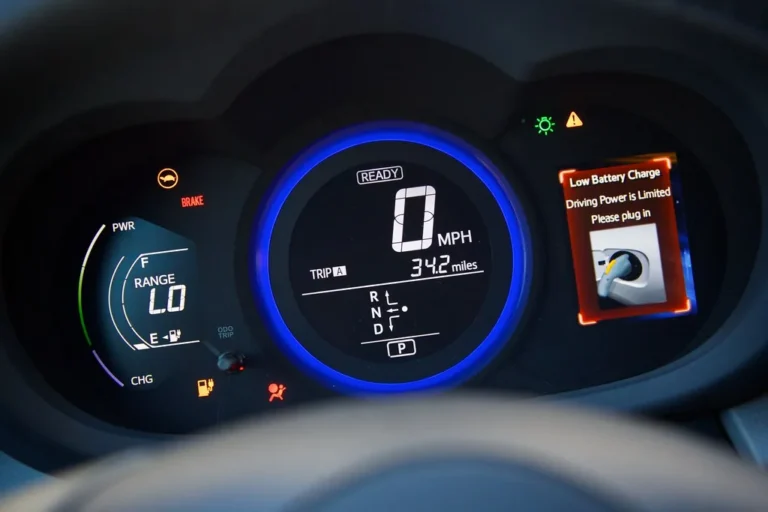
Common symptoms include harsh or delayed shifts, odd lockup behavior, a transmission warning light, stored fault codes, and reduced performance. If the signal is far off, the TCU may protect the transmission by changing shift strategy even though the hardware is still sound.
How the symptom pattern helps
Cold-start behavior is one of the best separators. After an overnight soak, the scanner reading should be close to ambient temperature. If it starts far above or below ambient, or does not move at all, the sensor circuit deserves suspicion before any parts are replaced.
Hot-soak behavior also matters. After warm-up and a short drive, the transmission fluid temperature signal should rise gradually. A sudden jump from one value to another, or a reading that stalls while the vehicle clearly warms, points to a sensor, wiring, connector, or input problem more than to a true overheating event.
Can a transmission fluid temperature sensor cause harsh shifting?
Yes. Incorrect temperature data can change line pressure, shift scheduling, and lockup timing, which often feels like harsh or delayed shifting. That does not prove the sensor is bad by itself; wiring damage, corrosion in the connector, low system voltage, or a TCU input fault can create the same shift complaint.
Suppose a vehicle starts cold at 194°F when the garage is 68°F, then falls to 160°F after a five-minute idle. That pattern is not believable. The shift complaint is a data problem first, not a transmission rebuild signal.
Will a bad transmission temperature sensor trigger a check engine light?
Often, yes. A failed sensor can trigger a check engine light, a transmission warning light, or both, depending on the vehicle architecture. The light alone is not proof of sensor failure, because the TCU may set a code for an open circuit, short, plausibility fault, or communication issue instead.
Use the light as a prompt, not a verdict. Read codes and live data before replacing parts.
Sensor failure or overheating?
Separate sensor failure from true overheating by comparing cold-start live data, hot-soak behavior, and supporting clues such as smell, fluid condition, or drivability changes. A sensor fault can mimic overheat protection. Real overheating usually shows a believable rise in temperature, other heat-related symptoms, and sometimes fluid that smells burnt or looks dark.
Cold-start live-data check
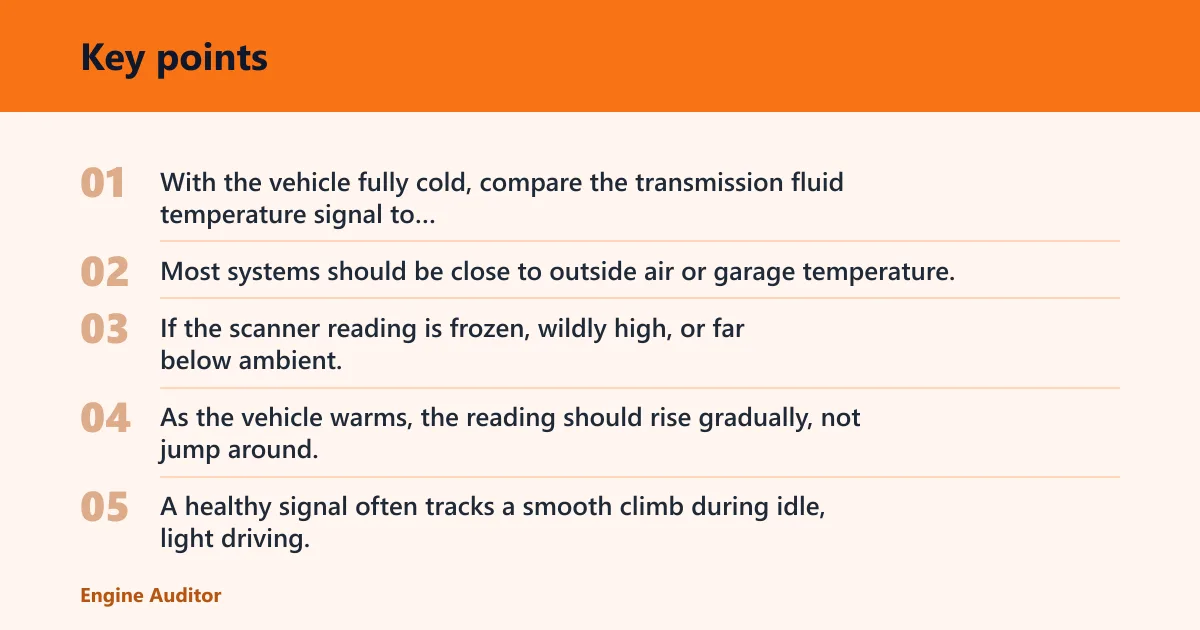
With the vehicle fully cold, compare the transmission fluid temperature signal to ambient temperature before warm-up. Most systems should be close to outside air or garage temperature, usually within a few degrees, when fully cold. If the scanner reading is frozen, wildly high, or far below ambient, suspect the sensor circuit or its wiring.
Hot-rise behavior you should expect
As the vehicle warms, the reading should rise gradually, not jump around. A healthy signal often tracks a smooth climb during idle, light driving, and stop-and-go traffic. A flat line, sudden step change, or noisy oscillation suggests a wiring issue, poor connector contact, or an internal sensor fault.
Signs that point to real overheating instead
Real overheating usually comes with a believable temperature rise, repeated heat-related shift issues, or fluid symptoms that fit the data. The fluid may smell burnt, the pan may contain debris, or the transmission may slip after long climbs, towing, or high load. In that case, the sensor may be telling the truth.
A common first-timer mistake is treating every high reading as a bad sensor. If the scanner shows 245°F after a long grade, the number may be valid. Compare it to load, fan behavior, ambient temperature, and whether the value drops once the vehicle is unloaded and cooled.
What codes point to sensor failure?
Codes that point toward a transmission fluid temperature sensor failure usually include temperature sensor circuit codes, open or short faults, plausibility codes, and some communication-related faults. The exact code family varies by make, but the diagnosis always starts with the scan tool, freeze frame, and live data rather than parts replacement.
Temperature sensor circuit codes
Look for codes that explicitly mention transmission fluid temperature, temperature sensor circuit, or sensor range/performance. These often mean the TCU sees a value outside expected limits, but they do not tell you whether the sensor, wiring, connector, or controller is at fault.
Open, short, and plausibility faults
Open-circuit codes often appear when the signal wire breaks or a terminal backs out. Short-to-ground or short-to-voltage codes suggest damaged insulation, oil intrusion, or an internal sensor fault. Plausibility codes appear when the reading does not fit ambient temperature, warm-up behavior, or other sensor inputs the TCU uses.
Communication and TCU-related codes
Communication faults matter too, especially if the TCU cannot trust the input stream. On some vehicles, the controller may set faults when sensor data is implausible relative to vehicle speed, engine speed, throttle position, or other operating signals. That is why a sensor-looking fault can be a controller-input problem instead.
The OBD2 scanner should show live data and freeze frame before any part is replaced. Freeze frame tells you the temperature, speed, load, and voltage conditions when the fault set. That snapshot often separates an intermittent wiring fault from a sensor that failed outright.
Use an OBD2 scanner to read live data, capture freeze frame, and compare the sensor value to ambient temperature before warm-up. Then watch whether the reading rises gradually during idle and a short drive. If the number is implausible or unstable, move to wiring and voltage checks before replacing the sensor.
- Key the vehicle on and read stored and pending codes.
- Save freeze frame for temperature, engine speed, vehicle speed, and system voltage.
- Check the transmission fluid temperature reading with the vehicle fully cold.
- Compare the reading to ambient temperature before starting the engine.
- Start the engine and watch for a smooth rise as the vehicle warms.
- Inspect the wiring and connector if the reading is fixed, jumps, or drops out.
- Check battery and charging voltage if other electrical faults are present.
Check voltage-related clues
Low battery voltage or charging problems can distort sensor signals or trigger related faults. If the battery is weak, the alternator output is unstable, or multiple low-voltage codes appear, fix the electrical supply first. A controller that is starved for voltage can misread several inputs at once.
That matters because the transmission control unit uses sensor inputs together. A weak power supply can create a temperature fault that looks like a bad sensor, when the real issue is system voltage.
Wiring, connector, or TCU fault?
Do a visual inspection before condemning the sensor. The wiring and connector can be the real cause of a sensor-looking fault, especially when corrosion, oil intrusion, broken pins, damaged insulation, or loose terminals interrupt the signal. If the wiring is bad, a new sensor will not solve the problem.
What to inspect first
Unplug the connector and look for green corrosion, transmission fluid in the plug, bent or recessed pins, and terminal spread. Follow the wiring for chafing near brackets, exhaust parts, and moving suspension pieces. A wire that opens only when warm or when the engine moves can create intermittent symptoms that are hard to catch on a quick scan.
When the TCU input is the likely problem
If the sensor and wiring test clean, but live data still shows implausible values, the TCU input circuit may be at fault. Some controllers set faults when the reading does not match other data, and some fail-safe modes are triggered by internal input errors. At that point, module diagnosis or pin-level testing is more appropriate than another sensor swap.
If the scanner shows 32°F on a 72°F morning, then the value freezes there while the car warms and the shift quality changes, That points to a signal issue. If the same vehicle later shows a believable rise to about 140°F, then drops to -40°F for a few seconds, the wiring or connector becomes the stronger suspect than the transmission itself.
Transmission temperature diagnostic matrix
| Symptom | Likely cause | Quick scanner check | Wiring check | Next action |
|---|---|---|---|---|
| Fixed temperature at cold start | Open sensor circuit, broken wire, bad connector | Compare to ambient; value should be close before warm-up | Check terminals, pin fit, corrosion, and wiring breaks | Repair wiring first; replace sensor only if circuit tests fail |
| Temperature jumps or spikes | Intermittent wiring fault or failing sensor | Watch live data for dropouts during idle and light driving | Wiggle-test connector, inspect for oil intrusion and broken insulation | Fix connector or wiring, then retest live data |
| Harsh shifting with warning light | Implausible input, TCU fail-safe, or real overheating | Check freeze frame, live temp, and related codes | Inspect wiring; verify battery and charging voltage | Stop guessing; confirm whether the reading is believable |
| Delayed lockup or limp mode | Sensor circuit fault or controller protection strategy | Look for circuit, plausibility, or communication codes | Check connector pins and wiring continuity | Limit driving and diagnose immediately |
| Gradual rise with burnt fluid smell and slip | True overheating or transmission-mechanical problem | Compare rise rate with load and road conditions | Verify cooling lines, fluid level, and wiring only after data fits | Stop driving if slip or severe heat persists |
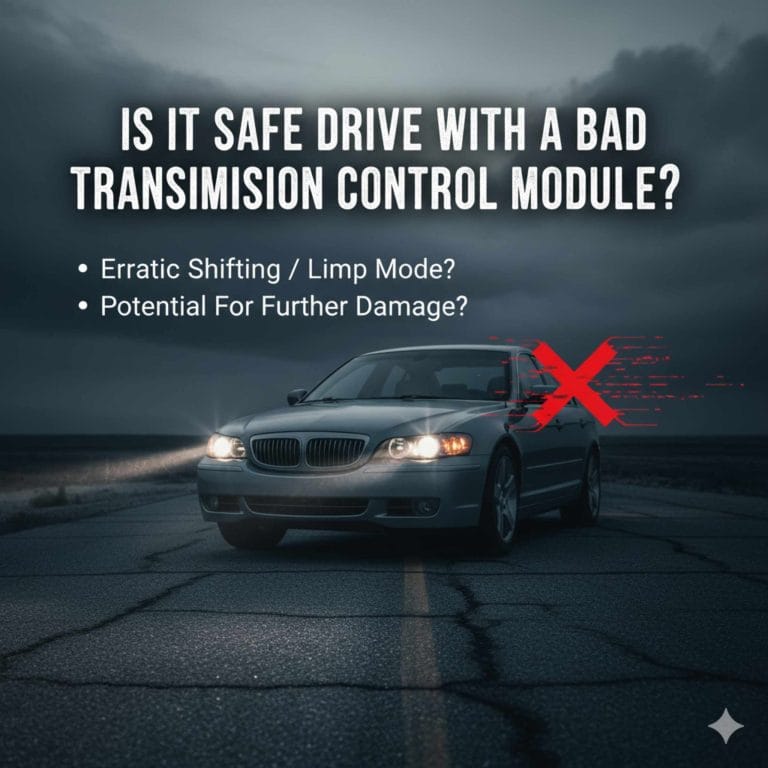
When the reading is implausible and the vehicle falls into limp mode, treat it as urgent. If the transmission warning light appears with reduced performance, or if the reading is obviously wrong by a large margin, stop driving long enough to confirm the data. If the data is believable and the transmission is truly overheating, continue only far enough to avoid further damage and get it serviced.
Frequently asked questions
How do I test a transmission fluid temperature sensor?
Scan live data and freeze frame first. Compare the cold-start reading to ambient temperature, then watch for a gradual rise as the vehicle warms. If the value is frozen, jumps, or is far off, inspect the wiring, connector, and system voltage before replacing parts.
Can low battery voltage cause transmission sensor problems?
Yes. Low voltage or charging problems can distort sensor readings, trigger related faults, or make the TCU misread inputs. If multiple electrical codes are present, or the battery and charging system are weak, fix that first. Otherwise, a healthy sensor can look bad.
Is it safe to drive with a bad transmission fluid temperature sensor?
Only for a short distance, and only if the vehicle still shifts normally and the live data problem is confirmed as a sensor or wiring fault rather than true overheating. If limp mode appears, the warning light stays on, or the temperature reading is clearly implausible, stop driving and diagnose it promptly.
Products related to this article
Sponsored / affiliate links. As an Amazon Associate I earn from qualifying purchases. I may earn additional commission from eligible campaigns.